Jean Roché experimented with a C-3, removing the main landing gear and substituting one wheel in the center of the fuselage. The wingtips had small tricycle wheels for launching and for the end of a landing roll. Quite a bit of weight was saved (about 40 pounds) and aerodynamic drag reduced. The C-3 was personally owned by Roché and shown in registers only as a racer. It was used in a race or two in 1933 wearing race number 17 (NR12407) then returned to conventional configuration. It came in third in a 115-c/i free-for-all.
Piston
Aeronca C-3 Duplex / Collegian / Master / PC-3 / 100
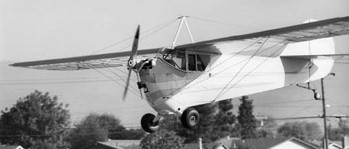
The Aeronca C-3 (ATC 396) was an offshoot of the C-2 Deluxe. Introduced in 1934, it was similar to the C-2 in structure but was expanded to accommodate side-by-side seating for two, selling for $1,895. The C-3 was produced in two versions; the Master / Duplex of 1931 was the Deluxe Collegian with an enclosed cabin design and rounded spine, and the Collegian retained the open cockpit styling and is easily confused with its C-2 predecessor. By this time, the production of both the engine and airframe of the Aeronca took place in Britain.
The C-3 Collegian sold for US$1895 at the factory. Various improvements were incorporated in the C-3 design year by year, including detachable cabin enclosures, roomier cockpits, leather upholstery and cantilever single strut landing gear. The PC-3 being a pontoon equipped model.
The 36-hp E-113 engine underwent modification and by 1935, as the E-113C, powered the C-3 Master (ATC 2-375) with 40-hp, sell for US$1695 in 1931. Two were built as floatplanes (NC11277 and NC11416).
Other significant changes included a cabin heater and wheel brakes. The ‘razorback’ appearance changed when a non-structural wooden frame was formed around the triangular welded steel fuselage, earning the nickname ‘roundback’. Simultaneously, the C-3 Master acquired a rounded rudder.
Pending production of a British model called the Aeronca 100 (ATC 2-333), 16 American-built C-3 airframes were assembled at Hanworth, London by Aeronautical Corporation of Great Britain Ltd, powered by a 28hp Aeronca E-107A.
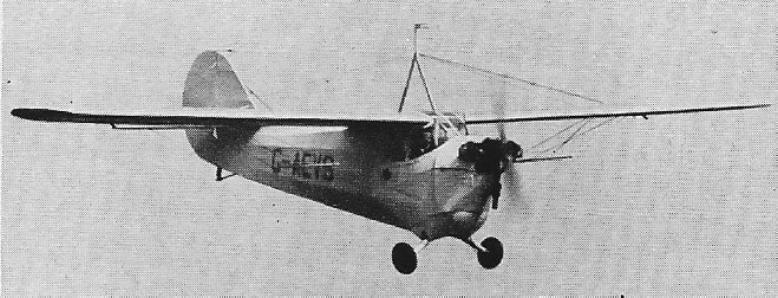
439 were built during six years of production including many conversions to C-3 Master; 14 PC-3 on floats, and 1 modified from C-1. Five appear in production records as C-3-SP “Special Purpose”.
The Aeronca C-3 evolved into the Aeronca K Scout in 1937.
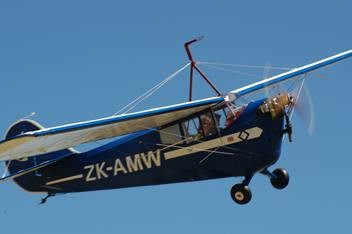
C-3, PC-3 Collegian
Engine: Aeronca E-113, 36hp
Wing span: 36 ft 0 in
Length: 20 ft 0 in
Height: 7 ft 6 in
Wing area: 142 sq.ft
Empty weight: 466 lb
Payload: 470 lb
Max speed: 82 mph
Cruise speed: 75 mph
Stall speed: 38 mph
Range: 300 sm
Seats: 2
C-3 Master
Engine: Aeronca E-113C, 40 hp
Gross weight: 1,005 lb
Empty weight: 569 lb
Top speed: 95 mph
Cruise speed: 87 mph
Range: 200 sm
Ceiling: 12,000 ft
Initial climb rate: 450 fpm
Seats: 2
C-3-SP “Special Purpose”
Engine: Aeronca E-107A, 28hp
Aeronca C-2 / PC-2 Scout
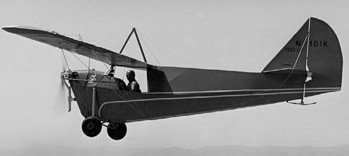
Jean Roche, an Air Service engineer at Dayton, Ohio saw a need for an affordable and reliable light aircraft. In 1924, 1n conjunction with John Dohse and Harold Morehouse he designed a small, basic single-seat monoplane powered by a two-cylinder Wright-Morehouse engine. This aircraft failed to attract much interest due to the popularity of the Curtiss Jenny at the time. Following the departure of Dohse and Morehouse to pursue alternative ventures, in 1929, Roche sold his design to the Aeronautical Corporation of America. Further design work was done on the aircraft and in 1930 the Aeronca C-2 was produced. During the 1929 stock market crash the C-2 proved very popular due to its simplicity, low purchase price and low running costs. Aeronca produced this but quickly developed it into the two-seat 36-hp C-3 that remained in production into 1936.
Cincinnati’s Aeronautical Corp. of America debuted the Aeronca C-2 at the Los Angeles Air Races of 1929 and officially introduced it in 1930. The single place C-2 (first (X3774) flying on 24 October 1929 piloted by Fred Fluck) was similar to the 1925 “Roche-Dohse” fliver plane, the PC-2 being a pontoon equipped model. The first production aircraft (X626N c/n 2) was the beginning of the 22-year Aeronca line.
Construction of the C-2 was conventional, utilizing a high-braced wing with two spruce spars and a welded steel-tube fuselage covered with fabric. Production totaled 167, including the C-2N Deluxe Scout version of 1931, which featured a 36-hp Aeronca powerplant. Two C-2N were built (NC13083 and NC13089) plus 1 converted from a C-1, and one from a C-2 (NC643W). The increased horsepower added about 20 mph to the C-2’s top speed and cruise speed but limited its range to 175 miles. Three were PC-2 on wooden floats. Several were built as two seat models. The C-2 sold for US$1545 and the PC-2 Scout for US$1245 in 1931. The C-2N sold for US$1695.
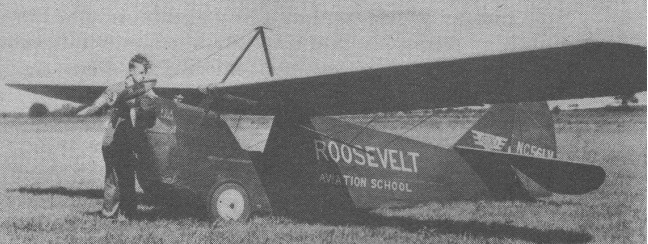
Variation:
Parham Aeronca C-2 glider
C-2 / PC-2 Scout
Engine: Aeronca E-107, 26hp
Wing span: 36 ft0 in
Length: 20 ft 0 in
Gross weight: 700 lb
Empty weight: 426 lb
Payload: 274 lb
Max speed: 80 mph
Cruise speed: 65 mph
Stall speed: 32 mph
Range: 240 sm
Initial climb rate: 450 fpm
Seats: 1
C-2N Deluxe Scout
Engine: Aeronca E-113, 36hp
Payload: 274 lb
Max speed: 82 mph
Cruise speed: 75 mph
Stall speed: 32 mph
Range: 300 sm
Aeronca C-1 Cadet

Three 1931 C-1 Cadet models were built, of which one was modified as C-2N (NC11417), and one was scrapped after the prototype [NC11290] crashed, killing company executive Conrad Dietz.
Engine: Aeronca E-113, 36hp
Wing span: 29 ft 0 in
Length: 20 ft 0 in
Empty weight: 398 lb / 180 kg
Payload: 274 lb
Max speed: 93 mph
Cruise speed: 80 mph
Stall speed: 35 mph
Range: 240 sm
Seats: 1
Aero-Nautic Services & Engineering A-N 400
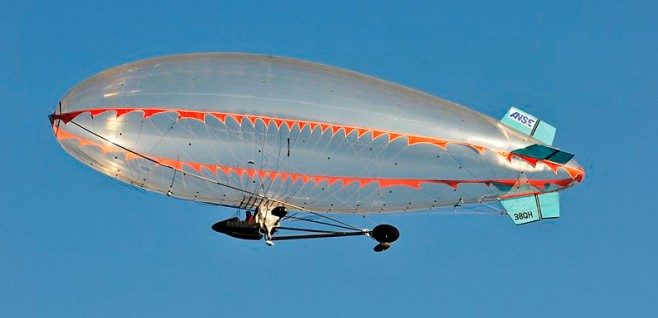
The French company Aero-Nautic Services & Engineering (A-NSE) tested in 2013 a demonstrator of an airship designed for marine surveillance missions. During the campaign carried out in Hyères, the data gathered by the airship was live-transmitted to the ground via a data link provided by Thales Communications Security.
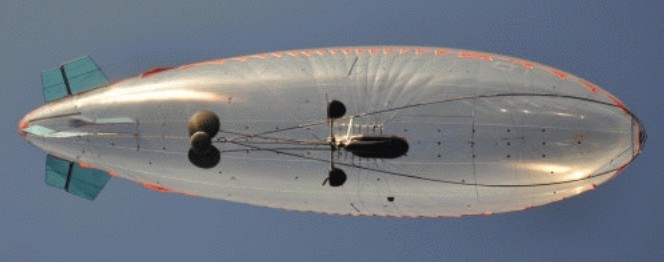
The aircraft is raised by helium, the engine only being used to propel it, which makes it much more economical and gives it greater endurance than an aeroplane. Airships are very stable and manoeuvrable, and can hover if required. In technical terms airships have evolved considerably, with the use of new materials and the emergence of new technology making them cost-efficient and effective for civilian and military applications,” explains Baptiste Regas, Managing Director of A-NSE.
According to the young French company based in Montrouge near Paris, whose Angoulême site has produced the AN 400, the airship can complement the airborne resources currently in service. “Airships are much more economical and can be used as guards, thereby saving the potential of aeroplanes on certain missions. So, they could carry out marine surveillance up to one hundred nautical miles from the coast, extending the detection range of the network of signal stations on the coastline. In such cases, aeroplanes could be reserved for remote missions or operations requiring great speed, such as marine search and rescue. The idea is not to replace the aeroplane – it is a truly complementary resource to current capacities.”
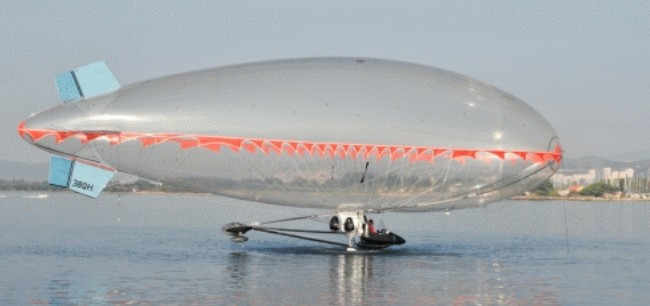
Although certain countries, such as the United States and Germany, are showing a renewed interest in airships for the purposes of marine surveillance, the models currently being used are based on a traditional implementation design. As in the good old days, aircraft are launched from land and brought back to earth by means of ropes with 15 people involved in the landing procedure. This manual technique is potentially dangerous, but also costly in terms of personnel. Which is why A-NSE has developed and patented a new design, by means of which its airship can land on the sea. During the approach over the sea or a lake, a system of ballast located at the rear is deployed on each side of the aircraft and draws in water to add weight to and stabilise the airship. Then, once the machine is on the surface, it anchors to a mooring buoy. “This tested technique substantially reduces operating costs by eliminating the need for ground personnel.”
Engine: 2 x 18 hp
Envelope volume: 400 cu.m
Max. diameter: 5,5 m
Length: 25 m
Max. weight at take-off: 400 kg
Empty weight: 240 kg
Payload: 160 kg
Min. speed: 0 km/h
Cruise speed: 65 km/h
Max. speed: 85 km/h
Climb rate: 5 m/s
Endurance at 0 km/h : 10 h
Endurance at max. speed : 6 h
Action range: 390 km
Max. wind at take-off: 45 km/h
Altitude: 100 to 3000 ft
AIS A & B (range): 210 km
Radar (range): 100 km
EO/IR (range): 30 km
Communication system: 50 km
Aeronautical Engineering Co 300 hp
In 1929 the Aeronautical Engineering Co built the 300hp 542ci 2-cycle double-row 9 cylinder air-cooled radial.
AISA I-115
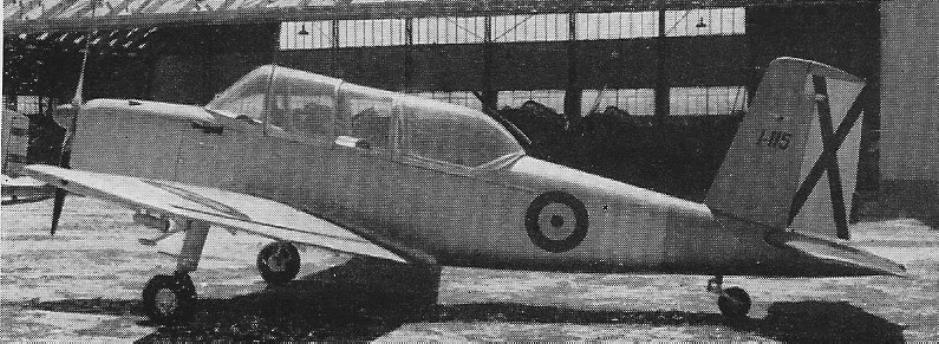
The 1950 I-11 aircraft was followed by the I-115 basic trainer with revised fuselage. Originally designed by Iberavia S.A., series production was undertaken by Aeronautica Industrial S.A.
First flown on 16 July 1952, 450 were delivered overall. Construction is all wood. Full dual controls and instrumentation are fitted.
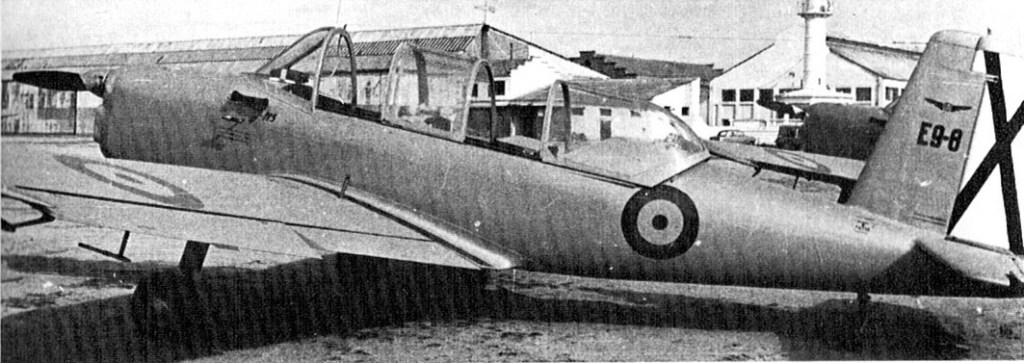
Two hundred were ordered for the Spanish Air Force during the mid-1950s, designated E.6, to replace the CASA-built Bucker Jungmann primary training biplane.
Engine: E.N.M.A. Tigre G-IVB, 150 hp
Wingspan: 31 ft 3 in
Wing area: 150.6 sq.ft
Length: 24 ft 1 in
Height: 6 ft 10 in
Empty weight: 1346 lb
Loaded weight: 1980 lb
Max speed: 149 mph
Cruise: 130 mph
ROC: 790 fpm
Service ceiling: 14,430 ft
Endurance: 3.5 hr
Seats: 2
AISA AVD-12 / I-18

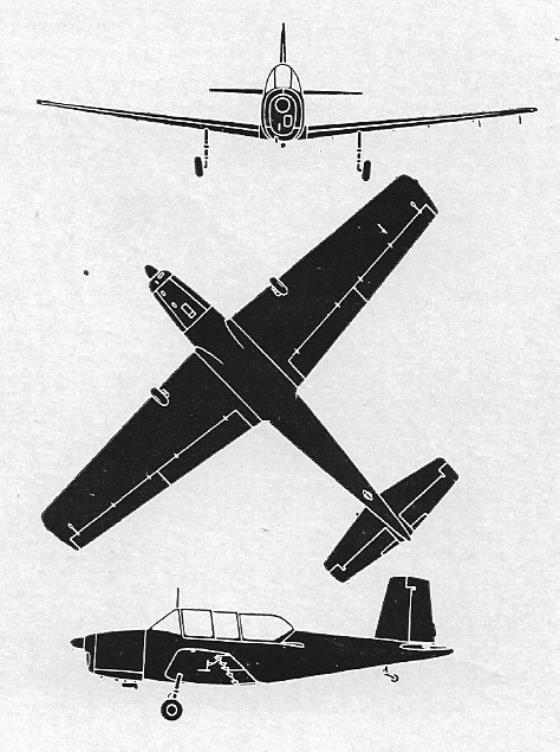
The I-18, or AVD-12. was designed by Emile Dewoitine to meet the Ministerio del Aire specification issued in 1953, for a two/three seat air observation and liaison aircraft to replace the Fieseler Fi 156 Storch then in service with the Spanish Air Force.
The specification called for a maximum speed of not less than 109 mph, minimum speed of not more than 37 mph, and an endurance of 2.5 hours.
A high-wing all-metal monoplane, the A.I.S.A. I-18 has full-span high-lift flaps with prominent guides.
The AVD-12 was flown for the first time on 18 August 1954.
Engine: E.N.M.A. Tigre G-IVB, 150 hp
Wingspan: 36 ft 5 in
Length: 25 ft 5 in
Height: 6 ft 11 in
Empty weight: 1322 lb
MTOW: 2314 lb
Max speed: 140 mph
Cruise: 113 mph
ROC: 900 fpm
Service ceiling: 16,400 ft
Range: 479 mi
Seats: 2-3

AISA I-11B Peque

Designed and built in 1950 the I-11 two-seat lightweight training/sporting aircraft. Two prototypes were built.
In 1954, AISA purchased the Spanish manufacturer Iberavia and took over the I-11 light plane project, eventually building around 400 examples as the AISA I-11B, with smaller canopy and tailwheel undercarriage.

Derived from the I-11 prototype, the I-11B differed from the production model in having a fixed nosewheel undercarriage and a larger cockpit canopy. The I-11B first flew on 16 October 1953. Inaugurated early in 1954, a production batch of 70 was built for Spanish Aero Clubs.

Some aircraft were powered by a 93 hp RNMA Flecha engine. Some 450 were built.
AISA I-11B
Engine: Continental C90-12F, 90 hp
Wingspan: 30 ft 7 in / 9.34 m
Wing area: 133.472 sq.ft
Length: 21 ft 3 in / 6.48 m
Height: 6.234 ft / 1.9 m
Empty weight: 926 lb / 421 kg
Normal TO weight: 1417 lb / 644 kg
Max TO weight semi-aerobatic: 1474 lb / 670 kg
Max. speed: 108 kt / 200 km/h
Cruise speed: 96 kt / 110 mph / 117 kph
Max ROC SL norm MTOW: 726 fpm / 200 m/min
Service ceiling: 15415 ft / 4700 m
Range: 349 nm / 403 mi / 650 km
Crew: 2


AISA HM.9
A glider tug built 1943

