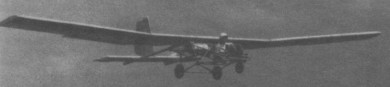
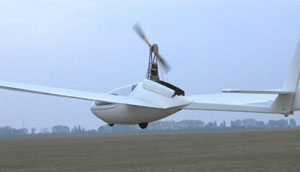
A side by side two seat single engined high-wing monoplane with conventional three axis control. Wing has unswept leading and trailing edges, and constant chord; conventional tail. Pitch control by elevator on tail; yaw control by fin mounted rudder; roll control by one third span ailerons; control inputs through stick for pitch/roll and pedals for yaw. Cantilever wing; wing profile NACA 23012; double surface. Undercarriage has three wheels in tail dragger formation; rubber suspension on all wheels. No ground steering (optional ground steering by differential braking). Optional brakes on main wheels. Aluminium tube framework, with optional pod. Engine mounted above wing driving pusher propeller. Wing and tail are made with stratified glass ribre/epoxy, vacuum molded; spar in carbon fibre. Designed by Alain Erval, the prototype of the two seater Intermezzo made its first flight on the 14 August 1982 and went on next to a test flight programme and detail modification, leading to sales in April 1983. This very original machine is a mixture of proven and classical solutions (NACA 23012 profiles for the wing and 0012 for the tail), combined with materials which are more common in gliding than in ultralights, such as layers of carbon fibre. The central section of the Intermezzo wing has no dihedral and the outer sections of the wing set at 8 degrees. To make garaging easy, this wing demounts like a glider wing into three 13.2 ft (4.0 m) sections and the empennage can be removed from the two spars which carry it. They come off in two parts, the horizontal section being a unit and the vertical another. Thanks to these arrangements, the structure is completely foldable to ease towing on a trailer. Production Intermezzos are supplied with dual controls. Another original point is that this machine is equipped as standard with fabric seats adjustable for the height of their occupants by laces; bucket seats are optional. It is fitted with a Hirth 493 cc engine (with electric start as an option), mounted by four bolts and with all electrical connections made via a single plug. This two seater is fitted with a tail dragger undercarriage. Production versions have an instrument panel with ASI, altimeter and rev counter. Options include a pod with windscreen, an integral canopy with this assembly, the glide ratio increases from 12 to 15/1 at 37 mph (60 kph) and air brakes.
Engine: Hirth 2701RR 179, 45 hp at 3600 rpm Propeller dia: 39 in, 1.0 m. Reduction ratio: 1.8/1 Max static thrust: 265 lb, 120 kg Power per unit area: 0.2 hp/sq.ft, 2.3 hp/sq.m Fuel capacity mains: 10.6 USG, 8.8 Imp gal, 40.0 lt Fuel capacity res: 5.3 US gal, 4.4 Imp gal, 20.0 lt Length overall: 19.8ft, 6.0 m Height overall: 7.2ft, 2.2m Wing span: 41.0ft, 12.5m Constant chord: 4.3ft, 1.3m. Dihedral: 8 degs Sweepback: 0 degs Tailplane span: 13.1 ft, 4.0 m Total wing area: 216 sq.ft, 20.0 sq.m Total aileron area: 8.6 sq.ft, 0.8 sq.m Fin area: 9.7 sq.ft, 0.9 sq.m Rudder area: 3.2 sq.ft, 0.3 sq.m Tailplane area: 43.2 sq.ft, 4.0 sq.m Total elevator area: 12.9 sq.ft, 1.2 sq.m Wing aspect ratio: 10.2/1 Wheel track: 6.7 ft, 2.0 m Tailwheel dia. Overall: 4 in, 10 cm Main wheels dia. Overall: 16 in, 40 cm Empty weight: 287 lb, 130kg Max take off weight: 662 lb, 300kg Payload: 375 lb, 170kg Max wing loading: 3.07 lb/sq.ft, 15.0 kg/sq.m Max power loading: 4.7 lb/hp, 6.7kg/hp Load factors: +6.6, 3.3 design Max level speed: 87 mph, 140 kph Never exceed speed: 124mph, 200kph Max cruising speed: 81mph, 130kph Econ. cruise speed: 71mph, 115kph Stalling speed: 28mph, 45 kph Max climb rate SL: 500 ft/min, 2.5 m/s Min sink speed: 31 mph, 50 kph Min sink rate: 240 ft/min, 1.2 m/s Best glide ratio: 12/1 at 37 mph, 60 kph Take off distance: 165ft, 50m Landing distance: 165ft, 50m Service ceiling: 12,500ft, 3800m Range at ave. cruise: 311 mile, 500km
The Vitamin is a paraglider for beginners and weekend pilots. Long brake travel helps beginners to sense the canopy. All sizes are – Lines: Cousin Trestec; upper dia. 1.1 Superaram 80 kg; lower dia. 2.2 Superaram 240 kg; med dia. 1.7 Superaram 155 kg; brake upper dia. 1.1 Dyanema 85 kg; brake lower dia. 2.0 Polyester 80 kg. Sail Cloth: Gelvenor/Porcher Marine
Vitamin power 38 moto
Vitamin 25 Cells: 31+ 8 Area: 25.0 sq.m Span: 10.97 m Aspect ratio: 4.81 Area projected: 21.87 sq.m Span projected: 8.32 m Aspect ratio projected: 3.56 Chord root: 2.765 m Chord tip: 0.6 m Total height: 6.91 m Take off weight: 60-80 kg Flight speed min: 21 km/h Flight speed trim: 36 km/h Flight speed max: 47 km/h Min.sink (opt. weight): < 1.2 m/s
Vitamin 27 Cells: 31+ 8 Area: 26.75 sq.m Span: 11.34 m Aspect ratio: 4.81 Area projected: 23.41 sq.m Span projected: 9.13 m Aspect ratio projected: 3.56 Chord root: 2.86 m Chord tip: 0.62 m Total height: 6.91 m Take off weight: 70-90 kg AFNOR: Standard Flight speed min: 21 km/h Flight speed trim: 36 km/h Flight speed max: 47 km/h Min.sink (opt. weight): < 1.2 m/s
Vitamin 30 Cells: 31+ 8 Area: 29.43 sq.m Span: 11.9 m Aspect ratio: 4.81 Area projected: 25.75 sq.m Span projected: 9.57 m Aspect ratio projected: 3.56 Chord root: 3.0 m Chord tip: 0.65 m Total height: 7.25 m Take off weight: 85-105 kg AFNOR: Standard Flight speed min: 21 km/h Flight speed trim: 36 km/h Flight speed max: 47 km/h Min.sink m/s (opt. wt): < 1.2 m/s
Vitamin 32 Cells: 31+ 8 Area: 32.0 sq.m Span: 12.41 m Aspect ratio: 4.81 Area projected: 28.0 sq.m Span projected: 9.98 m Aspect ratio projected: 3.56 Chord root: 3.13 m Chord tip: 0.68 m Total height: 7.56 m Take off weight: 100-125 kg AFNOR: Standard Flight speed min: 21 km/h Flight speed trim: 36 km/h Flight speed max: 47 km/h Min.sink m/s (opt. wt): < 1.2 m/s
Vitamin 38 Cells: 31+ 8 Area: 38.0 sq.m Span: 13.52 m Aspect ratio: 4.81 Area projected: 33.25 sq.m Span projected: 10.88 m Aspect ratio projected: 3.56 Chord root: 3.41 m Chord tip: 0.74 m Total height: 8.24 m Take off weight: 130-180 kg Flight speed min: 21 km/h Flight speed trim: 36 km/h Flight speed max: 47 km/h Min.sink m/s (opt. wt): < 1.2 m/s
Vitamin power 38 moto Cells: 31+8 Area: 38 sq.m Span: 13.52 m Aspect ratio: 4.81 Area projected: 33.25 sq.m Span projected: 10.88 m Aspect ratio projected: 3.56 m Total height: 8.24 m Take off weight: 130-350 kg Flight speed min: 21 km/h Flight speed trim: 36 km/h Flight speed max: 47 km/h Min.sink m/s (opt. wt): <1.2 m/s
In 1995 the Graffiti trike with the Stranger wing was certified. The wing has successfully undergone strength and aerodynamic testing in the course of the certification at DULV and within a year 80 Stranger wings had been sold.
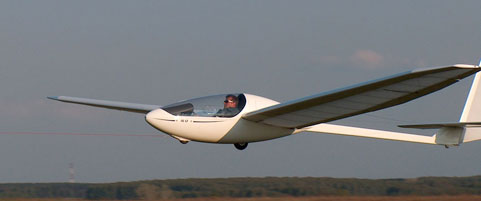
The AC-21 powered sailplane is an evolution of AL-12 design that was developed in Ukraine during 2000 – 2005 as a joint project by Aeros and Aerola. In 2006 it was decided to make a next step in the development of the sailplane, splitting the project and leaving production of AL-12 (now Alatus) in Aerola. AC-21 joins unique features of AL-12 incorporated in the new design. The AC-21 is all about maximum enjoyment of free flight. Sweet handling, slow flight capabilities and low sink rate allows exploring “microlift” conditions, when most other gliders are unable to stay in the air. AC-21 can turn really tight. AC-21 structural capacity has been increased keeping an aim to meet actual sailplane standards (+5.3 -2.65 G load factors). It gives us a chance of wider margin over current DULV and DAeC requirements for ultra light aircraft (+4/-2 G). Specifically the wing leading edge D-spar had to get stronger by 25%; the ribs structural capacity and rigidity was greatly increased and the ribs are now made of carbon. Powered by a Hirth F33 BS delivering 28 hp, it has a factory recommended TBO of 1000 hours at 75 % power. A newly designed fuselage insures laminar flow over its front, makes room for the engine and allows full enclosure of the propeller when in glider mode. There has also been an increase in the transparent part of the canopy, improving forward visibility.
AC-21 Engine: Hirth F33 BS, 28 hp Empty weight: 135 kg Мах. takeoff weight: 264 kg Wing span: 13.3 m Sail area: 13.5 sq.m Pilot weight: 60-110 kg Stall speed: 52-56 km/h Vne: 140 km/h Best glide ratio: 27 at 70 km/h Min. sink rate: 0.6 m/s at 67 km/h Climb w. Engine: 2.5 m/s
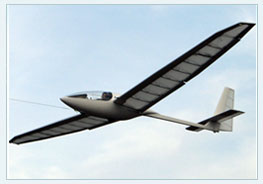
In 2005 the Aeros team took part in designing an entirely new product: the AL-12 ultralight sailplane and its powered version AL-12 M with a retractable power-unit. The idea of a sailplane that could have some of the positive features of hang gliders and rigid wing gliders, and the possibility of soaring flight while using narrow thermals and “microlift”, to takeoff from hang gliding sites, and the simplicity of quick rigging and ease of transportation appealed. The sailplane offered by Aeros takes off by air towing or winch towing, andallows mounting a retractable engine for autonomous takeoff and climb. The cockpit is equipped with adjustable pedals and seat back that can be adjusted to the pilot’s height up to 195 cm. There is a space for a backpack parachute. The sailplane can come complete with an optional rescue system. For transportation purposes all control and stabilizing surfaces are removed, the cabin is detached, the wing with the tail beam is put into a package 0,2 x 0,58 x 5,7 m. The 0,6 x 0,86 x 3 m cockpit can be transported either as a whole assembly or in parts (cockpit, fuselage spine fairing, cockpit enclosure). The rigging takes around 40 minutes.
AL12M -Powered version ultralight sailplane
On October, 8, 2005 the first flight of a powered sailplane AL-12M with a retractable power-unit took place. The sailplane was piloted by its chief design engineer and the Aerola company top-pilot Nikolay Kononenko. The AL-12M had been brought to the take-off field on a car roof rack and within an hour and a half the sailplane was rigged up and prepared for tests. The power-unit is based on Solo-210 engine (16 hp) and provides for self-taxiing, take-off and acceptable climb rate.During the first day six flights were performed and included air restarts.
AL-12 Empty weight: 80 kg Мах. takeoff weight: 185 kg Wing span: 13.3 m Sail area: 13 sq.m Pilot weight: 60-110 kg Stall speed: 34-40 km/h Мах. Airspeed: 140 km/h Best glide ratio: 27 (at 60 km/h) Min. sink rate: 0.5-0.6 m/s (at 45 km/h)
AL-12M Engine: Corsair Solo-210, 16 hp Empty weight: 120 kg Мах. takeoff weight: 220 kg Wing span: 13.3 m Sail area: 13 sq.m Pilot weight: 60-100 kg Stall speed: 39-45 km/h Мах. Airspeed: 140 km/h Best glide ratio: 27 (at 65 km/h) Min. sink rate: 0.8 m/s (at 45 km/h)
A single-engine all-composite high-wing side-by-side two-seater with a fixed tricycle landing gear (a steerable nose wheel included). Equipped with fully adjustable seats and a baggage compartment behind. Price 2009: 48500 EURO
Stall: 35 kt / 40 mph / 65 kmh Cruise: 103 kt / 118 mph / 190 kmh VNE: 130 kt / 149 mph / 240 kmh Empty Weight: 285 kg / 628 lb MTOW: 472 kg / 1041 lbs Climb Rate: 1200 fpm / 6 m/s Take-off distance (50ft obstacle): 580 ft / 178 m Landing distance (50ft obstacle): 630 ft / 192 m
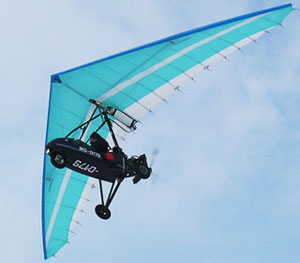
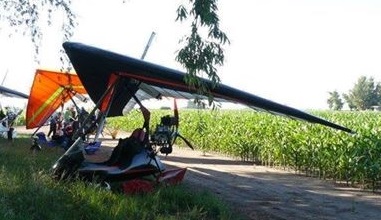
Aeros del Sur is the importer of Aeros products for Argentina. The Manta was designed by mating the Aeros Profi trike wing with a new, locally designed carriage. The Manta was designed to comply with the Fédération Aéronautique Internationale microlight category, including the category’s maximum gross weight of 472.5 kg (1,042 lb), with a ballistic parachute.
The aircraft is made from a mix of bolted-together aluminum and steel tubing, with its double surface wing covered in Dacron sailcloth. Its 10 m (32.8 ft) span wing is supported by a single tube-type kingpost and uses an “A” frame weight-shift control bar.
It features a cable-braced hang glider-style high-wing, weight-shift controls, a two-seats-in-tandem, open cockpit, tricycle landing gear with wheel pants and a single engine in pusher configuration.
The standard powerplant is a twin cylinder, liquid-cooled, two-stroke, dual-ignition 64 hp (48 kW) Rotax 582 engine, but the HKS 700E four-stroke, dual-ignition 60 hp (45 kW) engine is optional, as are Hirth and Simonini powerplants.
In production in 2013, the aircraft was supplied as a complete ready-to-fly-aircraft.
Engine: 1 × Rotax 582, 48 kW (64 hp) Propeller: 3-bladed composite Wingspan: 10 m (32 ft 10 in) Wing area: 15.4 m2 (166 sq ft) Gross weight: 472.5 kg (1,042 lb) Fuel capacity: 50 litres (11 imp gal; 13 US gal) Wing loading: 30.68 kg/m2 (6.28 lb/sq ft) Crew: one Capacity: one passenger
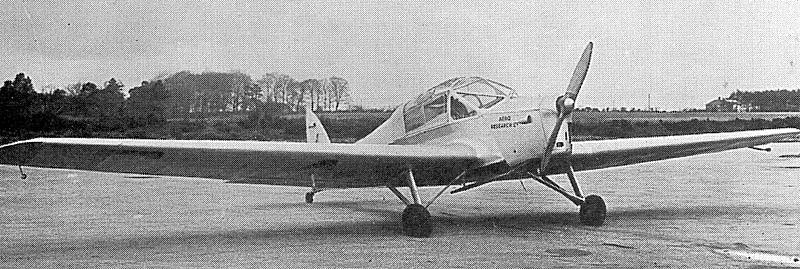
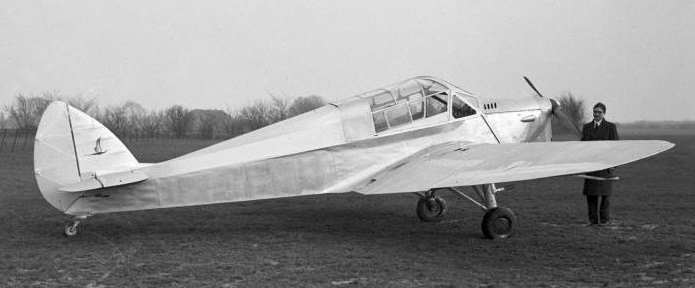
The Snark research aircraft G-ADDL c/ DB.2 was designed by Dr. N.A. de Bruyne and built by Aero Research Ltd in 1934. It was built to test low weight, bakelite-bonded plywood, stressed skin wing and fuselage structures
Apart from the structure the Snark was a conventional looking low-wing four-seat cabin monoplane, powered by a nose-mounted 130 hp (97 kW) de Havilland Gipsy Major piston engine. Registered G-ADDL the Snark first flew from Cambridge on 16 December 1934 flown by de Bruyne.
In May 1936 the Snark was transferred to the Royal Aircraft Establishment at Farnborough for research into the aerodynamics of thick wing monoplanes, with serial number L6103. The aircraft was sold by the RAE on 8 June 1938 but was destroyed by German bombing at Croydon Airport in 1940.
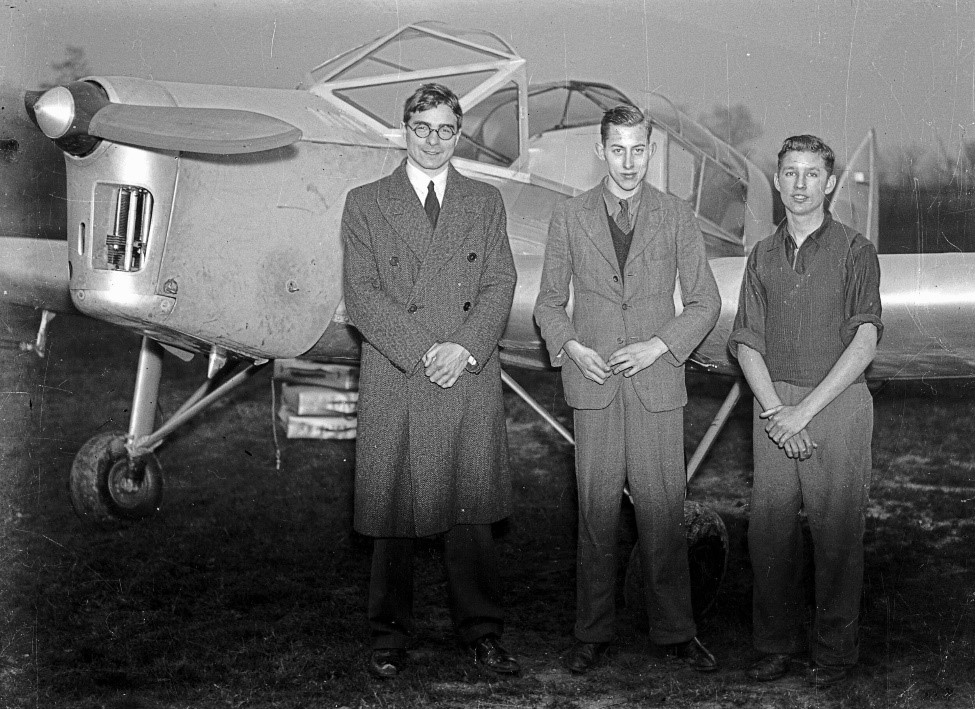
Dr Norman de Bruyne (left) with two of Aero Research’s staff members
Powerplant: 1 × de Havilland Gipsy Major, 130 hp (97 kW) Wingspan: 42 ft 6 in (12.95 m) Length: 24 ft 7 in (7.49 m) Empty weight: 1,200 lb (544 kg) Gross weight: 2,200 lb (998 kg) Maximum speed: 123 mph (198 km/h, 107 kn) Cruise speed: 110 mph (177 km/h, 96 kn) Range: 450 mi (724 km, 390 nmi) Service ceiling: 15,500 ft (4,725 m) Rate of climb: 600 ft/min (3.0 m/s) Crew: 1 Capacity: 3
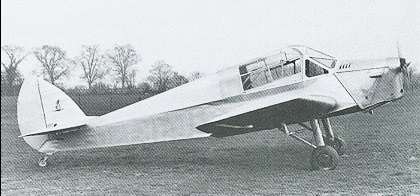
The third design of Dr. N.A. de Bruyne, the Ladybird was a single seat, shoulder wing monoplane, powered by a Scott Squirrel.
It was started in 1936 at Duxford by Aero Research Ltd as c/n DB.3 G-AFEG. It was not finished and taken over for competition by J.N.Maas in 1937 and redesignated de Bruyne-Maas Ladybird and given a new c/n, M.1.
It first flew at Cambridge in 1937 but was re-engined in 1938 with a Bristol Cherub. It apparently spent most of its time flying as DB.3/M1.
It survives somewhere in the Peterborough area.
Engine: Bristol Cherub, 30 hp Wingspan: 32.021 ft / 9.76 m Wing area: 106.241 sq.ft / 9.87 sq.m MTOW: 800.4 lb / 363.0 kg Weight empty: 421.2 lb / 191.0 kg Wing load: 7.59 lb/sq.ft / 37.0 kg/sq.m Crew: 1