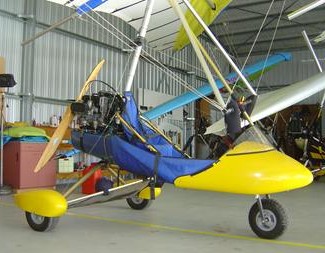
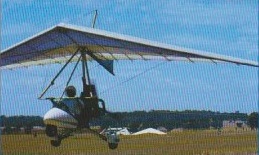
A 2 Seat Microlight, manufactured in England. This aircraft can be transported by car & trailer and assembled single handed.
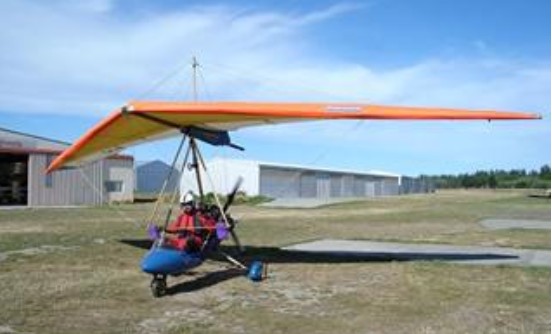
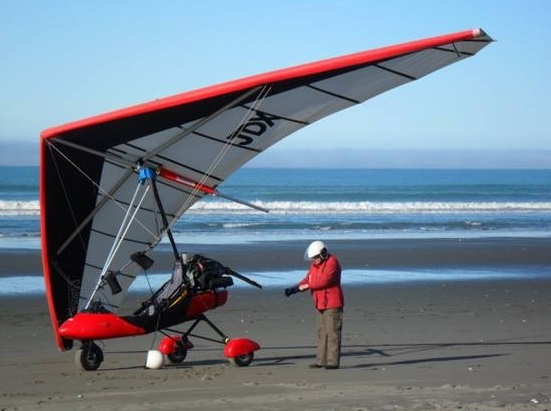
Pegasus XL
Engine: Rotax 447
Prop: 3 blade Ivo
Fuel tank: 47 Ltr
Seats: 2
Cruise: 75 – 80 kmh.
50hp Rotax 503
A 2 Seat Microlight, manufactured in England. This aircraft can be transported by car & trailer and assembled single handed.
Pegasus XL
Engine: Rotax 447
Prop: 3 blade Ivo
Fuel tank: 47 Ltr
Seats: 2
Cruise: 75 – 80 kmh.
50hp Rotax 503
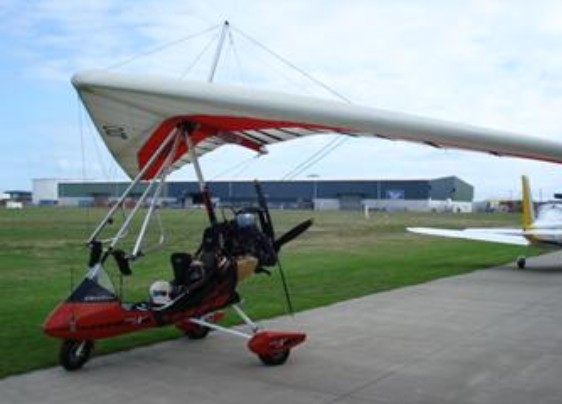
The Edge trike unit was offered circa 1998 with a wing of the same name; a double surface design.
The Airborne Windsports Edge XT-912 microlight is manufactured in Australia and designed to British Civil Airworthiness Requirements Section S – Small Light Aeroplanes (BCAR-S).
The microlight type was issued with a Type Certificate, Number VA513, by the Australian Civil Aviation Safety Authority on 16 December 2004.
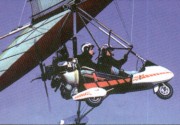
Edge 582E / Executive
Engine: Rotax 582, 54 hp
Speed max: 82 mph
Cruise: 57 mph
Range: 200 sm
Stall: 32 mph
ROC: 1500 fpm
Take-off dist: 75 ft
Landing dist: 100 ft
Service ceiling: 18,000 ft
Fuel cap: 10 USG
Weight empty: 400 lb
Wing span: 33.46 ft
Wing area: 167 sq.ft
Seats: 2
Landing gear: nose wheel
Edge X
Engine: Rotax 503, 46 hp
Speed max: 62 mph
Cruise: 45 mph
Range: 200 sm
Stall: 32 mph
ROC: 1500 fpm
Take-off dist: 75 ft
Landing dist: 75 ft
Service ceiling: 18,000 ft
Fuel cap: 12.7 USG
Weight empty: 407 lb
MTOW: 882 lb
Wing span: 33.3 ft
Wing area: 164 sq.ft
Seats: 2
Landing gear: nose wheel
Edge X 582
Edge / Edge
Empty weight: 171 kg
Wing span: 10.14 m
Wing area: 15.2 sq.m
Fuel capacity: 46 lt
Certification: Aust.
Engine: Rotax 582 DCDI, 64 hp
MAUW: 401 kg
Seats: 2
Max speed: 120 kph
Cruise speed: 93 kph
Minimum speed: 55 kph
Climb rate: 3.8 m/s
Fuel consumption: 12 lt/hr
Price (1998): Aust$19,272

The Airbet Girabet is a family of Spanish autogyros, designed and produced by Airbet of Barcelona. They are all supplied as complete ready-to-fly-aircraft. The Girabet family of designs all feature a single main rotor, tricycle landing gear and Rotax two-stroke and four-stroke engines mounted in pusher configuration. The aircraft fuselage is made from curved steel and aluminum tubing and mounts a cruciform tail. All rotor blades and other dynamic components are built by the company in-house. All models fit pre-rotators to shorten take-off distances.

The Classic model, assembled, sold for €16,500 in 2011.
Variants:
Girabet Classic
Original single seat model, powered by a 50 hp (37 kW) Rotax 503 twin cylinder, air-cooled, two-stroke, dual-ignition powerplant. Its 7.30 m (24.0 ft) diameter rotor has a chord of 21 cm (8.3 in). The aircraft has an empty weight of 118 kg (260 lb) and a gross weight of 230 kg (510 lb), giving a useful load of 112 kg (247 lb). The company also offers a custom-built trailer for ground transportation and home storage.
Girabet 582
More powerful single seat model, powered by a 64 hp (48 kW) Rotax 582 twin cylinder, liquid-cooled, two-stroke, dual-ignition powerplant. Its 7.30 m (24.0 ft) diameter rotor has a chord of 21 cm (8.3 in). The aircraft has an empty weight of 120 kg (260 lb) and a gross weight of 230 kg (510 lb), giving a useful load of 110 kg (240 lb). Take-off roll with the pre-rotator is 20 m (65.6 ft).
Girabet 2
Side-by-side configuration two seat model intended for use as a trainer, powered by a 100 hp (75 kW) Rotax 912S four cylinder, air and liquid-cooled, four-stroke, dual-ignition powerplant. Its 8.40 m (27.6 ft) diameter rotor has a chord of 21 cm (8.3 in). The aircraft has an empty weight of 175 kg (386 lb) and a gross weight of 410 kg (900 lb), giving a useful load of 235 kg (518 lb).
Girabet 2 Sport
Side-by-side configuration two seat model intended for use as a cross country aircraft and equipped with a cockpit fairing and windshield. Powered by a 100 hp (75 kW) Rotax 912S four cylinder, air and liquid-cooled, four-stroke, dual-ignition powerplant, its 8.40 m (27.6 ft) diameter rotor has a chord of 21 cm (8.3 in). The aircraft has an empty weight of 220 kg (490 lb) and a gross weight of 450 kg (990 lb), giving a useful load of 230 kg (510 lb).
Airbet Girabet 582
Engine: 1 × Rotax 582, 48 kW (64 hp)
Propeller: 3-bladed composite
Main rotor diameter: 7.3 m (23 ft 11 in)
Empty weight: 120 kg (265 lb)
Gross weight: 230 kg (507 lb)
Fuel capacity: 42 litres (9.2 imp gal; 11 US gal)
Maximum speed: 140 km/h (87 mph; 76 kn)
Cruise speed: 105 km/h (65 mph; 57 kn)
Rate of climb: 9 m/s (1,800 ft/min)
Crew: one

The Hornet is a tailless flying wing of composite construction and powered by a Konig driven ducted fan mounted behind the enclosed cockpit. The aircraft sits on a reverse tricycle undercarriage to enhance its rough strip capabilities. The large wing folds back either side of the fuselage to facilitate storage and trailering.
Engine: Konig 3-cyl
Prop: ducted fan
Wing span: 7.9 m
Wing area: 10 sq m
Length: 3m
Weight: 114kg
Cruise speed: 85 kt
Stall: 30 kt

Single seat single engined high wing monoplane with conventional three axis control. Wing has swept back leading and trailing edges, and constant chord; cruciform tail. Pitch control by elevator on tail; yaw control by fin mounted rudder; roll control by fullspan ailerons; control inputs through stick for pitch/roll and pedals for yaw. Wing braced from above by kingpost and cables, from below by cables and struts; wing profile Clark Y; double surface. Undercarriage has three wheels in tricycle formation with additional tailskid; rubber suspension on nosewheel and steel spring suspension on main wheels. Push-right go right nosewheel steering connected to yaw control. Optional brakes on main wheels. Aluminium tube framework, partially enclosed. Engine mounted above wing driving tractor propeller.
The PX2000 design studies began in December 1982 following an idea of Patrick Lemonnier. The construction of the prototype was begun in February 1983 and it made its first flight on the 3 April. Its test programme included as much static testing as flight testing, static tests being entrusted to Ingenerie Technique Atlantique (ITA), a specialist aeronautical and marine laboratory.
By 1982 the single seater had already largely confirmed the calculated performance figures. The figures quoted below correspond to the prototype which is fitted with a Fuji Robin EC44 2PM, hand started and developing 43 hp. It was tested without the glass fibre pod with polycarbonate windscreen, and the three wheel fairings which will be fitted to the production models.

Engine: Robin EC442PM, 53 hp at 6750 rpm
Prop¬eller diameter 65 inch, 1.64m
Toothed belt reduction, ratio 2.5/1
Max static thrust 309 lb, 140 kg
Power per unit, area 0.39hp/sq.ft, 4.2 hp/sq.m
Fuel capacity 1.8 US gal, 6.6 Imp gal, 30.0 litre
Length overall 17.5 ft, 5. 30 m
Height overall 7.9ft, 2.40m
Wing span 29.9ft, 9.10m
Chord at root 4.3ft, 1.29 m
Chord at tip 2.7ft, 0.82m
Dihedral 2 deg
Sweepback 5 deg
Tailplane span 8.7 ft, 2.61 m
Fin height 3.9 ft, 1.20 m
Total wing area 136 sq.ft, 12.6 sq.m
Total aileron area 31.5 sq.ft, 2.92 sq.m
Fin area 9.1 sq.ft, 0.85 sq.m
Rudder area 7.5 sq.ft, 0.70 sq.m
Tail¬plane area 12.7sq.ft, 1.18 sq.m
Total elevator area 10.3 sq.ft, 0.96 sq.m
Wing aspect ratio 6.59/1
Wheel track 4.7 ft, 1.40 m
Wheelbase 4.7 ft, 1.40 m
Nosewheel diameter overall 10 inch, 25 cm
Main wheels diameter overall 12 inch, 30cm
Empty weight 3091b, 140kg
Max take off weight 574 lb, 260kg
Payload 265 lb, 120kg
Max wing loading 4.24 lb/sq.ft, 20.7 kg/sq.m
Max power loading 10.83 lb/hp, 4.9kg/hp
Load factors; +6.0, 4.0 ultimate
Max level speed 87mph, 140kph
Never exceed speed 106mph, 170kph
Max cruising speed 81mph, 130kph
Economic cruising speed 65mph, 105kph
Stalling speed 22mph, 35kph
Max climb rate at sea level 1000ft/min, 5.1m/s
Min sink rate 400fpm at 34 mph, 2.0 m/s at 55 kph
Best glide ratio with power off 10/1 at 37mph, 60kph
Take off distance 115 ft, 35 m
Landing distance 131 ft, 40 m
Service ceiling 10,000 ft, 3050 m
Range at average cruising speed 218 mile, 350km
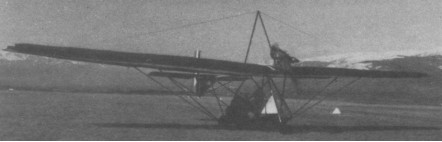
Side by side two seat single engined high¬wing monoplane with conventional three axis control. Wing has swept back leading edge, swept forward trailing edge and tapering chord; cruciform tail. Pitch control by elevator on tail; yaw control by fully flying rudder; roll control by ailerons; control inputs through stick for pitch/roll and pedals for yaw. Wing braced from above by kingpost and cables, from below by struts; wing profile double surface. Undercarriage has three wheels in tricycle formation; no suspension on any wheels. Push right go right nosewheel steering connected to yaw control. No brakes. Aluminium tube framework, with optional pod. Engine mounted above wing driving tractor propeller.
A Patrick Lemonnier design, the Patrilor 3 two seater was assembled without any prior engineering drawings, in his automotive repair and panel beating shop.
Prototype 01 made its first flight at the end of May 1982 and was shown at the end of July at the Brienne amateur constructors’ convention. Number 02 then appeared but prematurely terminated its career with a dicey landing and was followed by a number 03, which successfully completed the first London to Paris in the hands of Jacques Toulorge.
Production models have been on sale since November 1982 and have met with exception¬al success. The company, in April 1983, added to this strut braced machine a kingpost and landing wires, which give increased structural integrity and which have the secondary effect of improving aileron efficiency by stiffening the wing. This machine is therefore now one of those rare aircraft which use two struts in a V to support each wing plus wires stiffening it from above.
In standard form the Patrilor 3 is delivered built and tested by the manufacturer. It is deriggable by one person in 20 min and trailer transportable. The folded dimensions are 21.8 x 6.2 x 8. 0 ft (6.60 x 1. 88 x 2.45 m). Options include a fairing for the forward part of the framework (made of transparent polycarbonate), dual controls, carburettor heat kit, plus an instrument panel with basic instruments. Additionally, the standard Hirth engine can be replaced by the Robin EC44 2PM of 53 hp. Planned is a second model, the Patrilor 3bis with flaps, and a crop spraying version named Agrilor. For North America, Patrilors are delivered as kits and the 40 h building time is the responsibility of the dealer.
Engine: Hirth 2701R, 43 hp at 6750 rprn
Propeller diameter 56 inch, 1.42 m
Toothed belt reduction, ratio 2.5/1
Max static thrust 254 lb, 115 kg
Power per unit area 0.18hp/sq.ft, 2.0hp/sq.m
Fuel capacity 8.5 US gal, 7.0 Imp gal, 32.0 litre
Length overall 19.4 ft, 5.90 m
Height overall 8.0ft, 2.45m
Wing span 38.7ft, 11.75m
Chord at root 5.5ft, 1.64m
Chord at tip 3.5ft, 1.05m
Dihedral 3 deg
Sweepback 8deg
Tailplane span 11.1 ft, 3.38 m
Total wing area 233 sq.ft, 21.6 sq.m
Total aileron area 17.2 sq.ft, 1.60 sq.m
Rudder area 8.2 sq.ft, 0.76 sq.m
Tail¬plane area 17.2 sq.ft, 1.60sq.m
Total elevator area 11.8sq.ft, 1.10 sq.m
Wing aspect ratio 6.4/1
Wheel track 5.6ft, 1.72m
Wheelbase 6.2ft, 1.88m
Tailwheel diameter overall 10 inch, 25 cm
Main wheels diameter overall 16 inch, 40 cm
Empty weight 320 lb, 145 kg
Max take off weight 707 lb, 320 kg
Payload 387 lb, 175 kg
Max wing loading 3.03 lb/sq.ft, 14.8 kg/sq.m
Max power loading 16.4 lb/hp, 7.4 kg/hp
Load factors; +4.5, 3.8 ultimate
Max level speed 56 mph, 90 kph
Never exceed speed 68 mph, 110 kph
Max cruising speed 50 mph, 80 kph
Economic cruising speed 43mph, 70kph
Stalling speed 22 mph, 35 kph
Max climb rate at sea level 500 ft/min, 2.5 m/s
Min sink rate 600 fpm @ 24 mph, 3.0 m/s @ 40 kph
Best glide ratio with power off 8/1 at 37 mph, 60 kph
Take off distance 115 ft, 35 m
Land¬ing distance 115 ft, 35 m
Service ceiling 10,000ft, 3050 m
Range at average cruising speed 125 mile, 200 km
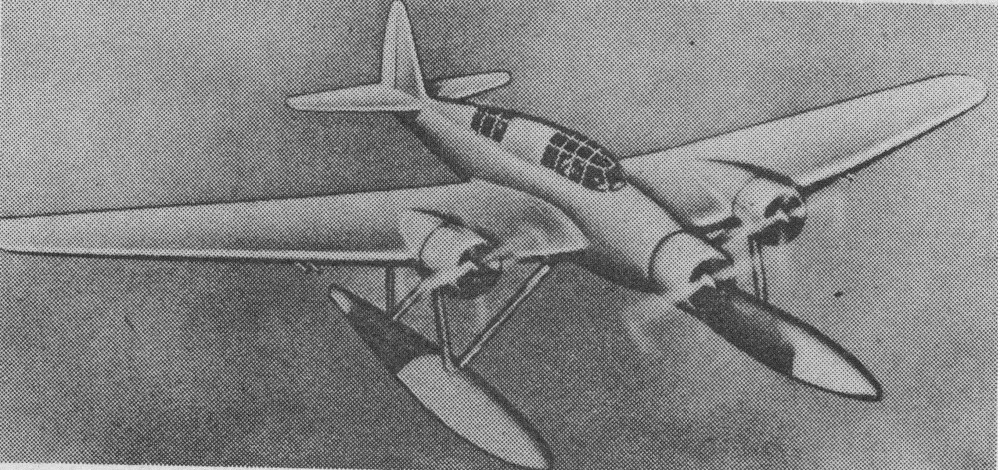
The Aichi AI-104 Type 98 Reconnaissance Floatplane never existed, yet it was described in detail in recognition manuals as late as February 1943. It may have been a mis-identified Italian CANT Z.506B that was illustrated in December 1938 Japanese magazines.
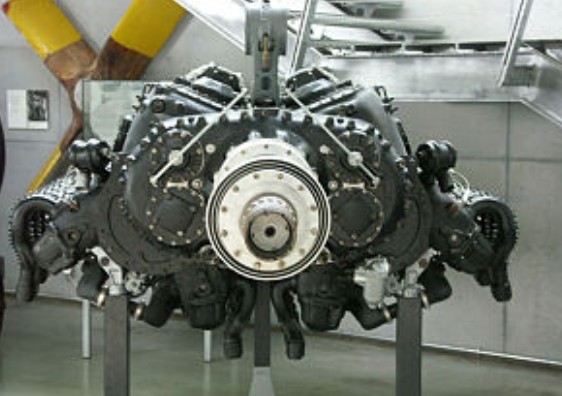
The Aichi Kokuki KK Ha-70 was a compound engine composed of two 1,700 hp 12-cylinder liquid-cooled inverted V-12 Aichi Atsuta aircraft engines mounted to a common gearbox, first run in 1945. The only aircraft powered by the Ha-70 was the Yokosuka R2Y, an Imperial Japanese Navy Air Service (IJNAS) prototype reconnaissance aircraft that was designed and built near the end of World War II.
Contents
In common with Daimler-Benz, Aichi Kokuki KK joined two Aichi Atsuta engines to drive a single propeller through a combining gearbox in very similar fashion to the Daimler Benz DB 606 (two Daimler-Benz DB 601 engines coupled to a gearbox),
The Yokosuka R2Y prototype reconnaissance aircraft required a new engine of 3,400 hp (2,535 kW) and after studying the Daimler-Benz DB 606A-2 engine that powered the Heinkel He 119 single-engine reconnaissance bomber, Aichi determined that the required horsepower could be attained by coupling two Atsuta engines with a common gearbox. To obtain the required power the Atsuta would require up-rating by at least 300 hp (224 kW) horsepower; Aichi continued to improve the Atsuta 32, eventually extracting the required 1,700 hp (1,268 kW)
The two inverted Vee Atsuta engines were mounted side-by-side, each rotated outboard from the centre-line so that the inner banks were upright, with sufficient room between them for the exhaust manifolds. The engines were attached to a gearbox that combined the two separate engine drives into a single output shaft.
Fitted to the R2Y the Ha-70 was mounted behind the pilot, requiring a long drive shaft to drive the nose-mounted gear box that mounted the six-bladed propeller.
Type: Two coupled twelve-cylinder liquid-cooled supercharged 60° inverted Vee aircraft piston engines
Bore: 150 mm (5.91 in)
Stroke: 160 mm (6.30 in)
Displacement: 33.93 L (2,070.5 in³) each, 67.86 L (4141 in³) total
Valvetrain: Two intake and two sodium-cooled exhaust valves per cylinder actuated via a single overhead camshaft per cylinder block.
Supercharger: Gear-driven single-speed centrifugal type supercharger[3]
Fuel system: Direct fuel injection
Oil system: Dry sump with one pressure and two scavenge pumps
Cooling system: Liquid-cooled
Power output: Takeoff: 2,500 kW (3,400 horsepower)
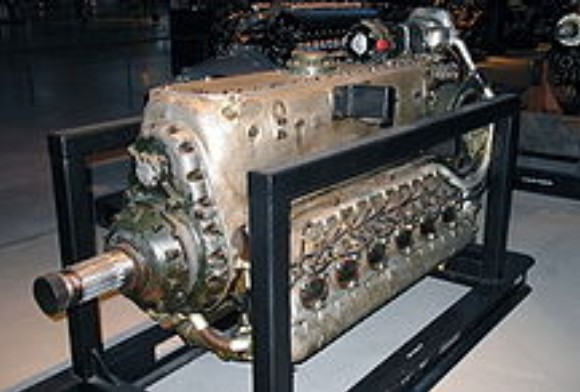
The Aichi Kokuki KK AE1A Atsuta (Japanese:アツタ or 熱田) was a Japanese licensed version of the German Daimler-Benz DB 601A 12-cylinder liquid-cooled inverted-vee aircraft engine. The Atsuta (first rn in 1942) powered only two models of Imperial Japanese Navy Air Service (IJNAS) aircraft aircraft in World War II. The Imperial Japanese Army Air Service (IJAAS) used the same engine (manufactured by Kawasaki as the Ha-40) to power its Kawasaki Ki-61 Hien (Allied reporting name “Tony”) fighter. Contents
Daimler-Benz granted Aichi Kokuki KK, a part of the Aichi Clock and Electric Co. (Aichi Tokei Denki KK), a license to manufacture the DB 600A through D models in November, 1936. At that time the Aichi Aircraft Company was building only the Nakajima Kotobuki 9-cylinder air-cooled radial engine at its Atsuta Engine Plant, located in south central Nagoya. It was necessary to re-tool the factory for the production of the new Daimler-Benz engine. Two DB-600 series engines were imported that year and three the next, all to be used as production patterns.
It was the Imperial Japanese Navy’s common practice to use a coded designation while an engine was in experimental or pre-production status. This engine was coded “AE1A”, which decodes as: A=Aichi Tokei Denki KK, E=Liquid-cooled, 1=Aichi’s first liquid-cooled engine model, and A=first version of that engine model. It was the Imperial Japanese Navy’s common practice to refer to its engines by name, while the Imperial Japanese Army referred to its engines by their engine (Japanese: Hatsudoki abbreviated Ha) model number. Ha numbers were assigned in sequence as the engine design was accepted.
The Japanese method of identifying model numbers of aircraft engines is unique in that the model number always has two digits and may be followed by one or more letters. The first digit represents the major version of the engine and the second number represents the minor version of that model engine. The model number follows the name (IJNAS engines) or the Ha number (IJAAF engines).
The first model number assigned to an engine is always 11, meaning the first major design and first minor version of that design. A major change to the design increments the first number and resets the second number to one. A minor change to the engine model increments the second number by one. If a very minor change is made, suffix letters are added after the model number.
When the AE1A engine was accepted by the IJNAS, its coded designation was dropped and a name was chosen. It is from the Atsuta factory that the engine name was derived.
The first production engine was the Atsuta 12 rated at 1200 hp. The model number 12 indicates this was the first model with one minor change.
By early 1938 the Japanese Navy had also acquired the German He 118 V4 two-seat dive bomber aircraft, along with its production rights. This aircraft was powered by the DB 601A. By 1939, eleven of the more advanced model DB 601A engines were imported. Manufacturing rights were updated for Aichi and granted to Kawasaki to build this model. The new engine received AE1P as its experimental designation.
When the AE1P design was accepted, Aichi’s version became the Atsuta 32 and Kawasaki’s version became the Ha-40.
The Atsuta 12 rated at 1200 hp was chosen to power the Yokosuka D4Y1 when it went into production. The D4Y2 was powered by the 1400 hp Atsuta 32 when it became available. The success of both airplanes was attributed to the slender lines of the high powered liquid-cooled engine.
A new top-secret aircraft that was to be transported and launched from a large submarine was ordered by the IJN in the spring of 1942 as the 17-Shi Special Attack Bomber. That aircraft became the Aichi M6A Serian (Shisei-Seiran), along with its M6A1-K Ninzan (Shisei-Seiran Kai) land-based trainer version.
Four preproduction M6A aircraft were completed, a firsthand account stating that one had a 1,200 hp Atsuta 12 engine, while the others three had Atsuta 32’s. The first aircraft’s engine was later changed to an Atsuta 32.
Eighteen M6A1 Special Attack Bomber versions followed, and these had the Atsuta 32 engine as well. Lastly, two of the original M6A1 prototypes were converted into M6A1-K Nanzan land-based training aircraft.
Aichi manufactured 873 Atsuta series engines during World War II. These were shared between the twenty-two M6A1/M6A1-K and all D4Y1/2 aircraft. Peak production of the Atsuta 32 engine was in May, 1944, when 107 engines were produced.
A serious problem with the Aichi and Kawasaki version of the Dailmer-Benz engine was that that of holding a close tolerance fit between the crankshaft and its bearings on this fairly long engine. The result was that the engine proved to be prone to crankshaft failure. Additionally, there was often great difficulties obtaining engine components which, along with repeated air attacks on the Atsuta engine plant, eventually brought engine production to a standstill.
Maintenance difficulties with the Atsuta and Ha-40 engines eventually led to the installation of the more reliable Mitsubishi Kinsei 62 radial engine for the D4Y3 model 33, and the Mitsubishi Ha-112 radial air-cooled engine for the Army’s Kawasaki Ki-61, which then became known as the Ki-100 Type 5 Fighter. Such a modification was not possible for the M6A1 as it could only use the liquid-cooled inverted-vee type engine, as it had to fit the submarine’s confined hangar. The M6A1 Seiran then became the only Japanese airplane that retained the inverted-vee engine installation throughout the war.
Postwar evaluation by the Air Technical Service Command’s Foreign Aircraft Evaluation Center for the Air Force (located at Wright Field and Freeman Army Airfield) found the Atsuta engine’s standard of workmanship was not as good as that of the Army’s Kawasaki Ha-40, and far worse than Mitsubishi and Nakajima.
Type: Twelve-cylinder liquid-cooled supercharged 60° inverted Vee aircraft piston engine
Bore: 150 millimetres (5.91 in)
Stroke: 160 millimetres (6.30 in)
Displacement: 33.93 L (2,071 cu in)
Length: 215 cm (84.65 in)
Width: 71.2 cm (28.03 in)
Height: 106 cm (41.73 in)
Dry weight: 715 kg (1,576 lb)
Valvetrain: Two intake and two sodium-cooled exhaust valves per cylinder actuated via a single overhead camshaft per cylinder block.
Supercharger: Gear-driven single-speed centrifugal type supercharger[10]
Fuel system: Direct fuel injection
Oil system: Dry sump with one pressure and two scavenge pumps
Cooling system: Liquid-cooled
Reduction gear: 0.532:1 (AE1A); 0.4:1 (AE1P)
Power output:
Takeoff: At sea level: 1,400 hp (1,419 PS) at 2,800 rpm
Cruise: At 1,700 m (5,600 feet): 930 kW (1,250 hp) at 2,600 rpm (AE1A)
Cruise: At 1,000 kW (1,340 hp) at 2,600 rpm (AE1P)
Cruise: At 5,000 m (16,000 feet): 960 kW (1,290 hp) at 2,600 rpm (AE1A)
Compression ratio: 7.2:1 (AE1A); 7.5:1 (AE1P)
The Aichi AC-1 was an experimental 330 hp nine-cylinder air-cooled radial engine. First run in 1929, it was used to power the newly designed Aichi AB-2, a catapult-launched reconnaissance seaplane.
The AB-2 with its AC-1 engine is noted for being the first shipboard reconnaissance seaplane and engine combination designed and manufactured entirely in Japan, without foreign assistance. This was a major turning point, not only for Aichi, but for all of the other Japanese aircraft and engine manufacturers, as they no longer need rely on foreign designs.
The engine proved to be a disappointment by not performing as expected. On one test flight, an exhaust fire spread to the airframe and the aircraft was lost, and, soon after, the project ended.
Specifications
Type: Nine-cylinder, air-cooled, Radial aircraft piston engine
Valvetrain: Two overhead valves per cylinder
Supercharger: gear driven single-speed centrifugal
Fuel system: Carburetor
Oil system: Dry sump with scavenging pump and pressure pump
Cooling system: Air-cooled

