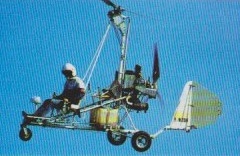
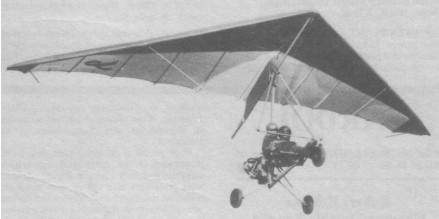
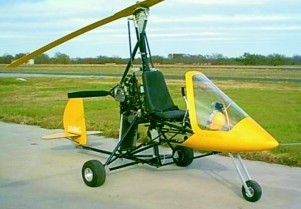
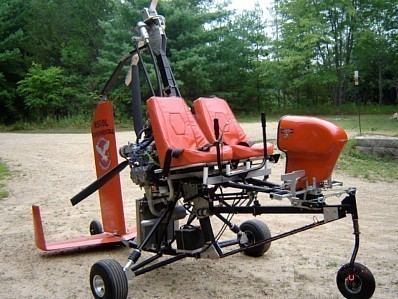
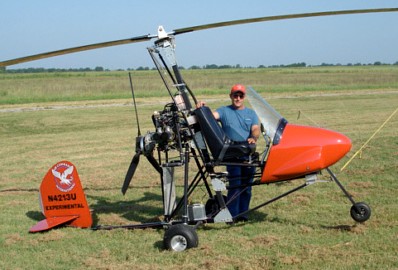
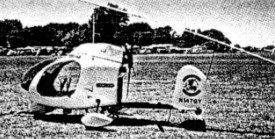
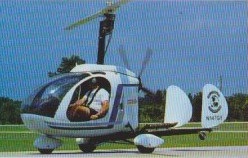
The Air Concept Safari Bi FR440/Alpha 18 is a tandem two seat single engined flex wing aircraft with weight shift control. Rogallo wing with fin. Pilot suspended below wing in trike unit, using bar to control pitch and yaw/roll by altering relative positions of trike unit and wing. Wing braced from above by kingpost and cables, from below by cables; floating cross tube construction with double surface on half chord, enclosing cross tube; pre formed ribs. Undercarriage has three wheels in tricycle formation; no suspension on any wheels. Push right go left nosewheel steering independent from yaw control. Optional brake on nosewheel. Aluminium tube trike unit, without pod. Engine mounted below wing driving pusher propeller. The Safari Bi was designed along the same principles as the single seater trike units from Air Concept, also using rectangular section Duralumin 6061T5 spars measuring 2.4 x 1.6 inch (60 x 40mm). As with virtually all tandem weight shift machines, the control bar is as easy to handle from the front seat as from the rear, but the Safari Bi takes dual control a stage further, as the throttles are accessible to both occupants and the nosewheel steering is twinned to the rear. The Safari Bi/Alpha 18 model uses a 190sq.ft (17.6 sq.m) wing which differentiates it from the two other two seaters offered from this manufacturer. As indicated from the FR440 part of the name, it is equipped with a Fuji Robin EC44 of nominal 440 cc capacity. The choice is left to the purchaser as to which version to fit either the EC44PM of 50 hp with electric start, or the EC44 2PM of 53 hp but hand started. Folded, the trike unit measures 6.7 x 2.8 x 3.4 ft (2.00 x 0. 80 x 1.00 m) and the wing 19.9 x 1.0 x 1.0 ft (6.00 x 0.30 x 0.30 m). Options include, apart from the choice of engine type, a nosewheel brake, a supplementary fuel tank and fairings. The Safari Bi FR440/Alpha 20 is a combination of the Safari Bi FR440 trike unit with the Alpha 20 wing variations on the same theme but a system which offers an excellent choice to the customer. The EC44 2PM engine is optional. The Safari Bi FR330/Alpha 20 is basically similar to the Safari Bi FR440/Alpha 18 but with a lower power engine and the Alpha 20 wing with a larger surface area. The structure of this trike unit is the same. The Robin EC34PM can be had with or without electric start and, married to a 214 sq.ft (19.8 sq.m) Alpha 20 wing, gives a lower stall speed than the Safari Bi FR440/Alpha 18 at any given angle of incidence. Available ready to fly or alternatively as a kit, the kit includes all the parts and accessories necessary to build the trike unit and requires only a drill and a few spanners to assemble it. All cutting, piercing, preparation of cables and other operations which could be hard for an amateur are done by the manufacturer. Detailed plans come with each kit.
Safari Bi FR440/Alpha 18 Engine: Robin EC44, 50hp at 6500rpm Propeller diameter 54 inch, 1.38 m Toothed belt reduction, ratio 2.2/1 Max static thrust 261 lb, 118 kg Power per unit area 0.26hp/sq.ft, 2.8 hp/sq.m Fuel capacity 2.6 US gal, 2.2 Imp gal, 10.0 litre in main tank; 6.1 US gal, 5.1 Imp gal, 23.0 litre in res Length overall 9.8ft, 3.00m Height overall 9.8ft, 3.00m Wing span 32.2ft, 9.80m Chord at root 8.2ft, 2.50 m Chord at tip 3.4ft, 1.00m Dihedral 4 degs Nose angle 122 degs Total wing area 190 sq.ft, 17.6 sq.m Wing aspect ratio 5.5/1 Wheelbase 5.7ft, 1.70 m Nose¬wheel diameter overall 16 inch, 40cm Main wheels diameter overall 16 inch, 40 cm Empty weight 254 lb, 115kg Max take off weight 773 lb, 350kg Payload 519 lb, 235kg Max wing loading 4.07 lb/sq.ft, 20.0 kg/sq.m Max power loading 15.5 lb/hp, 7.0kg/hp Load factors; +6.0, 3.0 ultimate Max level speed 53 mph, 85 kph Never exceed speed 56 mph, 90kph Max cruising speed 37mph, 60kph Economic cruising speed 34mph, 55kph Stalling speed 23 mph, 38 kph Max climb rate at sea level 500 ft/min, 2.5 m/s Min sink rate 370 ft/min at 28 mph, 1.9 m/s at 45 kph Best glide ratio with power off 8/1 at 29 mph, 47 kph Take off distance 115 ft, 35 m Land¬ing distance 130 ft, 40 m Service ceiling 10,000 ft, 3050 m Range at average cruising speed 100 mile, 160 km
Safari Bi FR440/Alpha 20 Engine: Robin EC44, 50hp at 6500rpm Propeller diameter 54 inch, 1.38 m Toothed belt reduction, ratio 2.2/1 Max static thrust 261 lb, 118 kg Power per unit area 0.23hp/sq.ft, 2.3 hp/sq.m Fuel capacity 2.6 US gal, 2.2 Imp gal, 10.0 litre in main tank; 6.1 US gal, 5.1 Imp gal, 23.0 litre in res Length overall 9.8ft, 3.00m Height overall 9.8ft, 3.00m Wing span 32.8ft, 10.0m Chord at root 8.2ft, 2.50 m Chord at tip 3.4ft, 1.00m Dihedral 4 degs Nose angle 122 degs Total wing area 214 sq.ft, 19.8 sq.m Wing aspect ratio 5.1/1 Wheelbase 5.7ft, 1.70 m Nose¬wheel diameter overall 16 inch, 40cm Main wheels diameter overall 16 inch, 40 cm Empty weight 254 lb, 115kg Max take off weight 773 lb, 350kg Payload 519 lb, 235kg Max wing loading 3.61 lb/sq.ft, 17.7 kg/sq.m Max power loading 15.5 lb/hp, 7.0kg/hp Load factors; +6.0, 3.0 ultimate Max level speed 47 mph, 75 kph Never exceed speed 56 mph, 90kph Max cruising speed 31mph, 50kph Economic cruising speed 28mph, 45kph Stalling speed 21 mph, 33 kph Max climb rate at sea level 500 ft/min, 2.5 m/s Min sink rate 310 ft/min at 25 mph, 1.6 m/s at 40 kph Best glide ratio with power off 8/1 at 27 mph, 44kph Take off distance 100ft, 30 m Land¬ing distance 100 ft, 30 m Service ceiling 10,000 ft, 3050 m Range at average cruising speed 93 mile, 150km
Safari Bi FR330/Alpha 20 Engine: Robin EC34Pm, 32 hp at 6500 rpm Propeller diameter 54 inch, 1.38 m Toothed belt reduction, ratio 2.0/1 Max static thrust 203 lb, 92 kg Power per unit area 0.15hp/sq.ft, 1.6hp/sq.m Fuel capacity 2.6 US gal, 2.2 Imp gal, 10.0 litre in main tank; 6.1 US gal, 5.1 Imp gal, 23.0 litre in res Length overall 9.8ft, 3.00m Height overall 9.8ft, 3.00m Wing span 32.8ft, 10.0m Chord at root 8.2ft, 2.50 m Chord at tip 3.4ft, 1.00m Dihedral 4 degs Nose angle 122 degs Total wing area 214 sq.ft, 19.8 sq.m Wing aspect ratio 5.1/1 Wheelbase 5.7ft, 1.70 m Nose¬wheel diameter overall 16 inch, 40cm Main wheels diameter overall 16 inch, 40 cm Empty weight 221 lb, 100 kg Max take off weight 662 lb, 300kg Payload 441 lb, 200 kg Max wing loading 3.09 lb/sq.ft, 15.2kg/sq.m Max power loading 20.7 lb/hp, 9.4kg/hp Load factors; +6.0, 3.0 ultimate Max level speed 44 mph, 70 kph Never exceed speed 56 mph, 90 kph Max cruising speed 31 mph, 50 kph Economic cruising speed 28 mph, 45 kph Stalling speed 20 mph, 32 kph Max climb rate at sea level 300 ft/min, 1.5 m/s Min sink rate 300 ft/min at 24 mph, 1.5 m/s at 40 kph Best glide ratio with power off 8/1 at 28 mph, 45 kph Take off distance 100 ft, 30 m Land¬ing distance 100 ft, 30 m Service ceiling 10,000ft, 3050 m Range at average cruising speed 124 mile, 200 km
The range offered by Air Concept in 1982 was best understood by considering three trike units. First is a tubular structure single seat trike unit, the Safari, second comes the polyester Safari GT single seater and finally the two seater Safari Bi. With each trike unit the firm also supplies an appropriate flex¬wing, such as the Alpha or Alpha Racer for the single seaters and the Alpha 18, Alpha20, or Centaure for the two seaters. Each assem¬bly takes its name from its components, for example Safari/Alpha, the basic model, which we detail below. The suffix FR250 indicates which motor has been used, a Fuji Robin EC25PS in this case. The Safari FR250/Alpha is a single seat single engined flex wing aircraft with weight shift control. Rogallo wing with keel pocket. Pilot suspended below wing in trike unit, using bar to control pitch and yaw/roll by altering relative positions of trike unit and wing. Wing braced from above by kingpost and cables, from below by cables; floating cross tube construction with double surface on half chord, enclosing cross tube; pre formed ribs. Undercarriage has three wheels in tricycle formation; no suspension on any wheels. Push right go left nosewheel steering independent from yaw control. Optional brake on nosewheel. Aluminium tube trike unit, without pod. Engine mounted below wing driving pusher propeller. The single seater Safari FR250/Alpha is transportable on a roof rack or trailer, the wing when folded measures 19.8 x 1.0 x 1.0ft (6.00 x 0.30 x 0.30 m). The Safari GT FR250/Alpha and Safari GTL FR250/Alpha are the same as the Safari FR250/Alpha except: no suspension on nosewheel and glass fibre suspension on main wheels. Glass fibre trike unit, partially enclosed. The Safari GT trike unit is entirely moulded in polyester with the exception of the vertical mast carrying the wing attachment, which is made of 2.20 x 0.08 inch (54 x 2mm) round section Duralumin AU4G1T4. The pod and its windscreen protect the pilot well from the vagaries of the weather. The only drawback to a faired in trike is that it necessitates the use of a trailer for transport; this trike for instance has a volume even without its wing of 6.6 x 2.0 x 3.4 ft (2.00 x 0.50 x 1.00 m). The machine is also offered in the Safari G TL version which benefits from all the options available for the basic GT model, these being tow hook, faired main undercarriage, wheel spats and propeller spinner. The trike unit ‘fuselage’ with windscreen and the three wheel spats were available separately from Eole 2000.
Safari FR250/Alpha Engine: Robin EC25PS, 18.5 hp at 6000 rpm Prop¬eller diameter 54 inch, 1.37m V belt reduction, ratio 2.0/1 Max static thrust 139 lb, 63 kg Power per unit area 0.10 hp/sq.ft, 1.1 hp/sq.m Fuel capacity 2 US gal, 2.2 Imp gal, 10.0 litre in main tank; 6. US gal, 5.1 Imp gal, 23.0 litre in reserve Length overall 9.8ft, 3.00m Height overall 9.8ft, 3.00m Wing span 32.2ft, 9.80m Chord at root 6.7 ft, 2.0 m Chord at tip 2.3 ft 0.70 m Dihedral 4 degs Nose angle 122 degs Total wing area 181 sq.ft, 16.8 sq.m Wing aspect ratio 5.7/1 Wheelbase 5.7ft, 1.70m Nosewheel diameter overall 10 inch, 26 cm Main wheels diameter overall 12 inch, 30 cm Empty weight 170 lb, 77kg Max take off weight 442 lb, 200kg Payload 272 lb, 123kg Max wing loading 2.44 lb/sq.ft, 11.9 kg/sq.m Max power loading 23.9 lb/hp, 11.1kg/hp Load factors; +6.0, 3.0 ultimate Max level speed 44mph, 70kph Never exceed speed 56mph, 90kph Max cruising speed 31mph, 50kph Economic cruising speed 28mph, 45kph Stalling speed 17 mph, 28 kph Max climb rate at sea level 400 ft/min, 2.0 m/s Min sink rate 280 ft/min at 24 mph, 1.4 m/s at 40 kph Best glide ratio with power off 8/1 at 27 mph, 43 kph Take off distance 65 ft, 20 m Landing distance 100 ft, 30 m Service ceiling 10,000 ft, 3050 m Range at average cruising speed 155 mile, 250 km
Safari GT FR250/Alpha Engine: Robin EC25PS, 18.5 hp at 6000 rpm Prop¬eller diameter 54 inch, 1.37m V belt reduction, ratio 2.0/1 Max static thrust 139 lb, 63 kg Power per unit area 0.10 hp/sq.ft, 1.1 hp/sq.m Fuel capacity 2 US gal, 2.2 Imp gal, 10.0 litre in main tank; 6. US gal, 5.1 Imp gal, 23.0 litre in reserve Length overall 9.8ft, 3.00m Height overall 9.8ft, 3.00m Wing span 32.2ft, 9.80m Chord at root 6.7 ft, 2.0 m Chord at tip 2.3 ft 0.70 m Dihedral 4 degs Nose angle 122 degs Total wing area 181 sq.ft, 16.8 sq.m Wing aspect ratio 5.7/1 Wheelbase 5.3ft, 1.60m Nosewheel diameter overall 12 inch, 30 cm Main wheels diameter overall 12 inch, 30 cm Empty weight 166 lb, 75kg Max take off weight 441 lb, 200kg Payload 276 lb, 125 kg Max wing loading 2.44 lb/sq.ft, 11.9 kg/sq.m Max power loading 23.8 lb/hp, 11.1kg/hp Load factors; +6.0, 3.0 ultimate Max level speed 47 mph, 75 kph Never exceed speed 56 mph, 90kph Max cruising speed 34mph, 55kph Economic cruising speed 28mph, 45kph Stalling speed 17 mph, 28 kph Max climb rate at sea level 400 ft/min, 2.0 m/s Min sink rate 240 ft/min at 24 mph, 1.2 m/s at 40 kph Best glide ratio with power off 9/1 at 27 mph, 43 kph Take off distance 65 ft, 20 m Landing distance 100 ft, 30 m Service ceiling 10,000 ft, 3050 m Range at average cruising speed 155 mile, 250 km
Safari GTL FR250/Alpha Engine: Robin EC25PS, 18.5 hp at 6000 rpm Prop¬eller diameter 54 inch, 1.37m V belt reduction, ratio 2.0/1 Max static thrust 139 lb, 63 kg Power per unit area 0.10 hp/sq.ft, 1.1 hp/sq.m Fuel capacity 2. US gal, 2.2 Imp gal, 10.0 litre in main tank; 6. US gal, 5.1 Imp gal, 23.0 litre in reserve Length overall 9.8ft, 3.00m Height overall 9.8ft, 3.00m Wing span 32.2ft, 9.80m Chord at root 6.7 ft, 2.0 m Chord at tip 2.3 ft 0.70 m Dihedral 4 degs Nose angle 122 degs Total wing area 181 sq.ft, 16.8 sq.m Wing aspect ratio 5.7/1 Wheelbase 5.3ft, 1.60m Nosewheel diameter overall 12 inch, 30 cm Main wheels diameter overall 12 inch, 30 cm Empty weight 166 lb, 75kg Max take off weight 441 lb, 200kg Payload 276 lb, 125 kg Max wing loading 2.44 lb/sq.ft, 11.9 kg/sq.m Max power loading 23.8 lb/hp, 11.1kg/hp Load factors; +6.0, 3.0 ultimate Max level speed 47 mph, 75 kph Never exceed speed 56 mph, 90kph Max cruising speed 34mph, 55kph Economic cruising speed 28mph, 45kph Stalling speed 17 mph, 28 kph Max climb rate at sea level 400 ft/min, 2.0 m/s Min sink rate 240 ft/min at 24 mph, 1.2 m/s at 40 kph Best glide ratio with power off 9/1 at 27 mph, 43 kph Take off distance 65 ft, 20 m Landing distance 100 ft, 30 m Service ceiling 10,000 ft, 3050 m Range at average cruising speed 155 mile, 250 km
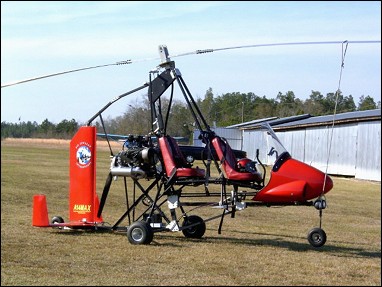
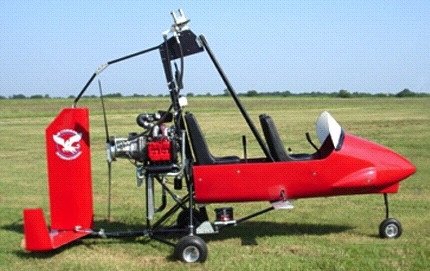
The Air Command Commander Elite is a two-seat kitbuilt autogyro. Construction of the tandem-seat F-30 began in late 1999 with the first flight was made on 1 March 2000, and a public debut at Sun ‘n’ Fun, April 2000. A side-by-side version of the F-30 has been introduced. The Commander Elite features an open cockpit with a range of options and many subassemblies preconstructed by the factory. Quoted build time was 100 hours. With pre-drilled and anodised 6061-T6 tubular airframe, with a 5 x 5cm tubing used for mast. With an optional glass fibre enclosure, the F-30 has aluminium rudder and composites horizontal stabiliser and tailfins. The optional enclosure givies 10-15 mph higher cruise speed. The landing gear is of fixed tricycle type with glass fibre speed fairings, aluminium suspension system with Hager wheels and brakes on all wheels, the mainwheel with hydraulic brakes. The nose wheel is fully castoring with a leg of 4130 steel tube and 6.00×6 Azusa tyres: 7.6cm tailwheel. The pilot and passenger sit in tandem on Elite F-30 and side by side on Elile F-30ES. Basic engine instrumentation is provided with each kit, and options include hydraulic pre-rorator and clutch reduction drive on F-30; and pre-rotator, C Box upgrade and electric start on F-30ES. Optional is a New Horizons Components gyro recovery system rocket-powered ballistic parachute. Fuel capacity is 37.9 litres in two seat tanks; and an optional 68.1 litre seat tank.
Commander Elite Tandem
Versions were: Elite F-30: Basic version, with Hirth F-30 engine. Elite F-30ES: As F-30, but side-by-side seating. Elite Mazda: As F-30, but with more powerful engine; withdrawn 2002. Over 200 kits had been sold by the end of 2002. The kit pricee in 2001 were: Tandem light weight without engine: $12,570 Tandem heavy weight without engine: $14,235 F-30 Tandem, basic kit: $19,975 F-30 Tandem, all options: $24,975 Mazda Tandem, basic kit: $22,975 Mazda Tandem, all options: $28,450 The 2003 kit prices were: F-30 US$22,475; F-30ES USS21,792, both including engine. Engine options include the 67 hp Rotax 582, 100-120 hp Arrow or the original 82.0kW Hirth F-30 driving a 68”four-blade Warp Drive propeller and 27’ x 8” Sky Wheels composite rotor blades. Tandems reach speeds up to 120 mph with a 160-hp engine or 110 mph with a 110-hp Hirth F-30, while the side-by-side can get up to only 85 mph with the F-30. A Patrol version came fully equipped with options.
Tandem 1000 Engine: Arrow 1000, 100 hp Speed max: 105 mph Cruise: 75 mph ROC: 1000 fpm Take-off dist: 300 ft Landing dist: 0-5 ft Service ceiling: 10,000 ft Fuel cap: 12 USG Weight empty: 380 lb Gross: 1000 lb Height: 8.9 ft Length: 13.4 ft Disk span: 27 ft Seats: 2 Landing gear: nose or tail wheel
Tandem Subaru Engine: Subaru EJ22, 135 hp Propellor: 3 blade 68″ Rotorblades: 28-29′ Dragon Wings, Sky Wheels Take off roll: 350′-750′ Cruise: 65-95 mph Fuel Consumption: 3-5 gph
Tandem Mazda Engine: Mazda 13B Rotary, 170 hp Height: 8.9 ft Length: 14 ft Disk span: 29 ft Empty weight: 700 lb Gross weight: 1500 lb Fuel capacity: 14 USG Max speed: 120 mph Cruise: 75 mph Rate of climb: 1000 fpm Takeoff dist: 350-700 ft Landing dist: 0-20 ft Service ceiling: 10,000 ft Seats: 2
The single-person Commander has center-line thrust to increases pitch stability and decrease drag. It takes up to a 67-hp Rotax 582 engine, but passes as an ultralight when equipped with a 40-hp Rotax 447. Cruising speeds range from 50 to 65 mph, depending on engine choice. All models can be upgraded to larger engines. Engines options include: 40 hp Rotax 447,52 hp Rotax 503,67 hp Rotax 582, and Hirth 3202 and 3203. The Air Command Sports Elite is a kit-built gyroplane built in the USA since the early 1990s. Powered by a Rotax 532 engine, the aircraft can take off within 600 feet in still air and can land within 10 feet. The cruising speed is 60 – 80 mph. Around 65 of the kits were imported into Britain but, after a number of fatal accidents, the aircraft type was grounded by the CAA. After several modifications type regained a flying permit and flew successfully for several years until the CAA again grounded the type. In 2001 the kit prices were: without engine: $7935 447 (40 hp) legal ultralight: $9875 503 (52 hp): $11,255 582 (67 hp): $12,675 2704: $12,996 2706: $14,995
A two-seat, partially enclosed autogyro with options including an enclosure giving 10-15 mph higher cruise speed. Engine options include: 67 hp Rotax 582, 100-120 hp Arrow 1000cc. A Patrol version was available fully equipped with options. Prop: Warp Drive 60” or 68”. Rotor blades: 25’ x 8” Sky Wheels composite. Similar engines produce different results in the two-seater Commanders. Tandems reach speeds up to 120 mph with a 160-hp engine or 110 mph with a 110-hp Hirth F-30, while the side-by-side can get up to only 85 mph with the F-30. The kit price in 2001 for the Side-By-Side with the F-30 was $19,292, and without engine: $11,580.
A single seat, partially enclosed autogyro using 6061-T6 tube, first flown in 1964. Can meet ultralight regs with Rotax 447. Options include enclosure, giving 10-15 mph higher cruise speed, and engine options include the 40 hp Rotax 447, 48 hp Rotax 503, 50 hp Rotax 503 (dual carbs), 65 hp Arrow, 100-120 hp Arrow. A Patrol version fully equipped with options is available. Prop: Warp Drive 60” or 68”. Rotor blades: 23’ x 8” Sky Wheels composite. Powered by a choice of three Rotax engines, the manufacturer’s claim a reduction in noise levels commonly associated with the rotor craft. Flown solo, the Commander gets off the ground in 100 feet with the pre rotator, has a maximum speed of 90 mph, normal cruise of 65 and can be landed in zero to ten feet. Airborne in less than 100ft. With a top speed of 90 mph. The Commander gyroplane will not stall; it slow flies at 8 mph, climbs at 1200ft per minute, can be flown in winds to 40 mph and will land in 0 to 10 feet. Converts to two place Commander Elite.
Air Command 582
The forerunner of the 532 model, the 447 is of open cockpit configur¬ation with power coming from a 40hp Rotax 447 engine.
Commander 447 Engine: Rotax 447, 40 hp Prop: Warp Drive 60” or 68” Rotor blades: 23’ x 8” Sky Wheels composite Height: 7 ft Length: 10.7 ft Empty weight: 252 lb Gross weight: 552lb Fuel capacity: 5 USG Max speed: 63 mph Cruise: 50 mph Vne: 150 mph Takeoff dist: 200 ft Landing dist: 0-20 ft Seats: 1
Commander 503 Engine: Rotax 503, 47 hp Disk span: 23 ft Height: 7 ft Length: 10.5 ft Weight empty: 265 lb Gross: 515 lb Fuel cap: 5 USG Speed max: 70 mph Cruise: 50 mph ROC: 900 fpm Take-off dist: 100 ft Landing dist: 0-5 ft Service ceiling: 10,000 ft Seats: 1 Landing gear: nose wheel
Commander 532
Commander 582 Engine: Rotax 582, 67 hp Disk span: 23 ft Height: 7 ft Length: 10.5 ft Weight empty: 275 lb Gross: 775 lb Fuel cap: 9 USG Speed max: 95 mph Cruise: 65 mph ROC: 1200 fpm Take-off dist: 100 ft Service ceiling: 15,000 ft Seats: 1-2 Landing gear: nose wheel
Air Command 582 Engine: Rotax 582, 64 hp Rotor span: 7 m Blade area: 0.23 sq.m MAUW: 320 kg Empty weight: 150 kg Fuel capacity: 20 lt Max speed: 160 kph Cruise speed: 130 kph Minimum speed: 22 kph Climb rate: 5.5 m/s Seats: 1 Fuel consumption: 14 lt/hr Kit price (1998): $9400
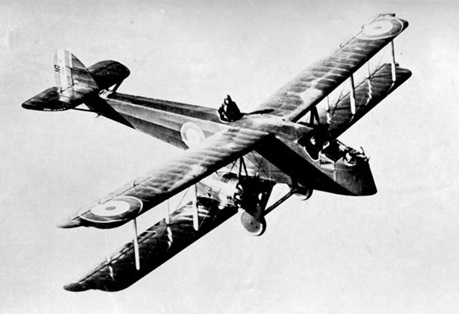
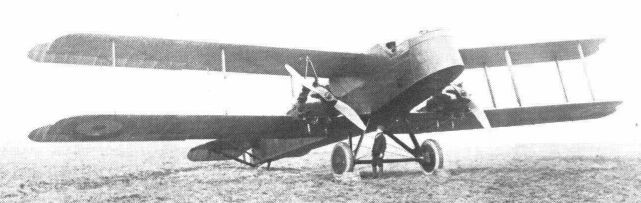
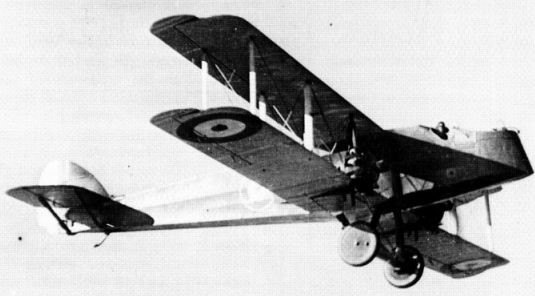
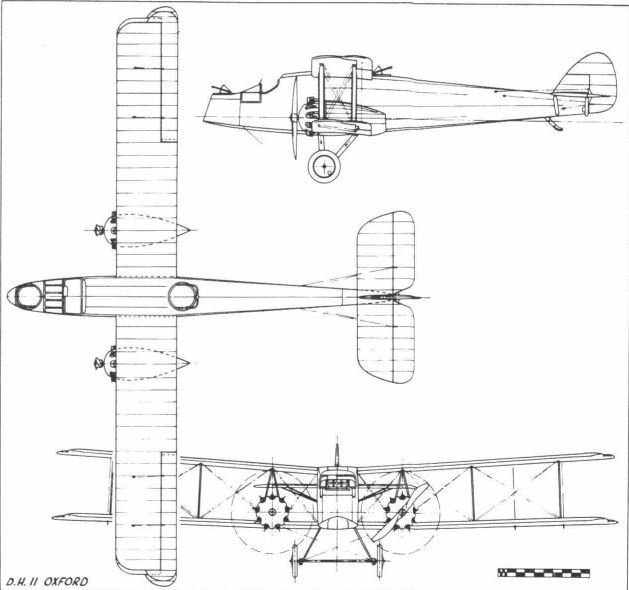
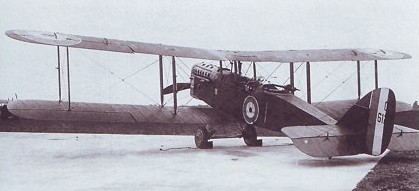
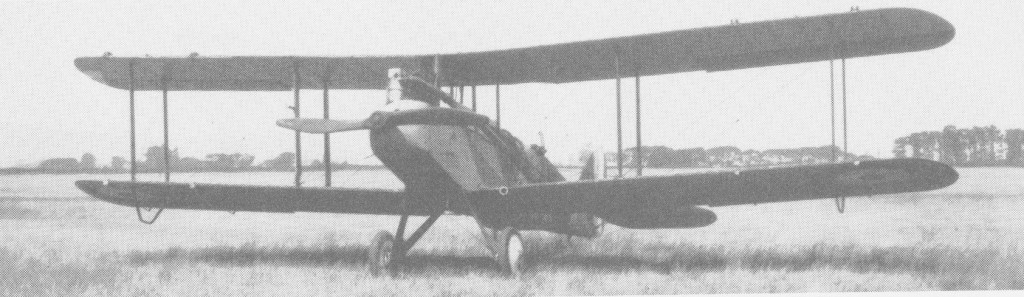
The DH.11 Oxford was designed by Geoffrey de Havilland for the Aircraft Manufacturing Company as a twin-engined day bomber to replace the Airco DH.10. It was designed (as required by the Specification) to use the ABC Dragonfly radial engine which promised to give excellent performance and had been ordered in large numbers to be the powerplant for most of the new types on order for the Royal Air Force.
Designs began early in 1918 when a contract was placed for three aircraft (Contract 35a/2150/C.2485) and by August the fuselage of the prototype, H5891, was well advanced in the Hendon factory. In September all work ceased because the Dragonfly engines were beset by problems and in November Siddeley Puma in-line, high compression engines were considered and the necessary engine bearer modifications were put in hand.
The D.H.11 had fabric covered, wooden airframes incorporating steel tubing for highly stressed or vulnerable members such as engine mountings, undercarriage and the empennage trailing edges. The type had horn balanced ailerons and the characteristic de Havilland rudder, and four degrees of dihedral on the upper mainplane compared with two degrees on the lower, gave the wings of the D.H.11 a diverging appearance and the fuselage filled the whole mainplane gap, making it possible to put the rear gunner on a raised floor in the mid upper position with a commanding field of fire in all upward directions.
A fuselage 6 ft. 0 in. deep and 4 ft. 0 in. wide enabled main fuel tanks of 170 gallons capacity to be slung from the top longerons of the centre fuselage with a walk way beneath. This gave the rear gunner access to the cockpit, in which the pilot sat on the starboard side, and thence to the front gunner. Entry to the aircraft was gained through a trap door between the spars of the lower wing which opened on to this catwalk. Armament consisted of a Scarff-ring-mounted Lewis gun fore and aft and approximately 1,000 lb. of bombs carried internally. Two 320 h.p. A.B.C. Dragonfly radial engines were housed in nacelles fixed directly to the lower mainplane but the eminently business-like and efficient divided undercarriage of the D.H.10 gave place to a narrow track.
By 1919 the machine, H5891, was ready and the mainplanes were being covered yet despite recurring magneto trouble it was decided to fit the Dragonflies after all. After the first few flights in January 1919 H5891 went back into the works for the engines to be repositioned but was short lived. Its last flight came when a connecting rod broke in one of the engines, which seized up just as the aircraft became airborne, but the pilot, F. T. Courtney, made a forced landing without damage.
Two further prototypes, Mk. IIs, H5892 and H5893, with Puma high compression engines, were cancelled in 1919, with no aircraft in the end being purchased to replace the DH.10. Serials later allotted to Sopwith Buffaloes.
Oxford Mk I Engines: 2 × ABC Dragonfly, 320 hp (239 kW) each Wingspan: 60 ft 2 in (18.34 m) Wing area: 719 ft² (66.8 m²) Length: 45 ft 2¾ in (13.79 m) Height: 13 ft 6 in (4.12 m) Empty weight: 4,105 lb (1,866 kg) Max. takeoff weight: 7,020 lb (3,191 kg) Maximum speed: 107 kn (123 mph, 198 km/h) Service ceiling: 14,500 ft (4,400 m) Power/mass: hp/lb (kW/kg) Climb to 10,000 ft: 13 min 45 sec Endurance: 3 hours Crew: three Armament: 2 × .303 in (7.7 mm) Lewis gun Bombload: 4 × 230 lb (104 kg) bombs carried internally
The DH9 development was started in order to give the RFC a means of hitting back at the Germans, who had raided London in daylight in June and July 1917.
Based on the DH.4 two seat day bomber the result was the DH.9. The prototype Airco DH.9 was produced by modification of a DH.4, retaining the same wings, tail unit, and generally similar landing gear, but the fuselage was completely new, with a more streamlined nose, and the pilot’s cockpit directly above the lower wing trailing edge. In the DH.4 there had been a problem with communication between the pilot and observer because the two cockpits were too far apart, but in the DH.9 the cockpits were almost back-to-back, no longer separated by the main fuel tank as on the DH4. Fuel in the DH9 was in two tanks aft of the engine and one in the centre-section.
First flying in November 1917, the prototype was powered by a 172-kW (230-hp) B.H.P., built by the Galloway Engineering Company, and referred to sometimes as the Galloway Adriatic.
DH.9
Early testing began in late July 1917 and proceeded so well that existing contracts for 900 D.H.4s held by subcontractors were amended to cover production of the D.H.9. Some of these early production aircraft had a Siddeley built B.H.P. engine, but a new lightweight version of this engine, known as the Puma and developed by SiddeleyDeasy, was selected as the major production engine. Most D.H.9s were fitted with 230, 240 or 290 hp Siddeley Puma engines, although one small batch, built by Shorts, had 260 hp Fiat A 12s. Rated at 224kW (300 hp), it was expected to give the D.H.9 outstanding performance, but development problems meant that reliability could only be assured by de-rating output to 172kW (230 hp), and the performance of the new bomber was inferior to that of the D.H.4 which it was intended to replace. When the type was first introduced in April 1918, this resulted in serious losses by the squadrons in France.
Carrying a full military payload the aircraft could barely make 13,000 ft. The problem was highlighted on 31 July 1918 when ten DH.9s out of twelve on a bombing mission over Germany were lost, some to engine failure others shot down. During 848 sorties flown by Nos 99 and 104 Squadrons, RFC, 123 engine failures were recorded.
In ex¬cess of 3,200 were built in Britain by Airco and 12 sub-contractors, including Westland Aircraft. By the time the prototype flew, Trenchard had already asked for its cancellation, but production was already well advanced and there was no immediate substitute.
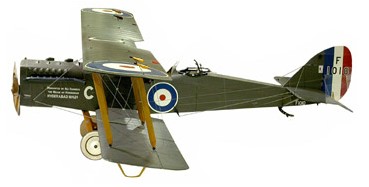
DH9A F1010
Deliveries of the D.H.9, to No 103 Squadron of the RFC, began in December 1917, and the first operational sorties (by No 6 Squadron) were carried out in France in the following March. Over the next few months their activity was stepped up quite considerably, but with operations affected by the lack of power from their Puma engines, or made abortive by repeated engine failures.
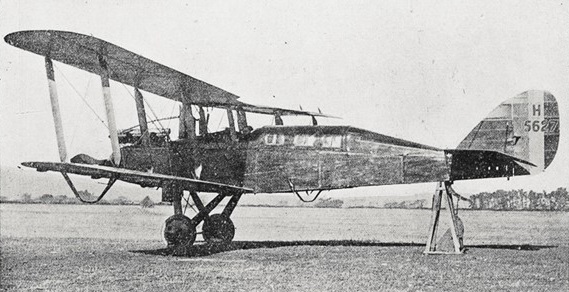
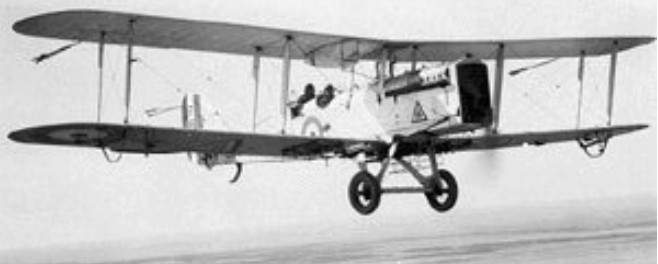
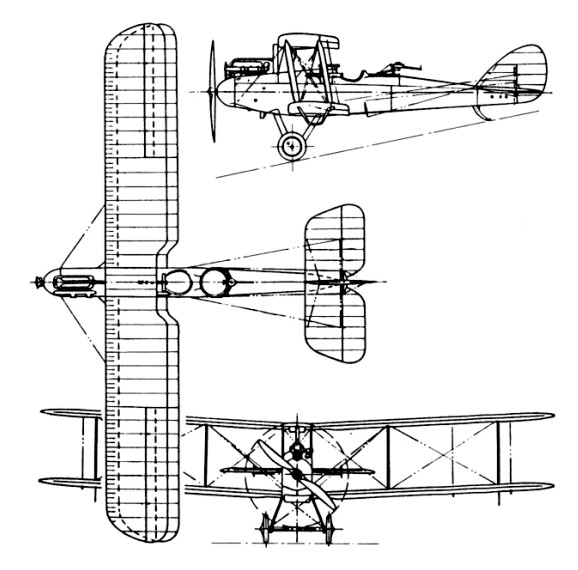
With the end of the war the D.H.9 soon faded from the RAF scene, eclipsed completely by the D.H.9A which replaced it. Developed from the DH.9, the DH.9A had a 375 hp Rolls-Royce Eagle VIII engine fitted at the behest of the Technical Department of the War Office. To accommodate this larger engine the mainplanes and ailerons were enlarged and the fuselage strengthened, but he undercarriage and tail section remained the as the DH.9. Harry Hawker carried out a number of the initial test flights.
DH.9A
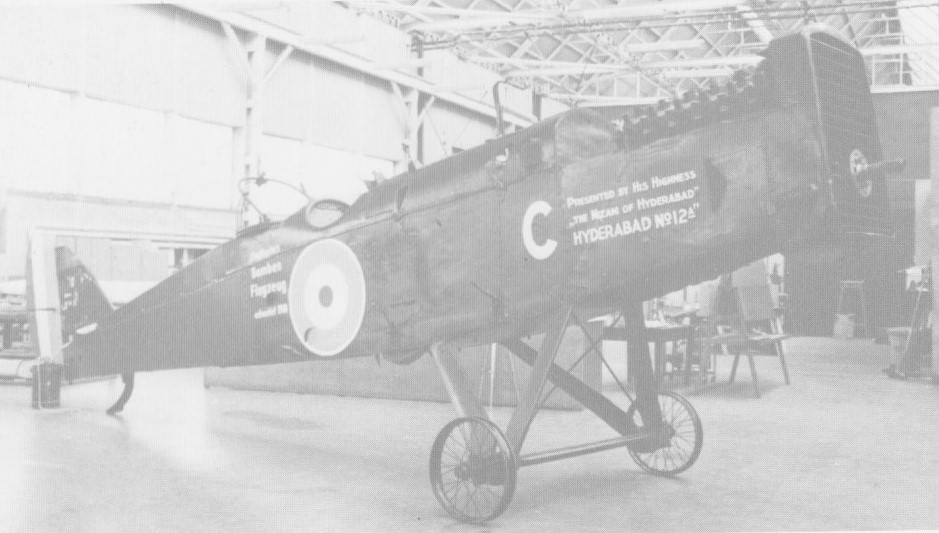
With the test completed, a number of the aircraft were assigned to No.110 Sqn, RAF, who used them to carry out bombing raids on Coblenz, Frankfurt and a number of other German manufacturing cities. One of the aircraft had been paid for by the Nizam of Hyderabad, commemorated by an inscription painted on the side of the aircraft.
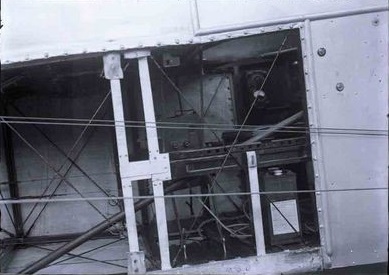
Armament comprised a front-mounted, forward firing 0.303 in (7.7 mm) Vickers machine gun, with Constantinesco synchronizing gear, and a 0.303 in (7.7 mm) Lewis gun on a Scarff ring mounting in the rear cockpit. Normal bombload consisted of two 104 kg (230 lb) or four 51 kg (112 lb) bombs, which could be carried internally (though they seldom were) or externally, on fuselage or lower wing racks. Camera or W/T equipment was also installed.
DH.9A
Irish Air Corp DH9 camera installation
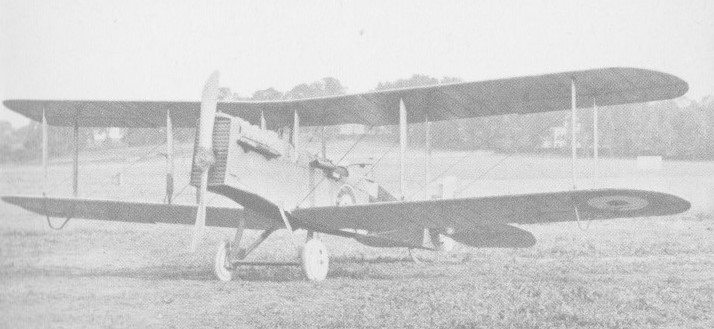
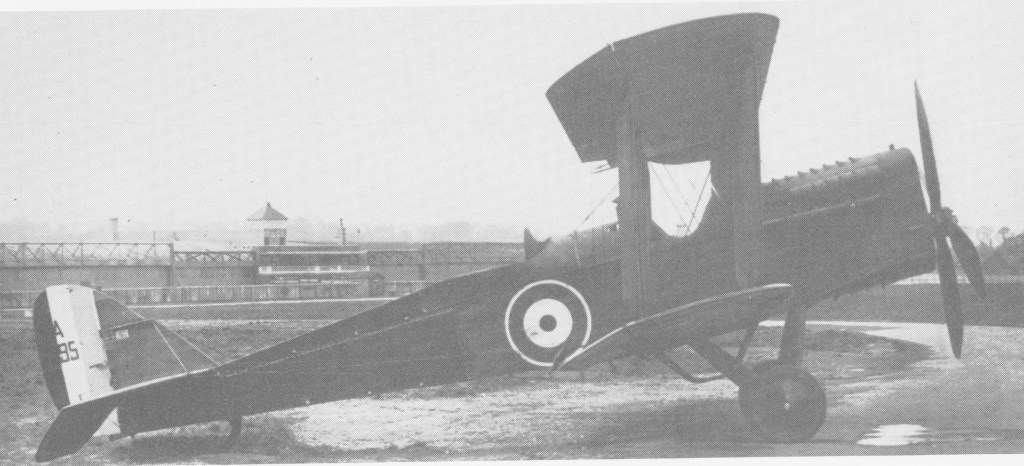
To improve performance of the DH9, the Liberty 12 engines were ordered from the USA, and Airco requested the Westland Aircraft Works at Yeovil, Somerset, to redesign the D.H.9 to accept the Liberty engine. Westland combined the best features of both D.H.4 and D.H.9 with the US powerplant, strengthening the fuselage structure and introduced wings of increased span and chord, ailerons on all wings. Fuel was in two tanks aft of the engine and one centre section. Although nominally a conversion of the earlier aircraft, to take a more reliable American engine, the new DH9A was a complete redesign. The prototype Airco DH.9A, because no Liberty engines had been received, was flown initially with a 280-kW (375-hp) Eagle VIII engine.
By the middle of 1918, the converson to the Packhard Motor Company-built Liberty engine had been completed and the aircraft was sent to Martlesham Heath foe evaluaton, while at the same time the Americans were promising deliveries of the engine. Twelve of the engines were already in Britain, and tests with the Liberty-powered DH.9A had been extremely encouraging. A number of different sub-contractors had to be brought in because Airco were heavily committed to the design and development of the DH.10 day bomber. Among the sub-contractor were the Vulcan Motor and Engineering Co, the Westland Aircraft Works, Mann, Egerton Co,, the Whitehead Co, and F.W.Berwick. The first de¬liveries were made to the RAF during June 1918.
The deliveries of the Ameican Liberty engines started to come in, but in July 1918 they stopped abruptly after 1050 had been delivered. Winston Churchill, who was Minister for Munitions at the time, immediately contacted the US Under-Secretary for Aviation, Mr Ryan. Ryan informed Churchill that the US Navy had staked a priority claim on all the Liberty engines that were currently under construction. This was devastating news to Airco, as they now had to find a replacement engine rapidly. The one that sprang to mind was the Rolls-Royce Eagle VIII, which was currently under evaluation in a Westland-built DH.9A.
By the end of 1918 nearly nine-hundred had been built. Enquiries were also made of the 500 hp Galloway Atlantic engine that was currently under evaluation. Seventy-two of these engines were ordered in September 1918 with a possible increase to 1000, but only one was ever fitted into a DH.9A, which was re-designatd the DH.15.
DH 9A
Construction not only continued in Great Britain but the type went into unlicensed production in Russia for the Red Air Force.
An American production programme of USD 9s (the US designation of the Liberty-engined version) was planned but of the 14,000 ordered only four were completed. Following the installation of a 400 hp Liberty in a British testbed, 3000 Liberty engines were ordered from the USA to power the refined D.H.9A for the RAF. Only 1050 of these engines reached Britain in early 1918, from which 885 D.H.9As were powered before the end of the war. Apart from the powerplant, the chief differences from the D.H.9 were larger area wings (to offset the bigger and heavier American engine) and a redesigned forward fuselage; armament and bombload remained unchanged. Deliveries were made from June 1918, initially to No 110 Squadron, but only two squadrons in France and two in Russia had become fully operational with them before the Armistice. Mass production, by a dozen British manufacturers (chiefly de Havilland and Westland), continued after the war; deliveries continued until 1928, and the total built eventually reached nearly 2500. Others, with various engines, were built in Spain, the USSR and elsewhere.
Russian R.1
The D.H.9’s basic design was phased out of RAF service in 1931. Those of the SAAF continued in service until 1937. Its RAF replacement, the Westland Wapiti, was based on the same airframe.
War surplus D.H.9s served in Afghanistan, Australia, Belgium, Canada, Chile, Estonia, Greece, India, the Irish Free State, Latvia, the Netherlands, New Zealand, Poland and South Africa; and the type was built under licence by HispanoSuiza for service with the Spanish air force, a figure in excess of 500 being quoted as the production figure, and at least 25 still being in service when the Spanish Civil War started in July 1936. Others were built by SABCA in Belgium; and the Netherlands Army Aircraft Factory also assembled 10 new D.H.9s, built by the de Havilland Aircraft Company in 1923, and in 1934 these were each given a Wright Whirlwind engine of 347kW (465hp). Despite this sort of demand, Britain’s Aircraft Disposal Company still had large numbers of war surplus D.H.9s in stock in late 1930, and these were scrapped and burned during the following year.
Nine served with the RNZAF from 1923 to 1930.
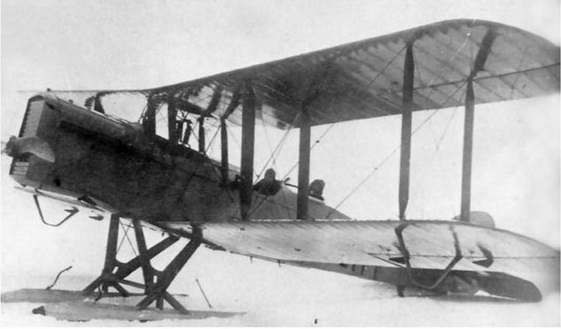
A DH9 specially prepared by the Canterbury Aviation Company for a Christchurch-Blenheim, New Zealand, mail service.
D.H.9s were also flown experimentally or as a result of conversion with engines that included the 186-kW (250-hp) Fiat A-12, 216-kW (290-hp) Siddeley Puma high-compression engine, 224-kW (300-hp) A.D.C. Nimbus and Hispano-Suiza 8Fg, 321-kW (430-hp) Napier Lion, and 324-kW (435-hp) Liberty 12A. Conversions carried out by the South African Air Force, with the 149-kW (200-hp) Wolseley Viper, 336-kW (450-hp) Bristol Jupiter VI and 358-kW (480-hp) Bristol Jupiter VIII, were known respectively by the names of Mantis, M’pala I and M’pala II. Air Transport and Travel launching a proving flight between Hendon and Le Bourget on 15 July 1919. Its de Havilland 9 carried only one passenger, Major Wilkinson, of the glass firm. Production, during and after the First World War, eventually reached more than 4000, by no fewer than 15 British manufacturers, of which 3204 were built before the end of 1918.
Variants: Airco D.H.9B: designation of aircraft converted for civil use, and carrying one passenger forward and one aft of the pilot Airco D.H.9C: designation of aircraft converted for civil use, and carrying one passenger forward and two aft of the pilot Airco D.H.9J: designation used for the SAAF M’pala I, and also for the D.H.9s modernised in the late 1920s for use by the de Havilland School of Flying. These latter aircraft had a strengthened forward fuselage structure; improved landing gear, aileron controls, and fuel system; introduced Handley Page leading-edge slots; and were powered by a 287-kW (385-hp) Armstrong Siddeley Jaguar III radial engine. de Havilland D.H.9AJ Stag: designation of single prototype with improved main landing gear and powerplant of one 347-kW (465-hp) Bristol Jupiter VI radial engine de Havilland D.H.9R: designation of a single racing version with sesquiplane wing, and powered by a 347-kW (465-hp) Napier Lion II inline engine Engineering Division USD-9A: designation of nine generally similar US-built aircraft, each having its forward-firing 7.62-mm (0.3-in) Browning machine-gun on the starboard (instead of port) side, and a modified rudder Engineering Division USD-9B: designation of one USD-9A following installation of a 313-kW (420-hp) Liberty 12A engine. R-1 – At least 2700 DH9As built in the Soviet Union.
DH.9 Engine: B.H.P, 200 hp Span: 42 ft 6 in Wing aera: 436 sq.ft Length: 30 ft 6 in Height: 10 ft Empty weight: 2203 lb Loaded weight: 3669 lb Wing loading: 8.4 lb/sq.ft Max speed: 111 mpg at 10,000 ft Service ceiling: 17,500 ft ROC: 500 fpm to 5400 ft Endurance: 4 hr 30 min Armament: 1 x Vickers mg, 1 or 2 x Lewis mg Bombload: 931 lb Crew: 2
DH.9 Engine: BHP, 230 hp Length: 30 ft 6 in / 9.29m Wingspan: 42 ft 4 in / 12.9 m Max speed: 116 mph / 187 kph Armament: 1 x Vicker .303 sync. Through airscrew, 1 x Lewis .303 for observer Bombload: 500 lb / 227 kg
DH9 Engine: Siddeley Puma, 230 hp / 172-kW Wingspan: 42 ft 4 in / 12.9 m Length: 30 ft 5 in / 9.2 m Height: 11 ft 3 in / 3.4 m Wing area: 40.32 sq.m / 434 sq ft Empty weight: 2230 lb / 1011 kg Loaded weight: 3325 lb / 1508 kg MTOW: 3669 lb Wing loading: 8.4 lb/sq.ft Fuel capacity: 70 Gal Max speed at 1980m (6,500ft): 104 mph / 167 kph Max speed: 111 mpg at 10,000 ft Climb to 1980m (6,500ft): 10 minutes 20 seconds Service ceiling: 4725m / 15,500ft Endurance: 4 hours 30 minutes Armament: one fixed forward-firing 7.7-mm (0.303-in) Vickers machine-gun and one or two 7.7-mm (0.303-in) Lewis guns on Scarff ring in aft cockpit, plus up to 209 kg (460 lb) of bombs. Crew: 2
Engine: Siddeley Puma, 290 hp Wingspan: 42 ft 4 in / 12.9 m Length: 30 ft 5 in / 9.2 m Height: 11 ft 3 in / 3.4 m Empty weight: 2230 lb / 1011 kg Loaded weight: 3325 lb / 1508 kg Max speed: 104 mph / 167 kph Ceiling: 15,500 ft / 4724 m Armament: 1 x .303 Vickers mg
Engine: Fiat A-12, 250 hp Wingspan: 42 ft 4 in / 12.9 m Length: 30 ft 0 in / 9.1 m Height: 11 ft 2 in / 3.3 m Empty weight: 2460 lb / 1115 kg Loaded weight: 3600 lb / 1632 kg Max speed: 117 mph / 188 kph Ceiling: 17,500 ft / 5334 m Armament: 1 x .303 Vickers mg
Engine: ADC Nimbus, 300 hp Wingspan: 42 ft 4 in / 12.9 m Armament: 1 x .303 Vickers mg
Engine: Hispano-Suiza 8Fb, 300 hp Wingspan: 42 ft 4 in / 12.9 m Armament: 1 x .303 Vickers mg
Engine: Napier Lion, 430 hp Wingspan: 42 ft 4 in / 12.9 m Length: 30 ft 9 in / 9.3 m Height: 11 ft 7 in / 3.5 m Empty weight: 2544 lb / 1153 kg Loaded weight: 3667 lb / 1663 kg Max speed: 138 mph / 222 kph Ceiling: 23,000 ft / 7010 m Armament: 1 x .303 Vickers mg
Engine: Liberty 12A, 435 hp Wingspan: 42 ft 4 in / 12.9 m Length: 30 ft 0 in / 9.1 m Height: 11 ft 2 in / 3.3 m Empty weight: 2460 lb / 1115 kg Loaded weight: 4645 lb / 2106 kg Max speed: 114 mph / 183 kph Ceiling: 17,500 ft / 5334 m Armament: 1 x .303 Vickers mg
Engine: Wright Whirlwing R-975, 465 hp Wingspan: 42 ft 4 in / 12.9 m Armament: 1 x .303 Vickers mg
Engine: Wolseley Viper, 200 hp Wingspan: 42 ft 4 in / 12.9 m Armament: 1 x .303 Vickers mg
Engine: Bristol Jupiter VI, 450 hp Wingspan: 42 ft 4 in / 12.9 m Armament: 1 x .303 Vickers mg
Engine: Bristol Jupiter VIII, 480 hp Wingspan: 42 ft 4 in / 12.9 m Armament: 1 x .303 Vickers mg
Airco D.H.9A Engine: one 298-kW (400-hp) Packard Liberty 12 Prop: 2-¬blade Wing span: 14.01 m / 45ft 11½in Length: 9.22m / 30ft 3in Height: 3.45m / 11 ft 4in Wing area: 45.22m / 486.7 sq.ft. Empty weight: 1270 kg / 2,800 lb Maximum take-off weight: 2107 kg / 4,645 lb Maximum level speed at sea level: 198 km/h / 123 mph Climb to 1980m (6,500ft): 8 minutes 55 seconds Service ceiling: 5105m / 16,750ft Endurance: 5 hours 15 minutes Armament: one fixed forward-firing 7.7-mm (0.303-in) Vickers machine-gun and one or two 7.7-mm (0.303-in) Lewis guns on Scarff ring in aft cockpit, plus up to 299 kg (660 lb) of bombs.