Built in 1935 by Arthur L Waldrop, the A-1 (registered N14499 c/n 101) was a two-place open-cockpit monoplane, powered by an 80hp LeRhône rotary.
Piston
Waldron H-12 Imperial
The 1928 H-12 Imperial N371 c/n 2 was a three-place cabin, high wing monoplane, powered by a 265hp Menasco-Salmson engine. It has also been noted as a five place with a 220hp Wright J-5 engine.
It was destroyed when it hit a snowbank on take-off.
Waldron H-11
The 1928 Waldron Aircraft H-11, designed by Orville Hickman, was modified from his Pheasant design. A three-place, open cockpit biplane, registered NX5316, it first flew on 4 June 1928, piloted by Gene Shank. It was priced at $3,000.
Engine: 90hp Curtiss OX-5
Wingspan: 32’0″
Length: 23’6″
Useful load: 823 lb
Max speed: 104 mph
Cruise: 95 mph
Stall: 30 mph
Range: 400 mi
Seats: 3
Walden-Markey WM-1
A four place open cockpit biplane flying boat built in 1932 (ATC 2-450) registered NC13206 c/n 10. Power was a 180hp Hisso E.
Walden V / VI / VII / VIII / IX / X / XI / XII
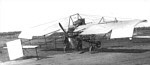
The Walden V to XII were built during 1911-13. The eight built were all monoplanes with tricycle gears and various powerplants, for flight training. Reportedly IIX had a 50hp Roberts, and a 40hp Hall-Scott powered the last four.
Walden IV
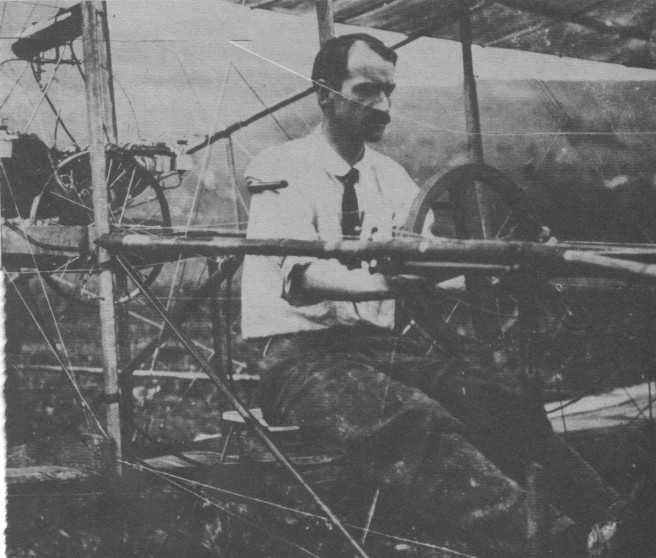
Built by Dr. Henry W Walden in 1910, the Walden IV was similar to III, but with 40hp Hall-Scott and ailerons. The Model IV really flew on 3 August 1910 to become the first successful US-designed and -built monoplane, and the first US craft to be licensed by FAI and Aero Club of America.
Reportedly III and IV went to Dyott when the partnership broke up in 1911 and were sold in South America; Walden retained the hangar and inventory.
Walden III
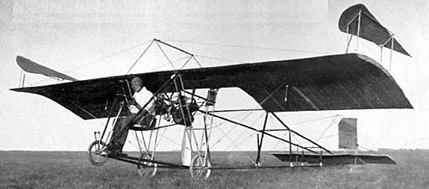
The Walden III had vane-like fins over the wingtips for “lateral balance”. Powered by a 25hp Anzani pusher engine, the single seater rose a few feet off the ground and travelled just over 10 yards before the plane’s one-gallon gas tank ran dry, becoming the first American monoplane to fly. However, this flight was discounted because of its brevity.
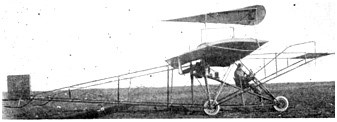
On August 3, 1910, with a 10-gallon tank installed, he tried again and became airborne for about 10 yards at a few feet altitude, albeit still brief, flight that ended in a crash beyond economic repair, breaking several ribs and fracturing his collarbone. This epic flight made headlines in a NYC newspaper and the record book.
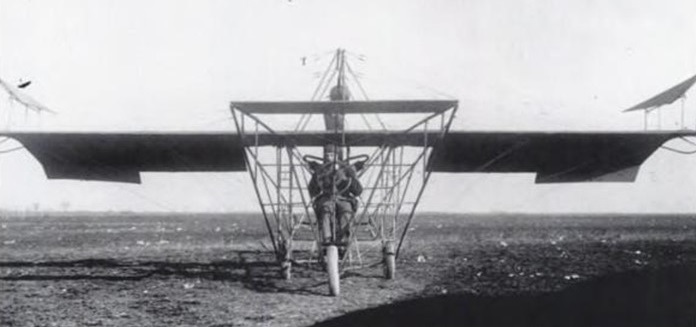
Reportedly III and IV went to Dyott when the partnership broke up in 1911 and were sold in South America; Walden retained the hangar and inventory.
There were claims of 6 more IIIs under construction, but if they were ever completed, flown, or sold is unknown.
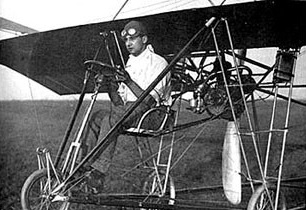
Walden I / II

The 1909 Walden I and Walden II were described as looking like two biplanes with an open-framework fuselage connecting them. The Walden I was scrapped after proving to be too underpowered to fly, so II was built with 25hp Anzani pusher. It, too, failed to get airborne.
Dr W. H. Walden tested this machine at Morris Park in Bronx in the autumn of 1909. A unique feature was the automatically stabilizing lateral control. It was operated by the weight of the engine, which was suspended as a pendulum and operated control surfaces on the wing tips via wires.
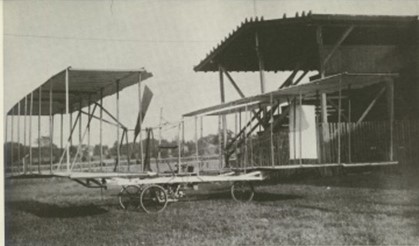
The machine was destroyed in November or December. It was stored outdoors and was overturned by the wind, reducing it to “a mass of stick and wires”.

I
Engine: 15hp auto
Wing span: 26’0″
Length: 20’0″
Seats: 1
II
Engine. 25hp Anzani
Wing span: 30’0″
Length: 20’0″
Wainscott Li’l Twister / Case Special
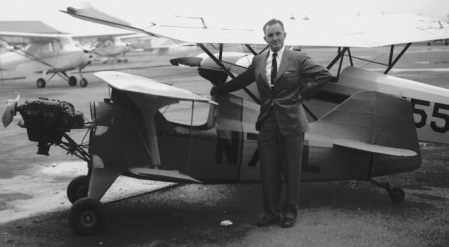
The aircraft was a design of Lee Wainscott and appeared during the 1930s and the construction was started by a gentleman named Case. Initial plans called for the use of a (modified) Heath Henderson motorcycle engine, but by the time the aircraft was completed a 35hp Lawrence radial was installed. The aircraft was rumoured to have a movable (pivoting) lower wing for the lateral control thus eliminating the need of ailerons.
For several reasons the aircraft never flew prior to WW II and it was later acquired by brothers P.E (Pat) and R.L. Day who made several modifications (the lower wing became fixed and ailerons were added to the upper wing) and also installed a 65 hp Lycoming O-145-B2 engine. The aircraft finally first flew during 1962, registered N72L, and in 1969 it was sold to Howard C. Cagle. It was reported that the aircraft flew no more than 5 times in total and then went into storage.

Over the years this extremely small aircraft was reported under various names including Case Special and Wainscott Li’l Twister.
Span: 13 ft 4 in (4.06 m)
Length: 12 ft 3 in (3.73 m)
Height: 4 ft 4 in (1.32 m)
Max speed: 155 mph (249 kmh)
Cruise speed: 140 mph (225 kmh)
Wainfan FMX-4 Facetmobile
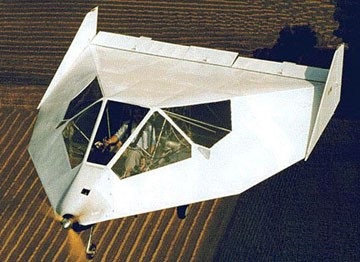
An “experimental lifting-body sportplane,” creation of Barnaby and Lynne Wainfan, and Rick Dean, took 2.5 years to develop and build. First flown on 22 April 1993, after 130 hours flight time, registered N117WD, it was damaged in a forced landing after the 2-stroke 46 horsepower engine malfunctioned at 500 agl. The plane landed at 28 mph and Barnaby walked away.
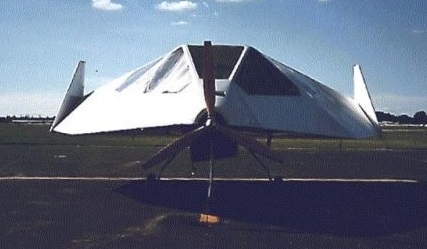
It was in reconstruction in 1999 with a Jabiru 4-cylinder replacement engine.
Engine: Rotax 503DC, 50hp
Wing span: 15’0″
Length: 19’6″
Useful load: 250 lb
Max speed: 110 mph
Cruise speed: 90 mph
Stall: 25-30 mph
Range: 200-250 mi
Ceiling: 11,000′
Empty wt: 370 lb
Seats: 1

