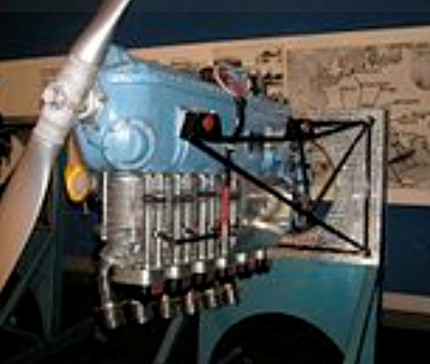
Alfa Romeo 115

The Alfa Romeo 110 and 115 were Italian air-cooled inverted inline engines for aircraft use, mainly for training and light planes. The Alfa Romeo 115 was a six-cylinder engine produced between 1936 and 1956; some 1,600 units were built. It was based on the de Havilland Gipsy Six engine.

Alfa Romeo 115
Power output:89 kW (120 hp)

Applications:

Ambrosini SAI.2S (version 115-I)
Ambrosini SAI.3
Bestetti BN. 1 (one prototype)
Breda Ba.75 (prototypes)
Breda Ba.79S
CANT Z.1012 (or 110)
Caproni Ca.164
Caproni Ca.309 Ghibli (version 115-II)
Nardi FN.305
Nardi FN.315
Saiman 200

Alfa Romeo 115bis
Power output: 145 kW (195 hp)

Applications

Fiat G.46-1B
Fiat G.46-3B and G.46-4B

Alfa Romeo 115ter
Type: six-cylinder inverted air-cooled inline engine
Bore: 118 mm (4.65 in)
Stroke: 140 mm (5.52 in)
Displacement: 9.186 L (560.6 in3)
Length: 1,642 mm (64.7 in)
Width: 498 mm (19.6 in)
Height: 825 mm (32.5 in)
Dry weight: 233 kg (515 lb)
Valvetrain: Two valves per cylinder, sodium-cooled exhaust valves
Fuel system: Two downdraught carburettors
Fuel type: 100/130 grade
Oil system: Pressure type. One pressure and three scavenger pumps
Cooling system: Air-cooled
Power output: 168 kW (225 hp) (max power), 160 kW (215 hp) (normal)
Compression ratio: 6.5:1
Specific fuel consumption: 150 g/hp/hr (0.55 lb/hp/hr) (take-off)
Oil consumption: 2.5 kg/hr (5.5 lb/hr)
Power-to-weight ratio: 0.72 kW/kg (0.44 hp/lb)

Applications:

Ambrosini S.7
Fiat G.46-A, G.46-3A and G.46-4A

Alfa Romeo 110

The Alfa Romeo 110 and 115 were Italian air-cooled inverted inline engines for aircraft use, mainly for training and light planes. The Alfa Romeo 110 was a four cylinder engine based on the de Havilland Gipsy Major, with approximately 500 units produced.

Alfa Romeo 110
Power output: 89 kW (120 hp)

Applications:

Ambrosini SAI.10
Fiat G.2 (G.2/2 variant)
CANSA C.5B/1
CANT Z.1010 Balilla (one prototype)
CANT Z.1012
Saiman 202

Alfa Romeo 110ter
Power output: 97-108 kW (130-145 hp)

Applications:

Ambrosini S.1001
Agusta CP-110

Alexander Eaglerock

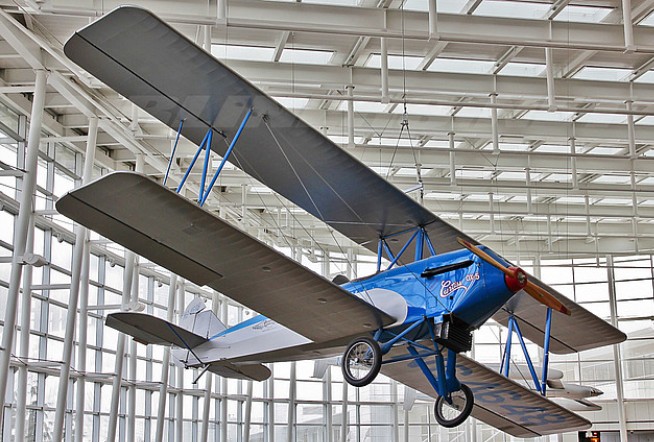
Designed by Daniel Noonan the Eaglerock was extensively redesigned as the A-1 by Al Mooney in 1926. The design had folding wings, and Warren-truss wing struts with no wire rigging, and based on surplus Longren components.

The name came about from an injured Golden Eagle cared for as a pet by factory employees, appended with “Rock,” honoring the nearby Rocky Mountains.

The 1925 Alexander Eaglerock had trouble get¬ting off the ground at Denver, where it was being built, because its wing area was too small. Mooney improved and lengthened the wing. He made the up¬per and lower wings exactly alike and left out the center section. So where the fuselage fitted into the bottom set, it gave them a longer span.

Eaglerock Combo-Wing

First flying on 19 September 1925, powered with a 100 hp Kinner engine the Eaglerock sold at $3907 flyaway factory. The craft was available with $1562.80 down and the balance in twenty semi-monthly installments of $128.94. Powered by a 150 hp Hisso A the flyaway price was $3230, or $1800.00 down and twenty semi-monthly installments of $107.25. Powered by a 165 hp Wright J-6 the flyaway price was $3397, or $2238.80 down and twenty semi-monthly installments of $182.71.

Eaglerock Kinner 100 hp

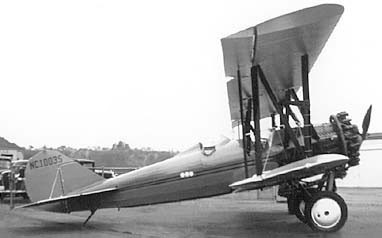
The second Eaglerock design, the 1926 Eaglerock A-1 or New Eaglerock, had 40’0″ lower wing.

Alexander Eaglerock A-1 NC10035

First flying on 7 January 1926, piloted by Capt Cordner, the A-1 sold for $6,500, or $2,250 less motor, receiving DoC approval (ATC 57) in 1928.

895 of all Eaglerocks were built 1927-32. Company records claim a total of about 450 Eaglerock models built by the end of 1928.

Gallery

Engine: Curtiss OX-5

Eaglerock A-1
Engine: 220hp Wright J-5
Wingspan: 36’8″
Length: 23’11”
Useful load: 786 lb
Max speed: 126 mph
Cruise: 108 mph
Stall: 39 mph
Range: 580mi
Seats: 3

Albessard La Balancelle / Autostable

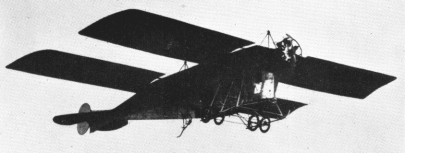
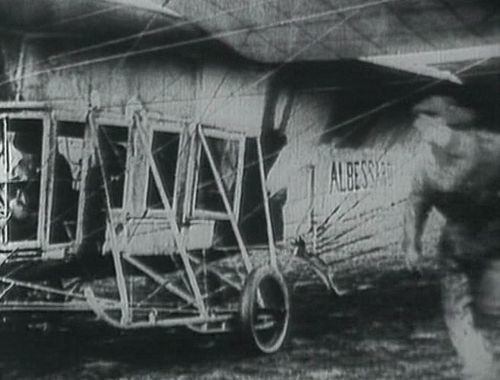
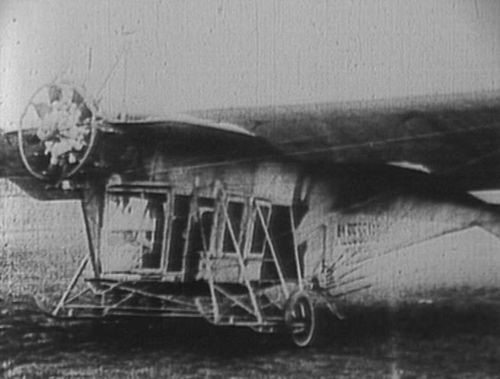
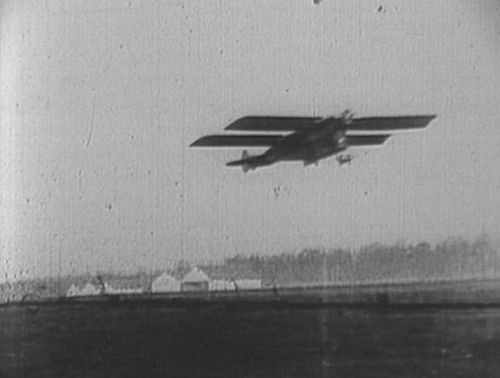
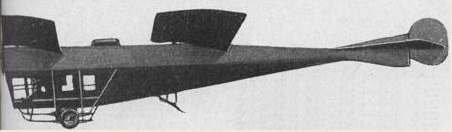
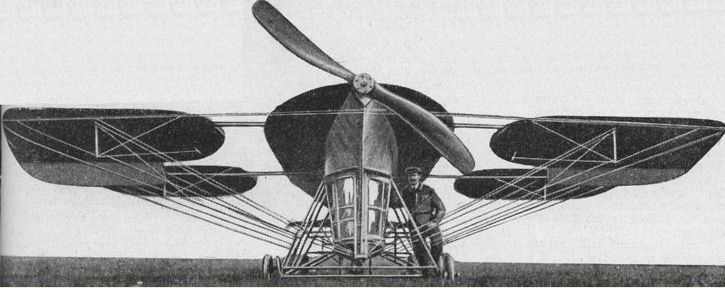
First actual built design of Lucien-Joseph-Antonin Albessard; although not necessarily named “La Balancelle” at the time. Built in 1912, the Albessard La Balancelle experimental aircraft had tandem wings.

Albessard tried to design a comfortable passenger aeroplane that would prevent stalling in alternating wind conditions, therefore he arranged the wings around an enclosed cabin to help keep the aircraft in the stream. Jules Vedrines tested the machine and noted that it was underpowered.

The design “Autostable” was efficient and research continued until 1926.