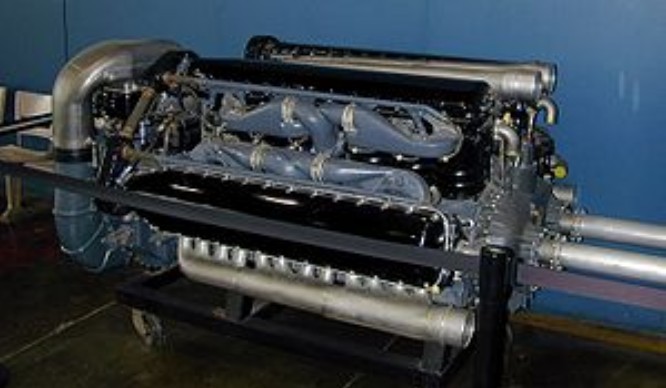
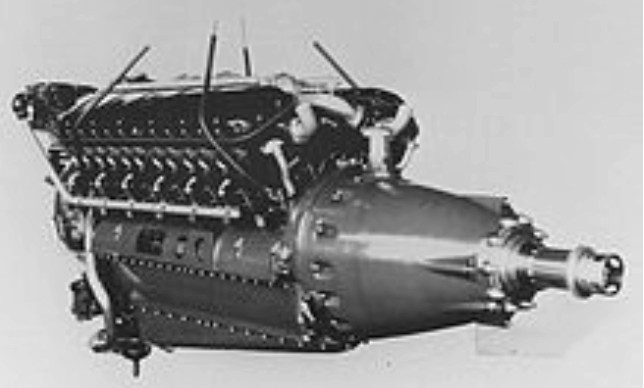
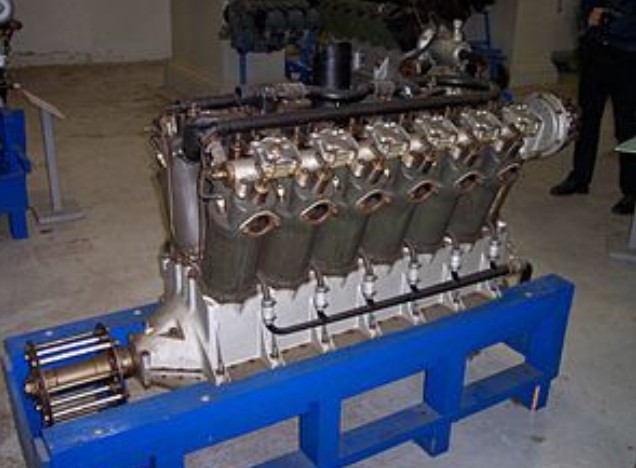
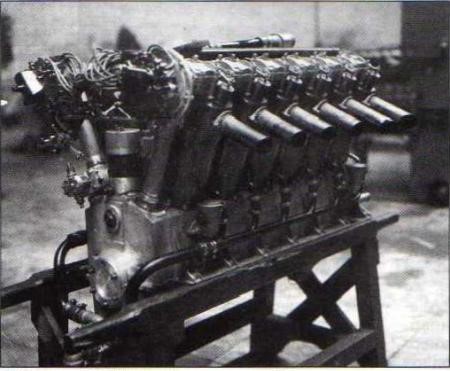
The Allison V-3420 was a large experimental W-configuration American piston aircraft engine, designed in 1937.
In 1937, at the behest of the United States Army Air Corps, the Allison Engine Company agreed to design and build a large-displacement high-power aircraft engine. The resulting liquid cooled V-3420 was essentially a pair of 12-cylinder Allison V-1710 in engines mated to a common crankcase with a 30° angle between the inner cylinder banks. The crankshafts of the two V-1710 engines were geared together to drive a common propeller shaft. Most V-3420 parts were interchangeable with those for V-1710-E and -F engines.
The V-3420 had a power-to-weight ratio of 1.6 kW/kg or 1 hp/lb, excellent for its time. It was envisioned as a powerful yet compact engine for several advanced Air Force projects of the day, including the Douglas XB-19, the Boeing XB-39 Superfortress, the Lockheed XP-58 Chain Lightning, and the General Motors P-75 Eagle. As none of these designs reached full-scale production, only about 150 V-3420s were built.
Variants: V-3420-A16R (-11)
V-3420-A16L (-13) left hand rotation of propeller, 1-stage supercharger with 1-stage turbo-charger and intercoler
V-3420-A18R (-17)
V-3420-A24 Supercharger ratio 7.2:1
V-3420-B (-23) Similar to the -A but with mechanically driven supercharger in two variable speed stages.
Specifications:
V-3420-A18R (-17)) Type: 24-cylinder turbosupercharged double-“Vee” liquid-cooled piston engine Bore: 5.5 in (139.7 mm) Stroke: 6 in (152.4 mm) Displacement: 3,420 in3 (56 L) Length: 97.7 in (2,482 mm) Width: 60.0 in (1,421 mm) Height: 38.7 in (863 mm) Dry weight: 2,655 lb (1,204 kg) Valvetrain: Single overhead camshaft per 6-cylinder block, two intake and two exhaust valves per cylinder, sodium-cooled exhaust valves. Supercharger: Single-speed one-stage gear-driven supercharger Turbocharger: General Electric turbocharger with intercooler Fuel system: Bendix-Stromberg PR-58B3 three-barrel injection-type downdraught with automatic mixture control. Fuel type: 100/130 Octane Oil system: Pressure fed at 60-70 psi (4.2 – 4.9 kg/m²) Cooling system: Liquid-cooled with a mixture of 70% water and 30% ethylene glycol, pressurized. Power output: Take-off 2,600 hp (1,940 kW) at 3,000 rpm at 46.0 inHg / +8.0Lb boost for 15 minutes Military 2,600 hp (1,940 kW) at 3,000 rpm at 25,000 ft (7,625 m) for 15 minutes Normal 2,100 hp (1,565 kW) at 2,600 rpm at 25,000 ft (7,625 m) maximum continuous power Max. Cruising 1,575 hp (1,175 kW) at 2,300 rpm at 25,000 ft (7,625 m) Specific power: 0.76 hp/cu in (34.6 kW/l) Compression ratio: 6.65:1 Specific fuel consumption: 0.41 lb/hp/hr (11 g/kW/hr) Oil consumption: 0.025 lb/hp/hr (138g/kW/hr) Power-to-weight ratio: 1.0 hp/lb (1.64 kW/kg)
The Allison Division of General Motors began developing the ethylene glycol-cooled engine in 1929 to meet a US Army Air Corps need for a modern, 1,000 hp (750 kW), engine to fit into a new generation of streamlined bombers and fighters. To ease production the new design could be equipped with different propeller gearing systems and superchargers, allowing a single production line to build engines for various fighters and bombers.
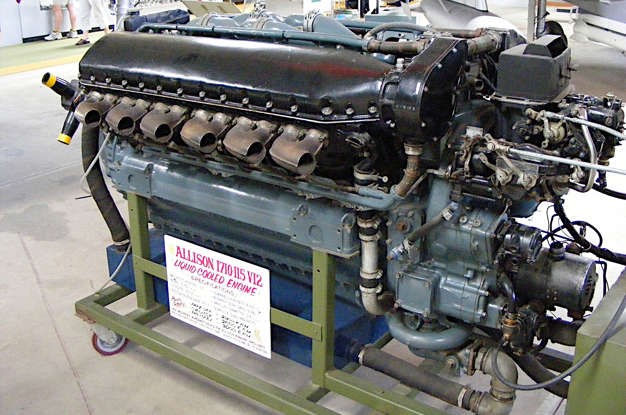
The V-1710 has 12 cylinders with a bore and stroke of 5.5 by 6 inches (140 by 150 mm) in 60° V-format, for 1,710.6 cu in (28.032 L) total displacement, with a compression ratio of 6.65:1. The valvetrain has overhead camshafts and four valves per cylinder.
The engine design benefited from the General Motors philosophy to build-in production and installation versatility. The engine was constructed around a basic power section from which different installation requirements could be met by fitting the appropriate accessories section at the rear and an appropriate power output drive at the front. A turbosupercharger could be used, if desired.
The accessory end had a one- or two-speed engine-driven supercharger that might have a second stage with or without an intercooler, the ignition magnetos and the customary assortment of oil and fuel pumps, all dictated by the application requirements. The front of the engine could have one of a number of different output drives. The drive might be a “long-nose” or close coupled propeller reduction gear, an extension drive to a remote gearbox, or a gearbox that could drive two wing-mounted propellers from a fuselage-mounted engine. The engine could be set up for right-hand or left-hand rotation, and could be used with a “tractor” or “pusher” propeller. This approach allowed easy changes of the supercharger(s) and supercharger drive-gear ratio. That gave different critical altitude ratings ranging from 8,000 to 26,000 feet (2,400 to 7,900 m).
The P-39, P-63, and XB-42 used V-1710-Es, exchanging the integral reduction gear for an extension shaft driving a remotely located reduction gear and propeller. Aircraft such as the P-38, P-40, P-51A, and P-82 used close-coupled propeller reduction gears, a feature of the V-1710-F series.
Another feature of the V-1710 design was its ability to turn the output shaft clockwise or counter-clockwise by assembling the engine with the crankshaft turned end-for-end, by installing an idler gear in the drive train to the supercharger and accessories, and installing a starter turning the proper direction. There was no need to re-arrange the ignition wiring, firing order, or the oil and Glycol circuits to accommodate the direction of rotation.
The U.S. Navy purchased the first V-1710s, the B model (the only V-1710 that did not have a gear-driven supercharger) in 1931 and installed them on the airships Akron and Macon with delivery on 12 Febuary 1935. The U.S. Army Air Corps purchased its first V-1710 in December 1932. They were the first aircraft engine specifically designed to use glycol as a coolant.
The Great Depression slowed development, and it was not until December 14, 1936 that the engine next flew in the Consolidated XA-11A testbed. The V-1710-C6 successfully completed the Army 150 hour Type Test on April 23, 1937 at 1,000 hp (750 kW), the first engine of any type to do so. The engine was then offered to aircraft manufacturers where it powered the Curtiss X/YP-37. All entrants in the new pursuit competition were designed around it, powering the Lockheed P-38, Bell P-39 and Curtiss P-40. When war material procurement agents from England asked North American Aviation to build the P-40 under license, NAA instead proposed their own improved aircraft design, using the V-1710 in their P-51A.
The Allison V-1710 aircraft engine was the only indigenous US-developed V-12 liquid-cooled engine to see service during World War II. The U.S. Army preference for turbosuperchargers early in the program meant that less effort was spent on developing suitable superchargers, and when smaller or lower-cost versions of the engine were desired, they generally had poor performance at higher altitudes. The V-1710 nevertheless gave excellent service when turbosupercharged, notably in the P-38 Lightning, which accounted for much of the extensive production run.
V-1710-115
Allison V-1710 models Allison’s internal model designation for the V-1710 started with the letter A and proceeded to the letter H. Each letter designated a family of engines that shared major components, but differed in specific design details. Each of these designs were identified by a number, starting with number 1. The last letter, which was introduced when both right hand turning and left hand turning engines were built, identified by the letter R or L respectively. The military model numbers were identified by a “dash number” following the engine description “V-1710”. The United States Army Air Corps models were the odd numbers, starting with “-1” and the United States Navy models were the even numbers, starting with “-2”.
V-1710-A “A” series engines were early development engines for the US Navy and US Army. The first military model was a single V-1710-2, which was first sold to the US Navy on June 26, 1930. The “A” engines had no counterweights on the crankshaft, 5.75:1 compression ratio, 2:1 internal spur gear-type reduction gear boxes, 8.77:1 supercharger ratio, 9 1/2 inch impeller, SAE #50 propeller shaft, a float-type carburetor, and produced 1070 hp at 2800 rpm on 92 octane gasoline.
V-1710-A1 / Military Model GV-1710-A 1 built. Rebuilt 2 times as XV-1710-2.
V-1710-A2 / Military Model GV-1710-1 Long reduction gear housing. 1 built.
V-1710-B “B” series engines were designed for US Navy airships. The military model was V-1710-4. They differed from the “A” series engines in that they did not have a supercharger, had two float-type down-draft carburetors were mounted directly to the intake manifold, an SAE #40 propeller shaft, and could be brought from full power to stop and back to full power in the opposite rotation in less than 8 seconds. They produced 600 to 690 hp at 2400 rpm.
V-1710-B1R, B2R / Military Model XV-1710-4 Quick reversing, remote 90 degree gearbox. 3 built for airships
V-1710-C “C” series engines were developed for highly streamlined pursuit aircraft for the US Army, and are easily identified by the long reduction gear case. The military models were V-1710-3, -5, -7, -11. -13, -15, -19, -21, -23, -33, producing between 750 and 1050 hp at 2600 rpm. These engines came in two groups, one group rated at full power at sea level, the other rated at full power at high altitude. The altitude rating difference was in the supercharger gear ratio, four of which were used: 6.23:1, 6.75:1, 8.0:1 and 8.77:1. These engines received heavier crankcases, a stronger crankshaft, SAE #50 propeller shaft, and Bendix pressure carburetors.
V-1710-C1, C2, C3, C4, C7, C10, C15 Military Model XV-1710-3, -5, -7, -9, -21, -33 Type test engines. 16 built. C2 rebuilt from -5 to -7. C4 first flight engine in A-11A and later in XP-37
V-1710-C8, C9 Military Model XV-1710-11, -15 Long nose. 3 built. C8 RH turn for XP-37, XP-38, C9 LH turn for XP-38 Redesigned by R M Hazen -C8 Tested in a modified Curtiss P-36 (XP-37) 1937
V-1710-C13 Military Model V-1710-19 Long nose. Early production P-40 engine
V-1750-D “D” series engines were designed for pusher applications using propeller-speed extension shafts and remote thrust bearings mounted to the airframe. The military models were V-1710-9, -13, -23, and -41, producing 1000 to 1250 hp at 2600 rpm. Supercharger ratios were 6.23:1, 8.0:1 or 8.77:1, depending on altitude rating. These engines had the compression ratio increased to 6.65:1. Marvel MC-12 fuel injection, which was unsatisfactory and quickly replaced by a float-type carburetor on -9 and -13 models. Later dash number engines used Bendix pressure carburetors. These engines were being designed at the same time as the V-3420 engine, and shared many assemblies as they were developed. The “D” series engines were the last of the “early” V-1710 engines.
V-1710-D1, D2 / Military Model YV-1710-7, -9, XV-1710-13 Pusher with extension shaft. 6 built for XFM-1
V-1710-E “E” series engines were designed for remote gearbox applications using crankshaft-speed extension shafts and remote 1.8:1 gearboxes with SAE #60 hollow propeller shafts. The military models were V-1710-6, -17, -31, 35, -37, -47, -59, -63, -83, -85, -93, -103, -109, -117, -125, -127, -129, -133,-135 and -137, producing 1100 to 2830 hp at 3000 rpm. Supercharger gear ratios were: 6.44:1, 7.48:1, 8.10:1, 8.80:1 and 9.6:1 depending on altitude rating. These engines were a complete redesign, and did not share many components with the earlier engine series. Almost all components were interchangeable with later series engines and the V-3420, and could be assembled as right hand or left hand turning engines in either pusher or tractor applications.
V-1710-E1, E2, E5 / Military Model V-1710-6, -17, -37 Remote gearbox. 5 built for XFL-1 and XP-39
V-1710-E4, E6 / Military Model V-1710-35, -63 Remote gearbox. P-39A/C engine
V-1710-E11, E21, E22, E27, E30, E31 Military Model V-1710-47, -93, -109, -117, -133, -135 Remote gearbox. P-63/A/C/D/E/F/G/H engine
V-1710-E23RB, E23LRB / Military Model V-1710-129 Remote gearbox. Douglas XB-42 dual installation with combining gearbox and extension shafts
V-1710-F
Allison V-1710-F
“F” series engines were designed for late model pursuit aircraft, and are identified by the compact external spur gear-type reduction gear box. Military models were V-1710-27, -29, -39, -45, -49, -51, -53, -55, -57, -61, -75, -77, -81, -87, -89, -91, -95, -99, -101, -105, -107, -111, -113, -115, -119, producing 1150 to 1425 hp at 3000 rpm. The V-1710-101, -119 and -121 models has an auxiliary supercharger, some with a liquid cooled aftercooler. Supercharger gear ratios were: 6.44:1, 7.48:1, 8.10:1, 8.80:1 and 9.60:1 depending on altitude rating. These engines had either a six or twelve weight crankshaft, revised vibration dampeners that combined to allow higher engine speeds, SAE #50 propeller shaft, and higher horsepower ratings. The “E” series and “F” series engines were very similar, the primary difference being the front crankcase cover, which was interchangeable between the two series engines.
V-1710-F1 / Military Model V-1710-25 Short nose. 1 built Development engine for XP-38
V-1710-F2R, F2L / Military Model V-1710-27, -29 Short nose. P-38D/E engines
V-1710-F3R / Military Model V-1710-37 Short nose. 2 built for NA-73X Mustang prototype
V-1710-F3R / Military Model V-1710-39 Short nose. P-40D/E and P-51A Production engine
V-1710-F4R / Military Model V-1710-73 Short nose. P-40K engine
V-1710-F5R, F5L / Military Model V-1710-49, -53 Short nose. P-38F engine
V-1710-F10R, F10L / Military Model V-1710-51, -55 Short nose. P-38 engine
V-1710-F30R, F30L / Military Model V-1710-111, -113 Short nose. P-38L engine
V-1710-F32R / Military Model V-1710-119 Short nose and two stage supercharger. XP-51J
V-1710-G “G” series engines were designed for high-altitude pursuit aircraft, and are identified by the auxiliary supercharger with a Bendix “Speed-Density” fuel control. Military models were V-1710-97, -131, -143, -145, and -147, producing 1425 to 2000 hp at 3000 rpm. Supercharger gear ratios were: 7.48:1, 7.76:1, 8.10:1, 8.80:1 and 9.60:1 depending on altitude rating. These engines were equipped with an SAE #50 propeller shaft and a single power lever to regulate engine performance, reducing the pilot’s workload when managing this very complex engine.
V-1710-G1R / Military Model V-1710-97 WER test engine
V-1710-G3R / Military Model V-1710-131 geared drive
V-1710-G4R remote extension shaft drive version of G3R
V-1710-G6R, G6L / Military Model V-1710-145 -147 P-82E/F engine
V-1710-H “H” series engines were to use a two-stage supercharger driven by a two-stage air-cooled power recovery turbine. The engine was to have an aftercooler and port-type fuel injection. Not built.
Supercharger The V-1710 has often been criticized for not having a “high-altitude” supercharger. The comparison is usually to the later, two-stage, versions of the Rolls-Royce Merlin built by Packard as the V-1650 and used in the P-51B Mustang and subsequent variants. The US Army had specified that the V-1710 was to be a single-stage supercharged engine and, if a higher altitude capability was desired, the aircraft could use their newly developed turbosupercharger as was featured in the P-37, P-38, and XP-39.
The benefits of a two-stage supercharger eventually became so clear that Allison did make some efforts in this direction. Allison attached an auxiliary supercharger in various configurations to the existing engine-mounted supercharger and carburetor. Early versions of these two-stage supercharger engines were used on the P-63. No intercooler, aftercooler, or backfire screen (flame trap) were incorporated into these two-stage V-1710 engines (except for the V-1710-119 used on the experimental P-51J, which had an aftercooler). The two-stage Merlin engines had all of these features, which were designed to prevent detonation from charge heating and backfire into the supercharger. The G-series V-1710s installed on the F-82 E/F/G models had only anti-detonation injection to deal with these problems, and not surprisingly had severe reliability and maintenance problems. In one record, it was stated that the F-82 required 33 hours of maintenance for each hour of flight.
Although the early V-1710 powered P-39, P-40 and P-51A airplanes were limited to combat operations at a maximum of about 15,000 feet (4,600 m) they were available in comparatively large numbers and were the mainstay of some Allied Air Forces in all but the European theater of war. The engines proved to be robust and little affected by machine-gun fire. In total, over 60 percent of the US Army Pursuit aircraft operated during WWII were powered by the V-1710.
Allison continuously improved the engine during the war. The initial rating of 1,000 hp (750 kW) was incrementally increased; the final V-1710-143/145(G6R/L) was rated for 2,300 hp (1,700 kW). By 1944, the War Emergency Power rating on the P-38L was 1,600 hp (1,200 kW).
The most powerful factory variant was the V-1710-127, designed to produce 2,900 hp (2,200 kW) at low altitude and 1,550 hp (1,160 kW) at 29,000 feet (8,800 m). This engine was static tested at 2,800 hp (2,100 kW) and was planned for installation in an XP-63H aircraft. The end of the war ended this development, so this promising experiment never flew. The extra power of this version was derived from using exhaust turbines, not to drive a turbosupercharger, but to return that energy to turning the crankshaft. This was called a “turbo-compound” arrangement.
Improvements in manufacturing brought the cost to produce each engine from $25,000 down to $8,500 and allowed the installed lifetime of the engine to be increased from 300 hours to as much as 1,000 hours for the less stressed powerplants. Weight increases needed to accomplish this were minimal, with the result that all models were able to produce more than 1 hp/lb (1.6 kW/kg) at their takeoff rating. Comparisons between Allison engine and the Rolls-Royce Merlin engine are inevitable. What can be said for the Allison is that it made more power at less boost with a longer time between overhauls and the part count was nearly half that of the Merlin engine which facilitated mass production greatly. The British-made Merlin engines were still reliant upon hand-crafted and fitted parts from skilled craftsmen, something which was corrected by the redesign and success of the Packard V-1650 license-produced version of it in the United States, built with American production-line techniques. There also was a high degree of commonality of parts throughout the series. The individual parts of the Allison series were produced to a high degree of standardization and reliability, using the best technology available at the time. Even after the War, racing Merlins used Allison connecting rods. Allison employed a modular design, so that it was capable of being mated to many different styles of turbo-superchargers and various other accessories, although the variety of turbo-superchargers available for installation was limited due to the constraints of single-engine fighter design. Since it was produced in large numbers and was highly standardized, the engine has been used in many postwar racing designs. Its reliability and well-mannered operation allowed it to operate at high rpm for extended periods. Following the war, North American built 250 P-82E/F for air defense roles into the early 1950s. This was the final military role for the V-1710.
Turbocharger
The Army had earlier decided to concentrate on turbosuperchargers for high altitude boost, believing that further development of turbochargers would allow their engines to outperform European rivals using superchargers. Turbosuperchargers are powered by the engine exhaust and so do not draw power from the engine crankshaft, whereas superchargers are connected directly by gears to the engine crankshaft. Turbosuperchargers do increase the exhaust back-pressure and thus do cause a decrease in engine power, but the power increase due to increased induction pressures more than make up for that decrease. Crankshaft-driven superchargers require an increasing percentage of engine power as altitude increases (the two-stage supercharger of the Merlin 60 series engines consumed some 230-280 horsepower at 30,000 ft). General Electric was the sole source for research and production of American turbosuperchargers during this period.
Turbosuperchargers were successful in U.S. bombers, which were exclusively powered by radial engines.
Mating the turbocharger with the Allison V-1710 proved to be problematic. As a result, designers of the fighter planes that utilized the V-1710 were invariably forced to choose between the poor high-altitude performance of the V-1710 versus the increased problems brought on by addition of the turbosupercharger. The fates of all of the V-1710 powered fighters of World War II would thus hinge on that choice.
The original XP-39 was built with a V-1710 augmented by a Type B-5 turbosupercharger as specified by Fighter Projects Officer Lieutenant Benjamin S. Kelsey and his colleague Gordon P. Saville. Numerous changes were made to the design during a period of time when Kelsey’s attention was focused elsewhere, and Bell engineers, NACA aerodynamicists and the substitute fighter project officer determined that dropping the turbocharger would be among the drag reduction measures indicated by borderline wind tunnel test results; an unnecessary step, according to aviation engineer and historian Warren M. Bodie. The production P-39 was thus stuck with poor high-altitude performance and proved unsuitable for the air war in Western Europe which was largely conducted at high altitudes. The P-39 was rejected by the British, but used by the U.S. in the Mediterranean and the early Pacific air war, as well as shipped to the Soviet Union in large numbers under the Lend Lease program. The Soviets were able to make good use of P-39s because of its excellent maneuverability and because the air war on the Eastern Front in Europe was primarily short ranged, tactical, and conducted at lower altitudes. In the P-39, Soviet pilots scored the highest number of individual kills made on any American, or British fighter type.
The P-40, which also had only the single-stage, single-speed-supercharged V-1710, had similar problems with high-altitude performance.
The P-38 was the only fighter to make it into combat during World War II with turbosupercharged V-1710s. The operating conditions of the Western European air war – flying for long hours in intensely cold weather at 30,000 feet (9,100 m) – revealed several problems with the turbosupercharged V-1710. These had a poor manifold fuel-air distribution and poor temperature regulation of the turbosupercharger air, which resulted in frequent engine failures (detonation occurred in certain cylinders as the result of persistent uneven fuel-air mixture across the cylinders caused by the poor manifold design). The turbosupercharger had additional problems with getting stuck in the freezing air in either high or low boost mode; the high boost mode could cause detonation in the engine, while the low boost mode would be manifested as power loss in one engine, resulting in sudden fishtailing in flight. These problems were aggravated by suboptimal engine management techniques taught to many pilots during the first part of WWII, including a cruise setting that involves running the engine at a high RPM and low manifold pressure with a rich mixture. These settings can contribute to overcooling of the engine, fuel condensation problems, accelerated mechanical wear, and the likelihood of components binding or “freezing up.” Details of the failure patterns were described in a report by General Doolittle to General Spatz in January 1944. In March 1944, the first Allison engines appearing over Berlin belonged to a group of P-38H pilots of 55FG, engine troubles contributing to a reduction of the force to half strength over the target. It was too late to correct these problems in the production lines of Allison or GE, and so the P-38s were steadily withdrawn from Europe until they were no longer used for bomber escort duty with the Eighth Air Force by October 1944. A few P-38s would remain in the European theater as the F-5 for photo reconnaissance.
The P-38 had fewer engine failures in the Pacific Theater, where operating techniques were better developed (such as those recommended by Charles Lindbergh during his P-38 flight testing in the PTO) the fuel quality was consistently superior and the Japanese did not operate at such high altitudes.
Using the same P-38Gs which were proving difficult to maintain in England, Pacific-based pilots were able to use the aircraft to good advantage including, in April 1943, Operation Vengeance, the interception and downing of the Japanese bomber that was carrying Admiral Isoroku Yamamoto. New P-38 models with ever-increasing power from more advanced Allisons were eagerly accepted by Pacific air groups.
When Packard started building Merlin V-1650 engines in America, certain American fighter designs using the Allison V-1710 were changed to use the Merlin. The P-40F, a Lend Lease export to Britain, was one of the first American fighters to be converted to a Packard-Merlin engine. However, the installed engine was the V-1650-1 with a slightly improved single-stage, two-speed supercharger, yielding only modest gains in performance.
The first production P-51A had the Allison V-1710 without turbosupercharger and thus, poor high altitude performance. At low altitudes, the P-51A was substantially faster than the Spitfire, which very much impressed the British when they first received the plane; they quickly realized the P-51 had an outstanding low-drag airframe and the airplane could become one of the best of the war if the Allison V-1710 engine were replaced by the two-stage-supercharged Merlin. Conversion proceeded on both sides of the Atlantic, with North American Aviation engineers making the definitive changes to the airframe to fully integrate the Packard-Merlin V-1650-3 into the P-51B. Ironically, because the P-51 was not originally developed for the USAAF, this was allowed to proceed rapidly with no Army input (or interference). A similar attempt to cure the problems of the P-38 by replacing its Allisons with Merlins was quashed by the USAAF, after protests from Allison.
Starting with the V-1710-45 around 1943, Allison attached an auxiliary supercharger to some of its engines in an effort to improve high-altitude performance, with limited success. Although described as a two-stage supercharger, it was essentially an afterthought and did not have the full refinements of the two-stage Merlin, such as the pressure-altitude governed two-speed gearbox and the intercooling system. Various configurations of this auxiliary supercharger were used in production versions of the V-1710 that powered aircraft such as the Bell P-63 and North American P-82E/F/G series. In addition, it was tried or studied as the powerplant for many experimental and test aircraft such as variants of the Boeing XB-38, Republic XP-47A, both with turbo-superchargers (AP-10), Curtiss XP-55 Ascender, and Douglas XB-42 Mixmaster.
Post-war The V-1710-powered F-82 did not arrive in time for World War II, but did see brief action in the Korean War, although the type was completely withdrawn from Korea by the end of 1950. It had a short service life that was probably due to a combination of factors: poor reliability from the G-series V-1710 engines, low numbers of F-82s produced, and the arrival of jet fighters. The initial production P-82B had Merlin engines, but North American was forced to use the Allison V-1710 for the E/F/G models when Packard stopped production of the Merlin engine.
In total, over 70,000 V-1710s were built by Allison during the war, all in Indianapolis, Indiana.
Other uses The V-1710’s useful life continued, as thousands were available on the surplus market. In the 1950s, many drag racers and land speed racers, attracted by its reliability and good power output, adopted the V-1710; Art Arfons and brother Walt in particular used one, in Green Monster. It proved unsuccessful as a drag racing engine, being unable to accelerate rapidly, but “could taxi all day at 150”.Unlimited hydroplane racing also became a big sport across the U.S. at this time and V-1710s were often tuned for racing at up to 4,000 hp (3,000 kW)—power levels that were beyond design criteria and significantly reduced durability.
Later, the warbird movement began to restore and return to the air examples of the classic fighters of the war and many V-1710-powered pursuit airplanes began to fly again, with freshly overhauled engines. The reliability, maintainability, and availability of the engine has led others to use it to power flying examples of aircraft whose original engines are unobtainable. This includes newly manufactured Russian Yak-3 and Yak-9 airplanes, originally powered by Klimov V-12s in World War II, as well as projects such as a replica Douglas World Cruiser and Focke-Wulf Fw 190D by Flug Werk of Germany.
Applications:
Bell P-39 Airacobra Bell P-63 Kingcobra Boeing XB-38 Flying Fortress Curtiss P-40 Warhawk Curtiss-Wright XP-55 Ascender Curtiss XP-60A Curtiss YP-37 Douglas XB-42 Mixmaster Lockheed P-38 Lightning North American A-36 Apache North American F-82 Twin Mustang North American P-51 Mustang Republic XP-47
Specifications:
V-1710-F30R Type: 12-cylinder supercharged liquid-cooled 60° “Vee” piston aircraft engine Bore: 5.5 in (139.7 mm) Stroke: 6.0 in (152.4 mm) Displacement: 1,710 cu in (28 L) Length: 85.81 in (2,180 mm) Width: 29.28 in (744 mm) Height: 37.65 in (958 mm) Dry weight: 1,395 lb (633.5 kg) Valvetrain: Two intake and two exhaust valves per cylinder with sodium-cooled exhaust valves, operated by a single gear-driven overhead camshaft per each bank of cylinders Supercharger: Centrifugal-type, single-stage, 15-vane impeller, 10.25 in (260 mm) diameter Fuel system: Bendix Stromberg carburetor with automatic mixture control Fuel type: 100 octane Oil system: Dry sump with one pressure and two scavenge pumps. Cooling system: Liquid-cooled with a mixture of 70% water and 30% ethylene glycol, pressurized. Power output: 1,475 hp (1,100 kW) at 3,000 rpm Specific power: 0.86 hp/cu in (39.3 kW/L) Compression ratio: 6.65:1 Power-to-weight ratio: 1.05 hp/lb (1.76 kW/kg)
In May 1917, one month after the US had declared war on Germany, a Federal task force known as the Aircraft Production Board summoned top engine designers Jesse G. Vincent (of the Packard Motor Car Company of Detroit) and E.J. Hall (of the Hall-Scott Motor Co. of Berkeley, California,) to Washington D.C. They were given the task of designing as rapidly as possible an aircraft engine that would rival if not surpass those of Great Britain, France, and Germany. The Board specified that the engine would have a high power-to-weight ratio and be adaptable to mass production. The Board brought Vincent and Hall together on 29 May 1917 at the Willard Hotel in Washington, where the two were asked to stay until they produced a set of basic drawings. After just five days, Vincent and Hall left the Willard with a completed design for the new engine.
The Liberty L-12 was a modular design where four or six cylinders could be used in one or two banks. A single overhead camshaft for each cylinder bank operated two valves per cylinder, in an almost identical manner to the inline six-cylinder German Mercedes D.III and BMW III engines, and with each camshaft driven by a vertical driveshaft that was placed at the back of each cylinder bank, again identical to the Mercedes and BMW straight-six powerplants. Dry weight was 844 lb (383 kg). Fifty-two examples of a six-cylinder version, the Liberty L-6, which very closely resembled the Mercedes and BMW powerplants in overall appearance, were produced but not procured by the Army. A pair of the 52 engines produced were destroyed by Dr. William Christmas testing his so-called “Christmas Bullet” fighter.
In July 1917, an eight-cylinder prototype assembled by Packard’s Detroit plant arrived in Washington for testing, and in August, the 27-litre (1,649 cubic inch) water-cooled 45° V-12 12-cylinder version was tested and approved. That fall, the War Department placed an order for 22,500 Liberty engines, dividing the contract between the automobile and engine manufacturers Buick, Ford, Cadillac, Lincoln, Marmon, and Packard. Hall-Scott in California was considered too small to receive a production order. Manufacturing by multiple different factories was facilitated by its modular design. Cadillac was asked to produce Liberty engines but William Durant was a pacifist who did not want General Motors facilities to be used for producing war material. This led to Henry Leland leaving Cadillac to form the Lincoln company to make Liberty engines. He quickly gained a $10,000,000 government contract to build 6,000 engines. Subsequently the order was increased to 9000 units, with the option to produce 8000 more if the government needed them.
However, Durant later changed his mind and both Cadillac and Buick produced the engines.
Other manufacturers in the program included Packard, Ford and Marmon. Lincoln had delivered 6500 of the 400 hp, V-12, overhead camshaft engines when production ceased in 1919.
Ford was asked to supply cylinders for the new engine, and rapidly developed an improved technique for cutting and pressing steel which resulted in cylinder production rising from 151 per day to over 2,000, Ford eventually manufacturing all 433,826 cylinders produced, and 3,950 complete engines. Lincoln constructed a new plant in record time, devoted entirely to Liberty engine production, and assembled 2,000 engines in 12 months. By the time of the Armistice with Germany, the various companies had produced 13,574 Liberty engines, attaining a production rate of 150 engines per day. Production continued after the war, for a total of 20,478 engines built between July 4, 1917 and January 1919.
While the 12-cylinder prototype was completed only 28 days after the first drawings were made, more than 1000 modifications to the design had to be made between September 1917 and February 1918. Nevertheless, 1050 Liberties were delivered to Britain between March and July 1918. They were fitted in the DH.9A.
Although it is widely reported otherwise, a few Liberty engines did see action in France as power for the American version of the DeHaviland DH4.
The Polikarpov I-2 used the M-5 engine with 12 cylinders in V and 420 hp of power (copy under license of the North American Liberty L-12 engine). It stood out for the careful work on the engine hood, of which at least two types were used. The most remarkable symbol of the upper region of the hood was the pipe through which the air flow entered the two “Zenit” carburettors. Cooling was basically achieved by means of a Lamblin radiator that could vary its angle of incidence by around 70º. The control of this radiator was carried out from the cockpit. A number of I-2s were delivered with fixed radiators attached to the fuselage.
Mikulin M-5
The Mikulin M-5 engine was used in the Grigorovich I-1, I-2 and MRL-1 fighters.
Variants:
V-1650 An inverted Liberty 12-A was referred to as the V-1650 and was produced up to 1926 by Packard — exactly the same designation was later applied, due to identical displacement, to the World War II Packard-built version of the Rolls-Royce Merlin.
Nuffield Liberty The Nuffield Liberty tank engine was produced in World War II by the UK car manufacturer Nuffield. It was a 27 L (1,649 in3) engine with an output of 340 hp (250 kW), which became inadequate for the increasing vehicle weights as the war progressed, and it suffered numerous problems with cooling and reliability. It was replaced in later British tanks by the Rolls-Royce Meteor, based on their Merlin aero engine.
Allison VG-1410 The Allison VG-1410 was an air-cooled inverted Liberty L-12, with a geared super-charger and Allison epicyclic propeller reduction gear and reduced displacement. (45⁄8″x7″=1,411 cu.in.)
Liberty L-6 A 6-cylinder version of the Liberty L-12, and nicknamed the “Liberty Six”:- a single bank of cylinders, with the resulting engine bearing a strong external resemblance to both the Mercedes D.III and BMW III straight-six German aviation engines of World War I.
Liberty L-8 An 8-cylinder V engine using Liberty cylinders in banks of four at 90°.
Applications:
Airco DH.4 Airco DH.9 Caproni Ca.60 Curtiss NC Curtiss Carrier Pigeon Airco DH.10 Douglas C-1 Douglas DT Douglas O-2 Fokker T.II Handley Page H.P.20 Witteman-Lewis XNBL RN-1 (Zodiac) Babs (land speed record car)
Specifications:
Liberty L-12 Type: 12-cylinder liquid-cooled Vee piston aircraft engine Bore: 5 in (127 mm) Stroke: 7 in (178 mm) Displacement: 1,649.3 cu in (27.03 l) in3 (27 L) Length: 67.375 in (1,711 mm) Width: 27 in (685.80 mm) Height: 41.5 in (1,054.10 mm) Dry weight: 845 lb (383.3 kg) Valvetrain: One intake and one exhaust valves per cylinder operated via a single overhead camshaft per cylinder bank Fuel system: Two duplex Zenith carburettors Fuel type: Gasoline Oil system: forced feed, rotary gear pressure and scavenge pumps, wet sump. Cooling system: Water-cooled Power output: 449 hp (334.8 kW) at 2,000 rpm (takeoff) Specific power: 0.27 hp/cu in (12.4 kW/L) Compression ratio: 5.4:1 (Army engines) 5:1 (navy engines) Specific fuel consumption: 0.565 pt/hp/hour (0.43 l/kW/hour) Oil consumption: 0.0199 pt/hp/hour (0.0152 l/kW/hour) Power-to-weight ratio: 0.53 hp/lb (0.87 kW/kg)
Hall-Scott L-6 / Liberty 6 1919 6-cylinder 224hp@1700rpm to 244hp@1830rpm 825.67ci dry wt: 546 lb
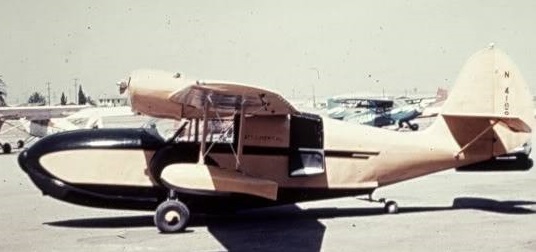
Allied Aviation Corp was developing, in 1945, the prototype of the Allied Trimmer light twin-engined flying-boat amphibian. Manufacturing rights acquired by Commonwealth Aircraft Inc., Kansas City, Missouri. 3 seat
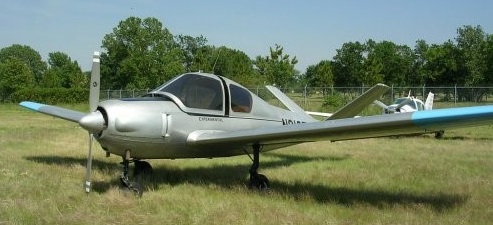
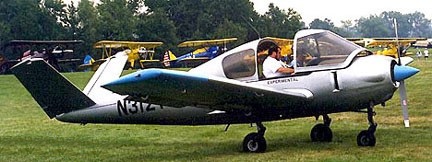
The A-2 was an original design by J A Phillips of the Allied Aircraft Corporation and the first prototype (NX3153K) first flew on 9 April 1948 under the power of a 145hp Continental C145-2 engine, piloted by Harry Ragland.
It was followed by a second prototype (which was destroyed in a hangar fire) and a third example was not completed and development was then shelved.
NX3153K was later extensively modified (possibly around 1970) by Mr. Thomas J. Ballentine who amongst others installed a 210hp Continental IO-360 and it was renamed as TJ-2 and registered N312TJ.
TJ-2
The aircraft is now in the collection of the Kansas Aviation Museum, Wichita, Kansas, and received it original designation back.
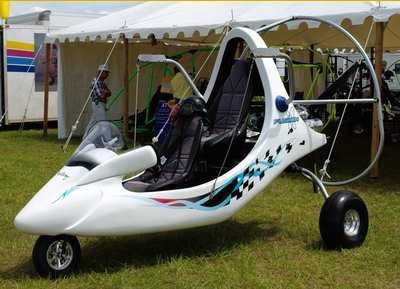
The Alliant Destiny Fusion is a two-seat powered parachute, designed and produced by Alliant Aviation based at Richland, Michigan. USA. The aircraft was designed to comply with the FAI Microlight rules. It features a parachute-style high-wing and two-seats in tandem in a semi-stressed fibreglass cockpit, tricycle landing gear and a single 52 hp (39 kW) Rotax 503 engine in pusher configuration. Versions were also available with a Rotax 582 or Hirth 3701 engine. The Rotax 503 version cost US$18,750 in 2004.
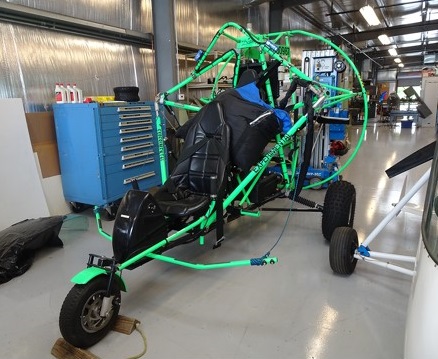
The Alliant Destiny XLT two-seat powered parachute was designed to comply with the FAI Microlight rules. It features a parachute-style high-wing and two-seats in tandem in an open frame, tricycle landing gear and a single 64 hp (48 kW) Rotax 582 engine in pusher configuration. Versions were also available with a Rotax 503 or Hirth 3701 engine. The Destiny XLT cost US$16,050 in 2004 with a Rotax 582 engine.
2005 Alliant Aviation Destiny XLT 2000
Destiny Fusion Powerplant: 1 × Rotax 503, 52 hp (39 kW) Propeller: 3-bladed Wing area: 540 sq ft (50 sq.m) Empty weight: 340 lb (154 kg) Gross weight: 849 lb (385 kg) Cruise speed: 29 mph; 25 kn (47 km/h) Rate of climb: 1,080 ft/min (5.5 m/s) Crew: two
ST Single-seat variant
LT Two-seat lightweight variant
XLT Heavier two-seat variant Powerplant: 1 × Rotax 582, 64 hp (48 kW) Propeller: 3-bladed Empty weight: 386 lb (175 kg) Gross weight: 992 lb (450 kg) Maximum speed: 34 mph; 30 kn (55 km/h) Cruise speed: 32 mph; 28 kn (52 km/h) Crew: two
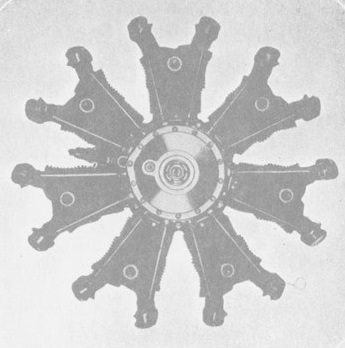
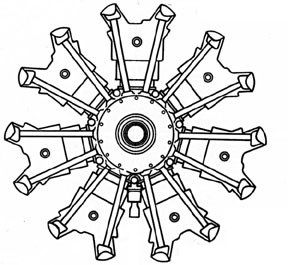
The Hess Warior aluminium alloy head is screwed and shrunk into the steel barrel, and bronze inserts and bushings, also shrunk in, take care of all points of wear such as valve seats, valve guides and spark plug bushings.
A two-piece crankshaft with the crank pin integral with the front half is used o transmit the power to the propeller. This construction permits the use of a one piece master rod. The articulating rods are of H section and machined all over.
The shaft is supported by two roller bearings and has a deep groove ball thrust bearing. Steel backed Babbitt bearings are used for the master rod and cam. The valve gear is entirely enclosed. All accessories are grouped at the rear of the engine.
Type: 7 cylinder, air cooled, fixed radial Rating: 115 hp at 11925 rpm Displacement: 447 cu.in Compression ratio: 5.2-1 Bore: 4.25 in Stroke: 4.5 in Diameter: 37 in Weight: 295 lb Fuel consumption: not more than .58 lb/hp/hr Oil consumption: not more than .025 lb/hp/hr Lubrication: Pressure and scavenger pumps Ignition: 2 Scintilla magneto Carburation: Holley Spark plugs: 2 per cylinder B.G. Price: $2,250 ATC 24
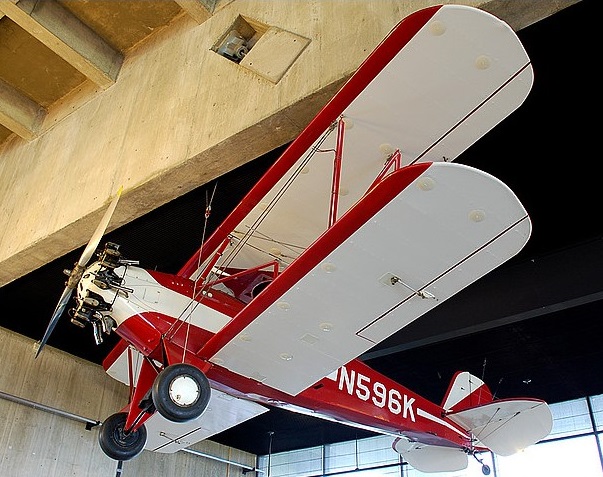
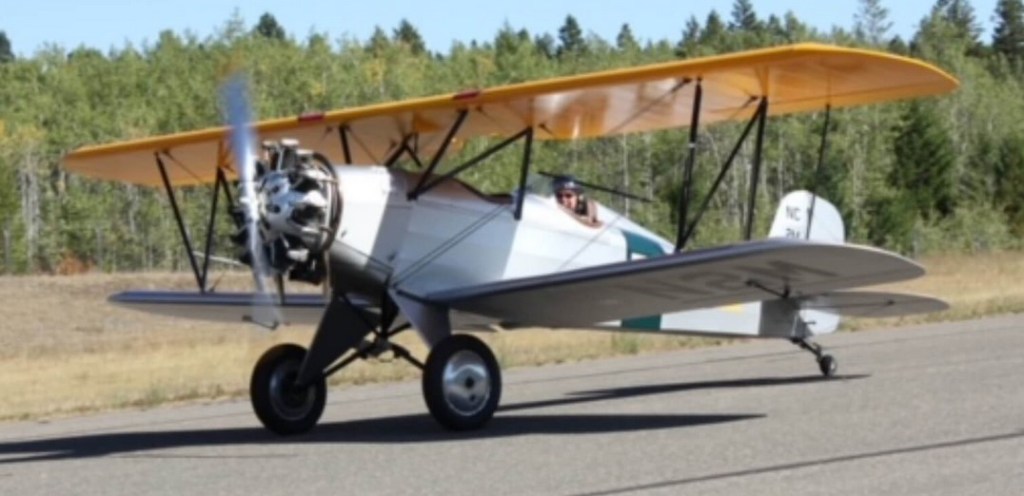
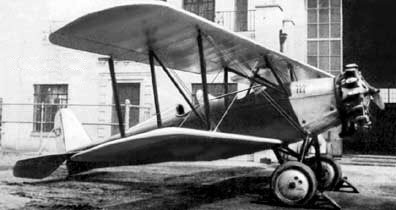
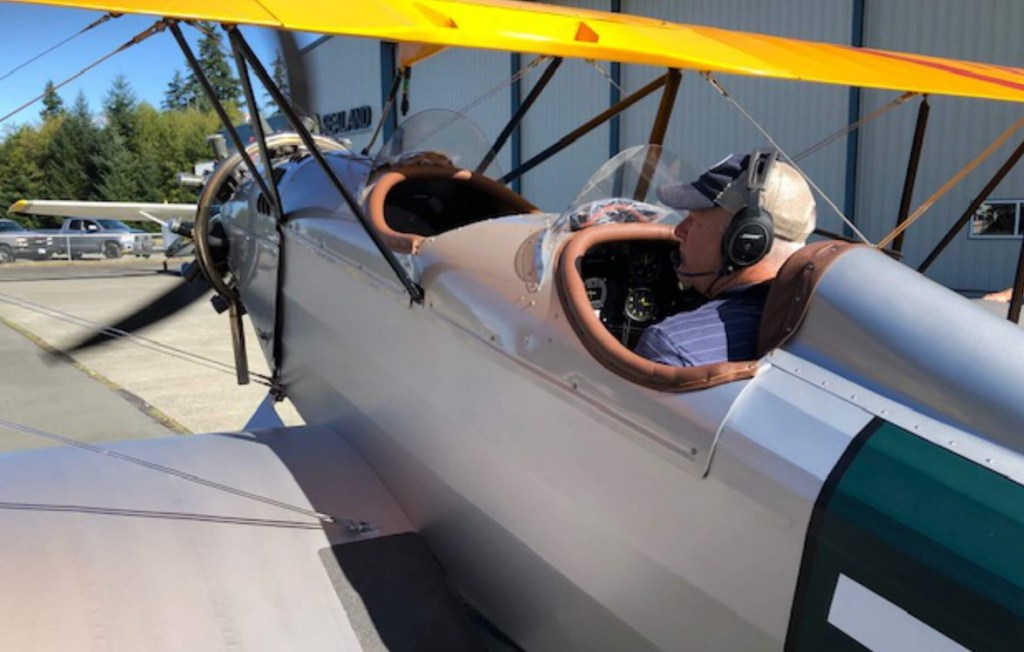
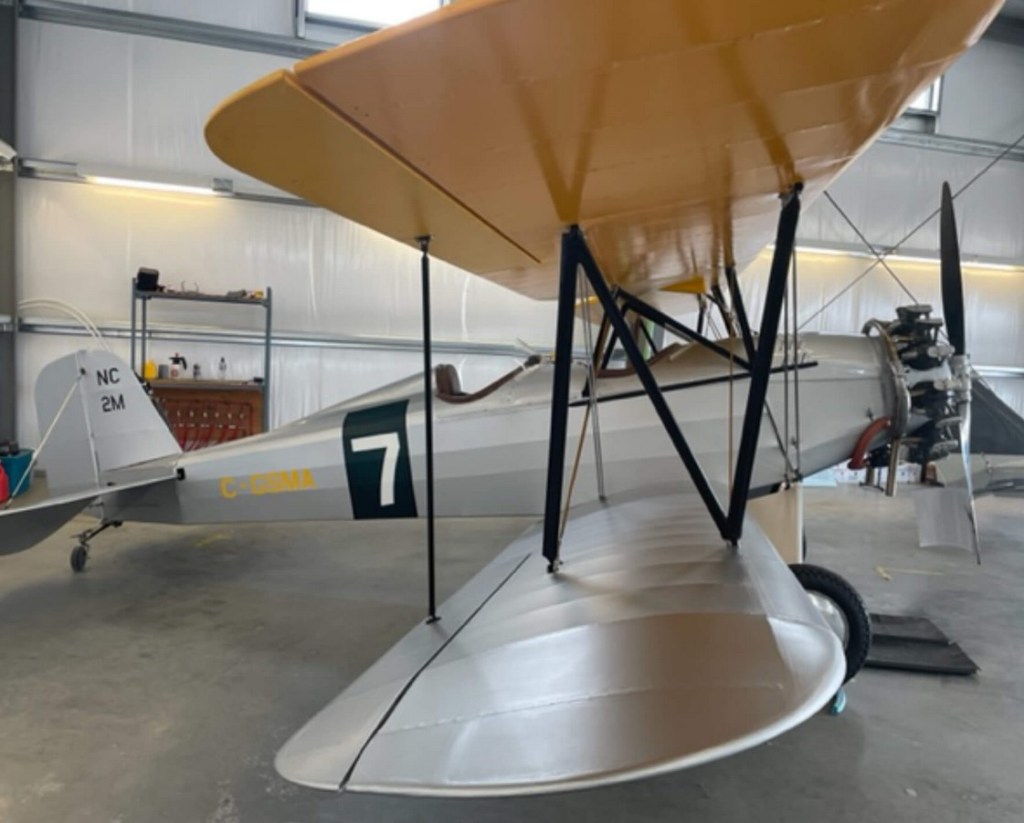
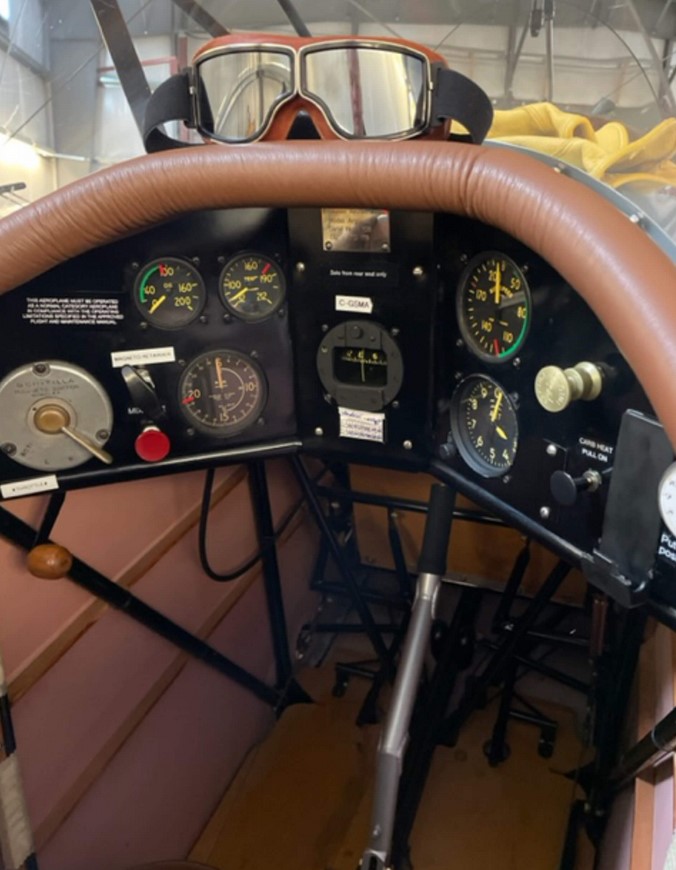
The Argo was a two-place open cockpit sport-trainer biplane seating two in tandem and was powered with the new 7-cylinder Hess “Warrior” engine. The type certificate number (ATC 178) for the Alliance Argo was issued in July of 1929 and it was manufactured by the Alliance Aircraft Corp. in Alliance, Ohio.
The prototype Argo was shown at the Detroit Air Show for 1929 and soon was in production. It was well received in flying circles all over the country, but the oncoming depression was hard felt at Alliance Aircraft. In all, some twenty of the Argo Sport-Trainer were built
After the prototype, N3601, 19 or 20 were manufactured (priced at $4,500) before the type became the Warrior line in 1930.
Alliance A-1 NC2M
By 2012, there were two survivors, with 1929 Argo N596K (cn 106) preserved at the Ohio History Center.
For transatlantic attempt built (1919) a special P.2 Seabird biplane with 21 -hour endurance, powered by Napier Lion engine; a second example crashed attempting Australia flight.
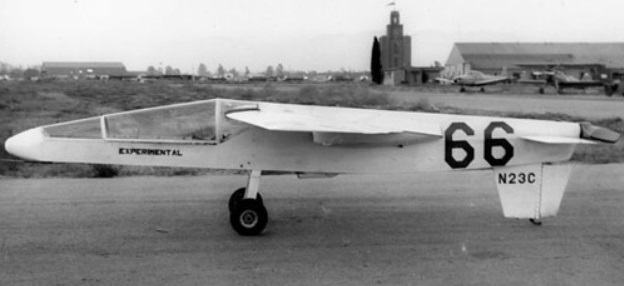
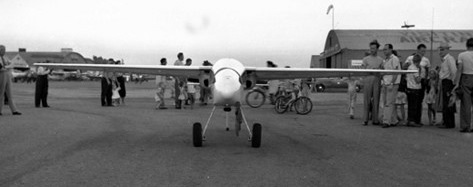
The Allenbaugh Grey Ghost Goodyear racer, No.66, registered N23C, was designed and built by Paul Schaupp for Ed Allenbaugh. A prone pilot required a fuselage of only 25 inch deep. The engine was behind the pilot.
The pilot, Dwight Dempster, was killed on the first flight when the engine failed on take-off due to oil sump pump failure. The Prone pilot arrangement was outlawed by the P.R.P.A.
Engine: Continental C-85 Span: 18 ft Length: 19 ft 6 in