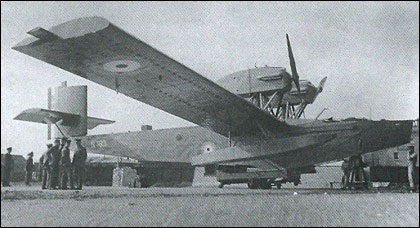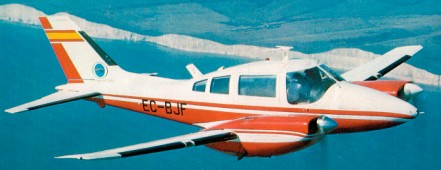
Beagle B.206 Basset

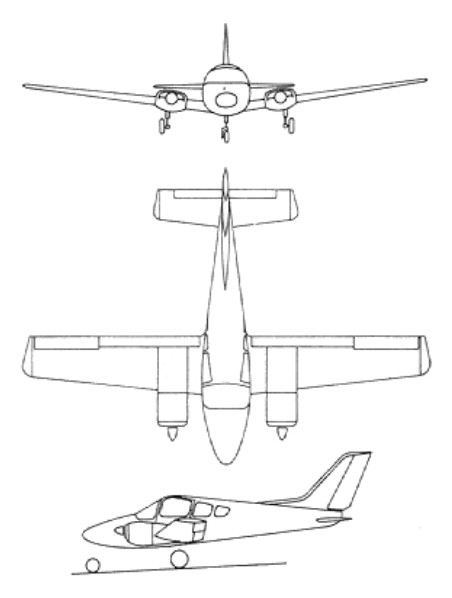
Twin-engined light transport aircraft with accommodation for five to eight persons. The first prototype flew on 15 August 1961, powered by Continental 194kW IO-470-A engines. The second prototype had increased dimensions and two 231kW Rolls-Royce/Continental GIO-470-As.

Beagle B.206 Basset Article

The initial commercial version was the B.206 Series I or B.206C. Early aircraft have overwing cabin door, later aircraft a passenger / cargo door aft of wings.

The B.206R was the military production version, ordered for communications and ferrying duties with the RAF under the name Basset CC.l. The B.206-S was a development of the Series I with supercharged engines and other refinements, first flying on 27 January 1966.

The B.206 Series II (B.206S) was development, with later production aircraft featuring an extended cabin, additional rear window on each side, and larger passenger / cargo door at rear on port side.
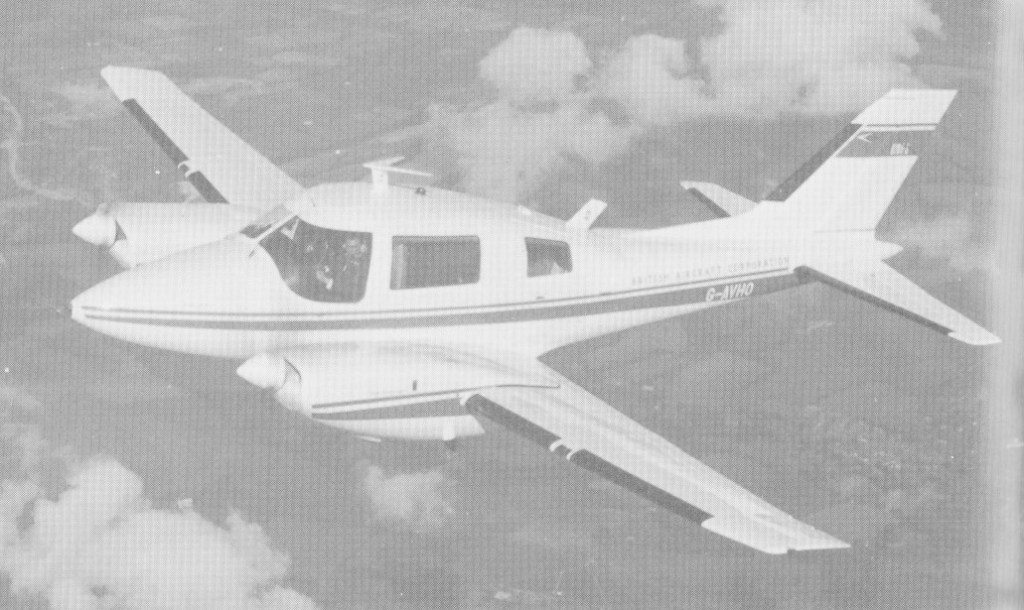
B.206 Srs II

Deliveries included two ambulance models for the Royal Flying Doctor Service of New South Wales, Australia.

By the close of 1969 40 B.206 Series I and II aircraft, 20 Bassets and two B.206Z pre-production types for the Ministry of Technology had been delivered.

The B.206 Series III developed version, seating 10 passengers, with dorsal and ventral fins, small tabs on main fin, extended tailplane trailing edge. A prototype only was built.

Gallery

Beagle B.206 Srs.I / B.206C
Powerplant: 2 x Rolls-Royce Continental GIO-470-A, 310 bhp take-off power (ISA SL)
Propeller: McCauley two-blade constant speed fully feathering metal.
Span, 45 ft 9 in
Length 33 ft 8 in
Height, 11 ft 4 in
Gross wing area, 214 sq.ft
Max. usable floor area, 44 sq.ft
Max. usable cabin volume, 221 cu.ft
Max. cabin length, 14 ft
Max. width, 62 in
Max. height, 50 in
Accommodation: 6-8.
Baggage space: 14 cu.ft
Basic operational (gross less usable fuel and payload) wt, 4650 lb
Total fuel, 1368 lb
Max. take-off weight, 7500 lb
Max. landing, 7125 lb
Max. payload (volume limited), 1530 lb
Max. zero fuel, 7050 lb
Power loading (max. take-off weight), 12.1 lb/bhp
Wing loading (max. take-off weight, 35.0 lb/sq.ft
Wing loading (max. landing weight), 33.3 lb/sq.ft
High-speed cruise, 184 kt. at 8 000 ft
Long-range cruise, 160 kt. at 8 000 ft
Approach speed 87 kt. EAS
Take-off field length, ISA SL, 2,370 ft
Landing field length, ISA at sea level; 2290 ft
Range with allowances, max. fuel, 1482 lb payload, 1440 nm

Engines: 2 x RR/Cont. GIO-470, 230kW
Take-off weight: 3223 kg / 7106 lb
Empty weight: 1978 kg / 4361 lb
Wingspan: 13.9 m / 45 ft 7 in
Length: 10.3 m / 33 ft 10 in
Height: 3.4 m / 11 ft 2 in
Wing area: 19.9 sq.m / 214.20 sq ft
Max. speed: 352 km/h / 219 mph
Cruise speed: 348 km/h / 216 mph
Ceiling: 6210 m / 20350 ft
Range: 1500 km / 932 miles
Range w/max.fuel: 3000 km / 1864 miles
Range w/max.payload: 1850 km / 1150 miles
Crew: 1
Passengers: 4-7

Engines: 2 x RR/Cont. GIO-470, 230kW
Take-off weight: 3223 kg / 7106 lb
Empty weight: 1978 kg / 4361 lb
Wingspan: 13.9 m / 45 ft 7 in
Length: 10.3 m / 33 ft 10 in
Height: 3.4 m / 11 ft 2 in
Wing area: 19.9 sq.m / 214.20 sq ft
Max. speed: 352 km/h / 219 mph
Cruise speed: 348 km/h / 216 mph
Ceiling: 6210 m / 20350 ft
Range: 1500 km / 932 miles
Range w/max.fuel: 3000 km / 1864 miles
Range w/max.payload: 1850 km / 1150 miles

B.206 Srs.II / B.206S
Powerplant: two Rolls-Royce Continental GTSIO-520C, 340 bhp take-off power (ISA SL)
Propeller: McCauley three-blade 7 ft 6 in diameter
Wing span: 45 ft 9.5 in (13.96 m).
Length: 33 ft 8 in (10.26 m)
Height: 11 ft 3 in (3.43 m).
Gross wing area, 214 sq.ft
Max. usable floor area, 44 sq.ft
Max. usable cabin volume, 196.5 cu.ft / 5.56 cu.m
Max. cabin length, 11 ft 11 in / 3.63 m
Max. width, 62 in / 1.57 m
Max. height, 52 in. / 1.32 m
Accommodation: 6-8.
Baggage space: 21 cu.ft / 0.59 cu.m
Basic empty weight, 4800 lb / 2177 kg
Total fuel, 1386 lb
Max. take-off weight, 7500 lb (3401 kg)
Max. landing weight, 7125 lb
Max. payload (volume limited), 1500 lb
Max. zero fuel, 7000 1b
Power loading (max. take-off weight), 11.02 lb/bhp
Wing loading (max. take-off weight), 35.2 lb/sq.ft
Wing loading (max. landing weight), 35.2 lb/sq.ft.
Max level speed: 258 mph (415 kph).
High-speed cruise 75%: 189 kt / 218 mph / 351 kph at 8000 ft
Long-range cruise, 176 kt. at 8000 ft
Approach speed 89 kt. EAS
ROC SL MAUW 1340 fpm / 408 m/min
Service ceiling: 27,100 ft / 8260 m
Take-off field length, ISA SL, 2380 ft
Landing field length, ISA at sea level, 2390 ft
Range with allowances, max. fuel, 1060 lb payload: 1389 nm / 1600 mi / 2570 km
Seats: 5-8

B.206 Srs.III
Passenger capacity: 10
Prototype only
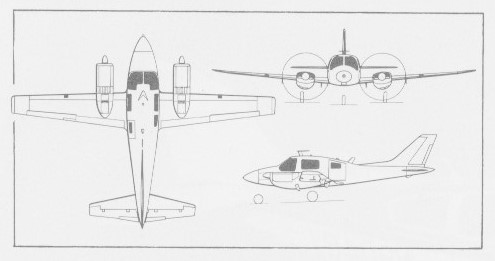
Beagle Bullfinch

A survivor of Beagle Aircraft efforts was the Scottish Aviation Bulldog/Bullfinch line, fixed gear and retractable versions, respectively, of the original Pup, with 200 hp engines and substantial airframe changes. A retractable four seater, the Bullfinch had a 1,500 pounds useful load, 140 knot cruise and many small improvements over the Bulldog. The Bullfinch was shelved when Scottish Aviation was nationalised.

Beagle B.125 Bulldog / Scottish Aviation Bulldog

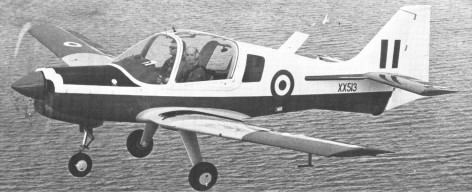
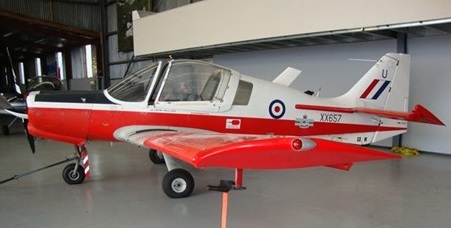
A military version of the Pup was developed after being assessed by Rolls Royce Test Pilot Graham Andrews, who made 12 recommendations including its adaptation to a twin seated aircraft suitable for training purposes. The aircraft evolved into the Beagle B.125 Bulldog with a 200 hp (150 kW) Lycoming engine. Only one prototype aircraft was built by Beagle (with another largely complete) before it ceased operations; the design and production was taken over by Scottish Aviation.

Scottish Aviation Bulldog Article

The Bulldog development of the B121 Pup was designed by Beagle as the B125, the prototype G-AXEH (c/n 001) flying from Shorehamon May 19,1969. Following Beagle’s collapse Scottish Aviation took over design and production rights in May 1970 and moved manufacturing facilities to Prestwick. SAL flew the second prototype G-AXIG (c/n 002) on February 14, 1971, in the colours of the Swedish Air Force. The third airframe (c/n 003) was used for ground structural testing. Designated the Bulldog Series 100, the first production aircraft G-AYWN (c/n BH100-101) was flown on June 22 as the first Bulldog for Sweden, serialled 61001, and operated in Sweden as the Sk61. It was followed by the second for Sweden, G-AYWO/61002 (c/n BH100-102), on July 14, both being delivered on July 26. Further allocations are G-AYWP, ‘YZL, ‘YZM and G-AZAK to ZAT, respectively BH100-103 to 114 and serialled 61003 to 61015. These are all known as Model 101. Following on the production line are the first Model 102s for the Malaysian Air Force, BH100-115 and 116. In 1971 orders were for 58 Bulldogs for Sweden, 15 for Malaysia and five for Kenya.

Bulldog Mk.1

In 1973, Finnaviation received a research and development contract from the Swedish Air Force to design skis for their primary trainer, Beagle Bulldog. The Swedes had developed a unique bottom shape for the skis around which an aerodynamic casing and load carrying structure of fiberglass epoxy laminate was designed. The skis were test loaded in the Helsinki University of Techonology structures lab.

Beagle, tried to get its two airplane line accepted in the U.S. The Pup, was expensive, slow for such a clean appearing airframe, and was against the most difficult market for an import the low cost basic trainers. Beagle Aircraft Limited went into receivership and production ceased in 1982.

Following delivery in 1981 of a follow-on batch of five Bulldog 125s to the Royal Jordanian Air Force, a further order for five was placed, making 23 in all. In 1981 the Nigerian Air Force ordered another four Bulldog 123s to bring its total to 36.

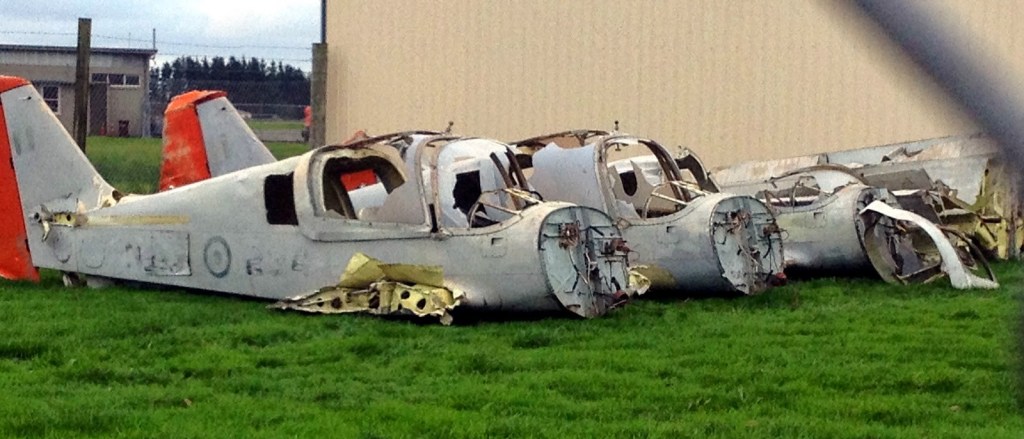
In 2014, Ex-Nigerian Air Force Bulldogs were sold as scrap and shipped to Palmerston North, New Zealand, for rebuild or resale.

Nigerian Bulldogs

Gallery

Beagle B 125 Bulldog
Engine: Avco Lycoming IO-360-A1B6
Length: 23.261 ft / 7.09 m
Wingspan: 33.005 ft / 10.06 m
Max take off weight: 2350.5 lb / 1066.0 kg
Max. speed: 130 kts / 241 km/h
Range: 540 nm / 1000 km
Crew: 2+1

Mk.102
Seats: 2.

Mk.103
Seats: 2.

Mk.120
Engine: Lycoming IO 360 A1B6, 200 hp.
Seats: 2.

Mk.121 / T.1
Engine: 200 hp.
Wing span: 33 ft (10m).
Seats: 2/3
Cruise: 120 knots.
Load limit: +6/ 3 G
Rear seat cap: 200 lb.
Max speed: 150 mph (241 km/h).

B.121 Pup 150
Engine: Lycoming, 150hp.
Wing span: 31 ft 0 in (9.45 m).
Length: 22 ft 9 in (6.93 m).
Height: 8 ft 6 in (2.59 m).
Max TO wt: 1600 lb (725 kg).
Max level speed: 153 mph (246 kph).

Mk.123
Seats: 2.

Mk.125
Seats: 2.

Mk.127
Seats: 2.

Mk.128
Seats: 2.

Beagle B.121 Pup

An aerobatic lightplane, the Pup was built by Beagle Aircraft in England at Shoreham Airport and Rearsby Aerodrome. The Pup was designed as a single-engined all-metal two-seat aerobatic aircraft or a four-seat touring aircraft.

Beagle B.121 Pup Article June 1968

The prototype Pup (a Series 1 G-AVDF) first flew from Shoreham Airport on 8 April 1967. Production of the Pup-100 began in February 1968. The Pup-100 model carries two seats and two optional children’s seats. It’s powered by a 100 hp Rolls-Royce/Continental O-200-A four cylinder engine.

Beagle 100B Pup OO-NAR (c/n B121-160)

The more powerful Pup 150, with seating for an extra adult, was flown in October 1967. The second (G-AVLM) and third (G-AVLN) aircraft were Series 2 aircraft fitted with an enlarged rudder which became standard on all production aircraft.

Pup Series 2 with a 150 h.p. engine

The Pup-150 fuselage is only three inches longer than the Pup-100 while wingspan dimensions of the low-wing tricycle gear airplane remain the same. A 150 hp Lycoming O-320-A2B engine allows optional seating for four. The Pup-150 also offered a larger 34-Imperial-gallon fuel tank as opposed to the standard 24-Imperial-gallon tank installed as standard equipment in the 100 and 150 models. A large rudder on the 150 allows full aerobatics including unlimited spinning.

The first delivery (a Series 1) was to the Shoreham Flying School on 12 April 1968.

A Series 3 variant, a four-seater, was developed for the Iranian Civil Air Training Organisation. G-AVLM was converted during 1968 to become the series 3 prototype aircraft with a further enlarged rudder.

By 1969 production had increased at Shoreham to one Pup a day, aircraft were flown to either Rearsby Aerodrome or Cambridge Airport for painting and finishing. One aircraft was evaluated by the Royal New Zealand Air Force in 1969, but was not ordered. Deliveries were made to civilian operators in several countries including Australia, Sweden and Switzerland.

The Pup-160 was powered with a 119kW Lycoming O-320-D2C engine.

Pup 150

The Pup was more spacious than its direct competitors and was a more complex design to manufacture and was also corrosion proofed throughout (usually then only an option on US-built competitors). For these reasons it was correspondingly more expensive to build, yet was sold at a competitive price. Its maintenance requires more care (i.e. expense) and its early days were troubled by issues with the doors and spares availability.

A total of 128 Pups had been delivered by the close of 1969, when 267 aircraft were on order. In December 1969 the government withdrew financial support for Beagle and the company was placed in receivership. Production ceased with the 152nd aircraft. Some remaining nearly completed aircraft were finished at a variety of locations, the last being completed G-BCGV (s/n B121-176) was first registered 17 June 1974. The Pup was developed into the Bulldog by Beagle, then Scottish Aviation.

A military version of the Pup was developed after being assessed by Rolls Royce Test Pilot Graham Andrews, who made 12 recommendations including its adaptation to a twin seated aircraft suitable for training purposes. The aircraft evolved into the Beagle B.125 Bulldog.

Gallery

B.121 Srs.1 Pup 100
Engine: 1 x RR/Cont. O-200-A, 100 hp / 74kW
Wingspan: 31 ft / 9.45 m
Length: 22 ft 11 in / 6.99 m
Height: 2.3 m / 7 ft 7 in
Wing area: 119.5 ft² / 11.10 m²
Take-off weight: 1,600 lb / 725 kg
Empty weight: 985 lb / 447 kg
Max. speed: 225 km/h / 140 mph
Cruise speed: 127 mph / 204 km/h
Ceiling: 2000 m / 6550 ft
Range: 800 km / 497 miles
Seats: 3

B.121 Srs.2 Pup 150
Engine: Lycoming 0-320-A2B, 150 hp (112 kW)
Wingspan: 31 ft 0 in / 9.45 m
Wing area: 119.5 ft² / 11.20 m²
Length: 23 ft 2 in / 7.06 m
Height: 7 ft 6 in / 2.29 m
Empty weight: 1090 lb / 494 kg
MTOW: 1925 lb / 873 kg
Fuel capacity: 24 ImpG / 109 lt
Fuel capacity w/opt: 34 ImpG / 155 lt
Cabin length: 6 ft 6 in / 1.98 m
Cabin max width: 3 ft 9 in / 1.14 m
Cabin max height: 3 ft 6 in / 1.07 m
Cabin volume: 85 cu.ft / 2.4 cu.m
Baggage space: 15 cu.ft / 0.42 cu.m
Top speed: 138 mph / 222 km/h
Max cruise 75% 7500ft/2290m: 114 kt / 131 mph / 211 kph
Range w/opt fuel: 549 nm / 633 mi / 1020 km
Service ceiling: 14,700 ft / 4480 m
Fuel @ 65% pwr: 45 lb/hr
Endurance 65% power: 5 hours
Stalling (clean/flaps): 53-48 mph/85-76 kmh
Max ROC SL: 700 fpm / 244 m/min
Take-off distance, 50 ft: 1350 ft.
Landing distance, 50 ft: 1430 ft.
Seats: 2-4

B.121 Srs.3 Pup 160
Engine: Lycoming O-320-D2C, 160 hp
Fuel capacity: 36 ImpG / 164 lt
Seats: 2+2
No built: 6

Pup 100

Beagle A.113 Husky / Auster A.113 / Auster D.4 / D.5 / D.6

A new range of Auster lightplanes appeared in early 1960. It included the two-seat D.4/108, three seat D.5/160 and /180 and four-seat D.6, all powered by Lycoming engines and featuring metal spars. The Auster D.6 was developed from the J/5V, but J/5V G-APUW did not have the metal spar and other refinements of the D.6

A total of 157 D.4 and D.5 had been sold by the beginning of March 1964.

Prototype D.4

The 1961 types in the Auster range – D.4, D.5 and D.6 development of the Auster Alpha were announced with Lycoming engines, but since then the company was taken over by the Pressed Steel Co., Ltd., as part of its Beagle (British Executive and General Aviation, Ltd.) group. Beagle has announced that Rolls Royce/Continental powerplants will be installed in Auster/Beagle aircraft being developed under the direction of Mr. Peter Masefield.

Prototype D.6 / J/5V

The Beagle group had continued production of the Auster D.5/160 and Auster D.5/180, the latter as the A.113 Husky when fitted with a 134kW Lycoming O-360-A1A engine.

A major innovation of the D series was the use of metal wing spars which, with new low-flammability long-weathering plastic-based butyrate dope and paint finishes, made the D entirely suitable for use in the tropics. The D.4 was a two-seater with either a 9.75m or 10.98m wingspan and an 80, 112/119 or 134kW Lycoming engine; the D.5 was a three-seater offering the two wing spans but only the 119 and 134kW engines; and the D.6 was a four-seater with the greater wing span and engines as for the D.5.

The first production D.4/108 flew on 12 February 1960.

The first D.5/160 on 10 January 1960. Beagle developed the D5/160 as the “Beagle D5/180 Husky” with a 180 hp Lycoming O-360 engine, the first being G-ASBV first flown in 1962. A small number were sold until production was discontinued in 1967.

The first D.6/160 flew on 9 May 1960.

D5/160

133 examples (Auster D.5/160) were built by the Oficinas Gerais de Material Aeronáutico in Portugal from 1961 onwards; and the Portuguese Air Museum preserves two of these; one in flying condition.

A.113 Husky

The designation “A.113” was only a design number and was not used in promotional material or in aircraft registrations with the Civil Aviation Authority where the term ‘D5/180’ was preferred. Additionally, the name Husky was only given to this version and not to the D5/160.

One Beagle Husky (XW635) was won by Sir Billy Butlin in a raffle and presented to the RAF’s Air Training Corps in 1969. It flew with No. 5 Air Experience Flight, flying air cadets from Cambridge Airport until it was retired in 1989 and sold to a civilian user.

Operators included the Burma Air Force, Portuguese Air Force, and Thai Border Patrol Police – One aircraft only.

Beagle-Auster D.4/108

Beagle-Auster D.5/160
Engine: 1 × Lycoming O-320-A2A, 160 hp (119 kW)
Wingspan: 36 ft 0 in (10.98 m)
Wing area: 185 ft² (17.2 m²)
Length: 23 ft 4½ in (7.13 m)
Height: 7 ft 11 in (2.41 m)
Empty weight: 1,450 lb (659 kg)
Loaded weight: 2,450 lb (1,114 kg)
Maximum speed: 125 mph (109 knots, 201 km/h)
Cruise speed: 108 mph (94 knots, 174 km/h)
Range: 460 mi (400 nmi, 741 km)
Service ceiling: 12,800 ft (3,900 m)
Rate of climb: 640 ft/min (3.3 m/s)
Crew: one pilot
Capacity: 2 passengers

D.5/180 Husky / A.113 Husky
Engine: 1 x Lyc. O-360-A2A, 132kW / 180 hp
Wingspan: 10.97 m / 36 ft 1 in
Length: 7.1 m / 23 ft 4 in
Height: 2.5 m / 8 ft 2 in
Take-off weight: 1090 kg / 2403 lb
Empty weight: 646 kg / 1424 lb
Max take off weight: 2400 lb / 1088kg
Range: 502 nm / 930 km / 580 mi
Max. speed: 206 km/h / 128 mph
Cruise speed: 177 km/h / 110 mph / 96 kt
Max ROC SL: 800 fpm / 245 m/min
Ceiling: 4420 m / 14,500 ft
Seats: 4
4 built

Beagle-Auster D.6/180

A.113
D.5/180 Husky

Beardmore Tornado

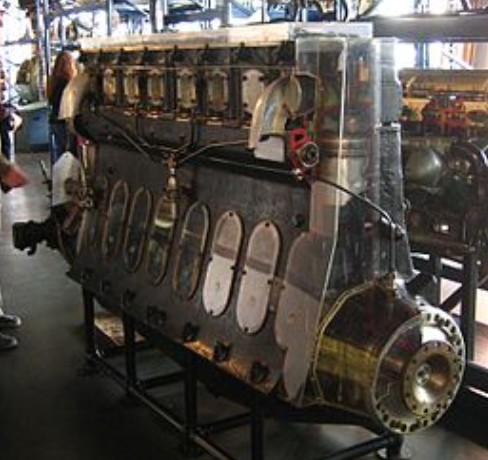
The Beardmore Tornado was an eight-cylinder inline aircraft Diesel engine built in 1929 by William Beardmore and Company of Glasgow, Scotland, and used in the British R101 airship when petrol engines were thought unsafe in the tropics. The model is given as Tornado IIIA or Tornado III C.I. The fuel is described as Diesel heavy-oil.

The engine was designed by combining two four-cylinder units used for railcars into the eight-cylinder (MkI) engine. These were intended to give an output of 700 bhp (520 kW) at 1,000 rpm but in practice had a continuous output rating of only 585 bhp (436 kW) with a maximum of 650 hp. At 17 tons for the five, they were six tons above design weight. The weight with the power car was over three tons per engine. The big end bearings were also found to be prone to early failure, and it was reported gold plating had to be used to lengthen their life. In addition, there were two critical vibration frequencies which coincided with idling and cruising speeds, to unfortunate effect.

The Tornado had steam cooling; water in the cylinder jackets was allowed to come to boiling point, and then condensed in three small triangular radiators on the hull above the power cars, or for the two midships engines was condensed in a retractable radiator and used to heat the passenger accommodation. Running the engines at a relatively high thermal temperature was expected to improve the specific fuel consumption. The Tornado engines used Ricardo petrol starting engines, and there had only been time to replace one with a Beverley heavy-oil starting engine (itself started by compressed air) on one Tornado.

The engines were intended to have reversing propellers, but they failed. At one point during development of R101, one engine was to be used for only astern running, at the start and finish of flights, a decision that astonished Nevil Shute and the other engineers on the R100 team. Later two engines were made reversible by an adjustment to the camshaft.

The R101 had five Tornado engines. The proposed R102 airship was to have seven engines of an improved version of the Tornado, having an output of 850 bhp (630 kW, maximum) or 700 bhp (520 kW, cruising, continuous). But the project was cancelled in 1931 after the crash of the R101. The R100 would have used the Tornado, but petrol engines were chosen to avoid delays.

Specifications:

Tornado III
Type: 8-cylinder liquid-cooled inline upright layout engine
Bore: 8.25 inches (210 mm)
Stroke: 12.0 inches (304.8 mm)
Displacement: 5,130.8 in3 (84.125 L)
Dry weight: 4,733 lb (2150 kg) bare engine, 8,580 lb (3890 kg) installed
Fuel type: Diesel heavy-oil
Cooling system: Water/steam cooling (see above)
Power output: 650 bhp (480 kw) at 935 rpm maximum; 475 bhp (350 kw) at 825 rpm cruise
Compression ratio: 12.25:1
Fuel consumption: 279 lb/hr maximum; 200 lb/hr cruise
Specific fuel consumption: 0.429 lb/bhp/hr maximum, 0.421 lb/bhp/hr cruise

Beardmore 160 hp

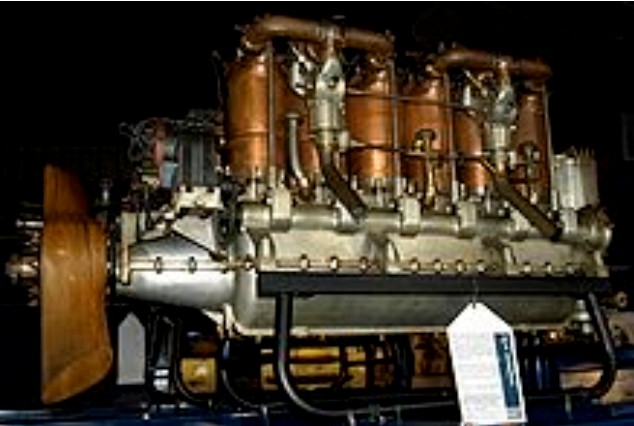
The Beardmore 160 hp is a British six-cylinder, water-cooled aero engine that first ran in 1916, it was built by Arrol-Johnston and Crossley Motors for William Beardmore and Company as a development of the Beardmore 120 hp, itself a licensed-built version of the Austro-Daimler 6.

The engine featured cast iron cylinders and mild steel concave pistons. Produced between March 1916 and December 1918, the design powered many World War I aircraft types. It was noted that the engine was not as reliable as its smaller capacity predecessor and had a unit cost of £1,045. A total of 2556 were built.

A Beardmore 160 hp has been restored to airworthy condition by The Vintage Aviator Ltd, an aircraft restoration company based in Wellington, New Zealand. The engine was found complete and in a preserved condition in a farm shed in Uruguay, after a complete overhaul and ground test runs the engine powered the company’s F.E.2b replica on its maiden flight.

Applications:
Airco DH.3
Armstrong Whitworth F.K.7
Austin Kestrel
Beardmore W.B.II
Beardmore W.B.X
Central Centaur IIA
Marinens Flyvebaatfabrikk M.F.6
Martinsyde G.102
Norman Thompson N.T.2B
Royal Aircraft Factory F.E.2
Royal Aircraft Factory R.E.7
Short Sporting Type
Supermarine Channel
Supermarine Sea King
Vickers F.B.14

Specifications (160 hp)
Type: 6-cylinder, inline, upright piston engine
Bore: 5.59 in (142 mm)
Stroke: 6.93 in (176 mm)
Displacement: 1,020 cu in (16.635 L)
Length: 57 in (1,148 mm)
Width: 19.9 in (505 mm)
Height: 31.9 in (810 mm)
Dry weight: 615 lb (279 kg)
Valvetrain: Overhead valve
Fuel system: Twin Zenith carburettors
Fuel type: Petrol
Oil system: Gear pump
Cooling system: Water-cooled
Reduction gear: Direct drive, right-hand tractor
Power output: 186 hp (139 kW) at 1,450 rpm (maximum power)
Specific power: 0.18 hp/cu in (8.74 kw/L)
Compression ratio: 4.56:1
Specific fuel consumption: 0.57 pints per hp/hr
Oil consumption: 0.3 pints per hp/hr
Power-to-weight ratio: 0.30 hp/lb (0.5 kW/kg)

Beardmore 120 hp

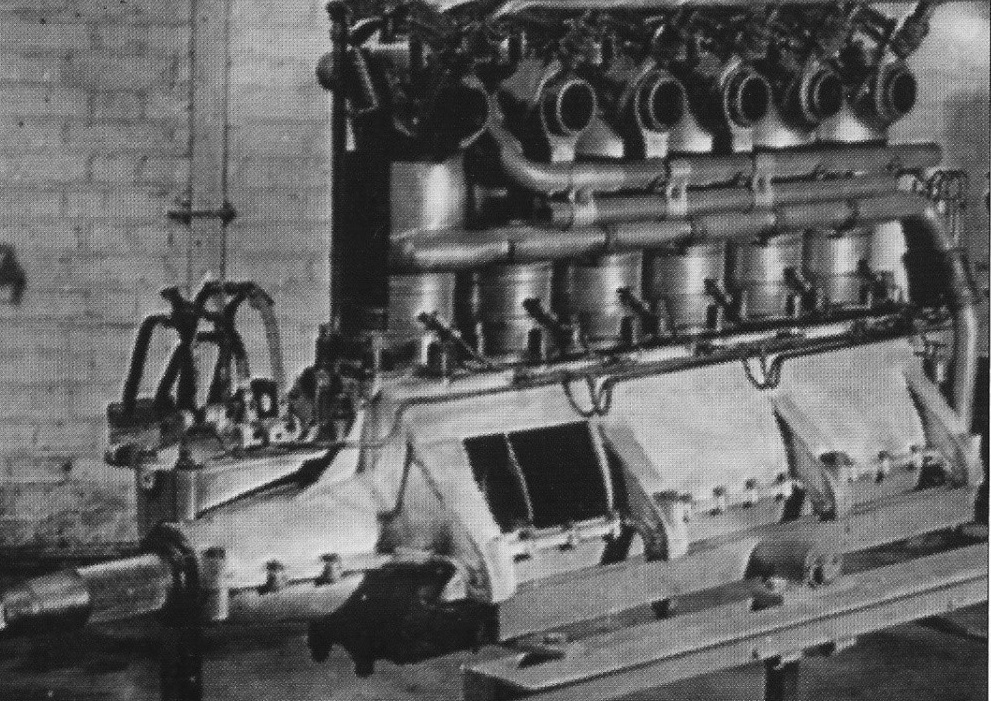
The Beardmore 120 hp was a British six-cylinder, water-cooled aero engine that first ran in 1914, it was built by William Beardmore and Company as a licensed-built version of the Austro-Daimler 6. The engine featured cast iron cylinders and mild steel concave pistons. Produced between August 1914 and December 1918, the design powered many World War I aircraft types.

Applications:
Airco DH.1
Airco DH.3
Armstrong Whitworth F.K.3
Armstrong Whitworth F.K.8
Bristol T.T.A.
Cody V
Martinsyde Elephant
Royal Aircraft Factory F.E.2
Royal Aircraft Factory R.E.5
Royal Aircraft Factory R.E.7
Vickers F.B.14
White and Thompson No. 3

Specifications (120 hp)
Type: 6-cylinder, inline, upright piston engine
Bore: 5.12 in (130 mm)
Stroke: 6.89 in (175 mm)
Displacement: 851 cu in (13.145 L)
Length: 57 in (1,148 mm)
Width: 19.9 in (505 mm)
Height: 31.9 in (810 mm)
Dry weight: 545 lb (247 kg)
Valvetrain: Overhead valve
Fuel type: Petrol
Cooling system: Water-cooled
Reduction gear: Direct drive, right-hand tractor
Power output: 154 hp (115 kW) at 1,400 rpm (maximum power)
Specific power: 0.18 hp/cu in (8.74 kw/L)
Compression ratio: 4.85:1
Power-to-weight ratio: 0.28 hp/lb (0.46 kW/kg)

Beardmore R36 / H.M. Balloon Factory R36

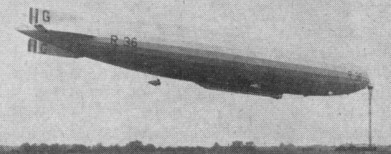
R36 was a British airship designed during World War I by the new Airship Design Department, work commencing in November 1917. She was a lengthened version of the R33 class. These had been influenced by the design of the German Zeppelin LZ 76 that had been forced to land in England. The LZ 96, which was forced down at Bourbonne-les-Bains in June 1917, provided yet more input into the design.

The R36, along with a second ship the R37 were to be a stretched version of the R33, getting more lift by adding another 33 feet (10 m) gas bag. Two of her five engines were German Maybach engines, recovered from the downed LZ 113. Construction began before the end of the war, but the design was altered to include accommodation for 50 passengers.

Unlike the R33 class, the control car was not suspended below the hull but directly attached to it, and formed the forward section of the elongated passenger compartment. The engines were housed in five engine cars, one pair (containing the Maybach engines) either side of the hull forward of the control car, a second pair either side of the passenger compartment and the fifth on the centreline in front of the tail surfaces. Unlike previous British airship designs, the fins and horizontal stabilisers were cantilevered structures, with no external bracing.

R36 was launched for her maiden flight on 1 April 1921 from the Beardmore works at Inchinnan near Glasgow. Late the following day she flew on to RNAS Pulham in Norfolk. When she first flew in 1921, it was not in her originally intended role as a patrol aircraft for the Royal Navy, but as an airliner, the first airship to carry a civil registration (G-FAAF).

On 5 April it left Pulham at 07:25am bound for London. After making its appearance over the city it proceeded to Salisbury Plain, where it climbed to 6,000 ft (1800 m) and began manoeuvring trials. Starting a fast turn of 130 degrees it encountered windshear, which overstressed the rudder, damaging the top rudder and starboard elevator. This made the ship adopt a nose down attitude and rapidly lose height, but it was brought under control at around 3,000 feet. Emergency repairs were made to the damaged control surfaces and the ship limped home on her one remaining rudder and elevator, using differential engine control to help with directional control, reaching Pulham at 9.15pm.

After repairs and strengthening work she re-emerged in June for a successful series of test flights, including an endurance trial starting on 10 June which lasted nearly 30 hours, covering 734 miles (1,174 km) over land and sea. She was also used by the Metropolitan Police for observing traffic congestion caused by the Ascot Races. Journalists and senior police representatives were entertained in great comfort on the day, and the journalists stories were dropped by parachute over Croydon airfield.

On 21 June, returning from another trial flight, she suffered damage during landing. The release of emergency ballast caused a sharp pitching up, straining the ship against the mooring line. The nearest unoccupied sheds were at Howden in Yorkshire since the Pulham sheds were holding German Zeppelins handed over as war reparations. The wind increased and it was decided that the LZ 109 (L 64) would have to be sacrificed to save the R36. Within 4 hours L 64 had been cut into pieces and cleared to give enough room for R36. Even then she was damaged by a gust of wind during the manoeuvre into the shed.

Repairs were delayed while policy on airships was reviewed because of the R38 disaster and economic conditions. In 1925 she was refurbished for an experimental flight to Egypt as part of the Imperial Airship Scheme, but calculations cast doubt on her ability to make the trip and in the light of her age and condition she was scrapped in 1926.

Engines: 3 × Sunbeam Cossack, 350 hp (260 kW) each / 2 × Maybach, 260 hp (190 kW) each
Volume: 2,101,000 ft3 (59,500 m3)
Length: 675 ft 0 in (206 m)
Diameter: 78 ft 6 in (23.9 m)
Height: 91 ft 7 in
Maximum speed: 65 mph (105 km/h)
Range: longest flight, 734 miles (1181 km)
Endurance: 29 hours 54 min
Service ceiling: highest attained, 6000 ft (1829 m)
Crew: 28
Capacity: 50 passengers

Beardmore Inverness

The Inverness is the Rohrbach RoIV all-metal flying boat designed by Adolf Rohrbach. The first aircraft (N183)was built in the Rohrbach factory in Denmark from parts manufactured in Berlin before being sent to Beardmore. The second aircraft (N184) was built by Beardmore.Both aircraft had short lives and were scrapped in 1925.
The Inverness was equipped with two large masts and sails to get it home in the event of a forced water landing.