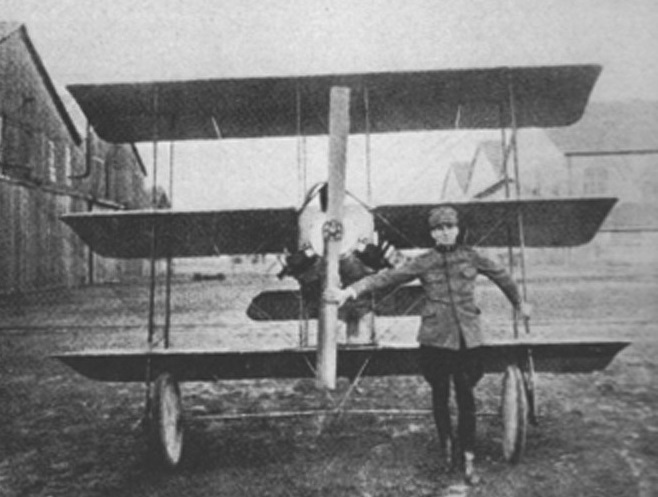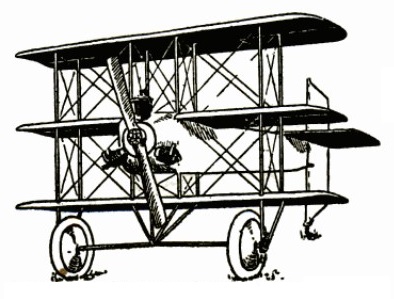
Breguet Br 5 / Br2 5 Ca2 / Bre.12 / Grahame-White Type XIX / G.W.19 / Breguet-Michelin 5

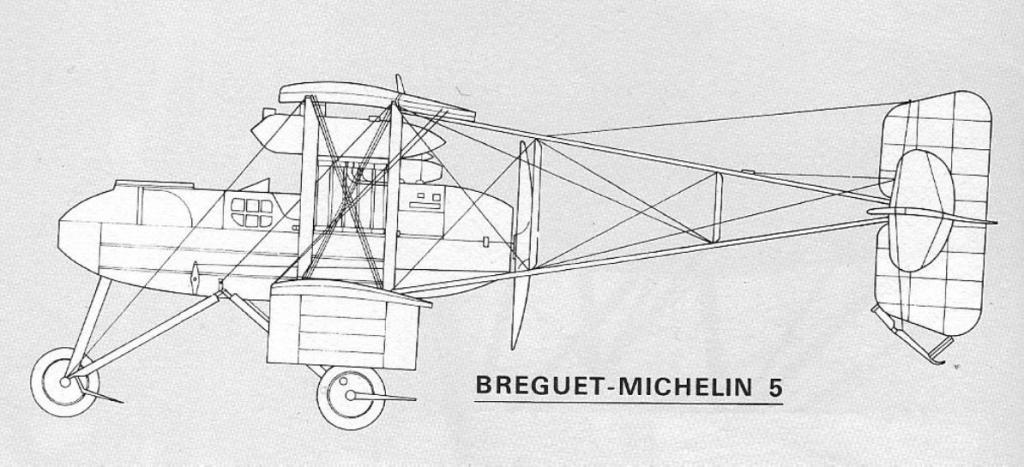
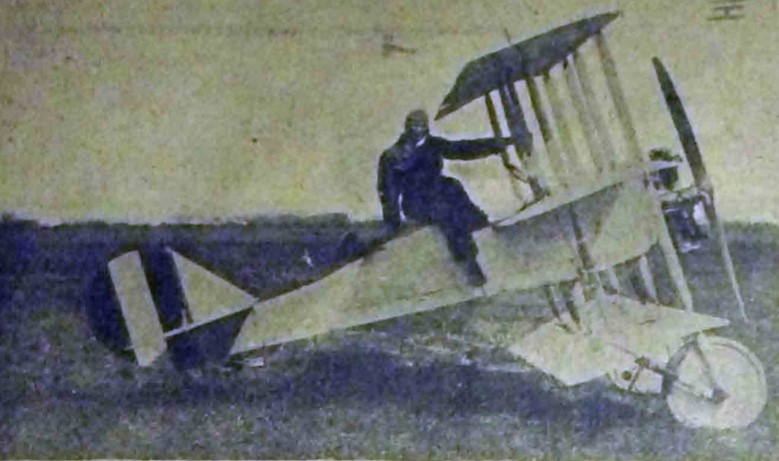
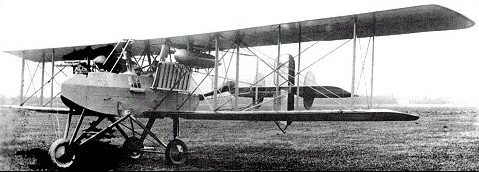
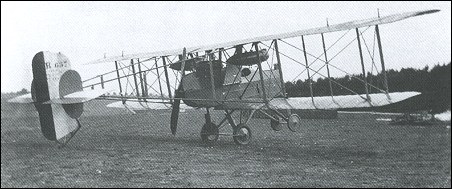
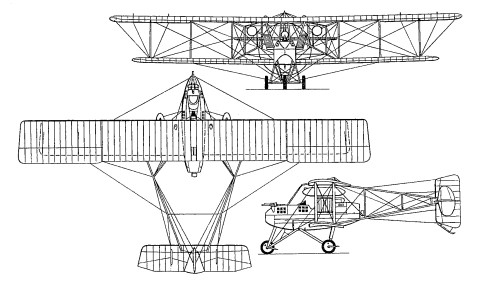
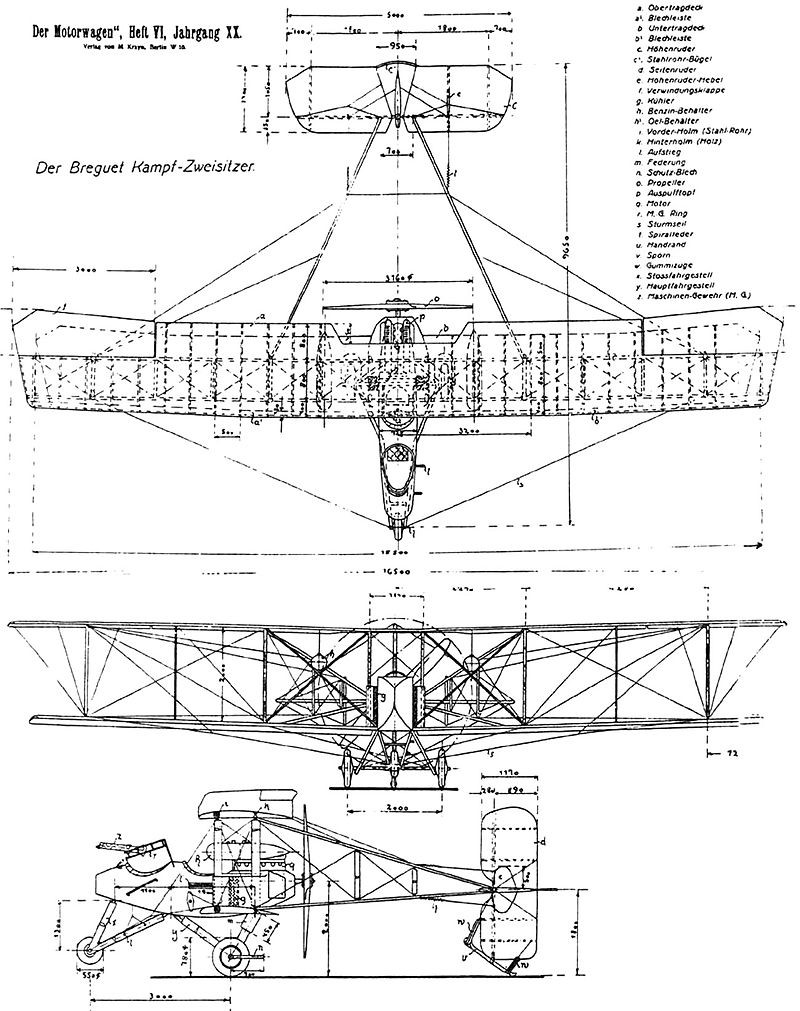
The relative success of the use of cannon in the Breguet BU.3 led the Breguet company to install it in their latest aircraft, the Breguet 5. This was a three-bay, unequal span biplane powered by a 225-hp Renault 12Fb engine. The tail section was the same as that of the Breguet BU.3, with four tail booms extending from the upper and lower wings. The Breguet Br.M5 series of biplane bomber was developed from the Breguet Br.M4 late in 1915 and was regarded by the Aviation Militaire as a two-seat escort fighter or reconnaissance-fighter.

Breguet Br.M V Article

The Br.M5 was operated by a crew of two with the pilot seated in the middle of the aircraft and the gunner/observer to the front. The engine sat behind the crew area – directly behind the pilot and was a pusher driving a two-blade propeller. Design was with a bathtub-like fuselage, a static tricycle landing gear array and framework and cables leading out to the empennage.

The RNAS purchased 59 Breguet 5s from the Breguet factory and ordered an additional 3 from Graham-White Aviation Company (as Grahame-White Type XIX / G.W.19), but only 10 were ever built in Britain. Twenty-five of the Breguet 5s built in France had the 250-hp Rolls-Royce engine installed, the remaining models were powered by the 225-hp Renault engine.

In action, the Br.M5 was fielded primarily as a night bomber and used by both the French and English forces from 1916-1917 though it first appeared in the summer of 1915. The Type 5 fighter, or Bre 5 Ca2, never equipped a complete escadrille, a few aircraft of this type being issued to each of the units operating the Bre 5 B2 bomber version, for which it was expected to act as escort. Armament comprised a 37mm Hotchkiss cannon on a flexible mounting in the forward cockpit and a rear-firing 7.7mm Lewis gun on an elevated mounting over the leading edge of the upper wing. Eleven Type 5 fighters were operational with the Aviation Militaire by 1 February 1916, but the type was generally unpopular.
Bre.12

Breguet Br.M5
Engine: 1 x Renault 12Fb, 220hp or 1 x Rolls-Royce Eagle, 250hp.
Wingspan: 17.50 m / 57 ft 5 in
Length: 9.90 m / 33 ft 6 in
Height: 3.90 m / 12 ft 8 in
Wing area: 57.70 sq.m / 621.08 sq ft
Take-off weight: 1890 kg / 4167 lb
Empty weight: 1350 kg / 2976 lb
Max. speed: 133 km/h / 83 mph
Service Ceiling: 11,483ft (3,500m; 2.2miles)
Armament:
1 x 7.7mm Lewis machine gun or 1 x 37mm cannon in forward observer/gunner position.
Accommodation: 2
Hardpoints: 2

Breguet-Michelin 5
Engine: Renault, 220 hp
Wingspan: 57 ft 8 in
Length: 26 ft 1 in
Max weight: 4235 lb
Speed: 86 mph at SL
Endurance: 5 hr
Armament: 1 x mg, 1 x 37 mm cannon
Bombload: 660 lb
Crew: 2
Breezer Aircraft Breezer

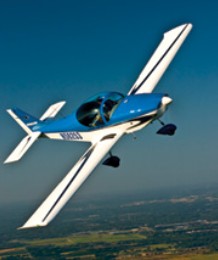
Breezer is an ultra light, LSA, and experimental category design.
The entire cockpit was designed ergonomically; from the instrument panel to the seating arrangement, everything was modeled and shaped.
Planning for a Breezer kit plane version from day one, the aluminum airframe structure design was kept simple and sturdy. To assemble the pre-manufactured components, you only need a flat table top. The high level of prefabrication allows a rapid fuselage assembly. Accurate matched drilling lets you to assemble aluminum alloy parts without extensive jigging. Other parts, like the spar center section, are provided fully assembled. Wherever needed the fuselage is reinforced in an optimal way.
The wings are built in a spar/rib structure. As the wings sport no wash-out, neither aerodynamically nor geometrically, these can be built on a flat table top. Jigging is minimal. Like with the fuselage, the wing parts come with most holes match drilled into the ribs, spar and wing skin. This assures that assembly errors are eliminated from the outset.
This same simple and sturdy structure is used to assemble the horizontal stabilizer and elevator.
The Breezer experimental category kit plane was developed along with the ultralight. The following items were modified for the experimental category kit plane:

  • MTOW raised to 580 kg / 1279 lb
  • Stronger wing spar
  • Stronger wing spar center section
  • Stronger stabilizer (as requested by the Swiss)
    After Germany allowed sailplanes to be towed by ultra light aircraft, the Breezer was tested and found suitable for towing flights.
    The Breezer is made in three models. The Breezer CR. The Breezer Club as a dedicated flight training edition, and the Breezer Acro, aerobatic aeroplane.
Breezer II

In 2012 the all-metal Breezer II was available as a ready built or E-LSA kit airplane. Price 2012: S-LSA Breezer is US$125,800. Quick Build kit (less engine and avionics): US$46,600.

Engine: Rotax 80 hp
Cruise speed (75%): 180 km/h / 112 mph
Maximum Speed Vne: 245 km/h / 152 mph
Stall speed: 64 km/h / 40 mph
Climb speed: 4,5 m/s / 886 fpm
Wingspan: 8,03 m / 26.4 ft
Cabin width: 1,16 m / 45,7 in
Length: 6,40 m / 21 ft
Height: 2,15 m / 7 ft
Wing area: 10,92 sq.m / 117.5 sq ft
Empty weight incl. BRS: 296 kg / 652.6 lb
Maximum gross weight: 472,5 kg / 1041.7 lb
Load: 176,5 kg / 389 lb
Fuel capacity: 70 liter / 18.5. USgal
Average fuel consumption / hr: 11-14 lt / 2.9 -3.7 USgal
Take off dist: 135 m / 443 ft
Landing dist: 140 m / 459 ft

Engine: Rotax 100 hp
Cruise speed (75%): 200 km/h / 124 mph
Maximum Speed Vne: 245 km/h / 152 mph
Stall speed: 64 km/h / 40 mph
Climb speed: 6 m/s / 1181 fpm
Wingspan: 8,03 m / 26.4 ft
Cabin width: 1,16 m / 45,7 in
Length: 6,40 m / 21 ft
Height: 2,15 m / 7 ft
Wing area: 10,92 sq.m / 117.5 sq ft
Empty weight incl. BRS: 300 kg / 661.4 lb
Maximum gross weight: 472,5 kg / 1041.7 lb
Load: 172,5 kg / 380 lb
Fuel capacity: 70 lt / 18.5 USgal
Average fuel consumption / hr: 12-15 / lt / 3.1-3.9 USgal
Take off dist: 95 m / 312 ft
Landing dist: 140 m / 459 ft

Breezer II
Engine: Rotax 912 ULS, 100hp@SL
Propeller: 3-blade Neuform
Gross weight: 1320 lb
Empty weight with optional BRS: 763lb
Useful load, std: 557 lb
Payload, full std. fuel: 518lb
Fuel capacity (lbs.): 21
Wing area: 117.5 sq. ft
Cruise speed, 75% power: 105 kt
Range with 30-min. reserve, 75% power: 420 nm
Best rate of climb, solo: 1181 fpm
Best rate of climb, two people: 900 fpm
Service ceiling: 14,500 ft
Takeoff over 50 ft obstacle: 925 ft
Landing ground roll: 606 ft
Vne: 120 kt
V Stall: 36 kt

Breda-Pensuit B.2 / Ba.1 / Caproni-Pensuti triplane

Breda-Pensuti B.2

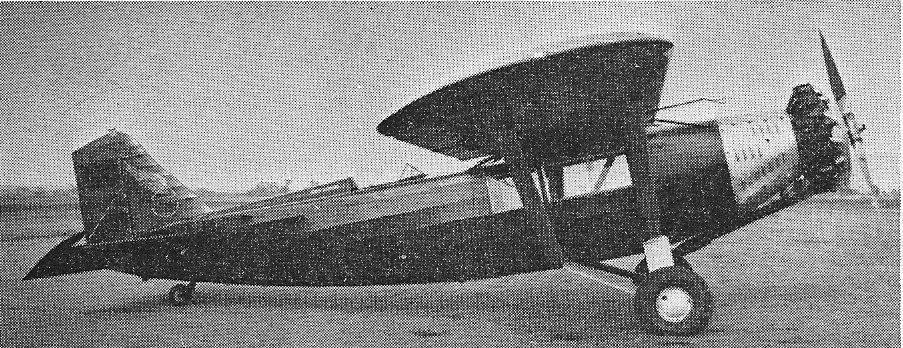
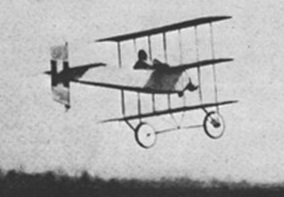
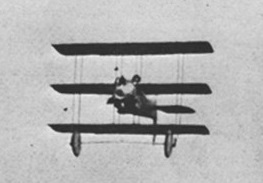
The Pensuti 2 was a very compact, low-powered triplane flown in about 1918. Its first flight, piloted by Lt. Lodovico Montegani, was delayed by the death of its designer and Caproni test pilot Emilio Pensuti in an unrelated aircraft crash. Designed to do in the air “what bicycle [sic] does for the man on the road”, it was categorised post-World War I as a small sporting aeroplane.

The single-seat triplane had unswept rectangular wings, each with a full span of only 4 m (13 ft 1 in). These were mounted without stagger, each wing braced to the one below by two pairs of vertical, parallel interplane struts, one pair out beyond mid-span and the other from the fuselage sides. The central wing was attached to the upper fuselage and the other two held well clear of it by the struts. There were ailerons on each wing.

The Pensuti had a simple rectangular cross-section fuselage, with the open cockpit at the wing trailing edge. A three cylinder, inverted Y configuration Anzani air-cooled engine of 26 kW (35 hp) in the nose drove a two-blade propeller. The triplane had a fixed undercarriage of wide track, with a single wheel at each end of a single axle with its extremities attached to extensions of the outer interplane struts. Its cruciform tail had horizontal surfaces mounted on the top of the fuselage; the vertical surface was trapezoidal and extended equally above and below the fuselage. A small tailskid was carried on its lower tip.

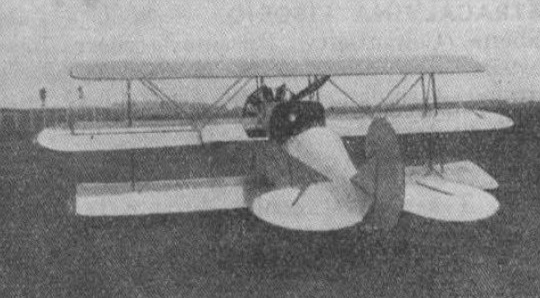
A second aircraft with a redesigned tail, Anzani 10-cylinder radial engine and other modifications was built at the Breda factory in Milan as the Breda-Pensuti B.2, (regn. I-BADZ). It gained the second prize at the Italian low-powered aircraft competition held in the summer of 1920 in Milan.

The Italian Air Force used them for quick recon flights for the infantry. The Pensuti 2 remained in service until 1923.

‘Ba.1’ has been applied to the B.2.

Possibly a variant with an 80 hp Breda V-8 was also built.

Powerplant: 1 × Anzani Y 3-cylinder, 26 kW (35 hp)
Propeller: 2-bladed
Wingspan: 4.0 m (13 ft 1 in) all wings
Length: 3.80 m (12 ft 6 in)
Height: 2.40 m (7 ft 10 in)
Gross weight: 230 kg (507 lb) in flight with pilot
Maximum speed: 95 km/h (59 mph, 51 kn)
Stall speed: 40 km/h (25 mph, 22 kn)
Rate of climb: 1.1 m/s (220 ft/min)
Take-off and landing distances: 20 m (65 ft).
Crew: one

Breda CC.20 / CC.2000 / CC.3000

Designed by Ing Generale Gaetano Arturo Crocco and Ing Giulio Cesare Costanzi who worked for the Italian military the 1929 Breda CC.20 trimotor monoplane bomber had a 42m span and IF Asso A.500 power. One prototype was built.

CC.2000 was an alternative designation for the CC.20 (based on total installed horsepower).

Built in the 1930s, the Breda CC.3000 trimotor monoplane was a more powerful derivative of the CC.20.

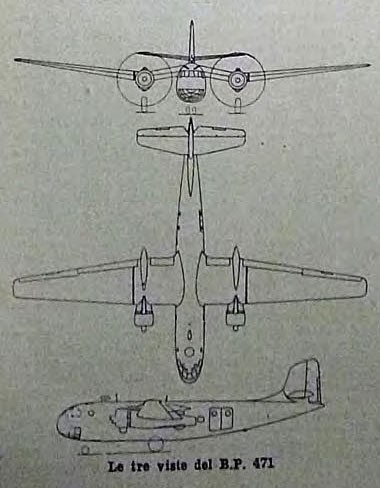
Breda-Pittoni B.P.471

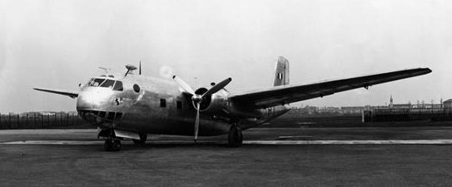
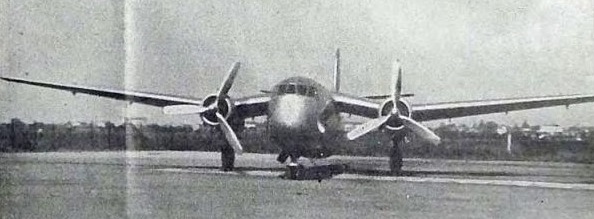
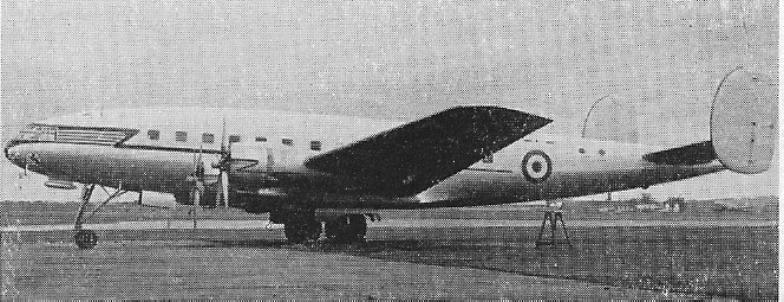
As part of its efforts to get back into aircraft manufacturing following the war, Breda commissioned Mario Pittoni to develop a twin-engine medium transport designated the Breda-Pittoni B.P.471. The prototype first flew in 1950. It was an all-metal twin-engine monoplane of stressed-skin construction. It had a retractable tricycle undercarriage and wings were of an inverted-gull configuration, this allowed the main landing gear to be short and light. The cabin had room for 18-passengers or freight. The company proposed many uses for the aircraft including a civil airliner and freighter, military navigation trainer or utility freighter. With no interest from buyers the prototype was operated by the Italian Air Ministry as a staff transport until retired in 1954.

Gallery

B.P.471
Engines: 2 × Pratt & Whitney R-1830-92 Twin Wasp, 890 kW (1,200 hp) each (take off power), 780 kW (1,050 hp) at 2,300 m (7,500 ft)
Length: 17.5 m (57 ft 5 in)
Wingspan: 23.0 m (75 ft 6 in)
Height: 5.75 m (18 ft 10 in)
Empty weight: 5400 kg
Gross weight: 10,000 kg (22,046 lb)
Maximum speed: 473 km/h (294 mph; 255 kn) at 3000 m
Cruising speed: 412 km/h (256 mph; 222 kn)
Range: 2,000 km (1,243 mi; 1,080 nmi) at 395 km/h (245 mph; 213 kn)
Service ceiling: 7,500 m (24,606 ft)
Time to altitude: 9 min 39 sec to 4,000 m (13,100 ft)
Crew: 2
Capacity: 18 passengers

Breda-Zappata BZ.308

Designed by Filippo Zappata, the 1948 Breda-Zappata BZ.308 was a four engined airliner evolved from the Zappata Z.511/BZ.305. The BZ.308 was designed primarily for trans-Atlantic services between Italy and the Latin American countries, and four were ordered by Argentina.

Powered by four 1750 hp Bristol Centaurus 568 radials, one prototype was built, employed by the Italian Air Ministry.

Engines: four 1750 hp Bristol Centaurus 568
Wing span: 138 ft 2 in / 33.50m
Length: 110 ft
Empty weight: 50,706 lb
Loaded weight: 79,366 lb
M ax speed: 311 mph
Cruise: 262 mph
Crew: 5
Passengers: 55