Breguet Type IV / Type V

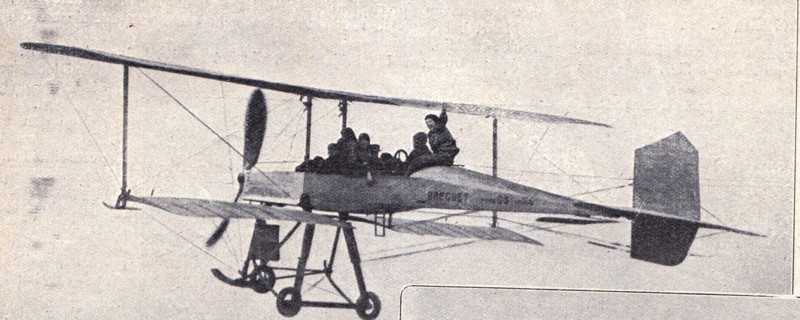
Bréguet and around 10 passengers above the airport of Douai in March 1911

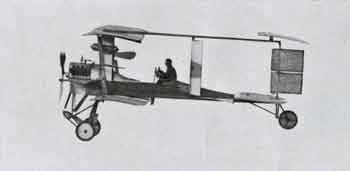
The Bréguet Type IV was developed from the Bréguet Type III which had appeared during 1910. It was a tractor biplane with a tricycle undercarriage.

The Bréguet Type IV was an aircraft built by Bréguet Aviation. It was first flown in 1911, and was the first Bréguet aircraft to be produced in quantity. It was used by the French Army and the British Royal Flying Corps. It is notable for the extensive use of metal in its construction, unusual in an aircraft of its time.

The Bréguet Type IV was produced in a number of variants, differing in their seating arrangement and in the engine fitted.

G, later G.1 powered by a 50 hp (37 kW) Gnome Omega
G.2 powered by a 70 hp (52 kW) Gnome
G.3 powered by a 100 hp (75 kW) Gnome Gnome Double Omega
G.4 powered by a 160 hp (120 kW) Gnome Gnome Double Lambda
R.1 powered by a 50 hp (37 kW) REP
R.2 powered by a 70 hp (52 kW) REP
L.1 powered by a 50 hp (37 kW) Renault 50/60 hp (the ‘L’ for Louis Renault)
L.2 powered by a 70 hp (52 kW) Renault
C.1 powered by a 40 hp (30 kW) Chenu
C.2 powered by an 80 hp (60 kW) Chenu
U.1 powered by an 80 hp (60 kW) Canton-Unné
U.2 powered by an 80 hp (60 kW) Canton-Unné
D.1 powered by a 100 hp (75 kW) Dansette
O.1 powered by an 80 hp (60 kW) Le Rhône
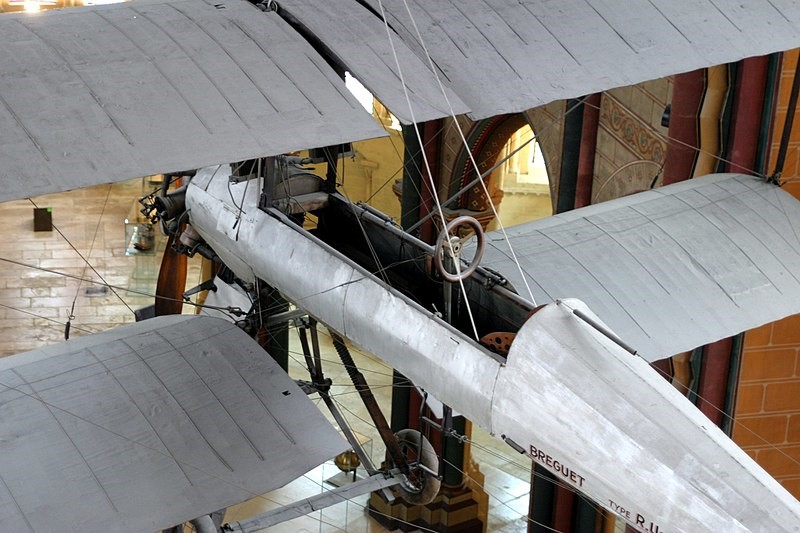
R.U.1

Although Bréguet’s earlier aircraft were referred to using a type number, the aircraft produced after the Type III were generally referred to using an airframe number and a letter/number combination denoting the type of engine fitted.

An example, an R.U.1, is on display at the Musée des Arts et Métiers in Paris.
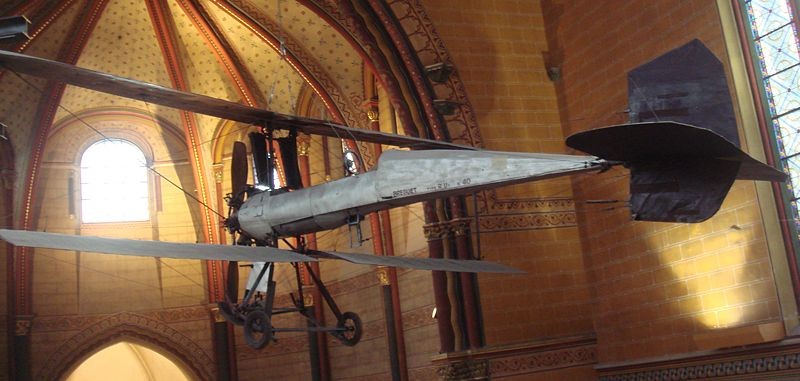
R.U.1 at the Musée des Arts et Métiers
Breguet 1-bis of 1909 at aérodrome de la Brayelle

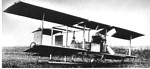
A large Breguet RU1 biplane.

U.I

The original 1909 Breguet U.I designed and built by Louis Breguet was later improved into the U.I-bis. Originally the Breguet biplane 1, but after a crash, it was re-designed and rebuilt. Sometimes referred to as the Breguet 2.

Number 40, of 1911 had a radial engine, two-blade wood propeller.
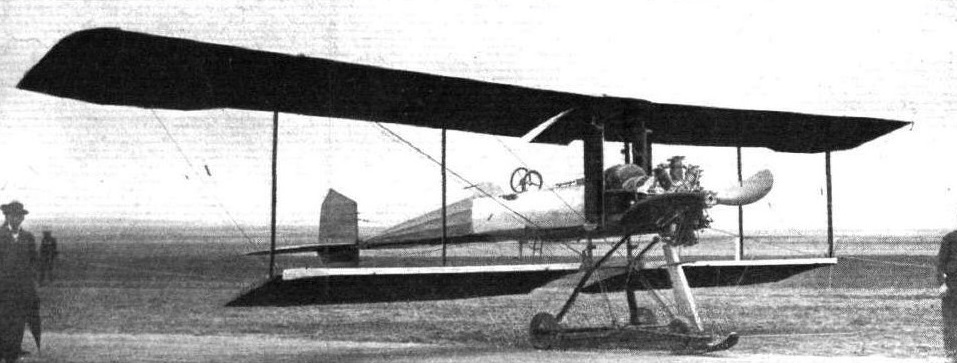
U.2

Proposed by the manufacturer to meet a military requirement, the Breguet U2 biplane was presented in various versions from 1911. The 1911 U2 version with a Salmson Canton-9 liquid cooled engine cylinder, two-bladed propeller, had the fuel tank between the two radiators placed vertically. The pilot, in back position, faced a rear-facing passenger, the other passenger, in the front, looked forward.

This machine has a steel structure fuselage, with a main landing gear with four wheels comprising two rear wheels mounted on the same axis and two front wheels detached. On early versions, lateral control was obtained by warping the wings, and later aileron control.

Initially the aircraft was equipped with a 130 hp Gnome rotary engine and was able to carry three people. Many engines were mounted on these machines, including Anzani, Renault 55 or 60 CV, and Canton-Unné of 120 hp. The propellers can be bladed or four-bladed.
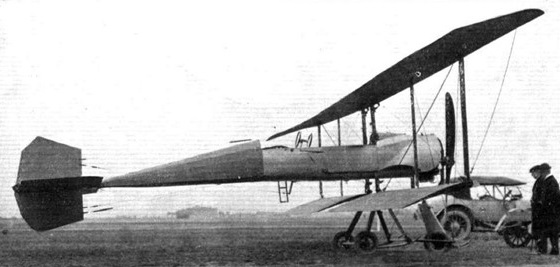
U.2

Type U.2 No 45; Another military machine showing in the same Concours. A heavier aircraft than L.1 No 3, with an interwing strut between the earlier 2, retaining the original wiring. 2 tall radiators stood up under the center-section; the nosewheel was now doubled.

Type U.2 No 102: This 3-seater 2-bay single-spar biplane appeared in 1913. The 4-wheel landing gear was supported under the rear cockpit by a tall skid, keeping the cruciform tail off the ground. The fuselage was no longer a single boom aft, but consisted of 4 steel tube longerons supporting a structure faired out with stringers.

Type U.2 No 138: Similar to No 102, this new 1914 machine was a 2-bay 2-spar biplane, with 2 separate cut-out cockpits. The wing cell design was named “semi-rigide,” and the wings still warped.

The Breguet H-U2 and U3 H seaplanes were derived from U-2 biplane. These became famous in April 1913, in Monaco, then in August of the same year in Deauville, in the hands of Henri Brégi and René sparrow.
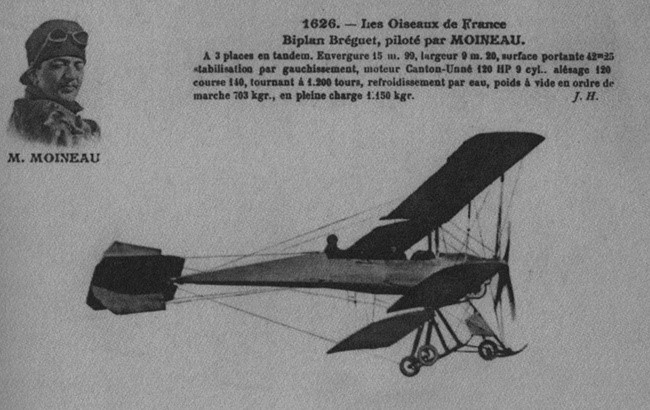
Breguet biplane U2, three-seater tandem, piloted by René Moineau

At the beginning of the First World War, the first bombing took place early in August 1914 with an attack of Frascati airship hangar near Metz by the airman Corporal Finck. Projectiles were almost exclusively former 90 or 120 caliber artillery shells. These weapons were crammed into cabins and launched by hand by the observer. Some firebombs were tried, but proved difficult to use and dangerous for the aircraft that carried them. The first months of war dart boxes (cylindrical steel rods of 12 cm long and 8 mm in diameter, tapered tip and Phillips tail to rotate to stabilize during the fall) were used. This process of low efficiency (lack of accuracy and dispersion) was abandoned in early 1915.

Used for reconnaissance missions at the beginning of the First World War these machines had rigid wings equipped with ailerons and a Salmson Canton-Unné liquid cooled 110 hp or rotary Gnome engine of 100 HP that allowed them to reach 110 km / h.

French forces employed about 30 machines.
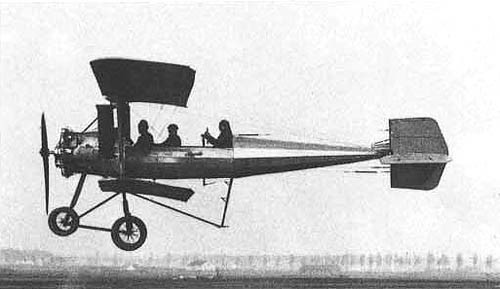
U.2

A small batch of the popular Breguet L.2 biplane, powered by an air-cooled Renault V-8, was assembled or built by Albatroswerke, Johannisthal in Germany under license and test flown by Bréguet factory pilot Debussy in March 1912.
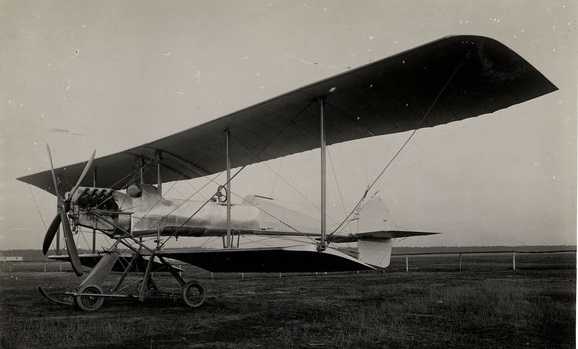
Breguet L.2, license-built by Albatroswerke

A myriad of versions of the Breguet biplane, were produced between 1910 and 1914. Breguet used a complex letter-number designation for the engine used in the machine. The L.2 uses a 70 hp Renault engine driving a four bladed propeller. In the Breguet system it was then coded as L (= Renault) 2 (70 hp). It might seem strange to code the Renault engine with the letter L, but the letter R was already taken by the R.E.P. engine. Code 2 stood here for 70 hp, where code 1 denoted 50 hp.

The machine had a tricycle undercarriage with a nosewheel. There were undercarriage skids to prevent the machine from nosing over. The big bulb in the front of the fuselage is the petrol tank. After the tank is a compartment holding two persons and the pilot at the back. The whole fuselage was a metal construction and in this version the big wings are two-bay.

The Breguet Biplane managed to set a world record with seven passengers.

The Royal Flying Corps (RFC) around August 1912 bought two machines of this exact type (L.2). They lasted till December 1913 but did very little flying, at most a few hours.

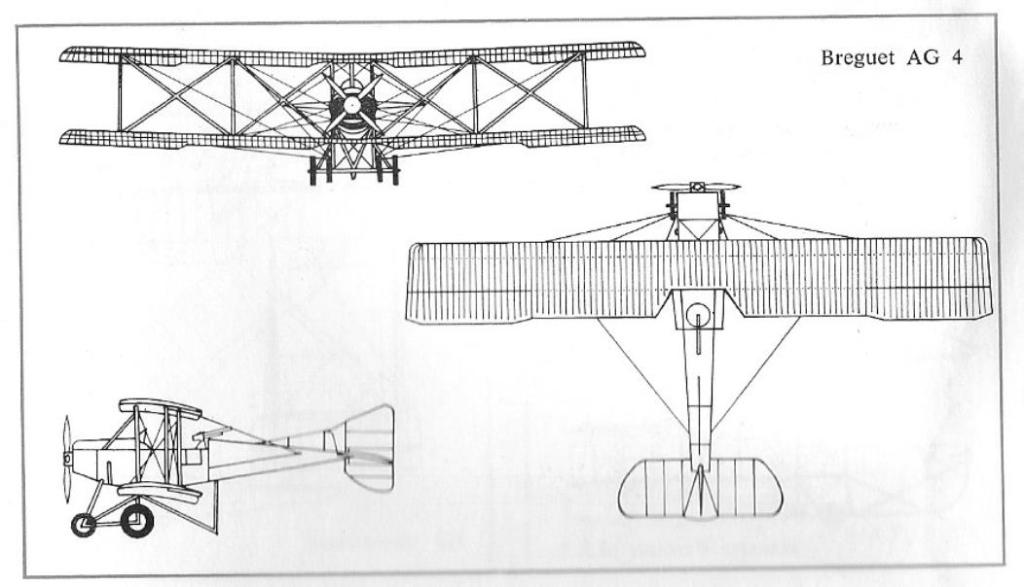
Just before the outbreak of the War, Breguet had started 2 new aircraft and projected a third. The A-G.4 was a 160 Gnome tractor; the A-U.3 was a 200 hp Canton-Unne tractor, and B-U.3 was a 200 hp Canton-Unne pusher (the A and B now used to distinguish similarly-powered machines only.)
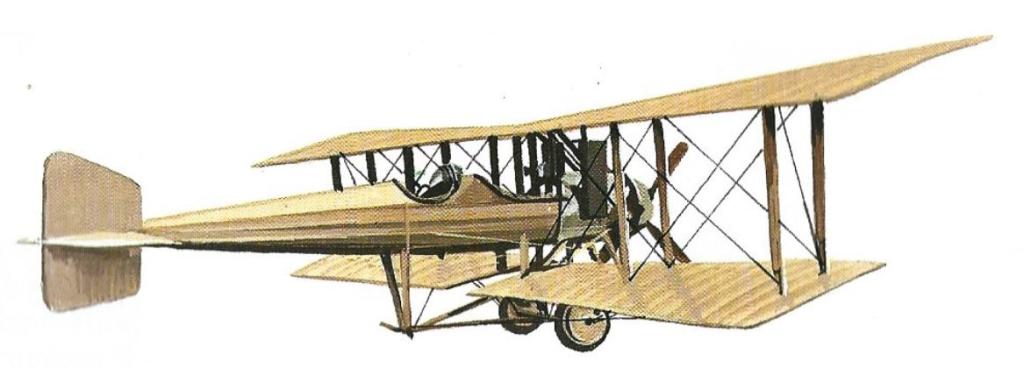
A-G.4

The relative success of the use of cannon in the Breguet BU.3 led the Breguet company to install it in their latest aircraft, the Breguet 5.

The French forces employed some type A-G4, the British employed some A-G4 for the Royal Flying Corps and 15 A-G4 for the Royal Royal Naval Air Service, the Italians some A-G4.

The A-G4 was the definitive 1913 military version with a rotary engine.

Gallery

L-1 Cruiser
Propeller: 2.4 m (8 ft) diameter
Upper wingspan: 13.94 m (45 ft 9 in)
Lower wingspan: 8.74 m (28 ft 8 in)
Wing area: 30.43 m2 (327.5 sq ft)
Length: 8.5 m (28 ft)
Crew: 1
Capacity: 1

U.I
Engine: Salmson Canton-Unné, 85 hp
Span upper: 45′ / 13,70 m
Span lower: 39’4″
Length: 30′ / 9.15m
Empty weight: 1275 lb
Total weight: 1150 kg
Speed: 80 kph

U.I-bis
Span: 41′
Length: 27’11”
Weight: 1100 lb

U.2
Engine: Canton-Unné, 110 hp
Wingspan: 44 ft 4 in / 13.5 m
Length: 27 ft 10 in / 8.5 m
Height: 8 ft 4 in / 2.5 m
Empty weight: 1234 lb / 560 kg
Loaded weight; 2116 lb / 960 kg
Max speed: 68 mph / 110 kph
Armament: none

U.2
Engine: Salmson Canton-Unné, 85 hp
Wingspan: 13,70 m
Length: 9.15m
Total weight: 1150 kg
Speed: 80 kph

A-G.4
Engine: Gnome, 160 hp
Wingspan: 50 ft 4 in / 15.35 m
Length: 27 ft 1 in / 8.25 m
Height: 10 ft 10 in / 3.30 m
Weight: 2970 lb / 1350 kg
Max speed: 62 mph / 100 kph
Ceiling: 42900 ft / 1500 m
Armament: 1 x mg
Crew: 2
Breguet Br.890H Mercure / Br.891 Mars / Br.892R Mercure

Breguet 892S Mercure

With a French Air Force requirement to replace the Douglas C-47 and Amiot AAC-1, in 1948, Breguet came to the conclusion that in the near future a high capacity transport aircraft would be needed that could be used for by both civilians and military.
Prototype 890J Mercure commercial transport was originally to be powered by two Jumo 211 but with the availability of the British Hercules engine the designation was changed to 890H.
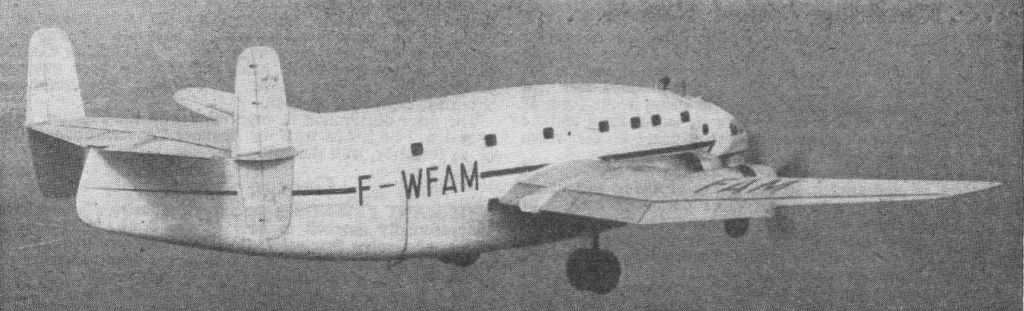
The prototype of the basic model Breguet Br.890H Mercure is a cantilever monoplane with a high-wing, construction – all metal, except fabric covering control surfaces of the empennage. The power plant consisted of two Bristol Hercules 739 engines rated at 2000 hp. The aft fuselage contains a swing tail to allow access. On the ceiling of the cargo compartment rails fastened to the lift / winch designed for the download directly from the truck through the back as well as through a side door. It had a retractable tricycle landing gear. One was built and first flown in April 1950.

890H Mercure

Br.891R Mars was a military transport version of Br.890H Mercure, retained the structural features of the latter, but distinguished by folding the seats for 20 paratroopers laid along the sides, and doors on the sides for dropping paratroopers in the air, as well as the hatch to clear the cargo container, and fixing landing site for towing gliders. The power plant consisted of two Gnome-Rhone 14R-200 rated at 1600 hp (1,193 kW). One was built and first flew in November 1949.
The first to fly on 1 March 1949, the Breguet 892S Mercure had four 500 hp (373 kW) Renault 12S inline piston engines. A convertible cargo/passenger variant, one was built and the 892S was later converted to be the second 890H.
Only one prototype of each variant was built, the French Air Force ordered the Nord Noratlas rather than the Mars and with the availability of war-surplus aircraft like the Douglas DC-3 available to commercial operators the type did not enter production.

Breguet Br.890H Mercure
Engines: 2 x Bristol Hercules 739, 2000 hp

Breguet Br.892R Mercure
Engines: 4 x Renault 12S, 500 hp / 373 kW
Maximum speed: 350 kph at 2500 m
Cruising speed: 285 kph at 1500 m
Range: 1000 km
Empty weight: 8,990 kg
Maximum take-off weight: 16 000 kg
Wingspan: 30.60 m
Length: 21.60 m
Height: 7.20 m
Wing area: 101.20 sq.m

Breguet Br.892S Mercure
Engines: 4 × Renault 12S inline piston, 370 kW (500 hp) each
Length: 21.60 m (70 ft 10 in)
Wingspan: 30.60 m (100 ft 5 in)
Height: 7.20 m (23 ft 7 in)
Wing area: 101.20 m2 (1,089.3 sq ft)
Empty weight: 800 kg (1,764 lb)
Max takeoff weight: 16,000 kg (35,274 lb)
Maximum speed: 350 km/h (220 mph; 190 kn) at 2500m
Cruising speed: 285 km/h (177 mph; 154 kn) at 1500m
Range: 1,000 km (621 mi; 540 nmi)

Breguet Bre.761 / 763 Deux Pont / Provence / Bre.764 / 765 Sahara

Bre.763

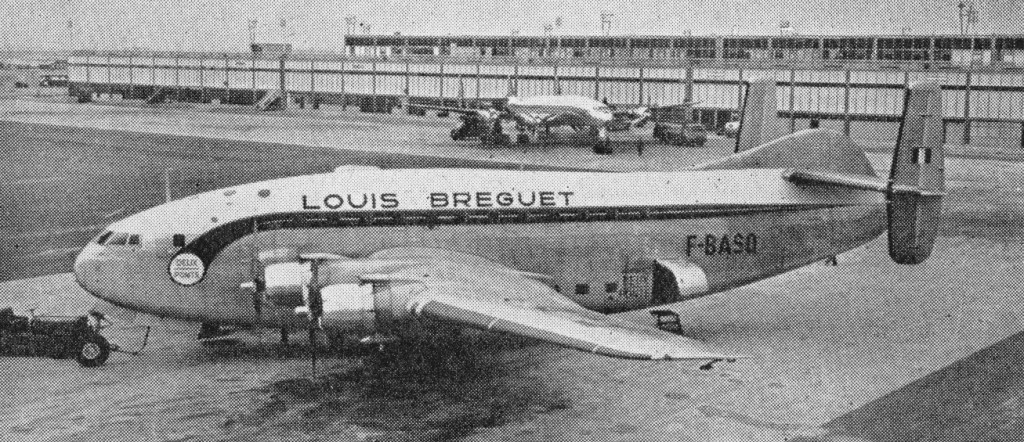
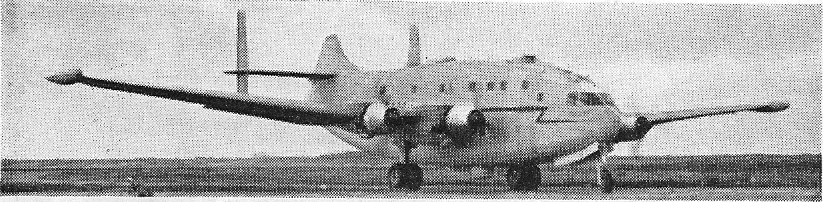
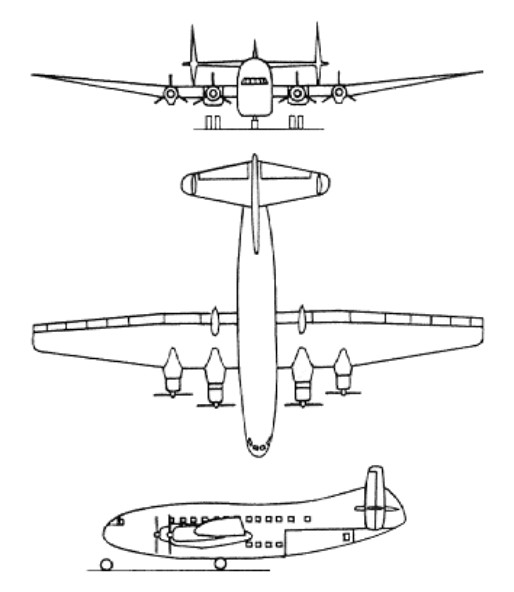
The 763 and 765 transport aircraft were the production developments of the 761, the design of which began in 1944. The prototype 761 powered by four 1,192kW SNECMA 14R engines and first flew on 15 February 1949. A pre-series of three aircraft, designated 761S, was then produced, powered by 1,490kW Pratt & Whitney R-2800 B31 engines.

Br.761 1949

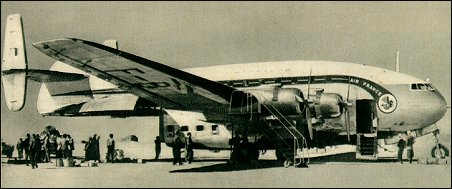
The 763 was the first production version of the Deux Ponts. Twelve were ordered by Air France in 1951, powered by four 1,788kW R-2800 CA18 engines. The inaugural flight was on 16 March 1953, on the Algiers-Marseilles-Lyon-Marseilles-Tunis run. The plane, powered by four 2400-hp Pratt & Whitney Double Wasps, carried some 107 passengers, 59 in tourist class on an upper deck and 48 in a second-class cabin below; alternatively, 135 could be carried in economy class. They were used mainly on routes to North Africa, but some have worked extra peak-period services to London Airport.

In 1958 a Breguet 763 make a demonstration tour, including New York’s International Airport at Idlewild.

The fuselage was generally similar to that of the 761, but the wing span was increased and the wings were reinforced. It was a convertible passenger/cargo airliner with standard accommodation for 59 tourist-class passengers on the upper deck and 48 second-class passengers on the lower.

The 765 Sahara was the military transport version with accommodation for 146 fully equipped troops, 85 stretchers and medical attendants or freight (including military vehicles loaded through the large rear-opening ramp). Fifteen were ordered for the French Air Force in 1956 powered by Pratt & Whitney R-2800 GB-16 or CB-17 engines. The first flew on 6 September 1958.

Breguet 765 Sahara Article

The Bre.764 was a special maritime patrol/anti-submarine version of the Breguet Deux-Ponts. It was fitted with tip-tanks and dorsal/ventral turrets and radome.

Bre.764

Gallery

Br.761
Engines: 4 x Gnome et Rhone 14R
Wingspan: 136 ft 6 in
Top speed: 323 mph

Engine: 4 x P+W R-2800 CA18 Double Wasp, 2400 hp / 1765kW
Wingspan: 43.0 m / 141 ft 1 in
Length: 28.9 m / 94 ft 10 in
Height: 9.9 m / 32 ft 6 in
Wing area: 185.4 sq.m / 1995.63 sq ft
Take-off weight: 51600 kg / 113759 lb
Empty weight: 32241 kg / 71080 lb
Cruise speed: 380 km/h / 236 mph
Ceiling: 6000 m / 19700 ft
Range w/max.fuel: 4000 km / 2486 miles
Range w/max.payload: 2300 km / 1429 miles
Crew: 2-5
Passengers: 107-135

Breguet 763 Provence
Engines: 4 x Pratt and Whitney Double Wasp CA-18 2,400 hp
Span: 140ft
Wing area: 1996 sq.ft
Length: 94 ft 11 in
Height: 31 ft 4 in
Empty weight: 55,8890 lb
Loaded weight: 110,230 lb
Max cruise: 230 mph at 9842 ft
ROC: 740 fpm
Range: 2367 mi

Breguet G.II Gyroplane / G.III Gyroplane

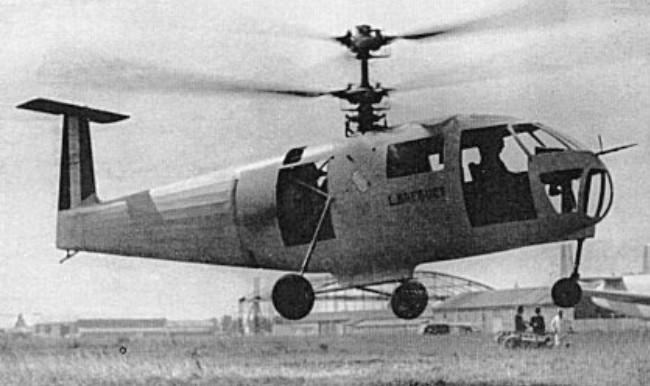
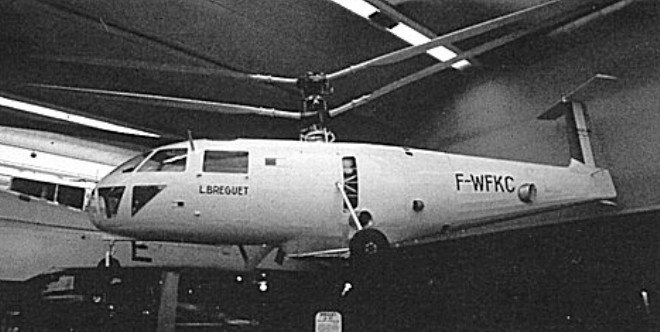
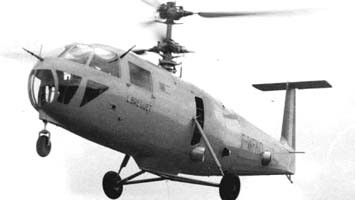
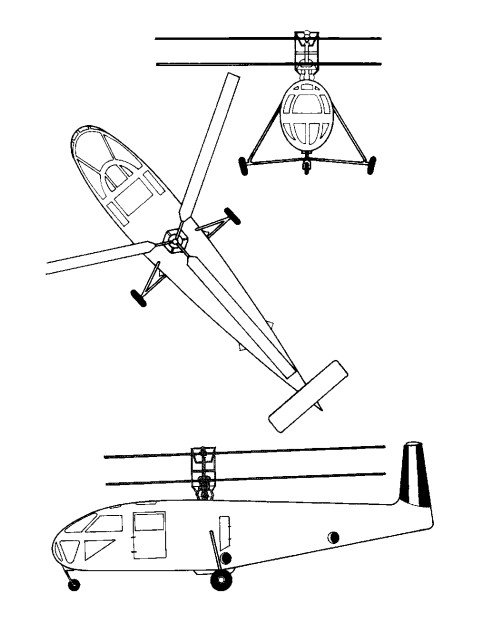
Louis Breguet produced his third “Gyroplane” in 1949; the Model G.IIE. The GIIE had a streamlined fuselage and T-tail and cabin space for a pilot and four passengers. Constructed on behalf of the Societe Francaise du Gyroplane by Breguet, the prototype had an all-metal fuselage with a tall fin and small T-tailplane. It had a cabin for five people and a fixed tricycle undercarriage. The 240hp Potez 9E engine was buried in the fuselage behind the cabin, and three-bladed all-metal rotors were used.

First flew on 21 May 1949, at Villacoublay-Velizy to the south of Paris, the G.IIE was found to be underpowered and it was re-engined with a 450hp Pratt & Whitney Wasp Junior – in which form it became the G.III, first flown in 1950.

Following testing in 1951 development was discontinued and F-WFKC was donated to the Musee de l’Air.

Bréguet G.III

Gallery

G.IIE
Engine: 1 x Potez 9E, 240 hp
Rotor diameter: 9.60m
Length with rotors turning: 9.70m
Height: 4.24m
Max take-off weight: 2100kg
Empty weight: 1473kg
Max speed: 215km/h
Hovering ceiling, IGE: 1600m
Service ceiling: 4600m
Range: 470km
Seats: 3

G.III
Engine: 1 x Pratt & Whitney R-985, 335kW
Rotor diameter: 31.58 ft
Fuselage length: 31.85 ft
Empty weight: 3241 lb
Max take-off weight: 4620 lb
Max speed: 133 mph
Cruise speed: 107 mph
Ceiling: 15,000 ft
Range: 291 miles

Breguet Bre.690 / 691 / 693 / 694 / 695 / 696 / 697

Breguet 693

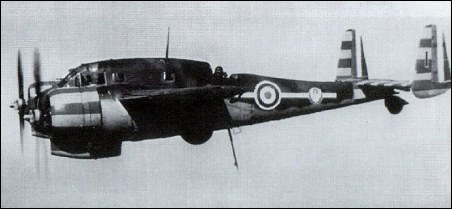
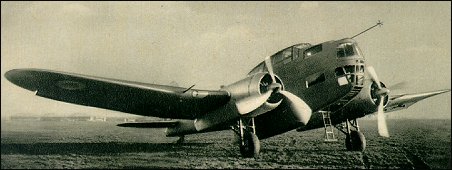
In 1934 the French Air Force issued a requirement for a twin-engined three-seat heavy fighter. Several manufacturers submitted proposals, and the contest was won by the Potez 630. The Breguet proposal had been heavier and more powerful than the other submissions, its designers believing it to be a more versatile, multi-role aeroplane. Design of the Breguet 690 was started in 1935 and a prototype was completed in 1937, first flying on 23 March 1938 with two 507-kW (680-hp) Hispano-Suiza 14AB-02/03 engines. The aircraft was found to have a performance superior to that of the Potez 630, and Breguet received a contract to supply 100 aircraft, configured as two-seat light attack bombers as the Bre.691, first flying in March 1939 with 522-kW (700-hp) 14AB-10/11s.

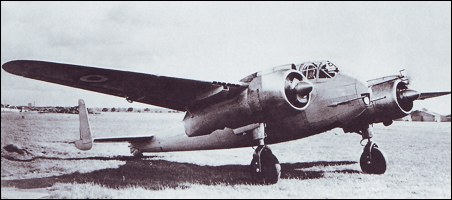
The Breguet 691 was a cantilever mid-wing monoplane of all-metal construction, with two wing-mounted engines and a short fuselage nose. Aft of the wing the fuselage tapered to a tailplane with twin endplate fins and rudders. Conversion from Bre.690 to Bre.691 was deletion of the navigator’s position to provide a small bomb bay. Experience with the Bre.691 proved the Hispano-Suiza powerplants to be unreliable, and the Bre.693.01 was introduced with two Gnome-Rhone 14M-6/7 engines after only 78 Bre.691s had been built. Two hundred and thirty four examples of the Bre.693 were built, later examples having two extra 7.5mm machine-guns, one installed in the tail of each engine nacelle, to improve self-defence. The Breguet 693 proved extremely vulnerable and almost half were lost to enemy action.
Foreign interest in the Bre.690 series was cut short by the German invasion of France and the single Bre.694.01 built, intended as a three-seat reconnaissance aircraft, was delivered directly to the Aeronavale. The Bre.694 was generally similar to the original Bre.690 with no bomb bay and a navigator’s compartment, but with Gnome-Rhone 14M-4/5 engines.
The Bre.695 was virtually identical to the Bre.693 but with Pratt & Whitney SB4G Twin Wasp Junior engines. Fifty Bre.695s were built, being delivered to Groupe 18 in June 1940.

Breguet 695

The Bre.696 and 697 were built only as prototypes and were respectively a two-seat light bomber and a two-seat heavy destroyer.

Bre.690
two 507-kW (680-hp) Hispano-Suiza 14AB-02/03 engines

Bre.691
Hispano-Suiza 14AB-10/11, 522-kW (700-hp)

Bre.693.01
two Gnome-Rhone 14M-6/7 engines

Bre.693
Engines: 2 x Gnome-Rhone 14M-6/7, 522kW (700 hp).
Span: 15.37m (50ft 5in).
Length: 9.67m (31ft 8.75in).
Max T/O weight: 4900 kg (10,803 lb).
Max speed: 304 mph at 16,405 ft.
Operational range: 839 miles.
Armament: 1 x 20-mm Hispano¬Suiza cannon and 4 or 6 7.5-mm (0.295-in) Darne mg, up to 400kg (882 lb) of bombs

Bre.693 AB2
Engines: 2 x Gnome-Rhone 14M-6/7, 522kW (700 hp).
Take-off weight: 4892 kg / 10785 lb
Empty weight: 3006 kg / 6627 lb
Wingspan: 15.4 m / 50 ft 6 in
Length: 9.7 m / 31 ft 10 in
Height: 3.2 m / 10 ft 6 in
Wing area: 29.2 sq.m / 314.31 sq ft
Max. Speed: 490 km/h / 304 mph
Ceiling: 9500 m / 31150 ft
Range: 1350 km / 839 miles
Crew: 2
Armament: 1 x 20mm cannon, 3 x 7.5mm machine guns, 400kg bombs

Bre.694.01

Bre.694
Gnome-Rhone 14M-4/5 engines.

Bre.695
Pratt & Whitney SB4G Twin Wasp Junior engines.

Bre.696

Bre.697

Breguet Bre.521 Bizerte / Bre.522 Bizerte / Bre.530 Saigon

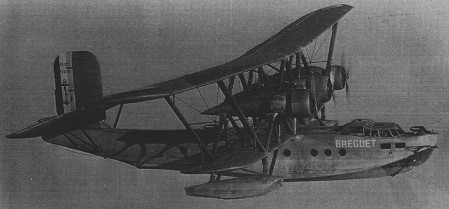
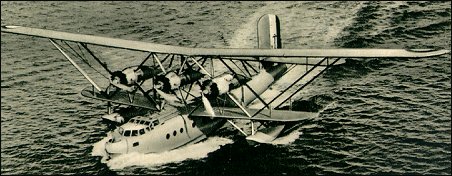
In 1931 Breguet secured a licence to build the Short Calcutta, and this was used as the basis for the company’s Bre.521 submission to meet a 1932 French Navy requirement for a long-range reconnaissance flying-boat.
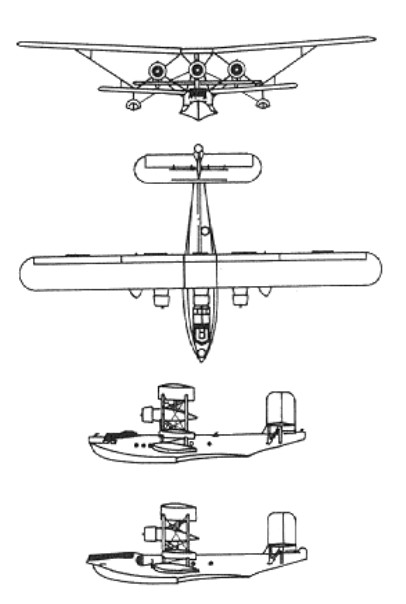
The Bre.521 was of all-metal construction with stabilising floats strut-mounted under the lower wings, a strut-braced empennage and three tractor engines located between the biplane wings.
The Bre.521.01 prototype flew on 11 September 1933 with 630-kW (845-hp) Gnome-Rhóne l4Kdrs radials, and was followed by three pre¬production boats. The second of these introduced refinements intended for the production variant, includng an improved cockpit enclosure and more potent defensive armament. Armament comprised five 7.5mm Darne machine-guns: one in the cupolas each side at the rear of the cabin, one under each of two sliding hatches (with retractable windscreens) staggered to port and starboard amidships, and one in the extreme tail cockpit aft of the tail unit.
Thirty were built up to 1940, powered by three 671kW Gnome-Rhone 14 Kirs radial engines. These served with “Exploration” escadrilles of the French Aeronavale from 1935 until the end of World War II, latterly being used as maritime reconnaissance and anti-submarine aircraft. Of these, nine were captured by the Germans and were used during 1943-45 for air-sea rescue.

One ‘boat became the sole Bre.522 when re-engined with 746-kW (1,000-hp Hispano-Suiza l4Aa radial engines.

In 1935 a civilian version – the Breguet Br.530 Saigon – was produced.

Breguet Bre.530 Saigon Article

Bre.521 Bizerte
Engines: 3 x Gnome-Rhône l4Kirs or 14N-11, 671 kW (900 hp).
Wingspan: 35.1-18.9 m / 115 ft 2 in-62 ft 0 in
Wing area: 169.8 sq.m / 1827.71 sq ft
Length: 20.5m (67 ft 3in).
Height: 7.5 m / 24 ft 7 in
Max T/O weight: 16600 kg (36,597 lb).
Empty weight: 8855 kg / 19522 lb
Max speed: 243 km/h / 152 mph at 3,280ft.
Cruise speed: 200 km/h / 124 mph
Ceiling: 6600 m / 21650 ft
Range w/max.fuel: 3000 km / 1864 miles
Range w/max.payload: 2000 km / 1243 miles
Seats: 8
Crew: 5
Armament: 5 x 7.5-mm (0.295-in) Darne mg plus up to 300 kg (661 lb) of bombs.

Bre.522
Engines: 3 x Hispano-Suiza 14Aa, 1000 hp, (746 kW).
Span: 35.15m / 115ft 4in.
Length: 20.5m / 67 ft 3in.
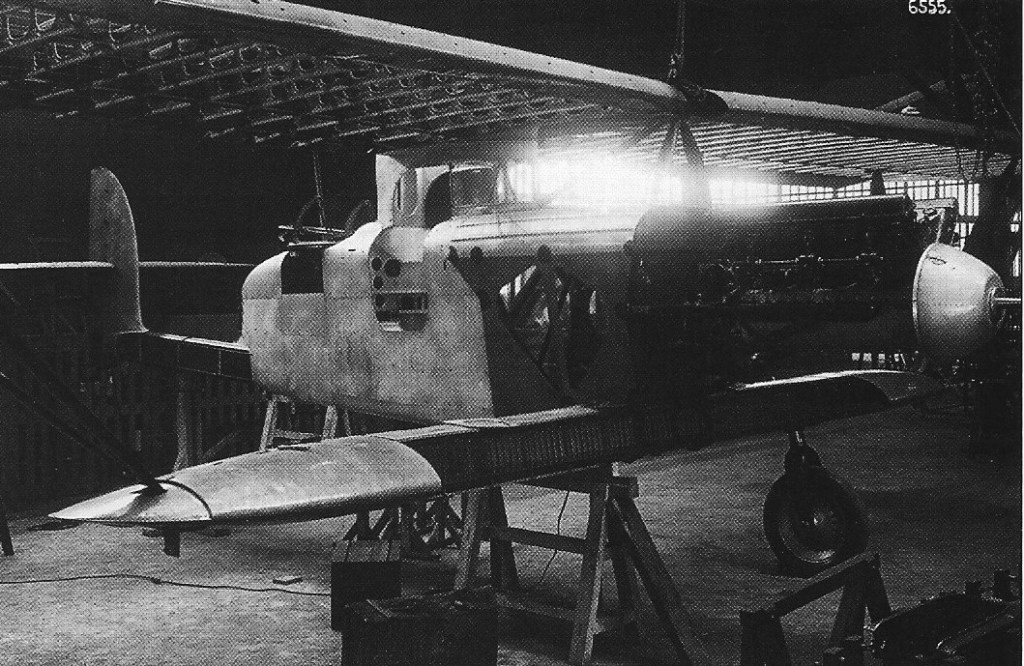
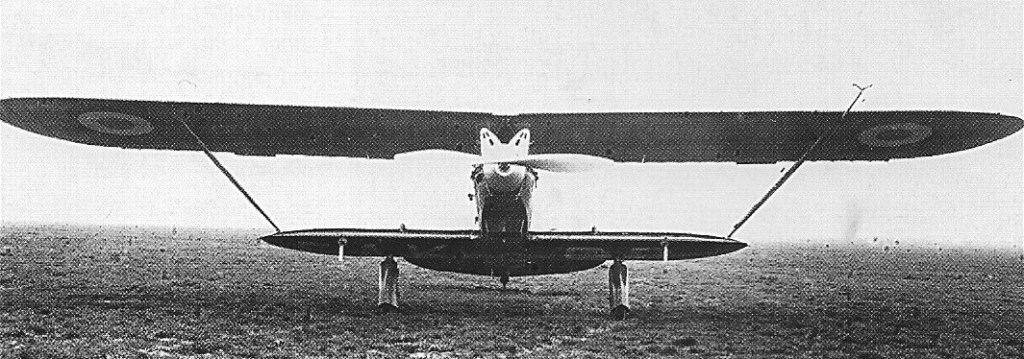
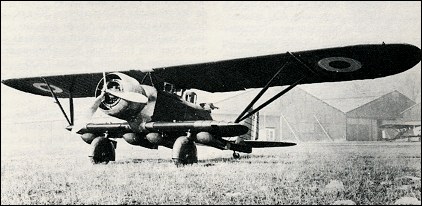
Armament: 5 x 7.5-mm (0.295-in) Darne mg.

Breguet Br 480 / Br 482

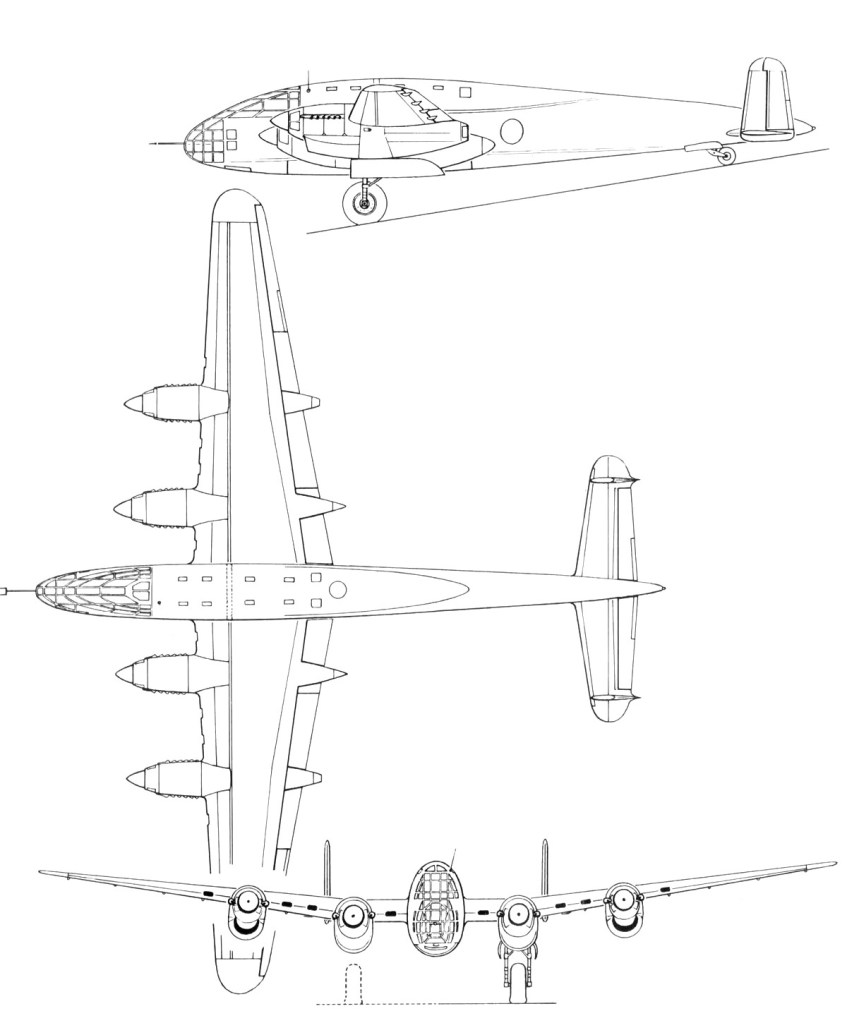
By the 1930s, the French air force’s bomber force was very out-of-date and too small. In December 1936, a requirement was issued code-named “B4”, the French Air Ministry, for a new four-seat, twin-engined medium bomber design.

Breguet submitted four designs and Bloch one; of which a two-engine Breguet and four-engine Bloch design were both shortlisted. Breguet’s initial design, the Breguet 480 (or Bre. 480) to be powered with the specified 1,225 hp (914 kW) Gnome et Rhône 14L radial engines which was meant to carry 1,000 kg (2,200 lb) of bombs over a 2,500 km (1,600 mi) radius. Gnome et Rhône abandoned the 14L however, so, after considering a version powered by two Hispano-Suiza 12Y V12 engines, Breguet reworked the design as the Breguet 482, with four 1,350 hp (1007 kW) Hispano-Suiza 12Z engines, with an order for two prototypes placed by the French Air Ministry on 12 May 1938.

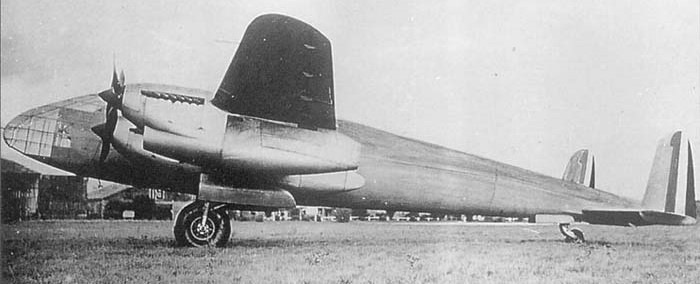
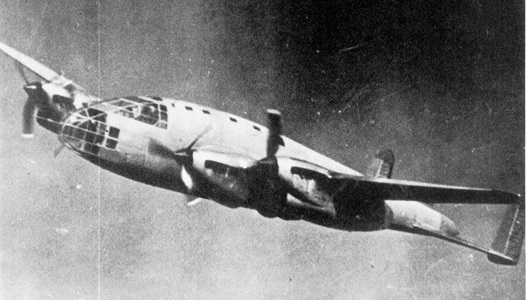
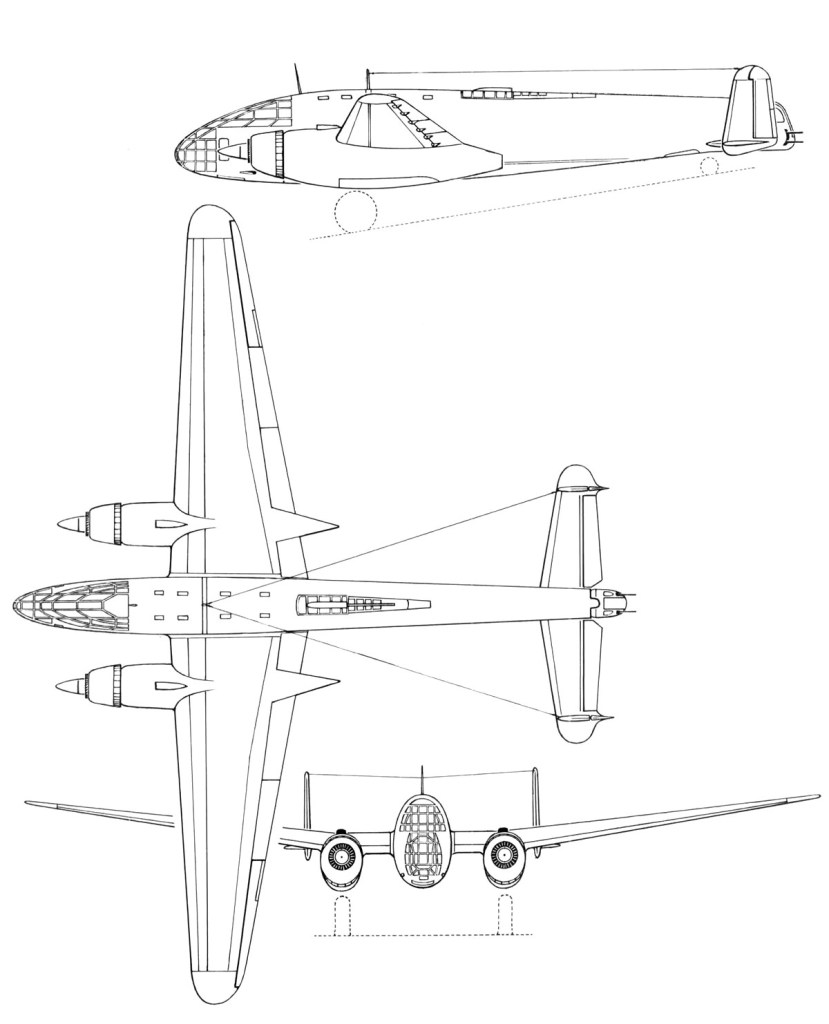
The Breguet 482 was a mid-winged monoplane of all-metal construction, with a clean, low-drag, oval section monocoque fuselage, twin tails and a retractable tailwheel undercarriage. The planned defensive armament was a 20mm Hispano-Suiza HS.404 cannon in a power operated dorsal position, with a 7.5mm machine gun in the nose and a further two machine guns in ventral mountings. Up to 2,500 kg (5,500 lb) of bombs could be carried.

The Br-482 was of all-metal construction with a four-man crew. The most characteristic feature was the large “glazed” nose area. The plane was fully-enclosed and had retractable main and tail landing gear. The internal wing supports were three spars, the outer two aluminium and the centre steel.

Construction of the two prototypes was well progressed when Germany invaded France on 10 May 1940, and in late May it was decided to evacuate the near complete prototypes from Villacoublay near Paris, with the first prototype being sent to Bône in Algeria and the second to the Breguet factory at Anglet, near Bayonne in the far south-west of France. The first prototype was destroyed during a German air-raid in November 1942 following the Allied invasion of French North Africa, but the first prototype remained hangered untouched, despite the fact that Anglet had been occupied by the Germans since 1940.

When the Germans withdrew, Breguet resumed work on the Br 482, proposing to complete it with more powerful Hispano-Suiza 12Z engines and a heavier armament. The French Armée de l’Air had no requirement for a bomber, however, and it was decided to use the aircraft, with the planned modifications, but with armament removed, as a research aircraft. Breguet deleted one of the crew positions leaving the Br-482 a three-man plane. The defensive guns, which had not been fitted before France’s 1940 surrender, were never installed and the mounts deleted. The engines were upgraded to the newest and most powerful model of the Hispano-Suiza 12Z with a centrifugal supercharger.

In this form it was finally flown for the first time on 27 November 1947 with a crew of three, being used for various experimental purposes, including testing of the 12Z engines.

The Br-482’s first mission was to explore the performance regime of the supercharged upgraded engines. They did not perform as well as expected and the Br-482 was never able to explore the full range of its flight envelope. After frequent engine failures the Br-482 was restricted to 84% throttle. Although Spain and Yugoslavia used the supercharged 12Z engine after WWII, the lone Br-482 was the only French plane to use it.
After these tests, it had been planned to use the Br-482 to test the planned 24Z engine and a new contra-rotating propeller design. Both of these projects were cancelled. Likewise, a planned quad gun mount design was cancelled before tests aboard the Br-482 could start.

In 1949, some consideration was given to re-engining the Br-482 with Gnome-Rhone 14R radial piston engines. The last design of Gnome-Rhone (which did not survive the occupation), the 14R was built by SNECMA after WWII and were 15% more powerful than the 12Z. There were concerns about the stability of the Br-482 at the increased speed, especially with the weight of the guns, bombsight, and fourth crewman missing. The re-engining was never done. The plane continued in use with the original engines as an observation vehicle for early French ballistic missile tests.

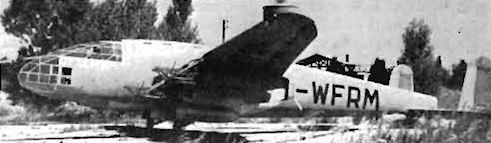
Twenty flights in all were done between 1948 and 1950. At some point in 1950, the Br-482 was transferred out of the French air force’s inventory and given the civil registration F-WFRM.

The Br-482 was discarded on 13 September 1950. The deactivated plane, stripped of the engines and equipment, was still in existence as late as 1952 when it was presumably finally scrapped.

Gallery

Br 482
Engines: 4 × Hispano-Suiza 12Z, 1,007 kW (1,350 hp) (take off power)
Wingspan: 24.09 m (79 ft 0 in)
Wing area: 64.4 m2 (693 sq ft)
Length: 18.86 m (61 ft 11 in)
Height: 5.21 m (17 ft 1 in)
Empty weight: 10,450 kg (23,038 lb)
Gross weight: 14,500 kg (31,967 lb)
Maximum speed: 560 km/h (348 mph; 302 kn) at 8,000 m (26,250 ft)
Cruising speed: 529 km/h (329 mph; 286 kn)
Range: 1,519 km (944 mi; 820 nmi)
Service ceiling: 12,000 m (39,370 ft)
Crew: 3
Armament: 1 x Hispano-Suiza HS.404 20mm gun firing forward (500 rds), twin Reibel 7.5mm machine gun in the dorsal position (600 rds), two loose MAC-1934 7.5mm machine guns firing from drop-down belly mounts.
Bombload: 5,500 lbs / 2500 kg

Br.482B.4
Engines: 4 x Hispano-Suiza 12 Y 51, 1100 hp
Wingspan: 24.20 m
Wing area: 67.90 sq.m
Length: 18.60 m
Height: 4.25 m
Empty weight: 9500 kg
Normal takeoff weight: 16,060 kg
Cruising speed: 400 kph
Practical range: 2500 km
Practical ceiling: 9000 m
Crew: 4
Armament: one 20-mm cannon Hispano-Suiza / four 7.5-mm machine gun Darne
Bombload: 2500 kg

Br.480
Br.482

Breguet Bre.462

The first prototype Br.460 flew for the first time in 1935. Then the project was cancelled in favour of Br.462 which first flown in October 1936. Only three Br.462 were built.

Engine: 2 x G+R 14NO, 700kW
Take-off weight: 8200 kg / 18078 lb
Empty weight: 4350 kg / 9590 lb
Wingspan: 20.5 m / 67 ft 3 in
Length: 14.8 m / 48 ft 7 in
Wing area: 57.0 sq.m / 613.54 sq ft
Max. Speed: 402 km/h / 250 mph
Ceiling: 8300 m / 27250 ft
Range w/max.fuel: 3100 km / 1926 miles
Range w/max.payload: 900 km / 559 miles
Crew: 4
Armament: 1 x 23mm machine-gun, 1500kg bombs

Breguet Bre.390T / Bre.392T / Bre.393T

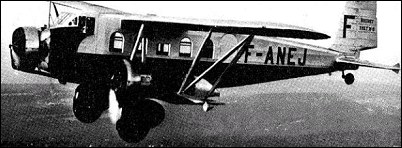
Development of the Breguet 393T three-engined passenger transport began with the Breguet 390T prototype, an all-metal sesquiplane which made its first flight in February 1931. During a test flight on 3 July 1931 a propeller broke away, the pilot losing his life when his parachute failed to open after he abandoned the aircraft. The Breguet 390T was completely destroyed in the ensuing crash.
A single Breguet 392T followed, replacing the Bre.390T’s 179kW Gnome-Rhone 5Kd radials with 224kW Hispano-Suiza 9Qc engines, and completed as a freight carrier. Only one example appeared and it was followed later in 1933 by the prototype Breguet 393T. It differed by changes in interplane struts, by having fabric instead of metal fuselage covering, and by introducing a tailwheel and spat fairings for the mainwheel units. This aircraft was delivered to Air France in July 1934, being followed by two more examples later that year. The remaining three aircraft ordered by Air France were delivered in 1935.
The Breguet 393T had accommodation for a crew of two and 10 passengers, each passenger having a comfortable armchair beside a large window. The type flew regular routes between Toulouse and Casablanca, the Mediterranean leg of the route to South America, and later on the Natal-Buenos Aires stage in Brazil. Their final employment was on several European routes radiating from Paris.

Bre.390T
Engines: 3 x 179kW Gnome-Rhone 5Kd radials

Bre.392T
Engines: 3 x 224kW Hispano-Suiza 9Qc

Bre.393T
Engines: 3 x Gnome-Rhone 7Kd Titan Major radial, 261kW
Take-off weight: 6000 kg / 13228 lb
Loaded weight: 3966 kg / 8744 lb
Wingspan: 20.71 m / 67 ft 11 in
Length: 14.76 m / 48 ft 5 in
Wing area: 66.46 sq.m / 715.37 sq ft
Max. speed: 249 km/h / 155 mph
Cruise speed: 235 km/h / 146 mph
Ceiling: 5850 m / 19200 ft
Range: 975 km / 606 miles

Breguet Bre.27 / Bre.270 / Bre.271-3 / Bre.272 / Bre.274        

Breguet 270

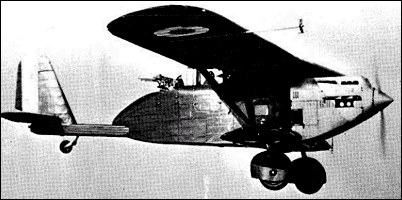
Built to an official requirement of 1928 for a two-seat observation aircraft, the Breguet 270 was designed by a distinguished team led by Marcel Vuillerme and including Rene Dorand, Rene Leduc and Paul Deville. The prototype Bre.270.01 made its maiden flight on 23 February 1929 with Bucquet, chief Breguet test pilot, at the controls.
A two-seat all-metal sesquiplane, it introduced a number of interesting design features. High-tensile steel replaced aluminium alloys, and the short fuselage, engine, lower wing and tail boom were all attached to a steel chassis, resulting in a very tough aircraft. Following early tests, the prototype was returned to the company’s Velizy-Villacoublay workshops where the tail unit was redesigned with a more angular fin/rudder assembly and lower-set horizontal tail-plane. Nine further prototypes under the Bre.270/271 designations were completed, two of them being displayed at the 1930 Paris Salon de I’Aeronautique.
Despite a rather poor overall performance, orders for a total of 85 Breguet 270s were received during 1930, all for the French Armee de I’Air. In 1932, an order was placed for 45 examples of the Breguet 271, powered by an engine delivering 112kW more than the original Hispano-Suiza 12Hb, and capable of lifting an increased useful load. Several Bre.270s were subsequently modified for VIP liaison duties, with a ‘glasshouse’ covering both cockpits.
In 1932 the original prototype registered F-AJRC and fitted with a supplementary ventral fuel tank, made a longdistance flight across Africa to Madagascar. Besides small batches of Bre.270s bought by Brazil and Venezuela, 15 examples of the Breguet 273 reconnaissance-bomber development were exported to Venezuela and six to China. The Bre.273 prototype had flown in April 1934. Powered by a 641kW Hispano-Suiza 12Ybrs engine with a frontal radiator (all previous versions had ‘chin’ radiators), the Bre.273 had improved performance and bombload increased to 400kg.

Experimental versions of the basic design included the Bre.272 TOE fitted with a radial engine, initially a Gnome-Rhone 9K and finally a Renault 9Fas, and the Bre.274 with a 567kW Gnome-Rhone 14K. The latter, intended as a bomber, was subsequently operated by sporting Frenchwoman Maryse Hilsz, who flew it to victory in the 1936 Coupe Helene Boucher contest, averaging 277km/h. A series of experimental Breguet 41 twin-engined biplanes, which shared the same ‘chassis’ and tailboom construction as the Breguet 270, met with initial success and secured an order for the Armee de I’Air, which intended them for the ‘multiplace de combat’ role, capable of fighting, bombing or reconnaissance. With the appearance of more promising rival designs, the order was cancelled before deliveries had commenced.

Bre.272 TOE

On 1 January 1936 Bre.270s and Bre.271s were still in service in the French observation escadrilles. At the outbreak of World War II a number of Groupes Aeriens d’Observation (manned largely by reserve pilots) had Bre.27s on charge. These included GAOs 509, 543 and 547. A number of Bre.27s were shot down while on reconnaissance patrols across the Rhine before being withdrawn from service at the end of 1939.

Breguet 274

Gallery

Breguet 270
Engine: 1 x Hispano-Suiza 12Hb inline piston engine, 373kW
Take-Off Weight: 2393 kg / 5276 lb
Loaded Weight: 1756 kg / 3871 lb
Wingspan: 17.01 m / 55 ft 10 in
Length: 9.76 m / 32 ft 0 in
Height: 3.55 m / 11 ft 8 in
Wing Area: 49.67 sq.m / 534.64 sq ft
Max. Speed: 236 km/h / 147 mph
Ceiling: 7900 m / 25900 ft
Range: 1000 km / 621 miles
Armament: 3 x 7.7mm machine-guns, 120kg of bombs