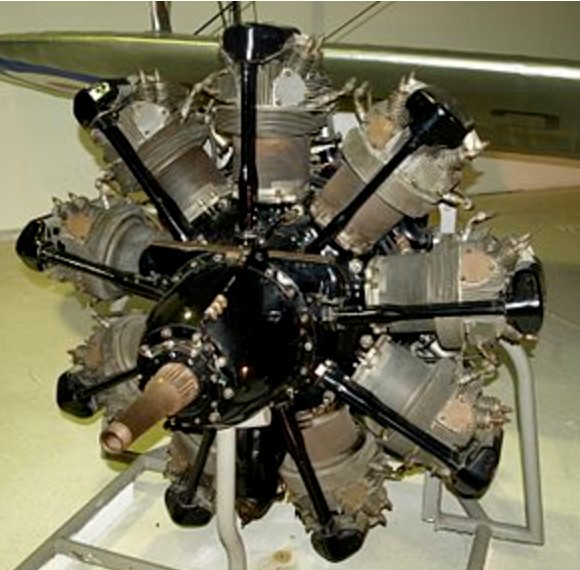
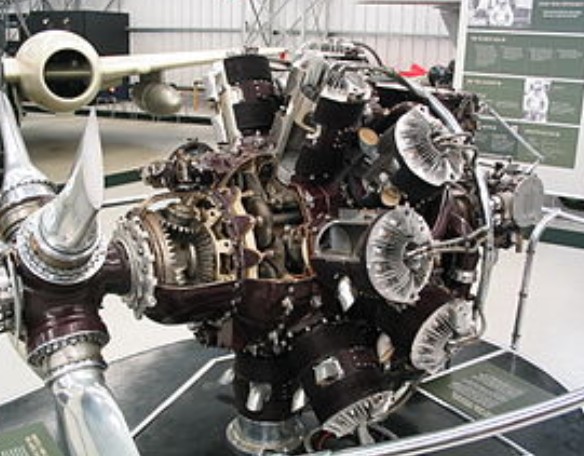
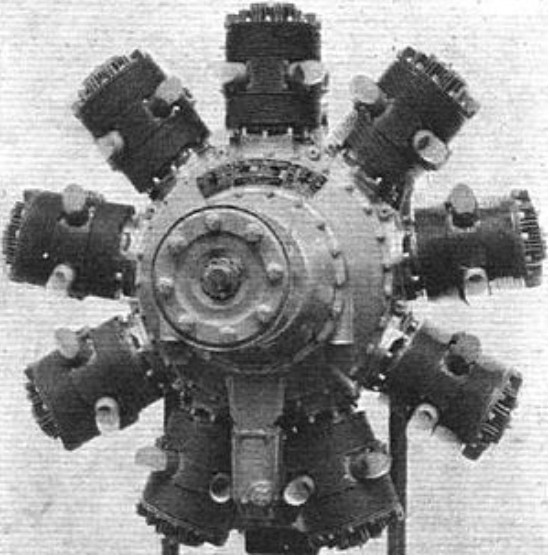
The Bristol Neptune was a seven-cylinder air-cooled radial engine developed in 1930. It had the same size cylinders as the earlier Mercury and Titan engines, 5.75 in (146 mm) x 6.5 in (165 mm) which gave a displacement of 1,182 cu in (19.3 L) and produced a maximum of 320 horsepower (239 kW). The Neptune was effectively a seven-cylinder version of the Titan.
Applications: Bristol Type 110
Specifications:
Neptune I Type: 7-cylinder air-cooled radial engine. Bore: 5.75 in (146 mm) Stroke: 6.5 in (165 mm) Displacement: 1,182 cu in (19.3 L) Diameter: 48.4 in (1229.3 mm) Dry weight: 630 lb (286 kg) Designer: Roy Fedden Valvetrain: Overhead valve, Four valves per cylinder Fuel type: 73-77 octane petrol Cooling system: Air-cooled Reduction gear: Direct drive, left hand tractor Power output: 295 hp (220 kW) at 1,700 rpm (rated power), 320 hp (239 kW) at 1,870 rpm at sea level Compression ratio: 5:1 Power-to-weight ratio: 0.5 hp/lb (0.83 kW/kg)
The nine-cylinder, air-cooled, single-row, piston radial Mercury was developed by the Bristol Aeroplane Company in 1925 as their Bristol Jupiter was reaching the end of its lifespan. Although the Mercury initially failed to attract much interest, the Air Ministry eventually funded three prototypes and it became another winner for the designer Roy Fedden.
With the widespread introduction of superchargers to the aviation industry in order to improve altitude performance, Fedden felt it was reasonable to use a small amount of boost at all times in order to improve performance of an otherwise smaller engine. Instead of designing an entirely new block, the existing Jupiter parts were re-used with the stroke reduced by one inch (25 mm). The smaller capacity engine was then boosted back to Jupiter power levels, while running at higher rpm and thus requiring a reduction gear for the propeller. The same techniques were applied to the original Jupiter-sized engine to produce the Pegasus.
The Mercury’s smaller size was aimed at fighter use and it powered the Gloster Gauntlet and its successor, the Gloster Gladiator. It was intended that the larger Pegasus would be for bombers but as the power ratings of both engines rose, the Mercury found itself being used in almost all roles including twin-engine light bomber, Bristol Blenheim.
In 1938 Roy Fedden pressed the Air Ministry to import supplies of 100 octane aviation spirit (gasoline) from the USA. This new fuel would allow aero engines to run at higher compression ratios and supercharger boost pressure than the existing 87-octane fuel, thus increasing the power. The Mercury XV was one of the first British aero engines to be type-tested and cleared to use the 100-octane fuel in 1939. This engine was capable of running with a boost pressure of +9 lbs/sq.in and was first used in the Blenheim Mk IV.
The Mercury was also the first British aero engine to be approved for use with variable-pitch propellers.
The Bristol company and its shadow factories produced 20,700 examples of the engine. Outside the United Kingdom, Mercury was licence-built in Poland and used in their PZL P.11 fighters. It was also built by NOHAB in Sweden and used in the Swedish Gloster Gladiator fighters and in the Saab 17 dive-bomber. In Italy, it was built by Alfa Romeo as the Mercurius. In Czechoslovakia it was built by Walter Engines. In Finland, it was built by Tampella and mainly used on Bristol Blenheim bombers.
Variants:
Mercury I (1926) 808 hp, direct drive. Schneider Trophy racing engine.
Mercury II (1928) 420 hp, compression ratio 5.3:1.
Mercury IIA (1928) 440 hp
Mercury III (1929) 485 hp, compression ratio 4.8:1, 0.5:1 reduction gear.
The rationale behind the single sleeve valve design was two-fold: to provide optimum intake and exhaust gas flow in a two-row radial engine, improving its volumetric efficiency; and to allow higher compression ratios, thus improving its thermal efficiency. The arrangement of the cylinders in two-row radials made it very difficult to utilise four valves per cylinder, consequently all non-sleeve valve two- and four-row radials were limited to the less efficient two-valve configuration. Also, as combustion chambers of sleeve-valve engines are uncluttered by valves, especially the hot exhaust valves, being comparatively smooth they allow engines to work with lower octane number fuels using the same compression ratio. Conversely, the same octane number fuel may be utilised while employing a higher compression ratio, or supercharger pressure, thus attaining either higher economy, or power output. The down-side was the difficulty in maintaining sufficient cylinder and sleeve lubrication.
Bristol had introduced their first sleeve-valve designs in the 750 horsepower (560 kW) class Perseus and the 500 hp (370 kW) class Aquila that they intended to supply throughout the 1930s. Aircraft development in the era was so rapid that both engines quickly ended up at the low-power end of the military market and, in order to deliver larger engines, Bristol developed 14-cylinder versions of both. The Perseus evolved into the Hercules (First run in January 1936), and the Aquila into the Taurus.
In 1937 Bristol acquired a Northrop Model 8A-1, the export version of the A-17 attack bomber, and modified it as a test bed for the first Hercules engines.
The first Hercules engines were available in 1939 as the 1,290 hp (960 kW) Hercules I, soon improved to 1,375 hp (1,025 kW) in the Hercules II. The major version was the Hercules VI which delivered 1,650 hp (1,230 kW), and the late-war Hercules XVII produced 1,735 hp (1,294 kW). The Hercules powered a number of aircraft including Bristol’s own Beaufighter heavy fighter design although it was more commonly used on bombers. The Hercules also saw use in civilian designs, culminating in the 735 and 737 engines for such as the Handley Page Hastings C1 and C3 and Bristol Freighter. The design was also licensed for production in France by SNECMA. Except for the 2000 hp-range versions in the 1950s until there were lubricating oil improvements, it was considered to be one of the more reliable aircraft engines of the era.
A total of over 57,400 Hercules engines were built.
Applications: Armstrong Whitworth Albemarle Avro Lancaster B.II Avro York C.II Bristol Beaufighter Bristol Freighter Bristol Superfreighter Breguet 890 Mercure Fokker T.IX Folland Fo.108 Handley Page Halifax Handley Page Hastings Handley Page Hermes Nord Noratlas Northrop 8A (One Swedish 8A-1 was bought by Bristol to test the engine) Northrop Gamma 2L Saro Lerwick Short S.26 Short Seaford Short Solent Short Stirling Vickers Valetta Vickers Varsity Vickers VC.1 Viking Vickers Wellesley Vickers Wellington
Specifications:
Hercules II Type: 14-cylinder, two-row, supercharged, air-cooled radial engine Bore: 5.75 in (146 mm) Stroke: 6.5 in (165 mm) Displacement: 2,360 in³ (38.7 L) Length: 53.15 in (1,350 mm) Diameter: 55 in (1,397 mm) Dry weight: 1,929 lb (875 kg) Valvetrain: Gear-driven sleeve valves with five ports per sleeve — three intake and two exhaust Supercharger: Single-speed centrifugal type supercharger Fuel system: Claudel-Hobson carburettor Fuel type: 87 Octane petrol Cooling system: Air-cooled Reduction gear: Farman epicyclic gearing, 0.44:1 Power output: 1,272 hp (949 kW) at 2,800 rpm for takeoff 1,356 hp (1,012 kW) at 2,750 rpm at 4,000 ft (1,220 m) Specific power: 0.57 hp/in³ (26.15 kW/l) Compression ratio: 7.0:1 Specific fuel consumption: 0.43 lb/(hp•h) (261 g/(kW•h)) Power-to-weight ratio: 0.7 hp/lb (1.16 kW/kg)
The Bristol Draco was an air-cooled 9-cylinder radial engine from the British manufacturer Bristol Aeroplane Company. It was essentially a version of their Pegasus converted to use a fuel injection system.
The carburettor had only a simple butterfly valve, while two injection pumps supplied the cylinders with fuel, one handling four cylinders and the other, five. Injection was into the manifold before they split into the two intake valves for each cylinder. First run in 1935, the engine was flight tested in a Westland Wapiti. Since the expenditure did not bring considerable improvements the development was stopped.
Draco Type: Nine-cylinder air-cooled radial engine. Bore: 5.75 in (146 mm) Stroke: 7.5 in (190 mm) Displacement: 1,753 cu in (28.7 L) Length: 43.5 in (1,105 mm) Diameter: 55.5 in (1,410 mm) Dry weight: 1,093 lb (495.8 kg) Designer: Roy Fedden Valvetrain: Overhead valve Supercharger: Medium supercharged Fuel system: Fuel injected Cooling system: Air-cooled Reduction gear: Geared epicyclic, reduction ratio 0.5:1, left hand tractor Power output: 570 hp at 2,000 rpm Compression ratio: 5.3:1 Power-to-weight ratio: 0.52 hp/lb
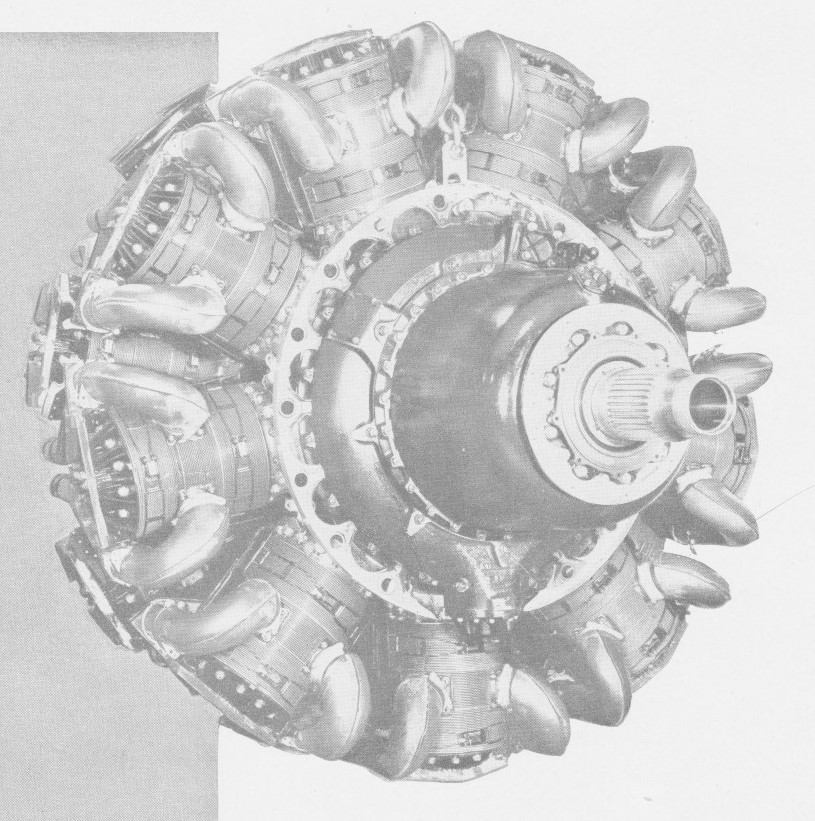
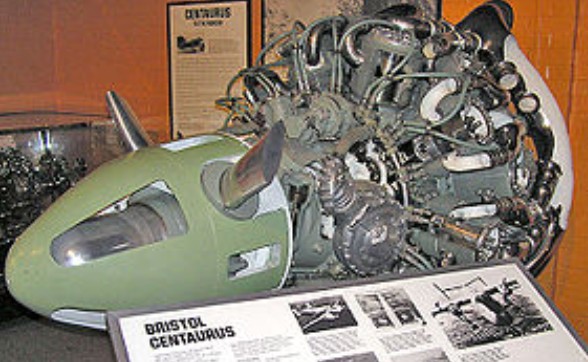
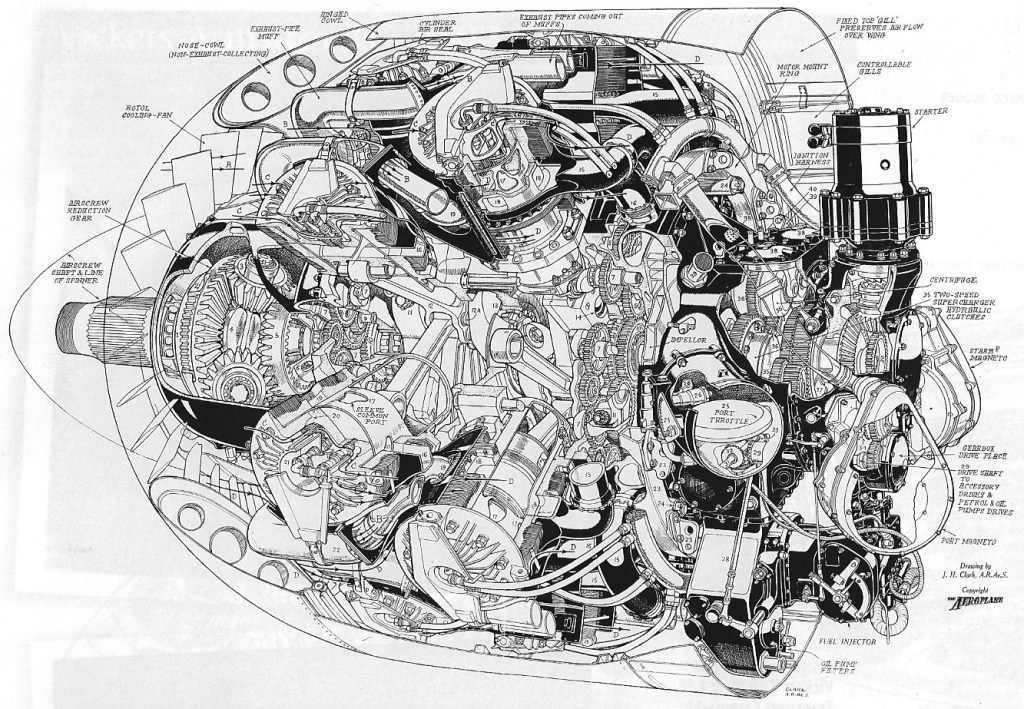
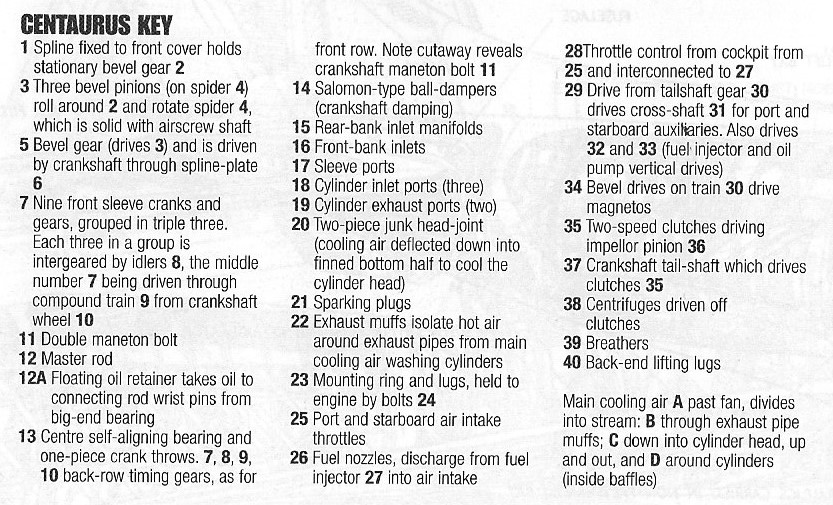
The sleeve valve Centaurus was based on the mechanicals of the 5.75 in (146 mm) piston from the original 1918 Jupiter. The Jupiter piston was still in use in the contemporary 14-cylinder Hercules, which was being brought into production during the design of the Centaurus. The Centaurus had a cylinder capacity of 3,270 in³ (53.6 lt), making it one of the largest piston aircraft engines to enter production, while that of the Hercules was 2,364 cubic inches (38.7 l). The nearly 40% higher capacity was achieved by increasing the stroke from 6.5 to 7 in (170 to 180 mm), and by changing to two rows of nine cylinders instead of two rows of seven, but the overall diameter of the Centaurus was only just over 6% greater.
While Bristol maintained the Centaurus dated from July 1938 (when it was originally type-tested), production could not start until 1942 owing to the need to get the Hercules into production and improve the reliability of the entire engine line. Nor was there any real need for the larger engine at this early point in the war, when most military aircraft designs were intended to mount engines of 1,000 hp or a little more. The Hercules’ approximately 1,500 hp was simply better suited to the existing airframes then in production.
In fact, the Centaurus did not see any use until near the end of the war, first appearing on an upscaled version of the Vickers Wellington, the Warwick. Other wartime, or just-postwar, applications included the Bristol Brigand and Buckmaster, Hawker Tempest and Sea Fury, and the Blackburn Firebrand and Beverley. The engine also saw post-war use in civilian airliners, including the ill-fated Bristol Brabazon.
By the end of the war in Europe, around 2,500 examples of the Centaurus had been produced by Bristol.
A projected enlarged capacity version of the Centaurus was designed by Roy Fedden, cylinders were produced for this engine but it was never built. Known as the Bristol Orion (a name used previously for a variant of the Jupiter engine, and later re-used for a turboprop one) this development was also a two-row, 18 cylinder sleeve valve engine with the displacement increased to 4,142 cubic inches (67.9 l).
The Centaurus was produced in 34 distinct variants ranging from the 2,000 hp (1,490 kW) Centaurus I to the 2,405 hp (1,793 kW) Centaurus 663 for the Airspeed Ambassador airliner. The most powerful variants were the 2,625 hp (1,957 kW) Centaurus 170, 173, 660, 661 and 662.
The Aquila was developed two years after the larger Perseus, both being sleeve valve designs. The primary difference was in size, the Perseus was based on the 5.75 by 6.5 in (146 by 170 mm) cylinder used in the Mercury engine, while the Aquila used a new and smaller 5 by 5.375 in (130 by 136.5 mm) sized cylinder. The result was a reduction in displacement from 1520 to 950 cubic inches (24.9 to 15.6 L).
First run in 1934, the first Aquila engine delivered 365 horsepower (272 kW) but soon developed into more powerful versions as improvements were worked into the line and by 1936 it had improved to 500 hp (370 kW). This would have made it an excellent replacement for the Bristol Jupiter, which ended production at 590 hp (440 kW) three years earlier, but by this time almost all interest was on ever-larger engines. The Aquila was never used in production, but further developments led to the Bristol Hercules, Bristol Taurus, and Bristol Centaurus.
Applications: Bristol Bulldog Bristol Bullpup Bristol Type 143 Vickers Venom
Aquila I Type: Nine-cylinder single-row naturally aspirated air-cooled radial engine Bore: 5 in (130 mm) Stroke: 5.375 in (136.5 mm) Displacement: 950 cu in (15.6 L) Length: 41 in (1,000 mm) Diameter: 46 in (1,200 mm) Dry weight: 776 pounds (352 kg) Valvetrain: Sleeve valve Supercharger: Medium supercharged Fuel system: Claudel-Hobson carburettor Fuel type: 73 octane rating petrol Cooling system: Air-cooled Reduction gear: 0.5:1 turning a Hamilton Standard variable pitch propeller Power output: 493 hp (368 kW) at 2,600 rpm for takeoff Specific power: 0.52 hp/in³ (23.59 kW/l) Compression ratio: 7.3:1 Specific fuel consumption: 0.46 lb/(hp•h) (282 g/(kW•h)) Oil consumption: 0.21 oz/(hp•h) (8g /(kW•h)) Power-to-weight ratio: 0.64 hp/lb (1.05 kW/kg)
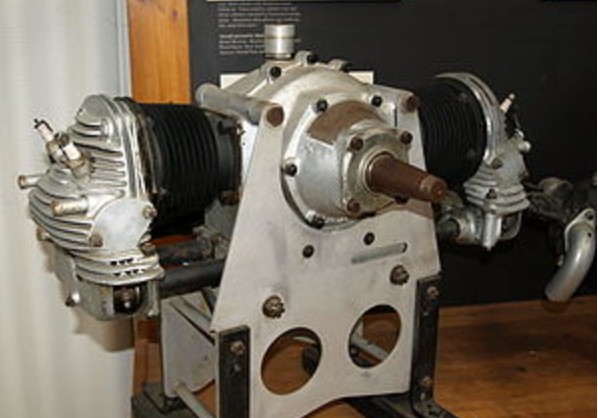
The Bristol Cherub is a British two-cylinder, air-cooled, aircraft engine designed and built by the Bristol Aeroplane Company. Introduced in 1923 it was a popular engine for ultralight and small aircraft in the 1930s.
Variants:
Cherub I Initial direct drive version introduced in 1923. Bore and stroke of 3.35 by 3.8 inches (85 mm × 97 mm) for a displacement of 67 cu in (1.095 L). 32 horsepower (24 kW) at 2,500 rpm.
Cherub II Geared down (2:1) version of the Cherub I.
Cherub III An improved and slightly larger (1.228 L) direct drive version introduced in 1925.
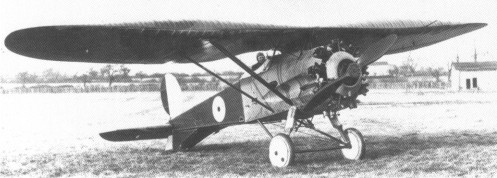
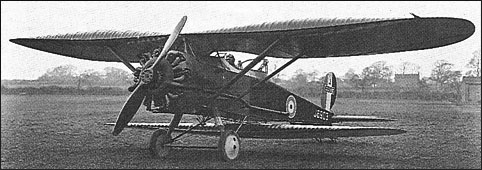
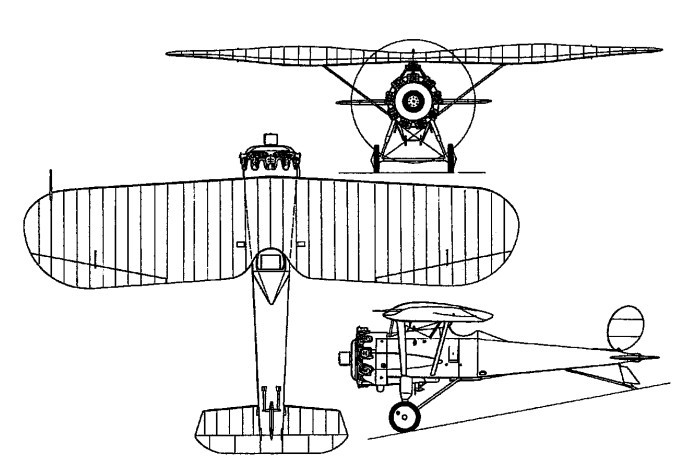
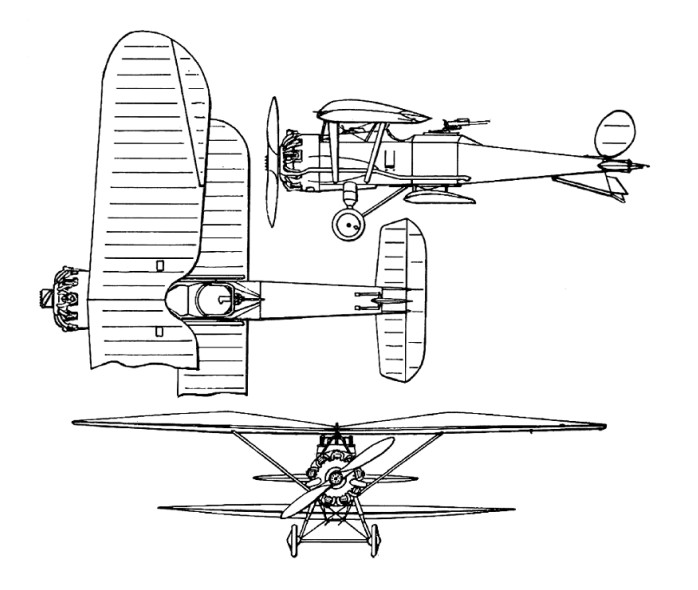
Captain Frank Barnwell designed the MF as an all-metal parasol-wing monoplane that could be flown as the MFA single-seat fighter or MFB two-seat reconnaissance plane. The latter had an extra fuselage section behind the cockpit for the gunner’s position and, below this on a short cabane arrangement, a cantilever second wing. In April 1921 the Air Ministry ordered three prototypes with wooden wings. Bristol proposed the name Pegasus, but this did not conform with current British practise and the two MFAs became Bullfinch Mk Is while the sole MFB became the two-seat Bullfinch Mk II. By March 1922, when the name Bullfinch was officially adopted, the decision had been taken to complete two of the prototypes as single-seaters, these being delivered in April 1923. Armed with two 7.7mm Vickers machine guns, the Bullfinch single-seaters were flown experimentally by the RAF and were found to offer a relatively good performance on the 425hp of a Bristol Jupiter III radial, but no production order was forthcoming. The Mk II was first flown on 15 February 1924 and delivered in March 1924. The Bullfinch II differed from the single-seat model primarily in having a 91.4cm section housing a self-contained gunner’s cockpit inserted in the fuselage immediately aft of the pilot’s cockpit and beneath which was attached a cantilever lower wing, the resultant shift of the centre of pressure compensating for the change in the CG. The only other change consisted of the repositioning of the main undercarriage members farther aft. The rear cockpit was fitted with a Scarff-mounted 7.7mm Lewis gun, and structural weight was increased by 145kg. The 425hp Jupiter III engine was insufficiently powerful to cater for the additional 400kg of the two-seater in fully loaded condition and the performance of the Bullfinch II suffered. Both variants were fully evaluated, but no orders followed.
Bullfinch II
Principal versions – Bullfinch Mk I (single-seat fighter prototype) and Bullfinch Mk II (two-seat reconnaissance prototype).
Bullfinch Mk.I Engine: one 450-hp (336-kW) Bristol Jupiter III radial Maximum speed 135 mph (217 km/h) at 15,000 ft (4,570 m) Srvice ceiling 22,000 ft (6,705 m) Endurance 4 hours 0 minutes. Empty weight 2,175 lb (987 kg) Maximum take-off weight 3.205 lb (1,454 kg). Wing span 38 ft 5 in (11.71 m) Length 24 ft 5 in (7.44 m) Height 10 ft 9 in (3.27 m) Wing area 267.0 sq ft (24.80 sq.m). Armament: two 0.303-in (7.7-mm) fixed machine guns.
Bullfinch Mk.II Engine: 425hp Jupiter III Take-off weight: 1854 kg / 4087 lb Empty weight: 1132 kg / 2496 lb Wingspan: 11.71 m / 38 ft 5 in Length: 8.38 m / 27 ft 6 in Height: 3.28 m / 10 ft 9 in Wing area: 36.32 sq.m / 390.94 sq ft Max. speed: 193 km/h / 120 mph
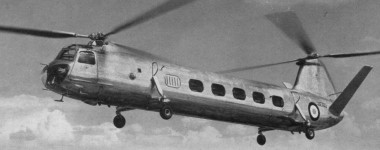
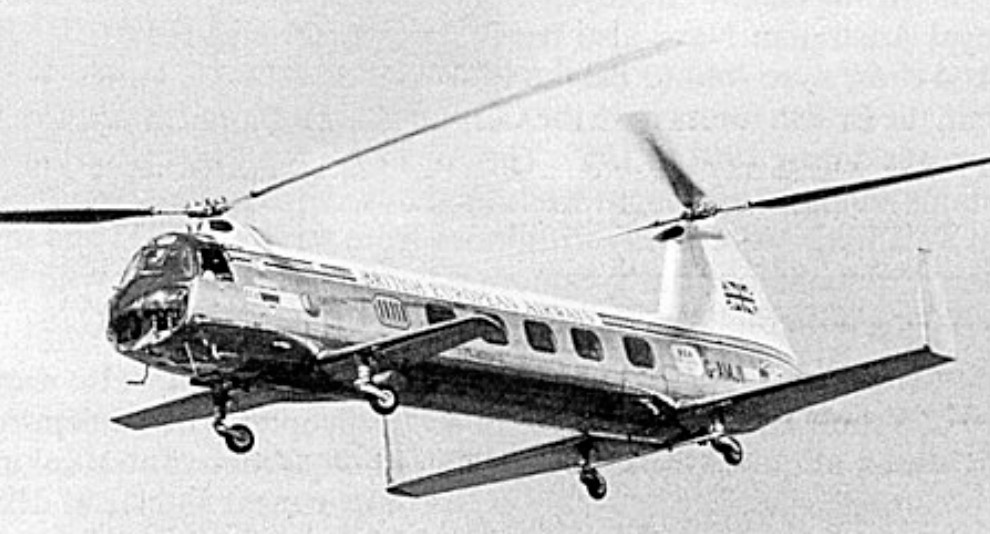
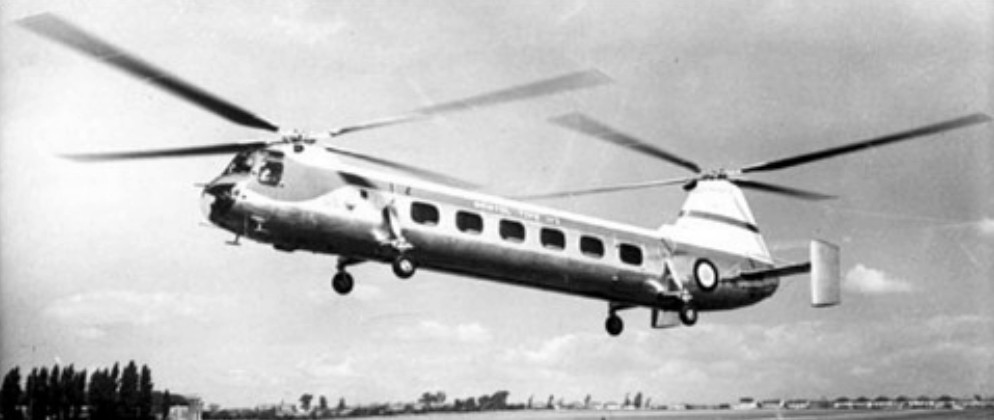
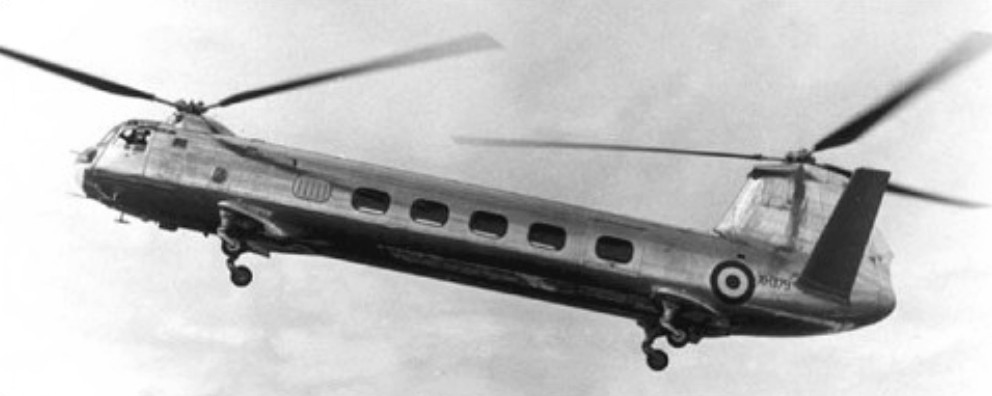
The Bristol 173 was the first helicopter specifically designed for commercial operation and passenger transport in particular. Two Mk.1 prototypes were begun in 1948 to Ministry of Supply Specification E.4/47.
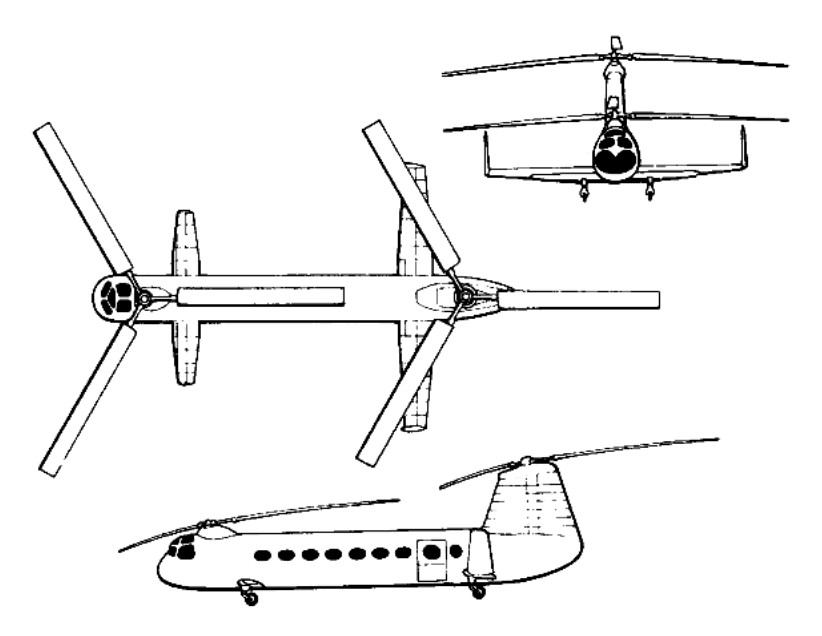
Ground tests started in 1951. It had two three-blade counter-rotating rotors, but it could fly on one Alvis Leonides 73 engine and the centre of gravity could be displaced. The two rotors were synchronized by a shaft in conjunction with a gearbox. In the event of a breakdown the shaft could transmit power from the working engine. The rear rotor was carried on a pylon which was part of the vertical fin structure. Two tailplanes were set at a sharp angle to improve longitudinal and lateral stability.
The 173 had virtually the 171 Sycamore Mk. 3’s transmission system, rotor assemblies and engine installation, except that one engine rotates in the opposite direction to the other.
Ground resonance originally caused some trouble. The problem was overcome by linking the right- and left-hand oleo-struts of the undercarriage by small-bore hydraulic piping. The latter formed the two arcs of a circle seen above the upper part of the legs.
The first, G-ALBN, made its maiden flight on 3 January 1952, after some eight months of ground trials and tethered flights. It was Britain’s first tandem-rotor helicopter design, and in this early form was powered by two 575hp Alvis Leonides 73 piston engines and could carry ten passengers. In 1953 this machine was handed over to the Admiralty for Naval trials. Trials were carried out with this aircraft in 1953, from the aircraft carrier HMS Eagle.
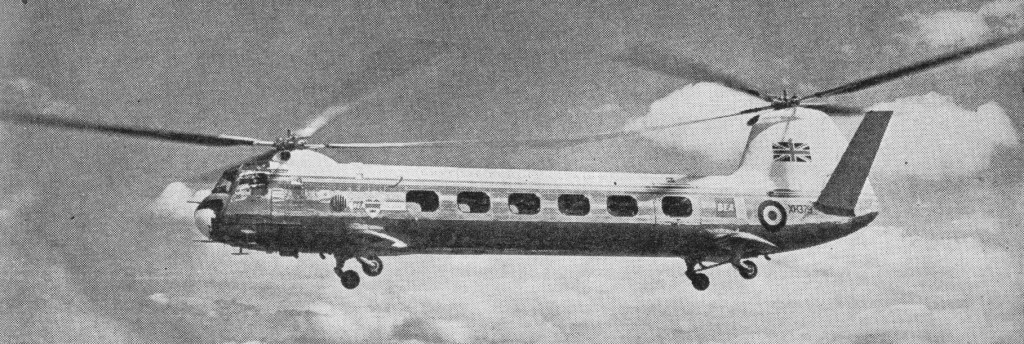
On 31 August 1953 a prototype 173 Mk.2 (G-AMJI) was flown, differing from the first machine in having two pairs of stub wings to off-load the rotors, the rear pair carrying upright fins at their extremities. These features were later removed, G-AMJI reverting to the Vee-tailed configuration of the Mk.1 and joining its stablemate for Naval trials as XH379. On 20 July 1956 it was delivered to BEA and returned to the civil register for handing trials in BEA colours.
BEA Bristol 173
It was based at Gatwick for the period of the trials before being written off in a landing accident in 1956.
The Mk.3, with more powerful engines, (two Alvis Leonides Majors rated at 850shp each) as well as metal instead of wooden four-bladed rotors, marked a greater advance. Seating was up from 14 in the Mk.1 and 2 to 16 in the Mk.3. three were ordered but the Mk.3 suffered from cooling problems and its service trials in 1956 were not entirely successful.
In the event, only one (XE286) was flown, the other two being utilised for ground testing. In 1956 the Royal Navy decided to adopt the Bristol machine for the antisubmarine role, placing an order for sixty-eight aircraft. The production version, to be known as the Bristol 191, was to have folding rotor blades and a shorter fuselage, to enable it to use existing carrier deck-lifts, and the rear legs of the quadricycle undercarriage shortened to facilitate loading of an external torpedo.
The Bristol 173 Mk.3 was offered to BEA.
In July 1958 the Bristol 192 made its maiden flight and this marked the successful climax to the development of the 173.
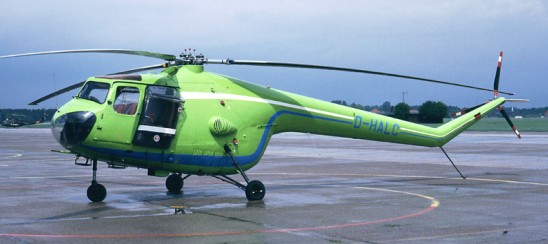
A helicopter department was set up in 1945 as part of the aircraft division at Filton, and Austrian-born Raoul Hafner, who had devoted himself to rotary wing research in the thirties, moved to England before the Second World War and took charge in 1944. Design studies, under Raoul Hafner, were started in June 1944 and, since no suitable British engine was available at that time, the two Mk.1 prototypes (VL958 and VL963) were built with 450hp Pratt & Whitney 11-985 Wasp Junior radial engines. These were 2-seaters, conforming to Ministry of Supply specification E.20/45. The design featured a light alloy cabin section and a stressed-skin tailboom attached to a central engine and gearbox mounting, the rotor head being fitted with three wooden monocoque blades. The crankshaft lay horizontally, with power transmitted to the vertical driveshaft through a gearbox. The three rotor blades were made of wood with leading edges in hardwood. After component testing, ground running of the completed airframe began on 9 May 1947, the first flight (VL958) was made by H. A. Marsh on 27 July 1947.
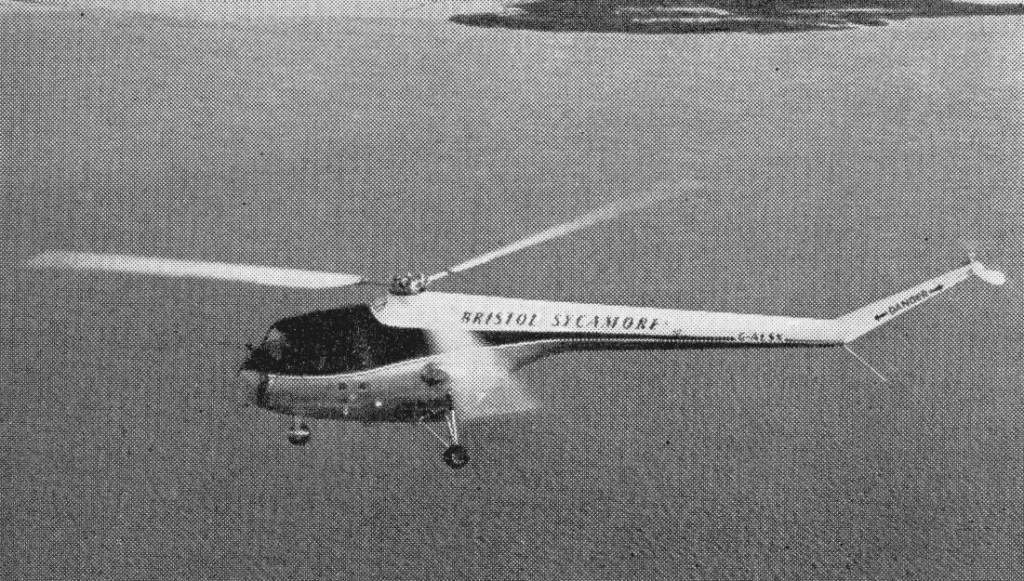
The second aircraft (VL963) joined the test programme in February 1948 and on 25 April 1949, to facilitate its flight to the Paris Salon, it became the first British helicopter to be granted a civil certificate of airworthiness. The third airframe appeared in the static park at the 1948 SBAC exhibition at Famborough. This was followed by the first flight on 3 September 1949 of the one and only Mk.2, built as a 4-seater to specification E.34/46 and powered by a 550hp Alvis Leonides 71 LE 21 HM piston engine in a horizontal position with the crankshaft running vertically. This eliminated the lower gearbox which not only saved weight but made the engine more accessible for checking and repairs, and increased the seating from two to five. It was of metal construction with a three-blade main rotor and was designed as an air taxi (four-five seats) and for military tasks such as air observation and casualty evacuation. This aircraft formed the basis for the first production series, although numerous detail modifications were made to individual machines in these batches, some becoming standard on later production aircraft. Seating was increased to six. A second take-off attempt ended abruptly when the rotor disintegrated. With a strengthened rotor, development flying was resumed while work continued on the assembly of 15 production Mk 3s with a smaller Alvis Leonides 73 engine. Airframe changes included a shortened nose and an 0.20m increase in cabin width to accommodate three passengers on the rear seat; in order to maintain essential systems in the event of engine failure, and the accessory drive was transferred from the engine to rotor gearbox. The Sycamore had a simple auto-throttle which the pilot could override.
The Type 171 was manufactured at Filton and Weston-super-Mare.
Two Mk 3A were bought by British European Airways. They had a slightly superior performance to the Mk3 and greater baggage capacity, with a freight hold behind the engine bay. BEA began an experimental service with these helicopters between Eastleigh and Heathrow airport in 1954, which lasted for about two years.
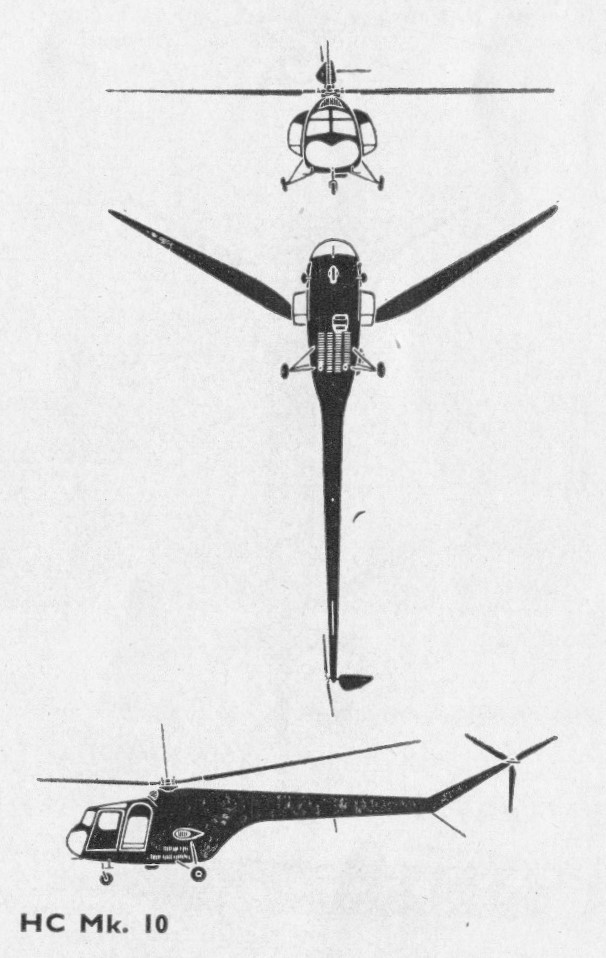
The first two production batches, totalling twenty-five aircraft, included one HC Mk.10 ambulance for evaluation by the Army Air Corps; four HC Mk.11’s for Army communications work; four HR Mk.12’s for RAF search and rescue duties, evaluated by Coastal Command; and two winch-equipped HR Mk.13’s for similar trials with Fighter Command. These were collectively to Mk.3 production standard, with 520hp Leonides 73 engines. Two Mk.3A’s with improved performance, a shorter nose and extra baggage space behind the engine bay, were completed for British European Airways. Of the remaining dozen machines, five were to Mk.4 standard, also with Leonides 173 engines and having four cabin doors; these were built for the Royal Australian Navy (three HR Mk.50), Royal Australian Air Force (one) and RAF (one HR Mk.14). All of these were completed to Mk.3 standard with a Leonides 173 engine. The remaining seven aircraft were a mixture of Mk.3 and Mk.4 reserved for military trials or civil demonstration.
The 1950 Mk.4 with four access doors, a longer-stroke landing gear, a bigger baggage compartment and an hydraulic winch and the pilot’s position moved from port to starboard. This was primarily intended for search and rescue and air ambulance duties, and was supplied to the RAF (two HR.13s and 80+ HR.14), Belgian Air Force (three Mk.14B), Royal Australian Navy (three HR.50 & seven HC.51, equipped with winches for air-sea rescue duties, initially with No. 275 Squadron) and West German Government (50 Mk.52). No. 275 Squadron, RAF. received its first helicopter on 13 April 1953. Sycamores also operated in the light assault and reconnaissance roles in Malaya, Cyprus and Borneo, joining No.194 Squadron in Malaya in 1954 and No.284 in Cyprus late in 1956. In August 1955 a 171 took part in the first British air-to-ground television transmission involving the use of a helicopter. The Bristol Type 171 Sycamore Mk.4 was the final production version of this machine. 178 examples of which had been completed when the last was delivered in 1959. Of these 50 were built in 1957-1959 for the Federal Germany as the Sycamore Mk.52, most serving with the Luftwaffe but 4 being delivered to the Navy, joined later by a further four from the Luftwaffe stocks. The German Sycamore Mk.52 helicopters were withdrawn from service in 1972-1973. In the mid 1950s Bristol Aircraft Ltd began work on a turbine-powered helicopter using a Mk 3 with an increased fin area. Under the name Bristol 203 it was to be an 11-seat machine and parts from the incomplete 179th and 180th Sycamore airframes were used in the prototype machine. This project was abandoned when the company was taken over by Westland, although some of its finer points were later incorporated in the Lynx.
Mk.2 Engine: 550hp Alvis Leonides 71 LE 21 HM Main rotor: three-blade seats: 4-5.
Mk.3 Engine: 520hp Leonides 73 Length: 46.161 ft / 14.07 m Rotor diameter: 48 ft 6.75 in / 14.81 m Max take off weight: 5600.7 lb / 2540.0 kg Max. speed: 93 kt / 173 km/h Range: 232 nm / 430 km Crew: 2+3
Mk.3A Engine: 520hp Leonides 73
Mk.4 Engine: Leonides 73, 520 hp Cabin doors: 4 Fuselage length: 46 ft. 2in. Loaded weight: 5,400 lb. Max. speed: 141 m.p.h. Ceiling: 15,500 ft. Typical range: 268 miles at 92 m.p.h. Seats: 4-5
HR.13 Engine: 1 x Alvis Leonides 73 radial, 410kW Rotors: 3-blade main; 3-blade tail. Rotor diameter: 48 ft. 6.75 in. Fuselage length: 46 ft. 2in. Loaded weight: 5,400 lb. Max. speed: 141 m.p.h. Ceiling: 15,500 ft. Typical range: 268 miles at 92 m.p.h. Seats: 4-5
HR.14 Engine: 1 x Alvis Leonides 73 radial, 410kW Main rotor diameter: 14.81m Rotors: 3-blade main; 3-blade tail. Length with rotor blades folded: 14.07m Height: 3.71m Max take-off weight: 2540kg Empty weight: 1728kg Loaded weight: 5,400 lb. Max speed: 204km/h Cruising speed: 169km/h Ceiling: 15,500 ft. Endurance: 3h Typical range: 268 miles at 92 m.p.h. Seats: 4-5
Bristol Sycamore HR 50/51 (RAAF) Ordered: 1952 Number purchased: 13 First delivered: 1953 Last delivered: 1961 Engine: One 520 hp Alvis Leonides Mk72 7 cylinder radial Rotor diameter: 48 ft 6.75 in Rotors: 3-blade main; 3-blade tail. Loaded Weight 5,600 lb Fuselage length: 46 ft. 2in. Height: 12 ft 2 in Initial Rate of Climb: 1,300 ft/min Ceiling: 4,000 ft Speed: 127 mph (max sea level), 91 mph (cruising) Range: 238 miles Armament: Nil Seats: 4-5 Crew: 2
Experience: Hal Jowers Back in 1968, I was hired by Associated Helicopters in Bankstown, NSW to ferry their one flyable, of 5-hulls & a hanger-full of spare parts they had bought surplus at the time, up to Port Keats Mission (about 200nm S.W. of Darwin) and work a mineral exploration contract.
The ole Sycamore was a more-than-interesting bird – to say the least! With that short-arm collective (+/- 15-inches fulcrum to end) / rt. angle throttle and direct NO hydrolic-assist linkage to the swash-plate: it was like physically lifting the bird WITH ONE ARM!!! … Add to that; a fully-castering nose gear and a 40-gal. liquid ballast system that had to be transferred during lift-off, so extra collective friction was necessary to hold it while reaching for the transfer-pump handle – otherwise; you were instantly back on the ground with a much bigger, LIFE-FULL OF GROUND RESONANCE problem to handle!!! … Albeit; once you had her in the air, all you had to be concerned with was the sporadic – no plausible answer why – 0.5 – 1.5 second engine STOPS that gave your heart its EXTRA exercise for the day.
Having acquired some 85-hours flt.time in the course of that experience; upon return to Sydney I was fortunate to be in conversation with some old RAN Sycamore drivers who expressed no small amount of chagrin that I had been so successful, as to still be alive to enjoy that moment with them. I allowed as how My Holy Spirit keeper obviously had other things for Me to do, before He punches My “ticket”. … All of that was at +/- 2,200, of the final 13,420 flt.hrs. He has blessed Me with. … God Speed!!!