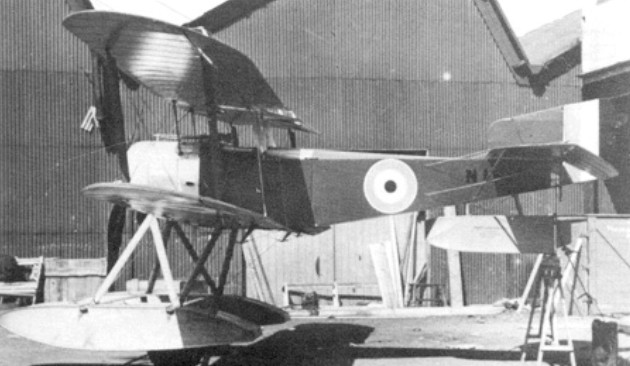
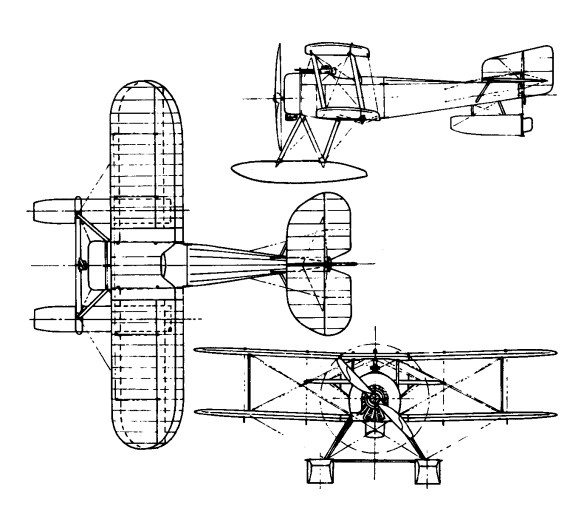
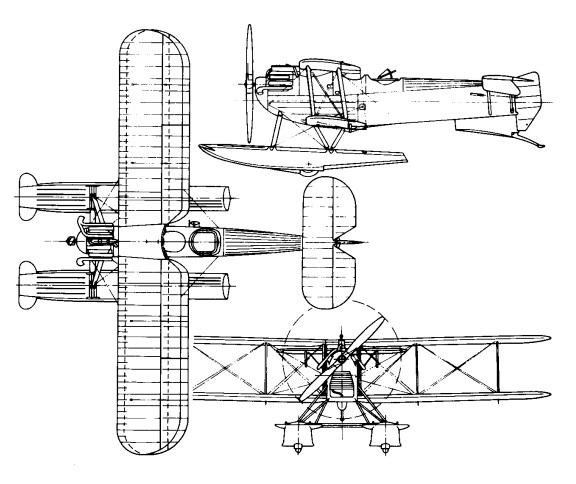
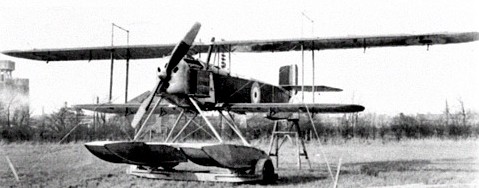
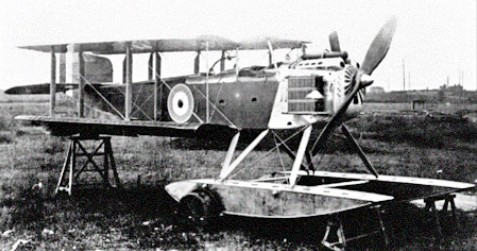
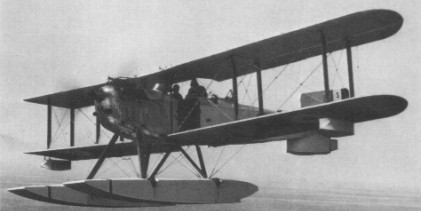
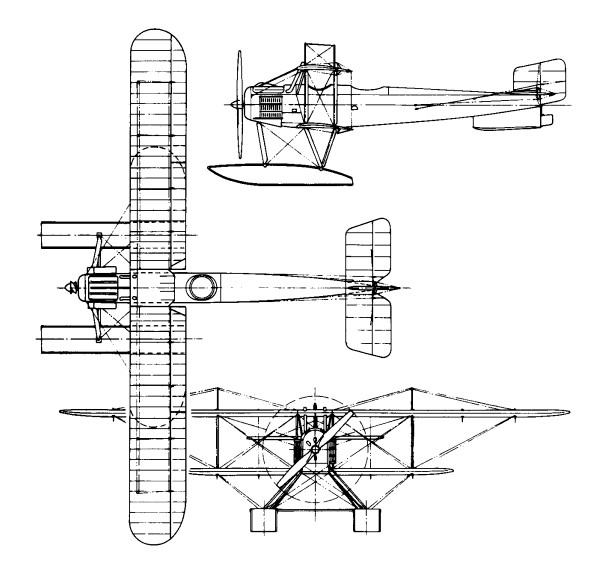
A total of 286 Sopwith Babies was built of which 195 were produced by Blackburn – and sometimes known as Blackburn Babies – 105 of the latter being fitted with the 130hp Clerget engine, and, of these, 40 were fitted (initially) to carry the Ranken dart and no gun armament. A more extensive modification of the Sopwith float fighter was the Fairey Hamble Baby.
The Fairey Hamble Baby had refinements such as full span flaps designed by Richard Fairey. A total of 180 were built.
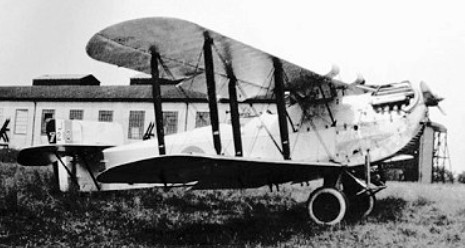
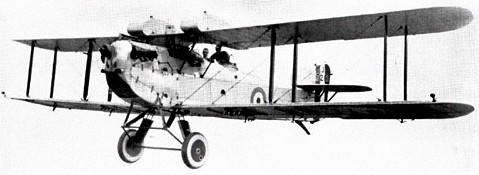
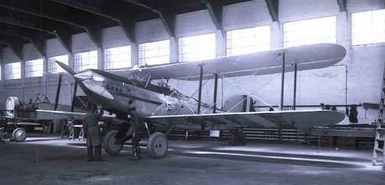
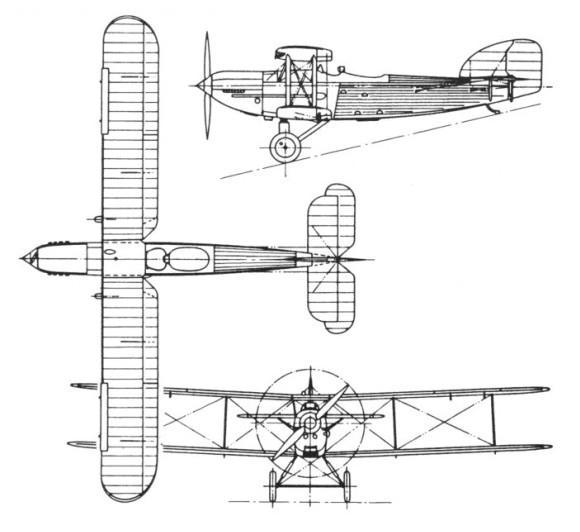
Developed from the Fairey Pintail amphibian of 1920, the Fawn was the first post 1918 designed light day bomber and reconnaissance aircraft to see RAF service. Intended as an army co-operation vehicle to replace the de Havilland 9A, the Fawn prototype, J6907, first flew in March 1923. After various modifications, including a longer fuselage, the design went into limited production, and the first production example appeared in January 1924, designated Fawn Mk II. This version entered RAF service, and eventually equipped Nos 11, 12, 100, 503 and 602 Squadrons.
Production amounted to 75 aircraft, made up of five prototype/pre-production aircraft, 50 350kW Napier Lion II-engined Fawn Mk IIs and 20 turbo-¬supercharged Lion VI engined Mk IIIs. The Mk III did not reach squadron use. Several were fitted with external side ladders and used for parachute dropping exercises and demonstrations at Henlow; while machines of 12 and 100 Squadrons participated in the 1925 and 1926 RAF air displays at Hendon, demonstrating ‘wing drill’.
Fawn III Engine; 1 x 470hp Napier Lion VI Span: 15.21 m (49ft 11 in) Length: 9.78 m (32ft l in) Height: 3.63 m (11 ft 11 in) Wing area: 51.10 sq.m / 550.04 sq ft Max take-off weight: 2649 kg / 5840 lb Empty weight: 1580 kg / 3483 lb Maximum speed: 183 km/h (114 mph) at 3048 m (10000 ft) Climb to 3048 m (10000 ft): 17 min 24 sec Service ceiling: 4220m (13850ft) Range: 1047 km / 651 miles Armament: 1 Vickers mg forward; 1 or 2 Lewis. mg rear cockpit External bombload to 209 kg (460 lb)
Fairey Fawn Mk. III Engine : Napier Lion II, 469 hp Length : 32.087 ft / 9.78 m Wingspan : 49.902 ft / 15.21 m Max take off weight : 5834.4 lb / 2646.0 kg Max. speed : 99 kts / 183 km/h Range : 564 nm / 1045 km Crew : 1+1 Armament : 2x MG 7.7mm, 209kg Bomb. ext.
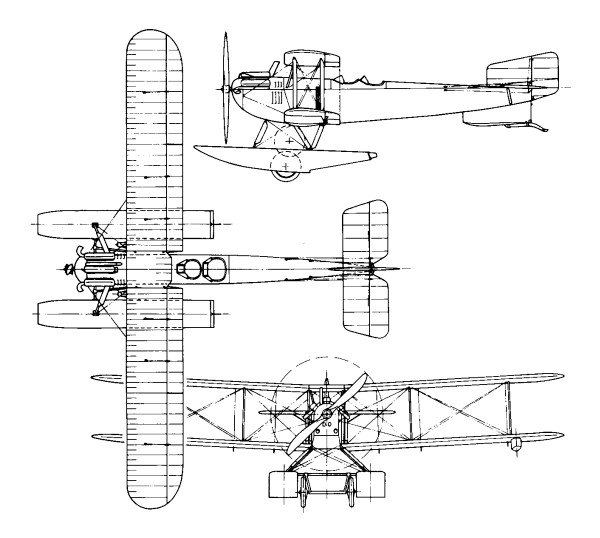
The Fairey N.10 (F.128) was modified in September 1917 as a landplane, with a wheeled undercarriage, and designated Fairey III. This introduced the Fairey Patent Camber Gear evolved for the Hamble Baby, which was then described as a trailing-edge flap and used to increase the lift of the wings. Tested as a two-seat seaplane, the F.128 was known as the Fairey III. With a single frontal radiator behind the propeller and the floats replaced by a wheel landing gear, the designation became Fairey IIIA. One N10 (III) even had its 46 foot wings reduced to about 25 feet, fitted with floats and entered in the 1919 Schneider Trophy Race. The race was flown, but foggy conditions prevented anyone from properly completing the course. This N10 (III) – at one stage G-EALQ – served as a prototype – floats on, floats off – wings long, wings short – 450 hp Napier Lion and so on. Fifty examples were ordered as ship-borne two seat bombers, and production began in 1918 (N2850-N2899), and the first IIIA was flown on June 6, 1918. Powered by a 260 hp Sunbeam Maori 12 cylinder engine, it had 46ft 2in equal span two bay wings; the variable camber being fitted to the lower wing only. The end of the war prevented any widespread use of the IIIA, however. The IIIB was also produced in small numbers as a two seat floatplane bomber, and a few examples saw active service before the Armistice mainly on coastal patrols around the United Kingdom. The IIIB had float landing gear, increased wing area, and ailerons on the upper wing in addition to the Patent Camber Gear on the lower. Both versions employed a 260 hp Sunbeam Maori engine, and could carry a bombload of approximately 272 kg (600 lb). The IIIB did have the top mainplane span increased to 62ft 9in was a specially strengthened catapult version. It seems that about eighty-two IIIAs and Bs were built – some later converted to the IIIC.
The third variant to be designed and produced during 1918 was the IIIC, a seaplane which had a performance increase of some 14%. Powered by a Rolls Royce Eagle VIII engine, the IIIC total production of 36 machines were all either IIIBs converted on the production line, or built as IIICs from that line. Too late for war service in 1918, at least seven examples saw operational duties with the North Russian Expeditionary Force, based at Archangel, in 1919. Four IIICs appeared on the Civil Register later, one of which, G-EBDI (ex N9253), took part in an attempted global flight in 1922, but finally sank in Far Eastern waters on August 24,1919. Progression in design next produced the IIID variant, first flown in prototype form in August 1920. An overall total of 227 IIIDs were eventually built, and the type’s adaptability to both float and landplane configurations gave it a relatively long life. The prototype IIID, N9450, retained the Eagle VIII engine and made its first flight in August 1920 as a seaplane, and an initial production batch of 50 machines was put in hand. Of the 207 IIID built for service with the RAF and Fleet Air Arm, 152 were powered by Napier Lion IIB, V or VA engines. On 30 October 1925, a IIID became the first standard FAA seaplane to be catapulted from a ship at sea. In landplane form, the IIID was one of the first service aircraft to have oleo-pneumatic (oil/air) shock-absorbers. Six IIID seaplanes went to the Australian government in August 1921. Several other European coun¬tries purchased a few machines in the same period. Copies were sold to Sweden, Portugal, and Netherlands. Long distance flights characterised the IIID era; Portugese IIIDs flew across the Southern Atlantic; 4 RAF IIIDs on a Cairo-Cape-Cairo flight in 1926. Led by Wg Cdr C. W. H. Pulford, between 1 March and 21 June 1926 IIIDs completed a flight of almost 22,530km, Cairo-Cape Town-Cairo and thence to Lee-on-Solent. At no time throughout the period of almost four months was any delay caused by mechanical failure of any of the aircraft. They operated from Singapore, Shanghai, British Guiana and Australia. The basic design was still much the same; 46ft span, double bay, variable camber, Napier Lion (or alternating R.R. Eagle VIII). In service from 1924 until 1930 the IIID played a significant part in the development of military aviation. Last in the III series was the IIIF. Originally designed to meet a 1924 specification which required a 3 seat spotter reconnaissance aircraft for the Fleet Air Arm, the IIIF was a much modified development of the IIID, having an all metal fuselage and propeller, folding wings, and easy change to either wheeled or float undercarriage. The first prototype, N198, first flew on 19 March 1926, and initial deliveries of production aircraft went to various naval units during 1927. The Fairey IIIF had no dual controls and were used extensively on naval co-operation with its two man cockpit aft of the pilot. No raked wings, no stagger, no sweep back, the top wing in perfect symmetry with the bottom. Although many of the same characteristics still applied it was a vastly improved design over the IIID. Nearly 600 of these were built.
Fairey IIID
It was in Fleet Air Arm use that the IIIF made its largest contribution, serving aboard every British aircraft carrier of the time, as well as ashore with many naval air stations, training establishments, and specialized naval schools. It also became the vehicle for a variety of experiments and testing in many roles; including catapult trials, landing on a carrier with strengthened float and empennage, and many trials of radio-controlled aircraft. The IIIF was also subjected to many years of scientific tests at the RAE, Farnborough. At least 25 IIIFs were purchased by non British governments, including Russia, Ireland, Argentina, Greece, Chile and New Zealand. In all a total of 622 Fairey IIIFs were built, of which 243 were RAF versions and the rest FAA variants. At least three examples recorded as still in RAF service (as target tugs) as late as February 1941.
Fairey IIIF Irish Air Corp
Two further developments, the IIIF Mk V and Mk VI, were to give further service under the designations Gordon and Seal respectively, but were merely the final examples of a line of Fairey III series aircraft which had spanned almost 23 years of service usage.
F.128 Engine; 1 x 260hp Sunbeam Maori II 12-cylinder in-line engine Max take-off weight; 4159 kg / 9169 lb Empty weight; 2970 kg / 6548 lb Wingspan; 46.2 m / 151 ft 7 in Length; 36 m / 118 ft 1 in Height; 11.10 m / 36 ft 5 in Wing area; 476 sq.m / 5123.62 sq ft Max. Speed; 104 km/h / 65 mph Ceiling; 14000 m / 45950 ft Armament; 1 x 7.7mm machine-gun, 2 x 50kg bombs Crew; 2
IIIA Span: 14.07 m (46 ft 2 in) Length: 9.45 m (31 ft) Height. 3.25 m (10 ft 8 in) Engines: 260 hp Sunbeam Maori Maximum speed: 175.4 km/h (109 mph). Service ceiling: 4572 m (15000 ft).
IIIB Engine: Napier Lion XIA, 570 hp. Wing span: 62 ft 9 in.
IIIB Engines: 260 hp Sunbeam Maori Span: 19.13 m (62 ft 9 in) Length: 11.3 m (37 ft 1 in) Height: 4.27 m (14 ft) Maximum speed: 152.9 km/h (95 mph) Service ceiling: 3139 m (10300 ft).
IIIC Engine: 375 hp RR Eagle VIII Span: 14 m (46 ft 1 in) Length: 11.3 m (37 ft 1 in) Height: 4.27 m (14 ft) Maximum speed: 177.8 km/h (110.5 mph). Service ceiling: 2774 m (9100 ft).
IIID Engine: 375 hp RR Eagle VIII or 450 hp Napier Lion II. Span: 14 m (46 ft 1 in) Length: 11 m (36 ft 1 in) Height. 3.96 m (13 ft) Maximum speed: 193 km/h / 120 mph Service ceiling: 6096 m (20000 ft) (Landplane/Lion).
IIIF prototye Length: 11.07 m (36 ft 4 in) Height. 3.83 m (12 ft 7 in)
IIIF Engine: Napier Lion XIA, 570 hp / 425kW. Span: 13.94 m (45 ft 9 in) Length 34ft 4in. Height 14ft 2in. Wing area; 41.2 sq.m / 443.47 sq ft Empty weight: 1779 kg / 3923 lb Loaded weight: 2858 kg / 6301 lbs Maximum Speed: 120 mph. Ceiling; 6095 m / 20000 ft Maximum speed: (Mk 1 landplane) 241.4 km/h (150 mph) Armament; 2 x 7.7mm machine-guns, 220kg of bombs
IIIM – Engine: Napier Lion XIA, 570 hp.
IIIM/B Engine; 1 x Napier Lion XIA, 425kW Max take-off weight; 2858 kg / 6301 lb Empty weight; 1779 kg / 3922 lb Wingspan; 13.94 m / 45 ft 9 in Length; 10.82 m / 35 ft 6 in Height; 4.26 m / 13 ft 12 in Wing area; 41.2 sq.m / 443.47 sq ft Max. speed; 209 km/h / 130 mph Ceiling; 6095 m / 20000 ft Armament; 2 x 7.7mm machine-guns, 220kg of bombs
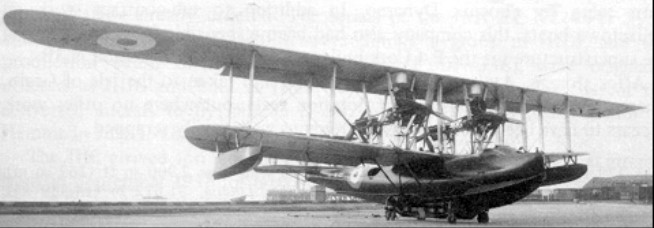
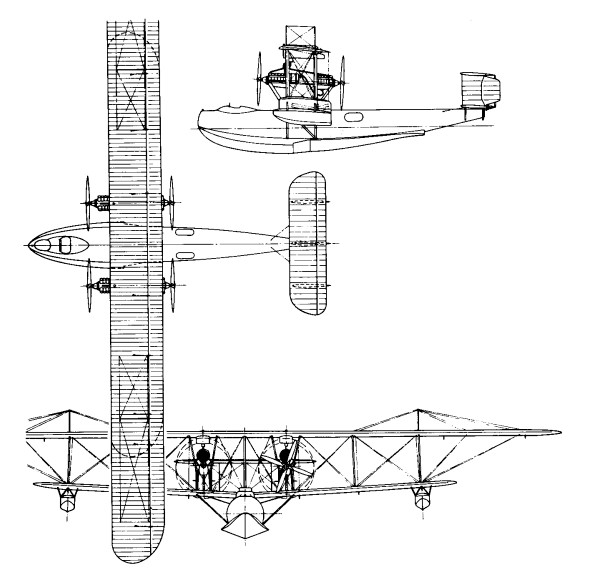
The Fairey N.4 was a 1920s British five-seat long range reconnaissance flying boat. Designed and built by the Fairey Aviation Company to meet an Admiralty requirement for a very large four-engined reconnaissance aircraft, it was the world’s biggest flying boat when it first flew in 1923. The first N.4 (named Atalanta) first flew in 1923 powered by four 650 hp (485 kW) Rolls-Royce Condor IA piston engines. The hull had been built in Southampton (by boat builders) and delivered to Lytham St. Annes for assembly and the complete aircraft was then dismantled and taken by road to the Isle of Grain for its first flight. The second N.4 Mk II (named Titania) included improvements and later variant Condor III engines. Titania was not flown straight away and was stored, not flying until 1925.
Engines: 4 × Rolls-Royce Condor III, 650 hp (485 kW) each Length: 60 ft 0 in (20.12 m) Wingspan: 139 ft 0 in (42.37 m) Wing area: 2900 ft2 (269.41 m2) Gross weight: 31612 lb (14339 kg) Maximum speed: 115 mph (185 km/h) Endurance: 9 hours 0 min Service ceiling: 14,100 ft (4300 m) Crew: 5 Armament 0.303in (7.7mm) Lewis machine-gun (in nose and beam positions) 1000lb (454kg) of bombs
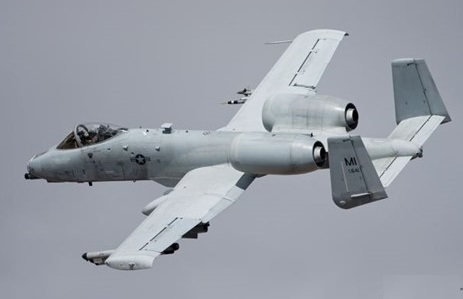
Produced in reply to a specification of 1967, which called for a hard-hitting close-support aircraft, the Fairchild A-10A Thunderbolt II (YA-10A) first flew on 10 May 1972 and was selected by the USAF in preference to the Northrop A-9 on 18 January 1973 after a competitive flyoff, and received a contract for six A-10A aircraft, the first of which flew 15 February 1975. The Thunderbolt’s appearance derives from the care taken to enhance its survival prospects over the battlefield and incorporate maximum fire-power. Absorbing much of the centre fuselage is a GAU-8/A Avenger seven-barrel 30-mm cannon, the muzzle protruding slightly beneath the nose, which can be fired at the rates of 2,100 or 4,200 rounds per minute. The engine location is considered optimum for minimizing hits by ground-fire, and has the additional advantage that the wing and tail mask the infra-red emissions of exhaust gases and therefore affords some protection against heat-seeking SAMs. All of the A-10’s glass is bulletproof and the cockpit itself is surrounded by a heavy tub of titanium. Titanium armor protects both the pilot and critical areas of the flight control system. This titanium “bathtub” can survive direct hits from armor-piercing and high explosive projectiles up to 37 mm in size. The front windscreen can withstand up to a 23 mm projectile. Fire retardant foam protects the fuel cells which are also self sealing in the event of puncture. The airframe has numerous constructional features resistant to battle-damage or conducive to swift repair, such as interchangeable (left or right) flaps, fuselage components, rudders, elevators and main landing gear legs. There are two primary hydraulic systems, each with manual back-up, and the landing gear can be extended under gravity if necessary. Well protected electronically by AN/ALQ-119 jamming pods, plus an AN/ALE-40 chaff and flare dispenser, the Thunderbolt carries a Pave Penny laser designation pod on a pylon to the right of the forward fuselage for accurate marking.
The first production A 10A Thunderbolt II flying on 21 October 1975. Entering service in early 1977, these single seat aircraft are powered by two 9,065 lb thrust General Electric TF34 GE 100 turbofan engines.
Armament comprises a seven barrel, 30 mm gun mounted in the nose, plus a maximum external load of 16,000 lb (7,257 kg) of weapons including air to surface missiles. The General Electric Aircraft Armament Subsystem (30 millimeter Gun System) is located in the forward nose section of the fuselage. The gun system consists of the 30 mm Gatling gun mechanism, double-ended link-less ammunition feed, storage assembly and hydraulic drive system. The General Electric GAU-8/A 30 mm seven barrel cannon, specifically designed for the A-10, provides unmatched tank killing capability. The gun fires armor-piercing projectiles capable of penetrating heavy armor. It also fires a high explosive incendiary round, which is extremely effective against soft skinned targets like trucks. The cannon fires at a rate of 4,200 rounds per minute.
Features of the design are very advanced avionics to enhance operational capability and provision of titanium 737 mph armour for the entire cockpit area.
Avionics equipment includes communications, inertial navigation systems, computer-aided fire control and weapons delivery systems, electronic countermeasures, target penetration aids and self-protection systems. The A-10 employs both electronic and infrared countermeasures against enemy weapons systems. The weapons delivery system incorporates a heads-up display that provides the pilot with references for flight control and weapons employment. The weapons delivery systems include head-up displays that indicate airspeed, altitude and dive angle on the windscreen, a low altitude safety and targeting enhancement system (LASTE) which provides constantly computing impact point freefall ordnance delivery; and Pave Penny laser-tracking pods under the fuselage.
Development of a night/adverse weather (N/AW) two seat version has been initiated, the prototype first flying in 1979. This is intended to allow the pilot to concentrate on control of the aircraft under night or adverse weather conditions, the second seat occupied by a weapons system officer to handle the electronics. The private-venture Thunderbolt N/AW (Night/Adverse Weather) was offered without success.
The A-10/OA-10 have excellent maneuverability at low air speeds and altitude, and are highly accurate weapons-delivery platforms. The A-10 has half the turning radius of the US Air Force’s other primary CAS aircraft, the F-16. After initially leaving a target, the A-10 can turn around and hit the same target again, all in around 7 seconds. Due to its large combat radius, the Thunderbolt II can loiter for extended periods of time, allowing for the coordination required to employ within yards of friendly forces. They can operate under 1,000-foot ceilings (300 meters) with 1.5-mile (2.4 kilometers) visibility. Using night vision goggles, A-10/ OA-10 pilots can conduct their missions during darkness.
The A-10 is capable of sustaining operations on unimproved airfields and the A-10’s rapid re-fueling and re-arming capability allows it to operate from forward bases close to the front lines. It is also capable of refueling in the air.
Altogether the USAF has received 713 aircraft, including A-10B dual control-trainers. Modelled on the A-10N/AW evaluator, the A-10B was in production featuring a second cockpit and taller fins.
The USAFs 33rd Tactical Fighter Training Squadron at Davis-Monthan AFB, Arizona, received its first Fairchild A 10A Thunderbolt IIs in February 1976.
The first combat-ready A-10A wing was the 345th Tactical Fighter Wing, based at Myrtle Beach, South Carolina, to which deliveries began on 20 March 1977. The last of 713 A-10s was handed over to the USAF on 20 March 1984. This was the end of aircraft manufacturing in Hagerstown and Washington County. A-10s were fitted with AIM-9L Sidewinder AAM dual rail adaptors, to allow four missiles to be carried in pairs.
The primary mission of the OA-10 is to act as forward air controller to coordinate and direct friendly air forces in support of land forces. Northrop Grumman acquired the A-10 programme from Fairchild in 1987. In 2000 preparations for the Precision Engagement Program (PEP) upgrade program began. PEP gives the A-10 the capability of deploying precision-guided weapons. The upgrade is carried out in two phases, called Spiral One and Spiral Two. The aircraft is designated A-10C. Between July and October 2004 the first A-10C underwent ground and instrumentation tests prior to the first flight in November 2004. In total 13 A-10C aircraft were for flight testing. The entire A-10A fleet is expected to receive the PEP upgrade. The last aircraft due to be modified before the summer of 2009.
Fairchild A-10A Thunderbolt II Engine: 2 x General Electric TF34-GE 100 turbofan, 9065 lb / 4112-kg Wingspan: 57 ft 6 in / 17.53 m Length: 53 ft 4 in / 16.25 m Height: 4.47m / 14 ft 8 in Wing area: 47 sq.m / 506.0 sq ft Empty equipped weight: 11,321 kg / 24,959 lb MTOW: 50,000 lb / 22,680 kg Wing load : 96.97 lb/sq.ft / 473.0 kg/sq.m Max speed: 439 mph / 706 kph Combat limit: 704 km/h (438 mph) at 1525 m (5,000 ft) Service ceiling 13,636m / 45,000 ft Initial ROC: 1830 m / min / 6,000 fpm Ferry range: 2454 sm / 3949 km Combat radius: 930+ km T/O run (to 15m): 780 m Ldg run (from 15m): 715 m Armament: 1 x 30 mm GAU-8/A Avenger seven-barrel cannon (1174 rds) Pylons: 11 up to 7,258 kg / 16,000 lb Fuel internal: 6225 lt. Air refuel: Yes. Seats: 1
The original Fokker F-27 Friendship was built in Holland. Fairchild has built the F-27 under license from Fokker since 1958. The first F-27 models had a maximum gross weight of 40,500 pounds and seated 44 passengers. Power was supplied by twin 1,720 shp Dart turboprops. When Fairchild merged with Hiller Aircraft, the designation of the airplane was changed to FH-227 and the fuselage was stretched by six feet, giving increased cabin space for passengers and freight. The stretched airliner will accommodate up to 52 passengers. In 1960, power was increased to 2,105 shp. The stretched version was fitted with 2,250 shp engines, and ultimately the FH-227 received a redesigned windshield, stronger landing gear, strengthened rear fuselage, heavier wing skin, propellers of increased diameter and a more powerful 2,300 shp Dart turboprop. Fairchild discontinued building the FH-227 under license from Fokker in 1975.
Engines; 2 x Rolls-Royce RDa-7 Dart Mk.532, 1655kW / 2,300 shp Wingspan; 29.0 m / 95 ft 2 in Length; 25.5 m / 83 ft 8 in Height; 8.4 m / 27 ft 7 in Wing area; 70.0 sq.m / 753.47 sq ft Take-off weight; 20640 kg / 45504 lb Empty weight; 12478 kg / 27509 lb Fuel capacity: 1,364 lb Max. Speed; 483 km/h / 300 mph Top cruise: 270 mph Stall speed: 87 mph Initial climb rate: 1,560 fpm Service ceiling: 28,000 ft Takeoff run: 3,950 ft Landing roll: 4,100 ft Range w/max.fuel; 2500 km / 1553 miles Range w/max.payload; 800 km / 497 miles Seats: 44-52 Crew; 2-3
Fairchild Engine Division started studies for a small, inexpensive turbojet in 1946, for a guided missile the company was developing. In June 1947 the US Navy awarded a contract to develop such an engine to power an air-to-undewater torpedo-carrying missile. The engine, designated the J44, was America’s first expendable turbojet and was required to have a life of only 10 hours.
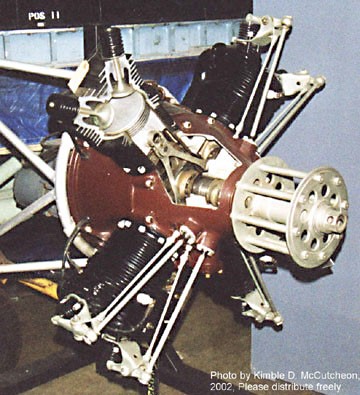
The Compressor was a mixed-flow, axial and centrifugal type with curved inducer vanes, and it was made of one piece of magnesium alloy casting that required no machining of the blades. Similary to the compressor, the diffuser section, with 3 rows of guide vanes, following the compressor was a single casting requiring no machining.
An annular combustion chamber was made from sheet metal and used in commercialy available oil burners. The single stage turbine had its blades welded on to a forged steel disc. A simple, stock stainless steel tube, with a welded flange at each end, formed the rotor connecting the turbine to the compressor.
There was a bearing before the compressor and aft of the turbine, and a fixed-area exhaust nozzle was used.
In August 1948 the XJ44 made its first run. The first flight was made in mid 1950 when it powered Fairchild’s Petrel Missile. As service trial proceeded, so problems with J44 where thrown up, most of them attribuable to over-simplified production. A lot of changes were required, and development of J44 was completed by October 1954 under designation J44-R-3.
The Improved engine was mounted on a Fairchild C-82 cargo aircraft, then later to each wingtips of the Fairchild C-123B cargo aircraft. Another use of the J44 was one the experimental Bell model 65 VTOL Aircraft.
The main usage of the J44 was to power the Firebee drone, although, with a specific fuel consumption of 1,55 it could not compete with Continental’s J-69 (Licence version of Turbomeca’s Marbore) and it was taken out of production by 1959.
Applications: AQM-34B/C Firebee AQM-41 Petrel Bell Model 65 C-123 Provider
Specifications Type: turbojet Diameter: 0,56 m Length: 2,24 m Frontal area: 0,25 m² Dry Weight, without accessories: 127 kg Dry weight: 363 lb. (165 kg.) Compressor: single stage centrifugal flow compressor Combustors: annular combuster Turbine: two-stage turbine Fuel type: JP-4 Static thrust: 454 kg Maximum thrust: 2450 lb. (10.9 kN) Specific fuel consumption: 0.94 SFC Thrust-to-weight ratio: 6.5:1