Nassau Blvd Aerodrome,
Long Island NY.
USA
In 1912 Alexander Williams built a single place open cockpit biplane powered by a 40hp Williams. It was described as being a “combination Farman and Howard Wright.”
Nassau Blvd Aerodrome,
Long Island NY.
USA
In 1912 Alexander Williams built a single place open cockpit biplane powered by a 40hp Williams. It was described as being a “combination Farman and Howard Wright.”
A 1948 Midget racer named Estrellita and piloted by Clifford “Kip” Mone, N44183, powered by an 85hp Continental C-85. A single place cabin, mid-wing monoplane
With an elliptical wing, it was destroyed at an air show on Sep 4, 1950.
Engine: 85hp Continental C-85
Wingspan: 19’6″
Length: 17’0″
Max speed: 180 mph
Cruise speed: 140 mph
Seats: 1
A 1949 Midget racer, N66732, powered by an 85hp Continental C-85. A single place cabin, mid-wing monoplane
Several of Williams products were the result of collaboration with other designers. For instance the Williams-Cangie WC-1 Sundancer N1AE was designed with Carl Cangie and won first place at the 1973 Reno Air Races Formula One Class.
Engine: Lycoming O-290-D2, 100hp
Wingspan (upper): 19’9″
Wingspan (lower): 12’9″
Length: 16’3″
Max speed: 200 mph
Seats: 1
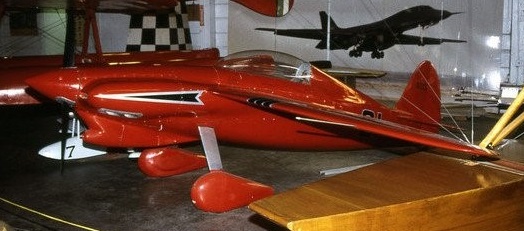
The Williams W-17 Stinger is an American homebuilt racing aircraft that was designed for Formula One Air Racing by Art Williams and produced by his company, Williams Aircraft Design of Northridge, California, introduced in 1971. The aircraft was at one time available in the form of plans for amateur construction, but only one was ever constructed.
The W-17 Stinger features a cantilever mid-wing, a single-seat enclosed cockpit under a bubble canopy, fixed conventional landing gear and a single engine in tractor configuration.
The aircraft fuselage is made from sheet aluminum in a monocoque structure. The wings are all-wood, with laminated spruce spars. Its 19.0 ft (5.8 m) span wing employs a NACA 64008 airfoil at the wing root, transitioning to a NACA 64010 at the wing tip. As the Formula One rules require, the engine is a 100 hp (75 kW) Continental O-200A powerplant.
The W-17 has an empty weight of 585 lb (265 kg) and a gross weight of 835 lb (379 kg), giving a useful load of 250 lb (110 kg). With full fuel of 8 U.S. gallons (30 L; 6.7 imp gal) the payload is 202 lb (92 kg).
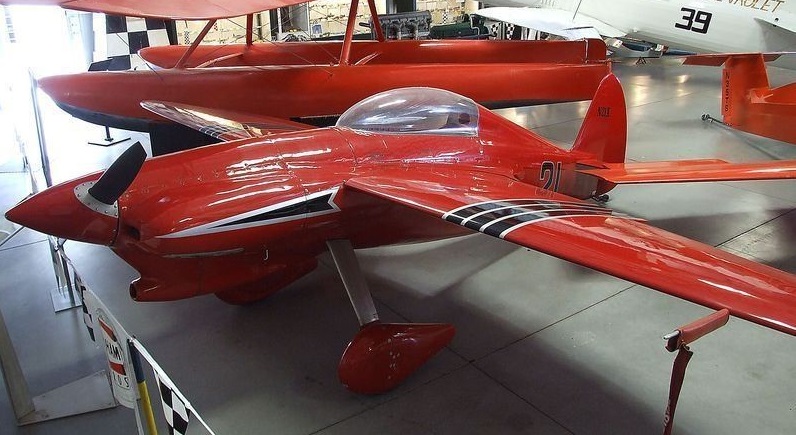
Only one example of the W-17 Stinger was registered in the United States with the Federal Aviation Administration in 1971 (N21X). The sole example was raced at the Reno Air Races by pilot John P. Jones in 1973 and captured second place. It went on display at the Planes of Fame Air Museum.
W-17 Stinger
Engine: 1 × Continental O-200A, 100 hp (75 kW)
Length: 15 ft 10 in (4.83 m)
Wingspan: 19 ft 0 in (5.79 m)
Airfoil: Root: NACA 64008, wing tip: NACA 64010
Empty weight: 585 lb (265 kg)
Gross weight: 835 lb (379 kg)
Fuel capacity: 8 U.S. gallons (30 L; 6.7 imp gal)
Propellers: 2-bladed metal
Maximum speed: 260 mph (418 km/h; 226 kn)
Stall speed: 65 mph (56 kn; 105 km/h)
Crew: one
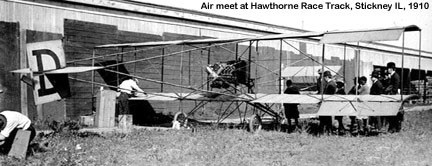
Charles F Willard, who had been leasing a Curtiss airplane for his exhibition flights, returned it, and reportedly designed a similar machine customized to his requirements, but still leased the motor from Curtiss (the one used on Curtiss’ Rheims Racer). This apparently was distinct from the 1910 Banshee Express, which he implied was his design, but was really another Curtiss product.
First flying on 12 August 1910, two were built, the second of which, christened simply The Express, had 50hp five-cylinder Gnôme rotary. Willard set a payload record with this craft by carrying two passengers with him on 14 August 1910.
Engine: Curtiss V-8, 63hp
Seats: 2
The Wilksch WAM series is a family of aero-engines for light and general aviation aircraft. WAM series engines are produced by Wilksch Airmotive in Gloucestershire, England. The engine outputs range between 100 hp (75 kW) and 190 hp (142 kW), and are suitable for both tractor and pusher configurations. Initially intended for homebuilt aircraft, the WAM engines may become certified for use on factory-built aircraft.
Wilksch engines are compression ignition engines which burn Diesel fuel or jet fuel. Aero-diesels are more efficient than the avgas engines more commonly found in general aviation aircraft. Kerosene jet fuel is ideal for jet turbines, but it lacks the lubricity of Diesel fuel. Accordingly, Diesel aero-engines that use jet fuel must have sufficient lubrication to compensate.
The WAM unit is a direct-drive two-stroke inverted inline triple with wet-sump, liquid cooling, supercharger, turbocharger and intercooler. Compression boost at startup comes via a supercharger, but once the engine is running, a turbocharger provides additional boost. Being inverted, the engine has its crankshaft at the top directly driving the propeller, and a camshaft at the bottom, immersed in sump oil. Charged air for combustion is introduced under pressure through a gallery of small ports, and exhaust gases are later expelled through a poppet valve in the cylinder head.
The intake ports are small enough to ensure that piston rings do not need to be pegged. Instead of using a gudgeon pin, each piston is connected to its connecting rod via a ball and socket joint, to enable the piston to rotate. This feature may be abandoned in favour of conventional gudgeon pins.
Fuel is filtered, and then supplied by a high pressure feed, surplus fuel being returned to the tank. Fuel injection is by IDI (indirect injection), whereby fuel is injected into a prechamber. A rather old-fashioned system, IDI was adopted for its simplicity and robustness.
Initial development was assisted with a UK government (DTI) grant. The prototype was a two-cylinder model capable of 80 hp (60 kW). The three-cylinder WAM120 produced 100–120 hp (75–89 kW), and the factory intended to produce a follow-up four-cylinder 160 hp (119 kW) motor to compete with engines such as the Lycoming O-360. However, funding proved problematic, and it became expedient to extend the product range by developing a larger capacity version of the three-cylinder motor. Wilksch are said to be still working on a four-cylinder motor.
The testbed aircraft for air trials were a Piper Cub a Shaw Europa and a Thorp T211. To date, some 20 aircraft have flown with WAM power, and one engine has been installed (in pusher mode) in a Staverton-based Rutan Long-EZ. In July 2009, Liberty Aerospace installed a WAM in the USA-built Liberty XL2 aircraft, and the company has agreed to assist Wilksch Airmotive in obtaining FAA certification for the WAM series. This cooperative effort bodes well for the future of Wilksch Automotive, and is expected to lead to the WAM engine becoming a specified option for the Liberty XL2.
Variants:
WAM120 three-cylinder engine
WAM 160 four-cylinder engine (proposed)
Applications:
Europa XS
Liberty XL2
Thorp T211
Rutan Long-EZ
Murphy Rebel
Jodel
Vans RV-9
Cosy
Specifications:
WAM120
Type: two-stroke inverted inline triple
Valvetrain: ohc (exhaust) & peripheral ports (inlet)
Supercharger: yes
Turbocharger: yes
Fuel system: IDI Fuel Injection
Fuel type: AVTUR or DERV
Oil system: wet sump
Cooling system: Liquid-cooled
Power output: 120 hp (89 kW) at 2,700 RPM

This Bicycle Bird will fly, insists inventor Lehman Wilde. For 34 years Wilde has dreamed of his ornithicopter, now it is ready for its final tests at Curtiss Field on Long Island. The machine weighs 275 pounds and is composed mostly of wings. There is a sprocket-and-gear arrangement that flaps these wings while a pilot treadles, as one would a bicycle.
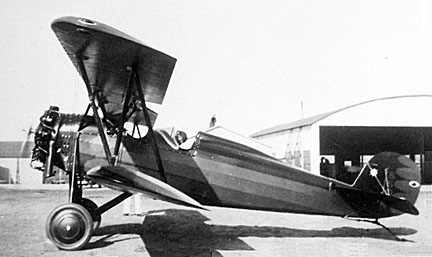
Wilcox ran an airport, located NE of Tulsa in Verdigris, that consisted of associated hangars and an office on 300 acres. William Collier built a number of planes there, reportedly including the 1930 T-12, until he relocated to Kansas.
The T-12-1 Sport Trainer was possibly first registred N550V.
T-12-1 Sport Trainer
Engine: 110hp Warner Scarab (originally a Siemens)
Wingspan: 31’6″
Length: 21’7″
Seats: 2
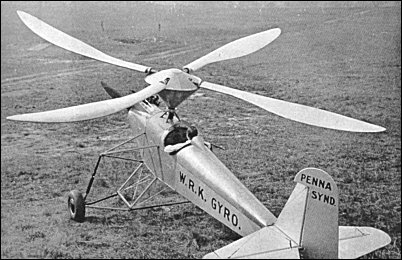
In 1928 Wilford visited Europe, and while there acquired the patent rights for the United States of a rotary wing aircraft conceived by a German named Rieseler. In 1929 Wilford began building his own gyroplanes.
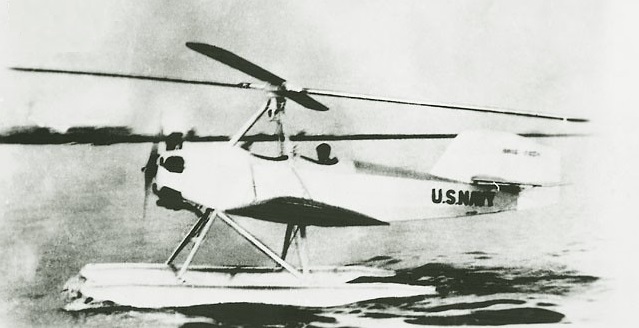
The idea behind this American/German partnership was a scheme for feathering the pitch of the blades rotating round the hub instead of the blade flapping system which La Cierva employed in his autogyros. The feathering control, operated through a system of cams, affected only the lateral parts of the circle described by the rotor.
Wind-tunnel tests proved the effectiveness of the idea.
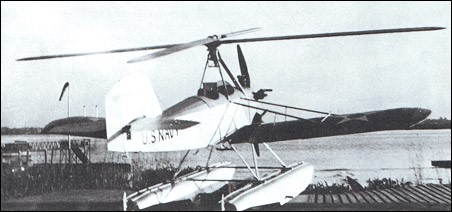
A Fleet XOZ-1 was modified to an autogiro configuration by the Pennsylvania Aircraft Syndicate, with a four-bladed autogiro rotor, held aloft over the forward cockpit by four steel struts, replacing the upper wing. The lower wing was retained and supports added, and the wheeled undercarriage was replaced by twin floats. The two-bladed wooden airscrew was retained, as were the two open, tandem cockpits. Wingspan was 8.33m.
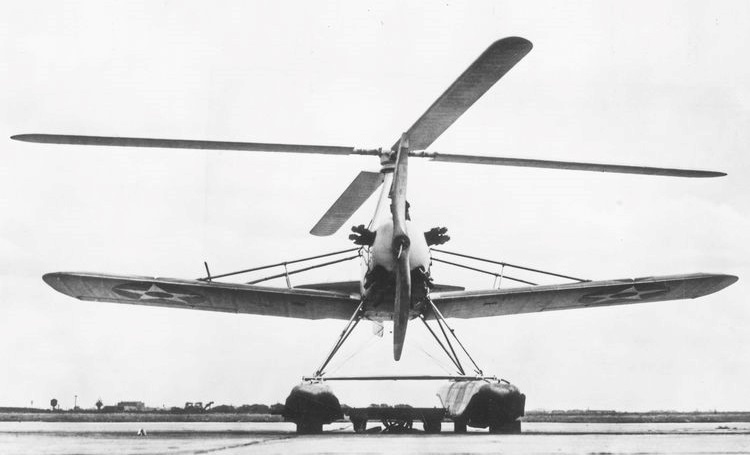
The first Wilford gyroplane (X794W) made successful first flight on August 5, 1931 at Paoli, Pennsylvania, piloted by Frank P. Brown. The original model had an engine of only 85hp.
As a result of these tests, various improvements were later made, such as a much more powerful engine, increase in the size of the rotor, and extension of pitch control to the four quadrants of the circle described by it.
A single-seat open-cockpit autogiro the ship made hundreds of successful flights before its crash in 1935, killing pilot Joseph McCormick. Model designation from initials of Wilford and German aero engineers Walter Reiseler and Walter Kreiser, upon whose patented 1927 designs the ship was based. A second version in 1934, for USN and NACA tests, was built up from a Fleet N2Y-1 fuselage and tail group as Pennsylvania XOZ-1 (8602). It proved very successful, when tested by the National Advisory Committee for Aeronautics, but nothing tangible ever materialized.
WRK Gyroplane
Number of seats: 1
Engine: 1 x ACE Mark III 85hp, repowered with 165hp Jacobs
Wingspan: 7.01m
Rotor diameter: 9.14m
Height: 3.05m
Weight fully loaded: 816kg
Max. speed: 190km/h
Min. speed: 50km/h
 All Aero