1998:
972 Weedon Dr NE
St Petersburg FL 33702
USA
Engine builder
1998:
972 Weedon Dr NE
St Petersburg FL 33702
USA
Engine builder
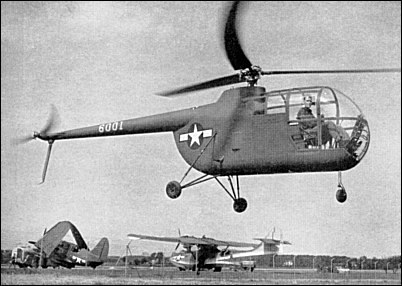
In 1943 Firestone absorbed G and A Aircraft of Pitcairn Field, Willow Grove, and this included the CG-4A, a troop-carrying glider, and the XO-61, a pusher-type autogyro. Between 1943 and 1945 the G and A was modified and developed into a dual tandem helicopter, the XR-9B.
G&A Aircraft had previously built six examples of the XO-61 two-seat gyroplane for the U.S. Army. This experience was applied to the design of a new helicopter for the U.S. Army, designated Model 45.
Conceived in 1943, the Model 45 was a conventional pod and boom helicopter with tandem seating, a fixed tricycle undercarriage and a three-blade main rotor. Completed in 1944 with co-operation from the Army Air Force’s Air Technical Service Command, the main rotor had three blades (and a fixed-type head); the tail rotor was 1.98 metres in diameter.
The helicopter was made of welded steel tube covered with an alloy skin, while the tail boom had a balsa-wood core covered with alcad. For storage purposes this helicopter could be broken down into three parts: rotor blades, fuselage and boom assembly.
The prototype incorporated an experimental electro-hydraulic governor, which by acting on the simultaneous pitch control maintained a constant predetermined rotor speed, irrespective of the power used. With automatic assistance from this governor, the pilot could rise or descend vertically just by using his throttle.
The original Model 45B design used a 126hp XO-290-5 engine and the Model 45C (military XR-9A) was a development with a two-blade rotor. Neither of these were actually built and the prototype (which carried the identity 6001) was designated XR-9B and was fitted with a 135hp Lycoming O-290-5 engine.
Firestone also built a civil version, the Model 45D (NX58457), with side-by-side seating but development of helicopters was abandoned by Firestone in 1947.
XR-9B
Number of seats: 2
Engine: 1 x Lycoming O-290-7, 135hp
Rotor diameter: 8.53m
Length: 8.41m
Width at landing wheels: 2.74m
Height: 2.6m
Gross weight: 800kg
Cruising speed: 128km/h
Inclined climb: 305m/min
Absolute ceiling: 3050m
Range: 400km
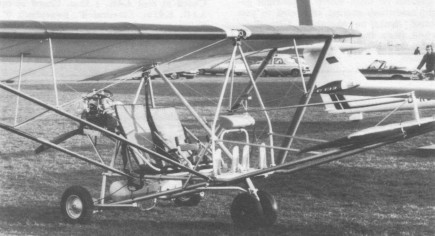
Side by side two seat single engined high¬wing monoplane with conventional three axis control. Wing has swept back leading and trailing edges, and constant chord; no tail, canard wing. Pitch control by fully flying canard; yaw control by tip rudders; roll control by spoilers; control inputs through stick for pitch/roll and pedals for yaw. Wing braced from below by struts; wing profile; double surface. Undercarriage has four wheels in ‘tricycle’ formation; suspension on all wheels. No ground steering. Brakes on all wheels. Aluminium tube framework, without pod. Engine mounted below wing driving pusher propeller.
Easily distinguishable from other Fledge derivatives by its unusual double nosewheel, the T1 is basically a two seat version of the M1. It was first shown at the Aero 83 Exhibition at Friedrichshafen in March 1983 and was placarded as having made its first flights the month before. The standard version includes electric start, while options include wheel fairings and floats.
Engine: Hirth 276A13, 40 hp at 7000 rpm.
Propeller diameter 63 inch, 1.60 m.
Belt reduction, ratio 2.04.
Max static thrust 252 lb, 114 kg.
Power per unit area 0.22 hp/sq.ft, 2.4 hp/sq.m.
Length overall 10.5ft, 3.20m.
Wing span 32.8 ft, 10.0 m.
Constant chord 5.6 ft, 1.70 m.
Canard span 6.7 ft, 2. 00 m.
Main wing area 183 sq.ft, 17.0 sq.m.
Rudder area 9.7 sq.ft, 0.90 sq.m.
Wing aspect ratio 5.9/1.
Wheel track 5.3 ft, 1.60 m.
Empty weight 327 lb, 148kg.
Max take off weight 707 lb, 320kg.
Payload 380 lb, 172 kg
Max wing loading 3.86 lb/sq.ft, 18.8 kg/sq.m.
Fuel capacity 6.9 US gal, 5.7 Imp gal, 26.0 litre.
Max power loading 17.7 lb/hp, 8.0kg/hp.
Load factors: +6.0, 3.0 ultimate.
Never exceed speed 56mph, 90kph.
Economic cruising speed 44mph, 70kph.
Stalling speed 28mph, 45 kph.
Max climb rate at sea level 600 ft/min, 3.1 m/s.
Best glide ratio with power off 8/1 at 37mph, 60kph.
Take off distance 100ft, 30 m.
Landing distance 65 ft, 20 m.
Range at average cruising speed 112 mile, 180km.
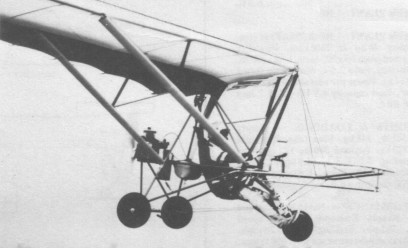
The prototype of the single seater M1 from Firebird made its first flight in 1979 and by 1983 more than 100 examples have been produced. The wing is directly descended from the famous Fledgling designed by Klaus Hill, originally as a hybrid control hang-¬glider. This wing, with its rudders at its wing tips, was powered in 1978 in the USA and the following year in Europe, by Firebird. Just as Pterodactyl does with its Ptraveler and Ascen¬der, Firebird uses it with a variable incidence canard. There is one fundamental difference between Firebird’s approach and that of the Americans, in that the German manufacturer chooses to support the wing with two profiled struts under each half wing, thus dispensing with all the ground and flight rigging wires.
The other principal difference is the power pack, which on the Firebird has to conform with West Germany’s stringent noise regulations. With Konig en¬gine and three bladed propeller, the standard arrangement on the M1, under 60 dB is recorded using the regulation measuring conditions.
Complete with electric start and battery, the M1 cost DM 17,408 in 1983, while options in¬clude an extra fuel tank, an instrument panel, floats and a parachute of 755 sq.ft (70 sq.m) area, which is usable at speeds up to 155 mph (250 kph) and which gives a rate of descent of 1300 ft/min (6.7 m/s) with a 442 lb (200 kg) load. Wing profile; FNI 4 81; double surface. Undercarriage has three wheels in tricycle formation; steel spring suspension on nosewheel and no suspension on main wheels. Push right go left nosewheel steering independent from yaw control. Brake on nosewheel. Aluminium tube/carbon fibre framework, without pod. Engine mounted below wing driving pusher propeller.
Engine: Konig SC430, 24 hp at 4200 rpm.
Propeller diameter 53 inch, 1.34 m (three blade).
Belt reduction, ratio 2.2/1.
Max static thrust 143 lb, 65 kg.
Power per unit area 0.15hp/sq.ft, 1.6 hp/sq.m.
Height overall 9.4 ft, 2.85 m.
Wing span 32.8 ft, 10.00 m.
Chord at root 5.6 ft, 1.70 m.
Chord at tip 4.6ft, 1.40m.
Dihedral 5 degs.
Sweepback 38 degs.
Canard span 6.6ft, 2.00m.
Canard chord 2.1 ft, 0.63 m.
Total wing area 175 sq.ft, 16.3sq.m.
Main wing area 161 sq.ft, 15.0 sq.m.
Canard area 14.0 sq.ft, 1.3 sq.m.
Wing aspect ratio 6.7/1.
Wheel track 6.9 ft, 2. 10 m.
Wheelbase 4.6 ft, 1.40 m.
Nosewheel diameter overall 14 inch, 35 cm.
Main wheels diameter overall 16 inch, 41 cm.
Empty weight 2161b, 98kg.
Max take off weight 420 lb, 190 kg.
Payload 204 lb, 92 kg.
Main fuel capacity 3.4 US gal, 2.8 Imp gal, 13.0 litre
Reserve fuel capacity 2.6 US gal, 2.2 Imp gal, 10.0 litre in.
Max wing loading 2.60 lb/sq.ft, 12.7 kg/sq.m.
Max power loading 17.5 lb/hp, 7.9 kg/hp.
Load factors +4.0, 2.0 design; +6.0, 3.0 ulti¬mate.
Max level speed 50 mph, 80 kph.
Never exceed speed 56 mph, 90kph.
Economic cruising speed 37mph, 60kph.
Stalling speed 24mph, 40kph.
Max climb rate at sea level 400 ft/min, 2.0 m/s.
Min sink rate 350ft/min at 34mph, 1.8m/s at 55 kph.
Best glide ratio with power off 8.5/1 at 37mph, 60kph.
Take off distance 100ft, 30 m.
Landing distance 65 ft, 20 m.
Range at average cruising speed 93 mile, 150 km.
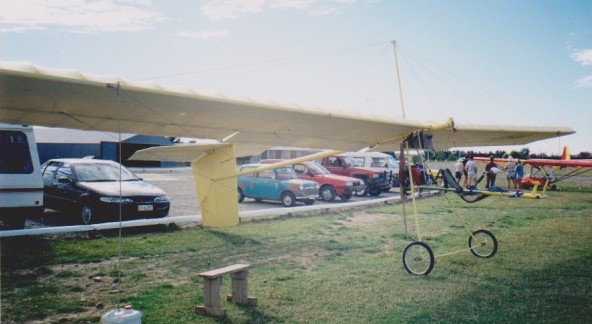
Otherwise known as the “Mangamingi Monster Mark III” this aircraft was designed by Tim Hardwick-Smith to achieve a low horsepower, slow flying aeroplane, for low cost flying, farm surveillance and motor gliding. The machine first flew on 1 February 1997 and was registered ZK-JHH on 13 February 1997.
Engine: 1 x Briggs & Stratten.
Cruise: 60 kph.
Stall: 35 kph.
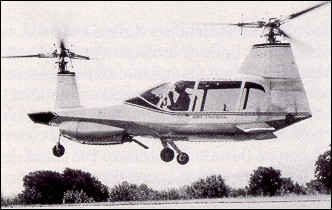
The Beta 200 prototype (N5000F) was first flown on 26 May 1966. Filper planned several versions of the Beta with either two seats (Model 200A and 300) or four seats (Model 400A and 600A). The four-seat models had a fuselage which was stretched by 36-inches and the first Beta 400A (N5003F) was flown on 13 July 1967. The Beta 400A had a 250hp Continental IO-520. Details of the Model 600A are unknown.
A former N.A. test pilot and a flight test engineer were killed in the stretched version.
Registration records show that 32 Betas were completed, comprising two Model 100As, 29 Model 400As and one Model 600A, but there is some doubt as to whether all of these were completed. It is believed the company ceased operations in 1969.
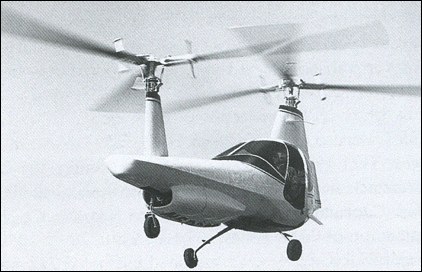
Under the direction of William Orr, Filper Research designed a novel helicopter using the ‘Gyroflex Rotor’, which employed special balance weights fitted to the roots of the rotor blades instead of conventional flapping or lead-lag hinges, or other hub stability devices. Filper was in the peach-pitting machinery business. This concept was tested on the Filper Helicopter (N9712C) which had fore and aft rotor pylons and the pilot sitting astride a central beam which also carried the engine.
A commercial development was the Filper Beta 100A. This was a tandem rotor machine with a two-seat cabin and pylon at the rear, and the engine with the forward pylon in front. This arrangement resulted in the pilot being unusually far from the front of the helicopter. The Beta 200 prototype (N5000F) was first flown on 26 May 1966. Filper planned several versions of the Beta with either two seats (Model 200A and 300) or four seats (Model 400A and 600A).
The Beta models had various powerplants – namely the 210hp Continental IO-360-E (Model 200A), Allison 250-C18 turbine (Model 300) and 250hp Continental IO-520 (400A). Details of the Model 600A are unknown. Registration records show that 32 Betas were completed, comprising two Model 100As, 29 Model 400As and one Model 600A, but there is some doubt as to whether all of these were completed. No Filpers were ever sold to the public and never received FAA certification. It is believed the company ceased operations in 1969.
The 1910 Filiasi biplane was designed and built by Francesco Filiasi in Italy.
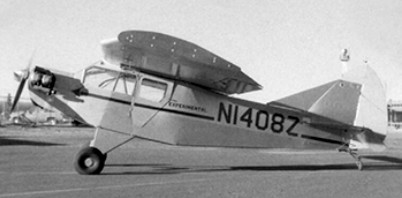
William Fike, designer and Alaska airline pilot, created this two-place cabin monoplane. The Model Es airframe structure includes a Piper J-3 tail assembly, a welded steel-tube fuselage and an all-wood, fabric-covered wing. Power is supplied by an 85-hp Continental engine. The wing can be removed within 10 minutes to enable the plane to be towed.
Gross Weight: 1150 lb
Empty Weight: 690 lb
Fuel capacity 15 USG
Wingspan 22 ft 4.5 in
Length: 19 ft 2 in
Engine: 85-hp Continental
Top speed: 110 mph
Cruise speed: 100 mph
Stall: 37 mph
Climb rate: 800 fpm
Ceiling: 10,000+ ft
Takeoff run: 400 ft
Landing roll: 600 ft
Range: 280 miles
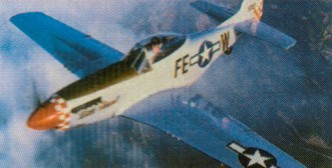
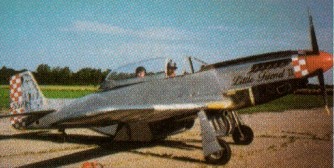
For years, many experimental aircraft builders have strived to re-create their favorite World War II fighters in miniature. For most, many hurdles had to be negotiated to get the right look, feel, sound and, of course, performance—all at the right cost of ownership. Until the advent of composite building techniques, forming all those compound curves of a fighter in metal just wasn’t within the means of your average builder. Then, getting the proper powerplant to look and sound like “the real thing” was next to impossible with the technology and funds at hand. Now with automotive/aviation V-8 conversions attaining a respectable degree of reliability, cost, and power coupled with these modern prepreg, composite techniques, the right combination has been reached. F.E.W.’s P-51D is a 67% scale version of the famous fighter of World War II first flew in 1992, and it looks the part, sounds the part and flies the part. The P-51D is stressed to ±6 G’s for aerobatics and is available in a dual-control version, the P-51TF, which first flew in 1997.
P-51
Speed max: 340 mph.
Cruise: 210 mph.
Range: 750 sm.
Stall: 57 mph.
ROC: 2000 fpm.
Take-off dist: 900 ft.
Landing dist: 1000 ft.
Service ceiling: 18,000 ft.
Engine: V-8, 300 hp.
HP range: 250-350
Fuel cap: 58 USG.
Weight empty: 1300 lbs.
Gross: 2200 lbs.
Height: 8.1 ft.
Length: 20.5 ft.
Wing span: 25.6 ft.
Wing area: 111 sq.ft.
Seats: 1-2.
Landing gear: retractable tail wheel.
P-51TF
Speed max: 340 mph.
Cruise: 210 mph.
Range: 750 sm.
Stall: 57 mph.
ROC: 2000 fpm.
Take-off dist: 900 ft.
Landing dist: 1000 ft.
Service ceiling: 18,000 ft.
Engine: V-8, 300 hp.
HP range: 250-350
Fuel cap: 58 USG.
Weight empty: 1300 lbs.
Gross: 2200 lbs.
Height: 8.1 ft.
Length: 20.5 ft.
Wing span: 25.6 ft.
Wing area: 111 sq.ft.
Seats: 1-2.
Landing gear: retractable tail wheel.

