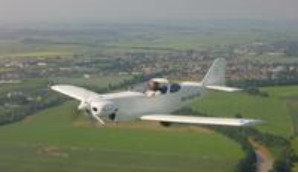
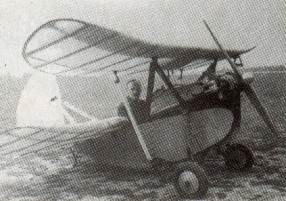
Single seat european ultralight with fully retractable landing gear. Fuselage is welded steel spaceframe construction covered by ceconite. Between the firewall and instrument panel is allmost 8 U.S. gal. composite fuel tank. The central section contains gear reinforcement areas for main landing gear and all retractable mechanism that is placed uder the seat. The wing is of single spar contruction build of glass-epoxy composite with carbon fibre main spars, wing skins molded in negative molds. Wing enploys split flap that increase speed range. Wings can be easy removed by one person. Tail section: Centilever tail is constructed with tube aluminium spars and styrofoam ribs covered by ceconite. Horizontal tail section is easy removable. New model of B612 is delivered with all composite tail section only. Lending gear: Welded steel udercarriage legs with hydraulic-shock-absorber are manually retractable. The tricycle gear configuration, steerable nosewheel and diferential braking all combine to make the aircraft easy handle on the ground. Engine: accetable hp range is 28- 80 hp and the B-612 is originaly designed for Rotax 503 [50hp].
Flying Legend have designed and made a prototype of a 70% Hurricane; it flew very well and looks good but they have done some changes and the Mk2 was to be flying.
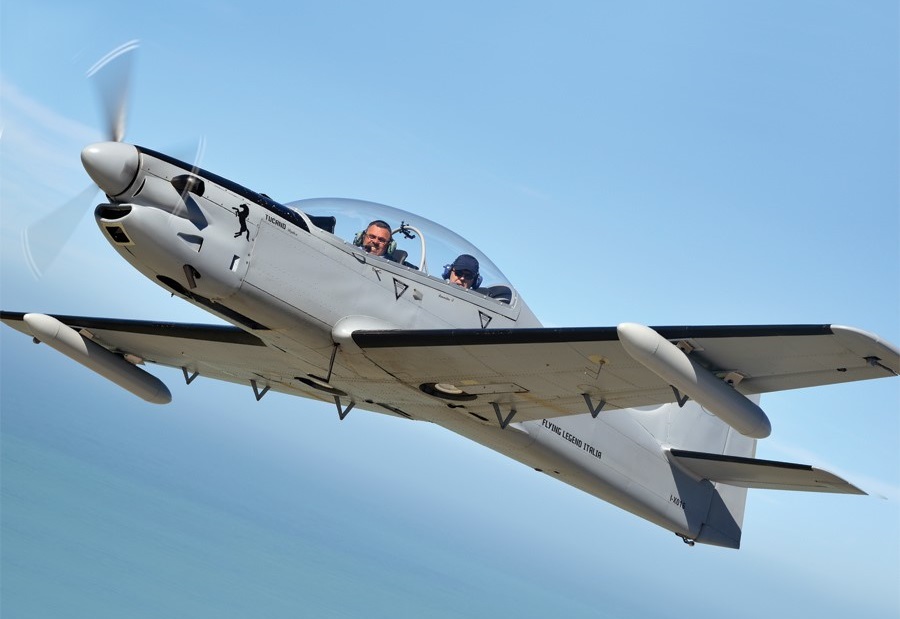
Flying Legend, an Italian company, has developed an all-metal Tucano replica that is 70% actual size and looks almost identical to the original.
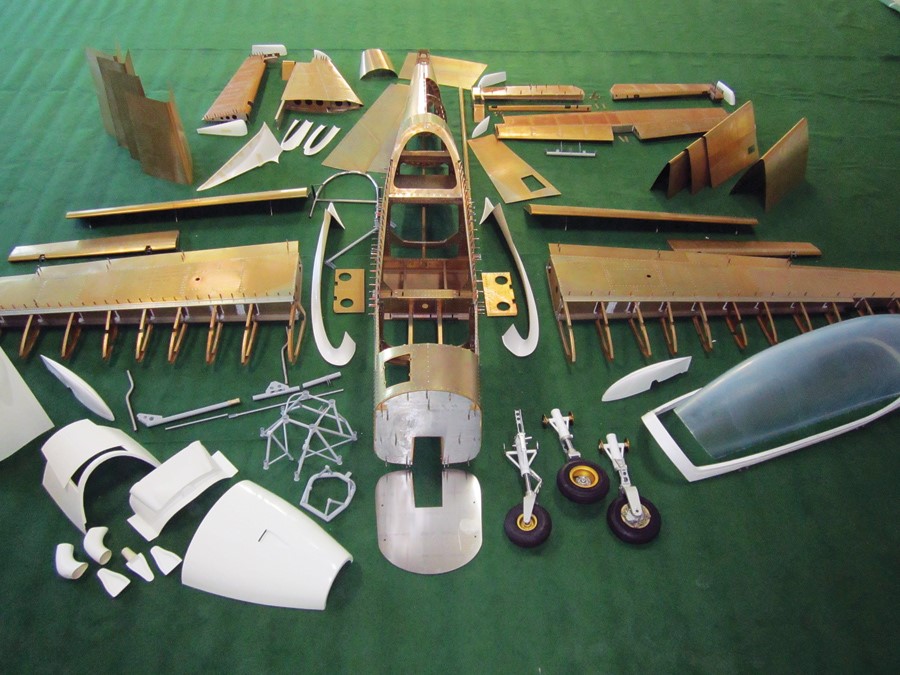
The Tucano replica uses traditional metal construction techniques. Pre-punched parts are fastened together by the builder using pulled rivets, while most of the structural parts are assembled at the factory with solid rivets.
The kit is divided into several sub-kits: empennage, wings, fuselage, flight controls, landing gear, fuel system, resins (cowling, wingtips, fairings, etc.), canopy, and engine mount. The kits can be ordered together or individually.
Tucano replica quickbuild kit
All hardware is AN/MS and measurements are in inches. All the aluminum parts are treated with Alodine at the factory. The fuel tanks hold 13 U.S. gallons in each wing, and are made by M.E.RIN, an Italian company that specializes in anti-explosion bladder fuel cells. The electro-hydraulic retractable landing gear was designed to look as close as possible to the original. The mainwheels are 6 inches in diameter with a differential brake system, and the nosewheel is 4 inches in diameter.
The Tucano replica front cowl has two faux turbine exhausts to look like the aircraft is powered by the Embraer EMB 312 Tucano’s turboprop engine.
Like all of the steel components, the engine mount is powder coated. The engine cowling, spinner, wingtips, and other fiberglass components are made with vinyl ester resin. Flying Legend worked extremely hard to make the replica cowling look as close to the original Embraer front section as possible. Besides the faux exhaust stacks, the shape of the front intake scoop really does make the replica look like it’s powered by a turboprop engine.
The canopy is ready to be riveted or glued to the frame. Like the original Tucano, the rear seat is raised to provide better forward visibility for the guy or gal in back. The rear seat also has stick, rudder, and throttle controls. You won’t find ejection seats, but a ballistic parachute is available as an option. The ailerons and elevator are connected to pushrods, and the rudder is controlled with cables.
It can be built with fixed or retractable landing gear.
With fixed gear and a 100-horsepower Rotax 912 ULS, the Tucano meets LSA requirements, provided that gross weight is limited to 1320 pounds. When licensed as Experimental/Amateur-Built, gross weight can be increased to 1433 pounds with aerobatic load limits of +6/-3 G at this weight.
Performance is significantly enhanced with retractable gear and more power. The “official” engine choice for the E/A-B version is a turbocharged 115-hp Rotax 914 UL. But there’s also the option of a Rotax 912 ULS fitted with Flygas Engineering’s supercharger kit which boosts power to 130-140 horsepower.
Quickbuild Tucano kits are built on jigs at the factory
The Tucano airframe kit is best described as a quick-build, since much of the work has been completed at the factory. The kit was being evaluated by the FAA and is expected to be fully compliant with the “51% rule.”
Crating a kit. Notice the framework securing the wings and horizontal stabilizer in the crate.
Included in the price of $67,900 USD (€60,430, depending on the exchange rate) in 2016 is the complete airframe, including two M.E.RIN anti-explosion bladder fuel cells. An optional safety kit with a Galaxy GRS ballistic parachute and double activation bars is available for $7,600. Engine, propeller, electrical system, instruments, avionics, and paint are not included and are up to the builder.
Pods under each wing serve as interesting baggage compartments. They’re great for touring, but not for speed. Each pod holds up to 27 pounds.
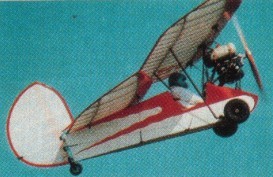
Able to be built as an ultralight or experimental, the Sky Raider has slotted flaps. First flown in 1996, the kit sold for US$7900 in 1996, and a quick build wing kit option was available for an additional US$500 in 1997.
Sky Raider
Super Sky Raider
LSA kit plane. All Sky Raiders are made of a fully enclosed chrome-moly steel fuselage with optional doors and windows.
Super Sky Raider
The Super Sky Raider is designed with tandem cockpit and dual controls.
Variation: Reality Easy Raider
Sky Raider Sky Raider / Super Sky Raider HELP !! Looking for all info. for a Sky Raider 2 ; especially the MOST FORWARD and the MOST AFT locations from DATUM line. Thanks. Ron W. Ron Wright May 2021 ron1@mtco.com
Sky Raider Engine: Rotax 277, 28 hp HP range: 28-50 Height: 5.2 ft Length: 17 ft Wing span: 26.2 ft / 8 m Wing area: 110 sq.ft / 12.5 sq.m Fuel capacity: 5 USG Empty weight: 250 lb / 109 kg Gross weight: 550 lb / 250 kg Max speed: 160 kph Top speed: 63 mph Cruise: 63 mph / 120 kph Stall: 27 mph / 37 kph Range: 120 sm Rate of climb: 600 fpm Takeoff dist: 75 ft Service ceiling: 11.000 ft Seats: 1 Landing gear: tailwheel
Sky Raider Engine: Rotax 447, 28 hp HP range: 28-50 Wing span: 26.1 ft Wing area: 98 sq.ft Length: 17 ft Empty weight: 253 lb Gross weight: 550 lb Fuel capacity: 5 USG Cruise: 63 mph Stall: 27 mph Range: 140 sm Rate of climb: 800 fpm Takeoff dist: 75 ft Landing dist: 75 ft Seats: 1 Cockpit width: 24 in Landing gear: tailwheel
Sky Raider II Cruise: 80 mph Stall: 36 mph Range: 290 sm Rate of climb: 1200 fpm Takeoff dist: 75 ft Landing dist: 75 ft Engine: HKS 700E, 65 hp HP range: 60-80 Fuel capacity: 14 USG Empty weight: 390 lb Gross weight: 950 lb Length: 17 ft Wing span: 28 ft Wing area: 107 sq.ft Seats: 2 tandem Cockpit width: 27 in Landing gear: tailwheel
Super Sky Raider Jabiru 80 hp Prop: GSC 60 in 2 blade Wing Span wi wing tips 30 ft Wing Area wi wing tips 107 sq. ft Wing span wlo wing tips 28 ft Wing area wlo wing tips 98 sq ft Length 18 ft Height 6 ft Empty Weight 450 1bs Gross Weight 1050 Ibs Fuel Capacity 14 gal. Fuel burn 4 USgal/hr at cruise VNE 100 mph Take Off Roll 75-100 ft Ground Roll 75-100 ft Climb Rate 1400 fpm Cruise 80 mph Stall wlo flaps 38 mph Stall w/ Flaps 30 deg 32 mph Width Folded 8 ft 2 in Length Folded 21 ft 6 in Gear Width 4 ft 8 in Cabin Width 27 in Super Sky Raider Standard Kit 2009 Price: US$15,995.00
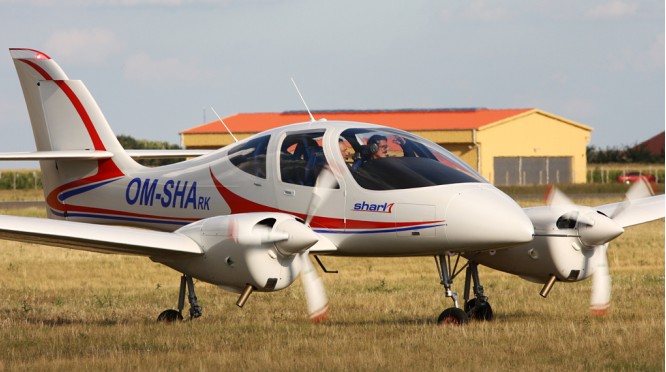
The Fly-Fan Shark is a Slovak light aircraft designed by Frantisek Sustek and under development by Fly-Fan of Trenčín. The design was introduced at the Aero show held in Friedrichshafen in 2007 as a mock up and in 2011 as a flying aircraft. The aircraft first flew on 29 June 2011 and was intended to be supplied as a complete ready-to-fly-aircraft.
The Shark was designed with the goal of providing similar performance to other twin-engined light aircraft, but on 30% less power. It features a cantilever low-wing, a five-seat enclosed cabin, retractable tricycle landing gear and twin wing-mounted engines in tractor configuration.
The aircraft is made from Kevlar and carbon fibre. Its 11.4 m (37.4 ft) span wing employs a Jd 16 (40) 162 airfoil at the wing root, transitioning to a Jd 17 (40) 157 at mid-span and a Jd 15 (35) 136 at the wing tip. The wing has an area of 16.2 sq.m (174 sq ft) and mounts split flaps that can be extended 50 deg. The standard engines fitted are a pair of 160 hp (119 kW) Lycoming O-320-D1A four-stroke powerplants.
The aircraft has an empty weight of 1,221 kg (2,692 lb) and a gross weight of 1,500 kg (3,300 lb), giving a useful load of 279 kg (615 lb).
Engines: 2 × Lycoming O-320-D1A, 120 kW (160 hp) Propellers: 3-bladed MT-Propeller or Hartzell Propeller constant speed, 1.78 m (5 ft 10 in) diameter Length: 8.9 m (29 ft 2 in) Wingspan: 11.4 m (37 ft 5 in) Height: 3.07 m (10 ft 1 in) Wing area: 16.2 m2 (174 sq ft) Airfoil: wing root: Jd 16 (40) 162 airfoil, mid-span: Jd 17 (40) 157, wing tip: Jd 15 (35) 136 Empty weight: 1,221 kg (2,692 lb) Gross weight: 1,500 kg (3,307 lb) Cruising speed: 260 km/h (162 mph; 140 kn) Stall speed: 140 km/h (87 mph; 76 kn) Never exceed speed: 330 km/h (205 mph; 178 kn) Range: 1,600 km (994 mi; 864 nmi) Endurance: 8 hours Maximum glide ratio: 16:1 at 160 km/h (99 mph) Rate of climb: 10.6 m/s (2,090 ft/min) Wing loading: 92.6 kg/m2 (19.0 lb/sq ft) Crew: one Capacity: four passengers
Circa 1998 with a kit cost of US$7900. A tandem version sold for US$8900. Attachable trikes were available.
The Mach 1 paratrike uses a modified paraglider wing with the German-manufactured Solo 210cc two-stroke petrol engine. This has electronic ignition, electric starter, in-flight battery charging and its Walbro carburettor and tuned exhaust gives an extra 5 kg of thrust. Power to the 1.22-metre diameter wooden propeller is via a 2.5:1 Polyvee Belt Drive reduction unit, giving 60 kg of thrust at 6,300 rpm. Fuel capacity has been increased from the standard 8.5 to 10 litres, giving a 5-hour endurance at approximately 27 knots.
Engine: Zanzoretta MZ34, 28 hp Wing span: 11.7 m Wing area: 32.2 sq.m Fuel capacity: 2.3 USG Empty weight: 62 lb Gross weight: 72 lb Cruise: 18 mph Rate of climb: 600 fpm Takeoff dist: 20 ft Landing dist: 15 ft Seats: 1
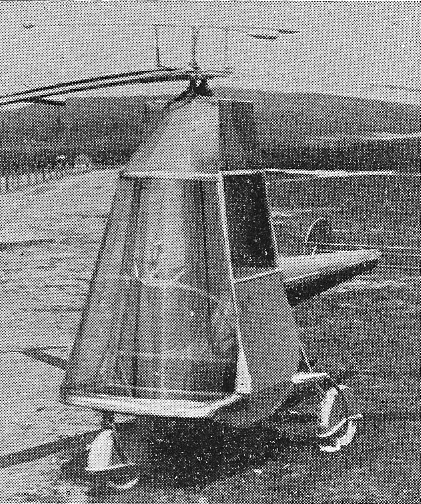
The Libelle two-seat ultra-light helicopter was built by Fluro (W. Schlieske, Helpup (L)), and was powered by three Schmidt-Argus jets fitted with afterburners.