Granville Bros / Gee Bee R-1

Jimmy Doolittle and the Gee Bee R-1

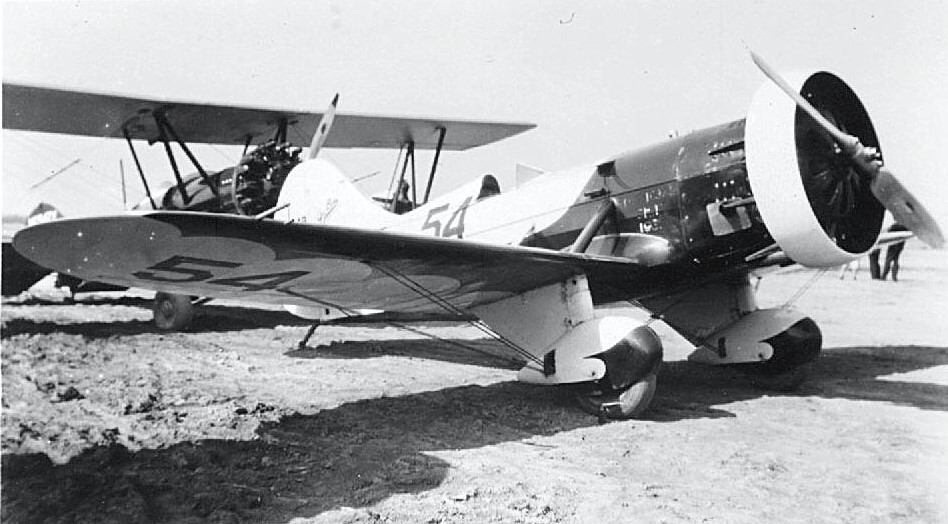
The Granvilles and their new chief engineer, Howell “Pete” Miller, came up with two of the most powerful models yet—the R Series Super Sportsters, race numbers 7 and 11—tailor-made to win the 1932 Nationals. For the Bendix there was No. 7, the Wasp Jr.-powered R 2; for the 1932 Thompson Trophy event there was No. 11, the Gee Bee R 1.

The Granvilles needed a pilot, and Jimmy Doolittle needed a plane. Doolittle flew to Springfield for a look. The Granvilles rolled out their creation, in a scalloped, black-piped, red-and-white paint scheme, set off by red 11s and dice showing 5 and 6. The R 1, essentially a scaled-up version of the Model Z, struck Doolittle as “all engine with minuscule wings and a bomblike fuselage.” The Granvilles had simply streamlined a Wasp Sr. engine with a modicum of bodywork, adding just enough wing and control surface area to keep it airborne, barely under control, and moving at nearly 300 mph.

Doolittle knew the airplane would be “extremely hot to handle.” After his one brief test flight, Boardman had reported severe directional instability, and the Granvilles had added two square feet of fin to the rudder. Doolittle clambered into the cockpit and asked that the engine be fired up. As the Wasp Sr. roared to life, one of the Granvilles, no doubt thinking ahead to locating the wreckage, asked where he was headed.

“I’m going to Cleveland, of course!” answered Doolittle. He took off and, without even a turn around the field, headed west. In less than two hours the Granvilles received a telegram: “Landed in Cleveland O.K., Jim.”
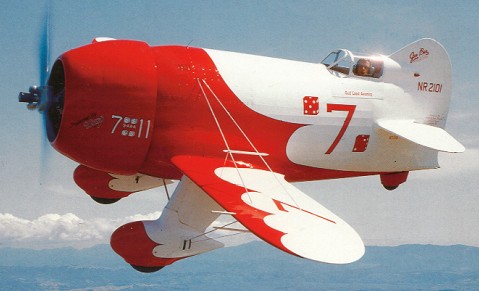
(replica)

Granville Brothers Gee Bee R-1 Article

Gallery

Super Sportster R-1
Engine: Pratt & Whitney R-1340, 800 hp
Length: 17.749 ft / 5.41 m
Height: 8.104 ft / 2.47 m
Wingspan: 25.0 ft / 7.62 m
Wing area: 79.654 sq.ft / 7.4 sq.m
Max take off weight: 3065.0 lb / 1390.0 kg
Weight empty: 1841.2 lb / 835.0 kg
Max. speed: 254 kt / 470 km/h
Landing speed: 103 kt / 190 km/h
Service ceiling: 4921 ft / 1500 m
Wing loading: 38.54 lb/sq.ft / 188.0 kg/sq.m
Endurance: 1 h
Crew: 1
Fuel capacity 160 USG.
Steerable tailwheel.
Granville Bros / Gee Bee Z Super Sportster

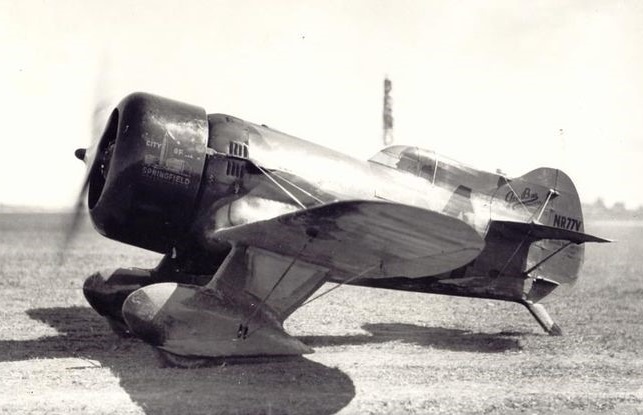
Gee Bee Z, NR77V, City of Springfield

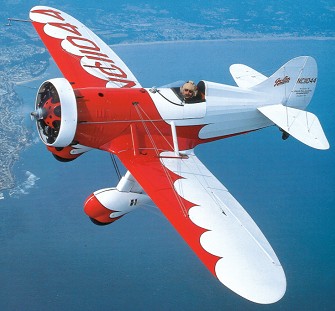
The Granville brothers first Gee Bee Sportster were fairly orthodox: but in 1931 they produced the Super Sportster Model Z which was pure racer, with a huge radial engine in a barrel like fuselage, stubby braced wings and enormous wheel spats.
With an engine borrowed from Pratt & Whitney and propeller borrowed from Curtiss, the Gee Bee Model Z Sportser entered competition. In one race, the Gee Bee averaged 267.342 miles per hour, the fastest speed ever recorded for a land plane. Later in the year with a upgraded 800-hp Pratt & Whitney R-1340, the model Z was clock in at 281.75 mph.
Piloted by Lowell Bayles it won the 1931 Thompson Trophy Race at 236 mph. In December 1931, while trying to set a new air speed record, Lowell Bayles had crashed in the Gee Bee and died. Movie footage and analysis of the wreckage revealed that a loose fuel cap had come off and smashed the Model Z’s canopy, causing Bayles to lose control

Engine 535-hp, supercharged Pratt & Whitney R-985 Wasp Jr.
Span 25 ft
Length 17 ft. 9 in
Height 8 ft. 2 in
Wing area 75 sq. ft
Gross wt. 2,280 lb
Empty wt. 1,400 lb
Fuel capacity 103 USG
Top speed 270 mph.
Cruise speed 230 mph.
Seats 1

GECI Skylander

Skylander was a Desmond Norman’s last project. Intended for rough field work in remote areas, the rights for this twin PT6A turboprop have been bought by GECI of France for further development.

Skylander (provisional)
Engines: Two 1100shp Pratt & Whitney Canada PT6A 65B turboprops.
Span, 71 ft (21.6m).
Length, 47ft 2in (14.38m).
Height, 20ft 1 in (6.lm).
Max take off weight, 18,5001b (8.4 tonnes).
Max payload, 7,2751b (3.3 tonnes)
Cruise speed, 230kt (426km/h).
Range, 1,207nm (2,235km).

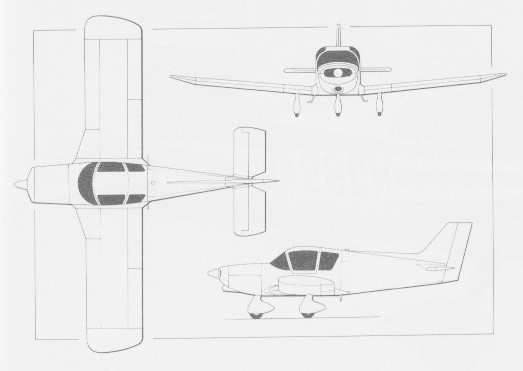
Gazuit-Valladeau GV 10 Gazelle

GV 10-31

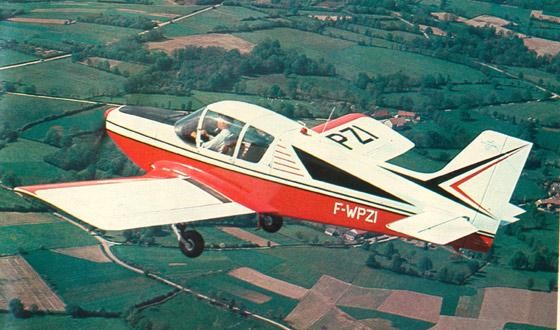
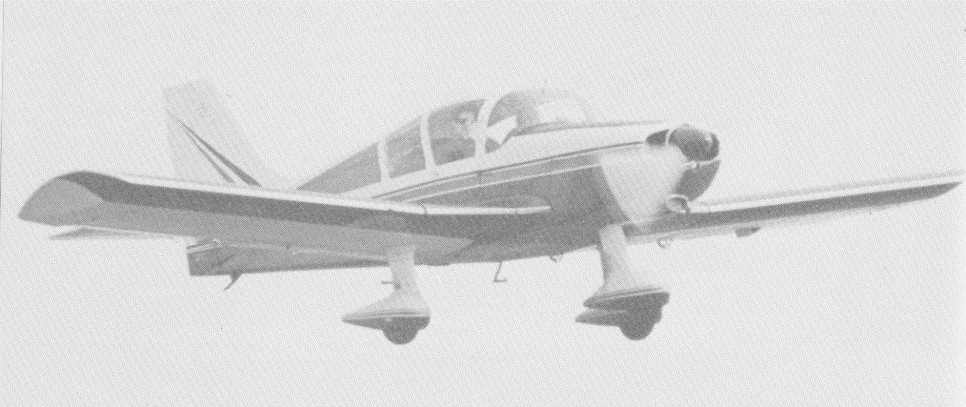
The company produced a 2/3-seat light aircraft, the GV 103L, which first flew on 1 May 1969. Subsequently built a second example with the intention of finding a sponsor for production of the type.

The GV 10-20 was an aerobatic two-seat version with 115 hp Lycoming engine.

The GV 10-31 was a four-seat version.

GV-10-31

GV 10-31
Engine: Lycoming O-320, 150 hp
Wingspan: 28 ft 8.5 in / 8.75 m
Length: 21 ft 7.75 in / 6.60 m
Empty weight: 1212 lb / 550 kg
MTOW: 2182 lb / 990 kg
Max cruise 75%: 122 kt / 140 mph / 225 kph
ROC SL: 787 fpm / 240 m/min
Service ceiling: 14,760 ft / 4500 m
Range: 594 nm / 683 mi / 1100 km
Seats: 4
Max rear seat load: 340 lb / 154 kg
Baggage: 22 lb / 10 kg