Wolfe Aviation WAT

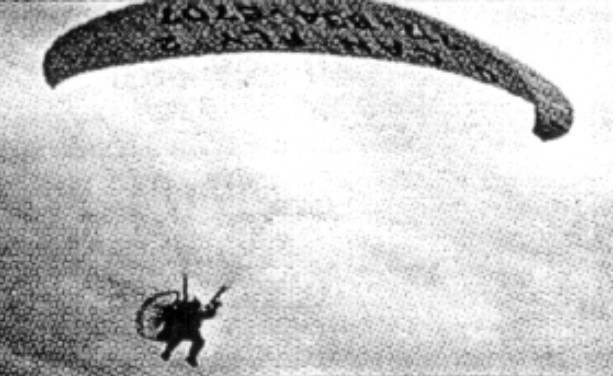
Single seat single engined flex wing aircraft with weight shift control. Rogallo wing. Pilot suspended below wing in trike unit, using bar to control pitch and yaw/roll by altering relative positions of trike unit and wing. Undercarriage has three wheels in tricycle formation. Push right go left nosewheel steering independent from yaw control. Aluminium tube trike unit, with optional pod. Engine mounted below wing driving pusher propeller.
The WAT the title stands for Wolfe Aviation Trike. In concept it is simple enough a monopole trike using a 2 inch (5cm) square section aluminium pole, adjustable in height to suit various Rogallo wings. Wolfe offers a variety of engines, with or without reduction drive, various seat options and also a selection of undercarriage designs. One of these undercarriages is unique as far as trikes are concerned in that it has retract¬able main wheels which fold behind the power pack to reduce drag. The WAT is also available with a double nosewheel. Another drag reducing option is a fabric pod.
To make the WAT as versatile as possible, the hang point uses a clamping arrangement, the idea being that the glider can be attached without drilling holes through the keel tube.
Standard engine is the Cuyuna 215 cc unit with reduction drive but among the engine options is a Cuyuna ULII-02. Price of the trike unit with 215 cc engine and reduction drive was $1690.

Engine: Cuyuna 215, 22hp at 6000rpm
Propeller diameter and pitch 50 x 20 inch, 1.27 x 0.51 m
V belt reduction, ratio 2.0/1
Max static thrust 160 lb, 73kg
Fuel capacity 2.0 US gal, 1.7 Imp gal, 7.6 litre
Length overall (Trike unit only) 5.0ft, 1.52m
Height overall (Trike unit only) 7.0 ft, 2.13 m
Empty weight (Trike unit only) 110 lb, 50kg
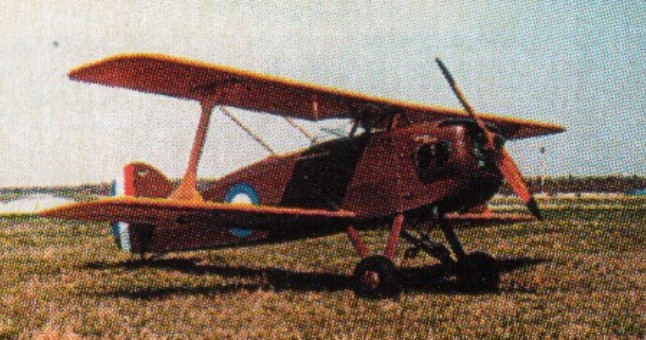
Wolf W-II Boredom Fighter

Don Wolf, a technical engineer at Fairchild’s Engine Division on many classified military projects and flew many different the past half century, then finally got around to designing a replica of the World War I wood-and-wire fighter types he loved as a kid. Rather than metal, he chose to build the framework of steel fittings of chrome-moly as well as tube structures for cabine, landing gear, etc. Wolf spent a year of spare time detailing Boredom Fighter after running stress analyses. First flying on 30 August 1979, the takeoff roll of 150 is spectacular, as well as its fast climb and excellent economy cruise of 100 mpg burning 3 gph of low-octane fuel.

W-II
Engine: Continental, 65 hp
Wing span: 20 ft
Wing area: 100 sq.ft
Length: 15.7 ft
Height: 6ft
Weight empty: 473 lbs
Gross: 770 lbs
Fuel cap: 15 USG
Speed max: 120 mph
Cruise: 110 mph
Range: 440 sm
Stall: 42 mph
ROC: 1200 fpm
Take-off dist: 150 ft
Landing dist: 350 ft
Service ceiling: 16,000 ft
HP range: 65-75
Seats: 1
Landing gear: tailwheel

Wojcicli Pulse

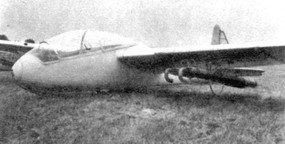
Stanislav Wojcicki designed in 1956 a pulse-jet giving about 10 kg of thrust. Four of these pulso were installed on a flying test bed, a two-seater glider Bocian. They were installed in pairs under the wings. In 1955, S.Wojcicki had also developed more powerful versions of 20, 40 and 70 Kgp.

The Bocian included an accelerometer for measuring horizontal accelerations.

The pulse was tested in two stages: first a 10 kg pulse, that start could only be performed in flight, then a group of four 8 kg pulse, allowing the autonomous takeoff of the Bocian.

These pulses had a consumption of 2 kg / kgf / h, a weight of 6 kg and a length of 2.80 m.

Witzig-Liore-Dutilleul No.1

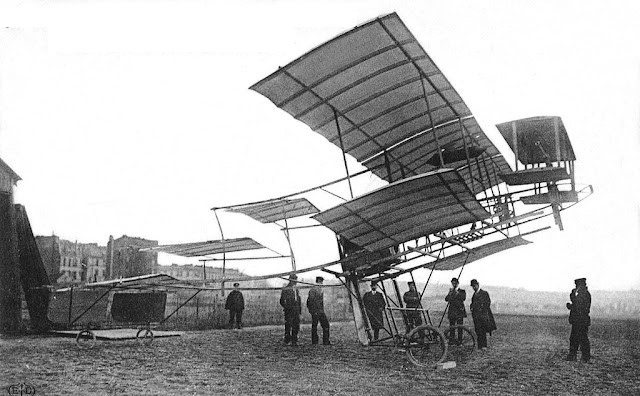
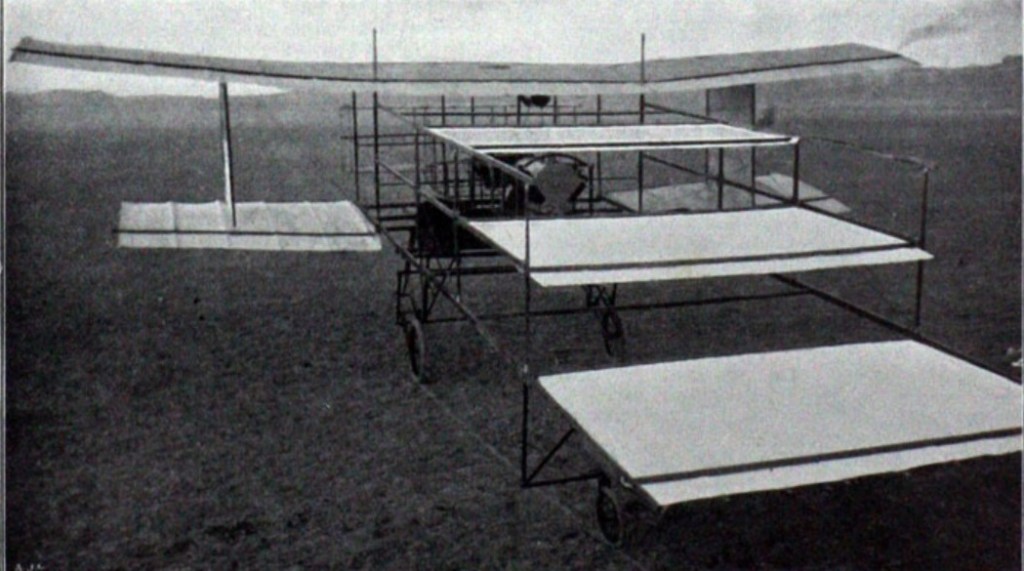
One of the first revisions of the 1909 Witzig-Liore-Dutilleul No 1, with the wheels set too far forward, resulting in the distortion of the whole airframe.

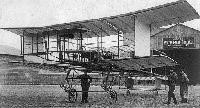
The final version of the WLD 1, with the wheels safely back supporting the engine.

A Witzig-Liore-Dutilleul biplane with a unique wing platform, and 50 horsepower engine.

During its test flight period, it saw several modifications, sometimes even rather drastic, without much improvement to its ‘flight’ characteristics.

Engine: 50 hp Renault
Wing span: 8 m
Length: 12 m
Total wing surface: 50 sq.m
Max. weight: 550 kg

Wittman Big X

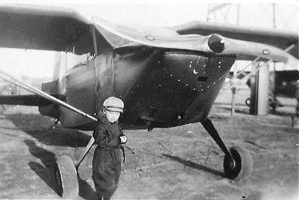
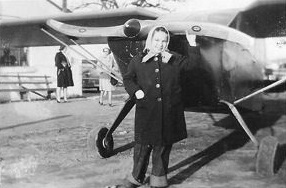
On a cross-country fuel stop at Hagerstown, Maryland with Wittman’s design, the Buttercup, Fairchild engineers expressed an interest in the design and even entered in negotiations for possible production of the aircraft. With the onset of WWII, production plans were shelved, but Fairchild contacted Wittman and proposed that a four-seat version would be marketable. Wittman designed the four-place “Big X” soon afterward, which first flew on 6 January 1945.

The Big X was steel tube fuselage with fabric covering and all-wood wings. The original Big X featured a 130 hp Franklin 6AC engine, later upgraded to a 150 hp 6A4 in 1950.

Big X was used as a companion plane and baggage hauler during Wittman’s years as an air racer. When Fairchild did not follow up on production offers, Wittman was contacted by Cessna in Wichita, Kansas, to demonstrate the lightweight and strong spring steel landing gear of the Big X. Cessna bought the plane and its production rights in order to use the gear on its new Cessna 195 taildragger. The Big X was rebuilt in 1962 with variable-camber wing and full-span flaps. Wittman later produced an updated version in a two-place configuration called the Wittman Tailwind that became a popular homebuilt aircraft.

The original aircraft (the ony Big X built) was rebuilt by Forrest Lovley in 1980.

Wittman Big X
Engine: 1 × Franklin 6A4-150-B3, 150 hp (110 kW)
Length: 24 ft 10 in (7.57 m)
Wingspan: 29 ft (8.8 m)
Empty weight: 1,150 lb (522 kg)
Gross weight: 2,200 lb (998 kg)
Fuel capacity: 36
Cruise speed: 130 kn; 241 km/h (150 mph)
Stall speed: 48 kn; 89 km/h (55 mph)
Rate of climb: 900 ft/min (4.6 m/s)
Capacity: 4

Wittman O & O Special

Built in 1986, this was a two-seat high-wing aircraft, N41SW, which appeared like an oversize Tailwind. It was specifically designed for fast cross-country travel between Wittman’s two homes in Oshkosh and Ocala, Florida (that’s where the O & O designation came from).

It was in this aircraft that crashed on 27 April 1995 and Steve and Paula were killed.

Engine: Continental, 225hp
Cruise speed: 210 mph
Stall: 52 mph
Seats: 2