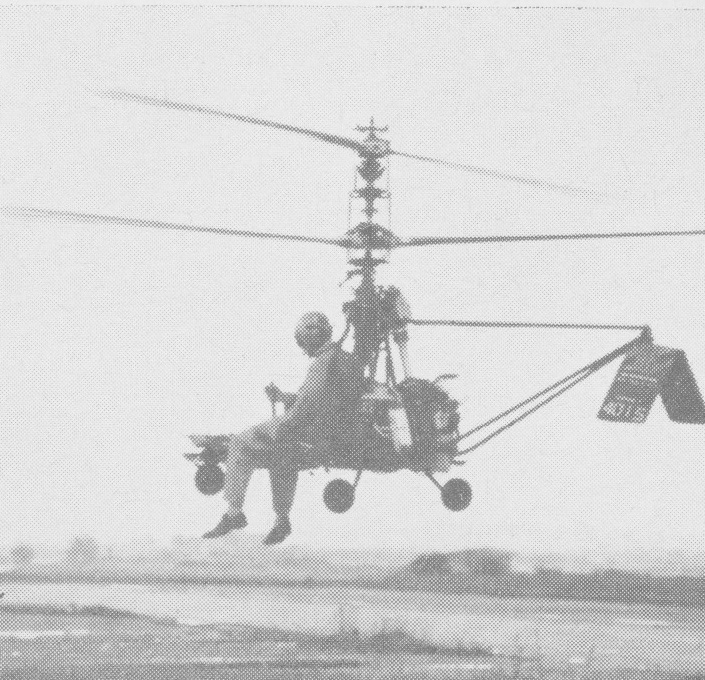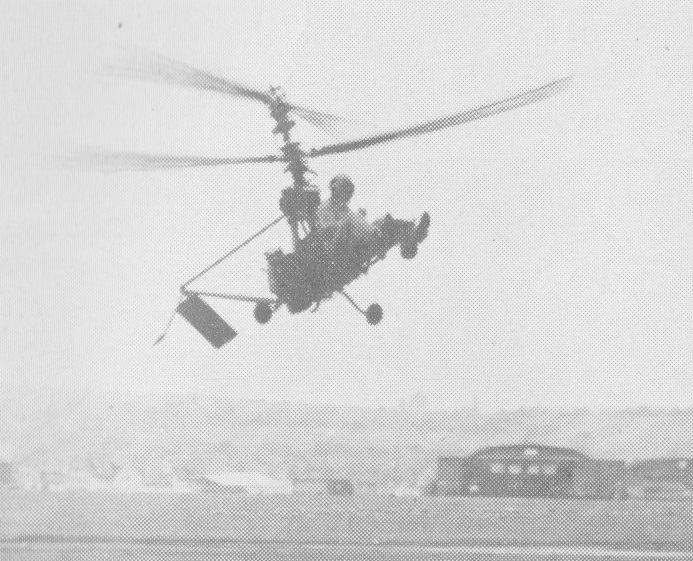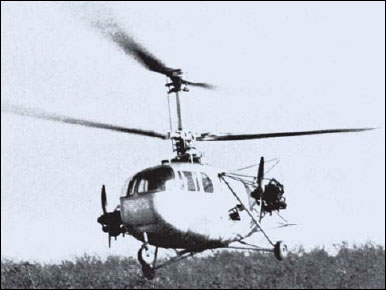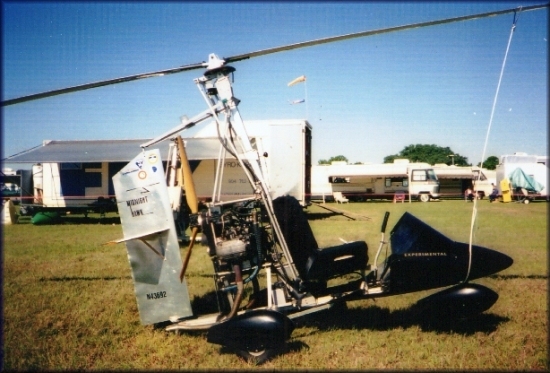
Gyro-Kopp-Ters Midnight Hawk

Gyro-Kopp-Ters can be purchased by kit or assembled and tested.
Midnight Hawk has front fairing and wheel pants. Frame of bolted 2X2 aluminum and angle, tall tail. Complete kit available, also engines, gauges, reduction drive, t-shirt. Free info package.

Kit
Midnight Hawk 2001: $8500
Kit: $9,500 in 2009.
Kit: $18,500 in Augusr 2020

Assembled
Midnight Hawk 2001: $9500

Single-seat partially-enclosed autogyro
Engine: EA-82, 90 hp @ 4800 RPM, Single Point fuel injected
with 1.75:1 reduction, Gates Polychain
Propeller: Precision 60″, 3-blade, ground adjustable, Rotax
bolt pattern
Rotor Blades: 26′ X 7″ Dragon Wings
Specifications:
Min Speed 25 mph
Cruise 50+ mph
Top Speed 80+ mph
Empty Weight 510 lbs
Useful Load 300 lbs
Width 4’11”
Height 7’11”
Length 10’2′

Engine: Subaru EA-82, 90HP @ 5200 RPM, Single Point Fuel Injected, Electric Start.
Reduction Drive: 1.67:1, Gates Polychain Belt
Rotor Blades: Dragon Wings, 25′ x 7″ (Rotor blade length may vary based on pilot weight)
Prop: Powerfin 60″, 3-Blade Composite, Ground Adjustable, Rotax Bolt Pattern.
Static Thrust: 450 LBS @ 4800 RPM, Prop Adjusted for Engine Peak Performance
Length: 12′ 4″
Width: 5′ 5″
Height: 8′ 2″
Empty Weight: 510 lb
Useful Load 300 lb
Climb: 600 FPM
Minimum Speed: 25 MPH
Cruise Speed: 50+ MPH
Top Speed: 85+ MPH
Never Exceed Speed: 120 MPH
Fuel Capacity: Max 16 Gallons; Burns: 4.0 GPH (Aluminum Seat Tank)
Standard Equipment: Hydraulic Pre-Rotator, Altimeter, Air Speed, Compass, Oil Pressure, WaterTemperature, Voltmeter, Hour Meter, Tachometer, Main Wheel Brakes, Trim Tab, & Tall Tail
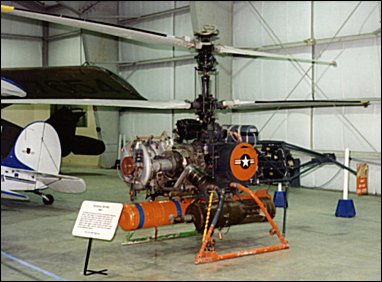
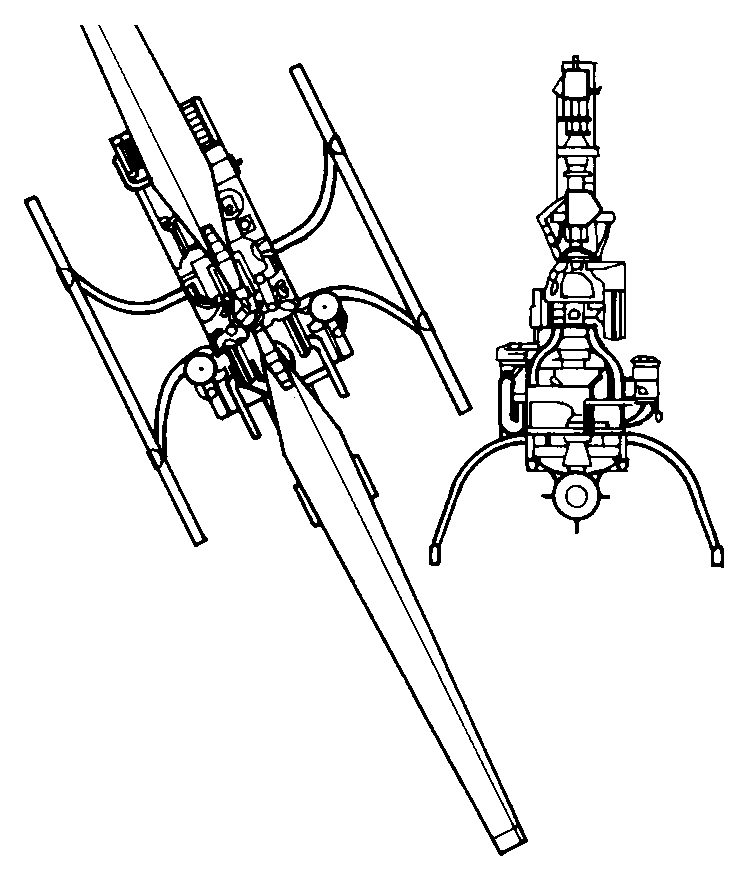
Gyrodyne QH-50

QH-50

In 1956, Gyrodyne XRON-1 experiments led to development of the QH-50 unmanned drone versions of the XRON-1 and Gyrodyne delivered over 60 production QH-50Cs for operation from Naval frigates.

QH-50C
Engine: 1 x T50-BO8A turboshaft, 243kW
Rotor diameter: 6m
Take-off weight: 1036kg
Empty weight: 524kg
Max speed: 148km/h
Ceiling: 5000m
Range: 132km
Armament: 2 x Mk-44 torpedos or 1 x Mk-46 torpedo

QH-50

Gyrodyne XRON-1 Rotorcycle

In 1956, Gyrodyne entered the competition to produce a single seat “personal” helicopter for operation off destroyer heli-decks for fleet observation, and for battlefield support, and built ten examples of the XRON-1 for the U.S. Navy. These also had a coaxial rotor layout and a 40hp Nelson H.59 engine – later replaced by a 60hp Porsche. This experiment led to development of the QH-50 unmanned drone versions and Gyrodyne delivered over 60 production QH-50Cs.

The inverted V-tail assembly is for stability only. All control is achieved through the overhead rotors. A feature is tip brakes mounted on the ends of the rotor blades which provide smooth directional control.

Gallery

XRON-1
Crew: 1
Engine: 1 x Porsche 4-cylinder piston, 45kW
Take-off weight: 315kg
Payload: 105kg
Max speed: 110km/h
Service ceiling: 2000m
Range: 50-95km

Gyrodyne GCA-2

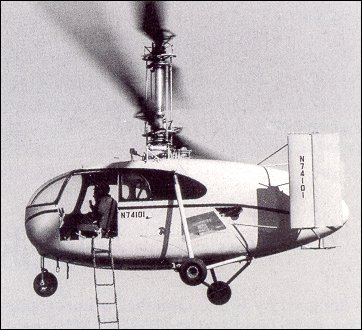
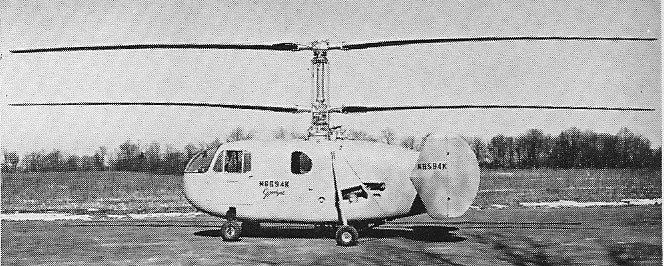
The Gyrodyne Company of America was established by Peter J. Papadakos in 1946. Gyrodyne acquired rights to the five-seat Helicopters Inc. (Bendix) Model J and developed this as the Gyrodyne GCA-2 (N74101). The GCA-2, an all-metal helicopter, had a coaxial twin rotor layout, with a five-seat cabin and a rounded fuselage with twin fins. It was subsequently modified to become the GCA-2A “Helidyne”, with twin 100hp Continental auxiliary engines mounted externally on strutted outriggers to give additional forward speed. It flew in this form on 30 November 1949.

Gyrodyne GCA-2C

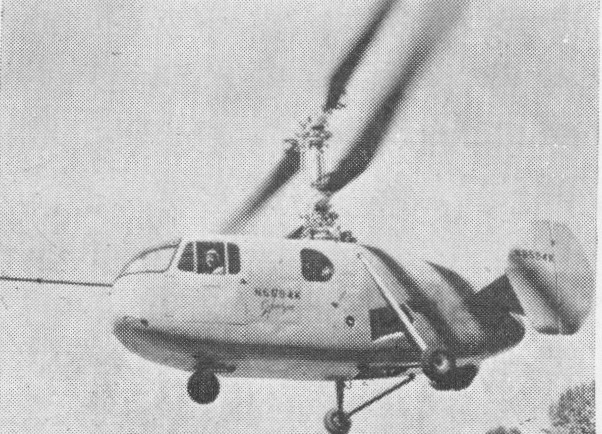
A further development of the GCA-2, serial number N6594K, first flew on April 25, 1952 piloted by Jim Ryan as the GCA-2C. Convertible to an ambulance with three litters.

G.C.A.2C

GCA-2C
Engine: 1 x P&W R-985-134, 450hp
Rotors: 2x 2 blade co-axial
Rotor diameter: 14.64m / 48 ft
Height: 14 ft 4 in
Fuselage length: 21 ft 6.5 in
Empty weight: 3800 lb
Loaded weight: 5,750 lb
Max. speed: 140km/h / 87 mph
Cruising speed: 110km/h / 70 mph
ROC: 1030 fpm
Ceiling: 9,200 ft
Typical range: 250 miles at 69 mph with full load
Number of seats: 6-8