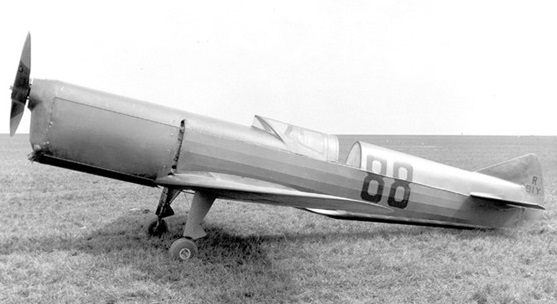
The Haines H-3 Mystery Ship (sometimes called the Special or Firefly) was designed and flown by Frank Haines in the 1937 Greve Trophy Races. The race was ten laps of a ten-mile course, with a $15,000 purse. The Haines H-3 was sixth and dead last.
Haines was killed in the H-3 on 3 December of 1937 in Miami as the race began. At virtually the same moment (but not a related incident) Rudy Kling, the 1937 Thompson Trophy winner lost control of his ship and was also killed. It was thought they were both caught by the same wake turbulence or downdraft. According to newspaper articles, both aircraft were set on fire at the end of the day to get rid of the wreckage.
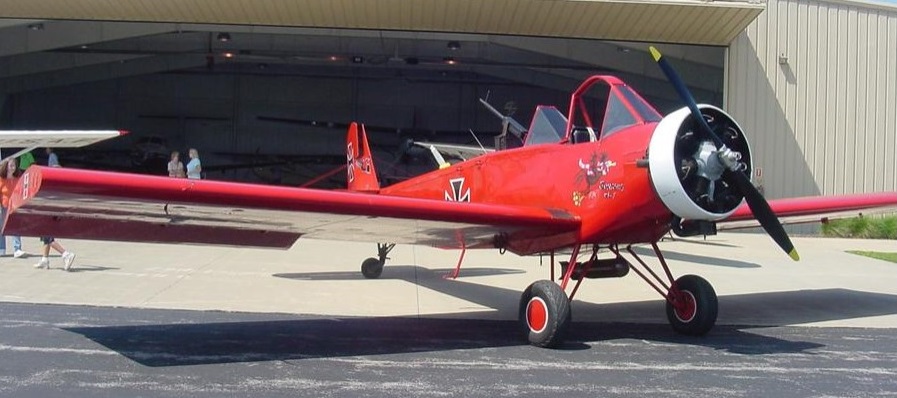
In 1986 Joseph Haig built a Junkers J8 replica in the U.S. This replica was based on a Snow S2A (s/n 1019, built in 1959). The replica was registered as N4976C in 1993 and was used on U.S. Airshows until 2005.
The replica was sold to T.Fissell Flying Service in Clarksville Texas.
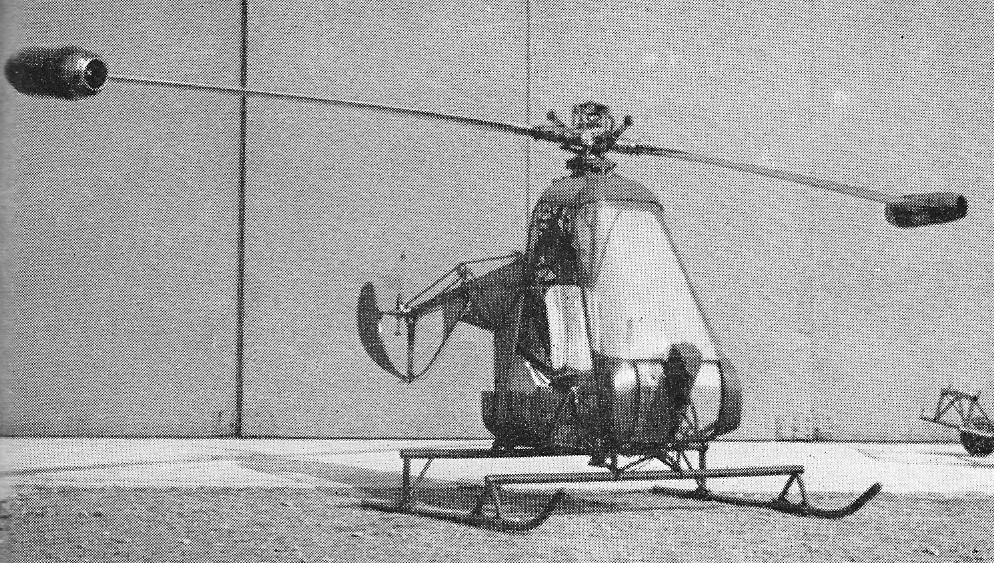
Mr. Hisao Hagiwara of Tokyo formed the Jiyu Koku Kenkyusho (Liberty Aeronautical Research Institute) in 1952 in order to develop a helicopter with a jet-driven main rotor.
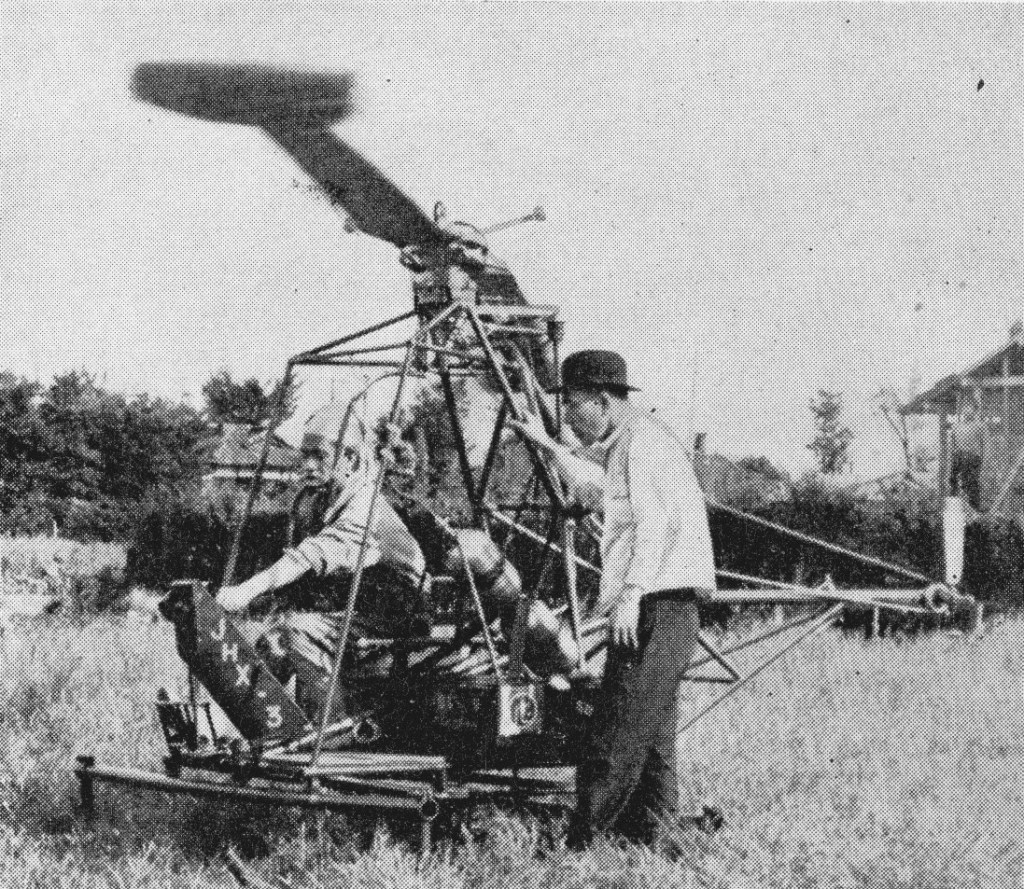
The JKK completed the design and construction of its first prototype in August, 1952. It was a light single-seat aircraft with a two-blade rotor of 7.3m diameter. Troubles with the transmission system and jet-nozzles led to its abandonment before the end of the year. No greater success was achieved with the original 100mm pulse-jet engine, designed by Mr. Takeo Kimura to power the helicopter, because it proved difficult to ignite and its noise level was unacceptable. Subsequent prototypes have had ramjet engines. Two of these prototypes, designated the JHX-2 and JHX-3, were completed in March and September, 1955 respectively. Two years later the JKK was disbanded, but Mr. Hagiwara has continued his work with technical assistance from the Civil Aeronautics Agency and the Tokyo Metropolitan Aeronautical Engineering School. The first result of this collaboration is the JHX-4 helicopter.
JHX-3
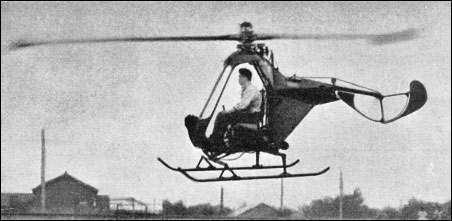
First flown in late September, 1958, the JHX-4 is a single-seat light helicopter with a two-blade main rotor which is driven by tip-mounted ramjet engines.
JHX-4
The rotor turns at 600 rpm. The JHX-4 has an endurance of 30 minutes.
Hagiwara JHX-4 Power: 2 x Hagiwara ramjet, 44 lb thrust Rotor diameter: 7.3m / 23 ft 9 in Height: 2.2m / 7 ft 2 in Length: 3.8m / 12 ft 5 in Empty weight: 396 lb Crew: 1
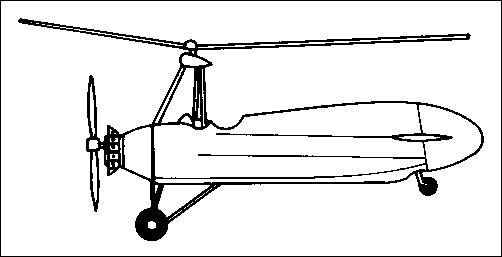
After the 1931, Hafner went to England where he designed and flew, with some success, his A.R.III gyroplane, a jump start autogyro. Raoul Hafner flew this first combined cyclic-and-collective control system on an autogiro with articulated blades in 1935. Although this machine was not capable of hovering, it marks a milestone in helicopter tecnnology.
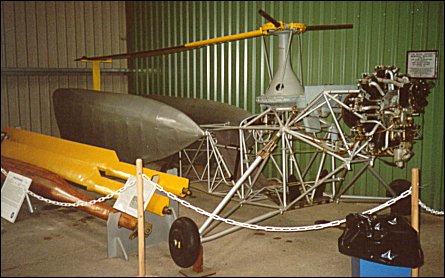
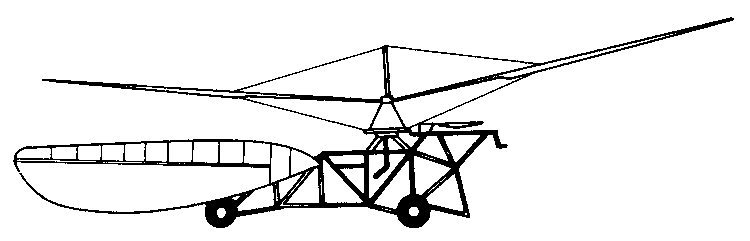
Built in 1930 at Vienna, Austria, was a second variant of the R.I, powered by a single Salmson 9 Adr radial piston engine. A single seat experimental helicopter, the initial tests in Vienna proved little more successful than those with the R.I and in 1932 the team with the R.II moved to Heston Airport in Middlesex. The R.II was under-powered to do more than just hover inches of the ground, and eventually went into storage.
The Austrian Bruno Nagler began work in the rotory-wing field in 1929 when, with Raoul Hafner, he built his RI Revoplane at Aspern Airport, near Vienna. This was a single seat machine with a rotor driven by a 45 hp engine and had a vertical torque-balancing surface acting in the rotor downwash. This machine, and also similar RII machine of 1932, was successfully tested in Great Britain.
In 1934, Nagler brought out his Heliogyro which had a 90hp Pobjoy radial air-cooled engine, a two-blade rotor and a pusher propeller. The engine could drive the rotor for hovering, when torque was balanced by a vertical surface, or the propeller could be driven for forward flight leaving the rotor to generate lift by autorotation. This single-seat aircraft was tested in Great Britain in 1937.
Helmut Haessler and Franz Villinger, engineers from the Junkers company, built a sailplane like aircraft called the Muffi which had a footcranked pusher propeller. It flew 722 m (790 yards) after an elastic aided launch and was awarded a consolation prize by Flugsport magazine for the first man powered flight of 1 km (0.6 mile) around two pylons set 400 m (437 yards) apart.
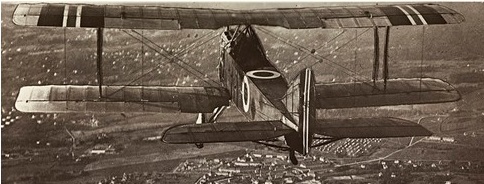
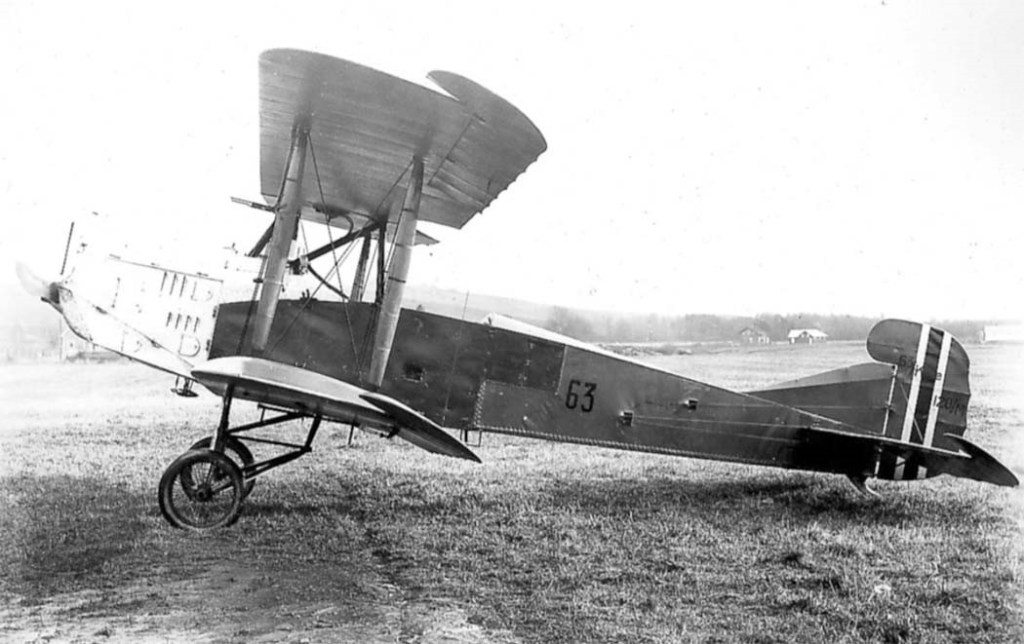
F.F.9 Kaje was the last in a series of own constructions in wood and canvas at Hærens Flyvemaskinfabrik at Kjeller. Designed and built by the Norwegian Army Air Service’s aircraft manufacturer Haerens Flyfabik, work on the FF9 Kaje trainer aircraft started in 1921. The aircraft body was designed in Norway, designed by Einar Sem-Jacobsen while the wing was licensed by German construction (Göttingen profile). The wings were made of wood paneling fabric covered.
The prototype was ready for test flight in November 1921.
Kjeller FF9 Kaje I in Bodø
The aircraft replaced older school aircraft and became a robust and reliable machine with good flight characteristics. Until June 1924, the designation was for the aircraft type F.F.9, when it was decided that the aircraft should be referred to as “Kaje”.
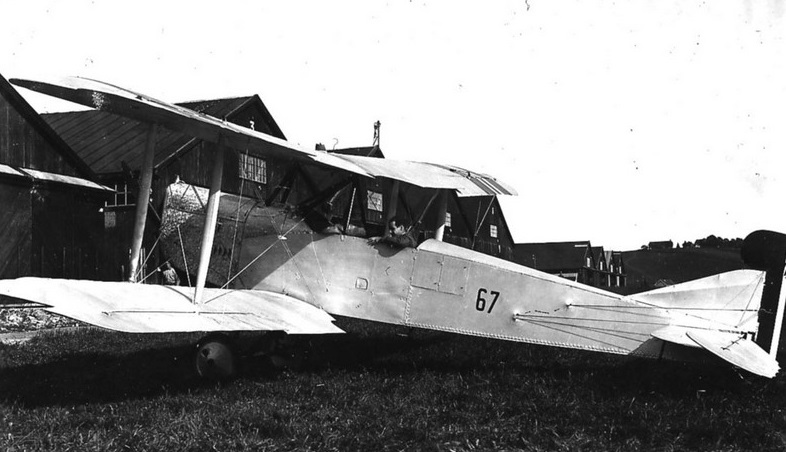
It was built in three series: the Kaje I of which ten were built in 1921 and 1922, the Kaje II of which four were built in 1925 and five Kaje III in 1926. The models differed slightly in wing profile, wingspan and rudder surfaces, based on experience with the previous model.
Although primarily used as a training plane and for reconnaissance, the aircraft could also carry arms and was tested with radio equipment.
FF.9 III
The aircraft was in use with the Norwegian Army Air Service from 1922 to 1935. A preserved example is at the Norwegian Aviation Museum in Bodø.
Kaje III Engine: 1 × Marabini 6-cyl, 89 kW (120 hp) (license built Mercedes D.II) Length: 8.4 m (27 ft 7 in) Wingspan: 9.5 m (31 ft 2 in) Height: 3.23 m Max weight: 1060 kg Maximum speed: 132 km/h (82 mph; 71 kn) Range: 375 km (233 mi; 202 nmi) Service ceiling: 3,200 m (10,500 ft) Crew: two Five built.
Kaje III Engine: 1 × Marabini 6-cyl, 89 kW (120 hp) (license built Mercedes D.II) Wing span: 10.37 m Length: 8.10 m Height: 3.30 m Max T O weight: 1080 kg Maximum speed: 135 km / h