Herzog Meteor 2nd

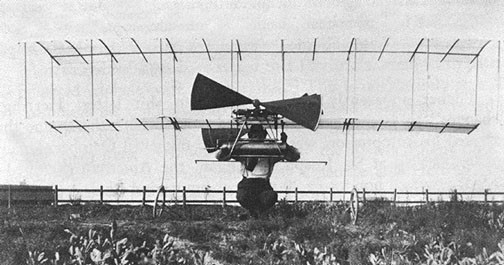
The second pusher biplane design built by the Herzog brothers of Harvard, Nebraska, USA, in 1909. It had a span of 48 ft, with a characteristic wavy W-shaped top wing and small horizontal stabilizing surfaces at the tips of the lower wings. The apparently tail-less plane had biplane elevators and rudders at the front, a three-wheel undercarriage and an aircooled engine of 21 hp of unknown make.
Herringhausen Vagabund

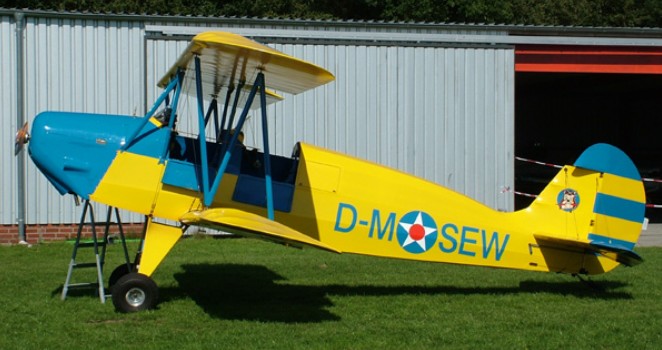
The Vagabund is a 3-axis two-seat ultralight biplane, in classic timber construction. The design of the Vagabund goes back to 1989. The open cockpit biplane is constructed using the usual materials and working procedures for wooden aircraft. The fuselage is conserved with epoxy resin and covered with polyester fabric. A high-quality lacquer finish gives it a maximum weather protection. The open cockpit biplane has a welded tubular steel chassis with one-guidable roll spur. The wooden-propeller is driven by a 80 hp, lightweight four-stroke, horizontally-opposed aircooled Jabiru 2200 engine. As power plant also the 50 hp Nissan Micra 1200 or the 80 hp Rotax 912 UL version engine can be used. The choice of the engine has its influence on the performance of the aircraft: with the Micra 1200 the cruise speed is 125km/h, with the Rotax 912 125 km/h.

Herring-Burgess Model A / Flying Fish

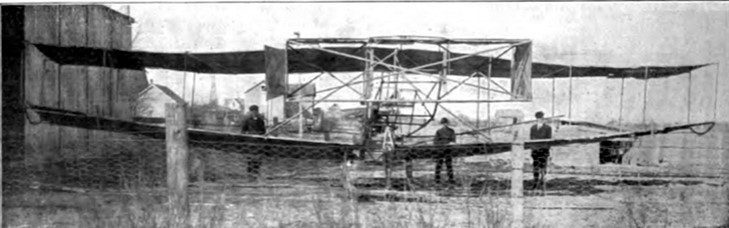
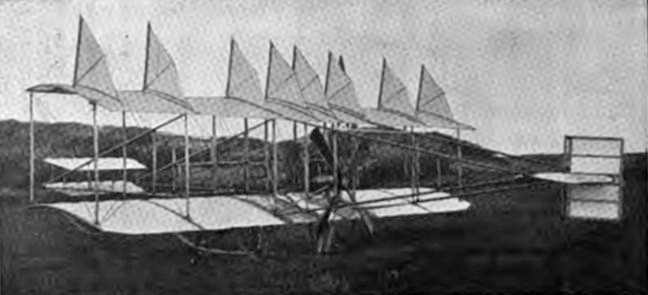
A pusher biplane with a central skid and skids under each wingtip, powered by a Curtiss 25 hp 4-cyl water-cooled engine with a four bladed propeller. Six vertical fins were arranged on the upper wing for lateral stability.

The machine was displayed at the Boston Aerial Exposition on 20-26 February, 1910.

It was first flown on 28 February 1910 by Augustus Herring on the ice at Chebacco Lake, Hamilton, MA.

It was ordered by the carousel and amusement park manufacturer Charles W. Parker of Abilene and Leavenworth Kansas. It was the first of many Burgess aeroplanes, it made the first flight in New England and was the first commercial aeroplane built and sold in New England.

Herrick Convertoplane

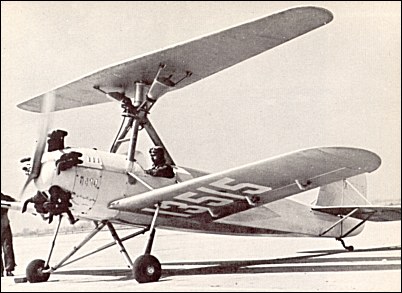
The Convertoplane, cross between an airplane and a rotorplane, was developed in the United States in the 1930s by the Gerard P. Herrick, aided by Ralph H. McClarren of Philadelphia’s Franklin Institute. Basically, the design was a biplane with an upper wing that could function either as a lifting surface or as a two-bladed teetering rotor.
Flown by test pilot George Townsend in 1937, the aircraft demonstrated successful conversions in flight from a biplane to a rotorplane. Herrick was striving for an aircraft that could achieve speed as an airplane while possessing ability to convert to rotating-wing configuration for landing and take-off in tight areas.

Hergt Monoplane

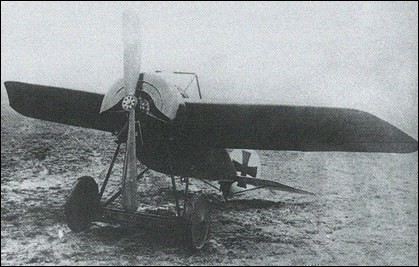
The Hergt Monoplane was designed and built at F.E.A. 1 Altenburg as a private venture by F. D. Hergt during 1918 and flown by Mario Scherff.

The prototype had room for one pilot, and ply-skinned wings and fuselage.

Engine: Gnome 80 h.p.
Wingspan: 6.0 m. (19 ft. 8 1/4 in.)
Length: 5.2 m. (17 ft. 0 3/4 in.)
Speed: 125 km.hr. (78 m.p.h.)
Armament: none