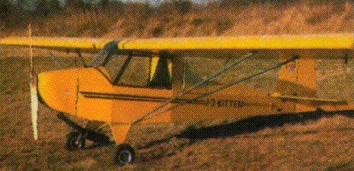
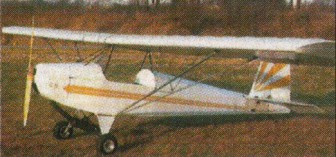
A single-seat parasol-wing LSA microlight first flown in 1986. Fitted with detachable wings. The kit price in 1997 was US$6884 and plans US$150. In 2007 the kit price was US$9993 and plans US$250.
Speed max: 63 mph. Cruise: 59 mph. Range: 120 sm. Stall: 24 mph. ROC: 800 fpm. Take-off dist: 50 ft. Landing dist: 200 ft. Service ceiling: 12,000 ft. Engine: Rotax 277, 28 hp. HP range: 28-40. Fuel cap: 5 USG. Weight empty: 240 lbs. Gross: 500 lbs. Height: 5.25 ft. Length: 16.33 ft. Wing span: 28 ft. Wing area: 112 sq.ft. Seats: 1. Landing gear: tail wheel. Cockpit width: 23.6 in
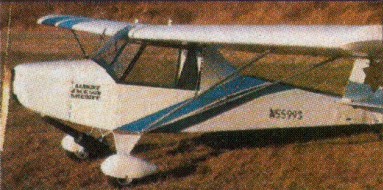
A single-seat, LSA legal high-wing microlight. With detachable wings, the J-3 Kitten first flew in 1986. The kit price in 1997 was US$6684 and plans US$100. By 2007 the kit price was US$10,893.
Speed max: 63 mph. Cruise: 59 mph. Range: 120-140 sm. Stall: 24 mph. ROC: 800 fpm. Take-off dist: 50 ft. Landing dist: 200 ft. Service ceiling: 12,000 ft. Engine: Rotax 277, 28 hp. HP range: 28-40. Fuel cap: 5 USG. Weight empty: 254 lbs. Gross: 500 lbs. Height: 5.25 ft. Length: 16.3 ft. Wing span: 30 ft. Wing area: 120 sq.ft. Seats: 1. Landing gear: tail wheel. Cockpit width: 23.6 in
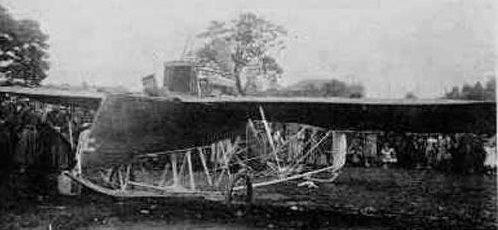
The Hino No.2 Monoplane of 1911 was designed by the Japanese captains Hino and Tokugawa. Its inline 4-cylinder pusher engine was by their own design and developed between 18 and 30 hp.
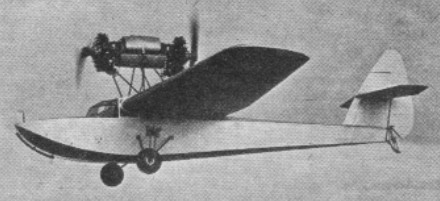
The Hinkler Ibis was a two-seat all wooden monoplane powered by two Salmson AD.9 radials mounted in an over-fuselage nacelle, one pusher, one tractor, Designed and built by H.J.Hinkler and R.H.Bound at Hamble in 1929. Construction of the wing was sub-contracted to Hendy Aircraft Ltd at Shoreham.
It was flown for the first time in May 1930 at Hamble. Registration was G-AAIS c/n 1.
It was put into store in Southampton until 1953 when it was displayed statically for a brief period until it was broken up at Lee-on-Solent in 1959.
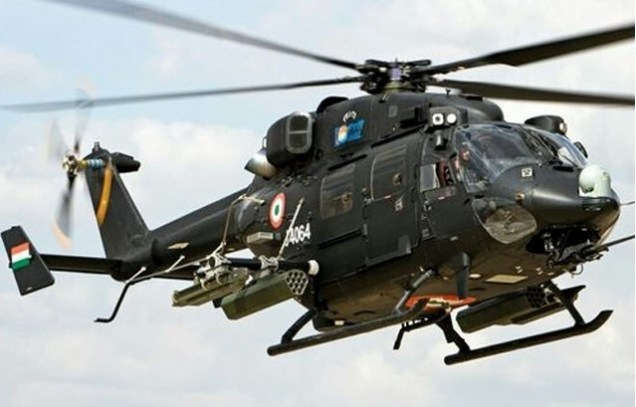
The indigenously designed and developed Advanced Light Helicopter is a twin-engine, multi-role, multi-new generation helicopter in the 5.8-tonne weight class. The multi role helicopter is powered by two Shakti Engines.
The features that are unique to LCH are sleek and narrow fuselage, tri-cycle crashworthy landing gear, crashworthy and self-sealing fuel tanks, armour protection and low visibility features which makes the helicopter lethal, agile and survivable.
Indigenously-developed weapon system integrated helicopter Rudra was to make its maiden appearance in the Republic Day parade on Rajpath on January 26 2018.
It is equipped with a 20 mm Turret Gun and 70 mm Rocket System and has a facility for air to air missile system.
The LCH is fitted with Self Protection Suite consisting of Radar/Laser Missile warning systems and Countermeasures dispensing system.
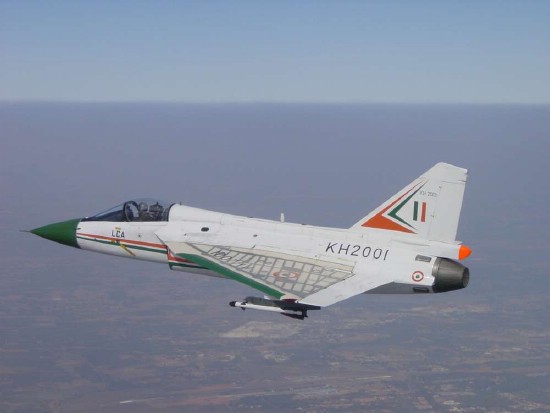
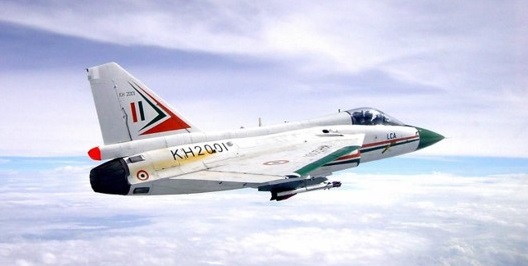
In 1983 the LCA, or Tejas as it was named, was conceived by the Indian Air Force to carry out frontline tactical missions and replace Indian Air Force MiG-21 jets. The first LCA prototype (Technology Demonstrator TD-1) rolled out on 17 November 1995. With the first flight of its Light Combat Aircraft (LCA) put back nearly four years after its roll-out, the program appears to be plagued with difficulties and delays. The prototype eventually first flew on 4 January 2001. The first flight of the LCA had to be postponed until Aeronautical Development Establishment (ADE) finished development of a new flight control system and system integration test were completed. After again much delay the second prototype (TD-2) made its maiden flight on 6 June 2002, also powered by the GE 404 engine.
The Hindustan Light Combat Aircraft (LCA) had two aircraft flying by the 2003 Paris Air Show and had complet¬ed some 80 flights with no major changes required to the airframe. Five prototypes were planned and eight limited series pro¬duction aircraft were to be delivered in 2006 for evaluation by the Indian Air Force. Despite major delays, the technology demonstration phase of the project has been completed and construction of further prototypes is underway. The first, Prototype Vehicle PV-1, joined the program in 2003. The fourth LCA, PV-2, was completed in 2005 and was first flown on 1 December 2005.
Built by partners Aeronautical Development Agency (ADA) and Hindustan Aeronautics Limited (HAL), the LCA design features digital fly-by-wire control system, multi-mode model, digital ‘glass’ cockpit, hands on throttle and stick (HOTAS), FLIR, and static instability. The aircraft has a delta wing design without any tailplanes or foreplanes and a total of seven external weapon stations. The two LCA technology demonstrators were powered by the US supplied General Electric GE F404-F2J3 turbofan. But because of the embargo placed in 1998 by the USA on the engine as a result of the nuclear tests conducted by India in 1998, the production aircraft were planned to be fitted with the Indian Kaveri GTX-35VS turbofan. The embargo included the Lockheed-Martin fly-by-wire flight control system. In May 2005, the Tejas flight, now consisting of TD-1, TD-2 and the first Prototype Vehicle PV-1, completed 400 sorties. A fourth prototype, PV-2, was scheduled to make its first flight in June 2005. It has reduced structural weight and new avionics and cockpit displays.
The Hindustan Intermediate Jet Trainer (UT or WT 36) took 18 months from metal cutting to roll out with a first flight three months later, on March 7, 2003.
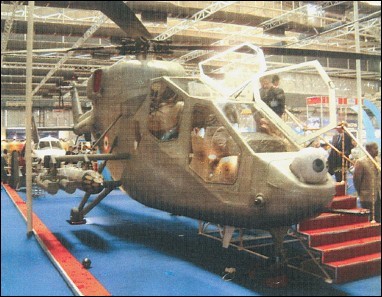
An attack helicopter derivative of Dhruv, displayed in model form at the Paris Air Show, June 2001 as LAH (light attack helicopter) proposal, but was restyled LCH, signifying light combat.
The original slimmed-down ‘gunship’ fuselage was discarded and the basic Dhruv airframc retained except for the forward fuselage modified to tandem crew seating. Officially launched on 5 February 2003, the LCH replaced the earlier LOH programme, which was met by a foreign design. The LCH was scheduled to fly in 2005, and intended to augment, and eventually replace Indian Air Force Mi-35 fleet.
The design features a four-blade hingeless main rotor with swept blade tips. Intended for anti-tank, close air support, air-to-air combat and scout roles, extensive use of composites is to reduce radar signature.
Landing gear is a non-retractable tricycle type and power is by two 895kW Turbomeca/HAL TM333-2C2 Ardiden 1H turboshafts (Indian name Shakii) with FADEC, derated to 798kW.
Systems include a four-axis autostabilisation system; anti-resonance isolation system (ARIS).
Armament is an undernose 20mm cannon and stub-wing hardpoints for ASMs, AAMs or rocket launchers.
HAL LCH Engines: two 895kW Turbomeca/HAL TM333-2C2 Ardiden 1H turboshafts Main rotor diameter: 13.20m Length overall, rotors turning: 15.86m Fuselage length: 13.94m Height to top of rotor head: 5.27m Stub-wing span: 4.43m Max. take-off weight: 5,500kg Empty weight: 3,243kg Never-exceed speed: 330km/h Max cruising speed: 280km/h Service ceiling: 6,500m Range with standard fuel: 700km