Wright Mk.I

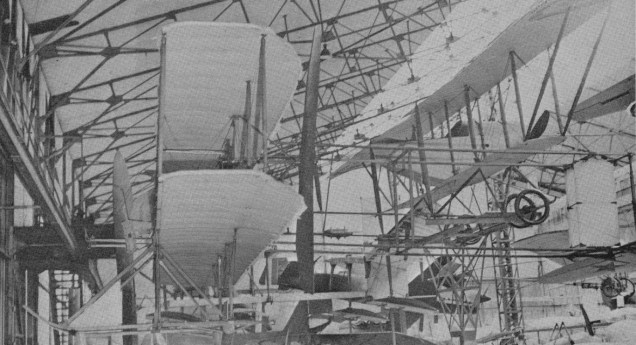
Peter Wright started the construction of a man powered aircraft in January 1971 at Melton Mowbray, UK. Similar to the ‘Puffin’ but differing in having a three unit undercarriage and swept forward wings.

The Mk.I first flew in February 1972 for 120 yards. After several flights it was decided a better test site was needed and that a Mk.II should be built.

Mk.I
Aspect ratio: 10:1

Wright WP-1

The sole Wright WP-1, A6748, was based on a Swiss-built Dornier Falke, imported by Wright Co. Built in 1923, it was all-metal, with an unbraced parasol wing, with a single-place open cockpit.

Engine: Wright-Hisso H-3, 325hp
Wingspan: 32’11”
Length: 24’6″
Max speed: 162 mph
Cruise speed: 142 mph
Ceiling: 19,400 ft
Seats: 1

Wright R Roadster / High Flyer / Baby Wright / Baby Grand

Wright R Roadster

The 1910 two-place open cockpit Wright R Roadster was powered by a 30hp Wright 4 with two pusher props.

Similar 8-cylinder models were known as High Flyer and Baby Wright.

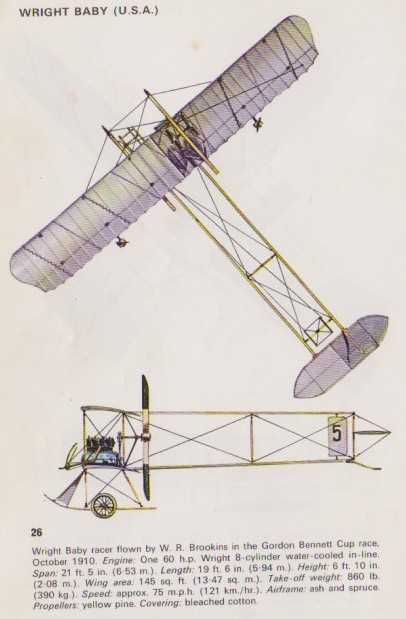
The Baby Grand, which was single place, with a 60hp Wright driving two pusher props, had no front elevator.

Wright Baby Grand 1910

Models were also displayed at the 1917 Pan-Pacific Aero Exposition (New York) with a 75hp Wright and a 150hp Hisso.

A Wright Baby flew more than 3100 miles around the United States.

One Baby Wright, constructed in France by the Society Ariel, a Wright licensee, was discovered in an old building at Villacoublay being torn down. It is now in the Musee de l’Air in Paris.

Baby Wright at Musee de l’Air in Paris

R Roadster
Engine: 30hp Wright 4
Props: two pusher
Wingspan: 22’0″
Length: 19’6″
Seats: 2

Baby Grand
Engine: 60hp Wright
Props: two pusher
Wingspan: 26’6″
Length: 19’6″
Speed: 75 mph
Seats: 1

Baby Wright
Wing span: 26.24 ft
Length: 23.62 ft

Wright NW-1 / NW-2

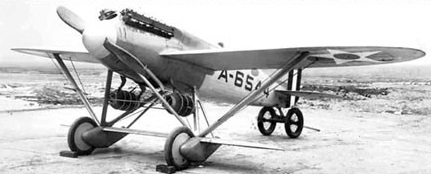
Wright NW-1 A-6543

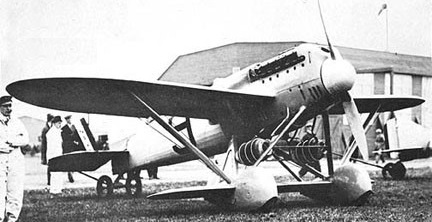
The 1922 Wright NW was a Pulitzer racer with a 650hp Packard T-2 engine. Two were built, as NW-1 sesqui-wing monoplanes, A6543 and A6544.

Wright NW-1 A6544

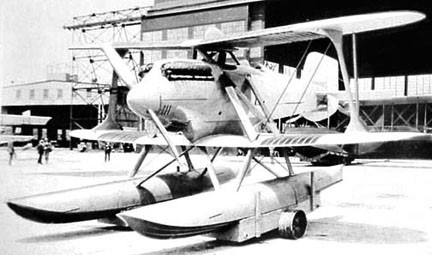
The first crash-landed in Lake St Clair and the second was only used as a test-bed for the 750hp Wright Tornado engine. It was then modified as a float equipped biplane NW-2 for the 1923 Schneider Cup race.

Wright NW-2 A6544

A6544 did not compete for the Schneider Cup after a shattered propeller blade tore its float during trail runs.

Wright Gipsy

The Wright Gipsy features nickel cast iron cylinders. Detachable aluminium alloy cylinder heads have on intake and one exhausr each, and extruded bronze valve seats shrunk into the heads.

The one piece crankshaft has 5 bearings. Tulip valves were of special valve steel. Pistons are aluminium alloy, slipper type. Hot spot effect secured by passing that portion of the intake manifold immediately above the carburettor through an exhaust manifold jacket.

Equipment included was a cylinder cowling, exhaust manifold, ignition switch, tool kit and instruction book.

Accessories available at extra cost were Eclipse hand starter, propeller hub, flange and bolt.

Type: 4 cylinder, air cooled, vertical inline
Military Rating: 85 hp at 1900 rpm
Commercial Rating: 100 hp at 2100 rpm
Displacement: 318 cu.in
Compression ratio: 5-1
Bore: 4 1/2 in
Stroke: 5 in
Length incl. hub: 45 1/4 in
Width btwn mounts: 11 11/16 in
Weight: 285 lb
Fuel consumption: not more than .55 lb/hp/hr
Oil consumption: not more than .010 lb/hp/hr
Lubrication: Gear pump pressure (no scavenger)
Ignition: Scintilla, Dual, PN-4-d, Impulse start on one
Carburation: Stromberg Type NA-R-4A
Spark plugs: 2 per cylinder
Price: $1600

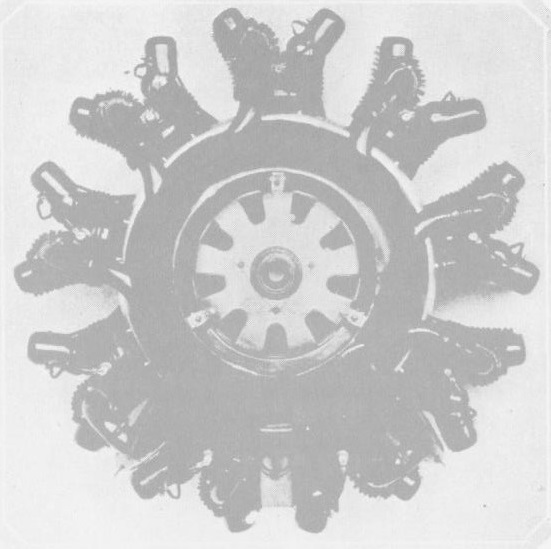
Wright R-1750 Cyclone 9

The Wright Aeronautical Corporation was formed in 1919, initially to develop Hispano-Suiza engines under licence. The Corporation’s first indigenous design, the R1, was also the first successful high-powered radial in the USA.

A new design was launched in 1926, known as the R-1750 Cyclone. This was a nine-cylinder radial with a displacement of 1750 cu in and internally cooled exhaust valves. It was type-tested at 500 hp in 1927.

The cylinders are composed of a steel barrel over which an aluminium alloy head is screwed and shrunk. Intake ports are at the rear with exhaust ports on the forward side of the cylinders.

The crankcase assembly is composd of five major castings of aluminium alloy. The cam follower ring carrying the tappet guides is cast integral with the main section of the crankcase.

The crankshaft is a two piece single throw with a one piece master rod and “I” section articulated rods.

Aluminium alloy pistons, cross ribbed on the under side of the head, and fitted with full floating hollow pins.

Tulip shaped valves; solid stem inlet valve and hollow stem exhaust valve; the exhaust valve containing a special salt compound which improves valve cooling and prevents warping.

Equipment supplied was air cleaner and heater, nose cowling, complete exhaust manifold, priming pump, ignition switch, tool kit, external oil filter, and instruction book.

Accessories available at extra cost were Ecllipse hand inertia starter, Eclipse generator, Eclipse generator control box, standard steel propeller hub, fuel pump, Eclipse combination hand and electric inertia starter, Eclipse hand starter with booster magneto, Eclipse electric inertia starter, propeller hub for wooden propeller, metal propeller, and hubs for two or three blade props.

Type: 9 cylinder air cooled radial
Military Rating: 525 hp at 1900 rpm
Commercial Rating: 525 hp at 1900 rpm
Displacement: 1750 cu.in
Compression ratio: 5-1
Bore: 6 in
Stroke: 6 7/8 in
Length: 39 1/4 in
Diameter: 53 15/16 in
Weight: 770 lb
Fuel consumption: not more than .60 lb/hp/hr
Oil consumption: not more than .035 lb/hp/hr
Lubrication: Pressure pumps
Ignition: Scintilla Dual
Carburation: Stromberg, double barrel
Spark plugs: 2 per cylinder
Price: $8600
Price with 2-1 reduction, no cowl or exhaust manifold: $10,000
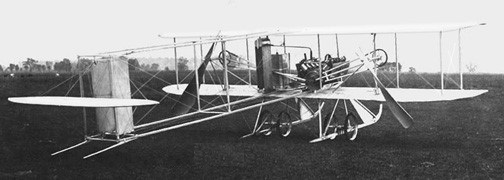
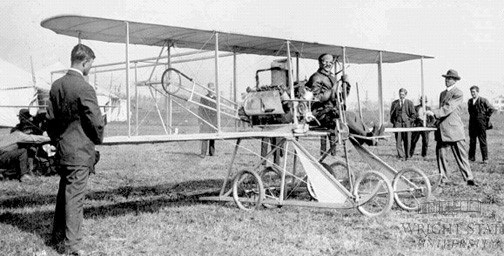
Wright R1

The Wright Aeronautical Corporation was formed in 1919, initially to develop Hispano-Suiza engines under licence. The Corporation’s first indigenous design, the R1, was also the first successful high-powered radial in the USA. Funded by contracts from the US Navy for new air-cooled radials, Wright started a new design (initially called the P2) in 1924. The resignation of Frederick B. Rentschler to join Pratt & Whitney, along with several key engineering personnel, seriously affected the development of the P2 and it did not go into production.