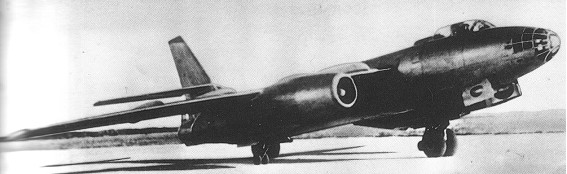
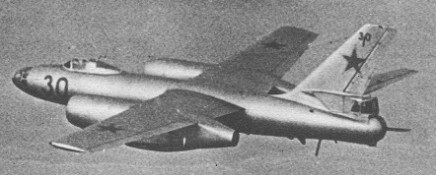
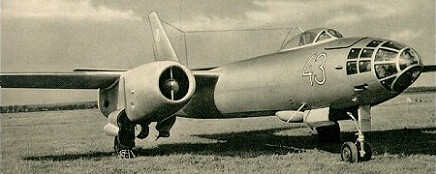
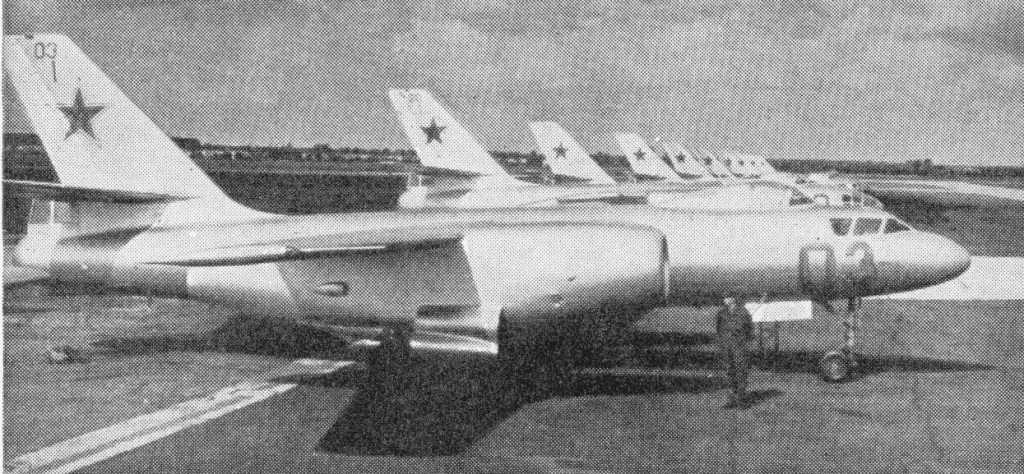
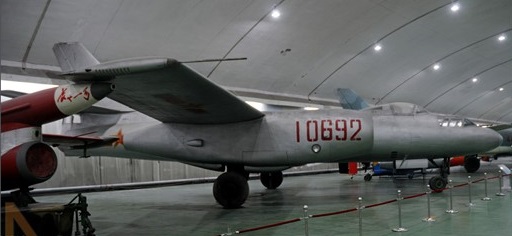
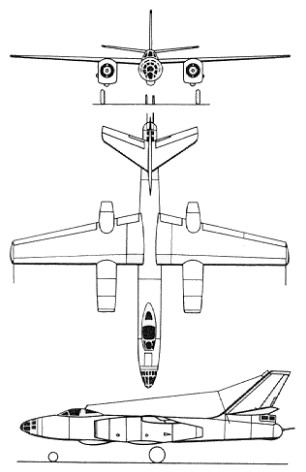
After the Il-30, the Ilyushin design bureau then moved to a scaled-up version of the Il-28 as the Il-46 of 1954 with an uprated version of the Il-30’s powerplant, but this too failed to secure any production commitment. The bureau then moved logically to a fully swept version of the Il-30 that offered transonic capability with the possibility of supersonic speed in a shallow dive, the Il-54.
Engines: 2 x Lyulka AL-5 turbojet Maximum take off weight: 42,000 kg
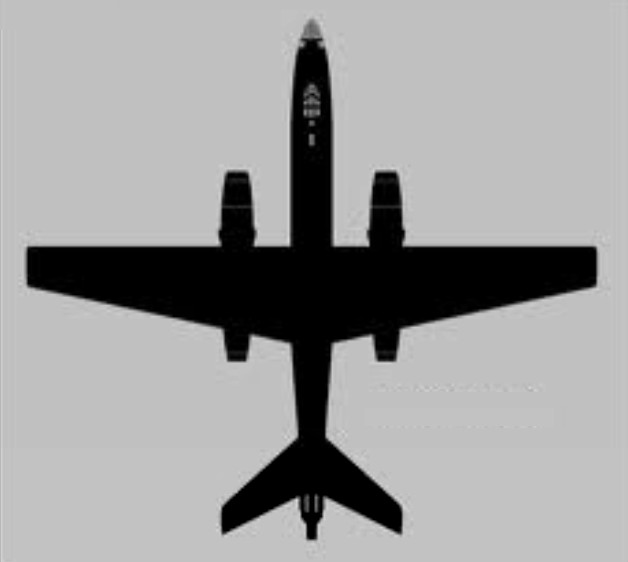
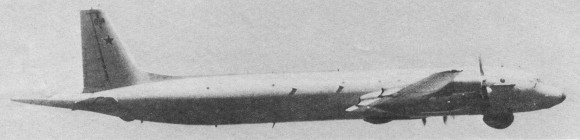
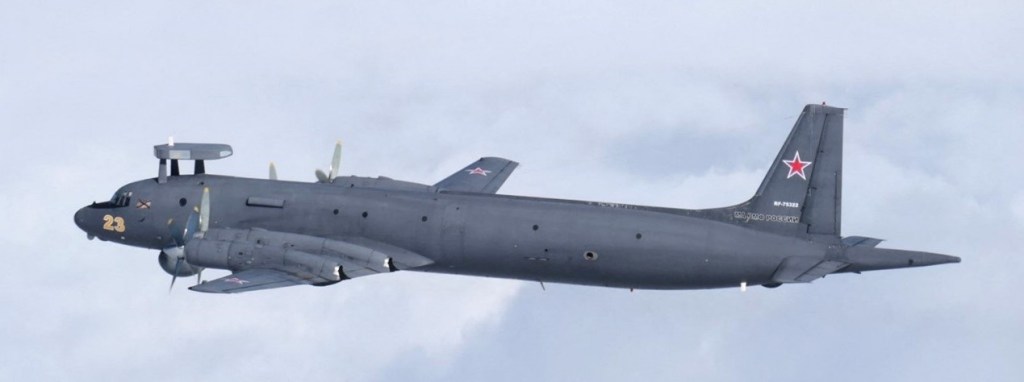
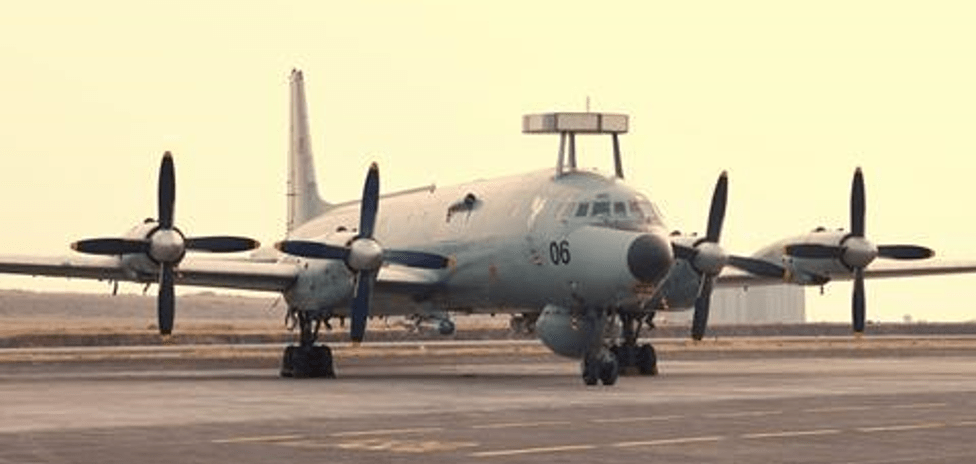
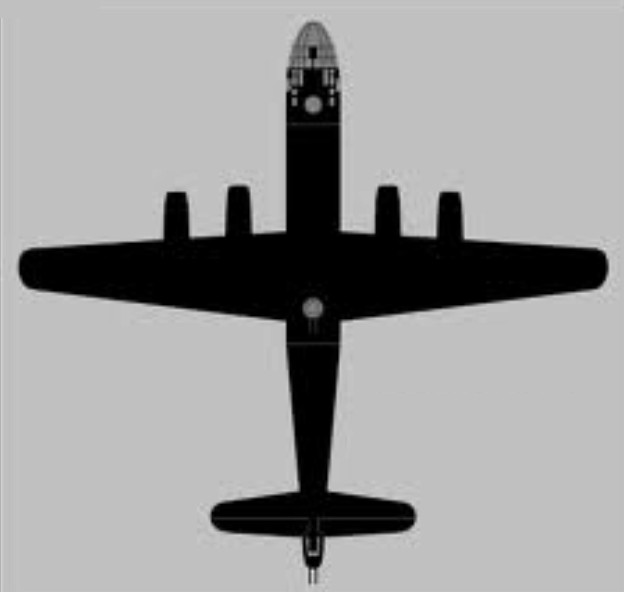
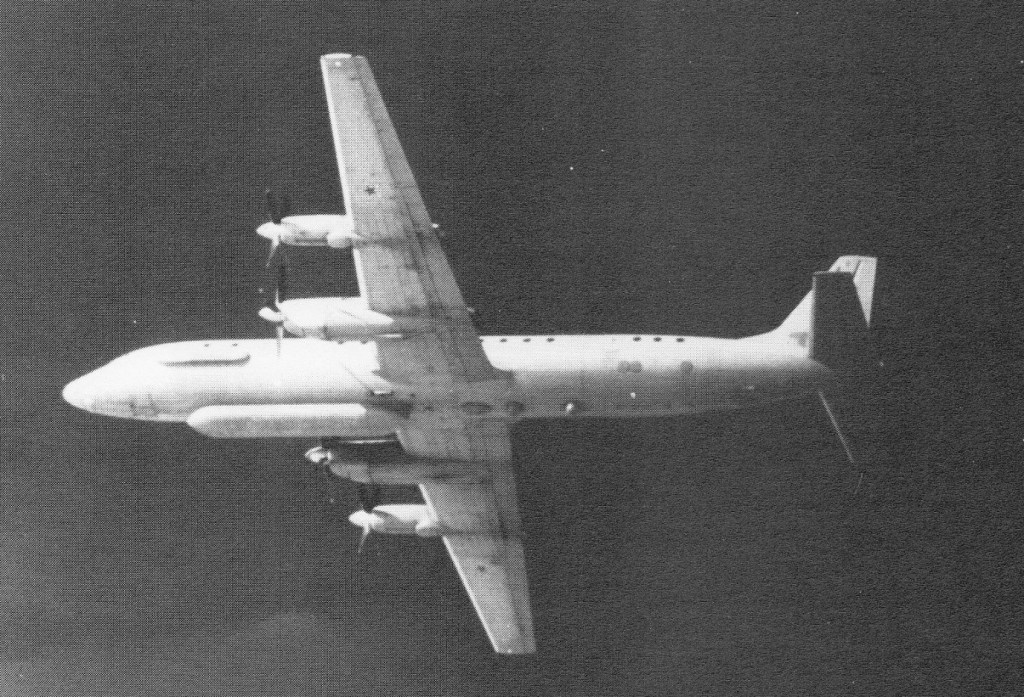
First disclosured in 1974, the Soviet Naval Air Arm (AV-MF) used the Il-18 trans¬port as the basis for the considerably changed Il-38, known to NATO by the code-name of “May’. Com¬pared with the transport it has a wing moved forward and a considerably longer rear fuselage, showing the gross shift in centre of gravity resulting from the changed role. The rear fuselage of the Il-38 contains only sensors, sonobuoy launchers of several kinds and a galley, with the main tactical compartment just behind and above the wing, with a probable tactical crew of eight. Most of the heavy stores and consoles are ahead of the wing, together with the search radar stinger, not a heavy it in the tail.
Il-38
Il-38 has been a standard SovNavAir open-ocean maritime surveillance aircraft since entering service in 1970, with some 60 in inventory mid-1987. NATO code name ‘May’. One of two current service military derivatives of commercial Il-18 (other being Il-20 Coot-A ELINT aircraft ), Il-38 has bays fore and aft of wing for sonobuoys and various attack weapons. Power is provided by four 4,250 ehp AI-20M turboprops. About 60 were believed to be in use by the Soviet naval air force. Three ex-SovNavAir operated by Indian Navy.
Some external modifications included an additional radome under the fuselage were reported by NATO as the May-B.
II-38 Type: maritime patrol and anti-submarine. Engines: 4 x Ivchenko Al-20 single-shaft turbo-props, 5,000 shp approx. Wing span 122 ft 8½ in (37.4 m) Length 129 ft 10 in (39.6 m) Height about 35 ft (10.7 m) Empty weight approx 90,000 lb (40,820 kg) Maximum loaded weight, approx 180,000 lb (81.650 kg) Maximum speed, about 450 mph (724 km/h) Maximum cruising speed, about 400 mph (644 km/h) Range with typical mission load, about 4,500 miles (7240 km) Endurance, about 15 hr. Armament: internal weapon bay.
The Il-28 was upgraded in the Il-30 of 1951 with the Lyulka AL-5 turbojet and 35 degree swept wings to produce a speed of more than 621 mph (1000 km/h), but this had not been ordered into production. The Ilyushin design bureau then moved to a scaled-up version of the Il-28 as the Il-46.
To a small extent, the Il-28 could trace its ancestry back to the first jet bomber, the German Arado Ar 234. Ilyushins first jet bomber, the Il-22, had closely resembled an enlarged Ar 234C, and several features of the German aircraft (the slim fuselage, shoulder-mounted unswept wing with underslung engines, and the large slotted flaps) were carried over into the Il-28. In December 1947, Ilyushin started development of a small, more compact bomber, trading range for speed and manoeuvrability. The pilot was seated to the bomb-aimer’s rear, above the nosewheel bay. A fighter-type canopy (the first on a Soviet bomber) provided adequate height for the pilot’s cockpit. The fuel was housed in five flexible tanks in the fuselage, forward and aft of the wing. The centre fuselage housed the bomb bay, large enough to house 12 551-lb (250-kg) FAB-250 bombs; the lower front fuselage accommodated a mapping radar and two NR-23 23-mm cannon.
The pressurized Il-K6 turret, mounting two 23-mm NR-23 cannon, was housed in the tail of the fuselage. The rear gunner was the only member of the crew without an ejection seat. The gunner doubled as the radio operator, the VHF and HF communications equipment being installed ahead of the turret.
The engines were ahead of the main wing structure, the jetpipes passed beneath the wing, and the single-wheel main landing gear units were located beneath the jetpipes.
The wings were built in upper and lower halves, which were joined together after hydraulics and other plumbing had been installed, and were built in sections to minimize the need for large production tools. The high wing eliminated the need for any complex carry-through structures around the fuselage and nacelles. Also, most of the fuselage and nacelle skins were single-curvature surfaces (much of the fuselage was an almost perfect cylinder.
A medium bomber, first flown on 8 August 1948, the Il-28 prototype flew on two RD-10 (Jumo 004 development) 2270kg thrust Klimov RD-45F turbojets, but the British Nene were substituted and, in VK-1 form, remained standard in the 10,000 or more subsequent examples.
In October 1948, the Il-28 was evaluated against the larger but similarly powered Tupolev Tu-78 in the light bomber role; the Ilyushin aircraft proved faster and more agile, and was selected as the replacement for the obsolescent Tu-2.
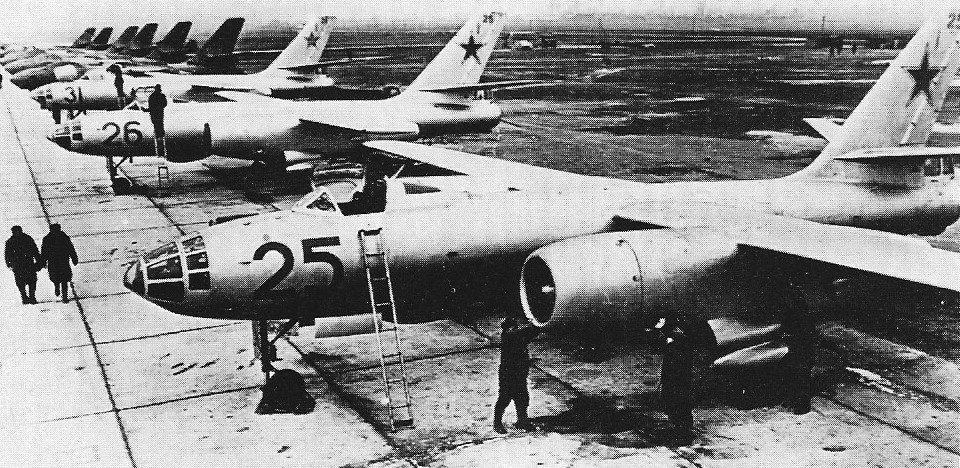
A formation of 25 pre-production Il-28s took part in the 1950 May Day Moscow fly-past, by which time large-scale production had been initiated at several factories. Series aircraft, which entered service with a large number of V-VS bomber regiments, incorporated aerodynamic refinements, Klimov VK-1 provision for detachable wingtip fuel tanks.
Preparations for large¬scale production were undertaken with great urgency, and the type entered service in September 1950. The only major change during development was the switch from the RD-45, used only in the prototype and pre-production aircraft, to the similarly sized but usefully more powerful VK-1.
The basic Il-28 remained virtually unchanged throughout its production life. The only visible alteration was the introduction of a small tail-warning radar, although the guns still had to be aimed manually. At least 3,000 were delivered from Soviet plants in 1950-60. (In the late 1950s, a few aircraft were produced by Czechoslovakia as B-228s.)
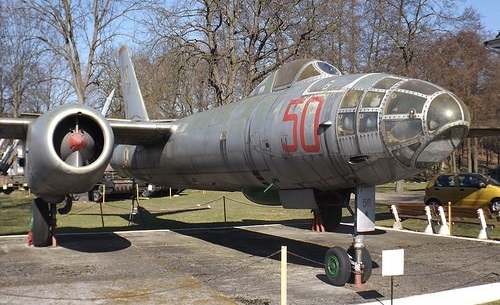
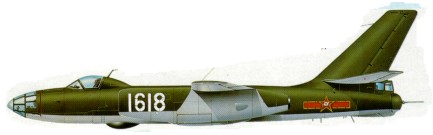
Known to NATO as Beagle, it equipped all the Warsaw Pact light bomber units in 1955-70 and was also adopted by the AV-MF as the II-28T torpedo bomber. Armed with two internally carried torpedoes, the Il-28Ts were replaced by Su-17s in the mid-1970s. The Il-28U dual trainer, NATO code name ‘Mascot’, has distinctive stepped cockpits, and the Il-28R reconnaissance versions (many probably converted bombers) carry a wide range of electronics and sensors’ and wing tip-tanks. No longer a front-line type in the Soviet Union, the Il-28 remained in service with some 15 air forces outside Europe, the most important being that of China where some hundreds were built under a licence granted before 1960.
Another version was unarmed and demilitarized, used by Aeroflot for high-speed package deliveries — for example, the matrices used to print Pravda throughout the USSR — and to gain jet experience in the civil environment before the introduction of the Tu-104. Later, some Il-28s were converted with radio control systems and used as target drones.
With its internal weapons bay, it could carry large conventional stores such as a 6,614-lb (3000-kg) bomb, or a tactical nuclear weapon.
The Il-28 rapidly became obsolete as a tactical combat aircraft, and it was replaced by the transonic Yak-28L from 1963—4 onwards.
50 Ilyushin IL-28 B5 56538
The Il-28 was a standard type with Warsaw Pact forces, and was widely exported. The type saw some action in the Middle East and the Nigerian civil war in the late 1960s.
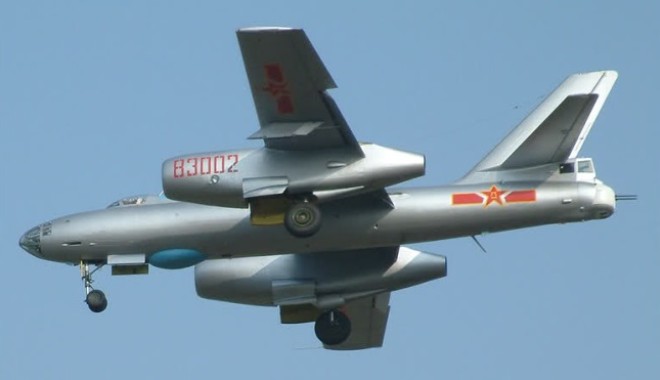
The biggest operator of the Il-28 outside the Soviet Union was China, which is believed to have received a substantial number of the type in the late 1950s. Shortly after the Sino-Soviet rift of 1959, engineers at China’s Harbin aircraft plant analysed and copied the Il-28 airframe and systems (the VK-1 engine was already in production for the MiG-17) and began to produce the aircraft at a low rate under the designation H-5 (sometimes rendered as B-B in the West) from 1966 to the 1980s. Like other Chinese-built Soviet types, the H-5 is a clone of the original: a copy so exact that it is almost indistinguishable from the Il-28. In 1980, it was reported that the H-5 was still in production at Harbin, and that more than 400 aircraft were in service, some carrying nuclear weapons.
H-5
In the bomber field, light duties were assigned to the Harbin twin-jet Hongjhaji 5 – alias Ilyushin Il-28 ‘Beagle’ – production having finally tailed off only in the early 1980s. Despite having flown as a prototype almost 40 years ago, on 8 August 1948, and having long since been withdrawn from first-line service by WarPac, the Il-28 tactical light bomber, in its H-5 version as built by Harbin provided the tactical bombing backbone of People’s Republic of China Air Force in 1987. Between 600 and 700 were built in China 1966-1982, some 500 serving with PRCAF and about 130 with PRC NavAir in 1987 Powered by two 5,952 lb St (2 700 kgp) turbojets based on Klimov VK- 1.
Harbin H-5
The Il-28U was known as HJ-5 in Chinese operational service.
HJ-5
In Europe the Romanian air force operated this type until December 2000.
Il-28 three-seat bomber and ground attack. Engines: 2 x 5952 lb (2700 kg) thrust Klimov VK-1 single-shaft centrifugal turbojets. Wing span excluding tip tanks: 21,45 m (70 ft 4.5 in). Length (typical): 17.65 m (57 ft 10.75 in). Height: 6,70 m (22 ft 0 in). Wing area: 60.80 sq.m (654.5 sq.ft). Max speed: 900 km/h (559 mph) at 4500 m (14.765 ft). Cruise speed: 800 km/h / 497 mph ROC: 2,953 ft (900 m)/min. Service ceiling: 12300 m (40,355 ft). Range at high altitude with maximum fuel 2180 km (1,355 miles). Range with bomb load: 684 miles (1100 km). Empty wt: 12890 kg (28,417 lb). MTOW in original bomber role: 21000 kg (46,296 lb). Armament: 4 x 23 mm NR-23 cannon, internal 3000 kg (6,614 lb) or two AV 45 36 torpedoes. Crew: 3
Ilyushins first jet bomber, the Il-22, had closely resembled an enlarged Ar 234C, and several features of the German aircraft (the slim fuselage, shoulder-mounted unswept wing with underslung engines, and the large slotted flaps) were carried over into the Il-28.
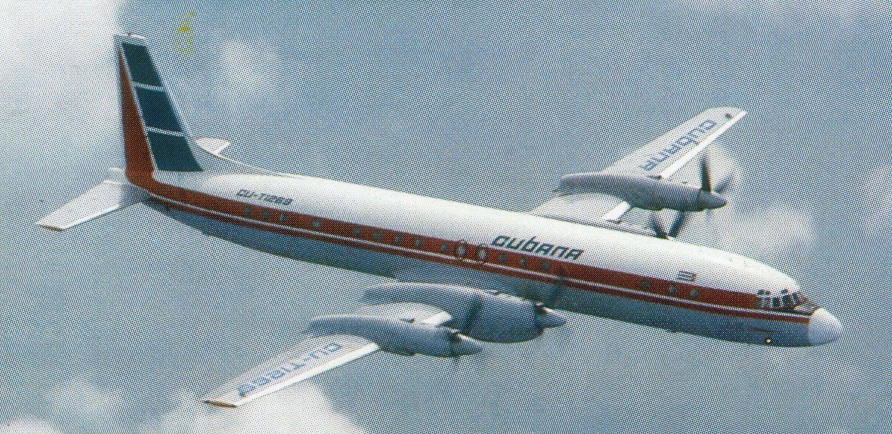
The llyushin Il-18 was developed in the mid-1950s to meet an Aeroflot requirement for a medium-range 75/100-seat transport, and the first prototype flew on 4 July 1957.
Flown for the first time on 4 July 1957, the Il-18 Moskva (Moscow) was originally powered by Kuznetsov NK-4 turboprops, but the Ivchenko AI-20 was adopted as standard at an early production stage.
Production 75-seat models, NATO reporting name ‘Coot’, entered service with Aeroflot in April 1959, and was the nation’s first turboprop airliner.
Aeroflot inaugurated use of the type on its Moscow-Adler and Moscow-Alma-Ata routes on 20 April 1959.
In 1963 Ghana returned four Il-18’s bought in a 1960 order for eight. Ghana decided it needed only four.
Further developments of the model resulted in a number of improvements and growing capacity. The last civil production version, the Il-18D long range variant built from 1965-69, utilised the 4,250 shp AE-20K engine, and could carry 110 or max 122 passengers.
The Il-18 served as s medium haul airliner until the mid to late 1970s. Some remain in Aeroflot service in 1992. Most of the survivors served as aerial laboratories or as transports for industry.
When production ended in 1969, a total of 564 Il-18 airliners of all versions were built in the GAZ-30 Znamya Truda (Banner of Labour) plant at Khodinka in Moscow in the former USSR, and about 120 were exported. Of the total built only small numbers entered military service, primarily for VIP transport.
As Il-18s have been retired from civil use some have been converted into the ECM or electronic intelligence (Elint) ll-20s, and these have the NATO reporting name ‘Coot-A’. It seems likely that the numbers of these aircraft will increase as the turboprop-powered ll-18s are retired from Aeroflot use.
Il-20 Coot-A
ELINT variants of the Il-18 transport have been operated by SovAir since 1978, and are distinct from the armed Il-38 May derivative. Coot-A has the same airframe as the basic Il-18, and carries SLAR in a large ventral fairing, plus other electronic equipment, camers and sensors for its specialised role. The Il-20 Coot A is a peacetime reconnaissance aircraft fitted with the side looking Igla (Needle) radar in a large underfuselage pad, plus cameras and signal intelligence units. Some twenty aircraft were built between 1969 and 1976. Some were later converted back to the passenger version.
Il-20 Coot-A with SLAR pod under the fuselage
IL- 38 anti-submarine/maritime patrol aircraft also developed from IL-18 and first flew 1961.
IL-20 reconnaissance, electronic intelligence, and communications relay aircraft also developed from IL-18, with the IL-24 civil variant.
Il-18 Engines: 4 x turbo-prop Ivchenko AI-20, 2940kW / 4,250 hp Props: ABI 4 blade 14 ft 9 in dia Max take-off weight: 61200 kg / 134924 lb Empty weight: 34500 kg / 76060 lb Wingspan: 37.4 m / 122 ft 8 in Length: 35.9 m / 117 ft 9 in Height: 10.2 m / 33 ft 6 in Wing area: 140.0 sq.m / 1506.95 sq ft Max. speed: 685 km/h / 426 mph Cruise speed: 650 km/h / 404 mph at 29,500 ft Landing speed: 118 mph Range: 5000 km / 3107 miles Range w/max.fuel: 6500 km / 4039 miles Range w/max.payload: 3700 km / 2299 miles Range at 135,584lb gross: 1550 mi Crew: 5 Passengers: 89-110
Coot-A Engines: 4 x AI-20M turboprop, 4250 shp (3169 kW).
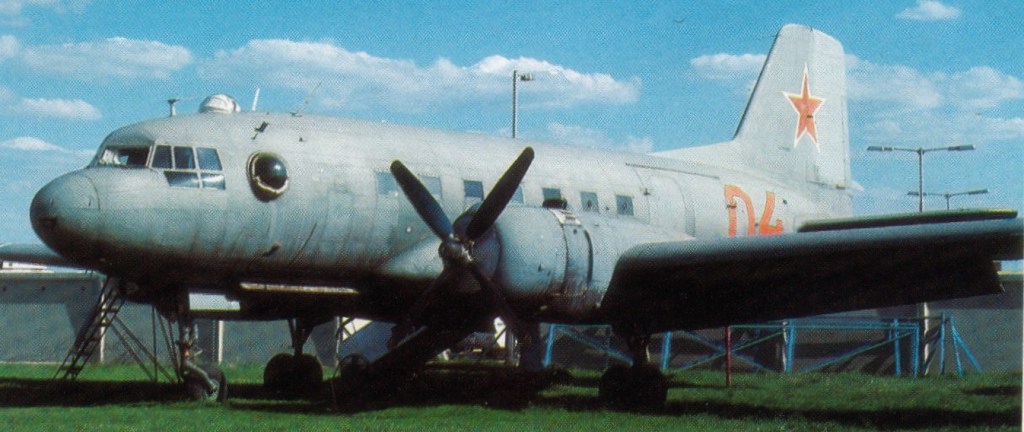
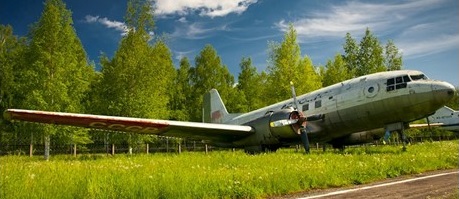
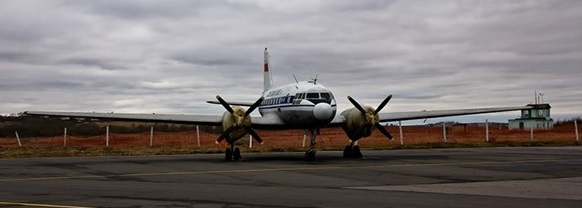
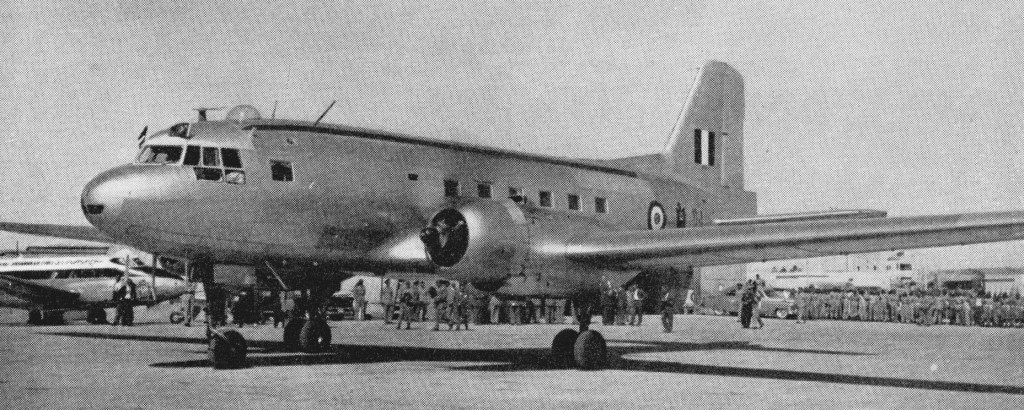
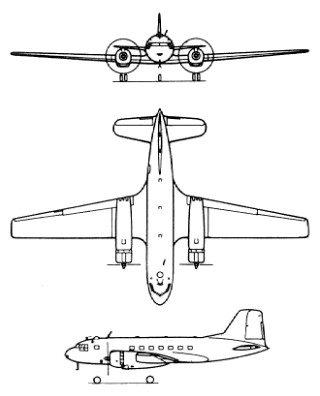
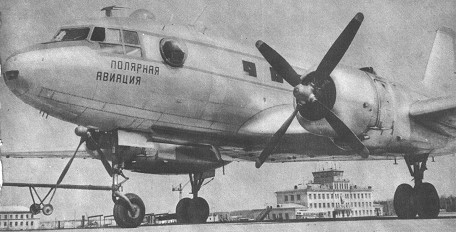
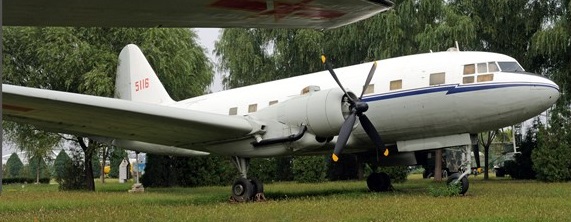
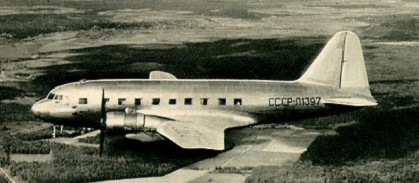
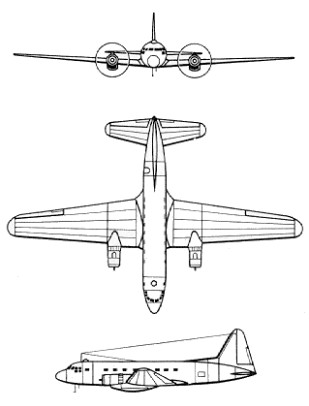
First flown in 1953, the IL-14 was developed from the IL-12 with a new tail unit and wing and was known in the West under the NATO reporting name Crate.
Many thousands were produced in the Soviet Union, East Germany and Czechoslovakia (as the Avia 14). The IL-14 basic version with normal accommodation for 28 passengers was followed by the IL-14M and IL-14P. The Il-14M has a fuselage lengthened by 1.0m and accommodates up to 32 passengers, while the Il-14P seats 26 passengers, has improved performance and an AUW of 16,500kg. A large number of M and P versions were converted into IL-14T freighters.
‘3078’ was the last Il-14 used by the Polish Air Force for VIP transport. Built by VEB in East Germany, it was retired in 1989.
At least 10 Il-14 transport were supplied to Egypt.
Il-14 Engines: 2 x Shvetsov ASh-82T, 1395kW / 1874 hp Max take-off weight: 17000 kg / 37479 lb Empty weight: 12200 kg / 26897 lb Wingspan: 31.7 m / 104 ft 0 in Length: 21.3 m / 69 ft 11 in Height: 7.9 m / 25 ft 11 in Wing area: 100.0 sq.m / 1076.39 sq ft Max. speed: 395 km/h / 245 mph Cruise speed: 345 km/h / 214 mph Service ceiling: 7000 m / 22950 ft Range w/max.fuel: 3200 km / 1988 miles Range w/max.payload: 1000 km / 621 miles Crew: 4 Passengers: 18
It entered service with the Soviet Air Force as a troop/paratroop or freight transport and for glider towing. It also went into commercial service with Aeroflot, CSA of Czechoslovakia and LOT of Poland, utilised by Aeroflot in the late 1940s and 1950s.
Engines: 2 x ASh-82FN, 1360kW Max take-off weight: 17000 kg / 37479 lb Empty weight: 9000 kg / 19842 lb Wingspan: 31.7 m / 104 ft 0 in Length: 21.3 m / 69 ft 11 in Height: 8.1 m / 26 ft 7 in Wing area: 100.0 sq.m / 1076.39 sq ft Max. speed: 375 km/h / 233 mph Cruise speed: 320 km/h / 199 mph Range w/max.fuel: 1900 km / 1181 miles Range w/max.payload: 300 km / 186 miles Crew: 4-5 Passengers: 18-27
To provide a replacement for the II-2 Shturmovik (ground-attack aircraft), the llyushin design bureau developed two different prototypes in 1943. The Il-8 and Il-10. The Il-10M attack aircraft was created after a proposal by the Soviet Air Force Marshal Pavel Zhigarev.
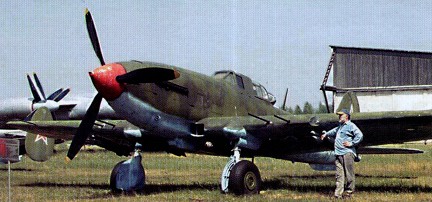
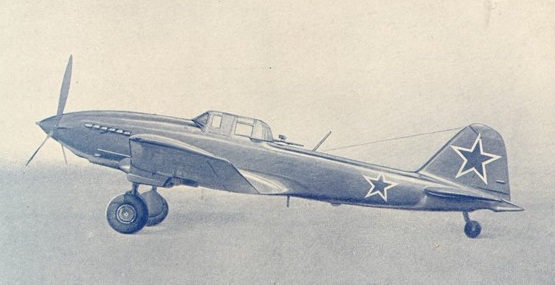
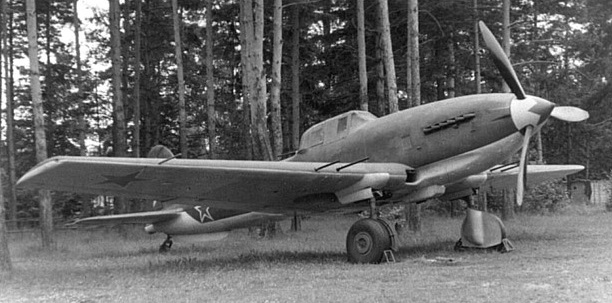
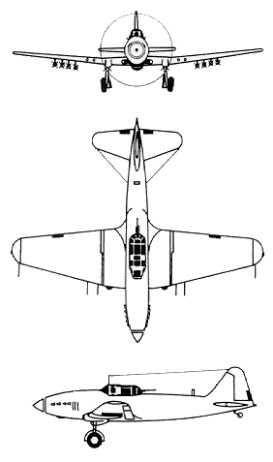
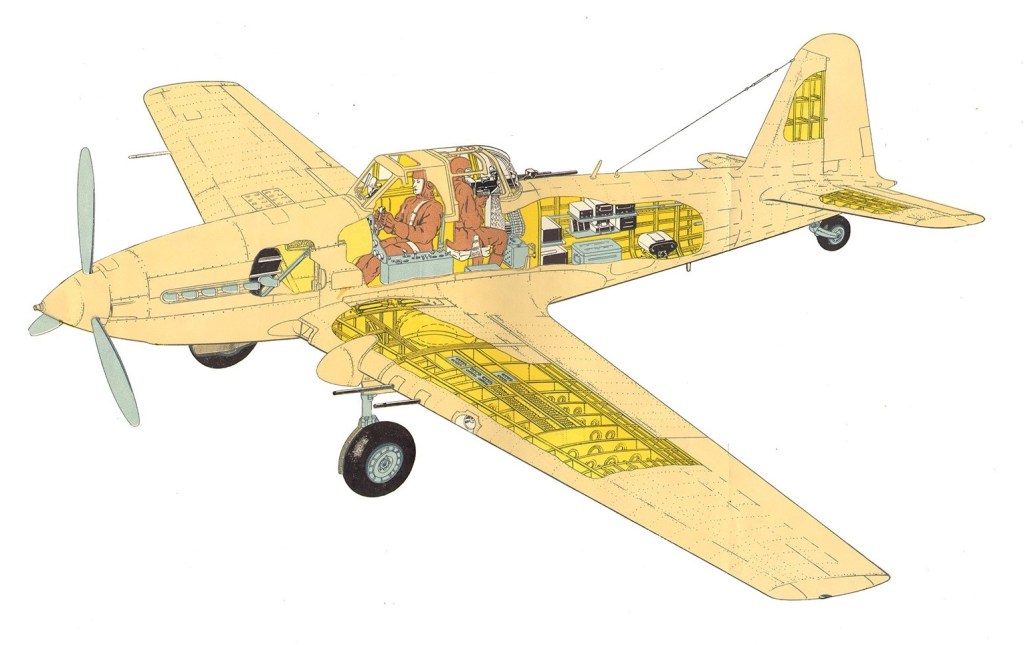
The II-8 was rejected by the Council of Ministers in favour of the contemporary llyushin Il-10 M, which first flew on 2 July 1951, piloted by Ilyushin’s chief test pilot V. Kokkinaki. The Il-10 was a completely new design of all-metal construction and improved aerodynamic form. It provided better crew accommodation, the gunner seated with his back to the pilot in an enlarged cockpit, and both crew members were located within the protective armoured shell. Revised main landing gear units retracted within the wing, eliminating the large landing gear fairings of the II-2 and requiring only small fairings over the pivoting mechanism.
Early favourable reports of the prototype test programme led to a batch of pre-series machines, quantity production being initiated in August 1944, with evaluation in operational regiments starting two months later. The type was used first in operations in February 1945 and by that spring output reached a peak. Many regiments re-equipped with the Il-10 before the German surrender, and a considerable number took part in the brief but large-scale operations against the Japanese in Manchuria and Korea during August 1945.
Production of the Il-10 continued post-war with Soviet factories building 4,966 machines, the last leaving the production lines in 1955. Additionally, ll-10s were also built at the Czech Avia factory, under the designations B-33 and CB-33, the CB-33 being the equivalent of the II-10U trainer variant. Czech production finished in 1954 when over 1,200 examples had been completed.
From 1951 onwards Soviet production had concentrated on the II-10M which featured an entirely new wing of revised planform and deeper aerofoil section, a slightly lengthened fuselage, modified landing gear with increased track, increased fuel capacity, and significantly improved armament. However a lot of equipment that the designers had planned to install on the new machine needed numerous improvements, and so production of the Il-10M started only in 1953. There were 146 aircraft built.
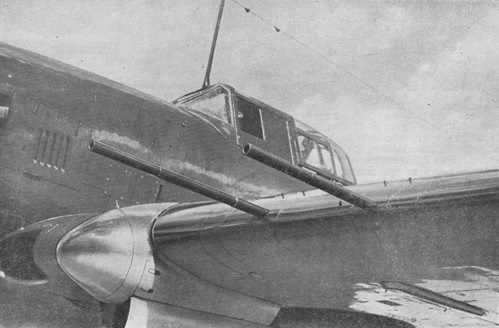
The Shturmovik was armed with four wing-mounted 23-mm NR-23 cannons, plus one 20-mm B-20-EN cannon installed in the VU-9M rear turret. The normal ammunition load was 600 shells for the NR-23’s and 150 shells for the rear gun.
Aside the cannon armament the aircraft could carry 400 kg of bombs and up to 600 kg in an overloaded configuration. The bombs were loaded into two bomb bays and on external BD-2 mounts fitted under the fuselage in front of the bomb bays. Additionally the Il-10M could be equipped with BD-3 bomb mounts on the wing hardpoints.
Alternatively, the new machine was able to mount four launch tubes on wing pylons that were capable of shooting unguided rockets.
The aircraft was quite heavily armored for its time. The plating varied from 4 to 16 mm near the rear armored wall. The armor protected all of the main parts of the aircraft’s power plant, control elements and crew cabin.
The Il-10M was powered by the AM-42 engine which was capable of producing 1750hp and fitted with a 3.6m diameter, three-bladed AV-5L-24 propeller.
The pilots who flew these machines noted a significant increase in controllability and stability in flight over the Il-10. Nevertheless the Il-10M didn’t get a chance to see combat. It was not ready for the conflict in Korea, while later conflicts were dominated by jet-powered aviation.
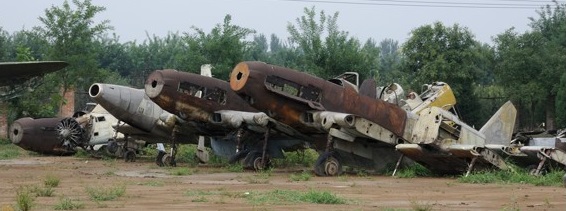
The Il-10 formed the sole equipment of Soviet assault units for a number of years and was also used widely by Warsaw Pact countries. Other Communist countries to employ the type included North Korea in the opening stages of the Korean War in 1950. Losses were heavy and the type was obsolete but, Il-10s remained in service with the Soviet V-VS until 1956 and with various satellite air arms for several years longer. For some time after that they were flown as gunnery trainers but they were decommissioned in April 1956 and all the crews were reassigned for further training on jet aircraft. most had been scrapped by the mid-1960s.
The Il-10 had been tested with a ZhRD-1 auxiliary rocket engine in the rear fuselage to provide short-term performance boost, but this modification was not adopted. The llyushin bureau strove to develop later shturmovik designs, including the II-20 single-seater and the Il-40 with twin turbojets, but official encouragement was minimal.
The Il-10M became the last mass-produced piston-powered attack aircraft designed by the Ilyushin design bureau.
Engine: 1 x AM-42, 1470kW / 1973 hp Max take-off weight: 6335 kg / 13966 lb Empty weight: 4680 kg / 10318 lb Wingspan: 13.4 m / 43 ft 12 in Length: 11.1 m / 36 ft 5 in Height: 4.3 m / 14 ft 1 in Wing area: 30.0 sq.m / 322.92 sq ft Max. speed: 302 kt / 560 km/h / 348 mph Cruise speed: 370 km/h / 230 mph Service ceiling: 7000 m / 22950 ft Range w/max.fuel: 830 km / 516 miles Range w/max.payload: 420 km / 261 miles Crew: 2 Armament: 5 machine-guns, 6 missiles, 600kg of bombs
To provide a replacement for the II-2 Shturmovik (ground-attack aircraft), the llyushin design bureau developed two different prototypes in 1943. The Il-8 bore a close resemblance to the II-2, but was powered by a more powerful AM-42 engine, and had new wings, horizontal tail surfaces and landing gear married to a late-production Il-2 fuselage. Test-flown in April 1944, the II-8 was rejected in favour of the contemporary llyushin Il-10, which began its test flight programme in that month.