Jabiru Aircraft Jabiru

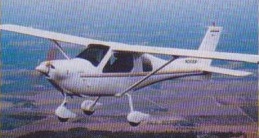
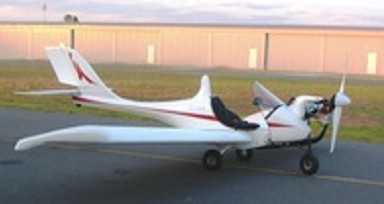
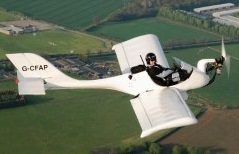
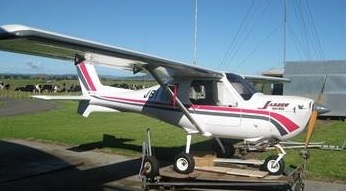
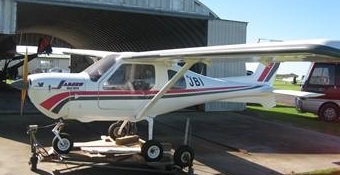
Jabiru SK80

The agents in the USA for the original Jabiru circa 1997 were Tiger Aviation. The SP 470 model is a combination of the best features of the SK and UL models. The longer fuselage and the standard SK wing.

Jabiru SK80

By 1998 sales were underway in the UK and worldwide 130 examples were flying.

Jabiru SK

Jabiru
Engine: Jabiru, 80 hp.
HP range: 60-80.
Height: 6.58 ft.
Length: 16.5 ft.
Wing span: 26.25 ft.
Wing area: 85 sq.ft.
Weight empty: 520 lbs.
Gross: 1060 lbs.
Fuel cap: 17 USG.
Speed max: 138 mph.
Cruise: 129 mph.
Range: 600 sm.
Stall: 46 mph.
ROC: 1200 fpm.
Take-off dist: 480 ft.
Landing dist: 300 ft.
Service ceiling: 15,000 ft.
Seats: 2.
Landing gear: nose wheel.

SK60
Engine: Jabiru 1.6lt, 60 hp.
Cruise: 75 % 90 kt.
Endurance: 4 hr.
Seats: 2

SK80
Engine: Jabiru 2.2lt, 80 hp.
Cruise: 75% 105 kt.
Endurance: 4.5 hr.
Seats: 2.

Jabiru SK
Engine: Jabiru 2200, 80 hp
Wing span: 8.34 m
Wing area: 7.9 sq.m
MAUW: 450 kg
Empty weight: 235 kg
Max speed: 215 kph
Cruise speed: 195 kph
Minimum speed: 74 kph
Climb rate: 6 m/s
Seats: 2
Kit price (1998): £24,675

SP 470
Engine: 2.2 Jabiru.
Stall speed 39 kts.

SP taildragger
Wing: UL.
Engine: Jabiru 2200.
Cruise: 90-95 kts @ 14 lt/hr.

ST3 UL
Stall: 35 kt / 40 mph / 65 kmh
Cruise: 85 kt / 98 mph / 157 kmh
VNE: 116 kt / 133 mph / 215 kmh
Empty Weight: 253 kg / 558 lbs
MTOW Weight: 450 kg / 992 lbs
Climb Ratio: 1000 ft/min / 5 m/s
Glide Ratio: 1:14
Take-off distance (50ft obstacle): 1180 ft / 360 m
Landing distance (50ft obstacle): 1180 ft / 360 m

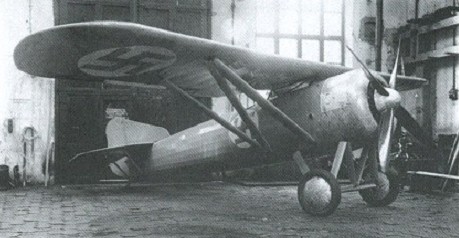
IVL C.IV 25

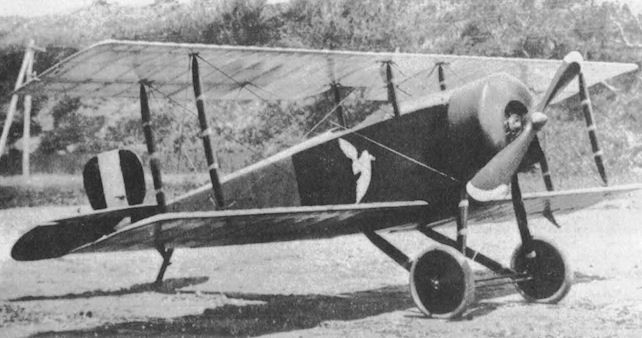
IVL C.VI.25 was a Finnish fighter aircraft designed by IVL as a further development of the IVL C.24.
The aircraft made its maiden flight on June 11, 1925, but was wrecked after a forced landing, due to engine trouble, on December 17, 1925.
The aircraft was under-powered, like its predecessor, and it was not considered possible to further develop the aircraft.

Engine: Siemens-Halske sh 3A 160hp
Top speed: 210 km/h

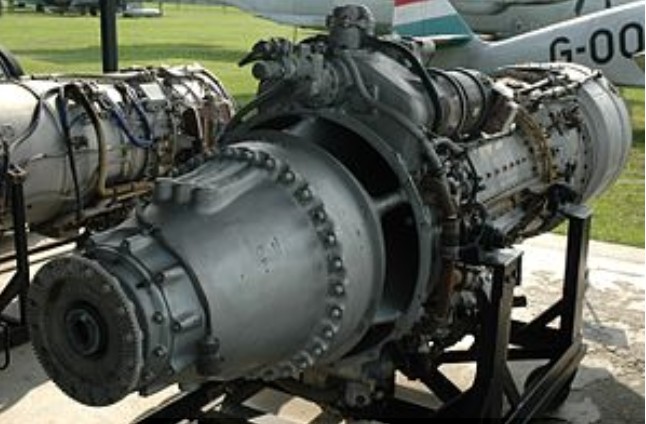
Ivchenko AI-20

Ivchenko AI-20M turboprop

The Ivchenko AI-20 is a Soviet turboprop engine developed in the 1950s. It has been built in large numbers, serving as the powerplant for the Antonov An-12 transport and the Ilyushin Il-18 airliner.

The AI-20 was the first gas turbine engine developed by the design bureau led by Oleksandr Ivchenko based at Zaporozhye, Ukraine, which had previously concentrated on small piston engines such as the Ivchenko AI-14 and AI-26 radials. It was designed as a prospective powerplant for the new large Ilyushin Il-18 airliner and the Antonov An-10, to be powered by four turboprops, in competition with the Kuznetsov NK-4. Both engines were tried out on the pre-production batch of 20 Il-18s, but the Ivchenko engine was chosen for full production, possibly due to a crash caused by an in-flight failure of an NK-4 engine, and possibly due to the desire for the engines of the Ukrainian An-10 to also be built in Ukraine.

The AI-20 is a single shaft turboprop with a ten-stage axial compressor and a three stage power turbine, and is designed to run at a constant speed. The overhaul life of the engine was initially reported as 600–750 hours in 1964, but was later improved to 6,000–7,000 hours, with a service life of 20,000 hours.

It entered production at Zaporozhye and at Perm, USSR in 1958, also being built under licence in China as the WJ6. About 14,000 AI-20s have been built in total.

Applications:

AI-20
Antonov An-8
Antonov An-10
Antonov An-12
Antonov An-32
Beriev Be-12
Ilyushin Il-18
Ilyushin Il-38

WJ6
Shaanxi Y-8

Specifications:
AI-20M
Type: Single-shaft turboprop
Length: 3,096 mm (121.89 in)
Diameter:
Width: 842 mm (33.15 in)
Height:1,180 mm (46.46 in)
Dry weight: 1,140 kg (2,293 lb)
Compressor: 10 stage axial compressor with 4 bypass valves for starting and transient ratings
Combustors: Annular with 10 burner cones
Turbine: 3 stage axial flow
Oil system: Pressure type feed, fully recirculating
Maximum power output: 3,149 kW (4,250 ehp) (take-off), 1,938 kW (2,600 ehp) (max cruise)
Overall pressure ratio: 7.6:1 (take-off) to 9.2:1 (cruise)
Turbine inlet temperature: 900°C (1,652°F)
Power-to-weight ratio: 2.8 kW/kg (1.9 hp/lb) (take-off power)

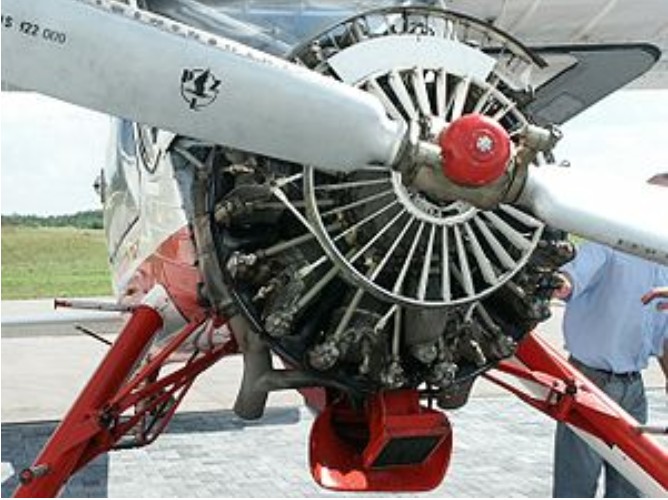
Ivchenko AI-14 / Harbin / Dongan HS-6 / PZL-Kalisz AI-14 / Avia M462

AI-14R

The Ivchenko AI-14 (Russian АИ-14) is a nine-cylinder, air-cooled, radial piston engine designed in the Soviet Union to power aircraft.

Its main variant is the AI-14R (АИ-14Р), which underwent state trials in December 1950 and was used in many types of light aircraft. Several thousand were built. There was also an AI-14V variant for helicopters and other applications. The AI-14R is typically used with a two-bladed propeller and is started with compressed air.

Apart from the Soviet Union, a licenced version of the AI-14R, (including the AI-14RA), has been produced by WSK-Kalisz in Poland from 1956 until 2007.

The AI-14RF was a variant uprated by Ivan Vedeneyev to 300 hp. Its further development is the Vedeneyev M14P family of engines.

Another modified version is the Czechoslovak Avia M462, which powers the Zlín Z 37 agricultural aircraft.

The Zhuzhou HS-6 was the designation for AI-14 Licence production in China.

Applications:
Aero L-60 Brigadýr (L-60S variant)
Antonov An-14 – AI-14RF
ICA IS-23 – AI-14RF
Kamov Ka-15 – AI-14V
Kamov Ka-18 – AI-14VF
Kamov Ka-26
Nanchang CJ-6
PZL-101 Gawron
PZL-104 Wilga
Sever-2 (aerosled based on GAZ-M20 Pobeda passenger car)
Yakovlev Yak-12
Yakovlev Yak-18 (Yak-18A variant)

Specifications:

Ivchenko AI-14
Type: 9-cylinder, air-cooled, radial, engine
Bore: 105mm (4.13in)
Stroke: 130mm (5.12in)
Displacement: 10.13 Liters (618 cu in)
Dry weight: 200kg (441lb)
Supercharger: Single stage, single speed, geared centrifugal supercharger
Fuel system: Carburetor
Cooling system: Air
Power output:
Power (take-off): 260 hp (194 kW)
Power (nominal): 220 hp (161 kW)
Compression ratio: 5.9:1

IvanovAero ZJ Viera

Designed, calculated and tested according to Czech UL-2 and American f2245 LSA standards, the ZJ has four versions: Mono wheel, Tri wheel, Part 103 ultralight, and Light Sport Aircraft (LSA).

A simple, one piece, all composite fuselage, engine, wings, wheels and tail surfaces, results in low maintenance and price. Wing construction consists of glass fiber leading edge and composite ribs covered with Ceconite.
The horizontal tail, rudder and ailerons have an aluminum structure.
The wings and horizontal tail are easily detachable for transport and storage.
The ZJ came completely assembled and ready to fly. 2009 Price: 19900 EURO

Stall: 24 kt / 27 mph / 44 kmh
Cruise: 59 kt / 68 mph / 110 kmh
VNE: 70 kt / 81 mph / 130 kmh
Empty Weight: 35 kg / 77 lbs
MTOW Weight: 90 kg / 198 lbs
Climb Ratio: 700 ft/min / 3.5 m/s

Itoh Tsurubane No.2

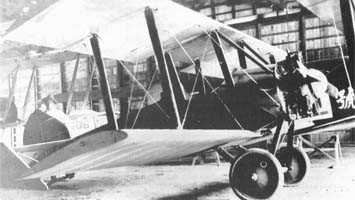
In 1918, the japanese Army purchased from France some of the most highly regarded military aeroplanes of the First World War, among them Nieuport 24 fighter. This and others were evaluated at the newly established Kagamigahara Army Airfield. At that time, 27 October, 1918, Tomotari Inagaki, a long-time friend of the company, and still studying in Tokyo Polytechnical School, became engineer of Itoh Aeroplane Research Studio. By chance, he had an opportunity to visit Kagamigahara and was able to rationalize the design and manufacture of a small aerobatic aircraft similar to the designs he had just seen. Beginning on 8 January, 1919, Inagaki started his first design as a company employee. It was to be a single-seat single bay biplane, light in weight, rugged, and easy to fly.

Logically, the design followed that of the Nieuport, but to obtain sufficient lift with the low powered 50hp Gnome engine Inagaki increased the total wing area, yet retained the same overall wing span and chord of the upper wing, by enlarging the lower wing to conform to that of an equal-span biplane rather than the sesquiplane arrangement of the Nieuport. The appearance of this aeroplane was considered radical when compared to other Japanese aircraft at that time.

The front half of the fuselage was ply-covered. To enhance the aeroplane’s appearance and resemble a fighter aircraft after which it was patterned, Itoh himself painted a white crane like a unit insignia on the sides of the fuselage similar to those often used by the French Air Force. This aeroplane was completed on 21 April, 1919, and made its first flight on 25 April.

Although Yamagata began teaching himself the skills of aerobatic flying, much had to be learned from an English-language book he had bought. His efforts included being suspended upside down while strapped in a chair to visualize control movements while in inverted flight. On 5 May, using this aeroplane, he became the first civil pilot in Japan to complete a loop.

Engine: Gnome, 50hp
Propeller: two-blade wood
Span: 7.21m (23ft 8in)
Wing area: 14.58sq m (156.942sq ft)
Length: 5.77m (18ft 11.25in)
Height: 2.38m (7ft 9.5in)
Empty weight: 204kg (450Ib)
Loaded weight: 340kg (749Ib)
Maximum speed: 74kt (85mph)
Climb to 1,000m (3,280ft): 4min 30 sec

Itoh Tsurubane No.1

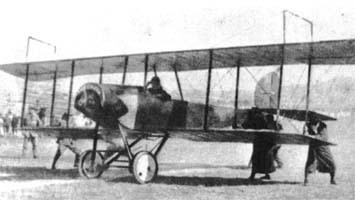
After the move caused by the destruction after the tsunami, ltoh Hikoki Kenkyusho built its first aircraft under the designation Tsurubane No.1 (“crane wing”). Its design was started by Ito’s assistant, The Tsurubane’s design was the result of the retrieval of a 50 hp (37 kW) Gnome rotary engine from the crashed Tamai No.3 by a relative of Itoh’s talented assistant, Toyotaro Yamagata, and given to him to create his own aircraft. This engine was purchased by Yamagata’s uncle to allow his nephew to finish the project. Yamagata made some initial sketches but Itoh was asked to take on the detailed design.

The aircraft that emerged was a wooden-structured, fabric covered two bay biplane. Its wings were rectangular in plan, with bays separated by pairs of upright, parallel interplane struts. The considerable overhang of the upper, greater span, wing was wire braced and a cabane of parallel struts held the central upper wing high above the fuselage. As on Itoh’s earlier aircraft there were ailerons only on the upper wings, with chords that increased outwards.

Its rotary engine was shrouded with a standard, open-bottomed cowling intended to collect oil spray. Behind it the fuselage became slender and flat-sided, as with Itoh’s earlier designs. Its pilot had an open cockpit near the wing trailing edge. The tail was like that of the Itoh Emi 2 with the horizontal tail mounted on the top of the fuselage carrying elevators that had a cut-out for rudder movement. The fin and rudder had upright, parallel edges but a sloping top.

Though its landing gear was a conventional, single axle design, Itoh was aware of the need to make it robust. It had large wheels and was taller than those of his earlier landplanes, with landing legs and rearward drag struts doubly cross-braced.

The Tsurubane was completed on 8 May 1918 and flown soon after.

The Tsurubane No.1, like several other early Japanese civil aircraft, initially paid its way with demonstration flights. Yamagata began with flights around Hiroshima. These attracted support from the Asahi Shimbun newspaper resulting in a tour of Korea, at that time part of the Japanese empire, throughout November 1918. In the following spring the Tsurubane gave many exhibition flights in Osaka. World-wide, early aircraft demonstrators included risky tricks to swell audiences: on one occasion the Tsurubane carried a passenger astride the fuselage.

When it was retired from demonstration flights, the Tsurubane was used as a trainer by Itoh’s flying school. It is not known how long it remained airworthy but it was eventually privately purchased, then donated to the Aki-Itsukushima Shrine near Hiroshima.

Tsurubane No.1
Powerplant: 1 × Gnome, 37 kW (50 hp)
Propeller: 2-bladed
Wingspan: 10 m (32 ft 10 in)
Wing area: 30 m2 (320 sq ft)
Length: 6.5 m (21 ft 4 in)
Height: 2.6 m (8 ft 6 in)
Empty weight: 380 kg (838 lb)
Gross weight: 520 kg (1,146 lb)
Maximum speed: 80 km/h (50 mph, 43 kn)
Cruise speed: 65 km/h
Crew: one

Itoh Emi 31

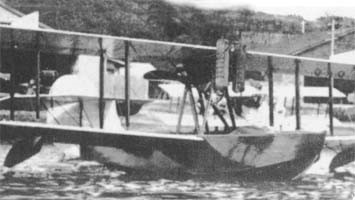
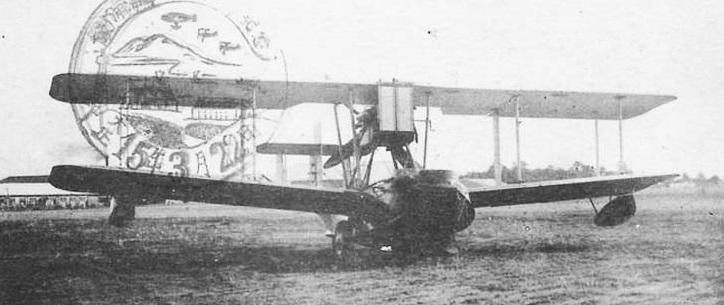
The development of the Emi 31 began in 1922 when the fledgling Japan Air Transport Research Society bought a Curtiss Seagull flying boat as their first passenger aircraft, intended for a service between Tokyo and Yokohama Bay. This was seriously damaged before it could be delivered so the airline’s founders, Sun-ichi Bando and Yukichi Goto who had earlier owned the Emi 16 racer, turned to Itoh for a replacement flying boat. In response Tomotari Inagaki designed the Itoh Emi 28, which was strongly influenced by the Seagull and powered by a 150 hp (110 kW) Hispano-Suiza engine, but this design was never built. Another passenger company, Choichi Inoue’s Japanese Air Transport Research Association (JATRA) that had provided Japan’s first regular airline service using floatplanes between Sakai to Takamatsu and Tokushima, was looking for a suitable passenger flying boat. Aware of the Emi 28 he placed an order for a more powerful development, resulting in the Emi 31.

The Emi 31 was a wooden-structured, pusher configuration biplane. Its unequal span, fabric covered, two bay wings were braced by parallel pairs of interplane struts. The shorter lower wing was mounted on top of the hull and the upper centre section, high above the water, was strengthened by the struts that supported the pusher engine. There were ailerons on the upper wings.

Its 220 hp (160 kW), pusher configuration, water-cooled V-8 Hispano-Suiza 8B engine was pylon-mounted just below the upper wing with two long, upright, rectangular radiators mounted edge-on ahead of the upper leading edge. The Emi 31’s plywood-covered hull was essentially the same as that of the single step Seagull. On the water it was stabilized by small, strongly up-pitched floats mounted below the outer interplane struts. It had two open, side-by-side seat cockpits in tandem. Initially the pilot and flight engineer occupied the forward cockpit with two passengers behind but in service the engineer was often displaced by a third passenger.

The Emi 31’s fabric-covered tail was also similar to that of the Curtiss, with a tailplane and elevator held well clear of the water on top of an abbreviated fin. Its large, comma-profile rudder moved in a deep elevator cutout and had a forward balance area overhanging the tailplane.

The Emi 31 was completed in mid-1922. The date of its first flight is not known but, after test flights at Itoh’s Tsudanuma base, it went to the JATRA base at Sakai to fly the planned route. It was also used by The Asahi Shimbun newspaper to report army manoeuvres, catching the attention of the Prince Regent. There were frequent, poorly recorded modifications; after only a few months of use it had been significantly improved twice. It remained in use with JATRA into 1924, after which it was retired to the water surface, further modified for use as a water taxi and sightseeing-boat.

Powerplant: 1 × Hispano-Suiza 8B, 160 kW (220 hp)
Propeller: 2-bladed wooden
Wingspan: 14.66 m (48 ft 1 in)
Wing area: 26 m2 (280 sq ft)
Length: 7.65 m (25 ft 1 in)
Height: 3 m (9 ft 10 in)
Empty weight: 780 kg (1,720 lb)
Gross weight: 1,350 kg (2,976 lb)
Maximum speed: 121 km/h (75 mph, 65 kn)
Endurance: 2 hr 30 min
Crew: one, with option of a flight engineer
Capacity: three, or two with engineer
Itoh Emi 30

After World War I Itoh had followed design developments in both Europe and the US and had explored these trends with their own designs. The Emi 30 was the first Japanese aircraft influenced by a western interest in small sports aircraft.

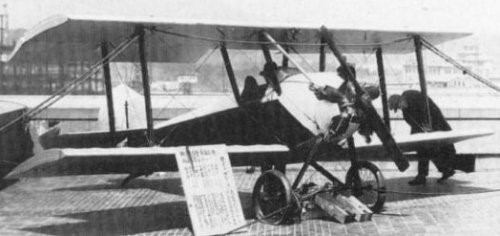
The Emi 30 had a wooden structure and was fabric-covered. It was a single bay biplane with wings braced by parallel pairs of streamlined interplane struts. The lower wing, which had a slightly greater span than the upper one, was mounted on the lower fuselage longerons and the centre section of the upper wing was held over the fuselage by outward leaning, parallel cabane struts from the upper longerons. The two spar wings had thick airfoil profiles compared to most contemporary biplanes. There were inset ailerons on the upper wing.

It was powered by an Itoh built, 40–45 hp (30–34 kW) air cooled 5-cylinder radial engine. The Itoh 11 used the cylinders and pistons from a Japanese-built Renault engine, joined to a new crankshaft and crankcase. Its two-bladed propeller had a domed spinner. The Emi 30 was flown from an open cockpit under the upper wing, with a streamlined headrest which merged into a slender rear fuselage. The tail was conventional, with a tailplane mounted on top of the fuselage and braced from below, and a generous fin and balanced rudder with an overall rounded but pointed profile.

The Emi 30’s landing gear had wheels on a single axle, its ends supported by V-struts from the lower fuselage longerons.

When it was first displayed in 1922 the Emi 30, a single seat civil sports aircraft, was the smallest aircraft in Japan.

It was first seen in public at an exhibition in July 1922, where it was awarded a silver plaque for innovation. The date of the first flight is not known but it was developed in a program flown by Seizo Okhura and later used as an aerobatics trainer by the newly renamed Itoh Aeroplane Manufacturing Works. In March 1924 it was displayed on the roof of a Tokyo department store where it was on sale for 5,000 yen but its later history is not known. There is no firm evidence that more than one was built.

Powerplant: 1 × Itoh 11, 34 kW (45 hp)
Wingspan: 5.80 m (19 ft 0 in)
Wing area: 13 m2 (140 sq ft)
Length: 5.11 m (16 ft 9 in)
Height: 2.10 m (6 ft 11 in)
Empty weight: 295 kg (650 lb)
Gross weight: 605 kg (1,334 lb)
Maximum speed: 130 km/h (81 mph, 70 kn)
Endurance: 2 hr
Crew: one