JAG Twin Jag

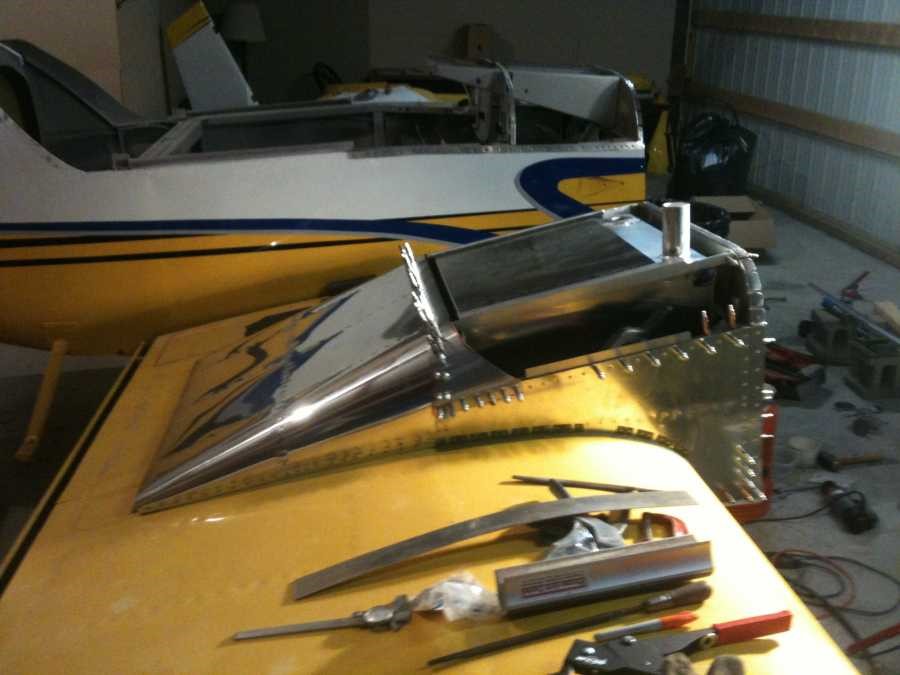
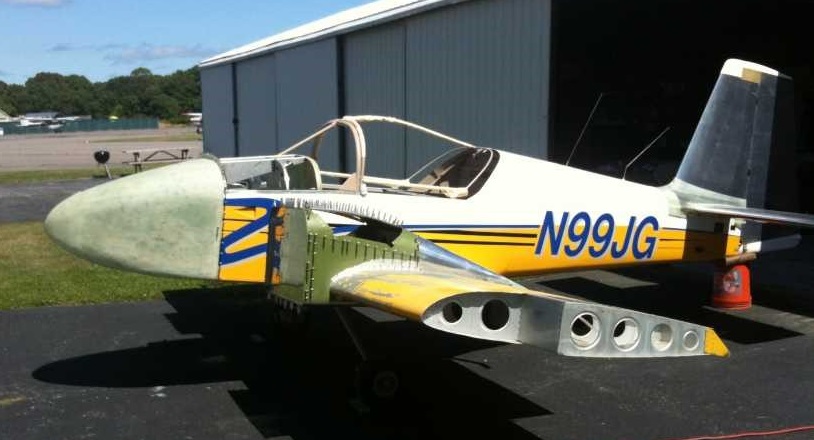
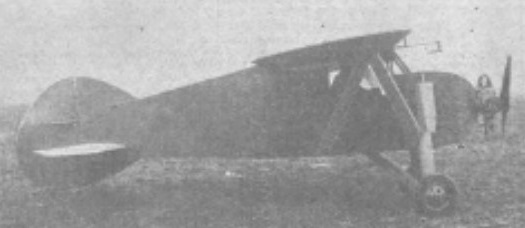
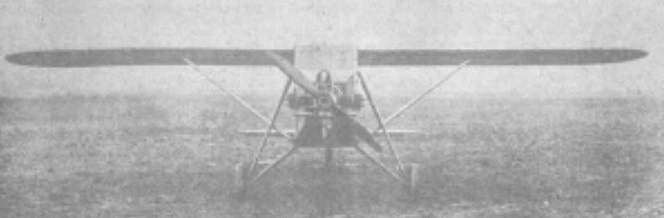
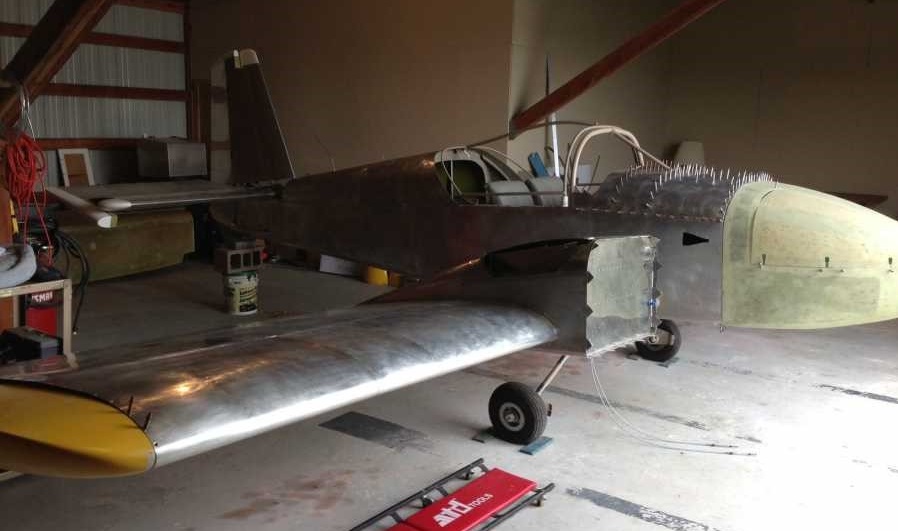
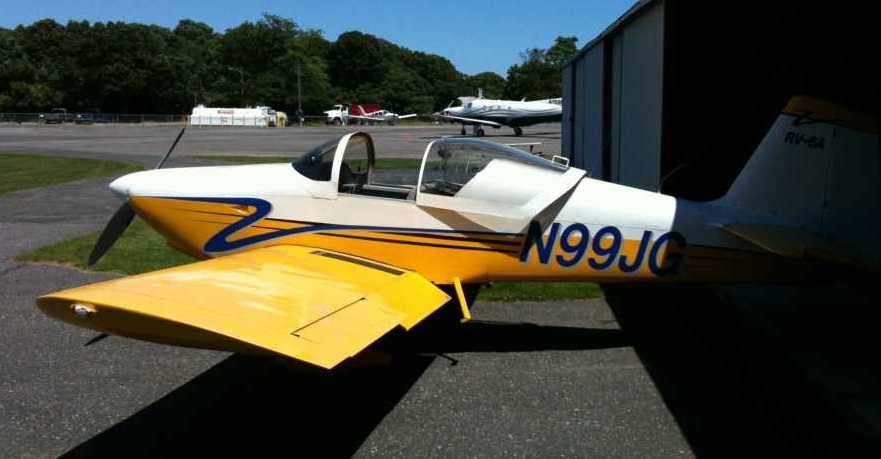
The Twin Jag project started life as a completed RV-6A, which was built and flew for 250 hours.
Some modifications include, but not limited to:

  1. Installing 2 Corvair 3000cc 120hp direct drive with Weseman 5th bearings. Weseman billet crankshafts.
  2. Custom made carbon fiber props.
  3. Unique prop brake system in lieu of constant speed feathering props.
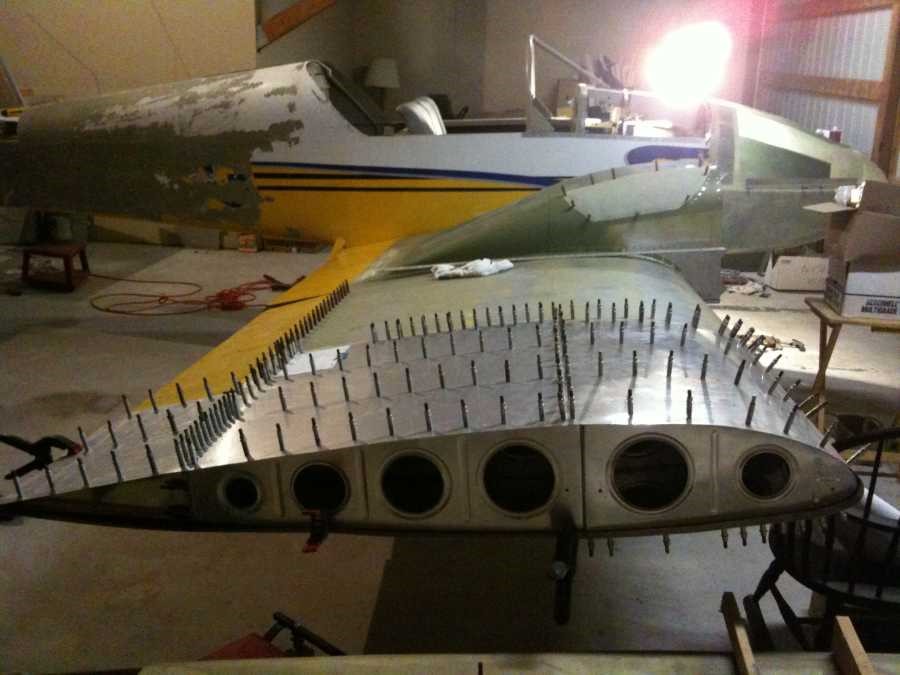
  4. Increased wingspan by 40″.
  5. Installed RV-9 tail.
  6. Re-designing nose gear with 4130 tubular gear & urethane dampening (similar to RV-10).
  7. Many more mods.

The Twin Jag is a side-by-side 2 seat twin-engine cross country aircraft. It will be IFR capable with dual Dynon Skyview EFIS.

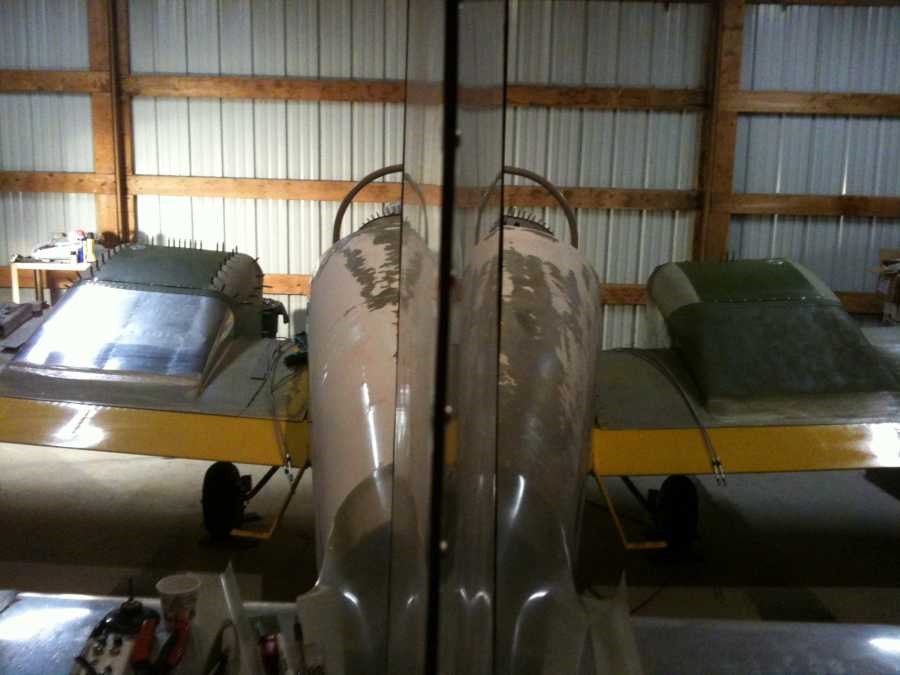
By January 2013, both nacelles complete. Custom motor mounts being fabricated. Riveting right wing extension now, left wing extension riveting to follow. Center console 75% complete. Fabricating nose gear/baggage shelf in next few weeks. All fibreglass work still in rough stages of completion…lots of filling & sanding ahead.

Engines: 2 Corvair 3000cc 120hp
Jacobs 1910 Multiplane

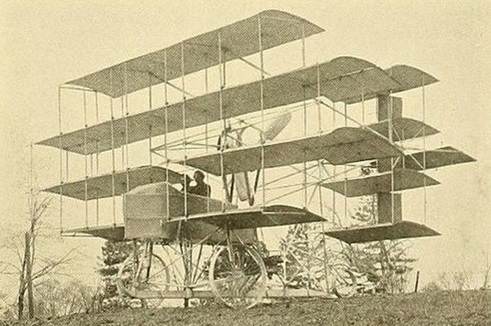
The 1910 Jacobs Multiplane [also identified as the Jacobs-Emerson multiplane] was the creation of Henry William Jacobs of Atchison, Kansas. It had quadruplane wings and tail and two engines, each driving a propeller.

Jacobs used two improved air-cooled 35hp engines he invented, to replace the two original underpowered engines [Emersons?], with which the plane flew in 1910.

It was displayed on the New York Aero Exhibition 1912. Jacobs had formed with others the firm “Multiplane Limited” in Kansas to build the machine and eventually sell it to the market and a brochure of 16 pages was produced.

Jacobs 104

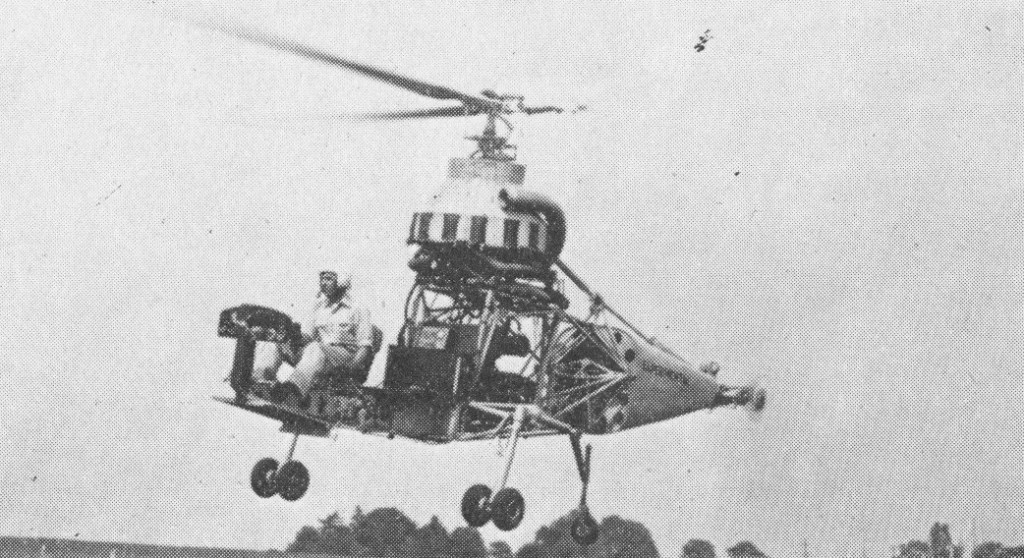
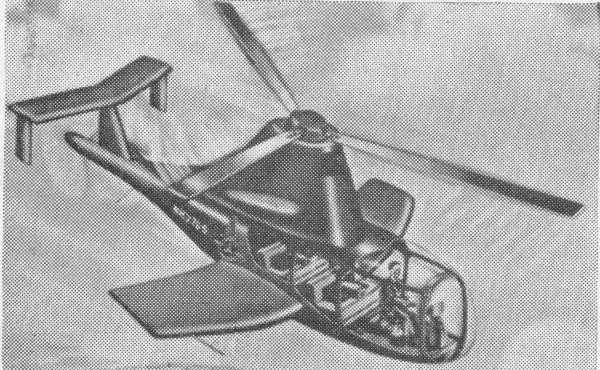
Designed circa 1958 as a high-speed short-haul aircraft, the Jacobs 104 was originally flown as a pure helicopter, as shown in the photograph above. Subsequently, a pusher propeller was fitted at the extreme tail.

It will take off as a helicopter; but in cruising flight it will be possible to transfer power to the pusher propeller, with the rotor auto-rotating and the majority of the lift coming from the fixed wings.

A feature of the Model 104 is the use of a Jacobs-designed engine “package”, consisting of the engine and complete transmission system. It is claimed to be 20 per cent lighter than conventional helicopter power plants, enabling one extra passenger to be carried. Also, by using moulded fibreglass and Plexiglass panels to cover the forward fuselage, high strength is combined with light weight, and the surface requires no painted or doped finish.

Engine: 350 h.p. Jacobs R-755EH
Rotor diameter: 36 ft.
Rotors: 3-blade main; 3-blade tail; 3-blade propeller.
Overall length: 26 ft. 4 in / 22 ft
Height: 10 ft 10 in
Empty weight: 2360 lb
Loaded weight: 3,475 lb.
Max. speed: 175 m.p.h.
Cruise: 157 mph
ROC: 1400 fpm
Typical range: 300 miles at 157 m.p.h.
Seats: 4-5.

Jacobs R-915 / L-6

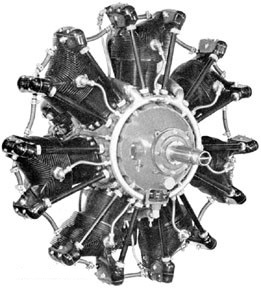
The Jacobs R-915 or L-6 is a seven-cylinder, air-cooled, radial engine for aircraft manufactured in the United States, production started in 1936.

The R-915 was effectively an enlargement of the R-755 with strengthened stressed parts. With a bore and stroke of 5.5 in × 5.5 in (140 mm × 140 mm) the displacement was 914 cu in (15 L), takeoff power was around 330 hp (246 kW). The engine features steel cylinders with aluminum-alloy cylinder heads. The R-915A4 variant features a drive shaft for autogyro use.

Applications:
Avro Anson
Beechcraft Model 18
Beechcraft Staggerwing
Fleet 50
Howard DGA-8
Kellett KD-1

Specifications:
R-915A1
Type: 7-cylinder air-cooled radial piston engine
Bore: 5.5 in (140 mm)
Stroke: 5.5 in (140 mm)
Displacement: 914 cu in (15 L)
Length: 40 in (1,030 mm)
Diameter: 45.5 in (1,160 mm)
Dry weight: 555 lb (252 kg)
Valvetrain: 2 valves per cylinder, pushrod-actuated, Sodium cooled exhaust valves
Fuel system: Single Stromberg NA-R7A carburetor
Fuel type: 73 octane
Oil system: One pressure pump, two scavenge pumps
Cooling system: Air-cooled
Reduction gear: Direct drive, right hand tractor
Power output: 330 hp (246 kW) at 2,200 RPM at sea level
Specific power: 0.36 hp/cu-in (16.4 kW/L)
Compression ratio: 6:1
Power-to-weight ratio: 0.6 hp/lb (1 kW/kg)