JP 210
Empty weight: 21 kg
Engine: Solo
Reduction: 2.9-1
Prop diameter: 123 cm
Fuel capacity: 7 lt
Price 1998: F21,750
Engines – Power
Jet Pocket
Jet Pocket were formerly marketed under the Airplum label (1998).
1998:
Route de Gannat
F-03140 Chantelle
France
Paramtor builder
Jetpack Aviation JB-9
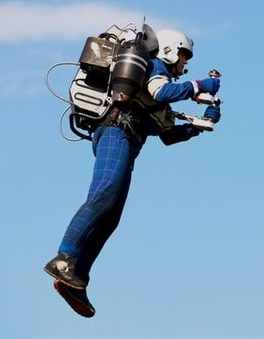
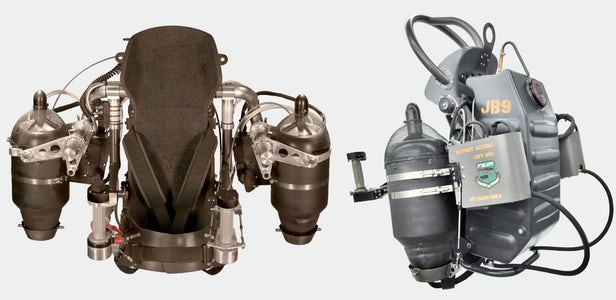
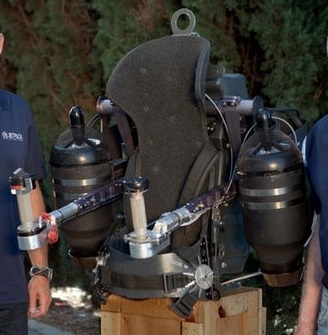
It’s a jet and a backpack; that can take off vertically. There’s a large suitcase that our whole JB-9 will fit into. It’ll fit in the back of a car. The JB-9 uses a carbon-fiber corset that straps to the pilot’s back, with the majority of the “backpack” section carrying fuel. The device can carry a total of 10 gallons of fuel, which it burns at around a gallon a minute. And the fuel itself is kerosene.
Mounted to each side is a small jet turbine engine that provides upward thrust. These engines mix ambient air with their exhaust gases to bring temperatures down to a comfortably warm airstream. The exhaust temperature actually declines really quickly.
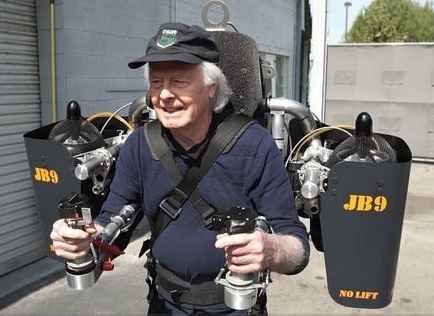
On the left hand is a twistgrip controlling yaw. If I turn the hand to the left, it will spin to the left. There are some little yaw vanes at the bottom of each engine, a little cup that tilts backward and forward. They’re on push/pull cables. They’re always going in the opposite direction to each other, so if you vector the right engine forward, the left one goes backward and you get that yaw rotation.
On the right is a fly by wire throttle driving the engines. That actually works back to front compared to a motorcycle throttle. Going back into the 1960s, the way Bell had it set up, you turn your hand inwards to develop thrust. The JB-9 works the same way.
The twistgrips sit on the end of levers, which can be pushed up and down to tilt the jet engines, either individually or together. Rather than just vectoring the thrust, they vectoring the entire engine on a sort of gimbal arrangement, not only moving the line of the thrust, but moving the centre of thrust.
To go forward or backwards, which requires pitch, effectively its pushing both handles down, that’ll make it go forward. Pulling them up, or actually allowing them to come up, because that’s what they want to do under thrust, will make it go backwards. Or more likely, just slow down from speed. The whole thing is completely manual at the moment, it’s literally a pair of levers tilting the engines.
You don’t need much roll as it’s similar to that. Once you start a roll it will basically follow that. It’s kind of kinesthetic, once you start a roll by shifting your body one way and pushing your arms down a little to the left, it’ll continue that rolling motion to the left.
The JB-9 is limited to the required standards, which is 55 knots, or just over 100 kilometers per hour.
Vertical speed depends more on the fuel payload. There is an initial climb rate of 500-1000 feet a minute and as fuel burns off, you get extraordinary vertical rates. Being turbine engines, they don’t run out of performance as the air thins. They’ll just keep going, they’re compressing the air like a turbocharger.
The total endurance of the JB-9 is 10 minutes plus, depending on pilot weight. It also depends a little bit on temperature, altitude and that kind of thing, but that’s by no means as significant as the total pilot weight.
Jetcraft Executive Mark I
A twin-boom executive jet aircraft based on newly built components of de Havilland Vampire T Mk 11 fighter type. Initial Jetcraft Executive Mark I prototype built.
JetCat P200
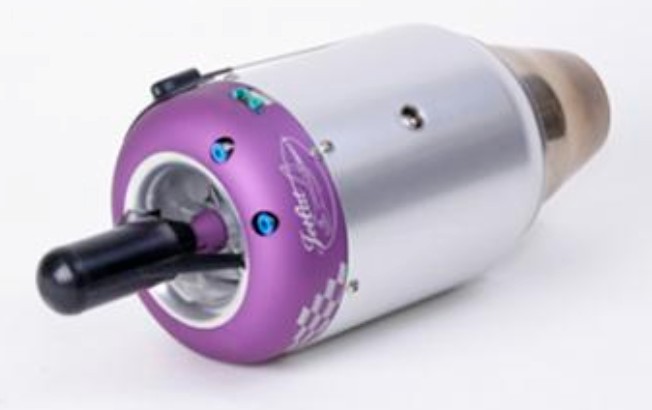
Jetcat produces a family of jet engines composed of several models whose powers between 2 and 23 pounds of thrust.
The JetCat P200 was put on the market in 2010.
Applications:
ACLA Sirocket
Colomban Cri-Cri
P200-SX
Thrust: 23 kg at 112 000 rpm
Weight: 2.370 kg
Diameter: 130 mm
Length: 350 mm
Engine speed: 33000-113000 rpm
EGT: 670° C
Specific consumption Full Throttle: 750 ml / min
Fuel: Kerosene, Jet A1
Jervis Baby J
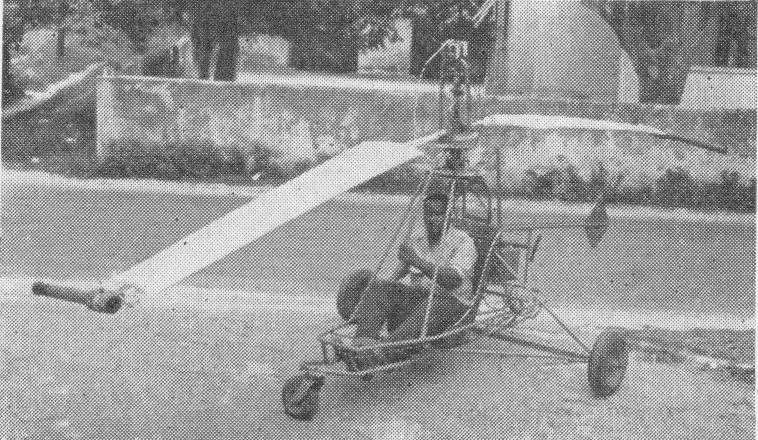
Built as a flying test bed for the Jervis tip-powered rotor system, the Baby J was flown in Nassau, Bahamas, in 1952.
Power: 2 x Jervis pulse-jets
Rotors: 2-blade, tip-powered main rotor
Seats: 1
Jendrassik Cs-1
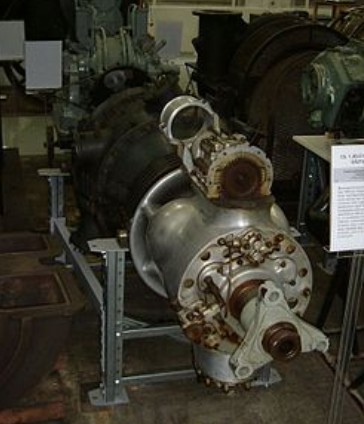
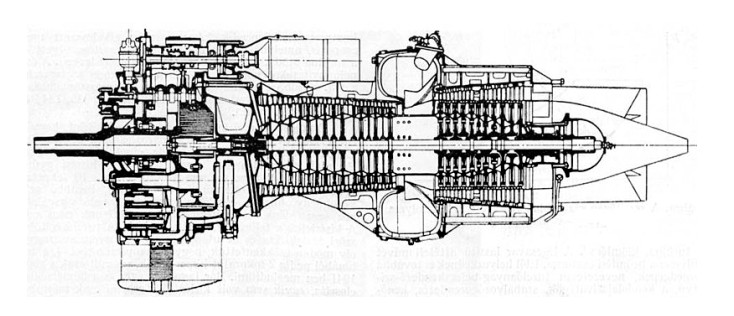
The Jendrassik Cs-1 was the world’s first working turboprop engine. It was designed by Hungarian engineer György Jendrassik in 1937, and was intended to power a Hungarian twin-engine heavy fighter, the RMI-1.
The engine was designed by György Jendrassik in 1937 and built at Ganz Works. It ran for the first time in 1940, but problems with combustion stability limited the power to 400 hp, from the design goal of 1,000 hp. There was nothing inherently wrong with the design, however, and continued work on the flame cans should have allowed it to develop to full power.
All work on the engine was later stopped when the Hungarian Air Force selected the Messerschmitt Me 210 for the heavy fighter role, and the engine factory converted over to the Daimler-Benz DB 605 to power it. The prototype RMI-1 was later fitted with these engines in 1944.
Jendrassik
György Jendrassik (1898 Budapest – 1954 London), Hungarian physicist and mechanical engineer.
Jendrassik completed his education at Budapest’s József Technical University, then at the University of Berlin attended lectures of the famous physicists Einstein and Planck. In 1922 he obtained his diploma in mechanical engineering in Budapest. From 1927 he worked at Ganz Rt, where he helped to develop diesel engines. He designed the world famous Jendrassik Cs-1 turboprop engine, of which the first few pieces were made with single and double cylinders; later, the 4- and 6-cylinder four-stroke versions were developed, without compression and with mixing chamber. The world’s first turboprop was the Jendrassik Cs-1, designed by the Hungarian mechanical engineer György Jendrassik. It was produced and tested in the Ganz factory in Budapest between 1939 and 1942. It was planned to fit to the Varga RMI-1 X/H twin-engined reconnaissance bomber in 1940, but the program was cancelled.
Later on he was active in improving gas turbines and in order to speed up research, he established the Invention Development and Marketing Co. Ltd. in 1936. His reputation continued to grow, and he became the factory’s managing director from 1942 to 1945. In recognition of his scientific work he was elected in 1943 corresponding member of the Hungarian Academy of Sciences. After the war he was not able to continue developing gas turbines. Political distrust surrounded him, and therefore he did not return from one of his travels abroad. He lived in Argentina for a while, then settled in England, where he established his own workshop, becoming in addition a consultant to the Power Jets company. The number of his inventions on record in Hungary is 77. His last invention of great importance was the pressure-compensating device.
Jeannin Eindecker Typ A
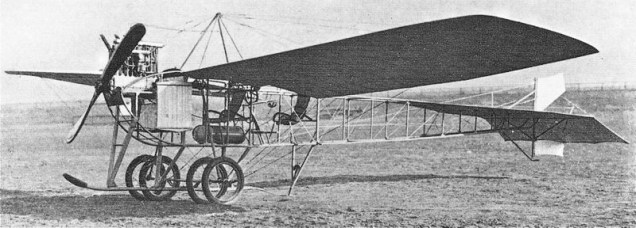
The first of Emil Jeannin’s monoplanes, the 1912 Eindecker Typ A design was the basis for all Jeannin’s Eindecker before the Stahltaube. It was sold with a 50/70 hp Argus, or a Gnôme engine.
Jeannin Stahltaube
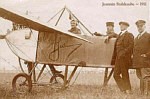
The Jeannin Stahltaube (Steel Pidgeon) of 1914 is a late model of the typical light reconnaisance and training aircraft common at the start of WW I. Unarmed, heavy engine and barely maneuverable.
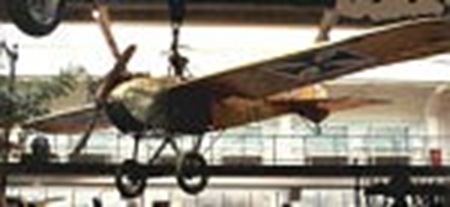
Length : 31.791 ft / 9.69 m
Height : 9.744 ft / 2.97 m
Wingspan : 45.505 ft / 13.87 m
Wing area : 387.504 sq.ft / 36.0 sq.m
Max take off weight : 1885.3 lb / 855.0 kg
Weight empty : 1323.0 lb / 600.0 kg
Max. weight carried : 562.3 lb / 255.0 kg
Max. speed : 62 kt / 115 km/h
Cruising speed : 54 kt / 100 km/h
Wing load : 4.92 lb/sq.ft / 24.0 kg/sq.m
Range : 162 nm / 300 km
Engine : Daimler D I od. Argus As I, 99 hp
Crew : 2

