
Knoller B.1(Th)
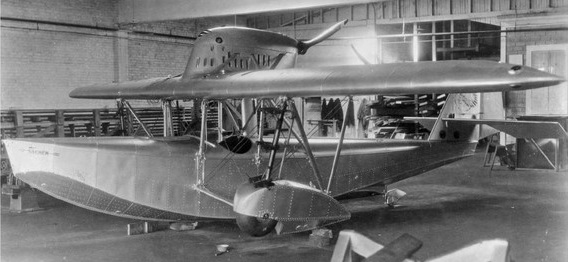
Designed by Felix Knoll and built by Brayton Aeronautical Corp, the Sachem appeared in 1931 as a three place, parasol wing amphibian powered by a 160 hp Menasco B-6 pusher enclosed in a streamlined nacelle. The single step hull was all metal while wings and tail surfaces were fabric covered. Strut mounted sponsons also contained retractable landing gear.
The pontons proved to offer too much resistance in the water and limited speed sufficiently to prevent lift-off from water. Although the craft was equipped to take off and land on the ground, attempts were to wait until water laft-off was achieved.
The Sachem was entered into Govt. competition won by Grumman. Destroyed in New Bedford Ma. 1938 Hurricane
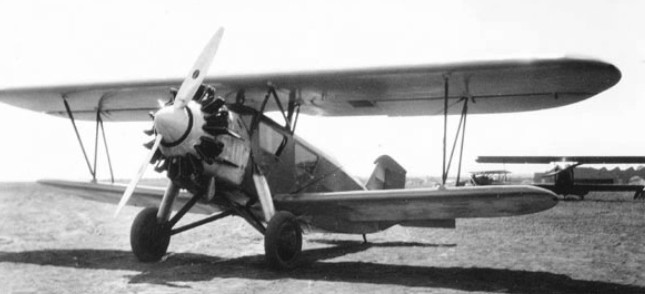
The KN-2 and KN-3 models shared the common airframe of the KN-1, though they were upgraded with more powerful 300 and 425 horsepower engines. The KN-3 also had an open-place cockpit in back of the cabin, allowing the seating of one additional passenger inside.
On was built in 1929, registered X9950, powered by a 425 hp Pratt and Whitney R-1340.
On June 12, 1929, test-pilot Russell Dick flying the Knoll KN-3, beat the US Army’s Lieutenant Walker piloting a Thomas-Morse pursuit plane in a race performing at the Wichita Air Show. On June 21 he performed again at the Aerial Wedding of Kansas, Oklahoma, Missouri, and Texas. He did steep power dives from 3000 feet to 100 feet, thrilling the crowds and demonstrating the strength of the airframe.
KN-3
Engine: 1 × Pratt and Whitney R-1340-9, 425 hp (317 kW)
Wingspan: 33 ft 6 in (10.21 m)
Wing area: 264 sq.ft (24.5 sq.m)
Length: 24 ft 3 in (7.39 m)
Empty weight: 2,100 lb (953 kg)
Gross weight: 4,000 lb (1,814 kg)
Range: 800 miles (1,287 km)
Maximum speed: 175 mph (282 km/h)
Service ceiling: 18,000 ft (5,486 m)
Rate of climb: 1,200 ft/min (6.1 m/s)
Crew: One pilot
Capacity: 4 passengers
The KN-2 and KN-3 models shared the common airframe of the KN-1, though they were upgraded with more powerful 300 and 425 horsepower engines.
One KN-2 was built in 1929 and registered X8899. Power was by a Wright J6 of 300 hp.
Felix Knoll, formerly of The Rohrbach Metal Aeroplane Company (Germany) and later the Chief Engineer of the Heinkel Aircraft Company, immigrated to the United States from Germany for better opportunities. Within weeks of being in the country, Wichita business leaders recruited Felix to come to Wichita and start a company of his own. Engineering work, stress calculations, and drawings for the first model, the KN-1, were completed in Room 623 of the Broadview Hotel. Felix and Herbert Schwenke; another German immigrant from The Rohrbach Metal Aeroplane Company, worked on the plans together.
George Siedhoff, who owned and built the Broadview Hotel where the KN-1 was designed, was selected to build a new 50,000 square foot factory on a 148 acre tract of land at the northeast corner of Kellogg and Webb Road. The company set up a temporary shop at 471 W 1st street in the former building of both the Travel Air Company and Laird Whippoorwill. By the end of December, 1928, the first airplane was ready to fly. It was a four-seat cabin biplane with forward stagger.
Over five hundred spectators gathered around the East Airport to watch the KN-1 first flight. Amongst the crowd were Lloyd Stearman, Walter Beech, reporters, and motion picture camerame. The December 30, 1928 first test flight was so successful that pilot Howard Jones chose to double the planned time and stayed in the air for thirty minutes. He took the airplane through loops, rolls, and power dives.
Three KN-1s were built. Registrations were X9090 and X8861. One airplane was destroyed by fire on February 1, 1929 while sitting idle; when a Laird aircraft landed on top of it.
KN-1
Engine: 1 × Wright J-5-9, 220 hp (164 kW)
Wingspan: 33 ft 6 in (10.21 m)
Wing area: 264 sq.ft (24.5 sq.m)
Length: 23 ft 3 in (7.09 m)
Empty weight: 1,800 lb (816 kg)
Gross weight: 3,050 lb (1,383 kg)
Maximum speed: 140 mph (225 km/h)
Range: 1,200 miles (1,931 km)
Service ceiling: 14,000 ft ft (4,267 m)
Rate of climb: 800 ft/min (4.1 m/s)
Crew: One pilot
Capacity: 3 passengers
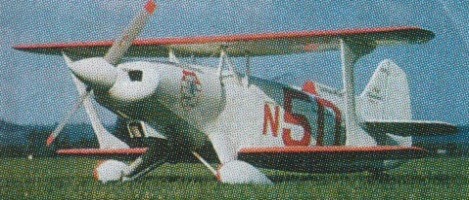
Designed by Vernon Payne in the USA in 1933, the Payne Knight Twister is a single seat biplane with a tube construction fuselage and wooden wings. All fabric covered.
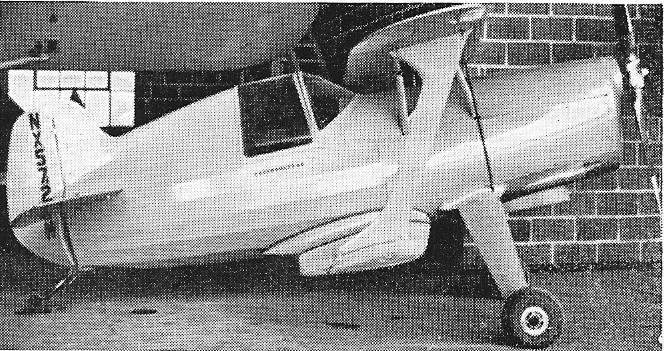
Engine: Lycoming, 108 hp.
HP range: 85-160.
Span upper: 15.00 ft
Span lower: 13 ft
Wing area: 55 sq.ft.
Length: 13.5 ft.
Height: 5 ft.
Weight empty: 517 lbs.
Gross: 865 lbs.
Fuel cap: 20 USG.
Speed max: 180 mph.
Cruise: 165 mph.
Range: 610 sm.
Stall: 55 mph.
ROC: 1800 fpm.
Take-off dist: 400 ft.
Landing dist: 800 ft.
Seats: 1-2.
Landing gear: tail wheel.
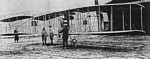
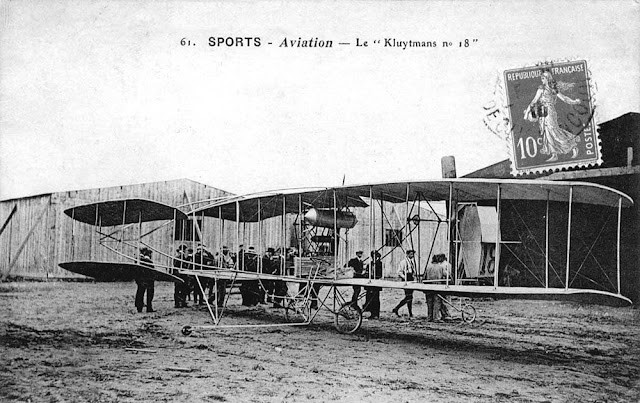
The 1909 Kluytman twin-pusher biplane was designed and built by Kluytman in France.
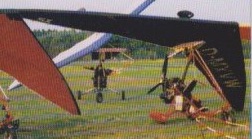
As well as the two seat Twin Racer there is also a smaller single seater.
Empty weight: 135 kg
Wing span: 10.6 m
Wing area: 16 sq.m
Fuel capacity: 50 lt
Certification: Vz
Engine: Rotax 582, 58 hp
MAUW: 400 kg
Seats: 2
Max speed: 90 kph
Cruise speed: 80 kph
Minimum speed: 45 kph
Climb rate: 2 m/s
Fuel consumption: 12 lt/hr
Price (1998): 31 088 DM
Single seat single engined flex wing aircraft with hybrid control. Rogallo wing; tail carries rudder and horizontal stabiliser. Pilot suspended below wing in trike unit, using bar to control pitch and roll by altering relative positions of trike unit and wing. Control input through pedals for yaw. Wing braced from above by kingpost and cables, from below by cables. Undercarriage has three wheels in tricycle formation. Engine mounted below wing driving pusher propeller.
Two Rogallo winged microlights are known to have been produced under the umbrella of this organisation, both of them attributed to Yevgueni Chevcheriko. As such they are hybrid control aircraft and are best described as ‘trike plus rudder on trike unit’. The trike unit is hung from the Rogallo in the normal way and the relative positions of the two can be altered to give pitch and roll control, just as in any other trike, but instead of relying on roll to initiate yaw, a separate rudder is attached to the rear of the trike unit, controlled by rudder pedals.
The Russian aircraft have a horizontal stabiliser behind the pilot. The Ptica 2, the earlier of the two Russian designs, has a large windscreen. The Ptica 2 has a 42 hp engine, 4 hp less than the SPM.
The initials SPM stand for Siniaya Ptica Modernisovanna, and it is basically an updated version of the Ptica 2.
Engine: 46 hp.
Total wing area 221 sq.ft, 20.5 sq.m.
Power per unit area 0.21 hp/sq.ft, 2.2 hp/sq.m.
Max take off weight: 401 lb, 182 kg.
Max wing loading: 1.81 1b/sq.ft, 8.9 kg/sq.m.
Max power loading 8.7 lb/hp, 4.0 kg/hp.
Take off speed 25mph, 40 kph.
Take off distance 100 130ft, 30 40m.
Landing dis¬tance 80 100 ft, 25 30 m.
Single seat single engined flex wing aircraft with hybrid control. Rogallo wing; tail carries rudder and horizontal stabiliser. Pilot suspended below wing in trike unit, using bar to control pitch and roll by altering relative positions of trike unit and wing. Control input through pedals for yaw. Wing braced from above by kingpost and cables, from below by cables. Undercarriage has three wheels in tricycle formation. Engine mounted below wing driving pusher propeller.
Two Rogallo winged microlights are known to have been produced under the umbrella of this organisation, both of them attributed to Yevgueni Chevcheriko. As such they are hybrid control aircraft and are best described as ‘trike plus rudder on trike unit’. The trike unit is hung from the Rogallo in the normal way and the relative positions of the two can be altered to give pitch and roll control, just as in any other trike, but instead of relying on roll to initiate yaw, a separate rudder is attached to the rear of the trike unit, controlled by rudder pedals.
The Russian aircraft have a horizontal stabiliser behind the pilot. The Ptica 2, the earlier of the two Russian designs, has a large windscreen. The Ptica 2 has a 42 hp engine, 4 hp less than the SPM.
Engine: 42hp.
Propeller diameter: 15in, 0.38m.
Total wing area 242 sq.ft, 22.5sq.m.
Power per unit area 0. 17 hp/sq.ft, 1.9hp/sq.m.
Take off speed 40mph, 65kph.
Cruising speed 62 mph, 100 kph.

