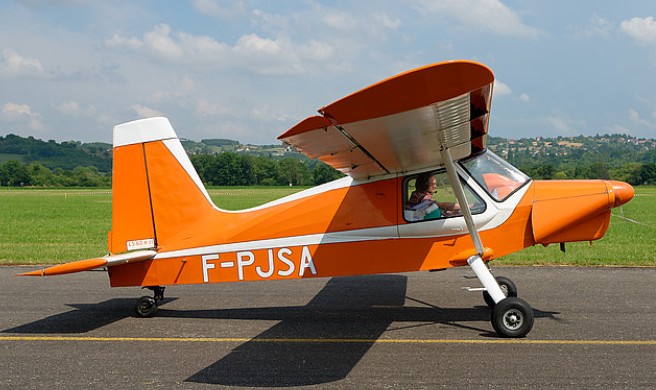
Legrand-Simon LS-60
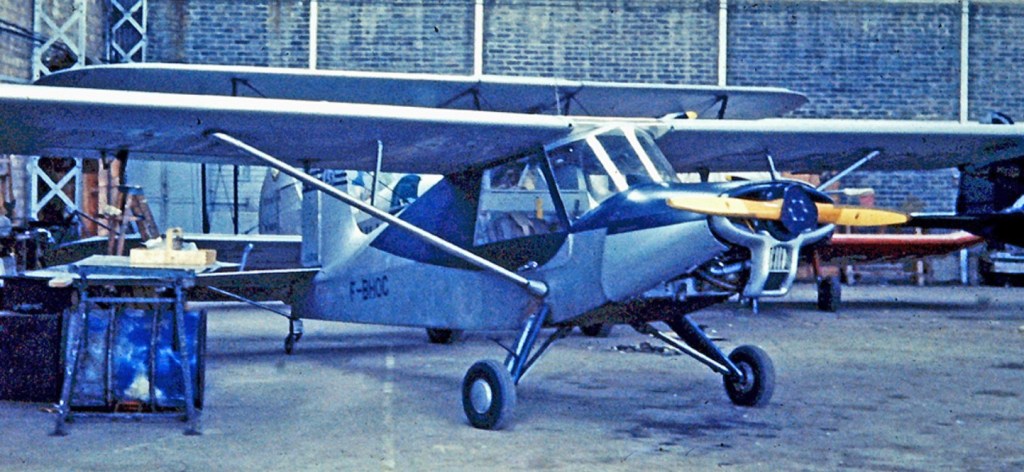
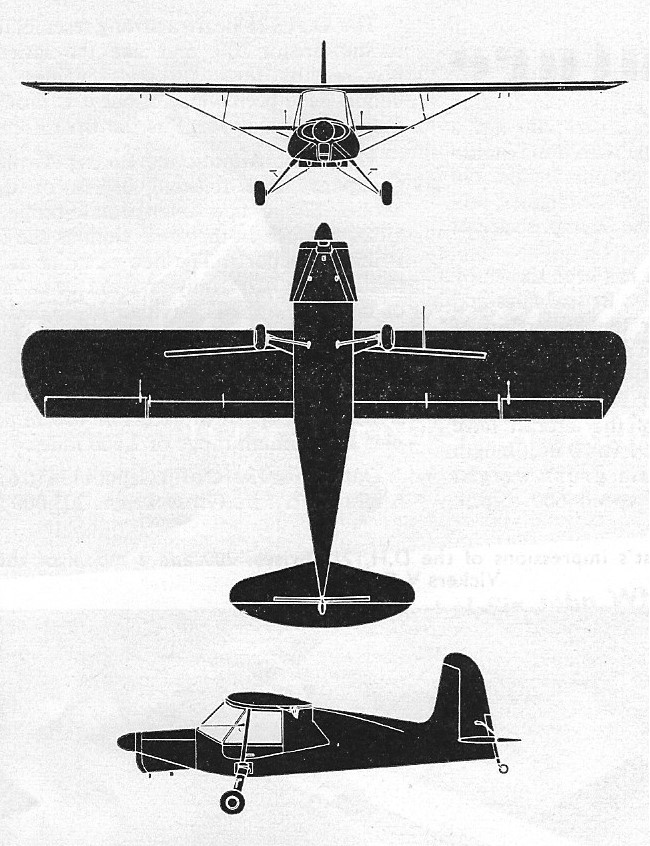
The LS 50 was designed to be suitable for touring, training, or towing. The craft is of mixed wood construction allowing sub-contracting and prefabrication.
On the prototype several components, such as cowling panels, wheel discs, spinner and door sills, had been made of fibreglass. The fuselage is basically rectangular, rigid wood box built up on four longerons. At the sear is a post for the rudder.
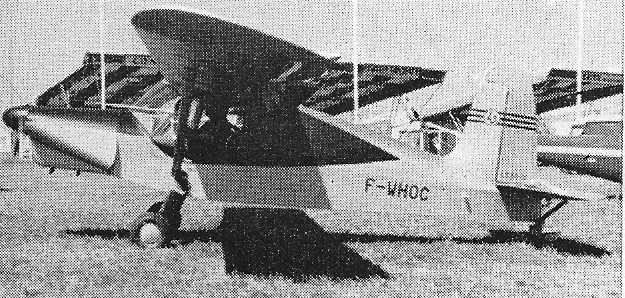
At the front a metal frame unites the cabin and wing supporting structure, the two side-by-side seats, the control column and its mechanism, and the undercarriage and shock absorbers. This welded steel structure supports the controls, flap mechanism, radio, doors and instrument panel. Full dual controls are fitted as standard, and the various trim controls are placed on the centrally mounted flap lever in the cabin roof, accessible to both seats.
The wing is built up on a single spar at 25% chord, and forward of this spar is plywood covered, forming a torsion box. The ailerons are cable-operated, the flaps by torsion tube. Ribs are built up of wood and the whole wing, braced by a single strut each side, is fabric covered. The tail unit is constructed of welded steel tube with a fabric cover.
Only the one was built.
Engine: 90 hp
Wingspan: 31 ft 6 in
Length: 21 ft 0 in
Height: 6 ft 6 in
Empty weight: 979 lb
Loaded weight: 1527 lb
Max speed at 3000ft: 118 mph
Cruise at 3000ft: 104 mph
Landing speed: 41 mph
Range: 620 mi
ROC: 700 fpm
Seats: 2
The 1910 Legrand triplane was designed by Jean Legrand and built by Voisin in France.
Span: 23′
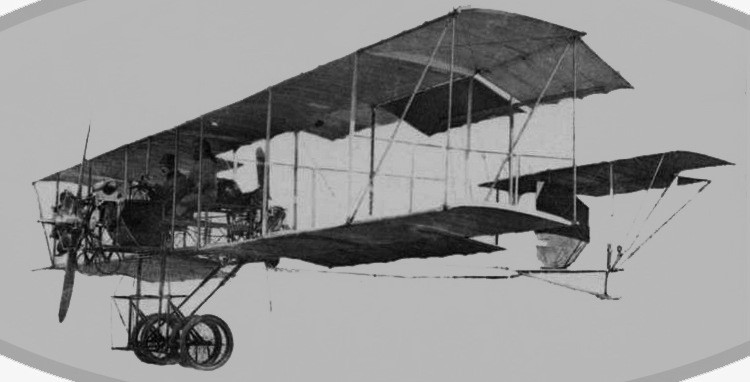
Built 1912-13, the tractor/pusher was a three-seater twin-Gnome-engined 100 hp plane built by Jean Legrand and flying by Camille Guillaume. A modification of a standard 1912 Voisin Type Course biplane to a push-pull machine.
The 1910 Legnano I monoplane was designed and built in Italy.
Produced the B.T. three-seat low-wing monoplane with 100 hp Michel engine.
Exhibited its first aircraft, the A.T.-35 two-seat parasolwing monoplane powered by an Anzani 3-cylinder engine, at the 1928 Paris Salon.
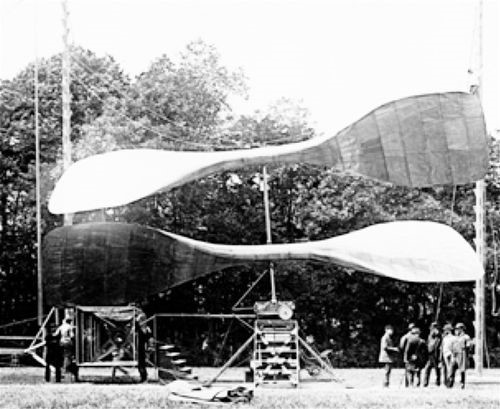
In 1905 Maurice Léger had Ouviere from Marseille build a huge ill-fated helicopter at Monaco. A half-scale model was built first, with a 5.6 kW electric motor on the ground, and a connecting cable. The spoon-bladed aluminum propellers were 6.5 m in diameter, and the empty weight of the model was 110 kg. The full-scale machine appeared shortly after, an enormous construction for the period, with two coupled Antoinette engines, driving two contra-rotating propellers made of fabric-covered frames. The pilot and his passenger sat on the base with twin steering wheels. A biplane tail unit was fixed within the diameter of the rotors. It was destroyed on its first test.

Cruise: 225 mph
Stall: 59 mph
Range: 1150 sm
Rate of climb: 3000 fpm
Takeoff dist: 1000 ft
Landing dist: 1650 ft
Engine: Chevrolet LS2 V-8, 300 hp
HP range: 300-500
Fuel capacity: 60 USG
Empty weight: 1800 lb
Gross weight: 2500 lb
Length: 22.5 ft
Wing span: 25.5 ft
Wing area: 111 sq.ft
Seats: 2 tandem
Landing gear: retractable tailwheel

Engine: Walter 601D, 724 hp
HP range: 600-1000
Cruise: 333 mph
Stall: 66 mph
Range: 1080 sm
Rate of climb: 6000 fpm
Takeoff dist: 1500 ft
Landing dist: 1500 ft
Fuel capacity: 120 USG
Empty weight: 2050 lb
Gross weight: 3300 lb
Length: 25.6 ft
Wing span: 29.4 ft
Wing area: 101 sq.ft
Seats: 2 tandem
Cockpit width: 27.5 in
Landing gear: retractable tailwheel

