Yuneec Power Drive 40

The Yuneec Power Drive 40 is a Chinese electric motor for powering electric aircraft and motorgliders, designed and produced by Yuneec International of Kunshan, Jiangsu.

The Power Drive 40 is part of a family of scalable electric motor designs produced by Yuneec. The family of engines is designed to use the company’s own power controller, Lithium polymer battery pack and charger, as an integrated package of components. This ensures that all components are compatible and also removes the need for aircraft builders to separately source components.

The Power Drive 40 is a brushless 133 volt design producing 40 kW (54 hp), with an outrunner. The low working rpm of the engine means that it can turn a propeller at efficient speeds without the need for a reduction drive.

Applications:
Yuneec E430
Yuneec EViva

Specifications:
Power Drive 40
Engine type: Brushless electric aircraft engine
Length: 163 mm (6.4 in)
Width: 240 mm (9.4 in)
Height: 240 mm (9.4 in)
Weight: 19 kg (42 lb)
Coil type: Outrunner
Bearings: 2
Reduction drive: none
Cooling: air
Voltage: 133 nominal
Current drain, maximum: 285 A
Current drain, cruise: 180 A
Power: 40 kW (54 hp) at 2400 rpm
Power to weight: 2.1 kW/kg
Yuneec Power Drive 10

The Yuneec Power Drive 10 is a Chinese electric motor for powering electric aircraft, designed and produced by Yuneec International of Kunshan, Jiangsu. Major applications are paramotors.

The Power Drive 10 is part of a family of scalable electric motor designs produced by Yuneec. The Power Drive 10+ produces the same power but at a reduced rpm.

The family of engines is designed to use the company’s own power controller, Lithium polymer battery pack and charger, as an integrated package of components. This ensures that all components are compatible and also removes the need for aircraft builders to separately source components.

The Power Drive 10 is a brushless 67 volt design producing 10 kW (13 hp), with an outrunner. The low working rpm of the engine means that it can turn a propeller at efficient speeds without the need for a reduction drive.

Variants:

Power Drive 10
Model that produces 10 kW (13 hp) at 2400 rpm, with a weight of 4.5 kg (9.9 lb).

Power Drive 10+
Model that produces 10 kW (13 hp) at 2000 rpm, with a weight of 6.0 kg (13.2 lb).

Applications:
Yuneec International EPac paramotor
Yuneec International ETrike ultralight trike

Specifications:
Power Drive 10
Engine type: Brushless electric aircraft engine
Length: 114 mm (4.5 in)
Width: 160 mm (6.3 in)
Height: 160 mm (6.3 in)
Weight: 4.5 kg (9.9 lb)
Coil type: Outrunner
Bearings: 3
Reduction drive: none
Cooling: air
Voltage: 67 nominal
Current drain, maximum: 180 A
Current drain, cruise: 55A
Power: 10 kW (13 hp) at 2400 rpm
Power to weight: 2.2 kW/kg

Yuneec International

Founded in Hong Kong in 1999, Yuneec International Co. Ltd. became a leader in electric aviation.

With hundreds of patents filed, Yuneec’s core technologies power its manned aircraft as well as its drones and its line of radio controlled aircraft for the hobby market.

The company was constructing a 260,000 square foot (25,000 sq m) factory to produce the E430 aircraft in Shanghai that was expected to open in October 2009.

In 2009 the rights, tooling and parts inventory of Flightstar Sportplanes of South Woodstock, Connecticut, were sold to Yuneec International of China when Flightstar Sportplanes’ business was wound up.

Yue No.2 / Ru, Feng No. 2

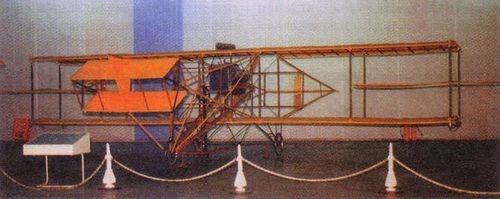
Feng Yue #2 at the National Aviation Museum in Nanking.

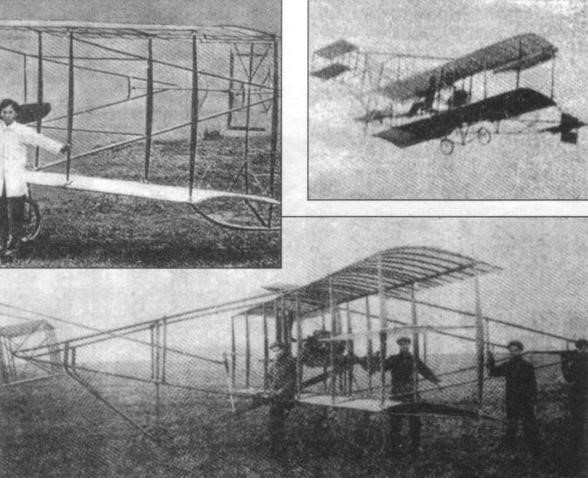
Although the “Feng Ru No. 1″ airplane was damaged during the first test flight, it can be proven that it flew, and the Chinese immigrants in the USA were legitimately very proud. They continued to support Feng Ru’s airplane endeavors, and in January 1911 Yue started his new airplane”Feng. 2” in Oakland.

Yue launched his second airplane above the Piedmont hills on September 21, 1909. The Feng Yue #2 was Curtiss-like, but had some differences in the front elevator assembly.

This was the first airplane manufactured by an Oakland resident to fly in that area. Unfortunately, this airplane crashed as well after a twenty minute flight when the bolt holding the propeller shaft broke. Fong continued building planes, and in 1911, his plane stayed in the air for 40 minutes and landed without a mishap.

Yue Feng Ru No. 1

With financial support from other Chinese immigrants in the USA, Feng Yue began to build an airplane in 1906. In 1907, in Oakland, a city east of San Francisco, in spite of all kinds of difficulties, he constructed the Guangdong Airplane Factory. By 1909 he had built an aeroplane, the first which had been designed and built by a Chinese. He called it “Feng Ru No. 1”.

On September 21, 1909, Feng Ru completed the first test flight from a hill in the proximity of Oakland, which was witnessed by some American journalists as well as three of his coworkers. Feng Ru reached a height of 4.5 meters with his airplane, and flew some 800 meters along the hill. Thus, he was the first Chinese who had built and flown an airworthy airplane.

After approximately 20 minutes, the flight came to a sudden end when the propeller failed and the aeroplane fell to earth from a small height. Fortunately, Feng Ru got off with only a bad scare and was not hurt. The first one crashed into his own workshop, starting a fire that burned it to the ground.

Young Eddyo F-2

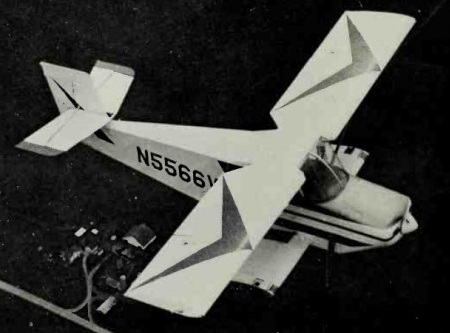
Designed by FAA employee Edward Young of Erie, Colorada, USA, the Young Eddyo F-2 was a two-seat side-by-side light aircraft and took three years of spare-time activity to complete at a cost of $2,500.

The Eddyo F-2 was a sesquiplane and had Vee-braced upper wings, which carried the ailerons, and cantilever lower stubwings which contained the fuel tanks. It had full span trailing-edge flaps. Construction was conventional, with wooden wings and a steel-tube fuselage and tail unit, all fabric-covered. The design featured tail-wheel landing gear which utilised cantilever spring steel main legs. The engine was a Lycoming O-290-D2 four-cylinder 135 hp horizontally-opposed air-cooled which drove a two-blade fixed-pitch propeller.

The sole aircraft, registered N55566V, first flew on November 4, 1963.

The aircraft registration was finally cancelled on 12 December 1983.

Powerplant: Lycoming O-290-D2, 135 hp
Wing span (upper): 23 ft 1 in (7.04 m)
Constant chord: 3 ft 10 in (1.17 m)
Length: 19 ft 5 in (5.92 in)
Height: 6 ft 0 in (1.83 m)
Empty weight: 997 lb (452 kg)
Maximum take-off weight: 1,525 lb (692 kg)
Maximum level speed at sea level at MTOW: 145 mph (233 km/h)
Cruising speed: 130 mph (209 km/h)
Landing speed: 70 mph (ll3 km/h)
Service ceiling: 8,000 ft (550 m)
Range with maximum fuel: 425 miles (685 km)
Accommodation: 2 seats