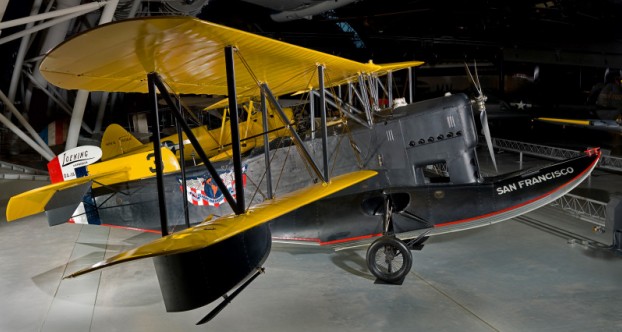
The hull is constructed of duralumin over a wooden frame, and the fuselage was built on top of the hull. The OA-lA is powered by a 420-horsepower, water-cooled Liberty V-12 engine that is mounted inverted.
The historic Pan-American Goodwill Flight of 1926 and 1927 through Mexico and Central and South America was intended to improve relations with Latin American countries, to encourage commercial aviation, and to provide valuable training for Air Corps personnel. The flight was made by ten pilots in five Loening OA-1A amphibian aircraft. To stimulate public interest, each airplane was named after a major U.S. city-the New York, the San Antonio, the San Francisco, the Detroit, and the St. Louis.
The 35,200 km (22,000 mi) flight began on December 21, 1926, from San Antonio, Texas. The journey took 59 flying days, interspersed with 74 days for scheduled maintenance and diplomatic meetings and ceremonies. The flight concluded at Bolling Field in Washington, D.C., on May 2, 1927. Within three weeks, however, the impressive achievement was eclipsed by Lindbergh’s solo trans-Atlantic flight in the Spirit of St. Louis.
Loening OA-1A San Francisco Engine: Liberty V-12, 313 kw (420 horsepower) Wingspan: 13.9 m (45 ft 7 in) Length: 10.7 m (35 ft 1 in) Height: 3.5 m (11 ft 6 in)
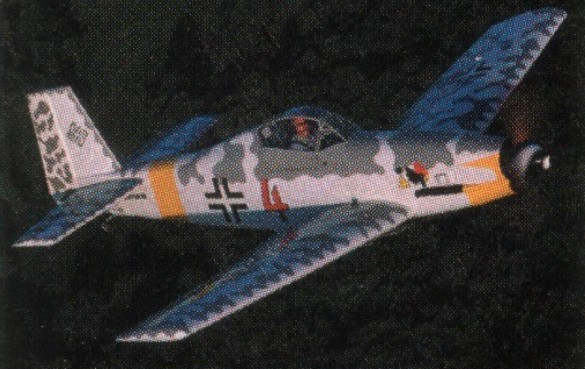
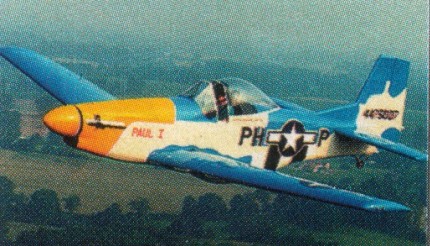
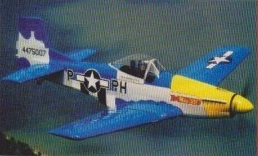
A 75% scale ultralight P-51 Mustang that qualifies as an LSA. The entire 5151 kit is designed for the inexperienced builder and is estimated to be completed in 400-500 hours. Almost all parts are pre-cut to exact dimensions, grooved, shaped and even tapered to ensure a perfect fit. The gussets and stringer attach pieces used in large quantity in the airframe are die cut like in a good model aircraft kit. The canopy and metal parts are also pre cut and those “difficult to make” parts are even preformed, predrilled and ready to assemble. All hardware comes separately packed and labelled for each section of the aircraft to avoid loss or confusion where parts go. The airframe kit includes everything to build the aircraft less engine, instruments and paint. Covering material and fabric glue, prop, tyres etc., and the enormous 18 inch custom spinner is also included in the airframe kit. Although the ROTAX 582LC is the recommend engine, there are several engine options including a 4 cyl., in-line 4-stroke engine available.
The construction of the 5151 Mustang consists more of an assembly than actually building, since all parts are highly prefabricated. Much of the assembly is of geodetic construction which, while it looks “fussy” it is actually a simple technique producing an exceptionally strong airframe for the structure’s weight. The fuselage consists of a conventional simple box-type construction which is transformed by formers and stringers into the shape of a P-51. The heart of the 5151 is the massive 10 x 12 inch centre section box spar which takes the optional wing tanks and the retractable or fixed landing gear, which ever the builder desires. The outer box spar i.e. wing panels attach to the centre section and are removable for storage or trailer, which leaves a foot wide structure on the landing gear for easy handling. Once the spar is assembled, the wing ribs simply attach to the spar and no jigs are needed since the aircraft is designed to be built on a flat bench. Also a remarkable feature is the technique used by the designer to virtually eliminate building errors in those critical components such as washout, taper etc., since the wing is tapered and all 12 wing ribs are different.
All tail surfaces are also built conventionally and consist simply of a leading edge spar, pre-cut trailing edge, ribs and geodetic bracing. The ribs are built over full-size drawings and are also built on the workbench, just as the entire rudder, elevators and vertical stabilizer. The retractable landing gear and also the fixed version is made of 4130N 2 inch chromolly tubing and comes tack welded.
The 5151RG has retractable undercarriage.
5151-RG
By 2014, the covering no longer came as part of the kit (available separately though), and only the Rotax 582 engine was offered. Ribs are solid wood – already cut to proper airfoil shape; simply require cap strips upper and lower.
5151 Engine: Rotax 503, 50 hp. Speed max: 95 mph. Cruise: 75 mph. Range: 325 sm. Stall: 28 mph. ROC: 700 fpm. Take-off dist: 150 ft. Landing dist: 250 ft. Service ceiling: 12,500 ft. Fuel cap: 5-13 USG. Weight empty: 513 lbs. Gross: 885 lbs. Height: 6 ft. Length: 22.9 ft. Wing span: 27.4 ft. Wing area: 130 sq.ft. Seats: 1. Landing gear: tail wheel.
5151 RG Engine: Rotax 582, 65 hp. Vne: 100 mph/ 89 kt. Cruise: 85 mph/ 79 kt. Range: 325 nm. Stall: 30 mph/27 kt. ROC: 1200 fpm. Take-off dist: 150 ft. Landing dist: 250 ft. Service ceiling: 12,500 ft. Fuel cap: 13 USG. Weight empty: 600 lbs. Gross: 885 lbs. Height: 6 ft. Length: 22.9 ft. Wing span: 27.4 ft. Wing area: 130 sq.ft. Seats: 1. Landing gear: tail wheel, retractable.
5151-RG Engine: Rotax 582, 64 hp Wing span: 8.4 m Wing area: 12.7 sq.m MAUW: 300 kg Empty weight: 203 kg Fuel capacity: 25 lt Max speed: 150 kph Cruise speed: 150 kph Minimum speed: 55 kph Climb rate: 4.2 m/s Certification: Vz Seats: 1 Fuel consumption: 13 lt/hr Kit price (1998): $7995
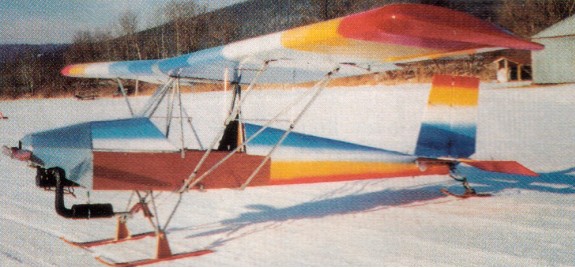
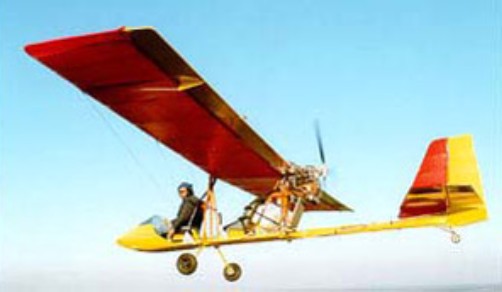
Produced by the Maxair Aircraft Corporation at the height of the ultralight boom, the original single-seat Drifter featured a 28-hp Rotax 277 engine. Its cable-braced wing and aluminum fuselage tube resulted in a rigid design that was soon expanded to include a two-seat trainer version and a short-wing, overpowered single-seat hot rod that was well outside ultralight limits. Some Drifters were equipped with monohull or dual floats.
Maxair declared bankruptcy in 1991, and the Drifter project was picked up by Phil Lockwood, who had worked for Maxair.
His company, Lockwood Aircraft, now kits the Super Drifter, an LSA, two-seat version powered by an 81-hp, four-stroke Rotax 912UL engine. With its standard 10-gallon tank, the Super Drifter claims a range of about 200 nautical miles at a cruise speed of about 60 knots—perfect for low-altitude, warm-weather exploring or short trips.
The two-seat Drifter and the similarly configured Air Cam has conventional controls and handling, and power is more than adequate. It’s worth noting that the rather short main landing gear legs and a long fuselage result in a nearly level three-point attitude on the ground. First-time front-seat pilots would benefit from climbing aboard, sitting awhile, and noting the angle between the Drifter’s small nose cone and the horizon. That’s the ideal landing attitude, and there is little ahead for a pitch reference.
Engine: Rotax 912, 80 hp HP range: 50-80 Length: 22 ft Wing span: 30 ft Wing area: 160 sq.ft Empty weight: 495 lb Gross weight: 1100 lb Fuel capacity: 10 USG Cruise: 70 mph Stall: 34 mph Range: 230 sm Rate of climb: 1000 fpm Takeoff dist: 200 ft Landing dist: 300 ft Landing gear: tailwheel
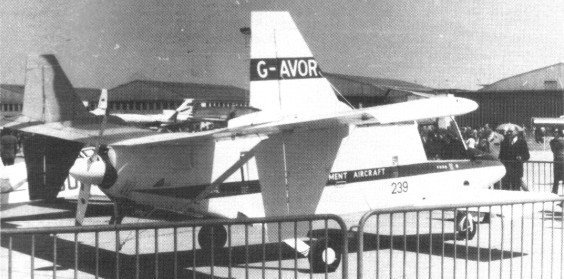
David Lockspeiser attempted to develop LDA (land development aircraft) general utility aircraft over two decades up to mid-1980s, with rear-mounted main wings and large canards, and rear-mounted engine with pusher propeller. A 70 percent-scale prototype flew 1971 as G-AVOR c/n LDA-01 and given PFA number 1346.
Construction was started at Shalford, UK, and the final assembly was done at Wisley. The two rear wing sections are interchangeable with each other and with the forward wing, which is mounted underneath the fuselage. The angular fuselage was capable of taking an underslung cargo pannier. A four unit undercarriage was fitted.
It was flown for the first time at Wisley on 24 August 1971 powered by a Continental C85-12. Initially it flew with a twin fin/rudder assembly but later a non-moving central fin was added.
In 1974, after a period of testing, the prototype was re-engined with a Lycoming O-320-D1A and given a conventional three unit undercarriage. The provision for the pannier was also removed. It appeared at the 1975 Paris Salon at Le Bourget France.
The intended full-size LDA-500 Boxer and larger LDA-1000 Boxer were designed.
Span: 29.00 ft Fore plane span: 13.00 ft Length: 22.06 ft
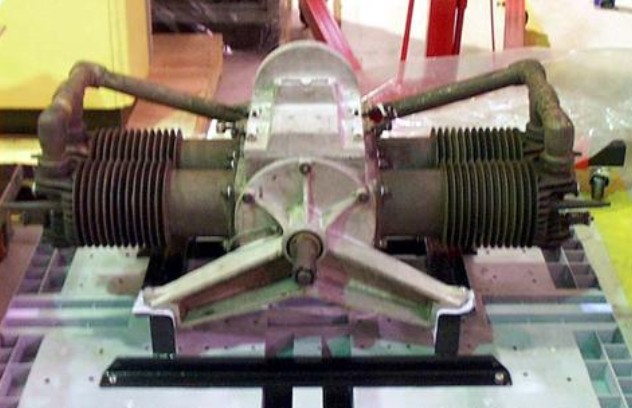
This four-cylinder, horizontally-opposed engine is one of the earliest aero engines to be built in Australia. It was designed and built by two young motor mechanics, Azor D. Robbins and Aubrey Keith Lock. Robbins was employed at Dalgetys Garage in Bourke Street, Melbourne while Lock was an apprentice with Herbert Thomson’s Steam Car Company in Armadale. They had been approached to build a 50 horsepower (37 kW) aero engine by Lawrence Marshall, a Melbourne inventor who was building a biplane to compete for a Commonwealth government prize of £5,000 for a military aeroplane. Lock and Robbins worked on the engine part-time in Richmond and subsequently at the Dalgety’s engineering shop in Melbourne. A total of forty cylinders were believed to have been cast by an outside foundry from which the four best were selected. Despite this, the cylinders fractured during a bench test and Marshall refused to pay for the engine as it did not deliver the promised 50 horsepower.
It was later repaired by Lock and acquired by Azor Robbins and a business partner Alex Porter, who had built a Bleriot-type monoplane in Albury, New South Wales. Robbins and Porter had moved to Albury from Melbourne in 1911 opening their own automotive business at 532 Kiewa Street. The engine was reported to have been displayed at the 1912 Albury Show. Their aircraft is believed to have made several short flights in July 1913. The aircraft was subsequently sold to Blacklock’s Garage in Dean Street Albury where it was later destroyed in a fire. The engine was salvaged by Aubrey Lock who kept it at his Melbourne house until his death in 1966. It was donated to the Museum of Victoria in Melbourne, Australia, in pieces in 1978 by Donald Shanks. Since then it has been reassembled and conserved to retain as much of the original finish and components as possible.
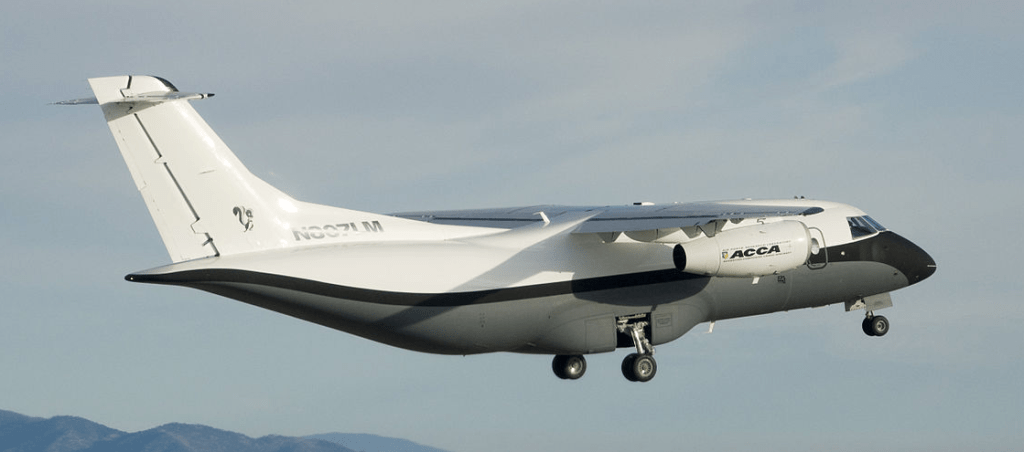
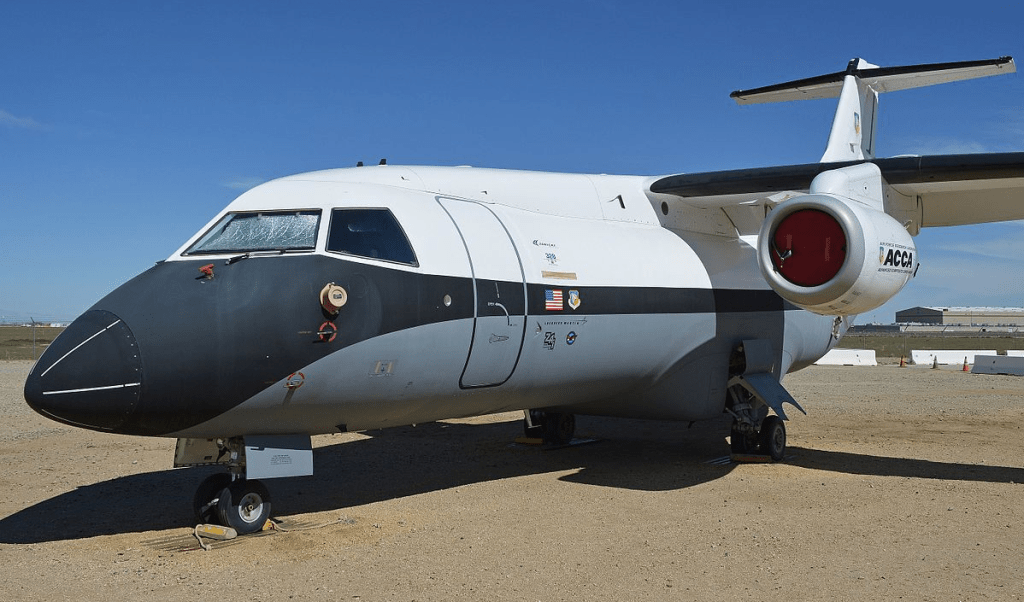
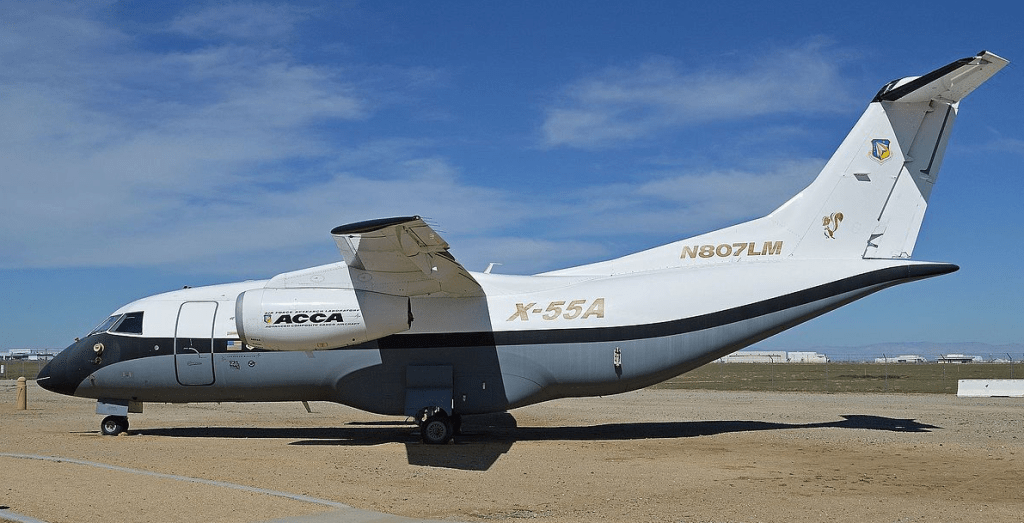
The Lockheed Martin X-55 Advanced Composite Cargo Aircraft (ACCA) is an experimental twinjet transport aircraft. It is intended to demonstrate new air cargo-carrier capabilities using advanced composite materials. A project of the United States Air Force’s Air Force Research Laboratory, it was built by the international aerospace company Lockheed Martin, at its Advanced Development Programs (Skunk Works) facility in Palmdale, California. The X-55 is a one-off aircraft intended to demonstrate the use of advanced composite materials in the fuselage of an otherwise conventional high-wing transport aircraft.
The aircraft is powered by two Pratt & Whitney Canada PW306B turbofans. The X-55 design is based on the existing Fairchild Dornier 328JET. The fuselage of that aircraft, which is constructed of aluminium alloys, was replaced aft of the entrance door with a newly designed fuselage. The new design makes extensive use of advanced composite materials, selected to allow out of autoclave curing at lower temperatures and pressures than previous materials. The new widened fuselage allows the loading of cargo through a rear ramp.
The new fuselage section is constructed as a single large component, including the vertical stabilizer. When attached to the existing nose section, the fuselage is 55 feet (16.8 m) long and 9 feet (2.74 m) diameter. The fuselage has upper and lower halves, each with a roughly-oval shape similar to a canoe. The halves are bonded to circular frames. The fuselage section ahead of the entrance door consists of the existing (metal) 328J component, with fasteners used to bring the forward and new aft sections together.
As of April 2008, the fuselage was being fabricated. The first flight of the modified aircraft was expected during the winter of 2008/2009. However, due to a “glitch” during fabricating the composite fuselage, that schedule slipped. The delay was caused by an unsatisfactory bond of the skin on the lower fuselage, which required a second fuselage to be fabricated.
The first flight was completed at Lockheed Martin’s Advanced Development Programs facility (Air Force Plant 42) in Palmdale, California on June 2, 2009 by the Air Force Research Laboratory in conjunction with Lockheed Martin. In October 2009, the ACCA demonstrator was designated X-55A by the USAF. Over the course of the program, 15 to 20 flights were expected.
As of September 12, 2014, the X-55 aircraft is on display at the Joe Davies Heritage Airpark in Palmdale, California.