Motoplaneur
Engines – Power
LOM Praha M-332 / Avia M 332 / Walter M 332
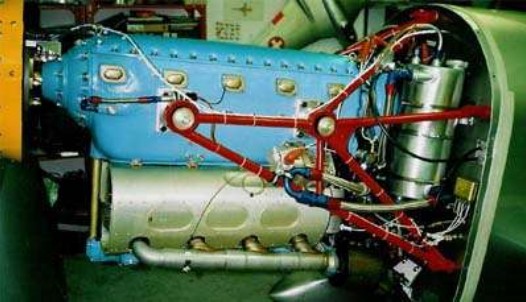
The Avia M 332 (originally known as the Walter M332) is an air-cooled four-cylinder inverted inline engine. It was designed by Bohumil Šimůnek, of Motorlet Walter Aircraft Engines, as a more powerful replacement for the four-cylinder Walter Minor engine, going into production in 1958. Piston aircraft engine production was transferred from Walter to Avia in 1964, the engine becoming the Avia M 332.
Applications
Aero 145
Carlson Criquet
Fry Esprit VFII
Orličan L-40 Meta Sokol
Rolandas Kalinauskas RK-5 Ruth
Specifications
Type: 4-cylinder inverted air-cooled supercharged inline engine
Bore: 105 mm (4.13 in)
Stroke: 115 mm (4.53 in)
Displacement: 3.98 L (247.9 in³)
Length: 1,102 mm (43.4 in)
Width: 425 mm (16.7 in)
Height: 628 mm (24.7in)
Dry weight: 102 kg (225 lb)
Valvetrain: two camshaft operated valves per cylinder, sodium filled exhaust valve
Supercharger: Centrifugal
Fuel system: Low pressure fuel injection
Fuel type: Min 72 octane unleaded or 80 octane leaded
Oil system: Dry sump pressure feed
Cooling system: Air-cooling
Power output: 104 kW (140 hp) at 2,700 rpm (take-off)
Lolo Pipistrel Spider
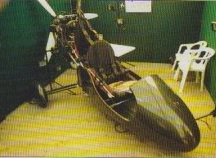
A trike of welded steel construction, power units options are the Rotax 503 or 912, and wings are 10, 1, or 15 sq.m.
Empty weight: 165 kg
Wing span: 11 m
Wing area: 13 sq.m
Fuel capacity: 42 lt
Certification: A
Engine: Rotax 582, 65 hp
MAUW: 400 kg
Seats: 2
Max speed: 100 kph
Cruise speed: 70 kph
Minimum speed: 42 kph
Climb rate: 8 m/s
Fuel consumption: 8 lt/hr
Price (1998): 250 000 AS
Loire-Nieuport LN.40 / LN.401 / LN.411
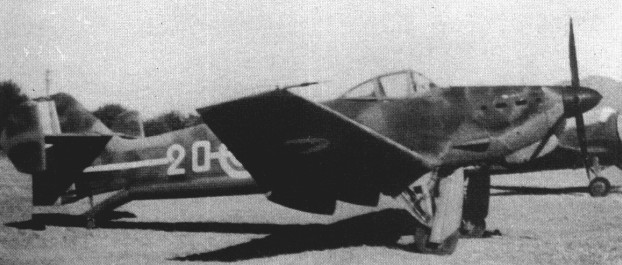
The LN.40 was evolved from the Nieuport 140 in response to a French naval requirement for a ship-borne dive-bomber, and emerged as a compact single-seater with inverted gull wings and a crutch to lever the single large bomb clear of the propeller before release. The prototype flew in June 1938, trials revealing the need for tail modifications. It was also decided to use the extended main landing gear legs as dive brakes, allowing the removal of the tail-mounted dive brakes. Some 42 LN.401 production aircraft were ordered, although only 23 or so had been delivered by the fall of France. The French Air Force also ordered 40 LN.411s, these having no arrester hook, wing-folding mechanism or flotation bags; again only about 23 had been delivered by the fall of France. After the Armistice SNCASO assembled another 24 LN.401s and LN.411s from components.
LN.401
Span: 14m (45ft 11.25 in).
Length: 9.75m (3l ft 11.75in).
Powerplant: l x Hispano-Suiza l2Xcrs, 515kW (690 hp)
Max TO weight: 2825 kg (6,228 lb).
Max speed: 236 mph at 13,125 ft.
Operational range: 746 miles.
Armament: 1 x 20-mm Hispano¬-Suiza cannon and two 7.5-mm (0.295-in) Darne mg plus provision for 1 x 225-kg (496-lb) bomb carried under the fuselage.
LN.411
Loire-Nieuport LN10
Loire 250
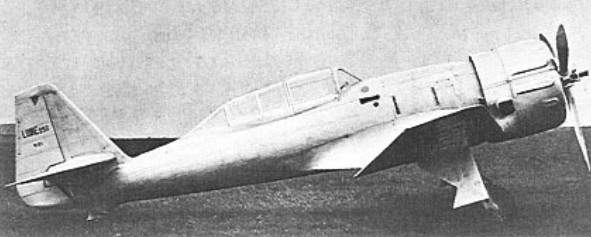
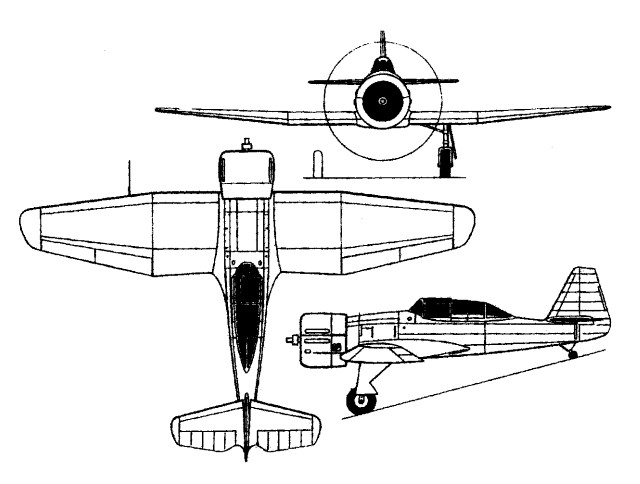
In 1934, the Service Technique issued an outline specification for a new single-seat fighter, all the contenders but one having all-metal stressed-skin monocoque structures with enclosed cockpits and retractable undercarriages. The structural exception was the MS 405.
The Loire 250 was powered by a 1000hp Hispano-Suiza 14Ha-79 two-row radial and was first flown on 27 September 1935 temporarily with a fixed-pitch two-bladed wooden propeller. Intended armament comprised two synchronised 20mm cannon and two 7.5mm machine guns, but trials with the Loire 250 proved disappointing from the outset, the prototype suffering serious drag problems. Various methods were applied to reduce drag, the vertical tail was redesigned to rectify a stability problem and a three-bladed variable-pitch propeller was fitted. Regardless the fighter proved incapable of attaining the max speed of “at least 485km/h” called for by the specification, and was eliminated from the contest at an early stage.
Engine: 1 x 1000hp Hispano-Suiza 14Ha-79 two-row radial
Max take off weight: 2200 kg / 4850 lb
Empty weight: 1500 kg
Wingspan: 10.80 m / 35 ft 5 in
Length: 7.81 m / 25 ft 7 in
Height: 3.72 m / 12 ft 2 in
Wing area: 16.30 sq.m / 175.45 sq ft
Max. speed: 480 km/h / 298 mph
Range: 875 km / 544 miles
Loire 210
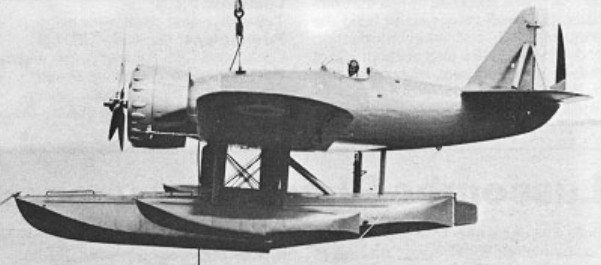
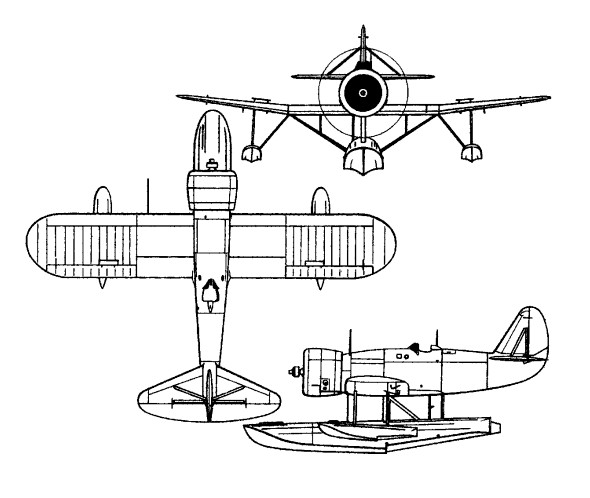
In 1933, the Marine Nationale formulated and issued a requirement for a modern float-equipped fighter that could be launched from the rotatable catapults of such cruisers as the Foch and the Richelieu.
Contenders were built by Loire, Bernard (H.52), Potez (452) and Romano (R-90).
The Loire 210, first flown on 21 March 1935, was of all-metal construction with metal skinning apart from the outboard sections of the wings which were fabric covered. Powered by a 720hp Hispano-Suiza 9Vbs nine-cylinder radial, the Loire 210 began official trials in June 1936.
A production order, which called for 20 aircraft, was not placed until 19 March 1937, the first series aircraft flying on 18 November 1938. The production model carried an armament of four wing-mounted 7.5mm Darne machine guns, two escadrilles forming with this fighter in August 1939. However, after several accidents resulting from wing structural failures, the remaining aircraft were withdrawn from service and their units disbanded.
Engine: 720hp Hispano-Suiza 9Vbs
Max take off weight: 2180 kg / 4806 lb
Empty weight: 1440 kg / 3175 lb
Wingspan: 11.79 m / 38 ft 8 in
Length: 9.51 m / 31 ft 2 in
Height: 3.80 m / 12 ft 6 in
Wing area: 20.30 sq.m / 218.51 sq ft
Max. speed: 299 km/h / 186 mph
Range: 750 km / 466 miles
Loire 130
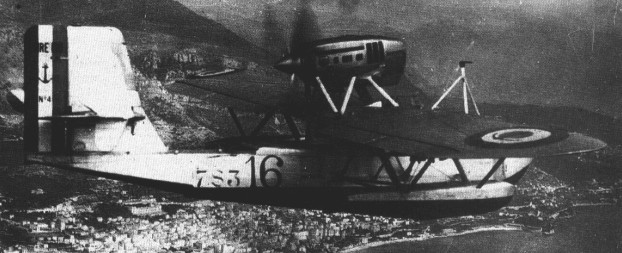
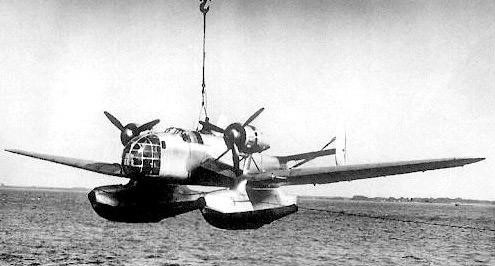
Designed in response to a 1933 French Navy requirement for an all-purpose seaplane capable of being catapult-launched, the three-seat Loire 130 prototype first flew in November 1934.
The trials programme was considerably slowed by the need to cure stability problems, and it was August 1936 before production orders were placed for the initial two versions, the Loire 130M (Metropole) and Loire 130C (Colonie) intended for metropolitan and colonial deployment respectively. The 130C being strengthened and equipped for use in tropical climates with a larger radiator. Power was a Hispano-Suiza engine mounted on struts over the hull.
The Loire 130 did not reach French navy escadrilles until 1938. By 1939 it equipped Escadrille 7S2 aboard the seaplane carrier Commandant Teste and 7S3 and 7S4 embarked on various capital ships and cruisers. Overseas the Loire 130 was with 8S2 at Fort-de-France, French Antilles, 8S3 in West Africa, and 8S4 in the Levant (now Lebanon).
In 1939-40 the type went on to equip several newly formed shore-based and shipborne units and also equipped Armee de I’Air units, including 1/CBS in French Indo-China (now Vietnam).
About 95 of the Loire 130s on order had been completed by the time of the June 1940 armistice with the Germans, but permission was given for 30 more of the type to be built under the auspices of the Vichy regime. All being used in the coastal role after the removal of catapults from all French ships in November 1942.
The last Loire 130 in flying condition, with Escadrille 8.S in Indo-China, was withdrawn and scrapped in late 1949.
Engine: 1 x Hispano-Suiza 12Xbrs V-12, 537kW / 720 hp
Max take off weight: 3396 kg / 7487 lb
Loaded weight: 2090 kg / 4608 lb
Wingspan: 16.00 m / 52 ft 6 in
Length: 11.30 m / 37 ft 1 in
Height: 3.85 m / 12 ft 8 in
Wing area: 40.10 sq.m / 431.63 sq ft
Max. speed: 226 km/h / 140 mph
Ceiling: 6000 m / 19700 ft
Operational range: 1100 km / 684 miles
Armament: 2 x 7.5mm Darne machine-guns, 2 x 75kg / 165 lb bombs
Seats: 3
Loire 101 / 102
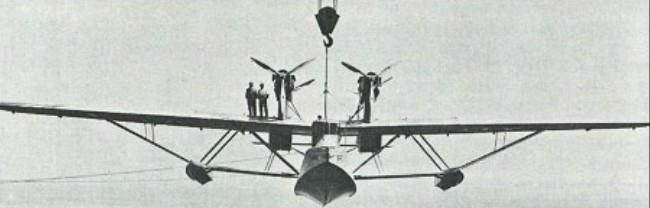
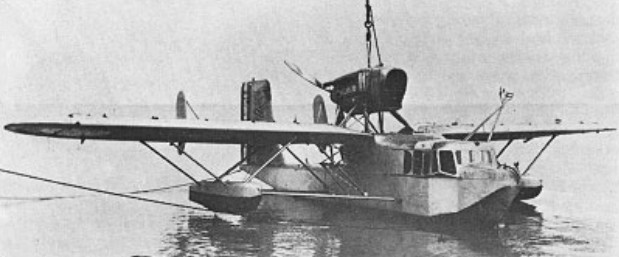
Designed for the South Atlantic mail route between West Africa and Brazil, the Loire 101 Bretagne (Brittany) flew for the first time on 12 May 1936. A large superstructure, on the lines of the naval vessels for which the firm was famous, was set-on top of the two-step hull and contained the control cabin and various crew compartments. Forward in the hull was a comfortable cabin for four passengers, to the rear of which were holds for mail, baggage and freight. Set on top of the high braced wing were four 537kW Hispano-Suiza 12Kbrs-1 liquid-cooled engines in tandem pairs. Vibration problems of the Loire 102 were never resolved and the flying-boat was finally scrapped in 1938.
Max take off weight: 19100 kg / 42109 lb
Wingspan: 34.0 m / 111 ft 7 in
Loire 70
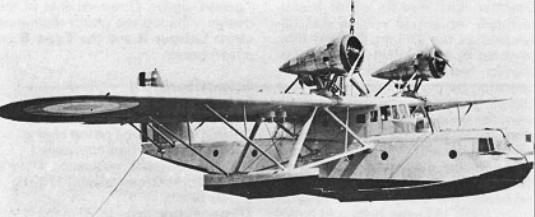
An eight-man long-range maritime reconnaissance and bombing flying-boat designed to a 1932 French navy requirement, the prototype Loire 70 made its first flight on 28 December 1933.
During tests the original three 373kW Gnome-Rhone 9Kbr radials were replaced by more powerful 9Kfr engines, and other changes included supplementing the large single fin and rudder with a pair of small auxiliary fins, elimination of the bow gun position, and relocation of the bomb-aimer/ navigator in the extreme nose.
Seven production aircraft were delivered to Escadrille E.7 at Karouba to join the prototype within a 12-month period from June 1937. From the beginning of hostilities, in September 1939, the Loire 70s patrolled the Mediterranean until three of four surviving machines were destroyed in an Italian air raid on their base on 12 June 1940. Nothing was heard subsequently of the surviving flying-boat.
Engine: 3 x Gnome-Rhone 9Kfr radial, 552kW
Max take off weight: 11500 kg / 25353 lb
Loaded weight: 6500 kg / 14330 lb
Wingspan: 30.00 m / 98 ft 5 in
Length: 19.50 m / 63 ft 12 in
Height: 6.75 m / 22 ft 2 in
Wing area: 136.00 sq.m / 1463.89 sq ft
Max. speed: 235 km/h / 146 mph
Ceiling: 4000 m / 13100 ft
Range: 3000 km / 1864 miles
Armament: 6 x 7.5mm machine-guns, 600kg of bombs

