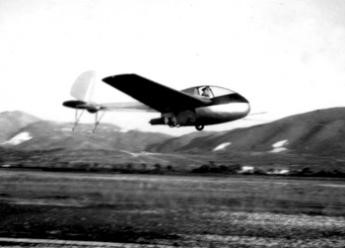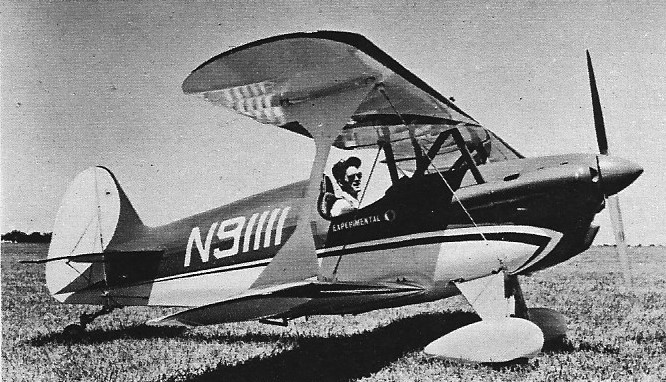
Marcotte Rich Mixture II

The Marcotte Rich Mixture II registered N91111 was an original single-seat biplane design by 35 year-old Ken Marcotte, an airframe and engine mechanic from Bedford Park, Ill, USA.

It had wood wings. Steel tube fuselage and tail, with Razorback cover. Fibreglass cowl and wheel fairings were fitted.

Engine: Continental C85-12
Wingspan: 19 ft / 5.79 m
Length: 17 ft / 5.18 m
Empty weight: 625 lb / 283.5 kg
MAUW: 1000 lb / 453.6 kg
Cruise: 115 mph / 185 kph
Landing speed: 50 mph / 80 kph
ROC: 1500 fpm / 7.62 m/sec
Range: 300 mi / 483 km
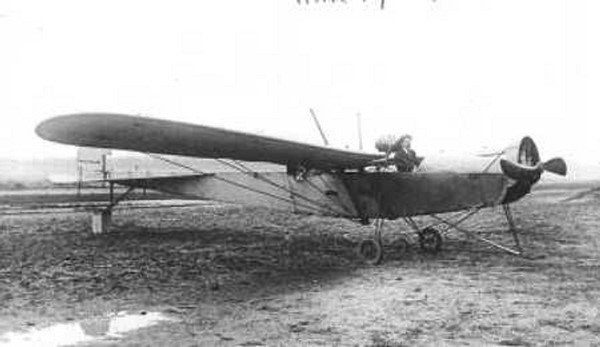
Marçay-Moonen 1911 monoplane

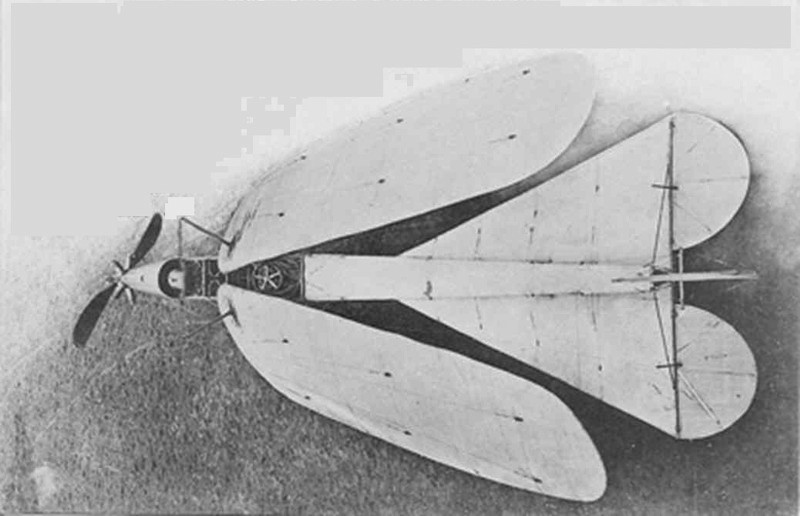
In 1911 the French army wanted to have an aircraft easily transportable and quickly dismountable from one location to another by road or railway. It was also required that the aircraft could be reassembled quickly. Baron Edmond de Marçay and Emile Moonen simplified the problem by imagining a device with wings folding along the fuselage, which was triangular and completely covered. The pilot could fold the wings without help and afterwards, according to the inventors, drive the machine on the road like a car, using the steerable rear wheels. The machine was first presented at the 1911 exhibition.

Manzolini Libellula II

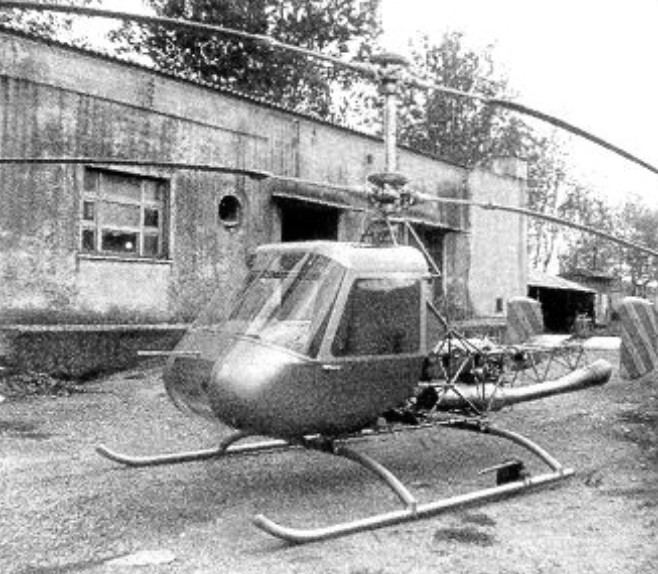
The Libellula II used a higher powered 105hp Walter Minor 4-III engine and had an enclosed cockpit. This aircraft, I-MANZ, gained an RAI type certificate on October 15, 1962, but no manufacture was undertaken.

Libellula II
Engine: Walter Minor III, 78kW
Main rotor diameter: 9.0m
Fuselage length: 4.75m
Height: 3.30m
Max take-off weight: 650kg
Empty weight: 500kg
Max speed: 109km/h
Hovering ceiling: 1250m
Range: 200km

Manzolini Libellula

Proposed final version

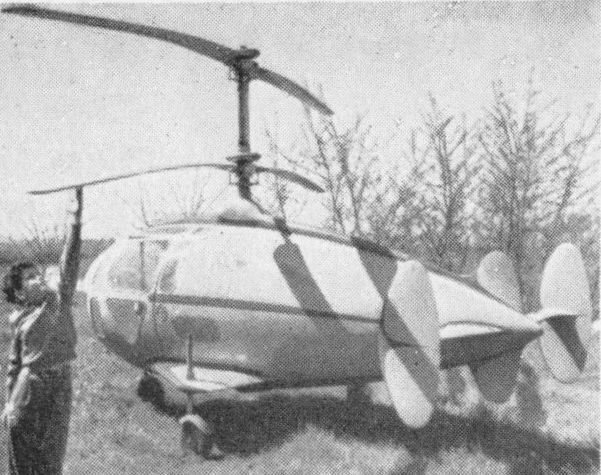
The Libellula was the brainchild of Count Ettore Manzolini. With an open framework fuselage and fixed skid undercarriage, Manzolini devised a coaxial rotor system for the Libellula and flew his ‘stripped’ prototype on 7 January 1952.

A mock-up of a proposed final version was prepared.

Engine: Hirth 105 hp
Rotors: 2 x 2-blade co-axial
Rotor diameter: 26 ft
Loaded weight: 1,430 lb
Cruising speed: 65 mph
Seats: 1

Mantelli AM 12 Palas

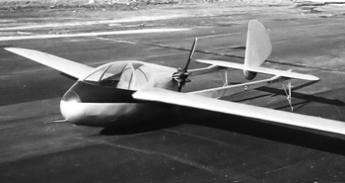
Although its origins are reminiscent of the Alaparma AM-10, the AM-12 was a glider. It was powered by a 38 hp CANC and finally with a 4-cylinder Praga 75 D HP. Three, with a long wing were built Guidonia (near Rome) by the Italian military center of gliding.

The fourth built with a shorter wing, was first flown as a glider before being changed to receive a Turbomeca Palas turbojet of 160 kgf. This engine had been recovered from the prototype of the jet Caproni F-5.

It is with this engine Mantelli, on February 17, 1962, beat the world record for altitude for jets of less than 500 kg, with 6700 m, and earn the 1962 Bleriot prize.

Later the aircraft was re-engined with a Walter Praga – D 75 piston engine. It is in this that Adriano Mantelli took the world record altitude for aircraft less than 500 kg, with 8763 m on April 16, 1964

Wingspan: 12 m
Length: 5.5 m
Height: 1.4 m
Wing area: 34.48 m²
Empty weight: 210 kg
Maximum weight: 500 kg
Maximum speed: 220 km / h
Minimum speed: 50 km / h