Zeppelin No.1 / LZ-1

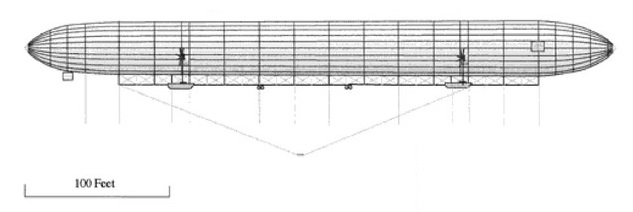
The construction of Graf Ferdinand von Zeppelin’s aluminium framework LZ 1 began in June, 1898, in a floating wooden hangar on Bodensee (Lake Constance) at Manzell (Friedrichshafen).

The hydrogen was contained in 16 cells supporting an all up weight of just under 12 tons. The parallel-sided, conical-ended craft had two gondolas fixed under the hull, each containing a four-cylinder Daimler petrol motor with an output of 16 hp. Lateral control was effected by two small rudders at the stern, whilst attitude and vertical control relied on a 500 lb sliding weight suspended on a cable beneath the ship.

Completed in the winter of 1899, the Graf decided to wait however until the summer of 1900 before attempting an ascension. The airship was inflated with hydrogen in June, and was towed out of its floating hanger by the steamboat Buchorn and, once clear of obstructions, vaned into the wind where the tow rope was released. On a near perfect day the LZ-1 rose to about 1300 ft, from where it flew 18 minutes above the calm waters of the lake on 2 July 1900 at 20:03. With a crew of four, including the Count himself, the airship covered some 4 miles against a headwind of 16 mph. The LZ-1 successfully achieved a degree of control despite the relatively low power of the engines, but problems with the sliding weight necessitated a descent on to the lake from where the ship was towed back to the hanger.

A second flight, of 30 minutes, took place on 17 October 1900. Experiments in control were undertaken, but again these tests were cut short due to engine trouble and there was some degree of structual failure of girders in the framework requiring another descent on to the water.

After some repairs and strengthening of the fractured girders the LZ-1 made its third and final flight of some 20 minutes, achieving a speed of 17 mph during which it again exhibited its ability to answer to the helm. This time the flight was terminated because of water in the petrol, but the ship again returned safely to its shed.

The following year Zepplin disbanded the joint stock company while personally assming its liabilities. The Count had the LZ-1 dismantled and the shed beached and closed up. He dismissed all the workers apart from Kober, whom he retained to work on a more advancd desighn he had conceived.

Length: 419 ft
Diameter: 38 ft 6 in
Height: 48 ft 6 in
Envelope capacity: 400,000 cu.ft
Gross lift: 12.5 ton
Useful lift: 2.75 ton
Engines: 2 x Daimler 16 hp
Max speed: 17 mph
Range at cruise est.: 180 mi
Ceiling: 2000 ft
Crew: 4
Zenoah G-25

G-25B

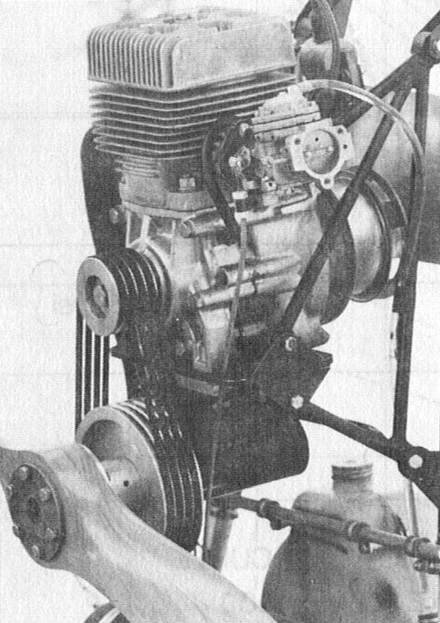
The Zenoah G-25 is a single cylinder, two stroke, carburetted aircraft engine from Japan, with optional fuel injection, designed for use on ultralight aircraft.

Zenoah G-25 Article

The Zenoah G-25 is equipped with single capacitor discharge ignition and a single Mikuni slide-type carburetor. It is equipped with a recoil starter system or optionally electric start and a 2.5 or 2.8:1 belt reduction drive.

The engine runs on a mixture of unleaded auto fuel and oil.

Producing 22 hp (16 kW) at 6600 rpm, the G-25 competed in the early 1980s ultralight powerplant market against the similar Rotax 277. Production of the engine was completed in the late 1980s and today only used engines and parts are available.

Applications:
Adventure F series
Aerodyne Systems Vector
AmeriPlanes Mitchell Wing A-10
Beaujon Mach .07
Carlson Sparrow
Cascade Kasperwing I-80
Cloudbuster Ultralights Cloudbuster
Cosmos Samba
DTA Alizés
Fly Hard Trikes SkyCycle
Greenwood Witch
Hill Hummer
ISON Airbike
LiteWing Aircraft LiteTrike
Lookout Mountain SkyCycle
Manta FX-3
Mitchell Wing B-10
Monnett Monerai P
North Wing ATF
Paramotor Inc FX series
Phoenix Industries B1Z ParaFlyer
Pterodactyl Ascender
Ritz Model A
Rutan Solitaire
St Croix Excelsior
Striplin Lone Ranger

Specifications:

G-25B-1
Type: Single cylinder, two-stroke aircraft engine
Bore: 72 mm (2.8 in)
Stroke: 59.5 mm (2.3 in)
Displacement: 242 cc (14.78 cu in)
Length: 11.81 in (300.0 mm)
Width: 11.57 in (293.9 mm)
Height: 14.84 in (376.9 mm)
Dry weight: 51 lb (23.1 kg)
Ignition: CDI
Valvetrain: piston ported
Fuel type: unleaded auto fuel
Oil system: pre-mixed
Cooling system: free air
Reduction gear: 2.47 or 2.8:1 Poly-V belt system
Power output: 22 hp (16 kW) at 6600 rpm
Compression ratio: 6.5:1

G-25B-2
Cycle: 2
No cylinders: 2
Bore: 72 mm
Stroke: 59.5 mm
Compression: 6.5
Displacement: 484 cc
Cooling: Air
Ignition: CDI
Reduction: Poly-V belt 2.47-1
Length: 11.81 in (300.0 mm)
Width: 11.57 in (293.9 mm)
Height: 14.84 in (376.9 mm)
Weight: 48 kg
Max pwr: 45 hp at 6600 rpm

Zenker Bremen I

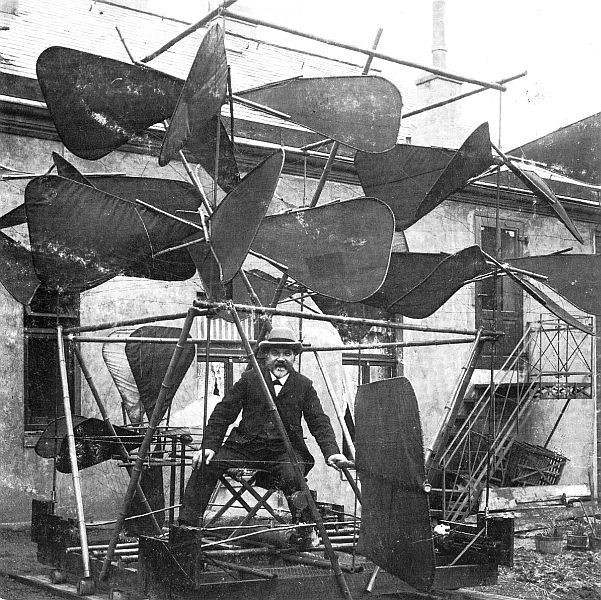
Carl Zenker, of Bremen, Germany, designed this “steerable airship” Eight horizontal propellers provided vertical lift. Its construction from bamboo rods and cloth took from August 1873 till March 1900, and cost about 40,000 Marks. Herr Zenker stated proudly that the craft, “Requires no balloon to become airborne, and operates at a nominal 6hp”. Weighing 660lb and driven by “fluid air and compressed air”, a speed of 1km in 2mins (about 18.5mph) was estimated. Horizontal flight was to be achieved by means of twin propellers, and the craft was steered by a single rudder. One could own a Zenker contraption for a mere 10,000 Marks, from four to six months after receipt of the order.

Zenith Aircraft Corp American Albatross B-1

Zenith B-1 NX6772

Designed by Charles Rocheville, the sole 1928 American Albatross B-1 NX6772 was sold in 1929 to (Alva Roy) Ebrite Aero Corp of Long Beach CA, for charter work and is sometimes seen as Ebrite New Albatross, reportedly repowered with 400hp P&W Wasp. It was used for 1929 endurance record attempts by John Gugliemetti and Lee Schoenhair, but without success.

Engine: 260hp Menasco-Salmson
Wingspan: 56’0″
Length: 39’0″
Useful load: 2350 lb
Max speed: 128 mph
Cruise speed: 92 mph
Stall: 40 mph
Range: 1000 mi
Seats: 8

Zenith Aircraft Corp Albatross Z-12 / Schofield Albatross

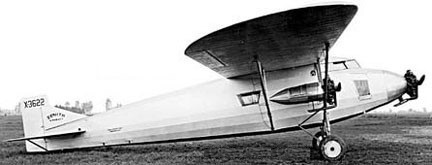
Zenith Z-12 NX3622

The sole 1927 Albatross Z-12, or Schofield Albatross, NX3622, succeeded, after four attempts, in taking off with 9898 lbs, 2.47 times its empty weight, in a 1928 demonstration flight.

Engine: 3 x 125hp Siemens-Halske
Wingspan: 90’0″
Length: 47’6″
Useful load: 9650 lb
Max speed: 110 mph
Cruise speed: 95 mph
Stall: 48 mph
Range: 6700 mi
Fuel capacity: 1300 USgallon
Seats: 12

Zenith Aircraft Corp Albatross Z 6

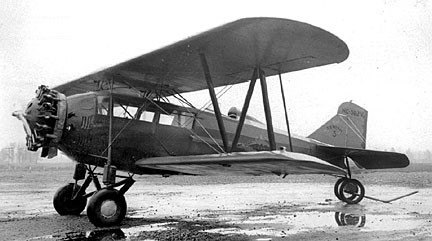
The 1927 Albatross Z-6 six place biplane was designed by Charles Rocheville, Albin Peterson. Three were built: NX578K, N7076, and NX707E, and one conversion: NX7580.

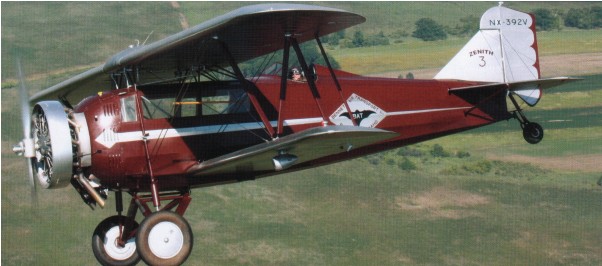
The two Albatross Z-6-A (ATC 2-269) of 1928 seated four in the cabin. For $20,000, one was for Bennett Air Lines in Idaho (NC392V), and one with ATC 2-212 for 450hp Wasp SC conversion (NC134W).

Zenith Z-6-A NC392V

NC392V was restored in 2006 at PAR, Maryland Heights MO.

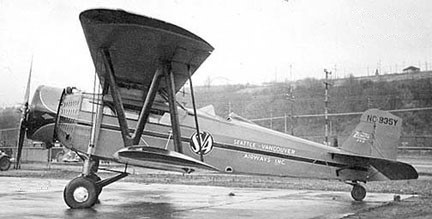
Three Albatross Z-6-B were built in 1929 (ATC 2-315). At $20,000, they were NC835Y, NC935Y, and NC977Y.

Zenith Z-6-B NC935Y

Gallery

Albatross Z-6
Engine; 220hp Wright J-5
Wingspan: 38’5″
Length: 30’0″
Useful load: 1667 lb
Max speed: 110 mph
Cruise speed: 95 mph
Range: 54 mph
Range: 500 mi
Seats: 6

Albatross Z-6-A
Engine: 420hp P&W Wasp C
Wingspan: 47’6″
Length: 29’9″
Useful load: 2100 lb
Max speed: 155 mph
Cruise speed: 130 mph
Stall: 58 mph
Range: 650 mi

Albatross Z-6-B
Engine: 420hp P&W Wasp C
Wing span: 41’6″
Length: 30’0″
Useful load: 1918 lb
Max speed: 150 mph
Cruise speed: 125 mph
Stall: 58 mi
Range: 650 mi
Seats: 7