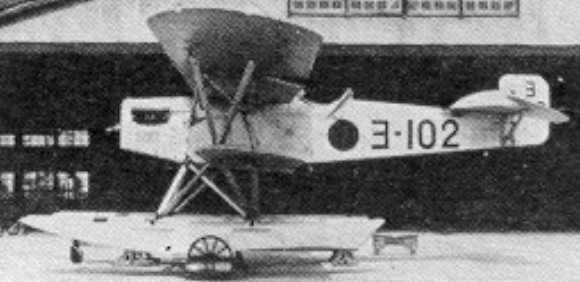
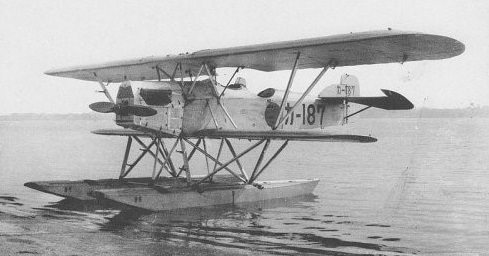
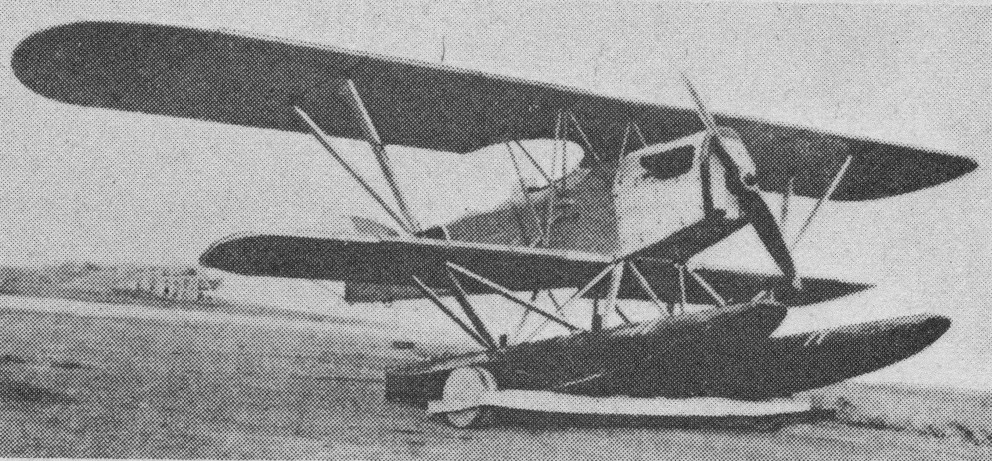
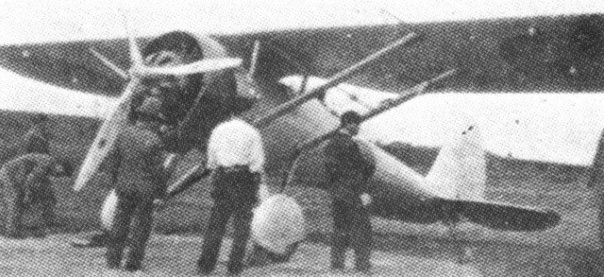
Built between 1927 and 1929, this two-seat twin-float sesquiplane was powered by a 224kW Hispano-Suiza engine and could attain a maximum speed of 166km/h. It was intended for shipboard reconnaissance and served with the Japanese navy as the Type 15 Reconnaissance Floatplane (Nakajima E2N1 and E2N2).
A total of 80 was built, many being relegated to training or sold to civil users during the 1930s.
Two machines were bought at the outset for civil fishery patrol duties. Converted by Itoh as the Itoh Emi 53, the Navy Type 15 conversions were completed in 1938, intended for use in fishery spotting.
E2N1 Engine: 1 x Hispano-Suiza, 224kW Max. speed: 166 km/h / 103 mph Crew: 2
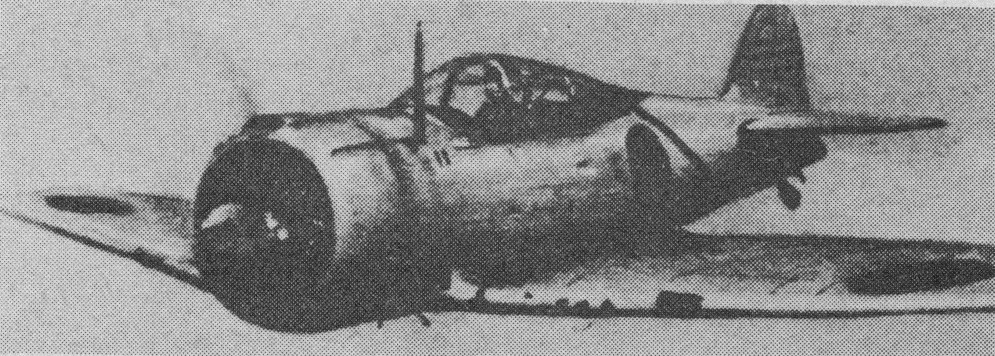
To meet a 7-Shi (1932) requirement for an advanced single-seat shipboard fighter with which the Imperial Navy hoped to replace the A2N1 that had just been adopted, Nakajima was instructed in April 1932 to develop a suitable aircraft in competition with Mitsubishi. Whereas the latter elected to adopt a cantilever low-wing monoplane configuration (1MF10), Nakajima chose to base its contender on the Army’s Type 91 parasol monoplane then entering service. A single prototype of a navalised Type 91 was completed in the autumn of 1932, this differing from the Army fighter essentially in having a 560 hp Nakajima Kotobuki 5 engine driving a three-bladed propeller, wheel spats and an arrester hook. Armament remained the standard two 7,7-mm guns. The 7-Shi fighter was considered to offer an insufficient advance to warrant further development.
Engine: Nakajima Kotobuki 5, 560 hp Max speed: 184 mph (296 km/h). Empty weight: 2,425 lb (1100 kg) Loaded weight: 3,527 lb (1 600 kg). Span: 36 ft 1 in (11,00 m) Length: 23 ft 7.5 in (7,20 m). Height: 10 ft 6 in (3,20 m) Wing area: 215.28 sq ft (20,00 sq.m).
In 1917, Chikuhei Nakajima set up the “Airplane Institute” at Ojima Town in Gunma Prefecture. In 1918 they built their first airplane; the “Nakajima Type 1” with a U.S.A. made engine.
In 1917, Chikuhei Nakajima (33 years old at that time), who retired as Engineering Captain of the Navy, contemplating developing a public aircraft industry, set up the “Airplane Institute” at Ojima Town close to Ota Town in Gunma Prefecture (currently Ota City). The building was a simply remodeled sericultural hut along the Tone River. In the beginning, there were only nine members, but in the following year they built their first airplane; the first “Nakajima Type 1” with a U.S.A. made engine. But the first Type 1 sadly crashed after take off. The second Type 1 also failed, and the third one finally did take off, but hit a ditch upon landing and also crashed. In that age, it was said that there was a pasquinade in Ota Town, “Too much paper money, too high a price for rice. Everything goes up, except Nakajima planes”.
Confusion over pre-war Japanese fighters was so complex many fictional or misidentified types received code names.
After the Pearl Harbor attack military intelligence gathered every piece of downed Japanese aircraft they could find. From that operation they came up with this aircraft. They found a manufacturing plate with the words Nogoya Sento, they thought that was a manufacturer, it was a plant location. From the wings and tail group, it looks like they found parts of an Aichi type 99 Val.
Given the allied code name ‘BEN’ after one of the 5th Air Force Intelligence officers, the code was dropped in less than a year.
It was 1943 before the war department figured out there was no such a plane.
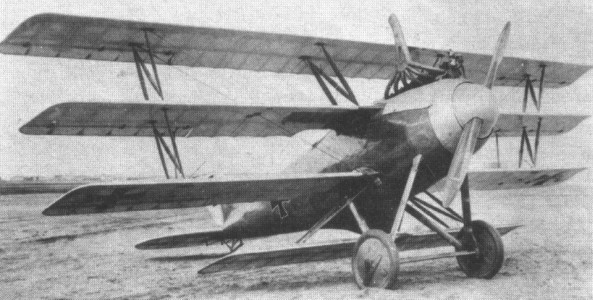
The DII quadruplane built by the Naglo Werft of Pichelsdorf, near Berlin, was designed by Ing Gnädig (who was, at the time, still in the employ of the Albatros Werke) and participated in the second D-type contest at Adlershof in the summer of 1918 (the debriefing minutes of which indicating that it was to appear for further testing after modification). Powered by a 160 hp Mercedes six-cylinder water-cooled engine and inten¬ded to carry an armament of two LMG 08,15 machine guns, the Naglo DII appears to have been based on an Albatros DV type fuselage. The bottom wing, completely independent of the three main lifting surfaces, being attached to an extruded keel and braced with splayed struts. Official type testing was undertaken on 24 May 1918, and during the D-type contest, evaluation pilots praised the excellence of the construction and workmanship of the D II while calling for an improvement in the flight characteristics.
Engine: Mercedes 6 cyl, 160hp Empty weight: 1,596 lb (724 kg). Loaded weight: 2,015 lb (914 kg Span: 29 ft 6 1/3 in (9,00 m). Wing area: 241.12 sq ft (22.40 sq.m).
Development of the NR 55 concept continued in 1941 with the generally similar NR 54 V1, in which reductions were made in size and weight. The engine power was reduced to 24hp and the rotor diameter to 7.8m with the engines mounted 1.2m from the centerline driving the propellers, which were 1.8m further out along rotor blade. The carburetor was never perfected to work satisfactorily and due to this no test flights were ever made. Performance with empty and loaded weights of 80 and 175kg respectively, was estimated to have a 55 mph cruising speed.
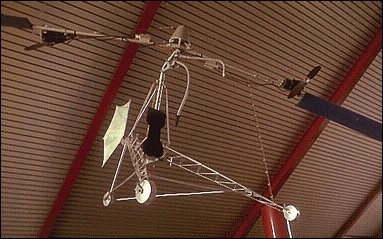
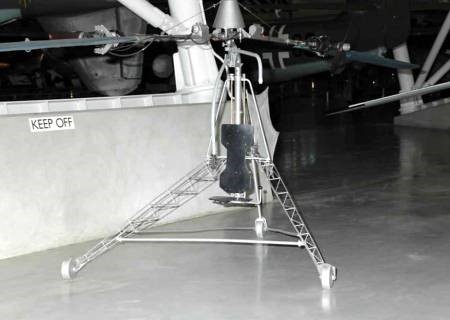
The NR 54 V2 was produced in 1941. The single-seat helicopter flew on remarkably little power. The 6.9m rotor consisted of two single blades, each of which had an 8hp motor driving a small airscrew at 6000rpm to give a torqueless drive, and the pilot’s controls consisted of two levers, one to alter rotor blade pitch and the other to control the engines. The entire airframe broke down for transporting and could carried by a single man. The little ship was said to cruise at 80km/h and climb at 140m/min.
Four of the NR 54V2 machines were built before the war ended, but it is not known how close the NR 54 was to being ready for production at that point. At least one of them was brought to the USA for evaluation and is now in the collection of the National Air and Space Museum.
NR 54 V2 Engine: 2 x 8hp Main rotor diameter: 7.92m Max take-off weight: 140kg Empty weight: 36.5kg Cruising speed: 80km/h Ceiling: 457m Range: 48kg Crew: 1
The Nagler-Rolz Flugzeugbau built a helicopter similar in configuration to the RI and RII. This ship had an empty weight of 700 pounds and though it was flown in hover, it could not be lifted out of ground effect. With the coming of World War II, the company received contacts from the German Government for the development of small single-seat helicopters.
In 1940 the first machine from the new company appeared as the NR 55, which had a single-blade rotor. This rotor blade was counterbalanced by a 40hp engine which applied to it a torqueless drive by means of two small airscrews which pulled it round at about 135rpm. Because of gyroscopic forces at the engine location, the carburetor was mounted on the centerline of the rotor hub and fuel-air mixture was piped out to the engine cylinders. The rotor diameter was 10.5m, and the machine weighed about 338kg loaded, but, although a cruising speed of 97km/h was thought feasible, only hovering and lift test were undertaken because the machine was built purely for testing the rotor system.
Development of the NR 55 concept continued in 1941 with the generally similar NR 54 V1.