John Nicolaides, an aeronautical engineer from San Luis Obispo, California, devised a ‘pack-away’ parafoil wing aircraft. The parafoil wing works on the same principle as the ram air steerable parachutes used by advanced skydivers: forward motion forces air into the open front of the parafoil and inflates its cells to an airfoil shape, which has all the properties (and more) of a conventional aircraft wing. The parafoil is made of high strength rip stop nylon sailcloth. A cat’s cradle of supporting lines distributes the airload.
Nicolaides maintains that the parafoil aircraft is simple to fly. There are just two controls: a rudder bar for left and right and a throttle to go up or down. Speed is 40 kph (25 mph), and the machine cannot be stalled because airspeed and angle of attack are constant. The landing run is 3 m (10 ft).
A version with a payload of 5080 kg/11,200 lb has been built.
Engines – Power
Nicolas-Claude NC-2 Aquilon
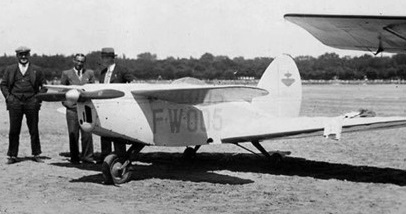
The Nicolas-Claude NC-2 Aquilon was a single-seat touring aircraft featuring a low-wing monoplane with canard foreplanes.
In 1936, French engineer Leon Claude (Leon Claude) began designing the aircraft, using the Henri Mignet formula, where the fuselage with a low center of gravity and two tandem wings were to provide the aircraft with sufficient longitudinal stability.
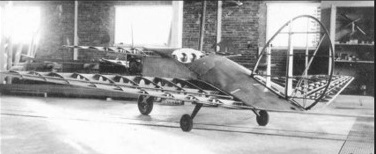
Claude did not have his own funds for the construction of the aircraft, but he managed to captivate the idea of industrialist Jean Nicolas.
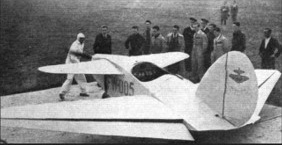
The NC-2 was first flown on 5 April 1937 at Auxerre. France, and only the one was built. In the same year, NC-2 took part in the so-called Prototype Tour, held in many cities in France.
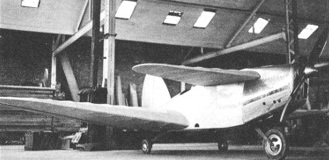
NC-2 Aquilon
Engine: 1 × Train 4T, 37 kW (50 hp)
Propeller: 2-bladed fixed-pitch
Wingspan: 7 m (23 ft 0 in)
Wing area: 14 sq.m (150 sq ft)
Length: 4.3 m (14 ft 1 in)
Empty weight: 183 kg (403 lb)
Gross weight: 410 kg (904 lb)
Maximum speed: 175 km/h (109 mph, 94 kn)
Cruise speed: 130 km/h (81 mph, 70 kn)
Stall speed: 50 km/h (31 mph, 27 kn)
Range: 850 km (530 mi, 460 nmi)
Service ceiling: 4,000 m (13,000 ft)
Wing loading: 29.2 kg/sq.m (6.0 lb/sq ft)
Seats: 1
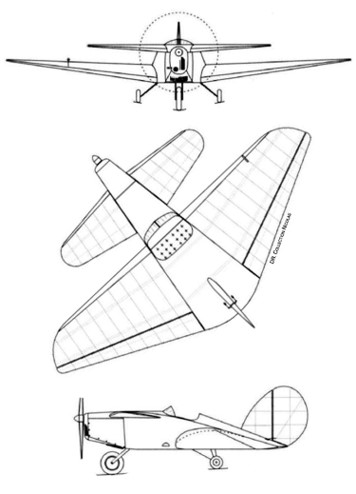
Nicholas-Beazley Pobjoy Special / Phantom I / Wittman Phantom / Flagg Phantom / Reaver Special
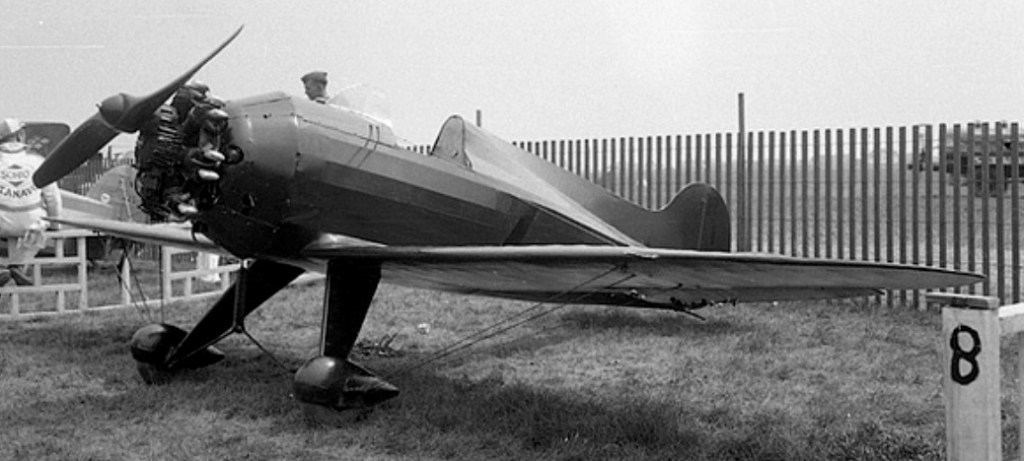
The Nicholas-Beazley Pobjoy Special aka the Nicholas-Beazley Phantom I, aka the Wittman Phantom, aka the Flagg Phantom, aka the Reaver Special was a world record holding air racer of the 1930s
The Nicholas-Beazley Airplane Company had imported a Pobjoy engine with a gear reduction unit for use in its new design the Nicholas-Beazley NB3. Designer Robert T. Jones computed the weight and balance for the setup and proposed a new design as an air-racer. Claude Flagg and H. F. Landis built the aircraft in their spare time under the Marshall Aircraft Laboratories monicker and patented the wing design. The Nicholas-Beazley company conducted the tests and produced the subsequent engineering report on the machine, under the supervision of inhouse chief engineer T. A. Kirkup, who also designed most N.-B.
The fuselage is welded steel with fabric covering. The wings used an early application of lightweight aluminum construction with U shaped cantilever spars with wire bracing and fabric covering. The aircraft used wheels with small tires and without brakes. The cockpit was open and the engine was fully cowled.
The Phantom I was given an “R” license by the federal government and, piloted by Danny A. Fowlie of Morris, Illinois, was entered in the 1930 National Air Races in Chicago from August 23 to September 1.
In 1932 Ownership passed to Air Racer Steve Wittman. A Air Commerce inspector fronted the money, and had Wittman race the aircraft to avoid a conflict of interest. The Pobjoy Special is the only racer Wittman raced that he did not build or design himself. In 1932 the Pobjoy P engine was replaced with a Pobjoy R of 75 hp. The cockpit was also enclosed. In 1933 Wittman lengthened the fuselage by 21 inches, removed the engine cowling and modified the rudder (now called the Pobjoy Special). In 1946 The engine was replaced with a Continental C-85.
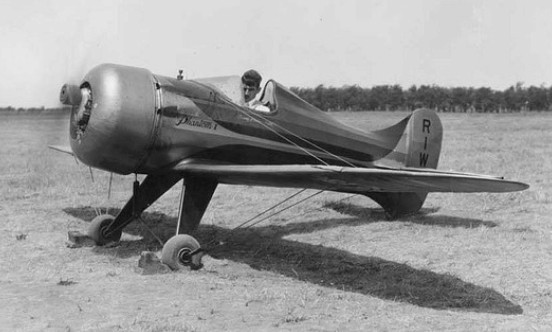
In 1937 the Pobjoy Special was flipped on its back. It was rebuilt sold, and stored until the end of WWII. It resurfaced in 1948 as the Reaver Special midget racer, with a 22′ wing and the more powerful 85 hp Continental engine. John Reaver entered the aircraft as the Reaver Special in the new Goodyear Formula One races.
1930 National Air Races – Registered as R1W, pilot Danny Fowlie reached 115 mph placing third in class with a mismatched prop.
1933 Chicago International Air Races – Pilot Steve Wittman wins all races in the 200ci class with a maximum speed of 120 mph.
1934 New Orleans – Wittman wins the 100 km world speed record of 137.513 mph for aircraft less than 440 pounds.
1934 Cleveland Air Races – Wittman wins all races in the 200ci class with a speed of 129.440 mph.
1935 Cleveland Air Races – New owner Percy V. Chaffee wins all races in 200ci class.
In 1936 the 200ci class is eliminated, making the Pobjoy Special obsolete for racing.
1937 St.Louis – Last race of the Pobjoy Special.
Replica:
Turner / Repeat Aviation Nicholas-Beazley Pobjoy Special
Specifications:
Phantom I
Engine: 65 hp Pobjoy P (Niagara II)
Wingspan: 21′ 9″
Length: 12′ 9″ in
Empty weight: 355 lb
Top speed: 200+ mph
Pobjoy Special
Engine: 1 × Pobjoy R Niagara II Radial, 65 hp (48 kW)
Length: 21 ft 9 in (6.63 m)
Empty weight: 355 lb (161 kg)
Capacity: 1
Reaver Special
Engine: 85 hp Continental
Wing span: 22′
Nicholas-Beazley NB-8 / NB-8G / NG-8G / NM-8G
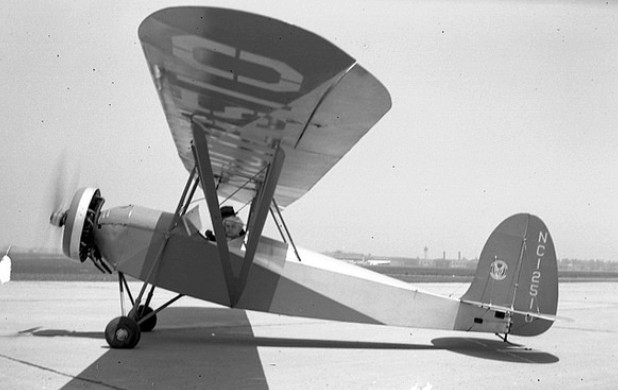
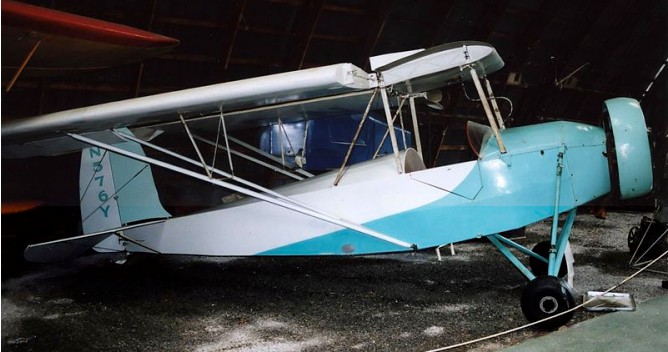
The NB-8 was a light parasol wing monoplane designed by Tom Kirkup and built by the Nicholas-Beazley Airplane Company at its factory in Marshall, Missouri. The first of 58 examples flew in 1931, and most are powered by the Armstrong-Siddeley Genet Mark II engine of 80 hp (60 kW). Initially a 36 hp Aeronca two-cylinder engine powered the aircraft, subsequently a 45 hp Szekely engine was fitted, while the final choice was an 80 hp Armstrong Siddeley Genet Mk.II. Some were later fitted with the 80 hp (60 kW) Lambert engine.
The aircraft has a high strut-mounted parasol wing that can be folded to reduce hangarage space required and to permit towing by road. The two crew seats are arranged side-by-side. Initially the cockpit was open, but some examples later had an enclosure fitted.
The NB-8G was advertised for sale at $1,790. The ‘G’ in the designation originally indicated installation of the A-W Genet radial engine. It was fully aerobatic. 58 examples were purchased, mainly by private pilot owners in the United States. Production ceased in 1935. The 58 aircraft of the type produced were: 1 NB-8, 54 NB-8G’s, 1 NG-8G, and 2 NM-8G’s.
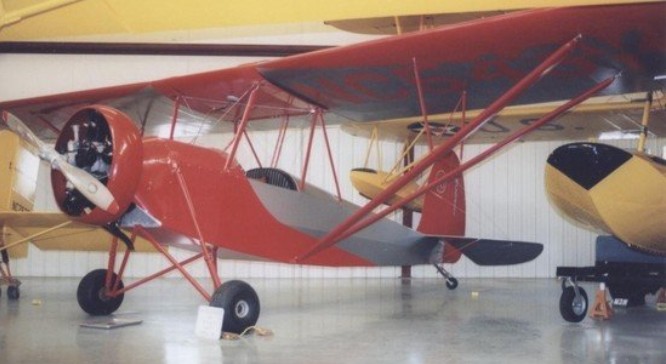
Six examples were still extant in 2009, with at least two being fully airworthy. Examples of these can be viewed at the Old Rhinebeck Aerodrome museum in New York State, and the Historic Aircraft Restoration Museum at Creve Coeur airfield near St Louis Missouri.
NB-8G
Engine: 1 × Armstrong-Siddeley Genet II, 80 hp (60 kW)
Wingspan: 37 ft 6 in (11.43 m)
Length: 20 ft 3 in (6.17 m)
Useful load: 493 lb (224 kg)
Maximum speed: 110 mph (177 km/h)
Cruise speed: 83 mph
Stall speed: 40 mph (64 km/h)
Range: 400 miles (644 km)
Service ceiling: 18,000 ft (5,486 m)
Seats: 2
Production:
Registr. Type c/n
NC436V NB-8 K-1
NC502Y NB-8G K-2
NC517Y NM-8G K-3
NC525Y NB-8G K-4
NC524Y NB-8G K-5
NC541Y NB-8G K-6
NC542Y NB-8G K-7
NC543Y NB-8G K-8
NC544Y NB-8G K-9
NC545Y NB-8G K-10
NC558Y NB-8G K-11
NC559Y NB-8G K-12
NC560Y NB-8G K-13
NC561Y NB-8G K-14
NC562Y NB-8G K-15
NC574Y NB-8G K-16
NC575Y NB-8G K-17
NC576Y NB-8G K-18
NC577Y NB-8G K-19
NC578Y NB-8G K-20
NC580Y NB-8G K-21
NC581Y NB-8G K-22
NC582Y NB-8G K-23
NC583Y NB-8G K-24
NC584Y NB-8G K-25
NC11063 NB-8G K-26
NC11064 NB-8G K-27
NC11065 NB-8G K-28
NC11066 NB-8G K-29
NC11067 NB-8G K-30
NC11071 NB-8G K-31
NC11072 NB-8G K-32
NC11073 NB-8G K-33
NC11074 NB-8G K-34
NC11075 NB-8G K-35
NC11087 NB-8G K-36
NC11088 NB-8G K-37
NC11089 NB-8G K-38
NC11090 NB-8G K-39
NC11091 NG-8G K-40
NC11095 NB-8G K-41
NC11096 NB-8G K-42
NC11097 NB-8G K-43
NC11098 NB-8G K-44
NC11099 NB-8G K-45
NC12505 NB-8G K-46
NC12506 NB-8G K-47
NC12507 NB-8G K-48
NC12508 NB-8G K-49
NC12509 NB-8G K-50
NC12510 NB-8G K-51
NC12514 NB-8G K-52
NC12515 NB-8G K-53
NC12516 NB-8G K-54
NC12517 NB-8G K-55
NC12518 NM-8G K-56
NC12527 NB-8G K-57
NC15498 NB-8G K-58
Nicholas-Beazley NB-4
A three-seat open-cockpit low-wing monoplane, which was offered with Lambert, Warner, or Armstrong Siddeley engines.
Nicolas Salamanca
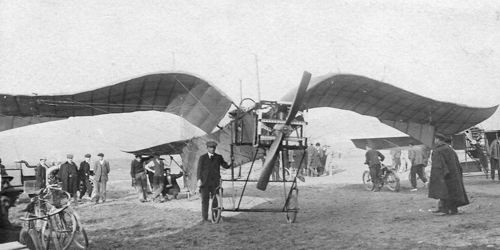
Francois Nicolas’ only design was sponsored by Marquis de Salamanca. An automobile-body-builder in Biarritz, Nicolas based his monoplane on the Antoinette, but made his even bigger. The triangular-section fuselage was long and slender, about one meter deep. Fully covered, it carried a long triangular tailplane and elevator. The rectangular wings were of dramatic seagull shape and supported by six kingposts and a forest of brace-wires.
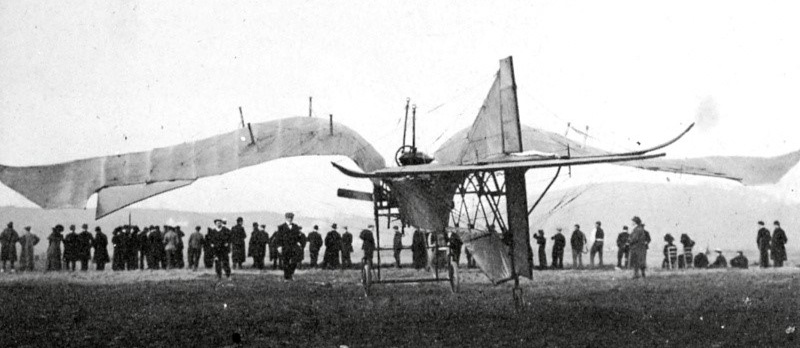
The aeroplane is reported to performed “careful hops” on the Biarritz airfield, France, in 1910.
NHI NH90

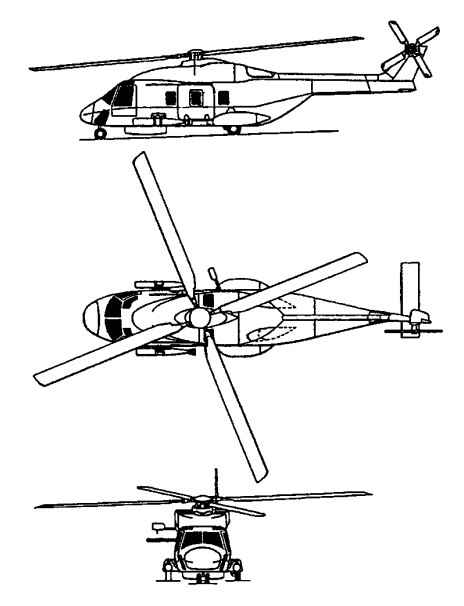
In the 8000/9000kg class, the NH90 was developed and qualified in both a Naval and Army variant and powered by RTM322 engines. A rear ramp option is available for the Army variant. Designated as the TTH (Tactical Transport Helicopter) and NHF for the NATO Frigate Helicopter, the NH90 has fly-by-wire controls and is capable of all-weather operations either on land or at sea. In the tactical version it carries 20 fully-equipped troops or 2500kg of cargo. In the NHF version can undertake multimaritime roles including the ASW or anti-surface vessel role and can carry up to 700kg of missiles.
Five European nations signed the memorandum in 1985 allowing the development of the NH 90. The work is being shared by Eurocopter France (43%), Agusta (26%), Eurocopter Germany (24%) and Fokker (7%).
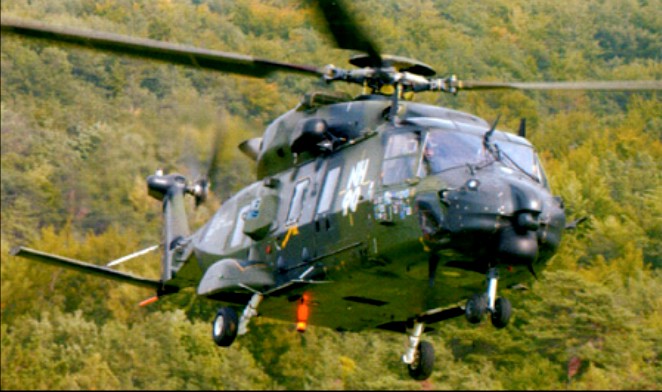
Largely built of composite materials, the NH90 was in service with France, Italy, Germany, the Netherlands, and New Zealand.

NH90 Solomons Deployment 2018 Article
NH-90
Engine: 2 x RTM 322-01/9 turboshaft, 1484kW at take-off
Main rotor diameter: 16.3m
Length with rotors turning: 16.3m
Height with tail rotor turning: 5.44m
Max take-off weight: 10000kg
Empty weight: 5400kg
Max speed: 290km/h
Cruising speed: 259km/h
Service ceiling: 4250m
Range: 1204km
Payload: 2000kg
NH90 TTH
Engine: 2 x R-RTM 332 or 2 x GE CT7-6E
Instant pwr: 1367 or 1360 kW
MTOW: 10,000 kg
Payload: 4460 kg
Max speed: 155 kts
Max range: 930 km
HIGE: 9,600 ft
HOGE: 7878 ft
Crew: 2
Pax: 20
NFW E 5 Eindecker
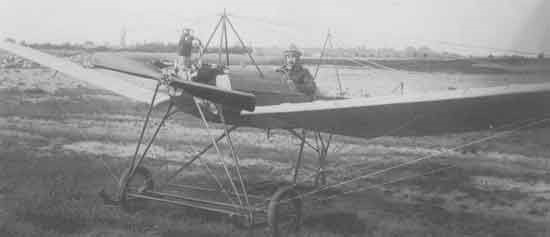
Designed and built by the Nordwestdeutsche Flugzeugwerke Heinrich Evers & Co. In all, 6 different monoplanes, E 1 through E 6, were built by NFW between 1912 and 1913.
Nexus Alar
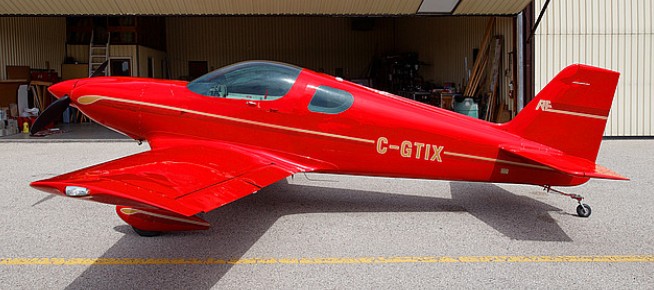
Nextant 400XT Jet
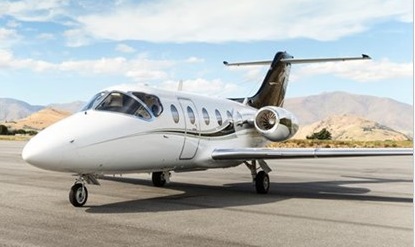
Nextant Aerospace selected the Beechjet 400/Hawker 400XP for remanufacturing as the Nextant 400XTi. The hundreds of millions of dollars needed to develop a new jet was a huge barrier, yet a well designed and -built jet has a long service life and could be an ideal platform on which to add new avionics and engine technology as well as aerodynamic tweaking using modern tools such as computational fluid dynamics.
The 400XTi is essentially a Beechjet 400/Hawker 400A/XP with new Fadec-controlled 3,050-pound-thrust Williams International FJ44-3AP engines replacing the original 2,965-pound Pratt & Whitney Canada JT15D-5Rs, aerodynamic improvements to the nacelles and pylons, a new Rockwell Collins Pro Line 21 flight deck, fresh interior and other enhancements. The jets undergo 60 engineering changes, replacement of more than 40 time-controlled components, compliance with A-, B-, C- and D-check inspections as well as compliance with all FAA airworthiness directives and applicable manufacturer service bulletins during a 6,000-man-hour renewal/overhaul process. The resulting remanufactured 400XTi carries a two-year tip-to-tail warranty (three for the engines), which can be extended to five years as an option.
The first remanufactured version was the 400XT, but in 2014 Nextant introduced the 400XTi, with an improved and more spacious composite cabin shell that takes full advantage of unused space in the fuselage, a new noise insulation package, Nextant-designed winglets, Luma Technologies LED warning panels and a Mid-Continent Instruments LCD standby attitude module and True Blue Power MD835 lithium-ion backup battery units. The MD835s eliminate a 90-day inspection interval for the jet’s original lead-acid backup batteries.
By 2015, Nextant had converted more than 40 Beechjet/Hawker 400s and delivered them to owners in eight countries since certification of the upgrades in 2011. Flight Options has ordered forty 400XTi conversions, and charter provider Travel Management Company was upgrading its entire fleet of 50 Beechjet/Hawker 400s. Nextant’s backlog represents a quarter of the available fleet of about 600 jets. There were also another 180 Air Force T-1A Jayhawks (Beechjet 400s) that could be converted, if the Air Force were to select the 400XTi upgrade instead of buying a new jet for its Air Education and Training Command bases.
The Nextant 400XTi sold for $5.15 million (2015). The airframe was valued at $995,000, so that would be deducted from the price if an owner brought a Beechjet/Hawker 400 for conversion. The performance improvements include a 50-percent range extension, 30 percent lower operating costs and 20 to 25 percent less fuel burn.
The Nextant 400XTi has the 3,502-pound Williams International FJ44-3APs (flat-rated to 3,050 pounds at ISA +7 deg C) engines. The jet itself can’t fly faster than its limiting Mach .785 Mmo. The new nacelles housing the Williams engines and the larger pylons are the fruit of computational fluid dynamics analysis that showed excessive drag due to a supersonic shockwave in the area between the nacelles and the fuselage. The pylons now have twice the surface area, and the redesign eliminated the drag problem. Noise compliance exceeds Stage IV requirements.
To help improve maintenance access to the nose gear and other areas, Nextant added access panels so mechanics don’t need to remove dozens of fasteners for routine maintenance tasks. Further adding to future reliability is a completely new primary wiring harness, built by Nextant technicians on the company’s own looms. The new wiring meets the latest FAA electrical wiring interconnection system regulations.
The new composite cabin shell by Jeff Bonner R&D takes advantage of space within the fuselage structure that the existing interior didn’t use, and it adds three inches of width and 2.5 inches of height. N2Aero insulation reduces cabin noise by nine decibels, to 66 dB.
Three interior layouts were available, and a typical choice is the forward divan opposite the galley, then a four-club configuration, with seats for up to eight passengers (including the belted lavatory). Also offering eight seats is the four-club layout with two forward-facing seats aft and one seat up forward opposite the galley. This layout provides less legroom in the club seating area, however. A six-seat interior puts the galley on the right side of the cabin and includes the spacious four-club seating area, one seat opposite the galley and forward of the cabin door, plus the lavatory seat. Passenger seats were redesigned by Nextant engineers and are mechanically rebuilt and recovered. The two aft-facing seats in the club-seating area fold flat, and the divan can be extended outward to provide a larger sleeping surface.
The updated interior is fitted with a Rockwell Collins Venue cabin management system (CMS) with Airshow moving map, Apple iOS device control of the CMS, LED lighting and a new galley with a Nespresso machine and a new work surface. Optional features include Aircell Gogo Business Aviation Axxess (air-to-ground telecom and SwiftBroadband satcom) and 110-/220-volt power outlets. The lavatory bulkhead is moved six inches forward, and this helps provide more interior space for luggage (an additional 20 cu ft), as one of the Beechjet’s Achilles heels is the small 26-cu-ft external baggage capacity.
On the outside, the most prominent change is the new winglets with embedded LED lights. Most of the upgraded jets were equipped with aluminum winglets, but soon, if not already, the 400XTi will have new carbon-fiber winglets that are raked back farther and shave 24 pounds off the empty weight. The new winglets bolt onto the existing structure and will be provided as a kit to owners with the old winglets.
The heavy remanufacturing and maintenance tasks take about eight to 10 weeks, during which the Beechjet/Hawker 400 is completely stripped down. All life-limited components are replaced, landing gear is overhauled, the entire structure is inspected and any repairs are completed. Typically, the horizontal stabilizer has cracked ribs, induced by an oscillation caused by the thrust reversers. Nextant technicians install thicker ribs in a special jig built in-house.
The engine mount beam that runs across the aft fuselage is another weak area, and Nextant engineers redesigned the beam with added doublers to make it stronger but maintain the same geometry so that it would meet the latest regulatory stress load requirements without requiring modification of the adjacent structure. Nextant also replaces the engine mount with a much stronger one-piece milled unit made of stainless steel alloy.
For pilots, the biggest visible change is the flight deck, where the old CRT-based Rockwell Collins Pro Line 4 avionics are replaced with a Pro Line 21 suite. The base system in the 400XTi includes two PFDs and two MFDs in portrait orientation, which provides one PFD and one MFD for each pilot to control. Dual Collins FMS 6100s are mounted on the angled portion of the console between the seats. All other avionics are new, including dual solid-state AHRS, autopilot, Waas LPV GPS 4000S, com and nav, ADF, DME, transponders, radar altimeter, weather radar, Taws, Tcas II, DBU 5010E database loader, 406-MHz ELT and the Mid-Continent standby attitude module. The eyebrow warning lights now use LEDs instead of incandescent bulbs. Engine instruments are all hosted on the Rockwell Collins MFDs, and if an MFD fails the engine indications migrate to the respective PFD.
After the major maintenance and modification phase, including avionics upgrades, the jet is moved outside for engine runs and flight-testing, then the exterior is painted and the interior installed. The final flight-test takes place about 16 to 17 weeks after the jet rolls into the Nextant facility. One way to spot a Nextant modified Beechjet/Hawker 400 is the new supplemental data plate mounted next to the old one on the aft fuselage.

The 400XT made its first test flight in March 2010. Receipt of final certification from the Federal Aviation Administration (FAA) was announced in October 2011. Deliveries of the Nextant 400XT began that same month, with initial deliveries of a 40-aircraft, $150 million order to private aviation company Flight Options LLC.
The 400XTi, at a takeoff weight of 13,800 pounds, 2,500 below the 16,300-pound mtow, will climb to 40,000 feet in 15 minutes. Climbing at more than 2,000 fpm at 30,000 feet. Takeoff field length, about ISA+15 on the ground, is about 3,100 feet.
At FL410 power for long-range cruise, Mach .70 and 392 ktas, burns 730 pph total. Pushing up the power to maximum continuous thrust raised the fuel flow to 1,040 pph, but in those conditions the airspeed would exceed the Mmo, so normal cruise is Mach .73 and 447 ktas, which brings the fuel flow down to about 1,000 pph.
The 400XTi can fly about five hours after reaching FL400 to FL410 at long-range cruise speed. The performance numbers in the flight manual supplement show that at a weight of 14,000 pounds, a climb to FL410 on an ISA day would consume 458 pounds of fuel. Climbing to FL450 in the same conditions should take 23 minutes and 578 pounds of fuel.
The stock Hawker 400XP can fly 1,464 nm with two pilots and four passengers (NBAA IFR reserves, 100-nm alternate). Under the same conditions, the 400XTi can fly more than 2,000 nm. Fuel capacity is 4,912 pounds. Typical BOW for a 400XTi is between 10,750 and 10,850 pounds, Marker said, depending on the options and interior configuration. These numbers are lower than the typical 10,985-pound BOW of a Hawker 400XP.

