The Continental CD-170 engine burns Jet A-1, Jet A, and diesel fuel.
Engines – Power
Wood, Cecil
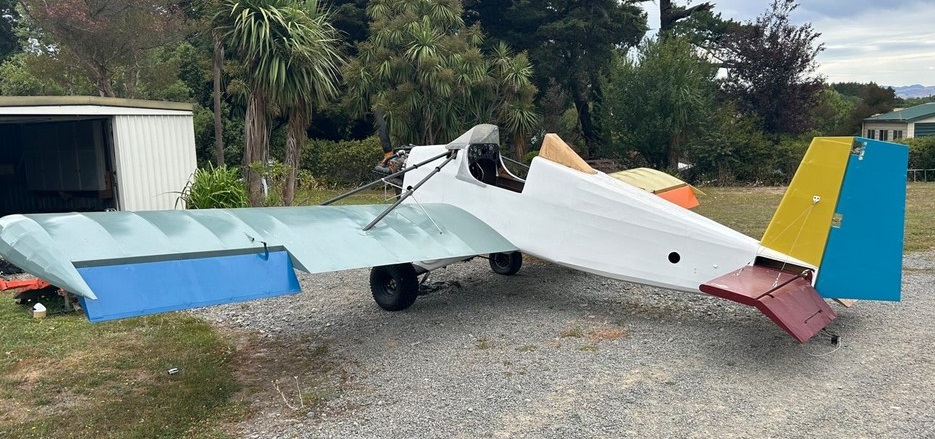
Richard Pearce flew on 31 March 1903 near Temuka, New Zealand, after he had enlisted the help of Timaru engineer Cecil Wood to help with his lightweight motor. Wood had already been the first person in New Zealand to construct an aircraft motor that was three times lighter for its power output than similar car engines at the time.
Baker Super Cat

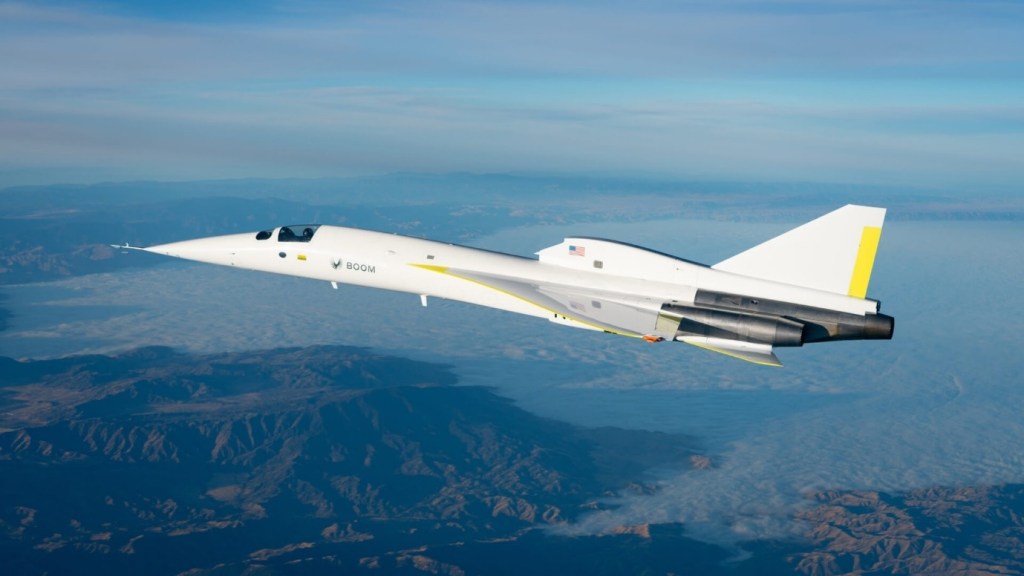
Boom XB-1

The XB-1 jet, the company’s prototype, was designed to bring back supersonic travel in a more efficient and accessible way, aiming to halve flight time from the traditional eight hours to just 3.5 hours.
After starting its tests in March 2024, the XB-1 reached a record speed of Mach 0.87 and reaching 27,716 feet of altitude during its ninth test flight.
Modifications to the vibration system made after the previous flight helped make the jet’s progress safer and more efficient.
The test pilot is Tristan Brandenburg.

After years of testing and refinement, a pilot flying the aerospace company’s XB-1 scale prototype finally broke the sound barrier during a livestream event—not once, not twice, but three times.
XB-1 took off from the runway at Mojave Air & Space Port near Barstow, California at about 11:21 AM EST. From there, Boom Supersonic’s Chief Test Pilot Tristan “Geppetto” Brandenburg ascended in the experimental plane to an altitude of 34,000 ft before turning left and beginning its supersonic test. After successfully achieving Mach 1.1 at 11:32 PM EST, Brandenburg continued XB-1 on its deceleration and descent path. At one point, however, XB-1 briefly broke the sound barrier once again.
“Alright, knock it off, knock it off,” someone in Boom Supersonic’s flight control room could be heard joking during the livestream.
XB-1 surpassed Mach 1 yet again a few minutes later before landing 11:54 PM EST after a total flight time of 33.49 minutes.
Tuesday’s success comes less than a year after the demonstrator aircraft’s debut flight on March 22, 2024. The XB-1 conducted another 10 flights prior to today’s Mach 1 breakthrough. Its most recent took place on January 10, when Brandenburg topped out at Mach 0.95 at an altitude of 29,481 ft (575 knots true airspeed, or roughly 661 mph).
At almost 63-feet-long, the XB-1 is about one-third the size of Overture, Boom Supersonic’s proposed commercial jet.
XB-1’s first flight was originally scheduled for 2021, but required pushbacks to address various engineering and design concerns.
Bentley
By 1931, during the Great Depression, Bentley was having financial difficulties. When funds ran out in 1931, the receivers were negotiating with D.Napier & Sons Ltd for the sale of the remains of Bentley. However, Rolls-Royce put in a secret bid through a Liechtenstein company, and secured Bentley Motors for £125,256. For this, Rolls-Royce got the factory equipment, a number of incomplete car chassis, and the services of Walter Bentley for three years.
Boeing 417

Boeing’s vision of a futuristic regional airliner, the model 417, emerged in the years following WWII.
Boeing took a fresh look at the travel requirements of a postwar populace and identified a need for a smaller airliner to serve regional routes. In 1946, it came up with the 417, an 18,365-pound, twin-engine aircraft designed to carry 20-24 passengers at a speed of 200 mph.
Boeing chose the 800 hp Wright Cyclone C7BA1, essentially the same powerplant as the R-1300 used by the North American T-28 Trojan trainer.
The Boeing appeared more advanced than the competing DC-5, but the performance numbers were nearly an exact match with the exception of the 417’s short-field performance, which was notably optimistic. The 417 was claimed to require only 1,200 feet to clear a 50-foot obstacle and 1,735 feet very impressive performance for its size and weight.
Proposed performance on the ground was similarly impressive, with features that were said to enable turnaround times of six minutes or less.
Boeing claimed this was achievable through the aircraft’s independence from ground equipment. The airstair door enabled boarding without the need for separate stairs, and the height of the cargo hold floor was said to match the height of truck beds, eliminating the need for ramps or hoists. In this diagram, we see the aircraft being refueled with the right engine running as cargo is loaded and passengers begin to board.

Presenting the concept to potential customers like Pan Am was one thing. Boeing also released data and artists’ renderings to the media, and it became prominently featured on magazine covers.
Boeing even ran its own ads in various publications.

Boeing did secure at least one order for the 417 when Empire Airlines ordered three of them to replace their Boeing 247s. In the September 1946 issue of Boeing Magazine, the 417 was said to provide a 57 percent greater break-even load factor than the 247D, promising greater profitability with fewer seats filled.
Just as Boeing was presenting the 417 to customers, Convair was doing the same with its 107, albeit without such a strong marketing and promotional effort.
While both concepts were forward-thinking solutions to shorter, lower-capacity routes, their roles would ultimately be filled with the glut of surplus aircraft from the war effort—namely, the DC-3, which provided similar performance for pennies on the dollar.
Robinson R88
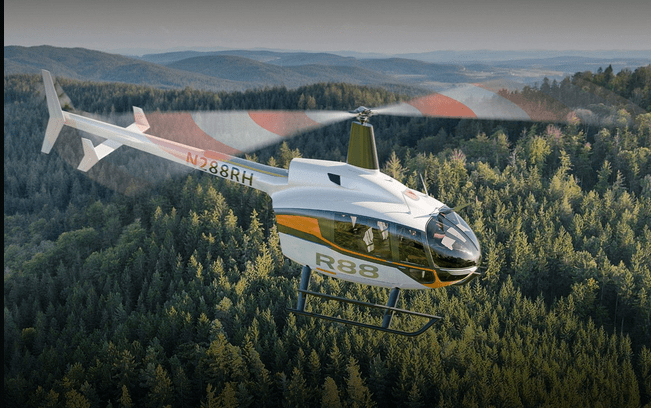
The R88 will feature an open-tail rotor design and two-bladed main rotor system. It also includes new LED aircraft exterior lights, including pulsed landing and taxi lights, tail rotor lighting, scene lighting, and entry lights, further enhancing utility and safety.
The internal payload was expected to accommodate over 2,800 pounds and deliver more than 3.5 hours of flight time and more than 350 nautical miles of range. It will carry up to two pilots and up to eight passengers for a passenger total of 1,800 pounds with a full fuel tank.
Large sliding doors on each side will provide easy access for passengers and cargo. The rear has a fold-down, truck-bed style door for simplified cargo loading or easily accommodating a HEMS stretcher. The aircraft is available with standard skids or optional high skids for increased ground clearance and compatibility with a firefighting water tank.
The Garmin avionics suite includes large Garmin G500H TXI displays and GTN navigators with touchscreen controls for easy operation, vivid displays, and extensive capabilities. The G500H TXI will include a crew-alerting system to provide the pilot with intelligent information about the aircraft’s systems. Offered is a standard 4-axis autopilot from Garmin. This system will provide a full range of important safety functions, including level mode, hover assist, limit cueing, low/high speed protection, and low altitude protection.
A standard data recording system with Datalink automatically will capture engine and system data for simplified operation and maintenance. A standard health usage monitoring system (HUMS) will monitor critical components and provide real-time track and balance data so operators can address issues before they affect operations.
The R88 incorporates dual hydraulics for pitch and roll for critical flight controls. Other standard safety features include an inlet barrier filter and impact-resistant windshields certified to Part 29 transport helicopter requirements.
The R88 introduces dual cyclic controls with removable controls on both sides, allowing the pilot in command to be in either the left or right seat with a passenger in the other seat. The aircraft will be type-certified for optional single-pilot IFR operations. The all-new interior design features comfortable, functional seating, easy-to-maintain materials, and a versatile layout.
New LED exterior lighting, including pulse landing and taxi lights, tail rotor lighting, scene lighting, and entry lights, further enhance safety.
The configurable cabin features a flat floor, allowing for multiple forward and club seating configurations, effective air medical and public safety mission configurations, and multiple future seating options. A fold-down, truck-bed style rear door simplifies cargo loading and accommodates a HEMS stretcher. The air conditioning system is made entirely by Robinson Helicopter.
Robinson partnered with Safran Helicopter Engines to add the Arriel 2W engine.
The R88 offers a wide range of optional OEM-provided mission equipment, including a 3000-lb. HEC-rated cargo hook, utility basket, optional wire strike protection kit, pop-out floats, and more.

With a launch price starting at $3.3 million, the R88 was presented in a configuration of two pilot seats followed by two banks of four passenger seats, illustrating the 275-cubic-foot (7.8-cubic-meter) cabin volume.
Powered by the 1,000-shaft-horsepower Safran Arriel 2W, the R88 has a payload capacity of up to 1,800 pounds (815 kilograms) with full fuel, and a range of 350 nautical miles (650 kilometers), with endurance above 3.5 hours.

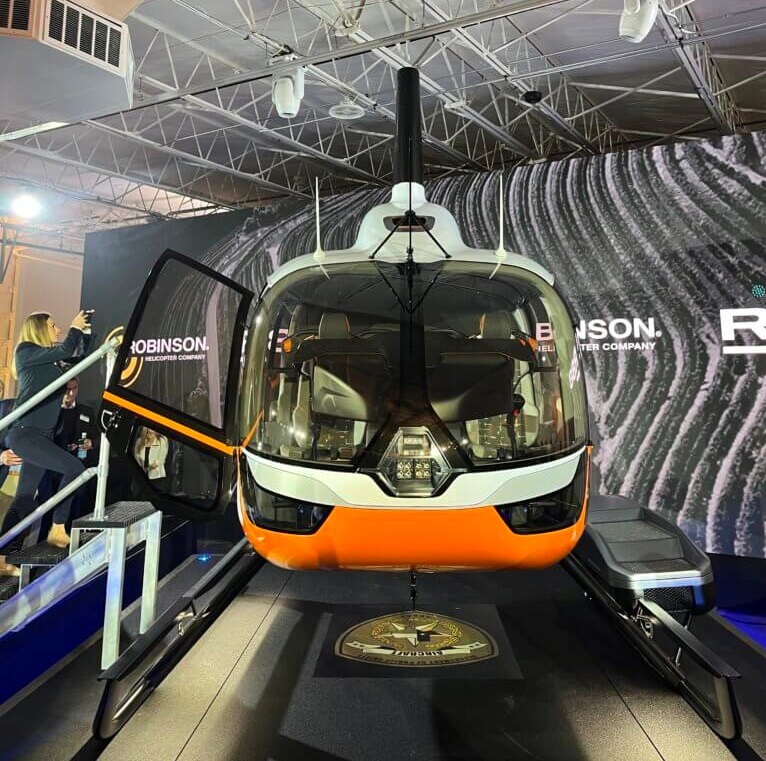
The engine of the R88 is in a different position than it is in the R66 and R44. Those types have a low engine placement within the airframe, while the R88’s engine is moved higher — representing a more “conventional” placement in a helicopter.
It has the standard Robinson two-bladed main rotor and tail, but scaled up to accommodate the increase in power and size provided by the Arriel engine. The blades have a 50 percent bigger chord than those of the R66, and are “quite a bit” longer, said Smith.
The tail boom looks similar to Robinson’s other types, but is higher up on the airframe. When the aircraft is equipped with high skids — as it was during the type’s unveiling in Dallas — the boom is high enough for most people to comfortably walk underneath.
Inside, the cockpit is fully glass, with dual conventional cyclic controls (rather than Robinson’s famed “T” bar — or teetering cyclic — as used in the other types in its range).
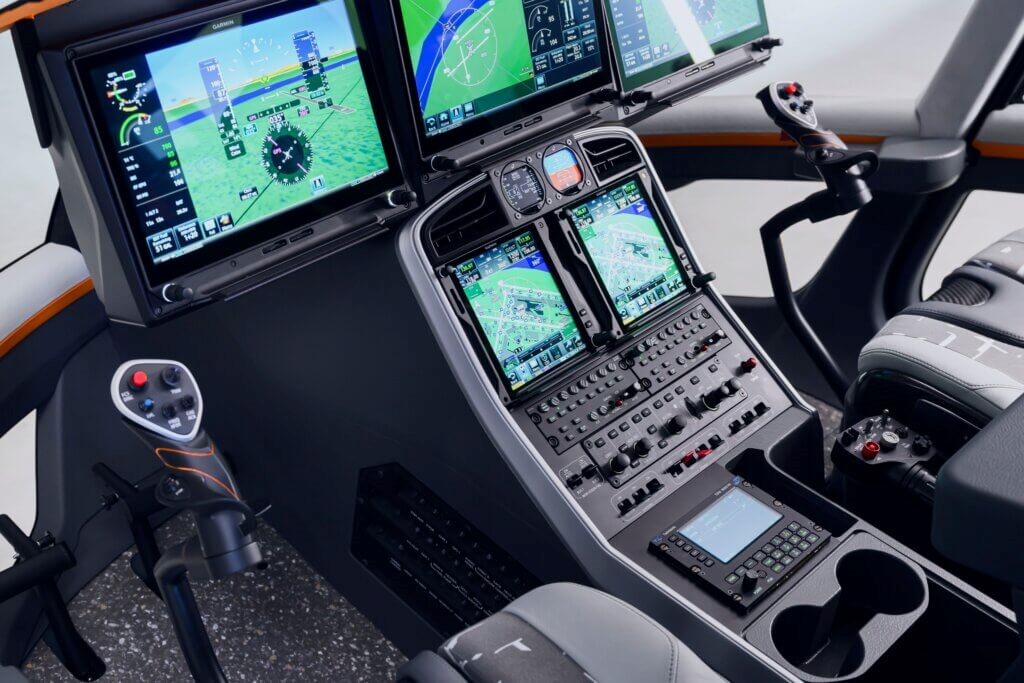
Switching to a conventional cyclic was the result of another functional decision, driven by the aircraft’s large width. They couldn’t get the teetering cyclic to work — it’s too large of a movement.
The R88 has a Garmin avionics suite, including large G500H TXi displays and GTN navigators with touchscreen controls.
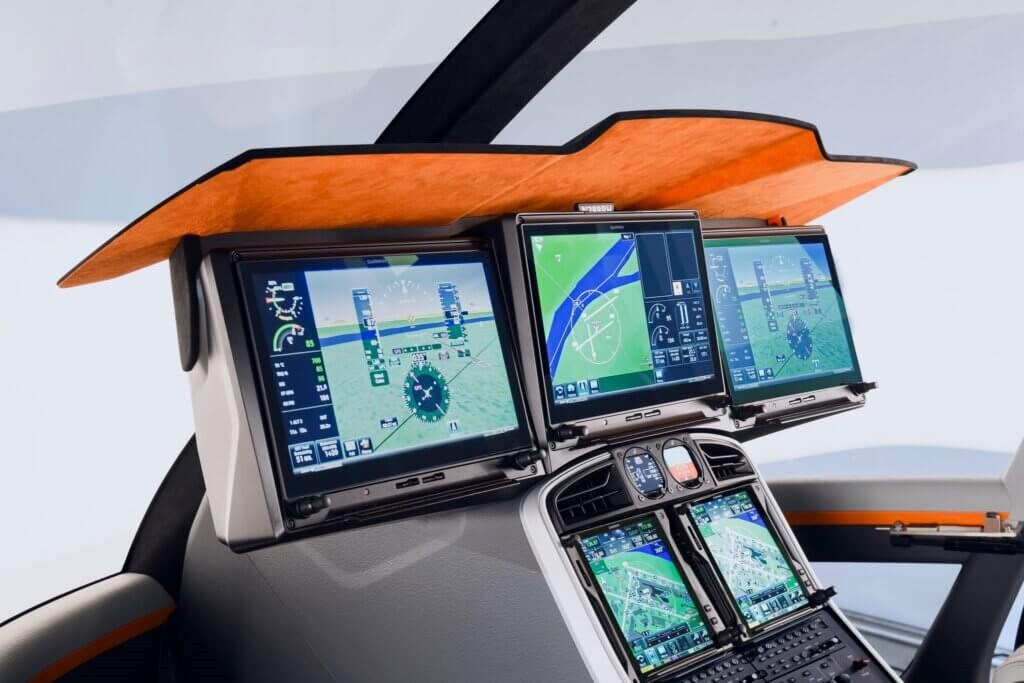
The R88 will have a four-axis autopilot as standard, along with data recording with datalink and a health and usage monitoring system (HUMS). Other safety features include an inlet barrier filter and impact-resistant windshields certified to part 29 transport helicopter standards.
Optional equipment will include a 3,000-pound human external cargo (HEC)-rated cargo hook, utility basket, wire strike protection kit, and pop-out floats.
The cabin has three entry points. Sliding doors — a new feature for a Robinson helicopter — are on both sides, while a fold-down door at the back of the cabin provides access from the rear.
Zurowski ZP.1

A homebuilt helicopter made in Poland. Not flown. Preserved in Newark Aircraft Museum, England.
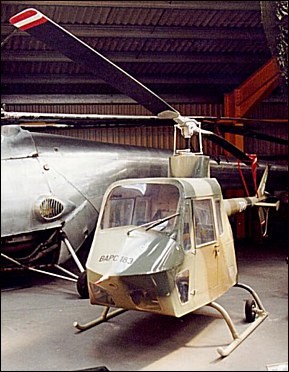
Number of Seats: 1
Number of Engines: 1
Žurovec 1912 monoplane

This monoplane was built at the home of the Žurovec brothers in the village Harty (German: Lilien) near Petrvald (Groß Peterswald) in 1912. When completed it was exhibited in the village inn of the neighbouring Albrechticky (Klein Olbersdorf).
Afterwards it was tested on the meadows between these villages, where today the airport of Ostrava (Ostrau) is located. But because of the quickly overheating 40 hp Delfosse engine only short flights with heights of no more than 40 metres could be obtained.
It was the first aircraft built and flown in Moravia (Mähren). Josef Žurovec was the driving person behind this design. He later should have joined the k.u.k. Fliegertruppe, but not much is known of him. Better known is his elder brother Vilém Žurovec, for his work with Petroczy and Kárman and the developement of the PKZ-1 and PKZ-2 helicopters.
Zündapp 9-092 / Z 92
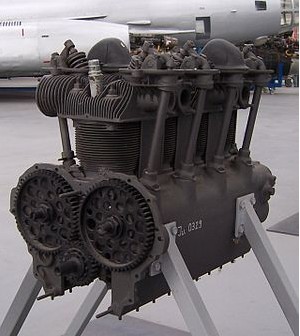
The Zündapp 9–092 or Z 92 was a German four-cylinder, air-cooled, inline aero engine made by Zündapp and used in light aircraft of the late-1930s.
The engine was developed from the smaller Zündapp 9-090. This inverted engine featured dual gear-driven camshafts with the valve rocker cover acting as the oil tank. It featured a single Bosch magneto ignition system. A total of approximately 200 engines were produced.
Applications:
Brunswick LF-1 Zaunkönig
Bücker Bü 180
Fieseler Fi 253
Gotha Go 150
Klemm Kl 105
Siebel Si 202
Specifications:
Type: Four-cylinder air-cooled inverted inline piston aircraft engine
Bore: 85 mm (3.35 in)
Stroke: 88 mm (3.46 in)
Displacement: 2 L (122 cu in)
Length: 800 mm
Width: 350 mm
Dry weight: 60 kg (132 lb
Valvetrain: Overhead valve
Fuel system: Downdraught carburettor
Cooling system: Air-cooled
Power output: 37 kw (50 hp) at 2,300 rpm
Compression ratio: 6.2:1
Power-to-weight ratio: 0.62 kW/kg (0.38 hp/lb)
 All Aero