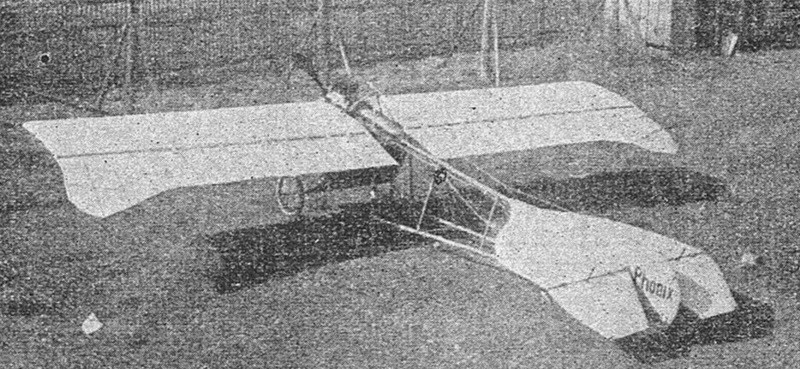
SA Piaggio & Co, an engineering and shipbuilding company, produced some Caproni aircraft and parts during the First World War at a Finale Ligure factory, but subsequently abandoned aircraft manufacture until it took over Pegna & Bonmartini in 1923. First product was the Piaggio-Pegna pursuit monoplane with Hispano-Suiza engine. Later was associated with Societa di Costruzioni Meccaniche Aeronautiche in license-construction of Domier Wal flying-boats. Built P.32 twin-engined heavy bomber at end of 1930s and several four-engined P.108 heavy bombers during Second World War.
Resumed aeronautical work in late 1946 with conversion of Dakotas for airline service. Built P.136 five-seat twin-engined amphibian, prototype flying in 1948, followed by a series of trainers for the Italian Air Force; the P.149 was also license-built by Focke-Wulf in Germany. Produced the P.166 executive transport in 1957, with two Lycoming engines and pusher propellers, as with the P.136; P.166-DL3 turboprop variant later developed and produced, with final P.166-DL3-SEM Maritime variant for search and surveillance, coastal patrol and other roles still available in 1998, but only to special order. Signed agreement with U.S. Douglas company in 1961 for joint development of light utility aircraft, first flown in 1964. Designated PD.808 and powered by two Bristol Siddeley Viper turbojets, only a small number was built.
The present Rinaldo Piaggio company was formed in February 1964 as a separate concern, but in 1994 was put under insolvency protection; 51 percent shareholding in the company was purchased by Tushav, a Turkish holding company, in mid-1998, and protection was thereafter lifted. P.180 Avanti twin-pusher turboprop business aircraft flown September 1986, but only 43 production aircraft ordered; turbofan derivative may be developed. Has manufactured components for Aeritalia/Alenia, AMX International, Dassault and Panavia.
In 1998 three Italian industrial families bought the debt-free assets from the Government and formed Piaggio Aero Industries SpA.
In 2024 Italy approved the sale of Piaggio Aerospace to the Turkish unmanned combat aerial vehicle (UCAV) producer Baykar. In 2023, Baykar ranked among the top 10 exporters in Türkiye across all sectors, racking up $1.8 billion in exports. Türkiye dominates 65% of the global unmanned aerial vehicle (UAV) export market, with Baykar alone holding nearly 60% of the market – three times the size of its closest US competitor. In recent years, Baykar has generated more than 90% of its revenues from exports, delivering Bayraktar TB2 UCAVs and Bayraktar AKINCI UCAVs to 35 countries.