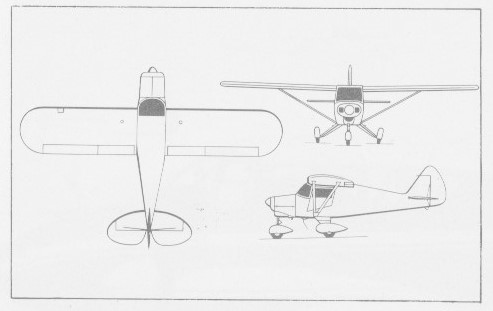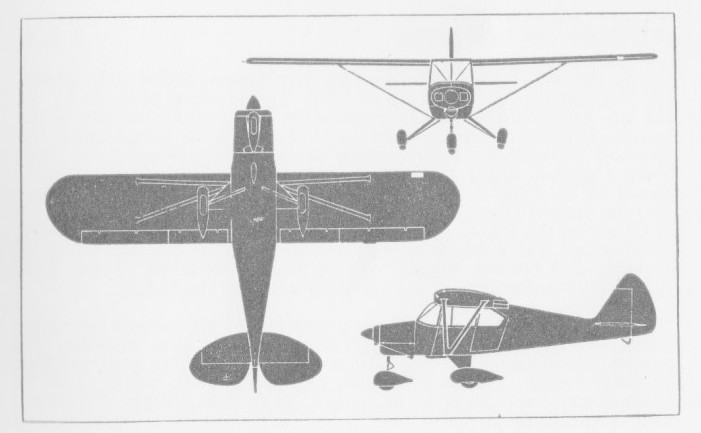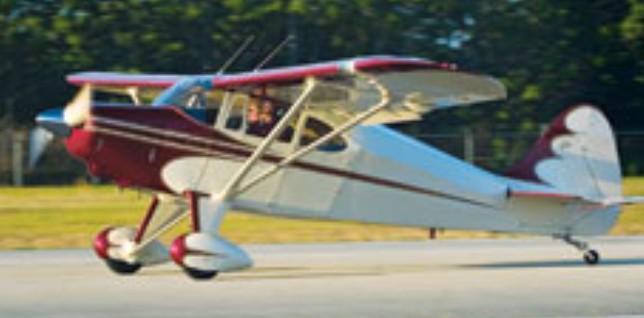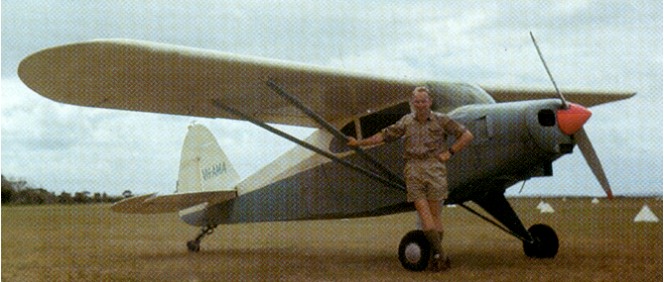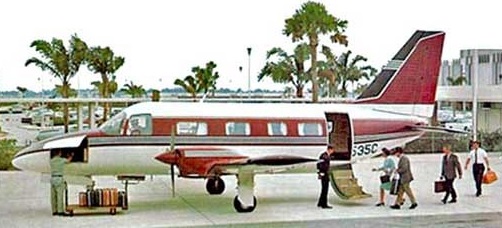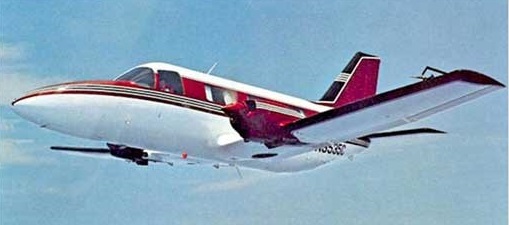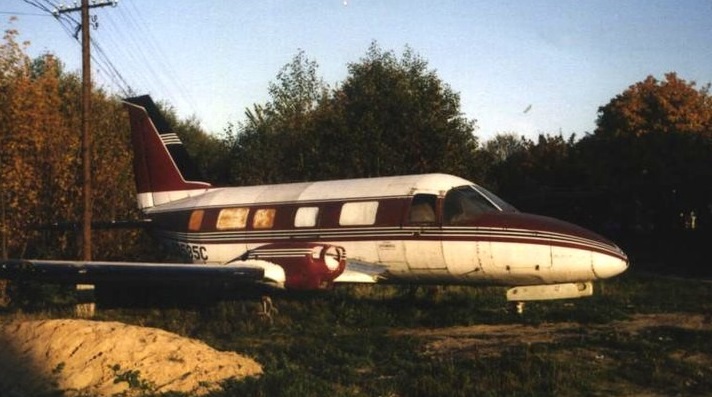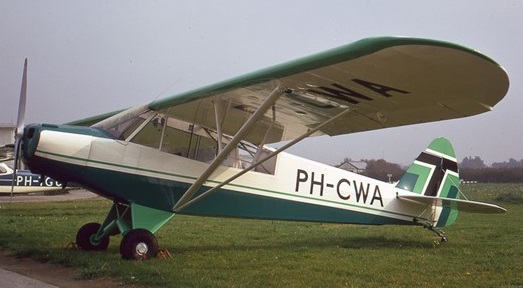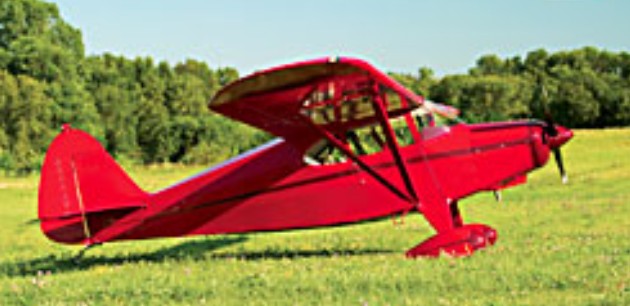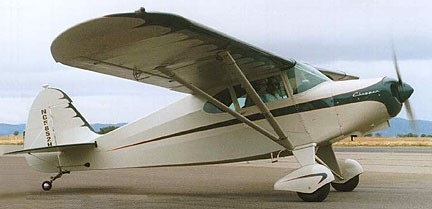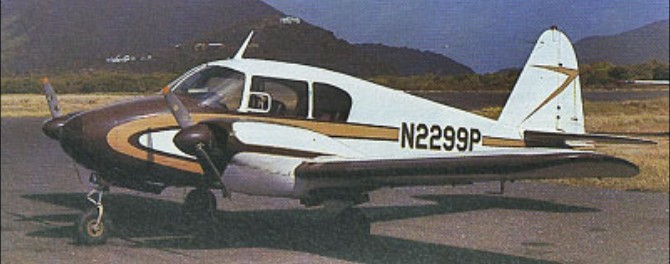
Piper PA-23 Apache / PA-23 Aztec / UO-1 / U-11 / Aztec Nomad

Apache

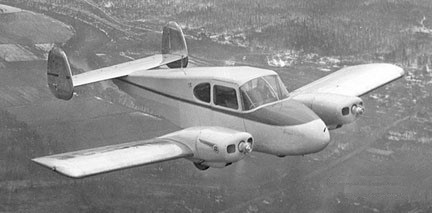
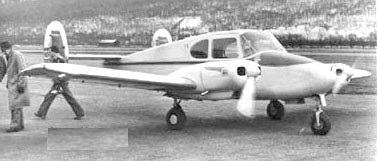
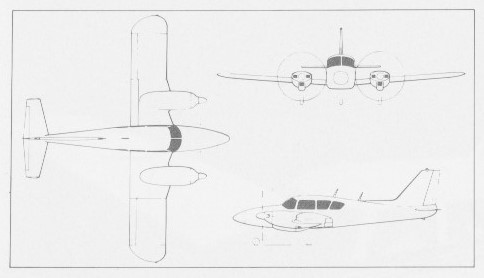
It all began in 1952 with the introduction of the Twin-Stinson, the first Piper of Stinson lineage to be produced since the Piper/Stinson Flying Station Wagon. It was powered by twin 125-hp Lycoming engines. The following year Piper introduced the PA-23 Apache, a vast improvement on the Twin-Stinson concept.The Apache featured a conventional single rudder tail unit rather than the Twin-Stinson’s twin-tail configuration, and power was boosted with the use of 150-hp Lycomings. The new Piper also utilized all-metal construction and retractable landing gear.

On 2 March 1952 Piper flew the prototype N1953A of a new twin-engine aircraft which it then identified as the Piper PA-23 Twin-Stinson. A cantilever low-wing monoplane of all-metal construction, it had a tailplane set high on the fuselage and mounting endplate fins and rudders, retractable tricycle landing gear and an enclosed cabin seating four in two pairs. The Stinson’s fabric covering was replaced by metal and there was a major redesign from the cabin aft, including a single tail. Power was upgraded to two 150hp Lycoming 0-320-A, and prototype N23P c/n 23-1 took wing on 29 July 1953. There followed a second prototype [N1000P] c/n 23-2, and issuance of a TC1A10 on 29 January 1954.

Piper PA-23 Apache Article

It entered production in early 1954 as the PA-23 Apache, later designated PA-23 Apache 150. A total of 1,231 were built, priced at $32,000.

Piper Apache 160 N3454P

Powered by two Lycoming O-320 engines, each of 150 h.p. with Hartzell constant-speed airscrews, the Apache has comprehensive instruments and radio equipment included to remove the limitation of “daylight, V.F.R. only” flying, and the selling price of the new machine was $32,500, or approximately £11,600, in 1954.
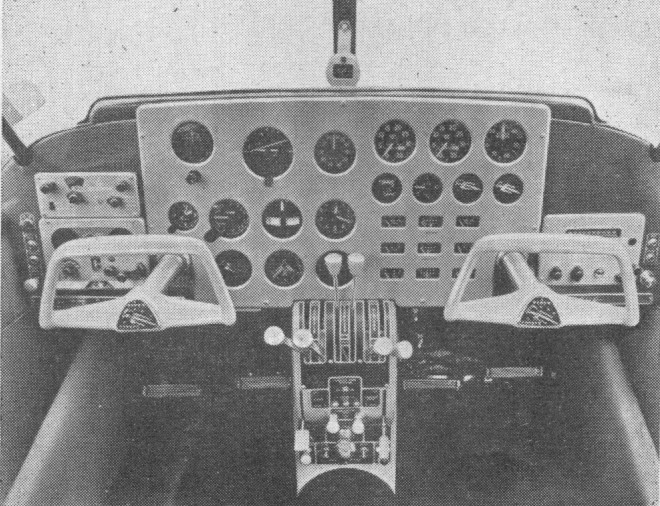
Maximum all-up weight of the Apache is 3,500 lb which, with full tanks, four passengers, full instrumentation aria radio, enables 198 lb of baggage or extra equipment to be carried. Maximum sea-level cruising speed is 160 m.p.h. Single-engined ceiling at top weight is 5,000 ft, and at 3,100 lb is 8,000 ft.

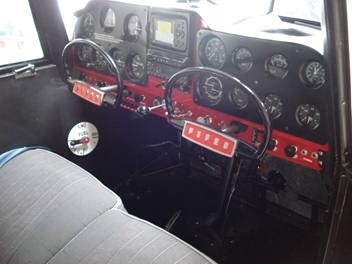
The aircraft is of all-metal construction, and has an empty weight (completely equipped) of 2,170 lb. The “Custom” model is fitted with the three radio installations shown in the cockpit photograph; an autopilot can be fitted. The baggage compartment behind the cabin has a volume of 25 cu ft, and the rear passenger seats can be easily removed to increase the available cargo space to 80 cu ft.

The dual controls are conventional, with toe brakes on the left rudder pedals, and with connections to the steerable nosewheel. Rudder and elevator trim controls are located centrally in the cabin roof. The “Electrol” tricycle landing gear is hydraulically retractable and is fitted with Goodrich wheels, tyres and brakes. Two 36-gallon rubber fuel tanks are installed in the wing, outboard of the engines. The span of the Apache is 37ft; length 27ft lin; and wing area 204 sq ft.
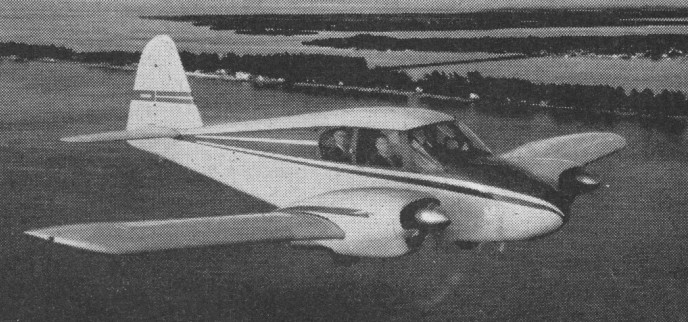
The Apache achieved FAA 1A10 certification on January 29, 1954, with Lycoming 150hp. This ended up covering all PA-23, PA-23-160, and PA-23-250 27-1 to 27-1999 and 27-2505 to 27-8154030.

In 1958, O-320-B 160-hp engines were added as the PA-23 Apache 160, and with some interior revisions so that it was classed as a four/ five-seat aircraft (816 built), and in 1963, the 175kW / 235-hp Lycoming O-540-B1A5 became the standard powerplant to meet requirements for better single-engine performance (119 built). This later model was the first to sport swept tail surfaces and was quite similar to the Aztec of the same vintage, except for the Apache’s smaller engines and shorter nose. 816 were built.
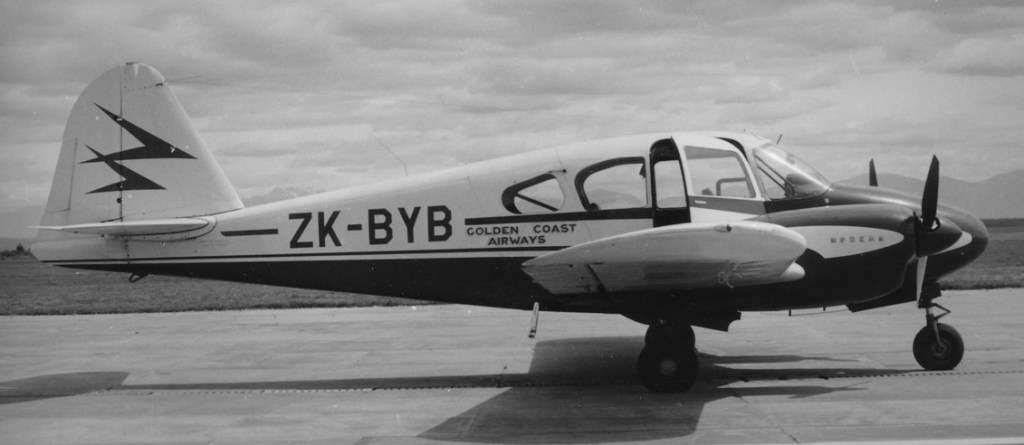
Piper PA-23-160 Apache ZK-BYB

The optional fifth seat became available in 1956, retrofitable to earlier models, though baggage capacity was reduced from 200 lbs to 30 lbs when the seat was occupied, and two 18 USG aux tanks in the outboard wings were installed. Introduced in 1958 were the 160 hp Lycomings along with an increase in MTOW from 3500 lbs to 3800 lbs.

The Apache 235 (later becoming the Aztec 235) featured a swept tail and two Lycoming 235hp O-540-B1A5 engines. 119 were built.

A total of 481 of the 1959 Aztec 250 were sold.

584 of the 1960 Aztec B were sold, plus 20 to the USN as UO-1.
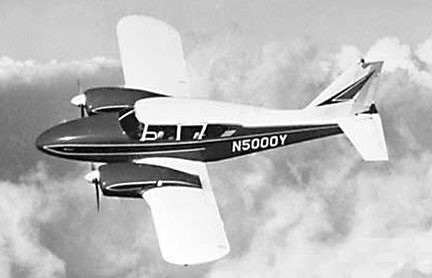
Piper Aztec B N5000Y

1357 of the 1962 Aztec C were built.

Introduced in 1968, the Aztec D featured a long nose with baggage compartment. 492 were built with an export model to South America and Africa.

1,020 of the 1970 introduce Aztec E were built.

Introduced in 1975, the Aztec F was powered with two 250hp Lycoming IO-540-C4B5 engines. Priced at $141,415 (1977), 714 were built, including Turbo Aztec F with TIO-540-C1A engines.
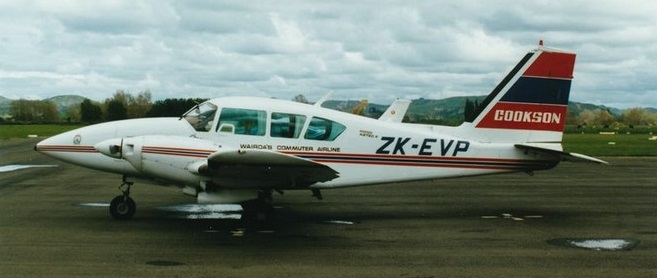
PA-23-250 Apache F ZK-EVP

The 1960 Apache G began the third side window. Some 170 of the 1961 Apache H model were built.
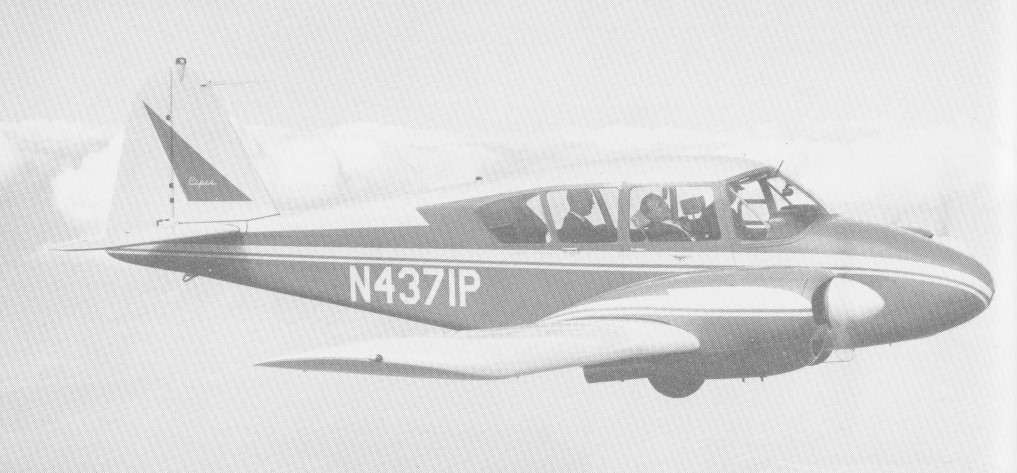
Apache G

Piper PA-23-160 Apache G Owners Handbook

Piper’s 1964 Aztec had streamlined nacelles, flush wing flaps and fully enclosed wheel doors raising the max cruise to 208 mph. Lycoming 250 hp engines have fuel injection and lightweight Hartzell props. The price was $54,990.

From 1962 to 1965, built 117 Apache 235s. More than 2000 150- to 160-hp Apaches were built between 1954 and 1962 until production was replaced by the Twin Commanche (introduced in 1963).

The type continued in production as the Apache until 1965, by which time 2,166 had been built, including 1,231 examples of the first production version.
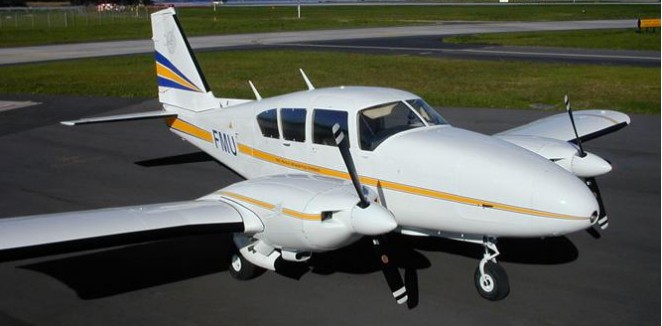
PA23-250C Aztec

With sales of the Apache 235 declining, Piper developed an improved version of this aircraft in 1960 which introduced a 250 hp / 186kW O-540 engine and provided six-seat capacity. The Aztec introduced a longer fuselage, longer nose, squared tail, and 5-6 seats instead of the Apache’s four.

This entered production under the designation PA-23-250 Aztec in 1959-60, the US Navy acquiring 20 of these aircraft, 149050 to 149069, for use in a utility role, designating them UO-1, changed to U-11A in 1962.

Piper U-11A

The Aztec was built until early 1982 when production was suspended. In final production form the type had the designation PA-23-250 Aztec F, and was available also as the generally similar PA-23T-250 Turbo Aztec F which differed by having Avco Lycoming TIO-540 engines with a Garrett turbo-charging system. The first F model, introduced in 1976, offered optional fuel capacity increase.

Both Apache and Aztec were available until the Apache line was dropped. A total of 2047 were built from 1954 to 1962.

Aztec Nomad Inc of Canada, produced the Aztec Nomad conversion of six-place Piper Aztec to twin EDO floats. The useful load was 2200 lb, reducing to 1800 lb as optional amphibian.
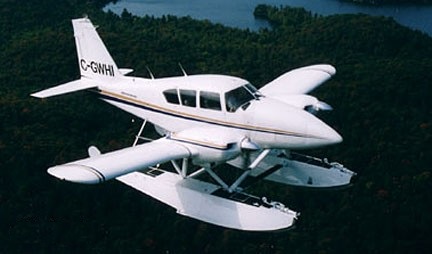
Aztec Nomad C-GWHI

Gallery

1954 Piper Apache 150
Engines: 2 x Lycoming O-320-A1A, 150 hp
TBO: 2200 hr
Fuel type: 100LL
Props: Hartzell HC-82VL-2C, 2 blade CS, 72 in..
Landing gear: hydraulic Tri/Retr.
Max ramp weight: 3800lb
Gross weight: 3800 lb
Landing weight: 3800 lb
Empty weight, std: 2215 lb
Useful load, std: 1585 lb
Payload, full std. fuel: 1153 lb
Usable fuel: 72 USG
Optional fuel: 108 USG
Oil capacity: 8 qt
Wingspan: 37 ft
Overall length: 27 ft. 1 in
Height: 9 ft. 6 in
Wing area: 208 sq. ft
Wing loading: 12.7 lbs./sq. ft
Power loading: 12.7 lbs./hp
Wheel base: 7 ft. 4 in
Wheel track: 11 ft. 4 in
Wheel size: 6.00 x 6 in
Seating capacity: 4 std, 5 opt
Cabin doors: 1
Cabin width: 48 in
Cabin height: 50 in
Baggage capacity: 200 lb /25 cu. ft
Maximum speed: 180 mph
Cruise speed 75% power @ 6,000 ft: 146 kt / 170 mph
Cruise speed 65% power @ 9,000 ft: 139 kt / 162 mph
Cruise speed 55% power @ 12,000 ft: 128 kt
Range at 75% pwr no reserve (72 USgal): 620 sm
Range at 65% pwr no reserve (72 USgal): 710 s.m
Maximum range no reserve (72 USgal): 840 sm
Fuel consumption 75% power: 18.0 USgph
Fuel consumption 65% power: 16.0 USgph
Fuel consumption 55% power: 14.0 USgph
Vs: 59 kt
Vso: 51 kt
Stall speed, gear and flaps up: 66mph. Stall speed, gear and flaps down: 59 mph
Best rate of climb (SL): 1150 fpm
Best rate of climb, 8000 ft: 600 fpm
Service ceiling: 15,500 ft
Single-engine absolute ceiling: 6750 ft
Rate of climb, SE SL: 240 fpm
Takeoff ground roll: 1290 ft
Takeoff over 50-ft. obstacle (ft.): 1600 ft
Landing ground roll: 750 ft
Landing over 50-ft. obstacle: 1360 ft

PA23-160 Apache
Engines: 2 x Lycoming O-320-B, 160 hp.
Gross wt: 3,800 lb
Empty wt. 2,280 lb
Total fuel cap: 108 USG
Max speed 3,000 ft: 152 kt / 183 mph
Vmc: 70 kt
Initial climb rate 1,260 fpm
Best SE climb speed: 83kt
SE ceiling: 5,500 ft
Cruise 23×23: 130 kt / 173 mph
Stall 61 mph
Range 1,260 sm
Ceiling 17,000 ft
Takeoff run 1,190 ft
Landing roll 750 ft
Seats 4-5

PA23-235 Apache / Aztec 235
Lycoming: 2 x Lycoming O-540-B1A5, 235 hp
Wingspan: 37 ft 1.75 in / 11.33 m
Length: 27 ft 7 in / 8.41 m
Empty wt. 2,735 lb / 1240 kg
MTOW: 4,800 lb / 2177 kg
Fuel capacity 144 USG
Top speed 202 mph
Cruise 75% 7000ft/2135m: 166 kt / 191 mph / 307 km
Stall mph 62
Initial climb rate: 1,450 fpm / 442 m/min
Service Ceiling: 17,200 ft / 5240 m
Range 75%: 851 nm / 980 sm / 1575 km
Takeoff run: 830 ft
Landing roll: 880 ft
Seats 4-5

PA-23 Aztec 250
Engines: 2 x 250hp Lycoming O-540-A1D5;
Wingspan: 37’3″
Length: 30’3″
Useful load: 1900 lb
Max speed: 216 mph
Cruise: 190 mph
Stall: 68 mph
Range: 885 mi
Ceiling: 21,000′
Seats: 5-6

Aztec A
1959
Engines: 2 x Lycoming IO 540 A1D5, 250 hp
Seats: 5

Aztec B
1962
Seats: 6

Aztec C
1964
Engines: 2 x Lycoming IO 540 C4B5, 250 hp

Turbo Aztec C
1964
Engines: 2 x Lycoming TIO 540 C1A, 250 hp

Aztec D
Engines: 2 x Lycoming IO 540 C41B5, 250 hp
Prop: 6 ft 5 in (1.96 m) dia 2 blade metal
Wing span: 37 ft 2.5 in (11,34 m)
Length: 30 ft 21 in (9,21 m)
Wing area: 207.56 sq ft (19.28 sq.m)
Gross weight: 5,200 lb (2,360 kg)
Normal cruising speed: 210 mph (338 km/h) at 4,000 ft (1,220 m)
Range: 830 miles (1,335 km) at normal cruising speed
Seats: 6.

Aztec E
Engine: 2 x Lycoming IO-540-C4B5, 250 hp
Wingspan: 37 ft 2.5 in / 11.34 m
Length: 31 ft 2.75 in / 9.52 m
Empty weight: 3042 lb / 1379 kg
MTOW: 5200 lb / 2360 kg
Cruise 4000ft/1220m: 182 kt / 210 mph / 338 kph
Range cruise 10200ft/3110m: 169 kt / 195 mph / 314 kph
ROC SL: 1490 fpm / 455 m/min
Absolute ceiling: 21,100 ft / 6430 m
Norm max fuel range: 720 nm / 830 mi / 1335 km
Max range cruise: 1050 nm / 1210 mi / 1947 km
Seats: 6
Cabin capacity: 1700 lb / 725 kg
Rear cabin capacity: 150 lb / 68 kg
Nose compartment capacity: 150 lb / 68 kg
Max cargo capacity: 122 cu.ft / 3.45cu.m

Turbo Aztec E
1964
Engines: 2 x Lycoming TIO 540 C1A, 250 hp

PA23-250F Aztec F
Engines: 2 x Lycoming IO 540 C4B5, 250 hp
TBO: 2,000 hrs
Props: 2 blade, constant speed, 77 in dia
Max wt: 5200 lbs
Max ldg wt: 4940 lbs
Empty wt: 3221 lbs
Useful load: 1979 lbs
Payload with full fuel: 759 lb
Wing area: 207 sq.ft
Wing loading: 25.1 lb/sq.ft
Pwr loading: 10.4 lb/hp
Wing span: 37.3 ft
Length: 31.2 ft
Height: 10.1 ft
Cabin length: 8.5 ft
Cabin width: 45 in
Cabin height: 50.5 in
Useable fuel: Std: 137.2 USG, Optional: 177.2 USG/1,063 lbs
Baggage capacity: Nose: 17.4 cu.ft, 150 lbs, Rear: 23 cu.ft, 150 lbs
Seats: 6
Maximum speed: 178 kts
Normal cruise: 179 kts @ 3850 ft
Economy cruise (range, std fuel): 170 kts @ 6250 ft (830 nm)
Long range cruise: (162 kts @ 10,800 ft: 985 nm
Max cruise, 75% power (2,300 rpm) at 4,000 ft: 177 kts
Econ cruise, 55% power at 10.000 ft: 152 kts
Duration at max cruise: 5 hrs
Duration at econ cruise: 8.6 hrs
ROC: 1400 fpm
SE ROC: 235 fpm
Single engine climb gradient at 88 knots (Vy): 1.5 degrees
Stall (5200 lbs), clean: 61 kts, Flap dn: 54.5 kts
Service ceiling (5200 lbs): 17,600 ft
Service ceiling SE: 4800 ft.
T/O (50ft): 1980 ft
Ldg dist (50ft): 1585 ft

PA23-250F Turbo Aztec F
Engines: 2 x Lycoming TIO-540-C1A, 250 hp / 186kW
Max wt: 5200 lb / 2359 kg
Max ldg wt: 4940 lbs
Empty wt: 3358 lb
Useful load: 1842 lb
Wing area: 207 sq.ft / 19.23 sq.m
Wing loading: 25.1 lb/sq.ft
Pwr loading: 10.4 lb/hp
Wing span: 37 ft 4 in / 11.37 m
Length: 31 ft 3 in / 9.52 m
Height: 10 ft 1 in / 3.07 m
Cabin length: 8.5 ft
Cabin width: 45 in
Cabin height: 50.5 in
Useable fuel: Std: 137.2 USG
Optional fuel: 177.2 USG
Baggage capacity: Nose: 17.4 cu.ft, 150 lbs, Rear: 23 cu.ft, 150 lbs
Max. speed: 407 km/h / 253 mph
Economy cruise (range, std fuel): 193 kts @ 24,000 ft (780 nm)
Long range cruise (range, std fuel): 165 kts @ 20,000 ft: 835 nm
ROC: 1470 fpm
ROC SE: 225 fpm
Stall (5200 lbs), clean: 61 kts, Flap dn: 54.5 kts.
Service ceiling (5200 lbs): 24,000 ft/7315 m, SE: 17,000 ft
T/O (50ft): 1980 ft
Ldg dist (50ft): 1585 ft.

UO-1 / U-11A
Engines: two 250hp Lycoming O-540-A1D5
Wing span: 37’3″
Length: 30’3″
Useful load: 1900 lb
Max speed: 216 mph
Cruise: 190 mph
Stall: 68 mph
Ceiling: 21,000′
Seats: 5

Miller Custom Apache / Piper Apache
Engines: 2 x Lycoming IO-360-C1C, 200 hp
Seats: 6
Wing loading: 19.3 lb/sq.ft
Pwr loading: 10 lb/hp
Max TO wt: 4000 lb
Empty wt: 2400 lb
Equipped useful load: 1501 lb
Payload max fuel: 583 lb
Range max fuel/ 75% cruise: 1233 nm/7.1 hr
Range max fuel / 55% cruise: 1311 nm/ 8 hr
Service ceiling: 21,000 ft
Max cruise: 174 kt
55% cruise: 165 kt
Vmc: 72 kt
Stall: 50-55 kt
1.3 Vso: 65 kt
ROC: 2000 fpm
SE ROC: 500 fpm @ 78 kt
SE ceiling: 10,500 ft
Min field length: 1100 ft. Fuel cap: 648/918 lb

Seguin Geronimo / Piper Apache
Engines: 2 x Lycoming O-360-A1D, 180 hp
TBO: 2000 hr
Fuel type: 100/100LL
Propeller: Hartzell, 2-blade, CS
Landing gear: Tri./retr.
Wingspan: 37 ft
Overall length: 31 ft. 6 in
Height: 31 ft. 6 in
Wing area: 207.6 sq. ft
Max ramp weight: 3800lb
Empty wt: 2500 lb
Usable fuel, normal: 108 USG / 648 lb
Optional fuel: 156 USG / 936 lb
Oil capacity: 8 qt
Wing loading: 19.3 lb/sq.ft
Pwr loading: 11.1 lb/hp
Max TO wt: 4000 lb
Equipped useful load: 1400 lb
Payload max fuel: 464 lb
Payload, full normal fuel: 729lb
Wheel base: 7 ft. 3 in.
Wheel track: 11 ft. 3 in.
Wheel size: 6.00 x 6 in
Cabin doors: 1
Cabin width (in.): 48
Cabin height (in.): 50
Cruise speed 75% power: 170 kt
Cruise speed 60% power: 163 kt
Cruise speed 55% power: 160 kt
Max range (w/ reserve): 75% power: 663 nm
Max range (w/ reserve) 60% power: 880 nm
Service ceiling: 23,000 ft
Vmc: 62 kt
Stall: 49-57 kt
1.3 Vso: 64 kt
Vso : 47kt
ROC: 1500 fpm
SE ROC: 800 fpm SL-300 ft
SE ROC: 700 fpm @ 82 kt
SE ceiling: 12,000 ft
Min field length: 650 ft
Takeoff ground roll: 400 ft
Landing ground roll: 400 ft
Landing over 50-ft. obstacle: 1400 ft
Seats: 5/6

Aztec Nomad
Engines: 250hp Lycoming IO-540
Props: seaplane
Wingspan: 40’2″
Length: 31’2″
Useful load: 2200 lb / as amphibian 1800 lb
Mac speed: 193 mph
Cruise: 153 mph
Stall: 54 mph
Range: 785 mi
Undercarriage: twin EDO float
Seats: 6
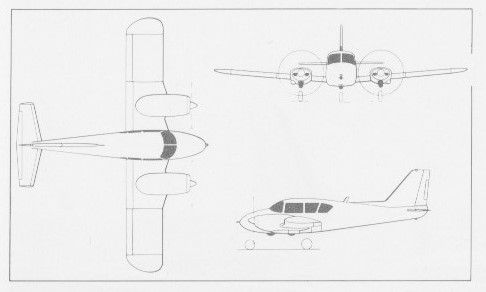
Apache 235
PA-23-250 Aztec

Piper Twin Stinson

Piper Twin Stinson N1953A

The four-place Piper Twin Stinson of 1952 was of steel-tube construction with fabric-covered fuselage and outer wing panels, and tricycle gear. Forerunner of Apache was acquired in a partial merger of companies in 1952.

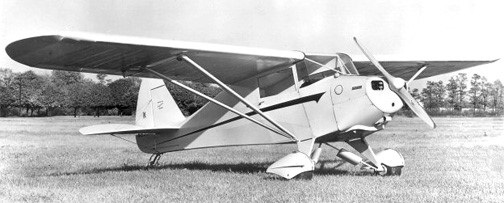
First flying on 2 March 1952, N1953A c/n 23-01 flight tests at Piper revealed engine cooling problems— it was underpowered and suffered in single-engine handling as well—so 150hp Lycomings were installed with full-feathering props. The original twin tail was replaced by a single tail from a PA-6 and other features were modified to bring up prototype PA-23.

Engines: two 125hp Lycoming 0-290-D
Wingspan: 37’3″
Length: 31’2″
Seats: 4

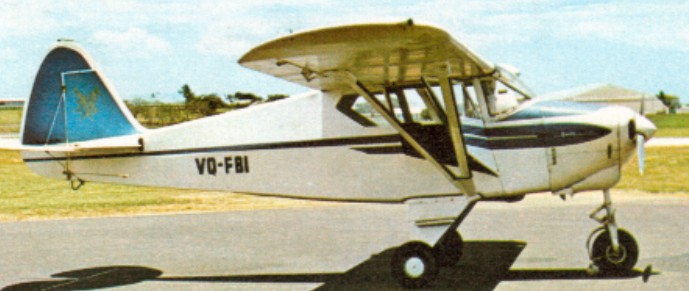
Piper PA-22 Tri-Pacer / Caribbean / Colt / Tri Pacer Twin

Tri-Pacer

Piper had nothing to compete with the Cessna 150, so Piper made use of its Tri Pacer tooling and brought forth a two seat, 108 hp version of the PA 22. A nose-wheel development of the PA-20. This was the final high-wing design to come from Piper. It differed from the PA-20 by having an interconnected aileron and rudder pedal control system, enabling the Tri-Pacer to be flown entirely by the control column without the need to have an input from the rudder pedals during turns. This system was easily disconnected, however, to permit independent use of the ailerons, elevator and rudder. Basically, an updated PA-20 Pacer with tricycle undercarriage, the PA-22 Tri-Pacer (TC 1A6) appeared in 1950 and sold in large numbers at $4,995-6,995 for Standard, Custom, and Super Custom models in 1962. 1,822 Colt were sold.

1959 Piper PA22 160 Tri-Pacer

The Tri-Pacer was introduced as four-seat PA22-125 (125 hp) and PA22-135 (135 hp), the -135 being standard from 1953.

Piper PA-22 Colt Article

By 1955 the Tri-Pacer (TC 1A6) had been updated and fitted with a 150 hp / 112kW Avco Lycoming O-320 engine, as installed in the PA-18 Super Cub. A more powerful version powered by a 160 hp engine was marketed in 1957 and the following year the 150 hp version became the Caribbean $8,395 (1959). 7,668 were built. EDO floats were an option for $2,435.

The final PA-22 version was the simplified two-place Colt built from 1960 to 1964. The Colt utilized the Tri-Pacer undercarriage, engine mounts, windshield, door, tail surfaces, struts, seats and instrument panel. Selected as the standard aero club trainer by Sweden, nearly 1800 of the type had been delivered by the beginning of 1964.

The 125-hp Pacers, fully equipped, sold for $5,170, and the 135-hp models were priced at $6,275, which included an Aeromatic or Sensenich controllable-pitch propeller.

1959 Piper PA22 160 Tri-Pacer

The Colt never had a chance. Despite its eight horsepower edge over the Cessna 150, it was a stocky, ragwing, flapless loser with a poor glide ratio; slow sales prompted Piper to axe the program after just three years.

The Tri Pacer Twin had two 100 hp Continentals in its nose, one atop the other, driving a pair of props on concentric shafts. The concept led to a similar sandwich engine Comanche study, after Bill Lear assured Piper that the first company to develop a conventionally configured “single” with engine out capability would get rich quick. Ed Swearingen, however, who did the feasibility study, convinced Piper that the Comanche would never work.

The PA-22-108, -150, and –16 were certified under FAA 1A6 and by the end of production a total of 9490 had been produced.

Gallery

PA22-125 Tri-Pacer
Engine: Lycoming O-290-D2, 125 hp
Seats: 4

PA22-135 Tri-Pacer
Engine: Lycoming O-290-D2, 135 hp
Seats: 4

PA22-108 Colt
Engine: Lycoming O-235-C1B, 108 hp
Wingspan: 30 ft 0 in / 9.14 m
Length: 20 ft 0 in / 6.10 m
Height: 6 ft 3 in
Wing area: 147 sq.ft
Empty weight: 940 lb / 426 kg
MTOW: 1650 lb / 748 kg
Max option fuel: 36 USG / 136 lt
Max speed: 120 mph at SL
Max cruise 75% 7000ft/2135m: 100 kt / 115 mph / 185 kph
ROC SL: 610 fpm / 186 m/min
Service ceiling: 12,000 ft / 3660 m
Range std fuel: 281 nm / 324 mi / 554 km
Range max opt fuel 7000ft/2135m: 599 nm / 690 mi / 1110 km
U/C: Nose wheel
Seats: 2

PA-22 Tri-Pacer
Engine: Lycoming O-320, 160 hp
TBO: 2000 hr
Fuel type: 100
Propeller type: 62-inch, FP Sensenich
Landing gear type: Conv./Fixed
Gross weight: 2000 lb / 908 kg
Empty weight, std: 1150 lb
Useful load, std: 850 lb
Usable fuel, std: 66 Usgals /396 lb
Payload, full std. fuel: 454 lb
Wingspan: 29 ft. 4 in / 8.9 m
Overall length: 20 ft. 4 in / 6.28 m
Height: 6 ft. 1 in
Wing area: 147.5 sq. ft
Wing loading: 13.6 lbs./sq. ft
Power loading: 12.5 lbs./hp
Seating capacity: 2+2
Cabin doors: 2
Cabin width: 40 in
Cabin height: 45 in
Wheel size: 6 x 6 in
Max level speed: 141 mph (226 kph)
Cruise speed, 75% power: 120 kts
Fuel consumption, 75% power: 8 gph
Vso: 42 kt
Best rate of climb, SL: 1000 fpm
Service ceiling: 15,500+ ft
Takeoff ground roll: 1120 ft
Takeoff over 50 ft obstacle: 1600 ft
Landing ground roll: 780 ft
Landing over 50 ft obstacle: 1280 ft

1958 PA-22 Tri-Pacer
Engine: Lycoming O-320-B, 160 hp
TBO: 2000 hr
Propeller: Fixed
Landing gear: Tri/Fixed
Gross weight: 2000 lb
Empty weight, std: 1110 lb
Useful load, std: 890 lb
Fuel: 36 USgal
Wingspan: 29 ft. 3 in
Overall length: 20 ft. 6 in
Height: 8 ft. 4 in.
Wing area: 147.5 sq. ft
Seating capacity: 4
Cabin width: 40 in
Cabin height: 36 in
Baggage capacity: 100 lb
Cruise speed 75% power: 113 kt
Max range (w/ reserve) 75% power: 435 nm
Fuel consumption 75% power: 8 US gph
Stall speed (gear, flaps down): 49 kt
Best rate of climb: 800 fpm
Service ceiling: 16,500 ft
Takeoff ground roll: 1120 ft
Landing ground roll: 500 ft

PA-22-150
Engine: 1 x Avco Lycoming O-320-B, 119kW
Max take-off weight: 907 kg / 2000 lb
Empty weight: 503 kg / 1109 lb
Wingspan: 8.92 m / 29 ft 3 in
Length: 6.28 m / 21 ft 7 in
Height: 2.54 m / 8 ft 4 in
Wing area: 13.7 sq.m / 147.47 sq ft
Max. speed: 227 km/h / 141 mph
Ceiling: 5030 m / 16500 ft
Range: 1054 km / 655 miles

PA22 Caribbean
Seats: 4

PA-22-160 Tri-Pacer

Piper PA-20 Clipper

Originally called ‘Clipper’ but changed to Pacer as PanAm had threatened as lawsuit as the name ‘Clipper’ was registered to them. The Piper Pacer, built 1950-1953 inclusive, evolved from the two-place Vagabond of 1948. As the post-war market developed, Piper recognized the need for a minimum-cost four-placer, and the initial result was the PA-16 Clipper in 1949, which in turn spawned the PA-20 Pacer in 1950.

The Pacer is typical Piper for that period: metal-framed, fabric covered, and easy to fly. It introduced a number of improvements, including a larger area tailplane with balanced elevators, increased fuel capacity, redesigned landing gear and several interior refinements.

The Pacers are taildraggers, and the first ones were powered with the Lycoming O-235-C1 Lycoming of 81kW / 115-hp, designated PA-20 Pacer 115 (TC 1A4), and priced at $3,795. Since this was during the pre-avionics age, not much, if anything, was added to that for radios.

Few of the 115-hp models were produced, however, before the 93kW / 125-hp (Lycoming O-290-D) Pacer 125 was offered, and most Pacer production is accounted for by this model.

The 1952 Pacer 135 introduced a variable-pitch propeller and were fitted with the O-290-D2 rated at 135-hp, but sales dwindled and production was halted in 1953, because the tri-gear version of the Pacer, the PA-22 Tri-Pacer, introduced in 1952, was claiming most of the customers.
In May 1951 Max Conrad set a Transcontinental, non-stop lightplane record of 23h:4m:31s
in a PA-20.

When production ended in 1954 a total of 1,119 had been built, and the PA-20 Pacer 135 could demonstrate a maximum speed of 225km/h and had a range of 933km.

Gallery

Engine: 1 x 93kW Lycoming O-290-D
Max take-off weight: 816 kg / 1799 lb
Wingspan: 8.93 m / 29 ft 4 in
Length: 6.21 m / 20 ft 4 in
Cruise speed: 180 km/h / 112 mph
Range: 933 km / 580 miles
Crew: 1
Passengers: 3

Piper PA-29 Papoose

This little bubbletop trainer was the world’s first fiberglass airplane. It bore a deceptive similarity to the Tomahawk, with which it has nothing in common. Heralded as Piper’s next generation trainer when it was previewed by the press in 1962, the airplane was quietly dropped: the potential profits weren’t worth the risks of being a plastics pioneer.

Only the one was built, N2900M, first flying on 30 April 1962.

A side by side two seat training aircraft, construction was all plastic / glassfibre honeycomb construction and fitted with a fixed tricycle undercarriage. The aircraft is fitted with one piece full span flaperons and the canopy slides rearwards.

The aircraft is now preserved at the Piper Aviation Museum at Lock Haven.

Engine: Lycoming O-235-C1B, 108 hp
Wingspan: 25 ft 0 in
Length: 21 ft 6 in
Height: 7 ft 0 in
Empty weight: 803 lb
Loaded weight: 1500 lb
Seats: 2

Piper PA-35 Pocono

Piper started the design work in 1965 for a twin-engined piston non-pressurized commuter airliner and the prototype first flew on 13 May 1968. It was a low-wing monoplane that was intended to be powered by two 475 hp (354 kW) Lycoming TIO-720-B1A piston engines then under development. It was planned that the aircraft would be built at the new factory at Lakeland Municipal Airport in Florida. Due to problems during development the tail area was increased, the fuselage stretched and the engines uprated to 520 hp (388 kW) variants.

Named Ponoco (meaning ‘a stream between two mountains’), development was stopped in 1969 initially to let the company develop other aircraft, but the halt was also influenced by the lack of a suitable engine and a number of third-level airline operators in the United States going out of business. In 1970 the company proposed a four-engined and a turboprop version, but they were not developed.

In about 1978 a cooperation program between Piper and WSK Mielec (Poland) was planned. As part of this one fuselage with wings was transported from Florida to Poland and a team of designers was assembled at the R&D Center in Mielec. The program was named M-19, with designer Tadeusz Widełka as the team leader. The program was abandoned when the An-28 program was launched in Mielec and the PA-35 fuselage was moved to the Technical University in Rzeszów. Later, probably in 1994, the aircraft was moved to the city of Widełka.

Pocono prototype in 1995 in Widelka, Poland

“What we should have done is put four Aztec engines on it” Pug Piper said later.

Only one, N3535C, was made.

Powerplant: 2 × Lycoming TIO-720-B1A, 520 hp (388 kW) each
Wingspan: 51 ft 0 in (15.55 m)
Length: 42 ft 4 in (12.91 m)
Height: 17 ft 5 in (5.31 m)
Empty weight: 5,572 lb (2,527 kg)
Gross weight: 9,750 lb (4,423 kg)
Maximum speed: 260 mph (417 km/h, 230 kn)
Cruise speed: 235 mph (377 km/h, 204 kn)
Stall: 80 mph
Range: 700 mi (1,127 km, 610 nmi)
Service ceiling: 29,000 ft (8,841 m)
Rate of climb: 1,680 ft/min (8.5 m/s)
Crew: two
Capacity: 16

Piper PA-19 / L-18

Early in 1948 Piper was developing the PA-19, which was a version of the PA-11 Cub Special for the U.S. Army. Only three were built and the first of them, N5011H (Ser. No. 19-1), would serve as the certification test bed for the installation of the Continental C-90-12F, Lycoming O-235-C1 and O-290-D.

The PA-11 airframe was unchanged, except for a revised center section and the use of the more rounded rudder that was first used on the J-4 Cub Coupe. A sporty 90hp Continental-powered version of the Vagabond with Clipper wings, which was to be a mate with the 90hp PA-11 for the 1949 model year.

Military orders for the PA-19 that Piper Aircraft hoped for did not immediately materialize, so the company decided to ”civilianize” the design and market it as the Super Cub. Rather than advancing to the next model designation, which would have been PA-20, Piper chose to go backward and assign the unused PA-18 designation to the Super Cub.

Ot the three PA-19s were built: the first became the test bed for the PA-18-90 and -105 models; the second example became the test bed for the PA-18-125 and -135; and the third was built and sold to the Department of the Interior and used by the Fish and Game Commission. This PA-19 existed in 2009 and was flying in Alaska.

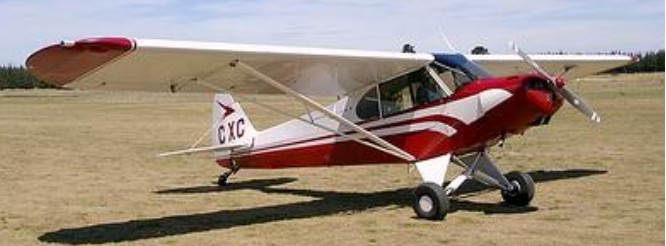
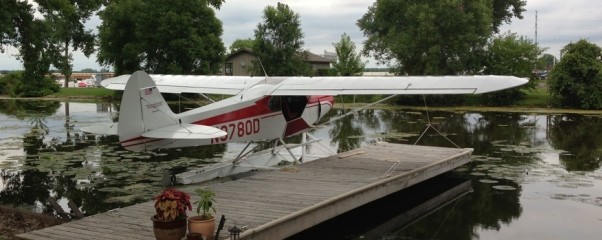
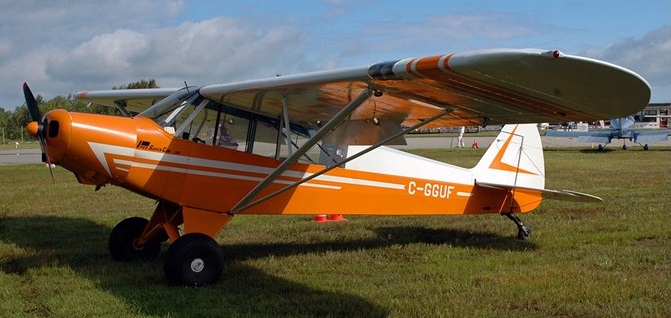
Piper PA-18 Super Cub / L-18 / L-21 / U-7 / YL-21 / Chincul PA-18 Super Club

Early in 1948, Piper assigned the model designation PA-18 to an improved version of the PA-17 Vagabond, which was to be introduced to the marketplace in 1949. A sporty 90hp Continental-powered version of the Vagabond with Clipper wings, which was to be a mate with the 90hp PA-11 for the 1949 model year.
A prototype was built and tested, but Piper decided to cancel the program early in 1949.

In October 1948, the Army approached Piper with a request for a new model: a light aircraft to be used for utility, training and patrol, similar to the previously built L-4. But it needed to be different in some ways to allow an opening for the L-18 light observation and utility aircraft contract.

Piper was just starting to get back on its feet from the aviation business crash of March 1947 and was very willing and able to devote attention to this request. So in January 1949 Piper responded with a proposal of a model known as the PA-19. At that time the PA-18 model number had been assigned to the 90hp Continental-powered version of the Vagabond with Clipper wings.

The PA-18 Vagabond programme was cancelled, leaving the number 18 open. As the development of the PA19 continued (the Army was very interested in the first one, having both the Continental 90hp and then a Lycoming 108hp engine installed), Piper looked at the possibility of making a civilian version of this aeroplane during the latter half of the 1949 model year, deleting some of the items the military had requested.

This would then be called the PA-18, and the Type Certificate 1A2 already assigned to the PA-19 would be updated to include the PA-18 as well. Hence the first PA-18 was born gaining type certification on 23 November 1949, patterned after the first PA-19 built in January that year. Both were powered with the Continental C90-8 engine.

The new civilian aircraft was the PA-18-90 Super Cub, very much like the 90hp PA-11 but better. Only three PA-19s were built: the first became the test bed for the PA-18-90 and -105 models; the second example became the test bed for the PA-18-125 and -135; and the third was built and sold to the Department of the Interior and used by the Fish and Game Commission.

The PA-18-105 was powered with a Lycoming O-235-C1. It had a larger horizontal tail, with balanced elevators and flaps (from the PA-20 parts bin). The PA-18-105s were only built from January to October of 1950 when that model was replaced by the PA18-125.

Piper PA-18-105 Super Cub

So the first full year of production was the 1950 model year and these two models were on the market. For 1951 the 90hp / 67kW version continued with the C90-12 engine and the PA-18-105 was replaced by the O-290-D Lycoming powered PA-18-125, which had wing flaps and the big tail, and oil cooler scoop on top of the cowling.

The very first Super Cub was N5410H, Ser. No. 18-1. It is still on the FAA’s books (2006) – registered to Eugene Frank of Caldwell, ID, who has been deceased for a number of years.

In 1952 the 125hp models gave way to the PA-18-135 with a Lycoming O-290-D2, production beginning in May of 1952. Two wing tanks standard with this model, with a right wing tank changed from optional to standard. The oil cooler scoop was moved to the bottom of the cowling. The PA-18-90 production continued and actually lasted until 1961, when a Piper employee bought the final example of that model.

In 1955 the 150hp Lycoming O-320 engine became available and was adopted as the standard engine for the PA-18-150. A few PA-18-135s were still built after that, but very few.

Piper PA-18 Super Cub Article

The PA-18-150 continued in production right up until the last one was produced as a 1983 model, actually built in November 1982. This was ferryed from Lock to Lubbock, Texas, during the New Year holiday vacation of 1982-83.

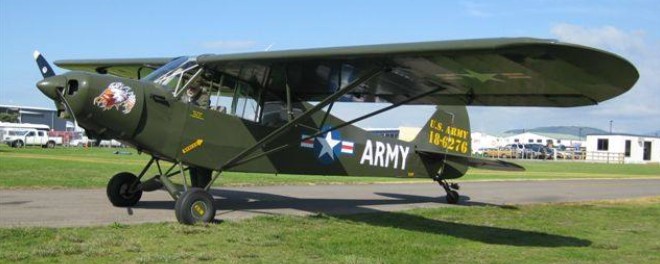
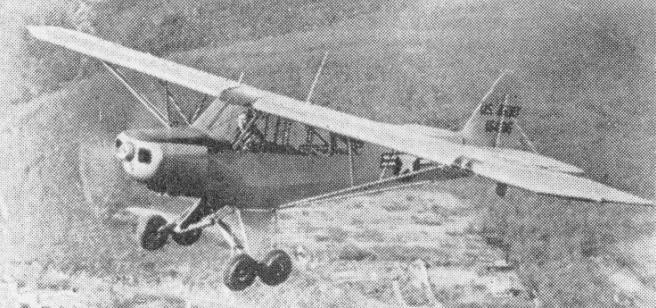
The military also utilised some special versions of the PA18. The first was known as the L-18C, a PA-18-90 with the observation greenhouse rear enclosure and first coming out in July 1950. N 1951 two YL-21, 51-6495 and 51-6496, enlarged PA-18 were used for evaluation.

In 1951 the military began receiving L-21A models, redesignated as U-7 in 1962, a military version of the PA-18-125. One-hundred and fifty, 51-15654 to 51-15803, were enlisted, of which some modified with full dual-controls as TL-21A trainer. In 1952 the L-21B, a military version of the PA-18-135, became available. 584 were built, of which 14 were transferred to other nations under Mutual Aid.

Several versions of the civil Piper PA-18 Super Cub were in service with the U. S. Army Field Forces under the designations L-18 (90 h.p. Continental) and L-21 (135 h.p. Lycoming) in 1955. The L-21B has tandem wheels for operation from rough ground. About 270 Piper 18-T trainers were being used by civil schools for initial training of U.S.A.F. pilots in 1955.

L-21B

The PA-18-95 was powered with a Continental C-90 engine. Like the PA-11 from which it was derived, it had no flaps, had a straight elevator (no counterbalancing horns) and one 18 gallon fuel tank in the left wing. Another 18 gallon tank for the right wing was optional. The initial price in 1949 was $5,850. Surprisingly, even though more powerful models were being manufactured, the PA-18-95 continued in production until 1961.

Also in 1952 was the PA-18-105 Special, or PA-18T, built for the Civil Air Patrol and the US Army and Air Force flying clubs as a trainer. These models had the Lycoming O-235-C1 engine, toe brakes, no flaps and the big tail with an upper and lower elevator bungee spring system, along with some other special options. Two hundred and forty-three of these aircraft were built.

In 1955 Piper built a very small number of L-21B “Modified” models which utilised the 112kW Lycoming O-320 engine.

Several versions of the civil Piper PA-18 Super Cub were in service with the U. S. Army Field Forces under the designations L-18 (90 h.p. Continental) and L-21 (135 h.p. Lycoming) in 1955. The L-21B has tandem wheels for operation from rough ground. About 270 Piper 18-T trainers were being used by civil schools for initial training of U.S.A.F. pilots in 1955.

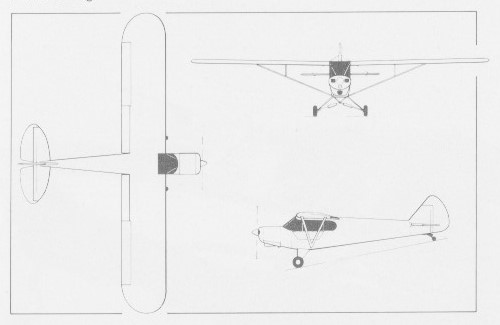
Another PA-18 model was the PA-18A (for Agricultural) which began with the 1952 model year. These were equipped for spraying or dusting of dry material from a hopper located in the rear seat area. The fuselage frame of these models was beefed up considerably and lacked the familiar turtle deck arches, giving it a flat back look.
When production ended a total of 2,650 PA-18A had been built

So the first PA-18 was built in Lock Haven in November 1949 and the last was built in November 1982. A total of 10,326 units were built during that time. The financial situation leed to the company disposing of all rights in this aircraft to WTA Inc. of Lubbock, Texas, in 1981.

A total of 10, 222 models were built 1982.

When Stuart Millar bought Piper from a holding company in 1986, one of his desires was to put the PA-18 back in production as a fully assembled turnkey aircraft, and also as an owner-assembled, fully-certified kit aeroplane. Piper of Vero Beach, set out to create the Cub Kit Programme and help get the production version off the ground.

The first Vero Beach Super Cub was built in July 1988 as a $45.000 completed airplane or a $21,000 kit (minus engine and prop). In December 1989 the company filed for bankruptcy and the Cub Kit Programme was cancelled before any kits got out of the factory, but the production models continued through the bankruptcy and were built until December 1994 when the last Piper built Super Cub, N41594, rolled off the production line. One hundred and thirteen additional aircraft had been built in Vero Beach.

In total, Piper Aircraft built 10,326 Super Cubs between 1949 and 1994. Just 44 were built at Vero Beach – all the rest at Lock Haven. The biggest year for Super Cub production was 1953, when 1043 were built.

Some significant changes pertaining to the Super Cub’s production occurred. In 1970 the method of welding the fuselage frame was converted to TIG welding from oxyacetylene. Also that year saw a change from covering with grade A cotton to Ceconite 101.

The 1977 models went to metal flaps and ailerons, Cleveland wheels and brakes with 6.00 x 6 tyres as standard, and an Alcor alternator kit for the electrical system.

All models were certified under FAA 1A2, except the PA-18A-135 under FAA AR-7.

Piper built 838 PA-18s with the 71kW Continental C90-8F engine for the US Army under the designation L-18C, 108 of this total being supplied to foreign nations under the Military Aid Program, and the army then ordered 150 examples of the generally similar L-21A which differed by having the 92kW Avco Lycoming O-290-II engine; at a later date a number of these aircraft were converted for use as trainers, then being redesignated TL-21A. Under the designation YL-21 the US Army evaluated two examples of a version of the PA-18 Cub powered by a 101kW Avco Lycoming O-290-D2 engine, later acquiring a total of 584 under the designation L-21B, a number of them being supplied to foreign nations under MAP. In 1962 in-service L-21Bs were redesignated U-7A.

WTA Inc received from Piper rights to PA-18-150 Super Cub lightplane and PA-36 Brave agricultural aircraft; 250 Super Cubs built before becoming once again Piper type, while PA-36 produced as New Brave.

Chincul SACAIFI manufactured aircraft under license from Piper Aircraft Corporation. The company was a wholly owned subsidiary of “La Macarena S.A.”, Piper’s Argentine agent. Production included PA-18 Super Cub.

Piper PA-18 vs Tecnam P-92 TD Article

Gallery

Variations:
Wagner Twin 3
General Airplane Service Model 11

Ultralight replica:
Light Miniature Aircraft LM-5
Nostalgair N3 Pup
Microwings Cubby

Specificatons:

PA-18-95
1949
Engine: Continental C90-12F, 90 hp

PA-18-105
1949
Engine: Lycoming O-235, 108 hp

Piper PA 18 – 125 Super Cub
Engine : Lycoming O-290 D2C, 123 hp
Length : 22.507 ft / 6.86 m
Height : 6.627 ft / 2.02 m
Wingspan : 35.302 ft / 10.76 m
Wing area : 178.037 sq.ft / 16.54 sq.m
Max take off weight : 1565.6 lb / 710.0 kg
Weight empty : 1045.2 lb / 474.0 kg
Max. weight carried : 520.4 lb / 236.0 kg
Max. speed : 109 kt / 201 km/h
Initial climb rate : 866.14 ft/min / 4.4 m/s
Service ceiling : 17110 ft / 5215 m
Wing load : 8.82 lb/sq.ft / 43.0 kg/sq.m
Range : 216 nm / 400 km
Endurance : 3 h
Crew : 2

PA-18-135
1952
Engine: Lycoming O-290-D2, 135 hp

PA-18 Super Cub 150
Engine: Lycoming O-320, 150 hp / 112kW
TBO: 2000 hrs
Prop: 2-blade, 74/76-in
Length: 22ft 5in
Height: 6ft 8in
Wingspan: 35ft 3in / 10.73 m
Wing area: 179 sq.ft / 16.58 sq.m
Wing aspect ratio: 6.98
Maximum ramp weight: 1750 lbs / 794 kg
Maximum takeoff weight: 1750 lbs / 794 kg
Standard empty weight: 984 lbs / 446 kg
Maximum useful load: 766 lbs
Payload max fuel: 566 lb
Maximum landing weight: 1750 lbs
Wing loading: 9.77 lbs/sq.ft
Power loading: 11.66 lbs/hp
Maximum usable fuel: 215 lbs
Fuel cap Std: 36 US Gal
Best rate of climb: 960 @ 65 kts
Climb gradient: 886 ft/nm
ROC @ 8000 ft: 600 fpm
Take off (50ft): 500 ft
Service ceiling: 19,000 ft / 5790 m
Maximum speed: 113 kts / 209 km/h / 130 mph
Normal cruise @ 65% pwr @ 8000 ft: 100 kts
Fuel flow @ normal cruise: 40 pph
Endurance at normal cruise: 5.3 hrs
Range max fuel/75% pwr: 400 nm/3.3hr
Stalling speed clean: 40 kts
Stalling speed flaps down: 37 kts
Turbulent-air penetration speed: 83 kts
Fixed tail wheel under carriage
Seating cap: 2
Baggage cap: 50lbs
1.3 Vso: 48 kt
Min field length: 885 ft
Seats: 2

L-18
Engine: 90 h.p. Continental

L-21A / TL-21A
Engine:125hp Lycoming O-290
Wingspan: 35’3″
Length: 22’7″
Useful load: 630 lb
Max speed: 123 mph
Range: 770
Ceiling: 21,650′

L-21B / U-7A
Engine: 135 h.p. Lycoming O-290D
Span: 35 ft. 2.5in
Weight: 1500 lb
Speed: 127 m.p.h.

PA-18-150

Piper PA-17 Vagabond

By the autumn of 1948, when the market was showing signs of recovery, Piper introduced the PA-17 Vagabond which was powered by a 48kW Continental A65-8 engine and again equipped with the ‘frills’ as standard. One aim of the PA-17 was to reduce a stockpile of materials held at Lock Haven.

The PA-17 Vagabond Trainer (ATC 805), designed soon after Piper began producing the PA-15, was a dual control, deluxe version of the PA-15. New were an engine primer for the 65hp Continental A-65 and bungee cord shock absorbers for the landing gear, and priced at $2,195.

Piper PA-17 N4835H

A total of 214 were built from May to October 1948.

Piper PA-16 Clipper

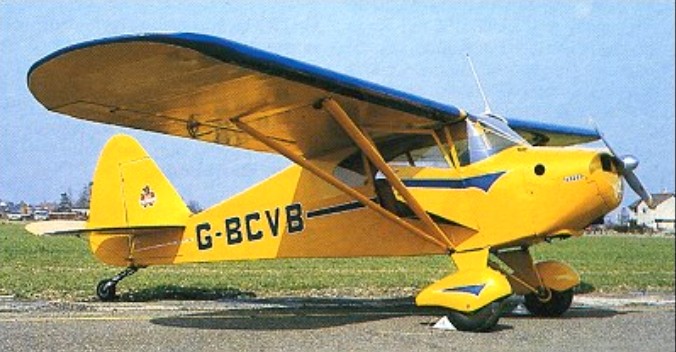
Piper in 1949 added to this success by introducing a four-seat version of the PA-15; designated PA-16 Clipper (TC 1A1), and powered by a 115-hp / 86kW Avco Lycoming O-235-C1 engine. Essentially an expanded Vagabond, the PA-16 Clipper was priced at $$2,995-$3,095.

Piper PA-16 N5852H

The prototype was completed in 1948 but all 724 units were produced in 1949. It had a front seat door on the left.

Following a complaint and suit threat by PanAm over the use of the Clipper name, the production was stopped in October of 1949, the design was modified for the O-290 engine, control wheels replaced the stick and slight mods to the landing gear was made and the production continued under the Pacer name in February of 1950. It was therefore the forerunner to the popular Tri-pacer.

Piper PA-16 Clipper
Engine: Lycoming O-235-C1, 115 hp
TBO: 2400 hr
Fuel type: 80
Propeller type: FP
Landing gear: Conv./Fixed
Max ramp weight: 1650 lb
Gross weight: 1650 lb
Landing weight: 1650 lb
Empty weight, std: 850 lb
Useful load, std: 800 lb
Payload, full std. fuel: 584 lb
Useful fuel, std. (gals.): 36 USG
Oil capacity: 6 qt
Wingspan: 29 ft 2in
Overall length: 20 ft 1 in
Height: 6 ft 2 in
Wing area: 147 sq. ft
Wing loading: 11.2 lb/sq. ft
Power loading: 16.2 lb/hp
Seating capacity: 4
Cabin doors: 2
Cabin width (in.): 40
Baggage capacity: 50 lb
Cruise speed 75% power: 97 kt
Fuel consumption: 6.1 USgph
Best rate of climb (SL fpm): 600
Best rate of climb, 8,000 ft: 300 fpm
Service ceiling: 13,500 ft
Vso: 43 kt
Takeoff ground roll: 720 ft
Takeoff over 50-ft. obstacle: 925 ft
Landing ground roll: 600 ft
Landing over 50-ft. obstacle: 875 ft