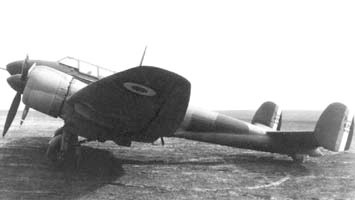
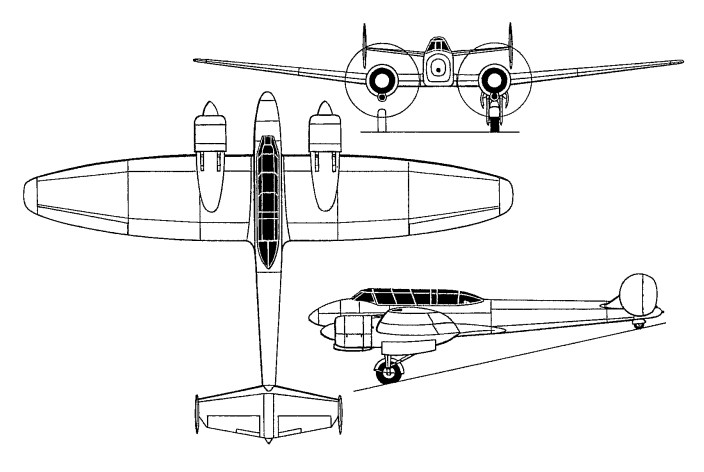
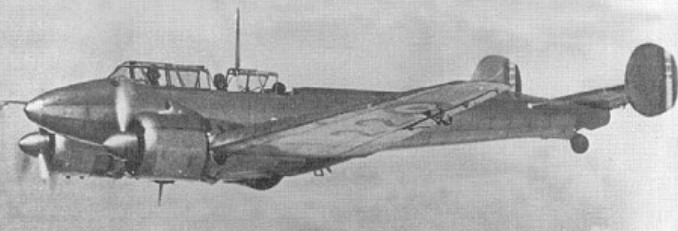
Designed to meet a requirement for a three-seat fighter with an endurance of three hours at 90% max speed, the Potez 670 was configurationally similar to the Potez 630 and 631. Flown for the first time on 30 March 1939, the Potez 670 had meanwhile been modified as a two-seat long-range escort fighter and bomber destroyer.
Potez 670
Initially powered by two 700hp Gnome- Rhone 14M radials, it was re-engined after initial flight trials with two 800hp Hispano-Suiza 14AB 12/13 radials, with which it resumed flight tests in July 1939 as the Potez 671.
Potez 671
Several production variants were proposed, but flight trials were incomplete at the time of the French collapse and the sole prototype was destroyed during the German onslaught. At the time, work had begun on an initial batch of 40 Potez 671 C2 fighters.
Potez 670 Engines: 2 x Gnome & Rhone 14M-3, 700 hp Wingspan: 15.10 m Wing area: 32.50 sq.m Length: 10.80 m Height: 3.27 m Empty weight: 3120 kg Maximum take-off weight: 4680 kg Maximum speed: 460 km / h Cruising speed: 412 km / h Practical range: 1800 km Service ceiling: 10,000 m Crew: 2 Armament: 2 x 20-mm cannon Hispano-Suiza HS-404 front, 2 x 7.5-mm machine guns MAC 1934, 1 x 20-mm cannon Hispano-Suiza HS-404 rear-firing turret
Potez 671 Engines: 2 x Hispano-Suiza 14AC, 800 hp Wingspan: 15.10 m / 50 ft 6 in Wing area: 32.50 sq.m / 349.83 sq ft Length: 10.80 m / 35 ft 5 in Height: 3.27 m / 11 ft 9 in Max take-off weight: 4726 kg / 10419 lb Empty weight: 3186 kg / 7024 lb Max. speed: 500 km/h / 311 mph Cruising speed: 445 km / h Maximum rate of climb: 876 m / min Service ceiling: 10,500 m Range: 2000 km / 1243 miles Crew: 2 Armament: 2 x 20-mm cannon Hispano-Suiza HS-404 front, 2 x 7.5-mm machine guns MAC 1934, 1 x 20-mm cannon Hispano-Suiza HS-404 rear-firing turret
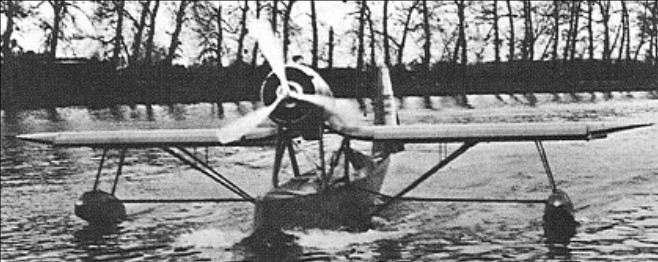
A contender to fulfil the 1933 Marine Nationale requirement for a single-seat float fighter suitable for catapult operation from 10,000-ton cruisers, the Potez 453 was based broadly on the design of the two-seat Potez 452 light observation flying boat. Competing with floatplanes tendered by Bernard (H.52), Loire (210) and Romano (R-90), the Potez 453 flying boat first flew on 24 September 1935. Of mixed construction, it was powered by an 800hp Hispano-Suiza 14Hbs radial engine and was intended to carry an armament of two 7.5mm machine guns. The engine was carried on bracing struts ahead of the wing, the thrust axis passing high above the CG of the flying boat with the result that, in view of the small dimensions of the aircraft, a considerable diving moment was induced at full throttle which could not be easily counteracted. Take-off was, in consequence, difficult and could be effected only by reducing engine power. Further development of the Potez 453 was therefore abandoned.
Max take-off weight: 1937 kg / 4270 lb Empty weight: 1534 kg / 3382 lb Wingspan: 11.20 m / 37 ft 9 in Length: 10.20 m / 33 ft 6 in Height: 3.45 m / 11 ft 4 in Wing area: 19.00 sq.m / 204.51 sq ft Max. speed: 318 km/h / 198 mph Range: 540 km / 336 miles
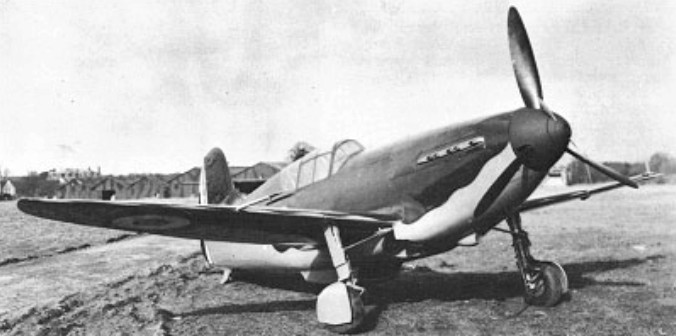
With the absorption of ANF-Mureaux in 1937 as a component of the SNCA du Nord (which also included Potez and retained the appellation for its products), Andre Brunet and his co-designers Lemaitre and Hubert continued the line of lightweight fighter development commenced with the ANF-Mureaux 190. In the autumn of 1938, work on a progressive development, the Potez 230, was begun. While possessing a number of features in common with the earlier fighter (eg, elliptical wings), the new aircraft was of more advanced design. Powered by a 670hp Hispano-Suiza 12Xcrs 12-cylinder liquid-cooled engine and having a proposed armament of one engine-mounted 20mm cannon and four wing-mounted 7.5mm machine guns, the Potez 230 was flown on 30 March 1940. When German forces occupied Villacoublay, the sole prototype of the Potez 230 was seized and transported to Germany for examination of the wing torsion box, which, of integral construction, was the first of its type to have been flown.
Max take-off weight: 1800 kg / 3968 lb Wingspan: 8.74 m / 29 ft 8 in Length: 7.57 m / 25 ft 10 in Height: 2.18 m / 7 ft 2 in Wing area: 10.97 sq.m / 118.08 sq ft Max. speed: 560 km/h / 348 mph
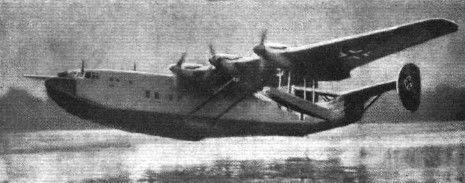
The Potez-CAMS 161 was one of three French large, six-engined flying boats intended as airliners on the North Atlantic route. The others were the Latécoère 631 and the SNCASE SE.200. In the summer of 1938, the 161’s aerodynamics had been investigated and refined with the Potez-CAMS 160, a 5/13 scale flight model.
Potez-CAMS 161 in foreground with the type 160 scale flight model behind. Floats retracted.
The 161 was an all-metal monoplane with a high, semi-cantilever wing, braced on each side by a pair of parallel struts between the lower fuselage and the wing near the first outboard engine. The engines were mounted on a constant chord central section but the outer panels were tapered, with ailerons interconnected to Handley Page slots near the wing tips. The trailing edges carried split flaps. The flying boat’s wing stabilizing floats retracted vertically to the outer engine cowlings. The tail unit was of the twin endplate fin type with the tailplane, mounted with marked dihedral, on a fuselage pedestal and externally braced from below. The D-shaped fins were fixed to the tailplane a little below their horizontal mid-lines and were also lightly braced, with struts between them and the upper tailplane surfaces.
The CAMS 161 was powered by six 664 kW (890 hp) Hispano-Suiza 12Ydrs liquid cooled V-12 engines driving three blade propellers. These were cooled via both wing surface and frontal radiators, the latter retracted after take-off. Its two step hull was flat sided forward of the wing but more rounded aft; there were long wing root fillets. Ten square windows on each side lit the passenger cabin, where twenty were provided with seating and sleeping compartments and flown and looked after by six crew.
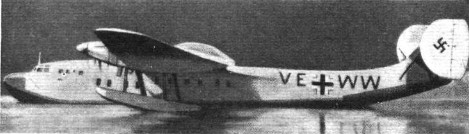
Very different dates for the first fight appear in the literature: a contemporary report in Flight gives it as within few weeks before 7 December 1939, with “further flying tests” in the first half of 1942, whereas Hartmann has 20 March 1942 as the first flight date. In either case the CAMS machine was the first of the three to fly.
In Hartmann’s account, the March flight was from the Seine, with the aircraft in German markings. Earlier it had been painted in Air France Atlantique trim and at some point it received a French civil registration.
Full flight trials and performance measurements were never done, so the figures remain estimates, but there is clear evidence that the empty weight had increased by about 33% from the 1938 estimates by the time the 161 was flying, with a corresponding 16% increase in gross weight.
It seems to have been destroyed by enemy fire toward the end of World War II, but there is disagreement on exactly when and where: Hartmann locates the event to the Baltic, others to Lake Constance. Cuny states that the SE.200 and the Laté 631 were destroyed on the lake early in 1944, but that the Potez escaped.
Engines: 6 × Hispano-Suiza 12Ydrs, 660 kW (890 hp) each Propellers: 3-bladed Wingspan: 46 m (150 ft 11 in) Wing area: 261 m2 (2,810 sq ft) Length: 32.11 m (105 ft 4 in) Height: 8.87 m (29 ft 1 in) Empty weight: 17,220 kg (37,964 lb) ; Flight (1942) has 22,979 kg (50,660 lb) Gross weight: 37,000 kg (81,571 lb) ; Flight (1942) has 43,001 kg (94,800 lb) Fuel capacity: 15,500 kg (34,172 lb) including oil Maximum speed: 335 km/h (208 mph; 181 kn) at 1,000 m (3,281 ft) Cruise speed: 300 km/h (186 mph; 162 kn) at 4,000 m (13,123 ft) Range: 6,000 km (3,728 mi; 3,240 nmi) in a 60 km/h (37 mph) wind, full load, std fuel Crew: Six Capacity: Twenty passengers
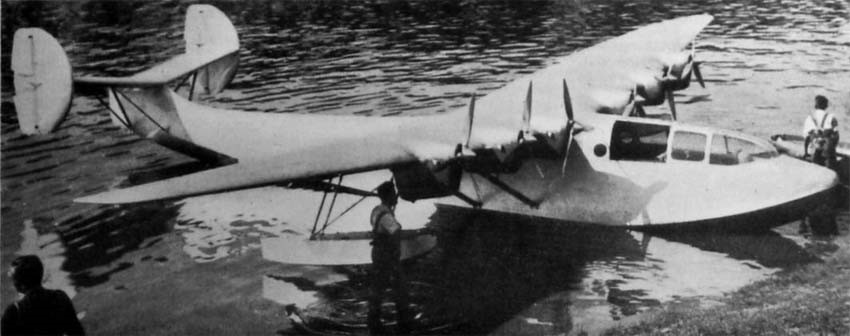
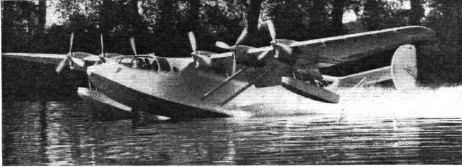
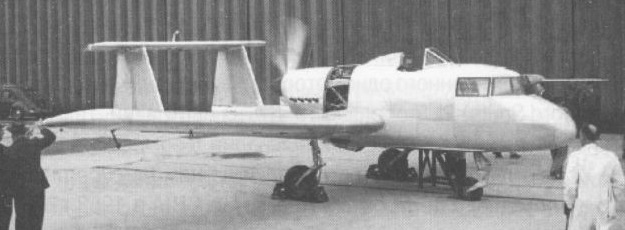
In 1936 the design bureau of Potez-CAMS was beginning the development of the Potez-CAMS 161 six engine, trans-Atlantic passenger flying boat, intended to be a key component of Air France’s Transatlantique fleet. To test the design they built a 5/13 scale flying scale model of it, careful not just to scale dimensions of the flying surfaces and hull, but also to copy the form the nose around the cabin, engine cowlings and retractable float housings. Control surface detail and the flaps of the 161, together with its variable-pitch propellers, were included on the resulting Potez-CAMS 160. It was intended to prove both the aerodynamic and hydrodynamic behaviour of the airliner.
The 160 was a high-wing monoplane. The wing was a semi-cantilever structure, with two parallel bracing struts on each side from the lower fuselage to the wing just inside the central engines, straight-edged in plan with taper on the trailing edge only and rounded tips. It was fitted with interconnected Handley Page slots and ailerons as well as split flaps. It was powered by six four-cylinder inverted inline air-cooled Train 4T engines, each producing 30 kW (40 hp) driving three blade, variable-pitch propellers. The engines were mounted on the wing underside, housed in long, narrow cowlings intended to mimic those around the 664 kW (890 hp) Hispano-Suiza 12Ydrs water-cooled V-12 engines of the full scale aircraft.
The little flying boat had a conventional stepped hull and was stabilized on the water by a pair of floats, attached under the outboard engines and retracting into their cowlings. Its enclosed, tandem seat cockpit was shaped to reproduce the form of the 161’s nose, though the full sized aircraft had proportionally shorter glazing. The 161 had a twin fin empennage with a N-strut braced, parallel chord tailplane mounted on top of the fuselage on a short pillar with marked dihedral. The fins were of the endplate type, with curved leading edges and roughly symmetric above and below the tailplane; on each, the rudder was split into an upper and lower part. All of these features appeared on the final, full size airliner.
It flew for the first time on 20 June 1938.
The Potez-CAMS 160 appeared, after its first flight, at the 1938 Paris Aero Show.
Engines: 6 × Train 4T, 30 kW (40 hp) each Propellers: 3-bladed variable pitch Wingspan: 17.69 m (58 ft 0 in) Wing area: 38.7 sq.m (417 sq ft) Length: 12.37 m (40 ft 7 in) Height: 3.41 m (11 ft 2 in) Gross weight: 2,275 kg (5,016 lb) Maximum speed: 222 km/h (138 mph; 120 kn) at 950 m (3,116 ft) Power/mloadng: 75 W/kg (0.047 hp/lb) Wing loading: 58.5 kg/sq.m (12.0 lb/sq ft) Crew: Two, pilot plus observer
The acquisition by Potez in 1933 of Chantiers Aero-Maritimes de la Seine (CAMS) brought increased interest in the development of maritime aircraft, and the Potez (CAMS) 141 was designed to meet an official requirement for a maritime reconnaissance flying-boat. A large-span monoplane wing was carried on a faired superstructure above the hull, to which it was braced on each side by large N-struts. A stabilising float was strut-mounted beneath each wing, and the two-step all-metal hull carried at the rear a twin fin-and-rudder tail unit. Carrying a crew of nine to 12, the 41m span Potez 141 was powered by four 694kW Hispano-Suiza 12Y-26/27 Vee engines in wing-mounted nacelles. First flown on 21 January 1938, successful testing led to large orders, but changing policies and the development of World War II meant that no production aircraft were built.
Max take-off weight: 25900 kg / 57100 lb Max. speed: 320 km/h / 199 mph Bomb load: 1500kg
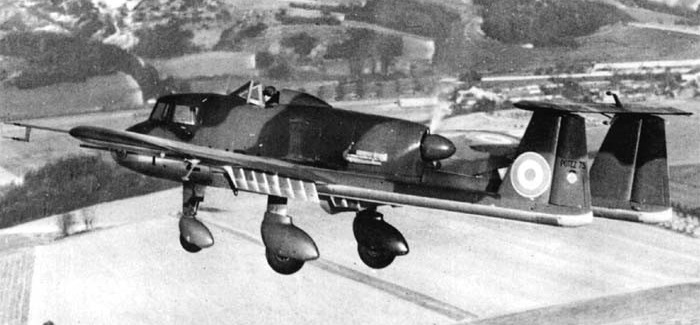
In 1953 Potez produced the Potez 75 single-engine twin-boom ground-attack aircraft, built by SNCAN. A contract for 500 for the French Army was awarded in 1956, but was cancelled later because of military cutbacks.
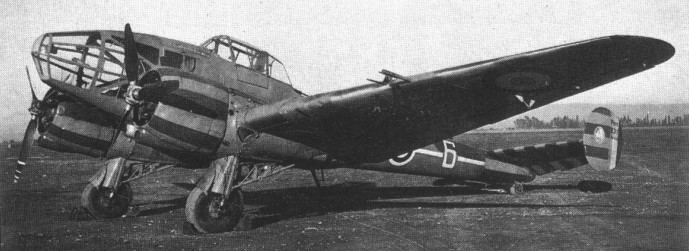
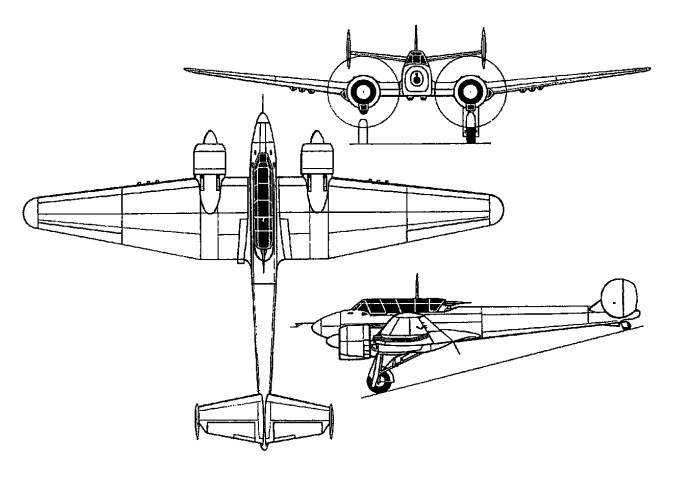
The Potez 63 was built originally to a 1934 French Air Ministry programme calling for a ‘Multiplace legere de Defense’, literally a light multi-seat defensive aircraft. In practice the specification called for an aircraft to perform the three roles of fighter control (three-seat C3); daylight interception (two-seat C2); and night-fighter (two-seat Cn2). The Potez 630 was a twin engine, monoplane, fully metallic three-seater with efficient aerodynamic lines and twin tailplanes. The long glasshouse hosted the pilot, an observer or commander who was only aboard if the mission required it, and a rear gunner who manned a single flexible light machine gun.
The Potez 63.01 first prototype flew on 25 April 1936. It was an all-metal stressed-skin cantilever monoplane with two 432-kW (1580-hp) Hispano-Suiza 14AB10/11 radials, and a retractable landing gear.
French re-equipment policies were blurred by lack of purpose (being confused by the likely form of warfare being studied by Germany), with the result that orders for development aircraft included four-general purpose two/three-seat day/night fighters, three two-seat night-fighters, one light bomber, one reconnaissance aircraft and one close-support aircraft.
Ten further prototypes were tested (including use of the Gnome-Rhone 14 radial) before production orders were placed in 1937 for 80 Potez 630s (two 432kW Hispano-Suiza 14 radials) and 80 Potez 631 C3 fighters (Gnome-Rhone 14 Mars radials). The production in three main streams was started by the nationalised SCAN organisation.
Fifty additional Potez 631s were ordered in 1938 of which 20 were diverted to Finland (these aircraft did not arrive in Finland). A typical feature of the 630 and 631 was the frontal armament, which originally consisted of two 20 mm Hispano-Suiza HS.404 cannons in gondolas under the fuselage, though sometimes one of the cannons was replaced by a MAC 1934. Later in their career, 631s received four similar light machine guns in gondolas under the outer wings, though it was theoretically possible to fit six.
The heavy fighter stream included the Potez 630 (82 with Hispano-Suiza engines) and Potez 631 (202 with Gnome¬-Rhone engines). The light bomber stream included the Potez 633 (71 mostly for export but mainly retained by France) and Potez 637 (60 for reconnaissance). The tactical reconnaissance and army co-operation stream included the Potez 63.11 (925 aircraft) and a number of experimental fighters and dive-bombers.
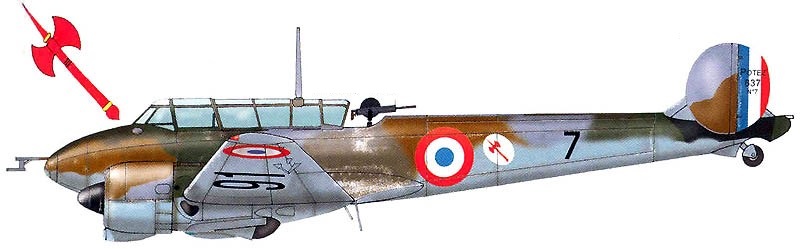
Dissatisfied with its strategic reconnaissance aircraft such as the troublesome Bloch MB.131, the Armée de l’Air ordered the development of a derivative of the Potez 631 heavy fighter for this role. The observer was to be housed in a gondola under the fuselage. While particularly uncomfortable, this arrangement resulted in a Potez 637 that retained most of the qualities of the 631. 60 examples were ordered in August 1938 and delivered. Unlike many contemporary French aircraft, production of the Potez aircraft was reasonably prompt and the first deliveries were effected before the end of 1938. The 63 had been designed with mass production in mind and as a result, one Potez 630 was cheaper and faster to manufacture than one Morane-Saulnier M.S.406. As production tempo increased, a number of derivatives and experimental models were also developed and produced with exceptional rapidity.
The Potez 633 B2 was a light bomber version with a partially glazed nose, 40 of which were ordered by Romania and others by Greece. In the event only 21 of the Romanian aircraft were delivered, the rest retained by France. The Potez 637 A3 was a three-seat reconnaissance version with a ventral gondola for the observer, 60 of which were built.
The Armée de l’Air was desperate to re-equip its army cooperation units which had particularly antiquated equipment, but since the development of the Potez 637, had completely changed its mind about how the observer position should be arranged. Potez was therefore required to develop a variant that, while retaining the wings, engines and tail surfaces of the 631, hosted the observer in a more conventional nose glasshouse. Because the pilot needed to be seated above the observer, the Potez 63.11’s fuselage was taller, which resulted in top speed degradation and reduced manoeuvrability. As a result the final production version, the Potez 63.11 proved very vulnerable, despite being protected with some armour and a basic self-sealing coating over the fuel tanks.
As a secondary light bomber capability was part of the requirements (though it was rarely if ever used), the fuselage accommodated a tiny bomb bay, carrying up to eight 10kg-class bombs. This bomb bay was replaced by an additional fuel tank on late examples. Additionally, two 50kg-class bombs could be carried on hardpoints under the inner wings. Frontal armament was originally one, then three MAC 1934s under the nose, and many 63.11s were equipped with additional MAC 1934 guns in wing gondolas as the 631s. The first Potez 63.11 No.1 and second No.2 prototypes first flew in December 1938, and no less than 1,365 examples were on order in September 1939, of which 730 were delivered.
Potez 63-11s were delivered from November 1939 and served with 40 GAO (observation Groupes) and 13 reconnaissance Groupes by May 1940.
Although a night-fighter prototype had flown in March 1937 as the Potez 631-0, relatively little importance was placed on the Potez 631 night-fighter, and it was not until June 1938 that production orders totalling 207 were confirmed.
The Ilmavoimat / Maavoimat evaluation team looked at a number of diferent variants of the Potez 630 in early 1938. There report indicated that all members of the family (possibly except the Potez 63.11) shared pleasant flying characteristics. They were well designed for easy maintenance and could be fitted with a heavy armament for the time (up to 12 light machine guns for the Potez 63.11 design that was being worked on). Although not heavily built they seemed capable of absorbing considerable battle damage. Unfortunately the Potez 63 family, like many French aircraft of the time, simply did not have sufficiently powerful engines to endow them with an adequate performance. However, while the aircraft was considered reasonably good, it by no stretch met the STOL Observation / Medical Evac requirements of the aircraft that was being looked for.
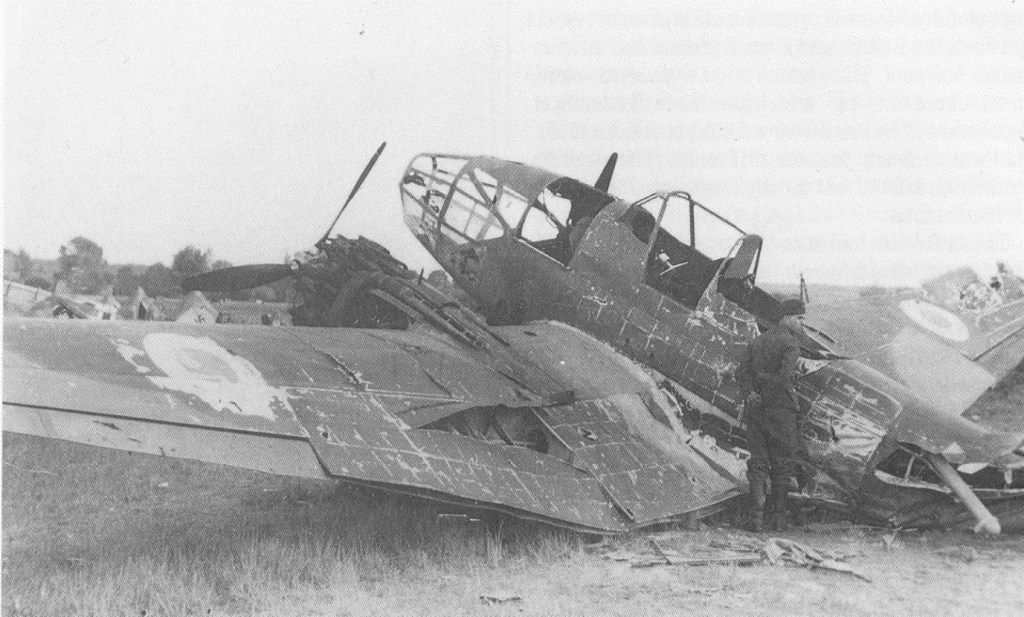
By 1 April 1939 the Armee de l’Air had taken delivery of 88 aircraft, of which 20 were in service; in May two night-fighter units, Groupes de Chasse de Nuit GCN III/l and II/4, and one day fighter unit, GC II/8, were equipped with about 30 aircraft; four other Potez 631s were serving at Djibouti. At the outbreak of war a total of 206 aircraft had been delivered, and the type had also joined GCN 1/13 and GCN 11/13, as well as seven escadres de chasse. Some aircraft were later transferred to the Aeronavale. When the German attack opened in the West the various Potez 631 units were in constant action both by day and night, although lack of radar prevented much success during the hours of darkness. In the first 11 days of the campaign Aeronavale’s Flotille F 1C shot down 12 German aircraft for the loss of eight, but the Armee de l’Air night-fighter units were ordered to assume day ground-attack duties, losing heavily to enemy flak. Moreover, losses were exceptionally heavy to Allied guns and fighters as a result of the Potez 631’s superficial similarity to the German Messerschmitt Bf 110; it has been estimated that as many as 30 of the French aircraft were shot down in error. In all, Potez 631 night-fighters destroyed a total of 29 German aircraft in the Battle of France, but for a loss of 93 of their own number. Of the remainder about 110 were in the Free French Zone (Vichy France) at the time of the armistice, but their number dwindled quickly because of a chronic lack of spares, although ECN 3/13 moved to Tunisia with a small number of Potez 631s in June 1941.
Potez 63
Armament comprised two forward-firing and one rear-mounted 7.7mm machine-guns. Potez 637s equipped five reconnaissance Groupes and during the battle for France suffered heavy losses.
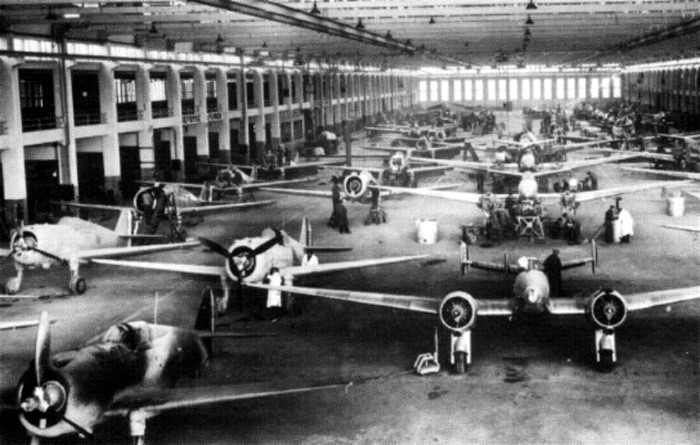
After the outbreak of the Winter War, 20 Potez 631s were ordered diverted to Finland. These aircraft arrived in mid-April 1940, having been flown to the UK where they were picked up by Ilmavoimat Ferry Pilots and flown via Norway and Sweden to Finland. In Ilmavoimat service, they were found to be underpowered and slower than many of the Soviet bombers, as well as undergunned. A rush project was undertaken to replace the engines with the Finnish-built and more powerful Hispano-Suiza 12Y’s, and every one of the aircraft was fitted with two nose-mounted 20mm cannon and four machine guns under the wings. In addition, the internal bomb bay was replaced with an additional fuel tank to extend the range.
Ilmavoimat Potez 631’s undergoing modifications at the Veljekset Karhumäki factory at Tampere, May 1940.
The aircraft finally entered service in August 1940, by which time the war was almost over. The Ilmavoimat went on to use them in the night-fighter role that the French had intended them for. They were not particularly successful in this role and were retired from active service and used as trainers from 1941.
A total of 748 examples were built.
John Garric recreated an example of the long extinct Potez 63-11 twin-engined reconnaissance aircraft.
Potez 637 A no (C591 de la lère Esc. Du G..II/3 January 1940
Potez 63.01 Engines: 2 x Hispano-Suiza l4Hbs, 1580 hp.
Potez 630 Engines: 2 x Hispano-Suiza 14AB, 725 hp Max speed: 273 mph / 440 kph ROC: 1800 fpm / 550 m/min Service ceiling: 32,800 ft / 10,000 m Empty weight: 5730 lb / 2600 kg Span: 52 ft 6 in / 16 m Length: 36 ft 4 in / 11.07 m Height: 11 ft 9.75 in / 3.6 m Seats: 2-3
Potez 631 three-seat heavy fighter and night-fighter Powerplant: 2 x Gnome-Rhone 14M-4/5or 14M-6/7, 522kW (700 hp) Span: 52 ft 6 in / 16 m Length: 36 ft 4 in / 11.07 m Height: 11 ft 9.75 in / 3.6 m Empty weight: 5730 lb / 2600 kg Max loaded weight: 8235 lb / 3735 kg Max speed: 275 mph at 14,765ft ROC: 1800 fpm / 550 m/min Service ceiling: 32,800 ft / 10,000 m Operational range: 758 miles. Armament: 2×20-mm Hispano¬Suiza cannon and 1 or 5 x 7.5-mm (0.295-in) MAC mg Seats: 2-3
Potez 633 Engines: 2 x Gnome-Rhone 14M, 700 hp Span: 52 ft 6 in / 16 m Length: 36 ft 4 in / 11.07 m Height: 11 ft 9.75 in / 3.6 m Empty weight: 5730 lb / 2600 kg Max loaded weight: 9285 lb / 4210 kg Max speed: 273 mph / 440 kph ROC: 1800 fpm / 550 m/min Service ceiling: 26,250 ft / 8000 m Seats: 2
Potez 637 Engines: two Gnome-Rhône 14M, 700 hp Span: 52 ft 6 in / 16 m Length: 36 ft 4 in / 11.07 m Height: 11 ft 9.75 in / 3.6 m Empty weight: 6390 lb / 2900 kg Max loaded weight: 9285 lb / 4210 kg Max speed: 267 mph / 430 kph ROC: 1800 fpm / 550 m/min Range: 932 miles Service ceiling: 26,250 ft / 8000 m Armament: 1x fixed, forward-firing 7.5 mm MAC 1934 machine gun, 1x fixed, rearward-firing 7.5 mm MAC 1934 machine gun, 1x flexible, rearward-firing 7.5 mm MAC 1934 machine gun Bombload: 4x 50 kg (110 lb) Crew: 3
Potez 63.11 Engines: 2 x Gnome-Rhone 14M, 700 hp Span: 52 ft 6 in / 16 m Length: 36 ft 1 in / 11 m Height: 11 ft 9.75 in / 3.6 m Empty weight: 6912 lb / 3205 kg Max loaded weight: 9987 lb / 4530 kg Max speed: 264 mph / 425 kph ROC: 1800 fpm / 550 m/min Service ceiling: 26,250 ft / 8000 m Seats: 3