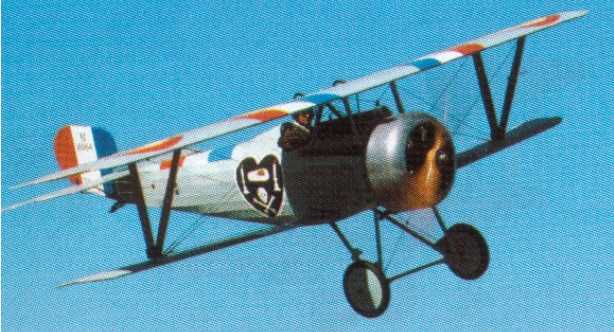
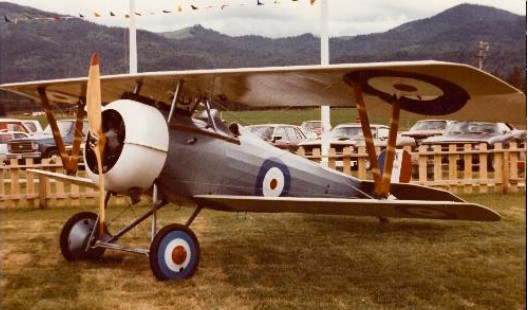
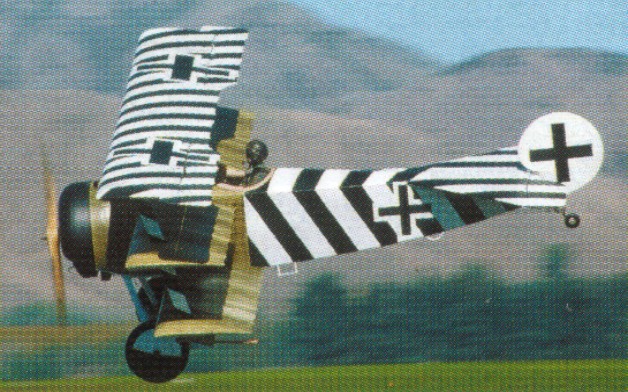
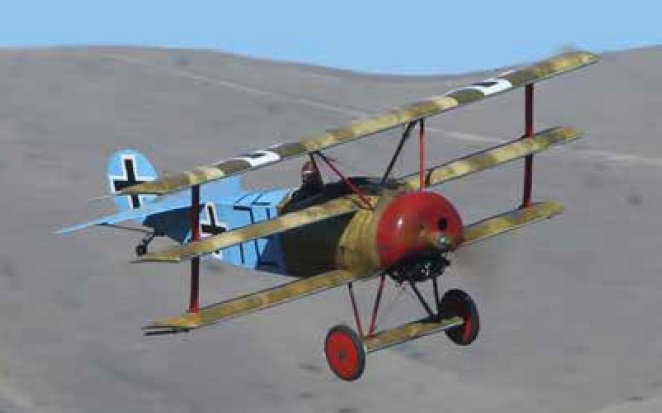
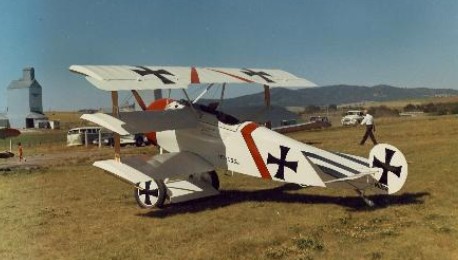
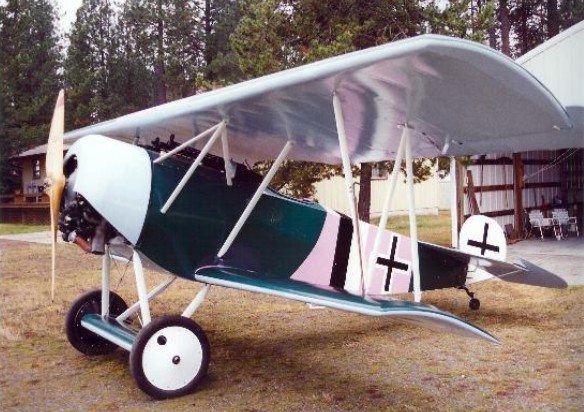
This replica of the famous World War I Nieport 17 or 24 Bis is powered by a flat four-cylinder Warner engine in the 145- to 160-hp range. A single open cockpit is situated close under the trailing edge of the upper wing.
Engine: Warner, 145 hp HP range: 145-180 Height: 7.7 ft Length: 18.8 ft Wing span: 26.9 ft Wing area: 161.4 sq.ft Fuel cap: 25 USG Weight empty: 1004 lb Gross: 1279 lb Speed max: 120 mph Cruise: 100 mph Range: 250 sm Stall: 45 mph ROC: 1500 fpm Take-off dist: 100 ft Landing dist: 300 ft Service ceiling: 15,000 ft Seats: 1 Landing gear: tail wheel
The replicas are built to the original 1917 pattern with small differences in the size of tubing used, and a few safety modifications like brakes and a steerable tailwheel. The aircraft has all the vices of the original poor ground visibility, and poor rudder control.
This replica of the Red Barons famed fighter is not one of the easier-to-build homebuilts. The fuselage is built from steel tube and plywood, then fabric covered. The wings are all wood and fabric covered. The engine usually recommended is a 145-hp Warner Radial.
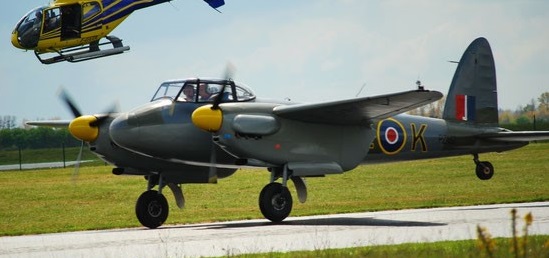
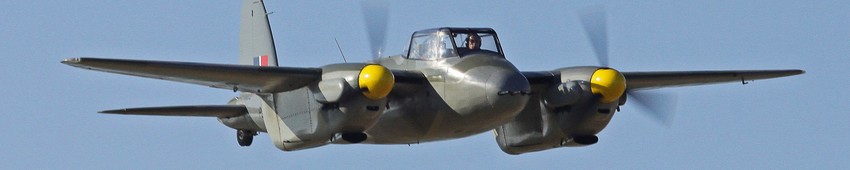
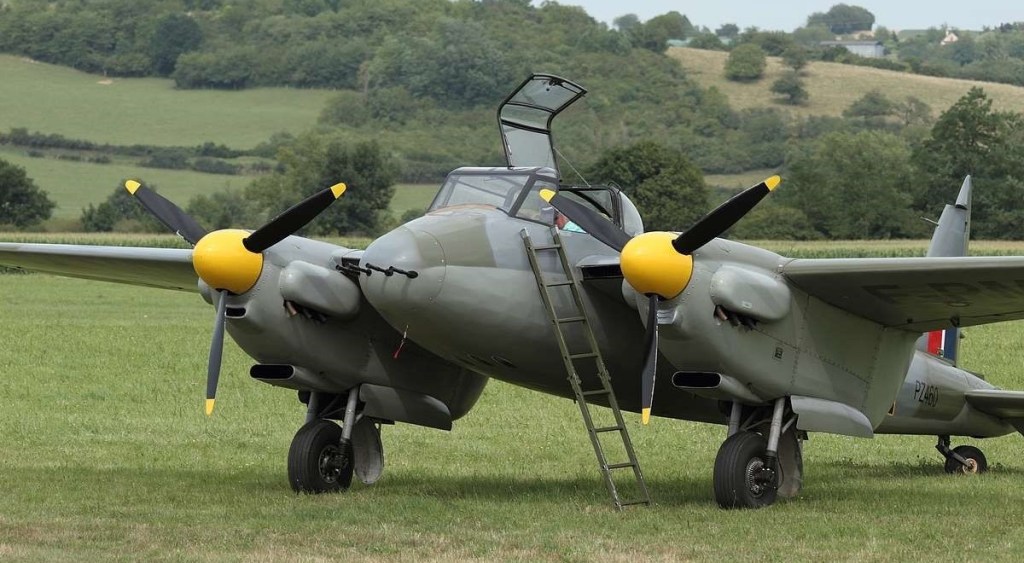
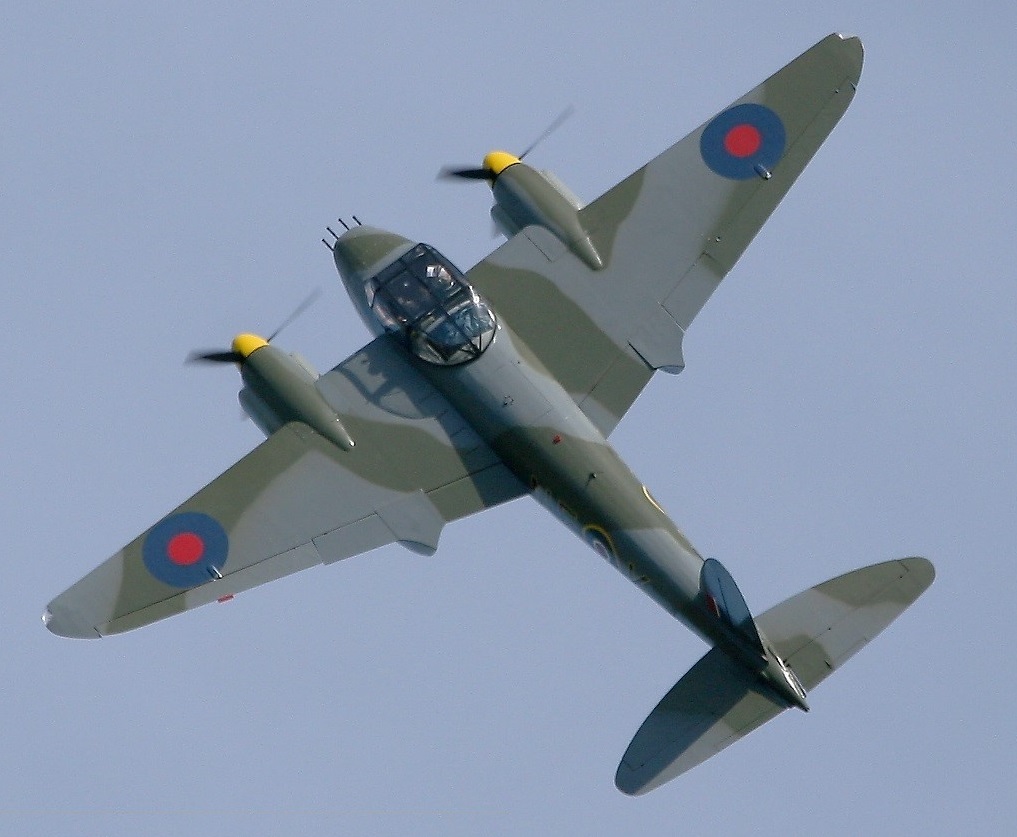
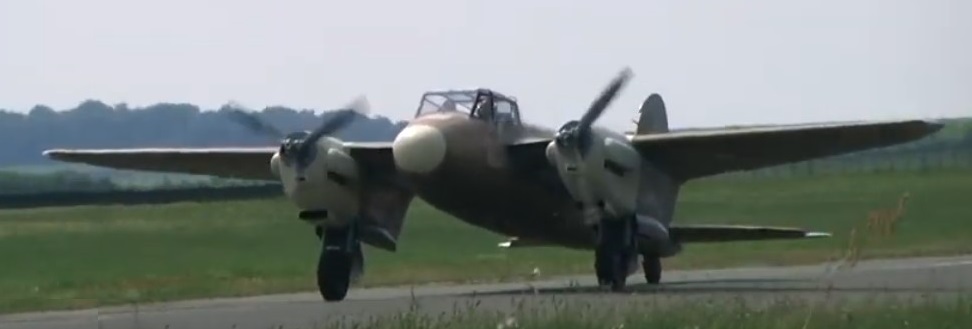
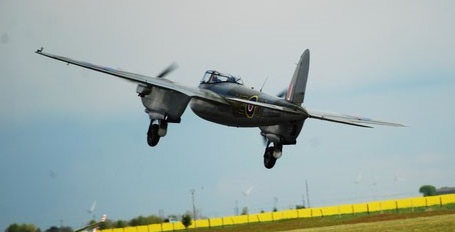
The French association Reconstruction Répliques Avions Anciens began work on 3/4-scale de Havilland Mosquito replica the replica in 1995 and required over 30,000 hours of work before it was ready for the first test at the Fontenay-le-Comte airfield.
The first engine test was carried out earlier this year and were then followed by high-speed ground tests. The first flight took place on April 23, 2011.
This replica of a British WWII bomber overturned on 6 August 2015 after touching the ground in Fontenay-le-Comte. The pilot is seriously injured.
Thursday evening, at 8:45 p.m., the plane approached an airstrip at the aerodrome of Fontenay-le-Comte, in the south-Vendée. This three-quarter-length replica of a Mosquito, a British WWII bomber, returns to its “base” after a commemoration, in Jonzac, in Charente-Maritime. On board: Hervé Thebaud, the pilot, an instructor from Île d’Yeu; and Jean-Paul Bichon, the co-pilot, a resident of Luçon, both in their sixties.
According to several witnesses, the landing “is going well”. Shortly after touching the ground, “a hundred meters from cutting the throttle”, during the “taxiing” phase, the aircraft got slightly askew. At this precise moment, it tilts forward, “like a wooden horse”, and completely overturns, until the fin hits the ground. He ends his race on his back. An aerodrome mechanic is already running towards the aircraft. Seeing the aircraft’s turn signals still on, he said to himself that it was absolutely necessary to “cut the battery to prevent it from causing a fire” with the fuel escaping from the tank. It then contains “at least 400 liters of gasoline”. When the mechanic arrives in front of the machine, the pilot and the co-pilot are aware and can press the button. The co-pilot is the first to exit, with the help of the mechanic who broke the window. The pilot was extricated after an hour by the firefighters, “quickly on the spot”. Seriously injured, he will later be directed to Nantes. Its vital prognosis is not engaged. On the aerodrome, around thirty firefighters cover the aircraft with a carpet of foam. The last left at 12:30 am Several people, including the co-pilot who returned from the emergency room, then got busy to get the Mosquito out of the airstrip. It is when trying to turn it over with a crane that the tail, which was already hanging on by a thread, becomes detached. The plane had required 17 years of work. According to a member of the Luçonnaise association which built it (Replicas and reconstruction of old planes), it will be “difficult to repair”.
Ironically, the Mosquito had, the same day, flew over Jonzac in homage to the crew of an Allied bomber that crashed there on August 6, 1944.
Wingspan: 12.04 m Length: 9.30 m Height: 2.45 to 2.53 m
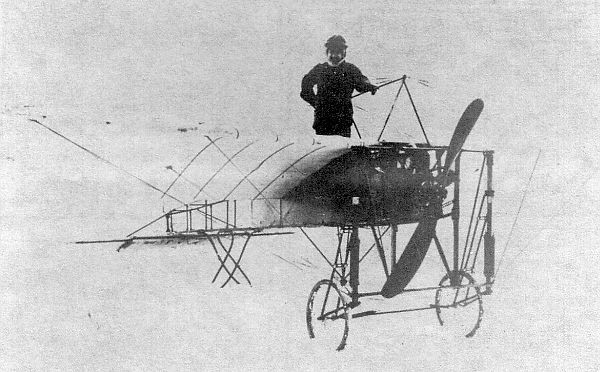
Based on the Bleriot XI, and designed in 1910 by Russian Nikolai Vasilyevich Rebikov, the Rossia B (Pуссиа Б) was built by the Shchetinin works in St. Petersburg, Russia.