20th Century Fox purchased the film rights of Jack D Hunter’s “The Blue Max” and the film was to be a multi-million dollar production, and the stars were to be the full sized reproductions of World War I fighters constructed for the film- two Pfalz D.III biplanes, two Fokker Dr.I triplanes, two S.E.5a scouts and three Fokker D.VII biplanes.
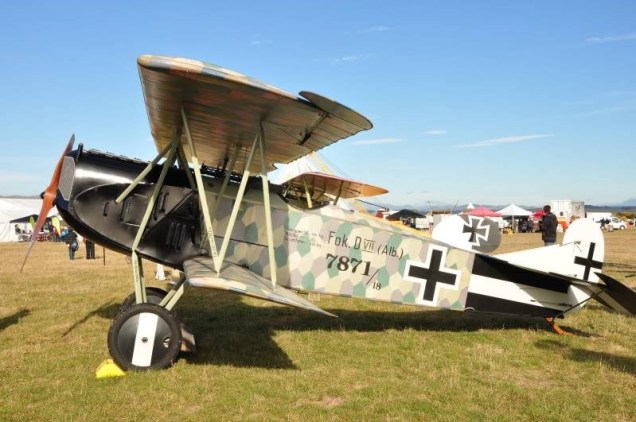
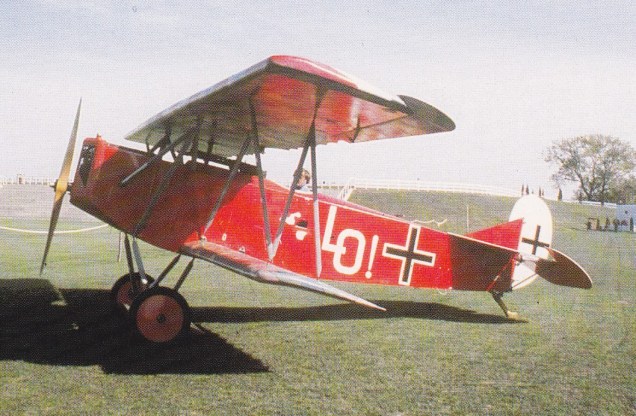
The reproductions had to be built in a hurry to meet the time frame for shooting and were constructed in different locations. At Dinard airport in France, Claude Rousseau constructed three Fokker D.VII fighters (F-BNDF to F-BNDH) in six months. At the time it was stated that the machines were constructed to original plans and dimensions. The two former Federated Fruit Dragon Rapides, G-AKJS and G-ANZP, left Liverpool destined to become part donors for the three Fokker D.VII. The limited choice of engines led to the Gypsy Queen being also installed in the D.VII reproductions. The Gypsy Queen is a six cylinder in-line inverted air-cooled direct-drive engine, as a result the prop emerges through what would be the radiator shell of a true D.VII. Since the Fokkers’ original Mercedes weighed almost twice as much, they required some 200 pounds of nose-ballast for balance. Rousseau Aviation named the reproduction the D.VII-65. They were painted in lozenze camouflage pattern colours.
Rousseau delivered its D.VIIs by actually flying them from France to the set in Exeter-Dublin, Ireland, during August 1965, their German crosses and lozenge camouflage no doubt raising eyebrows below.
The replicas were: F-BNDF, EI-APT painted as 6796/18
Became N902AC / ZK-FOD With The Vintage Aviator, New Zealand
F-BNDG, EI-APU painted as 8520/18
Became N903AC Rendered un-airworthy in a landing accident At Stampe & Vertongen Museum, Antwerp International Airport, Belgium
F-BNDH, EI-APV
Later N904AC On display at Southern Museum of Flight, Birmingham, Alabama, USA
They later appeared in “Darling Lili”.
One Fokker D.VII now belong to New Zealand film director Peter Jackson’s 1914–18 Trust, kept in fully airworthy condition.
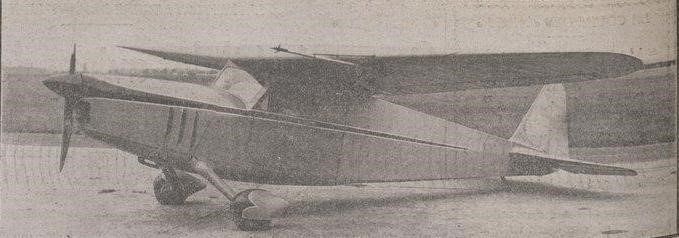
Fourth construction of Emmanuel de Rougé; and piloted by Sadi Lecointe (1891-1944) who obtained French civil brevet No. 431 on February 10, 1911. Before this 1911 machine, de Rougé designed and built two helicopters and one biplane. The Aéro-voile is probably his last venture as after this machine little or nothing was heard of de Rougé.
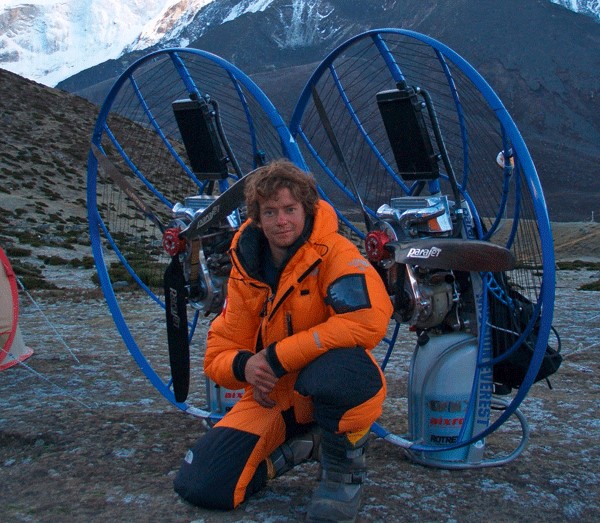
In early 2007 Rotron founder and chief technology officer, Gilo Cardozo, pursued a childhood dream: to fly a paramotor 30,000ft over the summit of Everest.
Having teamed up with friend and TV personality Bear Grylls, Cardozo had just seven months to build two paramotors. The most powerful paramotor engine available was barely producing 30hp and was far too heavy to launch at the desired altitude. So, he also set about building a four-stroke rotary engine that was more compact and 50 per cent lighter than a piston engine equivalent.
The basis of the Everest engine was a 294cc single rotor engine producing 40hp as a standard normally aspirated engine.
The engine included a miniature centrifugal supercharger fitted with a miniature intercooler to ensure the air was as cold and dense as possible when entering the combustion chamber. The supercharger was modified to be spun at up to 200,000rpm in order to simulate sea level atmospheric pressure of 1 bar at 30,000ft.
To eliminate the problem of icing, the supercharger was placed before the fuel delivery system. The heated and supercharged air was then sent through an intercooler before passing the injector at an average of 25 degrees Celsius.
After four months of design, development, testing and manufacturing, the engine was finally ready. With just two days before departure, the second engine was completed.
On 14 May 2007 the two pilots took off and in a flight that lasted four hours they achieved a paramotoring world record of 29,494 feet.
On completion of the expedition and building on its success, Cardozo continued to develop his rotary engine and looked for a commercial platform for the technology. Rotron Power was born.
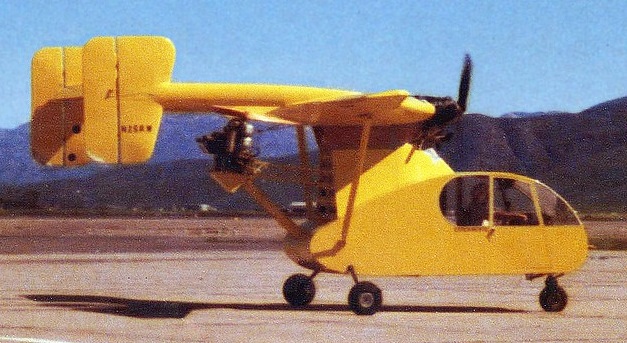
Described by its manufacturer as an “experimental ‘Three Passenger Airplane’ to demonstrate the high lift capability of an aircraft equipped with ‘Turbo Wing Technology.'” The Rotor Wing Ultra-Stol N25RW was developed in California in the late-1970s. It was reported as the Ultra-Stol by a company named Rotor Wing System and reportedly the aircraft flew at least twice.
Note the second engine and propeller, vertically mounted behind the trailing edge of the wing.
It had a relatively small wing and engines were reported as two Continental C85s and the rear could be tilted.
A very similar aircraft (maybe a rebuilt of the first?) was photographed in 1984 at Brown Field (near San Diego Ca), but it did not show a registration and was almost certainly never really completed. It differed in having a new wings, possibly from a Cessna Ce.150 and small canards. A company named High Technology Aircraft System, Inc (also in California). may be connected with this aircraft.
First flown in June 1989, the 3D-RV qualifies as an ultralight with a Rotax 503 or 582. Only available as plans, they originally cost US$100, with drawings for a Subaru engine an additional $20.
Engine: Rotax 503DC, 50 hp hp range: 50-65 Height: 7.3 ft Length: 8.5 ft Disk span: 25 ft Disk area: 491 sq.ft Fuel capacity: 5 USG Empty weight: 245 lb Gross weight: 500 lb Max speed: 65 mph Cruise: 50 mph Range: 80 sm Rate of climb: 800 fpm Takeoff dist: 700 ft Service ceiling: 10,000 ft Seats: 1 Undercarriage: nose wheel
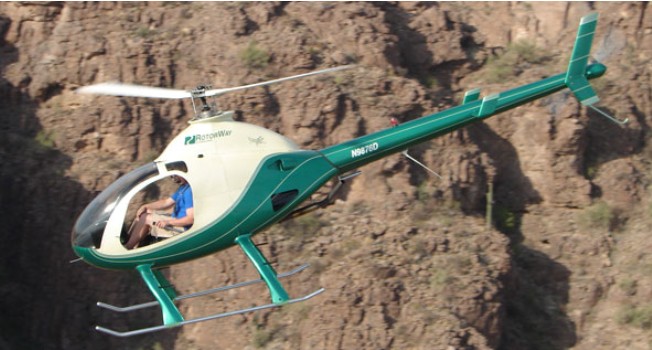
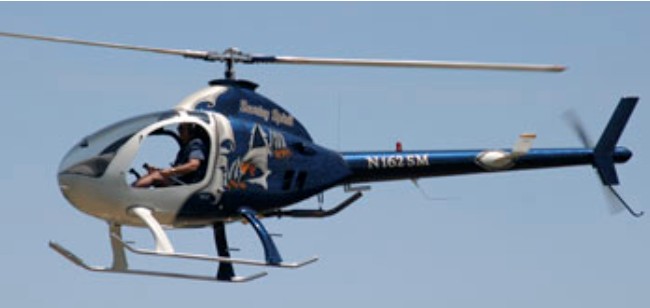
The A600 Talon is a top-to-bottom redesign, incorporating many customer-initiated requests, advanced electronics, engineering, and convenience items. The cockpit is now all-glass, using the MGL Avionics system. The completely redesigned and tuned FADEC system now has a secondary FADEC as a clone of the primary. Any failure of the primary unit will be imperceptible to the engine informing the pilot on the MGL display. The 162’s primary drive chain is replaced by a heavy-duty cog belt for ease of maintenance and longevity.
The useful load is 535 pounds, including a 100-pound luggage compartment. Economy cruise is a practical 90mph and fast long-distance cruise has already been demonstrated at 100 plus, with the doors off! The landing gear is 10 inches wider, 10 inches longer, and 7” higher than its smaller predecessor the Exec 162. This enables improvements in strength and stability, while offering greater accessibility underneath for the optional accessory luggage pod.
Process controls and designs with the new Talon’s manufacture at Rotorway’s new factory, are specifically aimed at the company’s plan to develop and deliver a certified helicopter. The A600 Talon is to be built in the new facility, on the new line, under the new processes that are being set up and proven to enable the certified machine to follow as early as 2011 in the United States. These new processes, materials, and documentation on the experimental, owner-built A600 Talon are designed to mesh into the processes and controls to be used on the future certified machine. The result is that the Talon will be built to type certified standards, of certified materials. First customer deliveries are set for October 2007.
Engine Standard: RI 600N, 147 hp Engine Supercharged: RI 600S, 167 hp Gross weight: 1500 lbs Empty weight: 965 lbs Fuel cap: 17 USG Service ceiling: 10,000 ft HIGE: 6000/7500ft(Supercharged) Normal cruise: 115 mph HOGE: 4000/6000ft(Supercharged) Max IAS SL: 115 mph Main rotor dia: 25 ft Tail rotor dia: 50.25 in Fuselage Length: 22 ft Overall length: 29.5 ft Cabin width: 44 in Skid width: 72 in Height: 103 in Seats: 2
In the late 80’s, RotorWay created the Elete, a larger, two-place helicopter. The Elete had an RW 152, water-cooled, dual electronic, 4 stroke engine that provided 152 horsepower with a pilot and passenger payload of 400 lb / 180kg. Normal cruise was 113 mph / 180km/h with maximum airspeed of 130 mph / 210km/h. After selling three Elete helicopters, the company finally succumbed to financial challenges and was soon purchased by a former customer, John Netherwood, a businessman from England. The new company recognized the design hurdles of the Elete and promptly set out to address making the proven Exec model a better aircraft to sell.
After selling three “Elete” helicopters, the company finally succumbed to financial challenges and was soon purchased by a former customer, John Netherwood, a businessman from England. The new company recognized the design hurdles of the “Elete” and set out to improve the proven “Exec” model a better aircraft to sell.
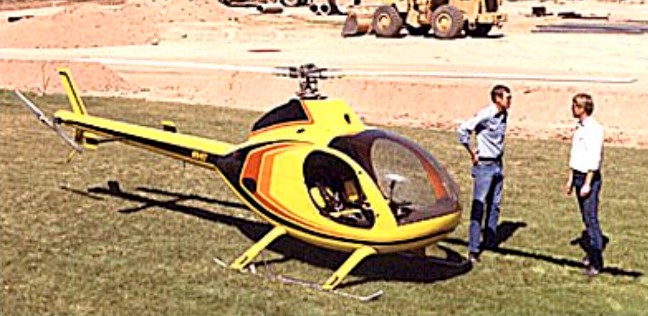
First presented at the 1980 Oshkosh. The RotorWay Exec is a two-place aircraft which features Rotorway’s RW-145 engine which offers improved operation on inexpensive automotive fuels as well as a greater ability to accomplish hovering maneuvers. Its asymmetrical airfoil rotor blades, a result of several years of research and development, reduce the autorotation descent rate to approximately 1300 fpm, and the increased lift for given pitch movement of these blades translates into less wear and tear on the powerplant. Other features include a simplified rotor blade thrust retention system, a fully enclosed streamlined fuselage and ultra-light tail boom construction.
Rotorway Exec
Purchased by a former customer, John Netherwood, a businessman from England, the new company recognized the design hurdles of the Elete and promptly set out to address making the proven Exec model a better aircraft to sell, the Exec 90. The Exec was reviewed from top to bottom. Any and all suggestions from the experienced staff were considered, evaluated and many implemented. Extensive redesigning was done and when all was complete, 21 items were changed or improved including the aerodynamics, drive train, stability and power. The engine was once more a primary area of improvement, a task made even easier by the fact that RotorWay had been engineering and manufacturing their own engine for years by this time. The RI 162 cubic inch engine was specifically designed for rotorcraft flight and possessed an incredibly light weight to horsepower ratio. Extended life limits were added to the chains, belts, rotor system and asymmetrical blades.
Improvements were made in every aspect of the aircraft including the method of packing and organizing the kit, the manuals, and the customer service program to assist the builder with technical information. Many critical systems were then assembled by RotorWay itself, almost all of the fabrication completed for the builder. All of the welding was now done at the factory as well. The rotor blades required little more than finishing touches. The tailboom had been formed and riveted and was ready for inspection covers to be fitted and mounted on the airframe. The wiring harness was assembled and tested, coming ready for installation.
The Exec 90 was the only piston-powered helicopter at the time to utilize an asymmetrical airfoil for improved autorotation characteristics and safety. The Exec 90 also utilized a unique drive system, eliminating an expensive transmission, metal chip detectors and possible in-flight failures. With all of this in place, the expected build time with the standard kit was about 500 hours. A quick build kit was soon offered, cutting that time nearly in half. Eventually, the quick build kit became the only way in which to purchase the helicopter. Pilot and passenger load was 400 pounds with a normal cruise of 95 mph and a maximum airspeed of 115 mph.
Exec 90
The Exec 162F powerplant utilises the very latest, fully automated, digital electronic control system. Designed to incorporate high performance with maximum reliability, maintenance on the Exec is kept to a minimum. Fuel consumption is only 8 USG per hour and the Exec 162F works with 92 Octane. The Exec 162F utilizes an asymmetrical airfoil for improved autorotation characteristics and safety. An elastomeric rotor hub eliminates a lot of moving parts, bringing considerable simplicity to the rotor system.
The many prefabricated components of the Exec 162F make the kit an easy project for the first time builder. The average build time of only 450 hours is one of the lowest in the kit industry. Some have even done it in as low as 300 hours. There is no welding to be done, only minor fabrication work, and all major components are pre-assembled.
Each of the Exec 162F’s smaller components are provided on detailed shrink wrapped cards. Each part is numbered to coincide with the construction manuals, prints, and templates. Construction manuals are in see-do style using step by step photographs. The Exec 162F can be built and stored in a one car garage. The kit was designed with the amateur builder in mind and no special tools are required.
With the introduction of the Exec 162F came a new cabin design. The side by side seating arrangement was modified from that of previous models, adding 2 cu. ft. of cabin space and greatly increasing cabin comfort. The cabin is 44 inches across the shoulders. The floorpan was widened to provide more leg room. Cabin doors were also widened to improve accessibility to the cabin. Dual controls are standard with each kit.
The Exec 162F utilizes the latest in fuel injection and electronic ignition. The “FADEC SYSTEM” (Fully Automated Digital Electronic Control) controls the Exec 162F powerplant. This processing unit provides the powerplant with the correct fuel, air, and ignition ratios required for optimum performance with minimum fuel expenditure. Sensors monitor the engine’s vital functions. These are provided to the pilot via a digital display in the cockpit. This display will also automatically display any system operating out of its normal range. Unique to this system is its excellent component redundancy. All Systems have a backup and in the event of a total loss or failure of any system component, including the electronic control unit, a redundant system will automatically engage for uninterrupted operation. Dual electronic ignition, electronic fuel injection, and complete engine monitoring are all part of the “FADEC” system.
Exec 162 F
Flight orientation and maintenance training was available to RotorWay owners.
Brochure $15, Video $15, both $25. Kit: $64,350 complete in 2009.
Executive 145 Engine 145-hp RotorWay RW-152 Gross Wt. 1285 lb Empty Wt. 830 lb Fuel capacity 15 USG Rotor diameter 25 ft Length 21 ft 6 in Top speed 115 mph Cruise 90-95 mph Climb rate 1200 fpm Range 190 miles
Exec 162F Engines: RotorWay RI162 with FADEC system Rotor Blades: 25 ft / 7.6 m RotorWay aluminum alloy Elastomeric rotor and hub Tail rotor: 50.25in / 1.2 m Width: 5 ft 5 in Height: 8 ft / 2.4 m Fuselage Length: 22 ft / 6.7m Overall length: 29 ft 6 in / 9 m Empty Weight: 975 lbs / 442 lb Useful Load: 525 lbs / 238 kg Gross Weight: 1,500 lbs / 680 kg Fuel cap: 17 USG / 64 lt Min Speed: Hover Cruise: 95-100 mph Top Speed: 115 mph / 100 kt ROC: 1000 fpm Service ceiling: 10,000 ft HIGE: 7000 ft HOGE: 5000 ft Range: 180 sm / 2 hr. Cabin width: 44 in / 1.1 m Landing gear: skids Skid width: 65 in / 1.6 m Seats: 2
Exec 162 F Engine: Rotorway 162, 150 hp Rotor span: 7.62 m MAUW: 680 kg Empty weight: 442 kg Fuel capacity: 65 lt Max speed: 185 kph Cruise speed: 153 kph Minimum speed: 0 kph Climb rate: 5 m/s Seats: 2 Fuel consumption: 30 lt/hr Kit price (1998): $62,350