R O Rubel & Co,
250 A St,
Louisville KY.
USA
It is unknown if Rubel was the manufacturer or possibly a sales agent for Kemp. There is a bit of physical similarity between the 30hp 4LAI and 50hp 6LAI and Kemp’s Gray Eagle.
R O Rubel & Co,
250 A St,
Louisville KY.
USA
It is unknown if Rubel was the manufacturer or possibly a sales agent for Kemp. There is a bit of physical similarity between the 30hp 4LAI and 50hp 6LAI and Kemp’s Gray Eagle.
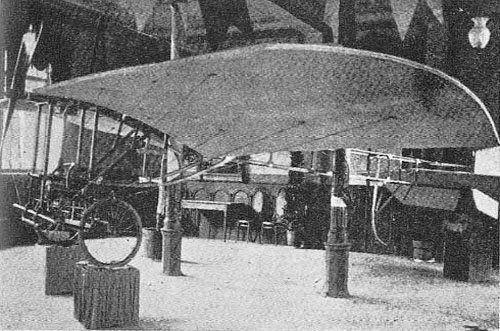
Designed by the Czech engineers Rozum and Bechyne and built by Emil Rudawski and Co. in Krakow. The construction of the aircraft was completed in April 1910. It was equipped a 40 hp air-cooled radial engine of their own design, one of the first Polish aircraft engines. It was presented at the factory on 4 April and the first flight was announced on 5 May.
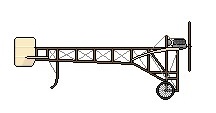
In 1910 Pole Rozum and Czech Bechiny built in Kraków, Poland, an aircraft broadly modelled after Bleriot XI and with engine of their own design. Static tests of the engine and airplane were apparently successful, but it’s unclear if there were any flights made on it.
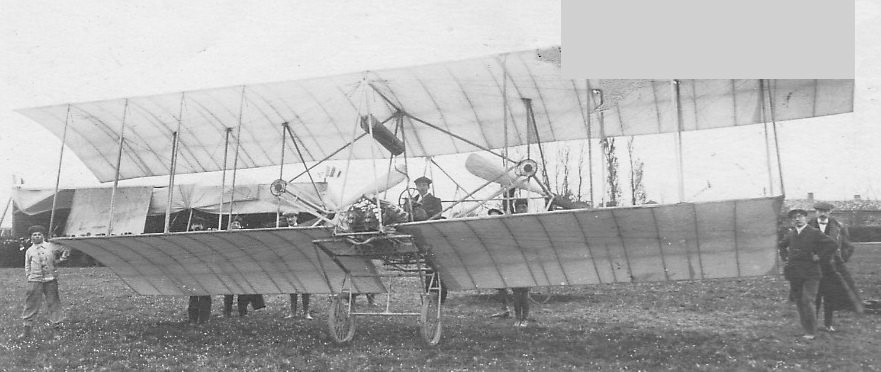
The Roze, Perret, et Chaffal biplane was a large overhung biplane that might have been designed by Francois Denhaut and was made partly of steel tubing. It had a single trapezoidal tailplane aft only and no apparent vertical surfaces. The arrangement of the two pusher propellers was similar to that on the Wright. It was damaged in 1909 at Poitiers, and probably rebuilt into the photographed configuration, which was tested at Poitiers, France, in May 1910.

The “Aviateur”, as designed and built by Louis-Étienne Roze. Recognizable due to the catamaran configuration of the rigid airship hulls. The Aviateur was a putative challenger for the Deutsch de la Meurthe prize, eventually won by Santos-Dumont using his No. 6 dirigible – but when tested in 1901, it failed to fly.
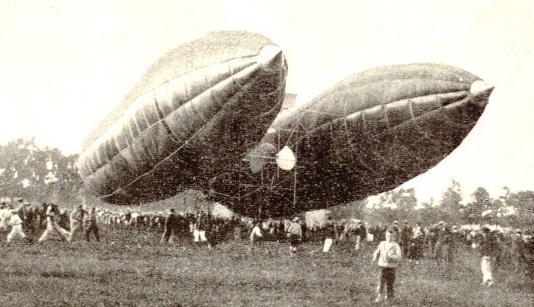
Trials took place on the 5th and 6th of September 1901. Miscalculations by M.Roze meant the airship was too heavy and managed to lift only fifteen feet, then coming down and landing softly. At 10 hp each, the two Santos-Dumont (Buchet) motors were too weak. The inherent problem with the motors was that they served the lifting propellors, which in turn had to be switched over to the propulsion/push propellors to move forward. Thus , no forward flight and the silk “wings” remained vertical, not closing to the horizontal.
As Roze had no further financial means to build the Aviateur larger nothing was ever heard of his airship again.
Development of the RTAF-5 turboprop advanced trainer and forward air control aircraft was temporarily suspended until the Fantrainer-wing manufacturing programme was complete. The RTAF-5 is similar in general layout to the OV-10 Bronco, but is powered by a single Allison 250-B17C turboprop mounted on the rear of the fuselage in pusher configuration. Four underwing hardpoints are fitted for light stores. The prototype flew on October 5, 1984, with a fixed landing gear. A retraction mechanism and other systems were due to be installed during 1985.
RTAF-5
Engine: 1 x Allison 250 turboprop, 313 kW
Span: 9.6 m
Length: 10 m
Wing area: 15.7 sq.m
Empty wt: 1645 kg
MTOW: 2154 kg
Warload: 225 kg
Max speed: 213+ kph
Initial ROC: 91 m / min
T/O run (to 15m): 700 m
Ldg run (from 15m): 915 m
Fuel internal: 219 lt
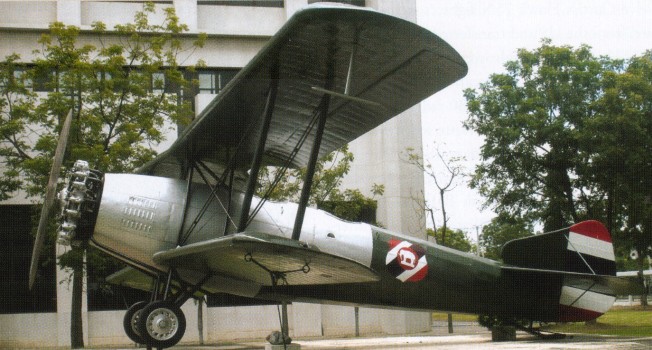
The construction ot this indigenous two seat bomber began on 5 April 1927 and was named ‘Paribatra’ by His Majestry the King.
The Boripatra was the first aircraft designed and built by the Thais. Around 12 were built by the Aeronautical Service Workshops at Don Muang up until 1933 and were powered by a Bristol Jupiter, BMW, Curtiss D-12 or Pratt & Whitney Hornet engine.
A Sopwith Baby fuselage with modified wings and enlarged floats.
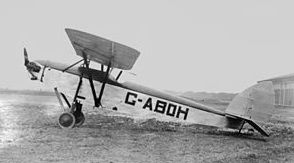
The Royal Aircraft Establishment Aero Club Scarab c/n 5 was designed by P.G.N.Peters and C.R.Brewer in 1930, using some DH.53 parts. A single-seat parasol monoplane, it was powered by a Bristol Cherub III engine and sometimes known as the P. B. Scarab.
Registered G-ABOH, it was finished in 1930 but was rebuilt in 1931 without having flown.
It first flew in 1932 at Farnborough. It was stored there until 1938 when it was broken up.
Engine: Bristol Cherub III
Wing span: 30.00 ft
Length: 21.00 ft
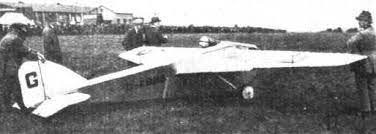
The Royal Aircraft Establishment Aero Club Hurricane c/n 2 was a single-seat, all wood, biplane, with high set wing, designed by S.Childs for the 1923 Lympne Light Aircraft Trials
Powered by a 600cc Douglas motor cycle conversion, it first flew from Farnborough in 1923 as G-EBHS.
It was rebuilt in 1925 with a Bristol Cherub III engine and modified undercarriage.
Wing span: 23.00 ft
Length: 17.03 ft
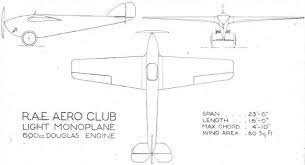
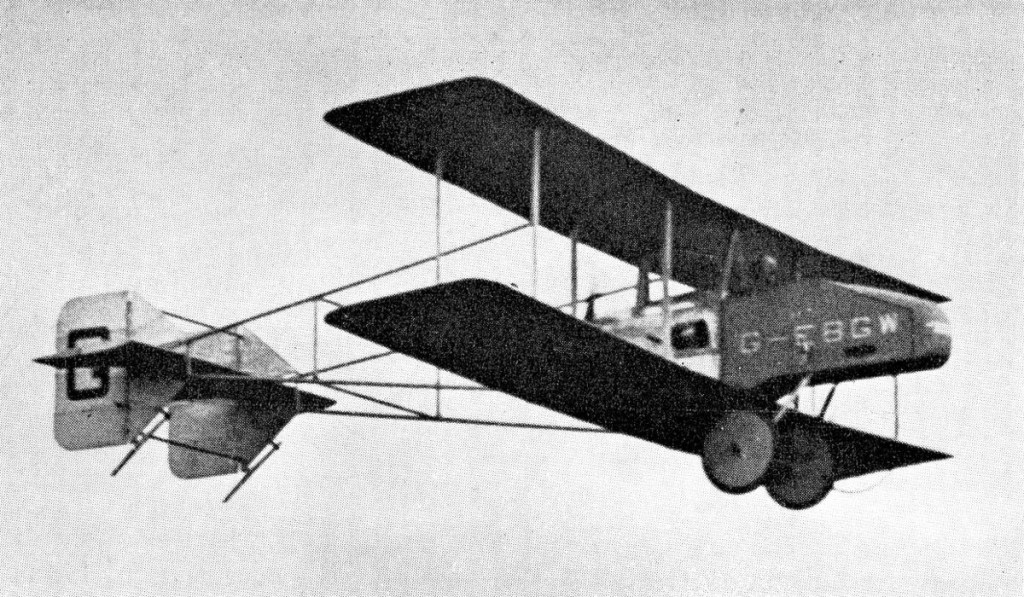
The Royal Aircraft Establishment Aero Club Zephyr c/n 1 was a single-seat, all wood, biplane, powered by a pusher 500cc Douglas motor cycle conversion. The tail was suspended on a twin lattice system from the wing trailing edge.
As G-EBGW, it was first flown at Farnborough on 6 September 1923.
It was broken up in 1925.
Engine: 500cc Douglas
Wing span: 29.00 ft

