In 1926 Alexander de Seversky modified a Curtiss JN-4D with a combination roller-and-ski landing gear.
The spelling of de Seversky’s name was deliberate to play up the ski angle.
It was damaged in landing tests on 10 February 1927 and scrapped.
In 1926 Alexander de Seversky modified a Curtiss JN-4D with a combination roller-and-ski landing gear.
The spelling of de Seversky’s name was deliberate to play up the ski angle.
It was damaged in landing tests on 10 February 1927 and scrapped.
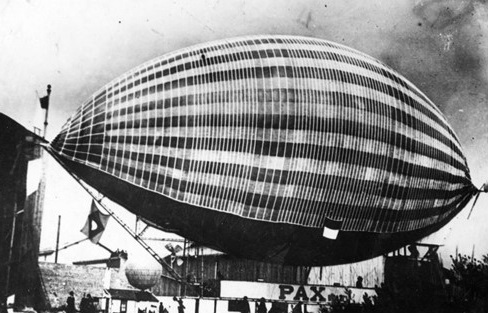
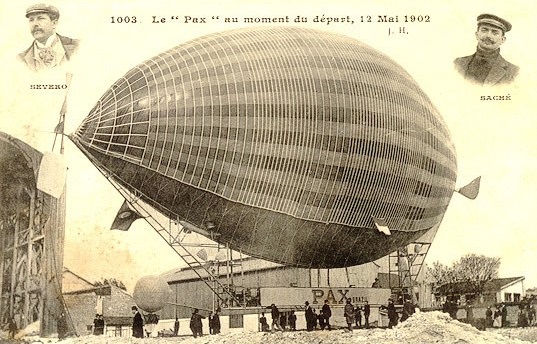
At the end of 1901 Brazilian inventor Augusto Severo de Albuquerque Maranhão travelled to France to build an airship, the semi-rigid “Pax”. It had no directional rudder but seven propellers, one at the stern, one at the bow, another at the nacelle and four at the sides. He had intended to use electric motors, but the lack of resources and time made him opt for two Buchet-type engines, one of 24 hp and the other of 16 hp. The envelope had a capacity of 2,500 cu.m, 30 m long and 12 m at the largest diameter.
Two pusher propellers set at 50 rpm drove the aircraft. The forward and aft propeller diameters were 5 and 6m, respectively. in addition, two other propellers were placed parallel to the machine’s longitudinal axis for lateral control, only. a further propeller was placed below the deck and was employed to control the pitch movement of the 30-m-long aircraft. Maranhão had some insights in designing the Pax, which were not taken into account by his predecessors. one of them was the placement of the traction line coincident with the drag one to better control and handling of the aircraft.
The trials were successfully performed on May 4 and 7, 1902. At 5 am on May 12, 1902, Severo and his mechanic, Georges Saché, set off, intending to fly from Vaugirard in Paris to Issy-les-Moulineaux. It rose quickly, but at about 400 meters’ altitude it exploded, crashing on Avenue du Maine. Both Severo and Saché were killed.
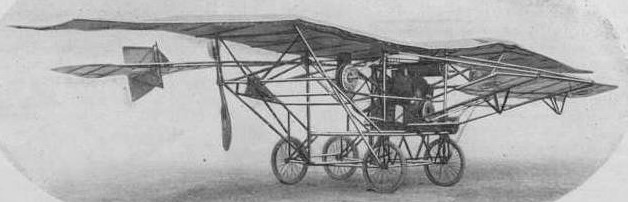
In the spring of 1907 Edmond Seux started development of a monoplane, which was tested on 15 May on a military parade ground. It first bounced on the uneven ground and one of the rear wheels broke. Later one of the two propellers hit the ground when the nose rose and damaged the wings. The plane was repaired and modified with bigger rear wheels and tested again in the end of May, but there are no reports of it flying and it was obviously abandoned. It was equipped with a 35 hp Anzani.
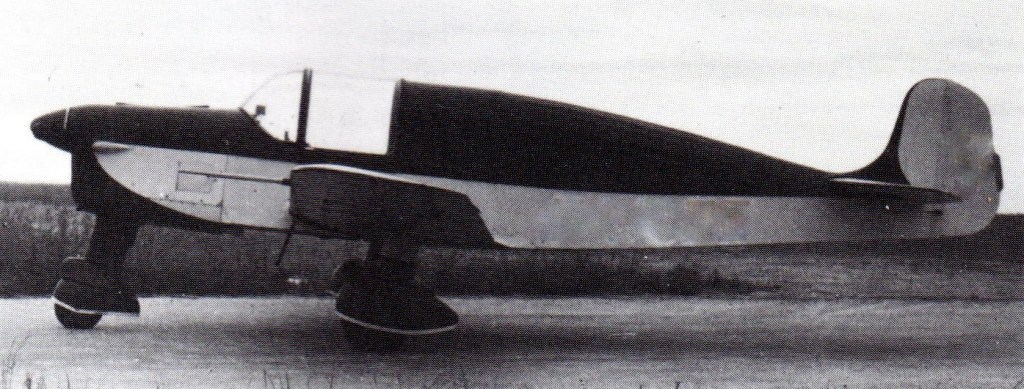
Designed and built by Laboureix and Lagrevol, the SETCA Milan was first flown in 1947, obtained its CNRA in August 1949, and in 1952 received a normal certificate de navigabilite.
A second prototype was built and flown. Of all-wood construction. The cabin seats two side-by-side, with dual controls.
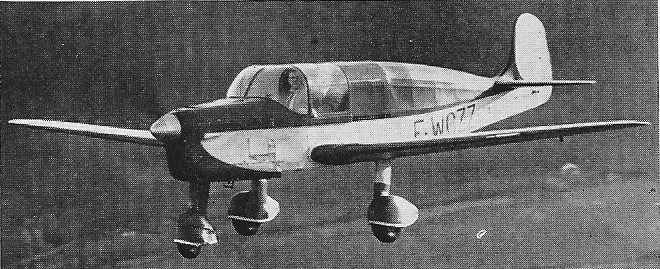
The Milan was shelved since no buyers showed interest.
Engine: 90 hp Regnier 4-EO
Max speed: 122 mph
Cruise: 112 mph
Range: 434 mi
Empty weight: 1210 lb
Loaded weight: 1742 lb
Wingspan: 32 ft 9.5 in
Length: 24 ft 1.75 ln
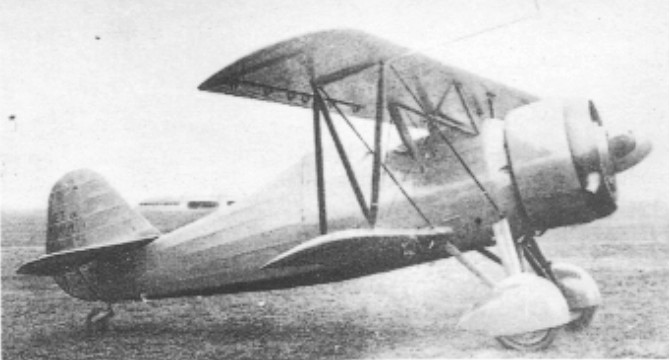
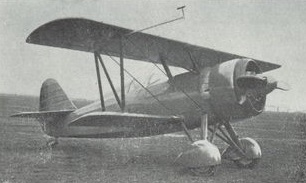
The 1934 S.E.T. XV had a metal frame. /its equipment included oxygen and a complete radio set. The wing was an original S.E.T. profile with flaps.
The armament was two fixed machine guns firing through the propeller. They were under the engine cowling.
Engine: Gnome-hone 9 Krsd, 500 hp
Wingspan: 9.40 m
Length: 7.00 m
Height: 3.05 m
Wing area: 18.65 sq.m
Empty weight: 1150 kg
Max weight: 1550 kg
Max speed: 350 kph
Stall: 113 kph
Max ceiling: 9400 m
Climb to 2000m: 3 min 10 sec
Climb to 7000m: 15 min 30 sec
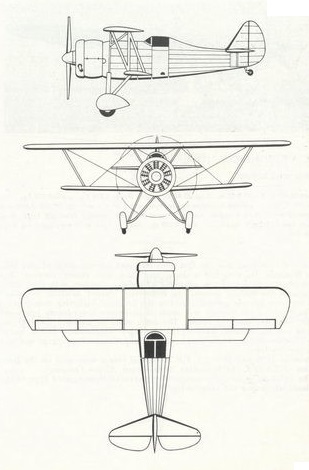
The first aircraft designed by Societatea de Exploatari Technice (SET) was the Proto SET 2. The prototype, powered by a 450hp (335kW) Lorraine Dietrich radial engine, was test flown in 1927.
In 1925 Claude Sessions built a two-place, open cockpit biplane. Powered by an 80hp Anzani engine, it was built in Owensburg KY.
In 1922 Claude Sessions built a single-place, open cockpit biplane. Powered by an Indian V-2 engine, it featured bicycle wheels and wing-warping controls.
A modified version was built in 1925 at Forsyth IL.
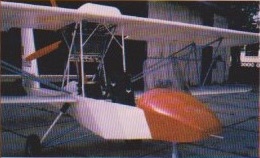
The Aerocraft is a tandem two seat biplane built around a welded steel spaceframe fuselage and wooden wings.
Engine: Rotax 582, 64 hp
Wing span: 7 m
Wing area: 17.50 sq.m
MAUW: 450 kg
Empty weight: 200 kg
Fuel capacity: 60 lt
Max speed: 160 kph
Cruise speed: 120 kph
Minimum speed: 60 kph
Climb rate: 4 m/s
Seats: 2
Fuel consumption: 15 lt/hr
Price (1998): US$25,000
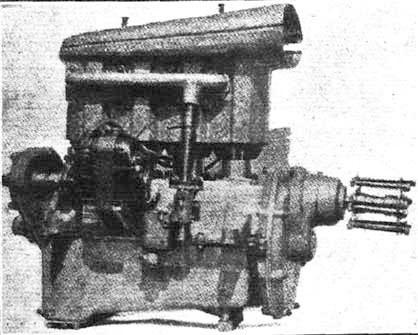
The Sergant Type A is a four-cylinder in-line, separate, air-cooled engine developed in the 1920s.
The housing is made of aluminum, the shaft of mangano-siliceous steel. The valves are in the bottom of the cylinders with rocker arms above.
The lubrication is done under pressure by a gear pump, in the bottom of the crankcase which contains the oil for 5 hours of flight. Distribution by camshaft. Variable advance Scintilla magneto ignition. Fuel supply loaded and Zénith carburetor.
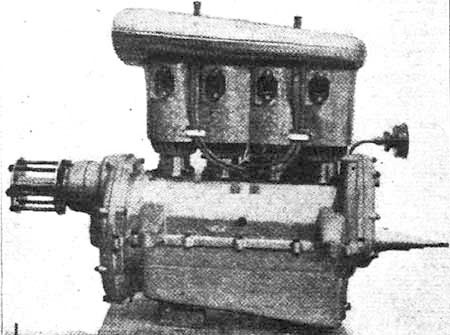
The propeller is mounted on a hub geared down by spur gears, following the steel flywheel wedged on the shaft. The propeller was in direct gear or three reductions were 14/35, 15/34 and 16/33, which at 3200 turns gives the propeller 1275, 1410 and 1540 turns.
The cooling is provided in an original way: a nozzle open towards the front channels the air in a chimney, the shape and section of which distribute the air current equally to all the cylinders which carry vertical fins.
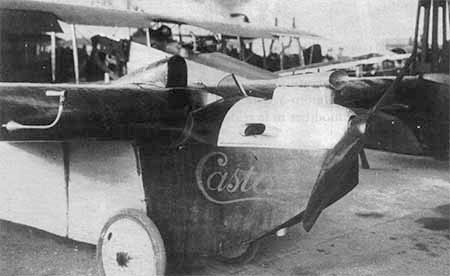
The Poncelet Vivette and Castar could easily be converted into a moto-cruiser by installing a Sergant engine.
4 cylinders in line
Displacement: 760 cc
Power: 16 HP at 3200 rpm, 17.5 hp at 3500 rpm
Bore 54.5 mm
Stroke 80 mm
Weight: 46 kg with accessories and propeller hub
Length with hub: 0.776 m
Height: 0.565 m
Width: 0.34 m

