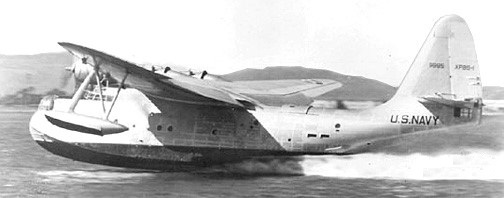
After a two-year construction period the Sikorsky XPBS-1 (Model S-44) 9995 first flew on 23 August 1937. Initial testing with 1050 hp engines revealed a top speed of 227 mph. Stability problems traced to turbulence generated by the wings resulted in the addition of dihedral to the horizontal stabilisers. After being delivered to the Navy in October 1937, the XPBS-1 began competitive trials with the Consolidated XPBY2-1 in mid-1938. Consolidated won a construction order and the XPBS-1 was assigned to Patrol Wing 5 at NAS Norfolk, Virginia, to evaluate long-range patrol-bomber operations until shortly after the US entered World War II. In the spring of 1942 the aircraft was reassigned to VR-2 out of California for transport duties between the West Coast and Hawaiian Islands. On 30 June 1942, while returning from Pearl Harbor, the XPBS-1 struck a log in San Francisco Bay and sank. All on board escaped safely, the passengers including Admiral Chester W. Nimitz, Commander of the Pacific Fleet.
Major elements of the design went into the VS-44A.
Engines: four 1200hp P&W Wasp Wingspan: 124’0″ Length 76’2″ Max speed: 227 mph Stall: 64 mph Range: 4030 mi Ceiling: 20,800′
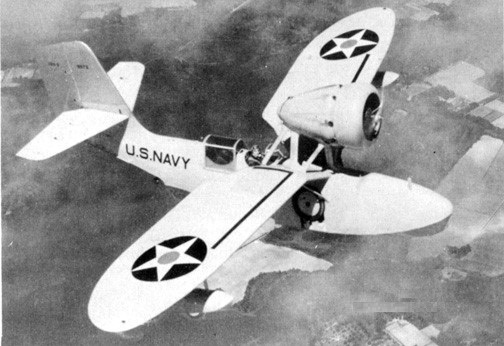
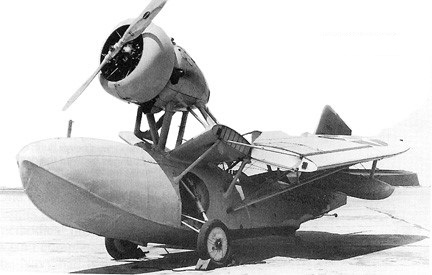
The only Sikorsky XP2S-1 built, A8642 in 1932, was powered by tandem pusher/tractor engines in an interwing nacelle. The engines were two 400hp P&W R-985A or 550hp R-1340s.
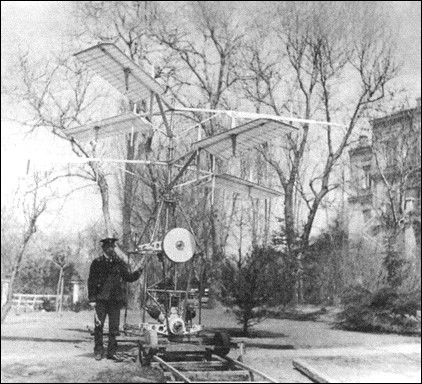
The Sikorsky Helicopter No.2 of 1910 was also known as the S-2; an identification later designated. Powered by the same Anzani 3-cylinder of 25 hp as in the No.1. Developing lift force using contra-rotating three-bladed rotors, reportedly it could almost lift itself.
The X-Wing was an experimental hybrid helicopter/fixed wing aircraft built in 1986 by Sikorsky for NASA and the US army, it was based on a modified S-72 Rotor System Research Aircraft (RSRA) which could fly with or without rotor blades. The addition of large X-shaped rotor blades would, in theory, allow the aircraft to take off and land vertically. During flight, the rotor blades could be switched off and act as an additional pair of wings to provide lift when moving forward. Despite being built, it was never flown.
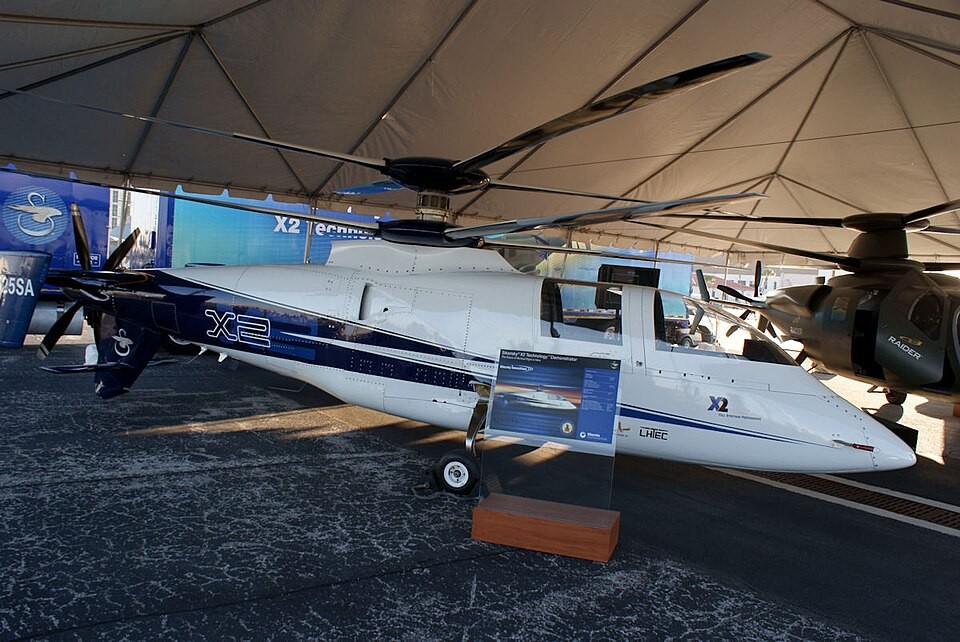
Sikorsky developed the X2 helicopter on a $50 million budget. The design includes expertise gathered from several earlier design projects. The S-69/XH-59A Advancing Blade Concept Demonstrator had shown that high speed was possible with a coaxial helicopter with auxiliary propulsion supplied using two jet engines, but that vibration and fuel consumption was excessive; the Cypher UAV expanded the company’s knowledge of the unique aspects of coaxial flight control laws with a fly-by-wire aircraft; and the RAH-66 Comanche developed expertise in composite rotors and advanced transmission design.
Other features include slowed “de-swirling” rigid rotors two feet apart, active force counter-vibration inspired by the Black Hawk, and using most of the power in forward flight for the pusher propeller rather than the rotor. Unusually for helicopters, the power required for high speed is more than the hover power. The pilot controls the independent propeller power with a thumb wheel on the collective.
Test flights and flight simulations were combined to improve test procedure. The fly-by-wire system is provided by Honeywell, the rotor by Eagle Aviation Technologies, anti-vibration technology from Moog Inc, and propeller by Aero Composites The rotor hub can have 10-20 times the drag of the blade. Sikorsky intended to test hub fairings to reduce drag by 40%, and test flew fairings on the hubs themselves but not the central hub fairing (“aero sail”) in between the hubs. Sikorsky has since patented a “Standpipe” (fixed tube between rotating rotor axes) suitable for a central hub fairing.
The X2 first flew on 27 August 2008 from Schweizer Aircraft, a division of Sikorsky Aircraft Corporation’s facility at Horseheads, New York. The flight lasted 30 minutes. This began a four-phase flight test program, to culminate with reaching a planned 250-knot top speed. The X2 completed flights with its propeller fully engaged in July 2009. Sikorsky completed phase three of the testing with the X2 reaching 181 knots in test flight in late May 2010.
On 26 July 2010, Sikorsky announced that the X2 exceeded 225 knots (259 mph; 417 km/h) during flight testing in West Palm Beach Florida, unofficially surpassing the current FAI rotorcraft world speed record of 216 knots (249 mph; 400 km/h) set by a modified Westland Lynx in 1986.
On 15 September 2010, test pilot Kevin Bredenbeck achieved Sikorsky’s design goal for the X2 when he flew it at a speed of 250 knots (290 mph; 460 km/h) in level flight, an unofficial speed record for a helicopter. The demonstrator then reached a new record speed of 260 knots (300 mph; 480 km/h) in a shallow 2˚ to 3˚ dive, which was just short of the 303 mph achieved by the Sikorsky S-69 technology demonstrator helicopter. Sikorsky states that the X2 has the same noise level at 200 knots that a regular helicopter has at 100 knots. Above 200 knots, the rotor speed is reduced from 446 to 360 RPM to keep tip speed below Mach 0.9, the rotor disc is slightly nose-up, and the lift-to-drag ratio is about twice that of a conventional helicopter. Hands-off flying was also successfully performed during flight tests.
On 14 July 2011, the X2 completed its final flight and was officially retired after accumulating 22 hours over 23 test flights. With the end of development, the X2 will be followed by its first application, the S-97 Raider high-speed scout and attack helicopter. It was donated to the National Air and Space Museum in October 2016 and is on display in the Steven F. Udvar-Hazy Center in Chantilly, Virginia.
Powerplant: 1 × LHTEC T800-LHT-801 turboshaft, 1,800 shp (1,300 kW) Main rotor diameter: 2 × 26 ft 5 in (8.05 m) Main rotor area: 548 sq ft (50.9 m2) contra-rotating four-bladed coaxial. Propellers: 6-bladed pusher Aspect ratio: 9.5 Empty weight: 5,300 lb (2,404 kg) Gross weight: 6,000 lb (2,722 kg) Max takeoff weight: 5,300 lb (2,404 kg)–6,000 lb (2,700 kg) Maximum speed: 290 mph (460 km/h, 250 kn) Range: 35 mi (56 km, 30 nmi) Wing loading: 0.44 lb/sq ft (2.1 kg/sq.m) Power/mass: 3.66 hp/lb Crew: Two
Sikorsky has used computer-assisted design tools in the engineering of its S-92 Helibus. The first Sikorsky program to use Enovia PM (Product Manager) is the S-92, the new medium-lift helicopter being developed by an international team that includes Brazil’s Embraer, Spain’s Gamesa, Japan’s Mitsubishi Heavy Industries, China’s Jingdezhen Helicopter Group/CATIC and Taiwan’s Aerospace Industrial Development Corp.
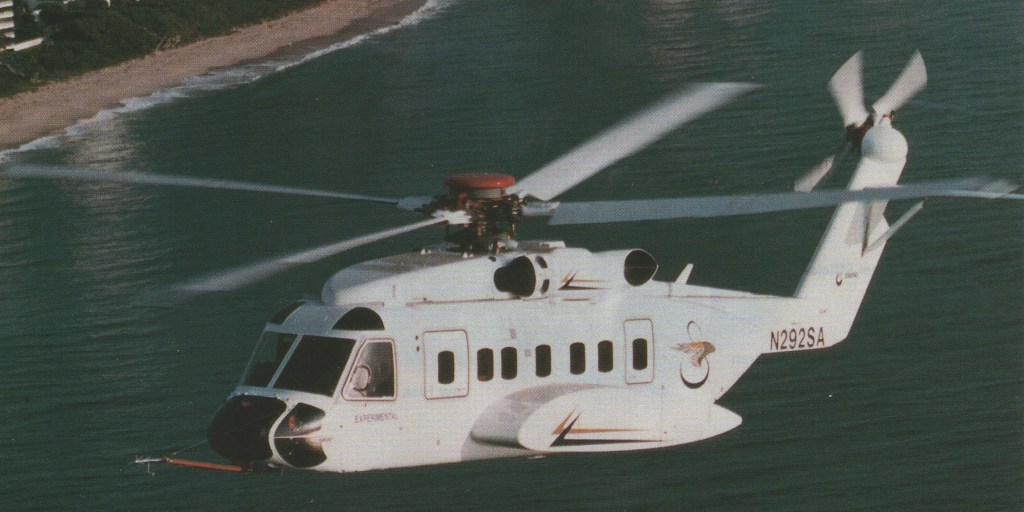
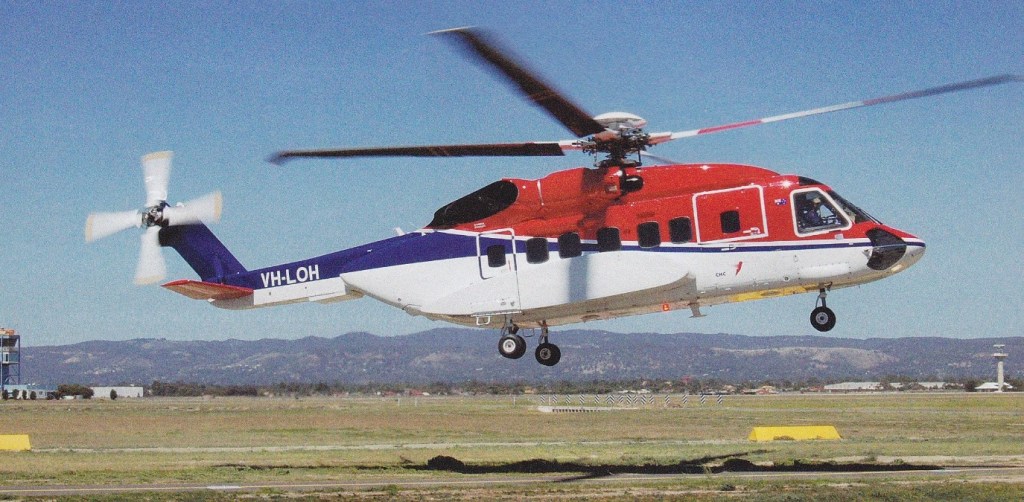
First appearing in 1998 the civil/military medium twin turboshaft S-92 Helibus can carry up to 22 passengers.
Sikorsky’s new S-92A made its maiden flight by Feb 1999 and was certified by the FAA on 17 December 2002. The parent company gave Sikorsky the go ahead to move the S-92 program into production after four prototypes had been built and number 3 was days away from first flight.
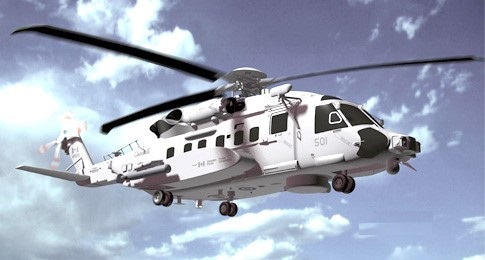
In November 2004 twenty-eight contracts for CH-148 Cyclone maritime helicopter H-92 variant as replacement for Sea King were signed.
Sikorsky CH-148
The H-92 is loadable with folding rotor and tail pylon into a C-5 or C-17.
In 2002 the Sikorsky S-92 was awarded the Collier Trophy.
H-92 Rotor diameter: 56’4″ Width: 17’3″ Length: 56’2″ MTOW: 25,200 lb Payload: 5000 kg External load: 10,000 lb Max speed: 174 mph Cruise: 151 mph Range: 550 miles Seats: 22
S-92 Superhawk Engines: 2 x GE 1450hp CT7-6D Main rotor: 4-blade 56’4″ diameter Width: 17’3″ Length: 56’10” Max speed: 178 mph Cruise: 160 mph Range: 575 mi
Sikorsky S-92A Engines: 2 x CT7-8A, 2,520 shp each Fuselage Length: 56.2 ft Height: 14.2 ft Width: 12.8 ft Max. Takeoff Weight: 26,500 lb Empty Operating Weight (EOW): 17,929 lb Standard Fuel Capacity: 5,130 lb / 766 gal Optional Fuel Capacity: 1,625 lb / 242 gal Vmo (Max Op) IAS: 165 kt Normal Cruise TAS: 139 kt Normal Climb: 1,600 fpm Engine Out Climb: 440 fpm Ceiling: 14,000 ft (HOGE) Out of Ground Effect: 6,500 ft (HIGE) In Ground Effect: 9,500 ft Range Tanks Full: 534 nm Range Full Seats: 542 nm Crew: 2 Passengers: 19
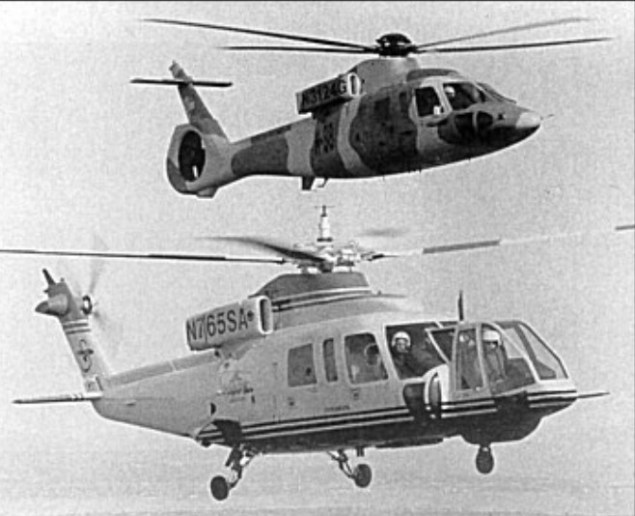
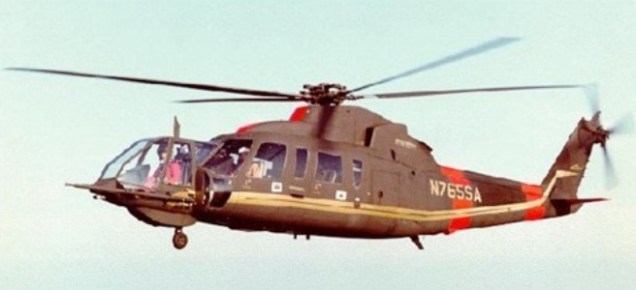
During the 1990s, two highly-modified S-76s were used to develop technologies embodied later in the RAH-66 “Comanche”. The Shadow (Sikorsky Helicopter Advanced Demonstrator and Operator Workload) S-76 in the foreground, N765SA, evaluated the built-on nose-mounted single-seat cockpit, with features such as fly-by-wire sidestick control, a voice interactive system and state- of-the-art combat avionics.
Sikorsky S-76B Shadow N765SA
The rear aircraft flew extensively to determine the optimum size and shape of the type of shrouded tail rotor once fitted temporarily to the S-67 “Blackhawk”.
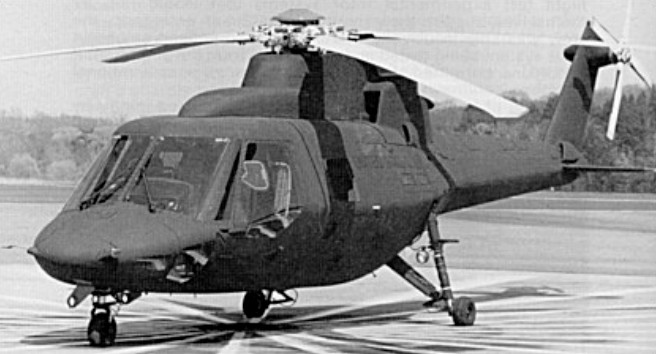
The Sikorsky Model S-75 helicopter was developed as part of the Army’s Advanced Composite Airframe Programme (ACAP), to develop an all-composite helicopter fuselage which is lighter and less costly to build than metal airframes. Both Sikorsky and Bell were awarded contracts in February 1981 for the design, construction and initial testing of two ground test airframes and one flying prototype, all three to be built entirely of composite materials. Sikorsky’s S-75 ACAP aircraft flew for the first time in July 1984.
The S-75 is a hybrid machine that uses the twin turboshaft engines, transmission and main and tail rotors of Sikorsky’s S-76 mated to an entirely new composite airframe. Most of the aircraft’s basic load-bearing structure is built of graphite or a graphite/epoxy blend, while the floors, roof and most exterior surfaces are of more ballistically-resistant Kevlar. In keeping with the Army’s requirement that the ACAP aircraft meet or exceed all existing military crashworthiness standards, the S-75 is equipped with specially designed impact-resistant crew and passenger seats and high strength pneumatic shock absorbers on its non-retracting tricycle landing gear. The machine is operated by two crew members, and can carry up to six passengers in its one hundred cubic-foot rear cargo cabin.
In tests the machine was found to have exceeded the weight- and cost-saving criteria set by the Army in the original ACAP specification.
Sikorsky S-75 ACAP Engines: 2 x Allison 250-C30S turboshaft, 485kW Main rotor diameter: 13.41m Fuselage length: 13.31m Height: 4.01m Max take-off weight: 3820kg Empty weight: 2895kg Max speed: 296km/h Cruising speed: 256km/h Ceiling: 6090m Range: 640km Crew: 2 Passengers: 6
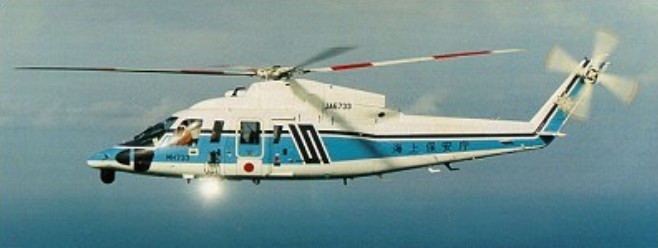
Growing demands for transport helicopters in support of offshore energy operations led Sikorsky to initiate worldwide market research to establish the requirements of such operators. An important consideration was seating capacity, and in 1975 Sikorsky began the development of a 14-seat commercial helicopter designated S-74. The designation was changed to S-76 to tie-in with the USA bicentennial and later named Spirit. Sikorsky used the H-76 Eagle unofficial designation to promote a military version of this model Sikorsky
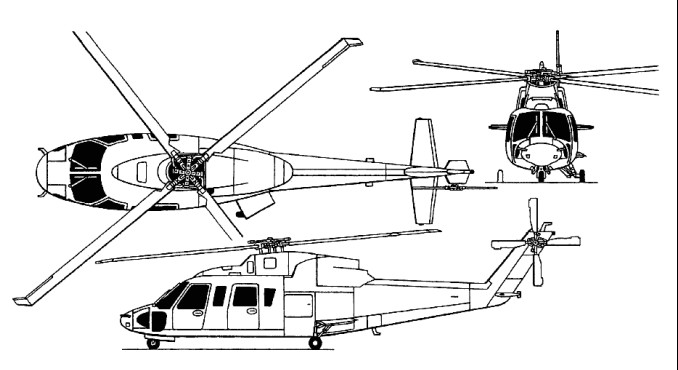
From the outset, the aircraft was equipped for all-weather operation, as one of its main roles was intended to be the servicing of offshore oil rigs. The four-blade rotor of this air craft is exactly like that of the S-70. The blades are built around a strong titanium spar; the leading edge is also titanium, while the trailing edge has a fiberglass and nylon honeycomb structure. The entire blade is pressurized for maximum structural integrity. The rotor hub is made according to the latest techniques to minimize maintenance: the normal bearings have in fact been replaced by elastomeric ones needing no lubrication, and special dampers virtually eliminate vibration. The powerplant is installed above the fuselage behind the drive shaft and consists of two 650 shp Allison 250-C30 turbines. There is a single 1030 litre fuel tank in the fuselage, but supplementary fuel tanks can be carried for longer journeys.
The carefully streamlined fuselage is also of composite structure. The front part is of fiberglass, the cabin section is of light alloy with honeycomb panels, while the tail, which is also of metal, has a semi-monocoque structure. The retractable tricycle landing gear is hydraulically operated. The cabin is normally furnished, with seats for 14 including the crew of two, but can be modified to suit the operator. There is a large baggage compartment at the rear, with a capacity of 1.19 cu.m. The S-76 can also be fitted with an external cargo hook to carry 2270kg.
Building of the four prototypes began in May 1976 and the second prototype (N762SA) was the first to fly, on 13 March 1977, complete with IFR avionics.
Sikorsky had deposits on 87 ships as of February 1, 1977, and the first fully certificated IFR production aircraft was delivered to Air Logistics of Lafayette, Louisiana, on 27 February 1979.
S-76A set nine speed and two time-to-climb records, and one altitude record in two weight classes over a five-day period in Feb 1982. A total of 284 were built.
The two-year certification programme resulted from the use of an advanced dynamic systems/powerplant combination evolved for military requirements, but further development continued from the time that production began, leading to an improved S-76 Mk II from 1 March 1982. This differs by having improved cabin ventilation, dynamic system refinements, more access panels to simplify maintenance, and an advanced version of the Allison 250 turboshaft engine that gives an increase in guaranteed power output.
In April 1982 Sikorsky flew the prototype of a military-configured S-76 Mk.II with door mounted guns and various pods. Features of the military S-76 were armoured crew seats, a pilot’s optical sight above the instrument panel, self-sealing high-strength fuel tanks and optional troop seating for up to 12 passengers. A high-clearance fixed landing gear is fitted, with low-pressure tyres, and the cabin floor is stressed for 200 lb/sq.ft / 876 kg/sq.m. The external cargo hook can carry up to 3300 lb / 1185 kg, and other options are a utility-rescue hoist and engine air particle separator.
In 1983 Sikorsky flew the first S-76B, to replace the Mk II on the production line. Powered by two 771kW Pratt & Whitney PT6B-36As, each with a maximum continuous power rating of 870 shp (649 kW), the S-76B incorporates aerodynamic refinements developed for the UH-60. S-76B meets FAR Pt 29 category A IFR requirements with a 48 per cent increase in take-off performance and a commensurate increase in useful load under hot and high conditions.
The 1987 S-76A+ were seventeen unsold S-76, re-fitted for medi-evac and retrofitted with two 681hp Turbomèca Arriel 1S engines.
Over 200 Sikorsky S-76s were in operation throughout the world in 1983 and principal operators include Air Logistics, Okanagan Helicopters, VOTEC in Brazil, and Bristow in the UK. The version currently in production, the S-76 Mk.ll, which won 12 world records in February 1982, has a special variant of the Allison 250 which yields five per cent more power than the previous model.
Of the ninety-six 1984 S-76B, one was modified with a nose similar to the Boeing-Sikorsky RAH-66 as “Shadow”, and another modified to have a fan-in-fin tail rotor (fantail) as a demonstrator during Comanche development.
The S-76C+ Medical model uses an S-76B airframe and has a maximum gross weight of 11,700 lb and a maximum cruise speed of 160 kt. Four hundred and thirty-nine were built.
Sikorsky S-76EMS
Forty-three S-76C were built.
In February 1987 the H-76 Eagle armed helicopter completed successful weapons firing trials using a new four-station pitch compen¬sated armament pylon (PCAP), and during the tests the GIAT M621 20mm cannon pod and VS-MD-H mine dispenser were used on the H-76 for the first time. The PCAP is one of several integrated improvements aimed at reducing pilot workload and giving greater weapons accuracy. The integrated armament management system (IAMS) can be controlled from the collective lever, activating both the PCAP and headup display.
The H-76N naval version is offered with either PT6B or Allison 250-C34S engines. The S-76N is a navalised version of the S-76C.
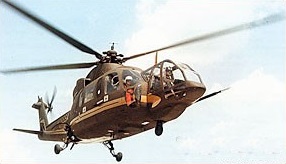
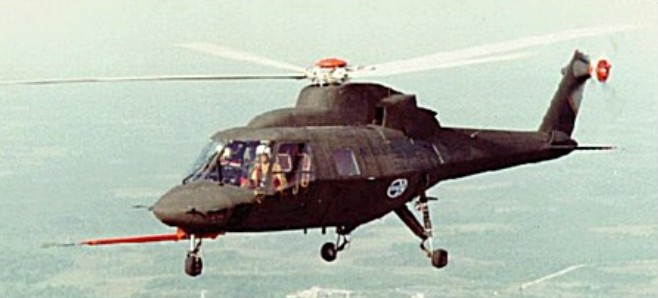
The S-76 has also served as a technology demonstrator for several projects. A one-off modification, the SHADOW (Sikorsky Helicopter Advanced Demonstrator and Operator Workload) programme saw an S-76 fitted with an add-on cockpit at the nose to test fly-by-wire, voice-actuated and side-stick control methods, together with helmet-mounted sights, FLIR and HUD combinations and an NVG cockpit. It was used extensively by Boeing/Sikorsky in their First Team submission for the US Army’s LHX competition to test a night vision system. A second S-76 was fitted with an anti-torque tail-rotor system, as the Fantail Demonstrator, playing an important part in the selection of the First Team’s design by the US Army as the RAH-66 Commanche.
The S-76 Shadow had a nose radar housing and fly-by-wire controls grafted onto the front section.
Sales of the Spirit in all its civil forms were approaching the 500 mark by 1993.
The S-76C+ model has a maximum gross weight of 11,700 lb and a maximum cruise speed of 160 kt.
To expand the S-76 market, Sikorsky introduced the Sikorsky Shares fractional ownership program, the first of its type to be offered by a leading helicopter manufacturer. Sikorsky Shares uses a pricing plan that is based on “flight units” rather than the conventional approach of charging per flight hour.
Variants:
S-76 Original production version, this designation applicable to aircraft delivered before 1 March 1982
S-76A+ Unsold S-76s re-engined with Turbomeca Arriel turboshafts – on demand; produced to special orders only such as SAR aircraft for Royal Hong Kong Auxiliary Air Force with undernose GEC MRTS FLIR turret and searchlight
S-76 Mk II Production all-weather transport from 1 March 1982, superseded by S-76B
S-76 Utility Simplified version of S-76 Mk II with sliding doors, and optional fixed landing gear; available in civil or military versions
AUH-76 Armed utility helicopter version, airframe basically as S-76 Utility, but with avionics and armament to permit deployment in various military roles
S-76B Production version powered by Pratt & Whitney PT6B-36 turboshafts
S-76C Alternative production version, powered by Turbomeca Arriel 1-S1 turboshafts
S-76D Projected version available from 1994, to be powered by uprated Turbomeca 2S1s
H-76 Eagle Armed version of S-76B
H-76N Projected naval version announced in 1984
Specifications:
H-76 Eagle Engine: 2 x P&WC PT6B-36 Instant pwr: 715 kW Rotor dia: 13.4 m Length: 13.2 m No blades: 4 Empty wt: 2545 kg MTOW: 5176 kg Payload: 2315 kg Max speed: 145 kts ROC: 410 m/min Fuel cap (aux): 1060 lt (415 lt) Max range: 748 km HIGE: 1890 m HOGE: 5350 ft Service ceiling: 11,500 ft Crew: 2 Pax: 12
S-76 Engine: 2 x Allison 250-C30, 650 shp TBO: 1500 hrs Main rotor: 44 ft Seats: 14 Length: 52.5 ft Height: 14.5 ft Max ramp weight: 10,300 lbs Max takeoff weight: 10,300 lbs Standard empty weight: 5600 lbs Max useful load: 4700 lbs Max landing weight: 10,300 lbs Max sling load: 3300 lbs Disc loading: 6.6 lbs/sq.ft Power loading: 7.9 lbs/hp Max usable fuel: 1875 lbs Max rate of climb: 1800 fpm Service ceiling: 15,000 ft Hover in ground effect: 6200 ft Hover out of ground effect: 2800 ft Max speed: 155 kts Normal cruise @ 3000 ft: 145 kts Fuel flow @ normal cruise: 490 pph Endurance @ normal cruise: 3.6 hr
S-76A Engines: two 650hp Allison 250-C30 Main rotor: 44’0″ Max speed: 178 mph Cruise: 167 mph Seats: 14
S-76A+ Engines: two 681hp Turbomèca Arriel 1S.
S-76B Engine: 2 x P&WC PT6B-36A/-36B, 981hp Instant pwr: 730 kW Rotor dia: 13.4 m MTOW: 5300 kg Useful load: 1855 kg Max cruise: 155 kts Max range: 828 km Crew: 2 Pax: 12 Seats: 14
S-76C Engine: 2 x Turbomeca Arriel 1S1, 681hp Instant pwr: 540 kW Rotor dia: 13.4 m MTOW: 5310 kg Useful load: 2072 kg Max cruise: 155 kts Max range: 643 km Crew: 2 Pax: 12 Seats: 14
S-76C+ Engine: 2 x Turbomeca Arriel 2S1, 856hp Instant pwr: 638 kW Rotor dia: 13.4 m Length: 52’6″ MTOW: 5310 kg Useful load: 2057 kg Load internal: 4813 lb Load external: 3300 lb Max speed: 181 mph Cruise: 171 mph Max range: 889 km / 505 mi Ceiling: 12,700′ Crew: 2 Pax: 12 Seats: 14