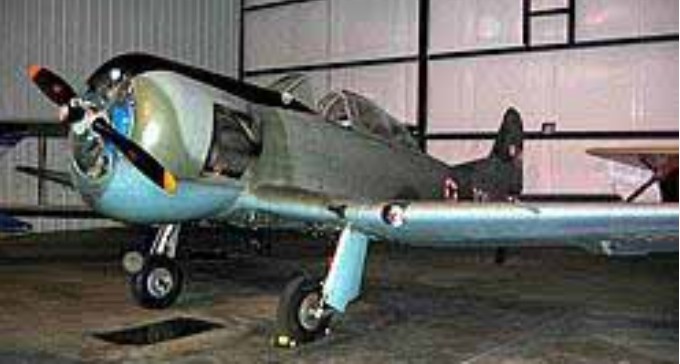
Ground attack aircraft
Dual Controls. 2 place tandem cockpit
Engine: Pratt & Whitney 600 hp
Cruise: 165 mph
Seats: 2
Ground attack aircraft
Dual Controls. 2 place tandem cockpit
Engine: Pratt & Whitney 600 hp
Cruise: 165 mph
Seats: 2
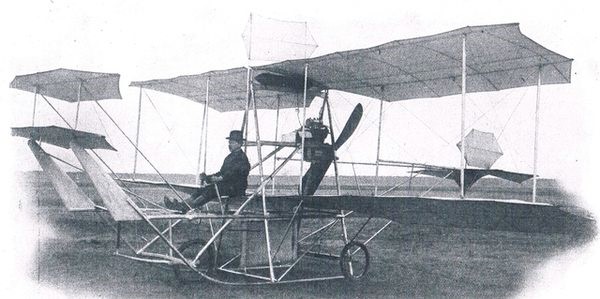
German flight-technician Emil Sohn seated on his doppeldecker during one of his trials at Johannisthal 1909. Sohn’s machine was a Wright-like biplane with a Haake motor. The engine didn’t work and Sohn was left without enough money to purchase a better one.
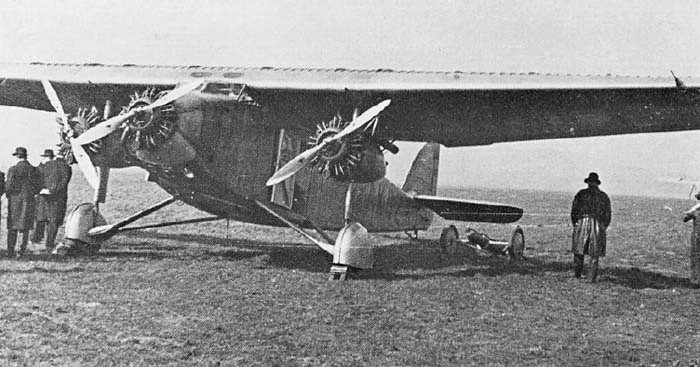
Type 40T was three-engined all-metal airliner which gave good service in early 1930s.
Under Paulhan-Pillard license-built E.5 three-engined monoplane flying-boat and T3-BN.4 twin-engined twin float coast-defense floatplane.
Under Paulhan-Pillard license-built E.5 three-engined monoplane flying-boat and T3-BN.4 twin-engined twin float coast-defense floatplane.

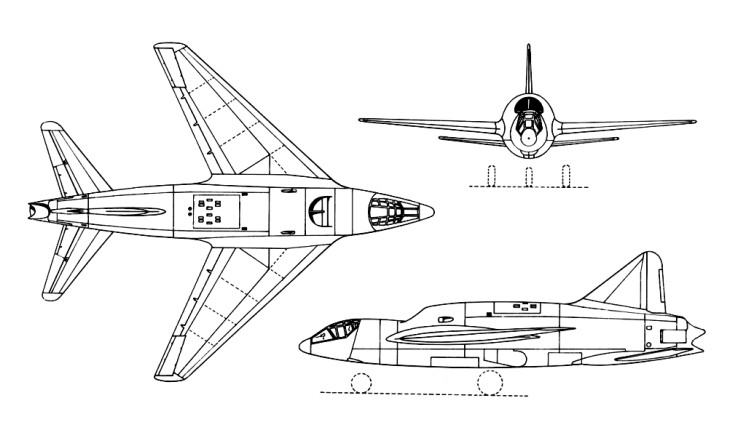
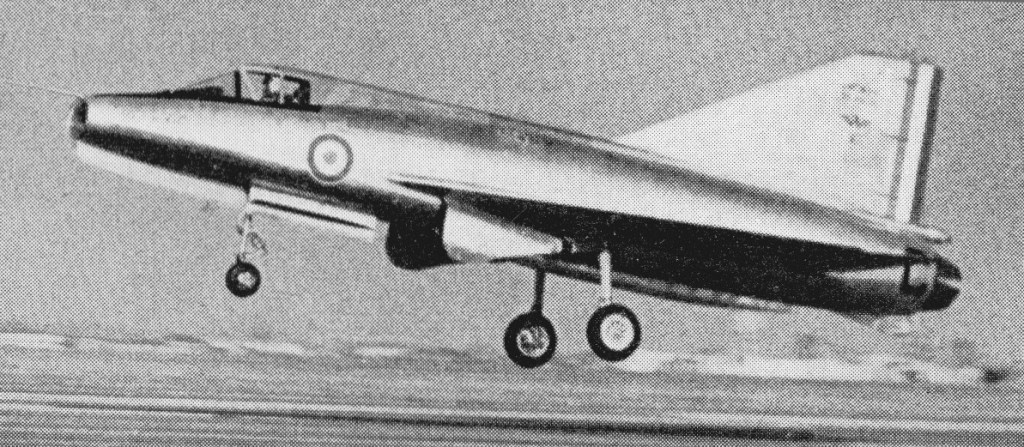
A private-venture single-seat tactical support fighter, the SE 5000 Baroudeur – a name derived from the Arabic word baroud for battle, and, in French Foreign Legion parlance, describing a pugnacious fighter – was designed by Wsiewolod J Jakimiuk. Of all-metal construction with a wing sweptback 36 degrees at quarter-chord, the Baroudeur represented an attempt to achieve a measure of independence from permanent runways. In place of a conventional undercarriage, it was provided with a combination of jettisonable take-off trolley and landing skids like the Me 163B Komet.
Sud Est SE 5000 Bardoudeur Article

The first prototype was powered by a 2,395kg SNECMA Atar 101B turbojet and flew on 12 May 1954.
Proposed armament comprised two 30mm or 37mm cannon. The Baroudeur was progressively re-engined with the Atar 101C and 101D-1, this last, rated at 2,600kg, powering a second prototype, which flew on 12 May 1954 and featured a three degree increase in wing anhedral.
Two months earlier, an official contract covered both SE 5000 prototypes as well as three SE 5003 pre-series aircraft. The first SE 5003 was flown in September 1955 with an 3,700kg Atar 101E-4, the second and third aircraft having a 2,850kg Atar 101D-3 and a 3,500kg Atar 101E-3 respectively. The Baroudeur eventually demonstrated the ability to take-off without recourse to the jettisonable trolley and the first SE 5003 was flown with flush-fitting auxiliary fuel tanks on the aft fuselage sides. The NATO nations elected to adopt a more conventional aircraft to meet the lightweight tactical fighter requirement and development of the Baroudeur was discontinued.
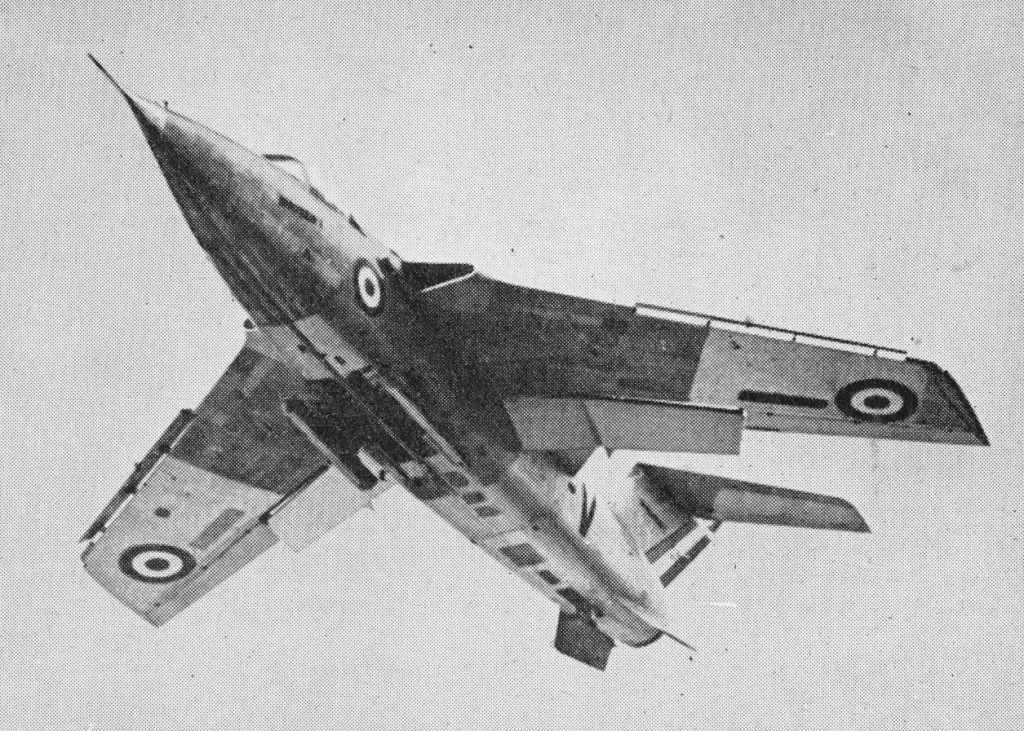
SE 5003
Engine: 1 x SNECMA “Atar” 101C, 27.5kN
Loaded weight: 7150 kg / 15763 lb
Empty weight: 4520 kg / 9965 lb
Wingspan: 10.0 m / 33 ft 10 in
Length: 13.66 m / 45 ft 10 in
Height: 3.25 m / 11 ft 8 in
Wing area: 25.30 sq.m / 272.33 sq ft
Max. speed: 1033 km/h / 642 mph
Crew: 1
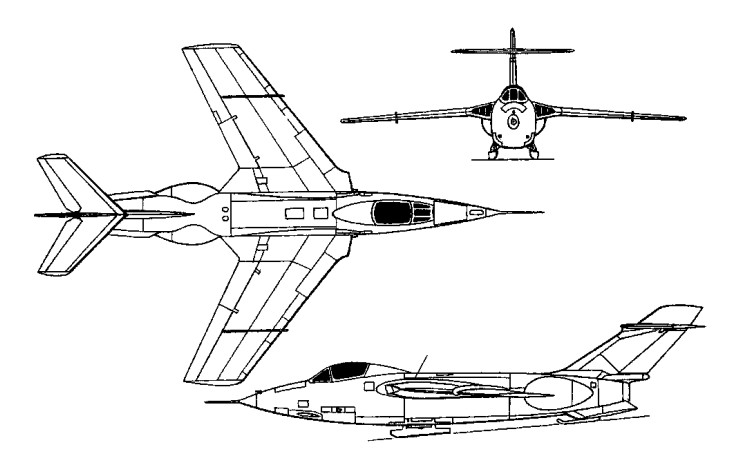
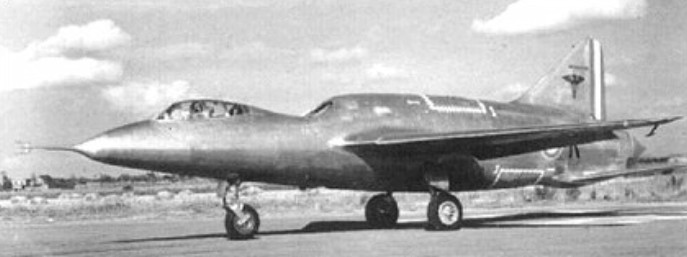
A second prototype, the SE.2415 Grognard II, flew in February 1945. A two-seater with wings swept at 32 degrees, it was damaged in a belly landing. Both designs suffered from flutter-induced problems. The definitive production version would have been the SE.2418, which was to have been powered by Rolls-Royce Tay turbojets, but the SO Vautour was selected to meet the Armee de l’Air’s ground-attack requirement instead.
SE.2415-08
Engine: 1 x 2400kg Rolls-Royce Nene 102 turbojet
Max take-off weight: 18000 kg / 39683 lb
Empty weight: 11312 kg / 24939 lb
Wingspan: 13.58 m / 45 ft 7 in
Length: 16.84 m / 55 ft 3 in
Height: 5.20 m / 17 ft 1 in
Wing area: 44.23 sq.m / 476.09 sq ft
Max. speed: 960 km/h / 597 mph
Cruise speed: 880 km/h / 547 mph

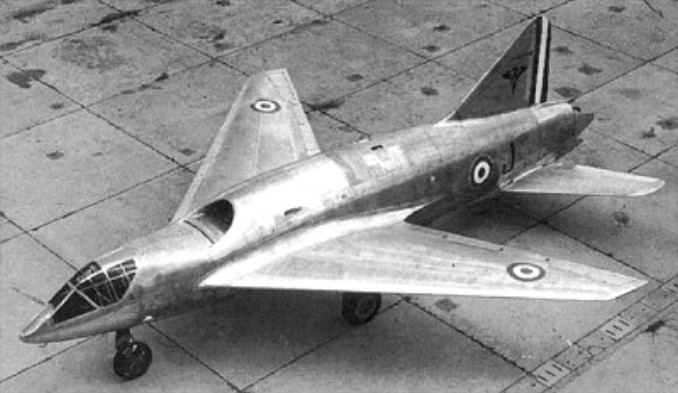
Designed as a single-seat ground-attack aircraft, the Sud-Est SE.2410 Grognard (Grumbler – a nickname for a soldier of Napoleon’s Old Guard) prototype flew for the first time on 30 April 1950. Powered by two 2197kg thrust Hispano-Suiza Nene 101 turbojets mounted one above the other in the fuselage and aspirated via a dorsal inlet, the Grognard I flew as a single¬-seater with wings swept at 47 degrees.
A second prototype, the SE.2415 Grognard II, flew in February 1945. Both designs suffered from flutter-induced problems. The definitive production version would have been the SE.2418, which was to have been powered by Rolls-Royce Tay turbojets, but the SO Vautour was selected to meet the Armee de l’Air’s ground-attack requirement instead.
SE.2410 Grognard
Engine: 2 x 2197kg Hispano-Suiza Nene 101 turbojets
Wingspan: 13.57 m / 44 ft 6 in
Wing area: 495 sq.ft
Length: 15.40 m / 50 ft 6 in
Height: 17 ft
Empty weight: 24,508 lb
Loaded weight: 31,967 lb
Max. speed: 1038 km/h / 645 mph at 4920 ft
Ceiling: 11590 m / 38050 ft
ROC: 5315 fpm
Range: 853 km / 530 miles
Armament: 2 x 30mm cannon, bombs and rockets
Crew: 1

In 1946 in France, plans were drawn for three new aircraft including the Sud-Est 2010, for 150 passengers, with delivery at the end of 1948. Fifteen SE 2010s had been ordered for delivery at the end of 1948. However, it was 2 April 1949 before the aircraft, christened the Armagnac, made its maiden flight. Powered by four 3,500-hp Pratt & Whitney Wasp Majors, this was designed to carry 64 passengers (with bunks) on the South and North Atlantic routes, or 107 on shorter runs. Air France, however, refused the aircraft on the grounds that bunks were no longer required, and there was therefore excessive space in the fuselage. Four were bought by Transports Aériens Intercontinentaux for freighting, but after only eight months this company decided that they were not economical. In 1954 they were overhauled and used to transport troops and supplies from Toulouse to fight the war in Indo-China. A further five were also used for this purpose.
Engines: 4 x Pratt & Whitney R-4360 Wasp Major, 3500 hp
Pax cap: 150

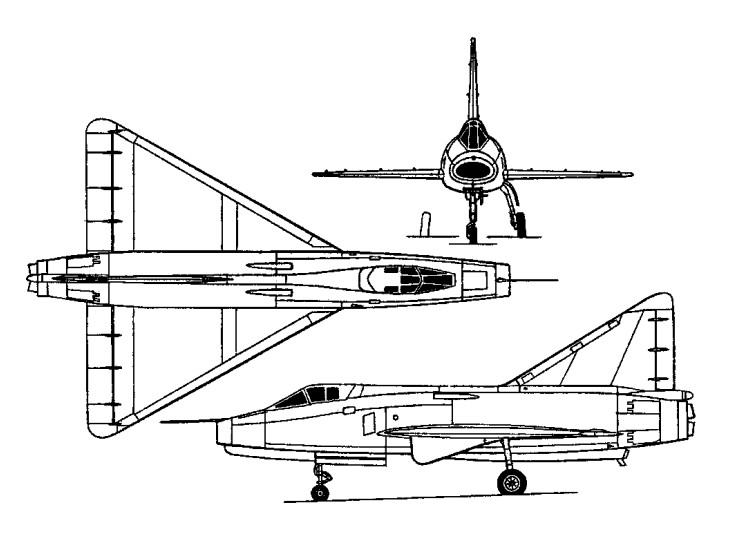
From the end of 1951, the bureau d’etudes headed by Pierre Satre at the SNCA du Sud-Est undertook a series of studies of potential lightweight mixed-power interceptor fighters under what was effectively the generic designation SE 212. These studies crystallized in the shape of a small, 60-degree delta powered by a SNECMA Atar 101F with an afterburning thrust of 3800kg and a 750kg SEPR 75 rocket motor. The primary armament was intended to consist of a single AA 20 or R 052 missile carried externally on the fuselage centreline, alternative armament being two 30mm DEFA cannon or 24 SNEB rockets of 68mm calibre. An official contract was placed for two prototypes, the first of which was flown on 20 April 1956 without the rocket motor fitted. The Atar 101F turbojet was subsequently replaced by an Atar 101G with an afterburning thrust of 4400kg, and the first flight during which the rocket motor was lit took place on 19 December 1956. The second prototype SE 212 was flown on 30 March 1957. During flight testing a speed of 1444km/h, or Mach=1.36, was attained at 12,300m without the rocket motor and 1667km/h, or Mach=1.57, was reached at 11,800m with the rocket motor lit. These speeds were achieved without armament fitted, and the test programme terminated in 1958.
Loaded weight: 6700 kg / 14771 lb
Empty weight: 4575 kg / 10086 lb
Wingspan: 7.44 m / 24 ft 5 in
Length: 12.07 m / 40 ft 7 in
Wing area: 29.60 sq.m / 318.61 sq ft
Max. speed: 1667 km/h / 1036 mph