Starflight Starfire

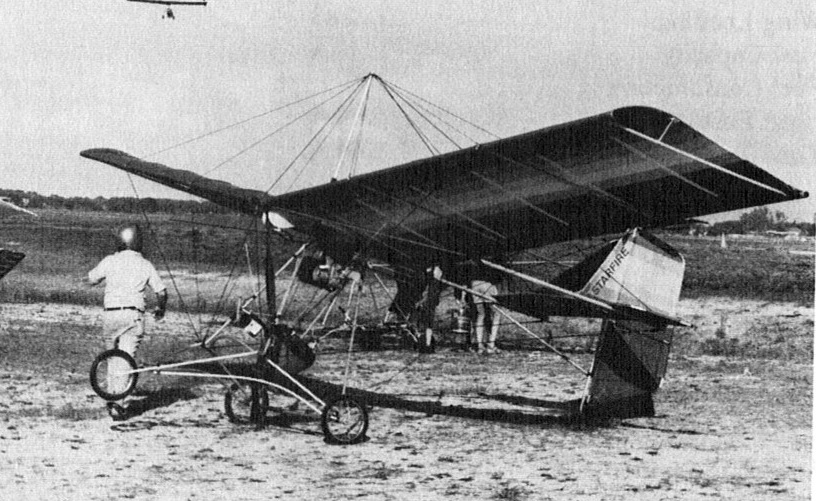
The aircraft was designed before the US FAR 103 Ultralight Vehicles rules were brought into effect, but all models comply with them anyway, including the category’s maximum empty weight of 254 lb (115 kg). The line of aircraft all feature a cable-braced high-wing, a single-seat, open cockpit, tricycle landing gear and a single engine in pusher configuration.

Starflight Starfire Article

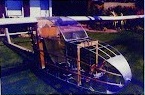
The Star Flight Starfire is the first aircraft in a large family of American ultralight aircraft that was designed by Dick Turner and produced by Star Flight Manufacturing, introduced in 1979. The aircraft were all supplied as kits for amateur construction.

The aircraft is made from bolted-together aluminium tubing, with the flying surfaces covered in Dacron sailcloth. Its 33 ft (10.1 m) span wing is cable-braced from a single element kingpost. The landing gear features a steerable nose wheel with a bicycle-style rim brake. The powerplant is mounted underneath the wing and drives a pusher propeller.
Single seat single engined high wing mono¬plane with hybrid control. Wing has unswept leading and trailing edges, and constant chord; cruciform tail. Pitch control by weight¬shift; yaw control by fully flying rudder; no separate roll control; control inputs through weight shift for pitch/yaw. Wing braced from above by kingpost and cables, from below by cables; wing profile; single surface.

Undercarriage has three wheels in tricycle formation; with additional tailskid; glass fibre suspen¬sion on main wheels. No ground steering. No brakes. Aluminium tube framework, without pod. Engine mounted below wing driving pusher propeller.

Up to the beginning of 1983 the Star Flight Aircraft company belong¬ing to Dick Turner was called Starflight Manufacturing. His basic model, the Starfire made its appearance in 1982 and was sold as a kit requiring 16 h for assembly at a price of $3995, with options including wheel fairing for $150.

However, in common with other manufac¬turers, Dick Turner has found that the market is moving away from hybrid control to stick operated machines. As a result, the Starfire was discontinued in 1983.

Engine: Cuyuna 215R engine
Max power 20 hp at 6000 rpm
Propeller diameter and pitch 52 x 24 inch, 1.32 x 0.60 in
Belt reduction, ratio 2.4/1
Power per unit area 0.12 hp/sq.ft, 1.3 hp/sq.m
Fuel capacity 2.5 US gal, 2.1 Imp gal, 9.5 litre
Length overall 9.0ft, 2.74m
Height overall 16.0ft, 4.87m
Wing span 33.0ft, 10.05m
Constant chord 5.0ft, 1.52m
Dihedral 5 deg
Sweepback 0 deg
Total wing area 165 sq.ft, 15.3 sq.m
Wing aspect ratio 6.6/1
Nosewheel diameter overall 16 inch, 41 cm
Main wheels diameter overall 16 inch, 41 cm
Empty weight 175 lb, 79kg
Max take off weight 475 lb, 215 kg
Payload 300 lb, 136 kg
Max wing loading 2.87 lb/sq.ft, 14.0 kg/sq.m
Max power loading 23.8 lb/hp, 10.83kg/hp
Max level speed 42mph, 68kph
Never exceed speed 55mph, 88kph
Max cruising speed 30mph, 48kph
Stalling speed 19 mph, 31 kph
Max climb rate at sea level 450 ft/min, 2.3 m/s
Best glide ratio with power off 6/1
Take off distance 100 ft, 30 m
Landing distance 50 ft, 15 m
Starfire Firebolt

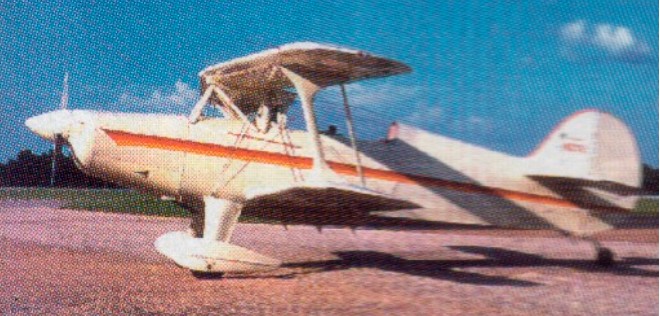
The Starfire Firebolt, sometimes called the Starfire Firebolt Convertible, due to its removable canopy, is an American homebuilt aerobatic biplane that was designed by G. H. “Mac” McKenzie and produced by Starfire Aviation of Tempe, Arizona. When it was available the aircraft was supplied in the form of plans for amateur construction, with some pre-fabricated parts available.

Developed from the Steen Skybolt and first flying on 15 May 1987, at least nine were built. Plans were sold for US$275.00 in 1998.

Engine: Lycoming IO-540-K1A5, 340 hp
Speed max: 214 mph
Cruise: 202 mph
Range: 600 sm
Stall: 61 mph
ROC: 4000 fpm
Take-off dist: 400 ft
Landing dist: 850 ft
Service ceiling: 18,500 ft
Fuel cap: 39 USG
Weight empty: 1354 lbs
Gross: 2000 lbs
Height: 7.6 ft
Length: 21 ft
Wing span: 24 ft
Wing area: 150 sq.ft
Seats: 2
Landing gear: tail wheel

Star Aviation LoneStar

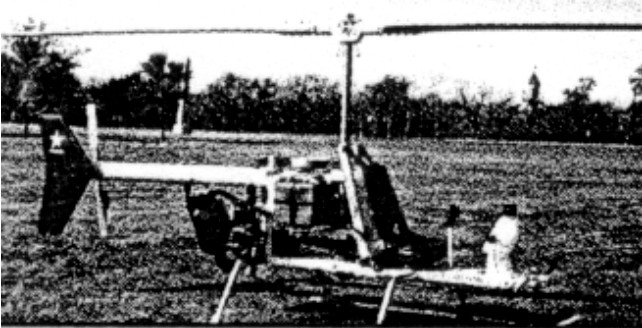
A single seat open frame helicopter first flown on 16 October 1990. Aluminium tube frame with all parts bolted or pop riveted together. Engine: 64-110 hp Rotax or Hirth.

Engine: Rotax 582, 64 hp
Rotor blades: two-blade 21 ft 6 in symmetrical airfoil
Tail rotor: 3’6”
Cruise: 60-65 mph
Top speed: 85-95 mph
Empty wt: 420-470 lbs
Useful load: 260-450 lbs
Gross wt: 680-920 lbs
Width: 5’
Height: 7’4”
Length: 13.5”
Seats: 1

Engine: 88 hp
Max speed: 95 mph
Cruise speed: 65 mph
Range: 105 sm
ROC: 1000 fpm
Service ceiling: 9,000 ft
Fuel cap: 8 USG
Empty wt: 430 lbs
Gross wt: 895 lbs
Height: 7.33 ft
Length: 13.5 ft
Disk span: 20 ft
Disk area: 314 sq.ft
Seats: 1

Star Aircraft Cavalier

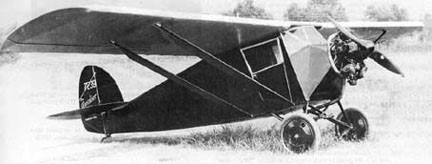
Star Cavalier B Prototype NC7239

The Star Aircraft division of Phillips Petroleum was formed at Bartlesville, Oklahoma in 1928. Designers E A “Gus” Riggs and William “Billy” Parker prepared plans for a two-passenger high-wing light private owner aircraft intended for the lower cost end of the market. The advertised cost was $3,450 with a 90hp Lambert R-266 engine. They were also advertised with a 60hp LeBlond or 75hp Velie engine for $2,985. Three Cavalier A planes were delivered in 1928.

The Cavalier B (ATC 138) followed in 1929 fitted with a lower powered 55 hp Velie M-5 engine and 15 examples were sold at $2,895 to owners of more modest means. Some were fitted with 80hp Genet and 90hp Lambert R-266 engines. The fifteen included NC24B, NC263K, NC331H, NC350M and 351M, NC451, NC453, NC450, NC941E, NC960H, NC990H, NC7239 and N7249.

Cavalier B

A single example of the Cavalier C (ATC 255) followed. The Cavalier C NC993H was powered by a 60hp LeBlond 5D engine for $2,985.

Star Cavalier C NC993H

Two examples of the 1929 Cavalier D (ATC 2-191) were built, powered by 80hp Genet engines.

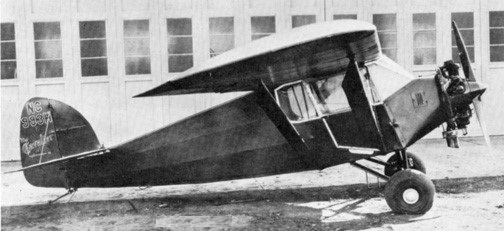
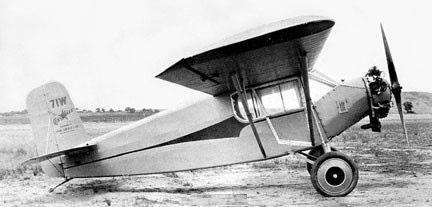
Star Cavalier E NC71W

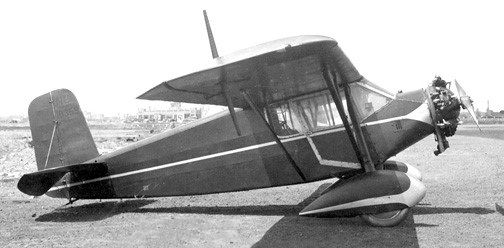
The next to secure modest success was the Cavalier E (ATC 321) of 1930 which had a 90 h.p. Lambert R-266 and was fitted with a taller, more angular, tail fin. Priced at $3,450 thirteen were sold (NC9E, NC13E, NC71W, NC350V, NC397V, NC636W, NC678W, NC980N, NC10359, NC10535, NC10583, NC10585, and NC11007).

Star Cavalier E Wing antennae NC10359

The last of the Cavalier series was the single 1930 F model N69W with a Warner Jr engine.

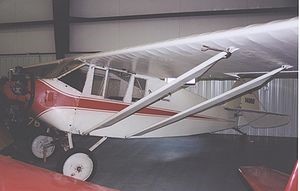
The several Cavalier models served private owners in the touring role until the curtailment of civil flying in the USA in late 1941. Five Cavaliers remain on the U.S. civil aircraft register in mid-2009. Cavalier B N14860 of 1930 was on public display, in airworthy condition, at the Historic Aircraft Restoration Museum at Dauster Field, Creve Coeur, Missouri near St Louis.

Cavalier A
Engine: 90 h.p. Lambert R-266
Wingspan: 31’6″
Length: 19’8″
Useful load: 578 lb
Max speed: 120 mph
Cruise: 100 mph
Stall: 35 mph
Seats: 2

Cavalier A
Engine: 60hp LeBlond
Wingspan: 31’6″
Length: 19’8″
Max speed: 105 mph
Cruise: 87 mph
Stall: 38 mph
Seats: 2

Cavalier A
Engine: 75hp Velie
Wingspan: 31’6″
Length: 19’8″
Max speed: 105 mph
Cruise: 87 mph
Stall: 38 mph
Seats: 2

Cavalier B
Engine: 1 × Velie M-5, 55 hp (41 kW)
Wingspan: 31 ft 6 in (9.60 m)
Wing profile: Clark Y
Length: 19 ft 11 in (6.07 m)
Useful lift: 538 lb ( kg)
Maximum speed: 100 mph (161 km/h)
Cruise speed: 85 mph (137 km/h)
Stall speed: 40 mph (64 km/h)
Range: 500 miles (800 km)
Crew: 1
Capacity: 1 passenger

Cavalier B
Engine: 80 h.p. Armstrong Siddeley Genet
Seats: 2

Cavalier B
Engine: 90 h.p. Lambert R-266
Seats: 2

Cavalier C
Engine: 60 h.p. LeBlond 5D
Seats: 2

Cavalier D
Engine: 60 h.p LeBlond.
Seats: 2

Cavalier D
Engine: 80hp Genet
Seats: 2

Cavalier E
Engine: 90 h.p. Lambert R-266
Length: 19’8″
Useful load: 550 lb
Max speed: 105 mph
Cruise: 87 mph
Stall: 38 mph
Range: 360 mi
Seats: 2

Cavalier F
Engine: Warner Junior
Seats: 2

Stanton Sunbird

In early 1983, Charlie Stanton commenced a three-year project that would see him design and build the Stanton Sunbird powered glider.

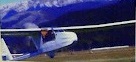
The 28 hp Rotax 277 engine enables a take-off and climb to a height sufficient for the engine to be stopped, the propellor automatically folded and the aircraft to fly as a conventional glider. The engine can be re-started in flight if needed.

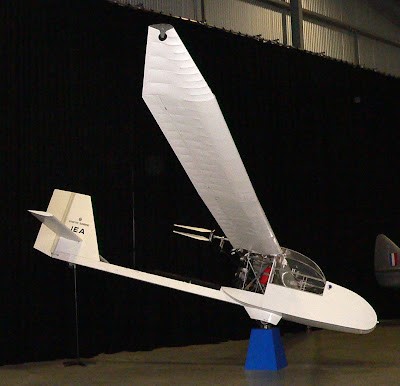
The single seat Stanton Sunbird motorglider ZK-JEA utilised various mechanical parts from Charlie’s earlier American Eaglet ZK-GOE.

It has a wingspan of 42 feet (12.8 metres) and was powered by a 27 HP Rotax 277 engine with a feathering propellor that could be restarted in flight if necessary. It was self-launching and flew successfully for over 10 years.

ZK-JEA (c/n 001) was registered as a Class 1 microlight to Charlie Stanton on 1 November 1994, and its first flight was on 26 February 1995 and over the next ten years Charlie made many flights including a maximum height of 13,000 ft and on another occasion a flight of 3 hr 30 min.

The registration was cancelled on 11 April 1997 as withdrawn.

Its final flight was on 16 April 2005.

On Sunday 4 December 2005, during the Ashburton Aviation Museum’s Christmas party, the Stanton Sunbird was donated to the museum by Charlie and his wife, Phyllis, where it is now on display.

Engine: 28 hp Rotax 277
Wingspan: 42 ft / 12.8 m
Wing area: 100 sq.ft / 9.2 sq.m
Wing loading: 5.3 lb/sq.ft / 26 kg/sq.m
Airfoil: Epple 748 High Lift
Empty weight: 313 lb / 142 kg
Payload: 214 lb / 97 kg
Max weight: 527 lb / 239 kg
Vne: 81 mph / 132 kph
Cruise: 45 mph / 90 kph
Stall w/flaps: 32 mph / 52 kph
Load factor: +- 4.4g
Service ceiling: 15,000 ft

Standard GD-24

The Standard GD-24 (Gates-Day) of 1928 (ATC 2-38) was designed by Charles H Day and first flew on 24 August 1928, piloted by Clyde Pangborn.

A 3-4 seat (in three cockpits) biplane, three were built; NC193E c/n 102, NC442 c/n 103, and NX7286 c/n 101, and possibly also included NC2220. The first two become New Standard D-24.

An optional engine was the 220hp Hispano E.

Engine: 180hp Hispano E
Wingspan: 45’0″
Length: 26’0″
Useful load: 1305 lb
Max speed: 105 mph
Cruise: 90 mph
Stall: 35 mph
Seats: 3-5

Standard JR-1 / E-4

Standard JR-1B

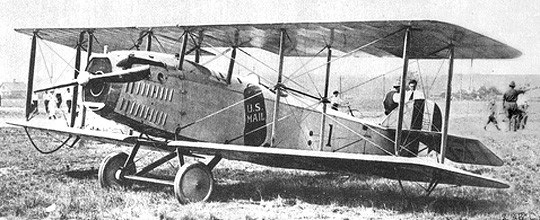
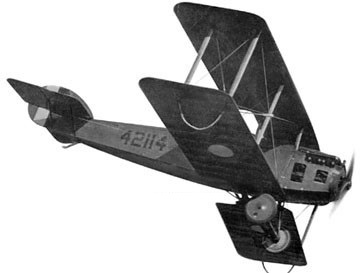
The 1917 Standard JR-1 and -1B were two-place Army advanced trainer, but boldly referred to by the company as “Pursuit”. They were revised J-1/SR-1 with a 175hp Hall-Scott A-5 engine in the JR-1, and 150hp Wright-Hisso A in the JR-1B.

Six JR-1 were built; AS25804, and 34225 to 34229, and six went to the US Mail Service in 1918 as JR-1B with 150hp Wright-Hisso A engine (AS42111 to 42116).

Standard JR-1B AS42114

The 1918 Standard E-4 were redesignated JR-1B as a post-war single-place mail plane with a 150hp Wright-Hispano A and a longer top wing.

JR-1
Engine: 175hp Hall-Scott A-5
Useful load: 546 lb
Seats: 2

JR-1B
Engine: 150hp Wright-Hisso A
Speed: 90 mph
Seats: 2

E-4
Engine: 150hp Wright-Hispano A