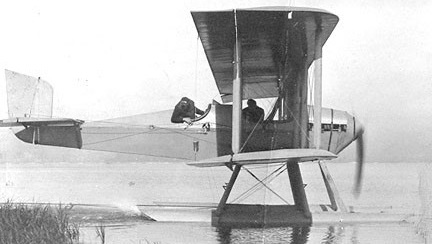
The Sturtevant S-4 Seaplane of 1916 was two-place open cockpit.
Twelve went to the US Navy as scout planes and one to the Rhode Island Naval Militia.
Wingspan: 48’7″
Length: 25’1″
Seats: 2
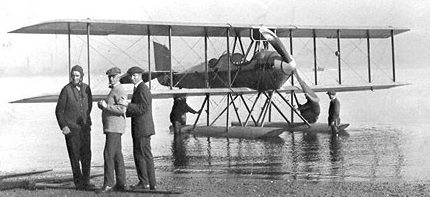
The Sturtevant S-4 Seaplane of 1916 was two-place open cockpit.
Twelve went to the US Navy as scout planes and one to the Rhode Island Naval Militia.
Wingspan: 48’7″
Length: 25’1″
Seats: 2

The 1916 Sturtevant S-3 was a three-place open cockpit biplane.
The 1916 Sturtevant S-2 Trainer was an advanced trainer.
Two went to the USAS as AS110 and AS111 (four more were cancelled but issued s/ns AS64 to AS67).
Twelve went to the USN as A76 to AS81, and A128 to AS133. Most were built as two place floatplanes.
Engine: 130hp Sturtevant 5
Wingspan: 49’6″
Length: 25’1″
Speed: 50 mph
Seats: 2
The 1915 P-L Tractor, two-place, open cockpit biplane is an unrecorded designation, and could be a renamed A-1 Tractor. It was powered by an 80hp 6-cyl Sturtevant engine.
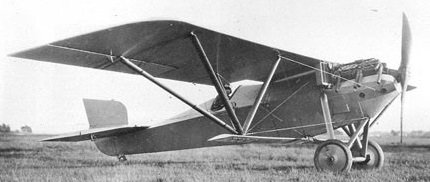
In 1916 one Sturtevant B-2 was built.
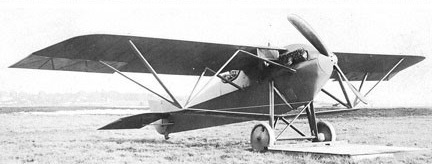
The B-2 Pursuit clipped a tree on landing in March 1917 and crashed.
Wingspan: 30’7″
Length: 23’3″
Seats: 1
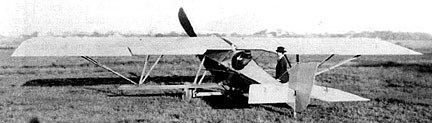
Designed by Grover Loening, the Sturtevant B-1 Speed Scout of 1916 was an Army pursuit.
Four aircraft were ordered by the Army on 8 December 1916, as AS277-280. The first one flew the first time on 20 March 1917, but crashed on that flight; the remaining three were then cancelled.
Engine: Sturtevant A5
Wingspan: 30’7″
Length: 23’3″
Seats: 1
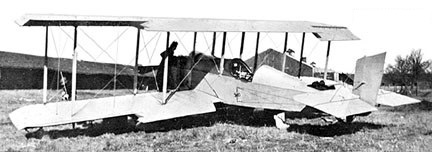
One Sturtevant A-1 Tractor was built in 1915. The wingspan was 47’0″ and length 25’10”.
The A-2 Seaplane was an unbuilt 1915 design.
The one Sturtevant A-3 Battleplane was built in 1915. Only one recorded flight was made, at nearby Readville Trotting Park in December 1915. The wingspan was 47’0″ and length 25’10”.
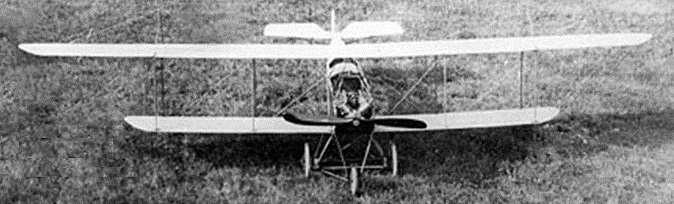
In 1914 Max F Stupar designed and built two single place biplanes as exhibition ships for Earl Daugherty. The first was powered by a 75hp Curtiss OXX-5, and also a 60hp Kirkham 6, the second one with 50hp Gnôme rotary.
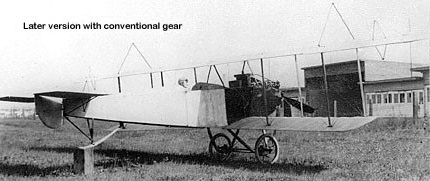
Similar planes were also built for Victor Carlstrom, William Couch, Robert Shank, and other local notables, some likely produced as Chicago Aero’s Star Tractor.
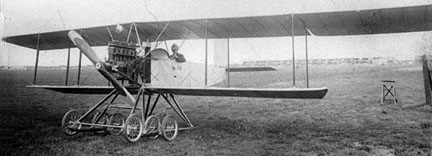
The Stupar 1914 Biplane 1 was Stupar’s first construction while employed by the Aero Works, this one for Hillery Beachy.
The single-place biplane was powered by a Hall-Scott engine, and also a Kirkham 4. A six-wheel undercarriage was fitted.
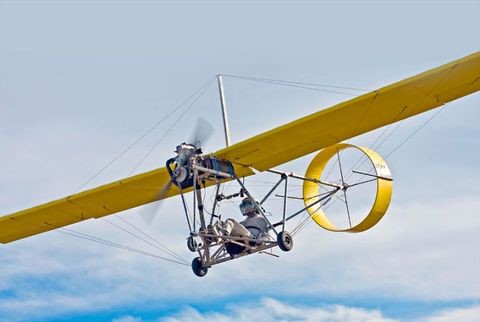
Mark Stull built Lucky Stars with a 4.5-foot-diameter ring tail. It took some clever engineering and some hair-raising test flights to make it work. Stull added a hydraulic damper to ensure that the tail didn’t swing too far to the side, and balanced the tail by adding weights to the ring. He then moved the seat forward to maintain the craft’s centre of gravity.

