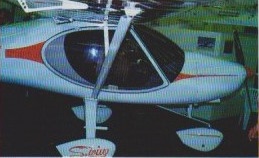
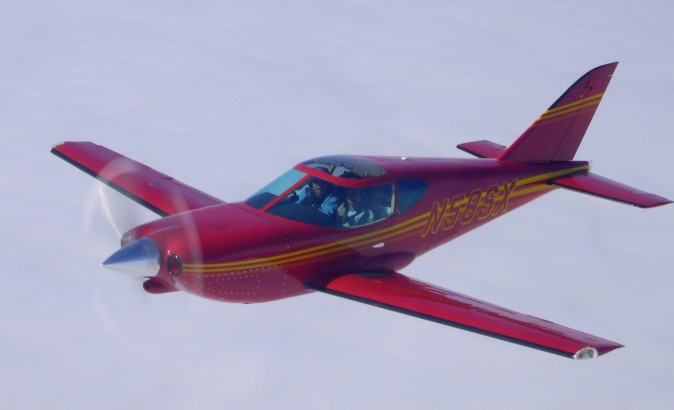
The Tango features a composite fuselage with a large cockpit and large doors. The wooden wings are strut braced. The pilot is almost lying down, with a Cessna style steering column.
BTA 4 Tango Empty weight: 276 kg Wing span: 10.2 m Wing area: 12.9 sq.m Fuel capacity: 75 lt Certification: vVz Engine: Rotax 912, 80 hp MAUW: 450 kg Seats: 2 Max speed: 220 kph Cruise speed: 160 kph Minimum speed: 65 kph Climb rate: 6 m/s Fuel consumption: 10 lt/hr Price (1998): 73,500 DM
Certain versions can operate with a hangglider wing. The parapland version was offered with a Flight Design canopy. The nose wheel was steerable in later versions.
1998
Empty weight: 58 kg Wing area: 30 sq.m Fuel capacity: 15 lt Certification: vVz Engine: Hirth F-33, 22 hp MAUW: 48 kg Seats: 1 Max speed: 48 kph Min speed: 18 kph ROC: 2 m/sec Fuel burn: 3.5 lt/hr Price (1998): 11 990 DM
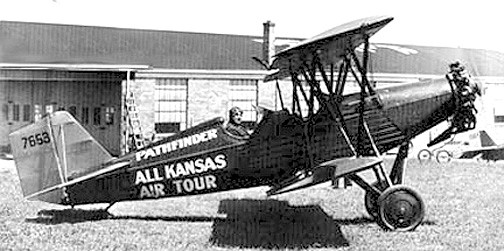
Designed by C B Bennett and Thomas Finney, the Swift 18 of 1928 was a Sport with a 120hp Quick engine. Three were built; N7653 c/n 1002, N8196 s/n 1003 (later reregistered as Swift 15 c/n 1005), and NX8863 c/n 5.
The 1929 Swift 19 was a Sport with a Wright J-6-5 engine. One was built registered NX8864 c/n 6.
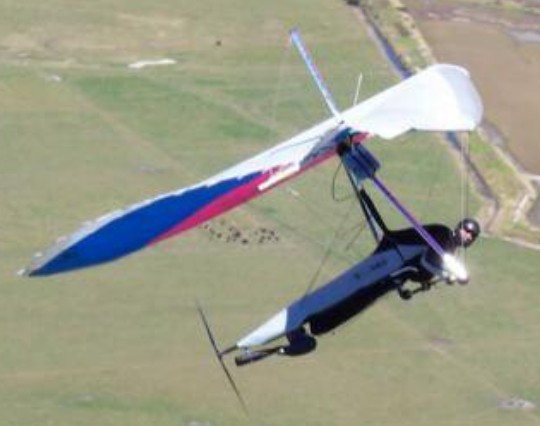
The Mosquito will fit most modern gliders with only one permanent modification. The keel has to be cut 1200 mm (47″) behind the hang point. The cut off section can be refitted to help rig the wing and for free flight. The 120 cc engine produces 15 Hp and will gives a climb rate of around 2 m/s (400 ft/m). A centrifugal clutch allows the propeller to stand still while the engine idles. This is a big safety factor and also reduces vibration. It has electric start and prop brake with foldable carbon prop. It also has intake silencer and after muffler.
Mosquito Empty weight: 24 kg Engine: Racket, 15 hp Reduction: 1:2.6 Prop diameter: 135 cm Fuel capacity: 4 lt Price (1998): £3000
The SX300 was originally designed by Ed Swearingen in San Antonio, TX, as a two place, all metal, single engine low wing monoplane with fully enclosed retractable landing gear. First flown on 11 July 1984, the aircraft was marketed as a kit from 1984 to 1989.
By the end of 1989 approximately 80 kits had been sold, although there were only 48 sets of landing gear, which were built by the landing gear vendor, Airight Inc. in Wichita, KS.
The basic concept was to set new standards for Homebuilt or Amateur Built Aircraft as a dependable, fast mode of transportation; using all metal construction and proven techniques to provide an airframe that was equal to advanced jet aircraft. Fundamentally this was accomplished, however, the complexity and the labor intensive kit proved to be too challenging for the Homebuilt Market. The kit was high quality but the aircraft was never kit-proofed by the factory, so there were numerous glitches from the beginning. If the aircraft had been offered as a “fast build kit” it may well have survived.
In 1994, Jim Ryan, the owner of Airight, acquired the SX300 tooling, aircraft kit components and production/manufacturing rights (except military application). Jim planned to continue supporting the existing builders and to supply kits, fast build kits and possibly a fixed gear version which he called the SX200. Unfortunately Jim died in early 1996 before he could implement his new program.
The inventory of SX300 parts were bought by Bill Johns and now reside with Doug Poli at his facility in Ft. Worth, TX.
Engine: Lycoming IO-540-L1C-5, 300 hp Propeller: Hartzell Constant Speed 3-blade, 74 in. diameter Overall Length: 21 ft. 1.5 in. Overall Height: 7 ft. 6.5 in. Wing Span: 24 ft. 4.5 in. Wing Area: 70.73 sq. ft. Aspect Ratio: 8.4 Structural Cabin Width Inside: 41 in. Load Factor: 6G + 3G – Cruise Speed @ 75% Power, 8000 ft: 240 Kts. Stall Speed @ Gross Wt. (2400lbs.) flaps down: 75 Kts. Rate of Climb @ Gross Wt. Sea Level: 2400 ft./min Range (66 gal): 900 miles. Empty Weight: 1600 lbs. Baggage Capacity: 70 lbs. Power Loading: 8 lbs./hp Vne: 280 KIAS