Built by Frank Allen in 1936 Chicago IL., the DLX Special, or Newhall Racer was a racing aircraft registered NR14868.
A single-place low wing monoplane powered by an 85hp DLX-Pobjoy engine, it crashed during flight testing.
Built by Frank Allen in 1936 Chicago IL., the DLX Special, or Newhall Racer was a racing aircraft registered NR14868.
A single-place low wing monoplane powered by an 85hp DLX-Pobjoy engine, it crashed during flight testing.
The Allen A-2 built by A.J. Allen in 1931 was a two-place open cockpit monoplane powered by a 60hp Ford A engine.
Registered N890Y, it was modified for the A-3 designation.

The Aler Sport built circa 1938 in Flint MI. was a two-place powered by a 40hp Continental engine, and registered N12872 c/n 100.
Unconfirmed, but most likely evolved (or converted) into Dale Air-Dale.

The 1913 Schwade 2-seater biplane was designed and built by Schwade in Germany

The 1913 Schmitt Type 7 biplane was designed and built by Paul Schmitt in France.
In 1914 this plane broke 43 world records.
Span: upper 57’5″ lower 44’3″
Weight gross: 3300 lbs
Speed: 27-78 mph
Incident variation: between o° and 12°.

The 1913 Rumpler monoplane was designed and built by Rumpler Company in Germany
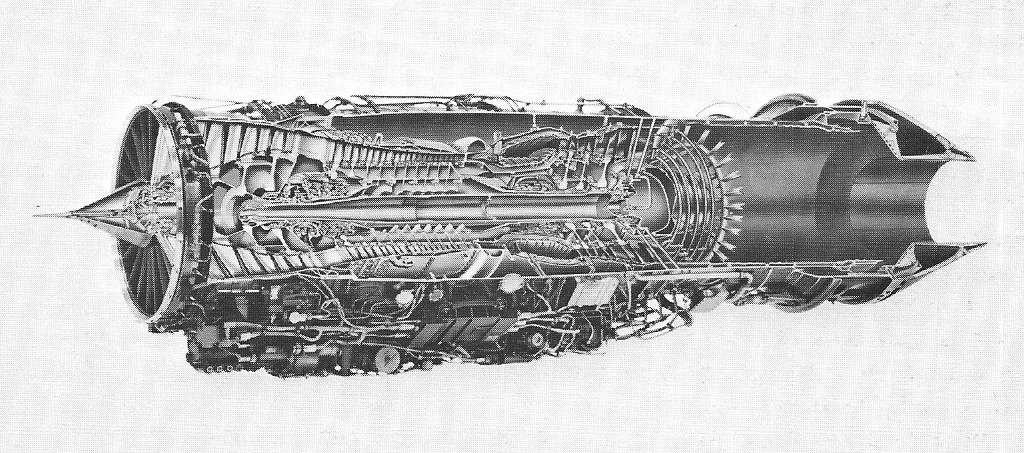
Development of the PW1120 to Israeli Air Force (IDF/AF) specifications began in June 1980. It retained the F100 digital electronic control system, along with the F100 main module transmission fuel pump forward channels, with only minor modifications. Unique PW1120 components include a wide-chord low-pressure (LP) compressor, a single-stage uncooled low-pressure (LP) turbine with a simplified single-flow booster, and a lightweight convergent/divergent nozzle. Full-scale testing began in June 1982, and the PW1120’s flight permit testing began in August 1984. The PW1120 had a 70% similarity to the F100, so the IDF/AF would not need a dedicated facility for spare parts. It was to be built under license by Bet-Shemesh Engines Limited in Israel.
IAI installed a PW1120 on the starboard bed of an F-4E-32-MC of the IDF/AF (Number 334/66-0327) to explore the airframe/engine combination for an upgrade program for the F-4E known as the Kurnass 2000 (“Heavy Hammer”) or to serve as an engine testbed for the Super Phantom and Lavi. The engine was more powerful and more fuel-efficient than the General Electric J79-GE-17 turbojet normally fitted to the F-4E.
Structural changes included modified air intake ducts, new powerplant ports, new or modified powerplant bay doors, integrated drive generators, and a new fuselage-mounted gearbox with an autothrottle system. It also included a modified bleed management and air conditioning ducting system, modified fuel and hydraulic systems, and a powerplant control/airframe interface. It first flew on 30 July 1986.
Two PW1120 power plants were installed in the same F-4E and first flew on 24 April 1987. This proved very successful, allowing the Kurnass 2000 to exceed Mach 1 without afterburners and have a combat thrust-to-weight ratio of 1.04. This improved the sustained turn ratio by 15 percent, the climb rate by 36 percent, mid-level acceleration by 27 percent, and the low-level speed from 1,046 km/h to 1,120 km/h (654 to 700 mph) with 18 bombs (or 565 kn to 605 kn). It was demonstrated at the 1987 Paris Air Show.
The Avro 538 was a considerably modified development of the basic Avro 531 design with equal-span wings, normal wing strutting and a larger upper wing/fuselage gap.
Intended as a racing aircraft, the 538 was never used as such because of a defective spar. Powered by a 150 hp / 112 kW Bentley B.R.2, it was used by Avro Transport Co as a communication aircraft from May 1919 until September 1920.
Engine: 150 hp / 112 kW Bentley B.R.2
Wingspan: 8.53 m / 28 ft 0 in
Height: 2.59 m / 8 ft 6 in
Wing area: 19.51 sq.m / 210.0 sq ft
Empty weight: 442 kg / 975 lb
Take-off weight: 635 kg / 15400 lb
Range: 320 mi / 515 km
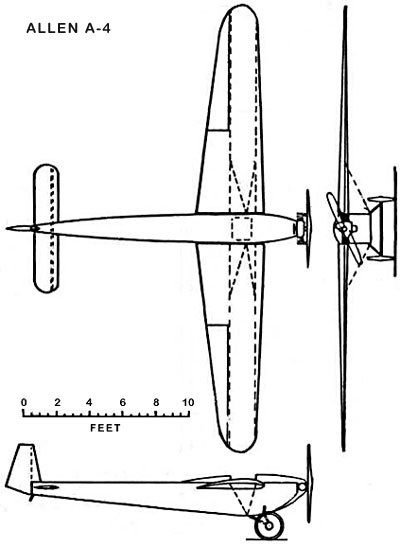
Edmund T Allen, Salt Lake City UT., circa 1924, built a single-place open cockpit mid-wing, intended to compete in the 1924 Dayton races, but the list of contestants did not show it as an entry.
A-4
Engine: Harley-Davidson motorcyle engine
Wingspan: 27’0″
Length: 18’9″
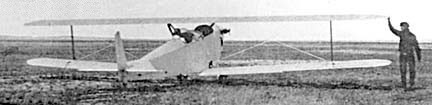
Circa 1928 Edmund T Allen, Salt Lake City UT. built a two-place open cockpit biplane, bowered by a 29hp Wright-Morehouse engine.
A home-built, undocumented other than mention that it was built in Utah, and its photo taken in Cheyenne.
 All Aero