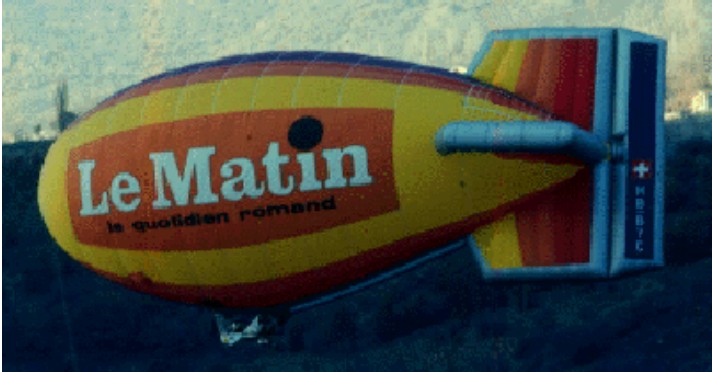
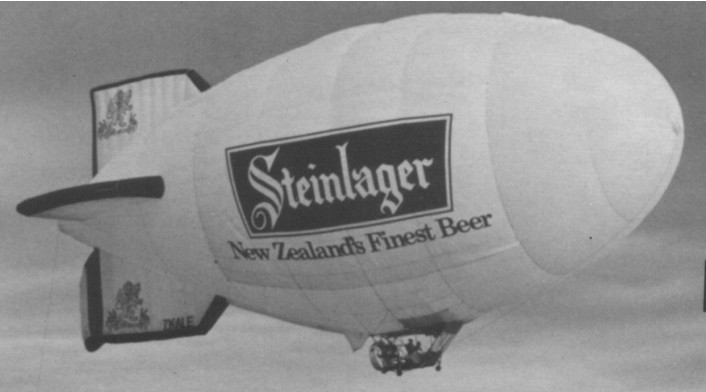
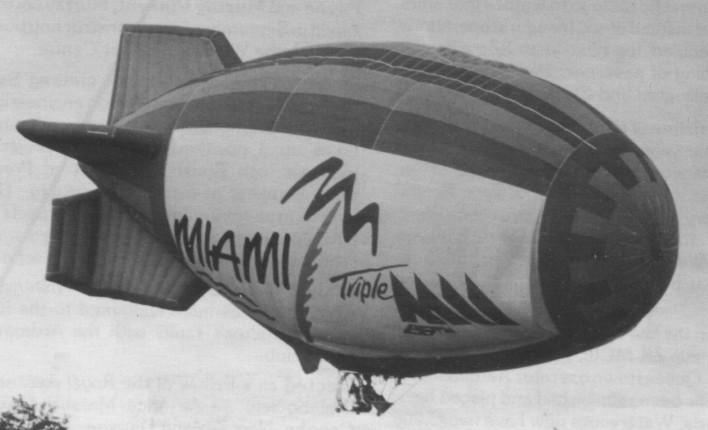
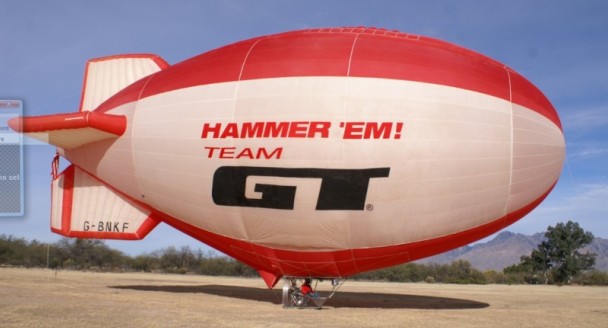
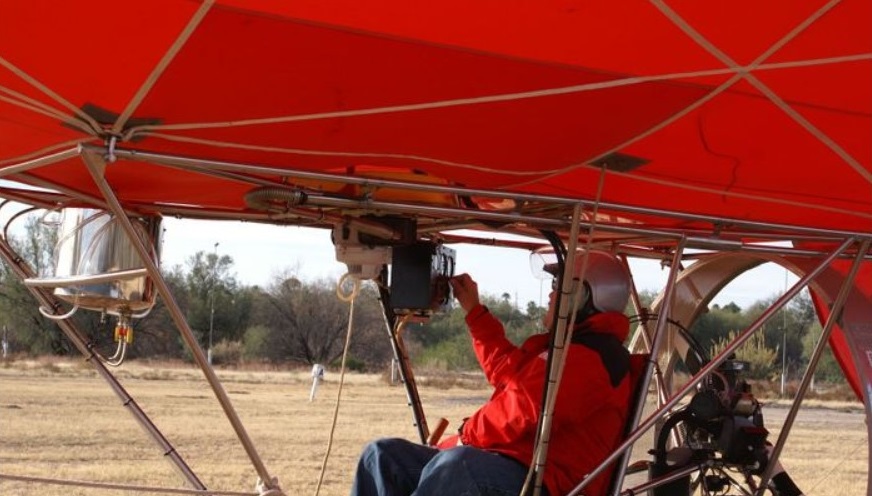
A T&C AS 105 Mk II hot air airship at the 1996 Worlds in Italy.
Mk2 Gondola and 105,000 cu.ft. Mk2 envelope
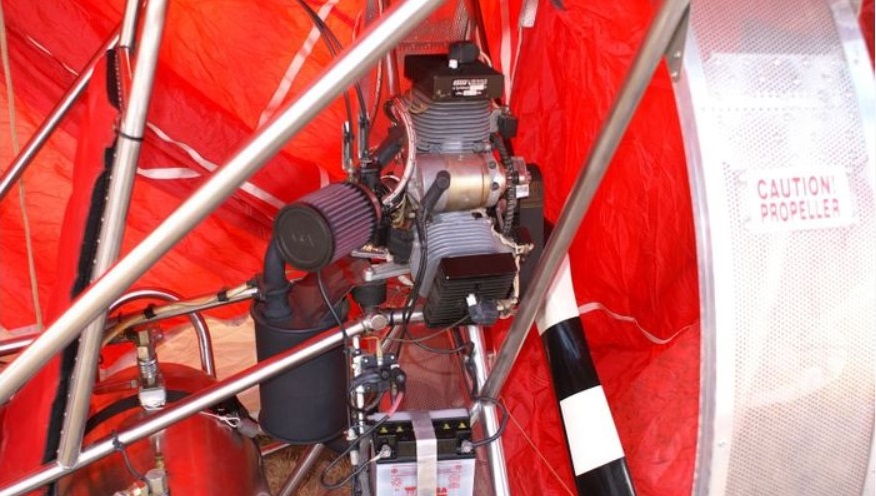
With the thermal airship, the shape is maintained by a small pressurising motor while the heat is supplied in the same manner as a common or garden hot air balloon, via a large twin burner. Fuel for both motors and the heating is supplied from two 100 litre LPG tanks.
All AS-105 are certified under Civil Aviation Authority UK AN 17803
Length: 34 m Height: 13 m MAUW: 750 kg Fuel: LPG Fuel cap: 2 x 100 lt Endurance: 2 hr Envelope capacity. 105,000 cu.ft Max envelope temp: 120 degC Max envelope pressure: 14 mm/Hg Vertical rate of climb: 500 ft/min Service ceiling. 6000 ft Normal operational altitude minimum legal Structural cruise: 12 14 kt Vne: 15 kt Forward propulsion: Honda, 600 cc V-twin lquid cooled Seating capacity: 2 persons
AS-105 MkII Length overall: 34.0 m (111 ft 6.5 in) Max. diameter: 13.87 m (45 ft 6 in) Volume: 2,973.3 cu.m (105,000 cu ft) Max. speed: 37 km/h (23 mph) Endurance: 2 h 30 min
The circa 1885 Thunder and Colt Pressurized Thermal Airship instead of using helium for lift, uses low pressure (3 psi) hot air to provide static lift. The hot air is supplied by a hot air balloon burner located above the pilot’s head inside the hull. Directly beneath the burner is a modified 2 stroke engine that drives a small fan that provides constant pressure in order to provide rigidity to the hull. Behind the pilot is a 24 horsepower 3-cylinder 2 stroke German Konig radial engine that swings a 52″ pusher propeller A Certified Aircraft
The pilot climbs by raising the temperature inside the hull. He descends by allowing it to cool. There is a small amount (20%) of dynamic lift that increases with speed. Rudder only.
In 1928 Thunderbird Aircraft Inc was contracted by a Lt C A Burrows of the California National Guard for use in “scouting new passenger and air mail routes,” but it is unclear whether this was a state or personal order. A seven place cabin monoplane, there is no record of the plane being constructed.
Engine: P&W Wasp Max speed: 145 mph Cruise: 120 mph
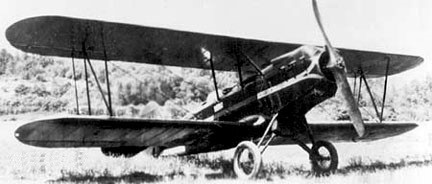
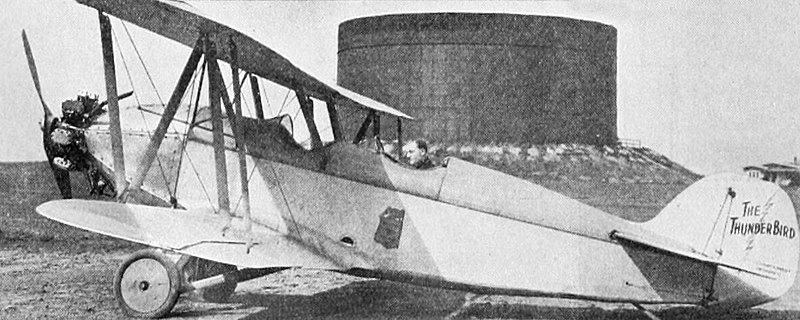
Thunderbird Aircraft was established to build and develop the Thunderbird biplane, designed by Theodore A. Woolsey, and first flown in June 1926. The production W-14 was a three-seat open-cockpit biplane powered by a Curtiss OX-5 engine.
Design of the Thunderbird W-14 family was begun in 1926 by the W-F-W Aircraft Corporation (formed by Theodore Woolsey, Jack Frye and Paul Whittier).
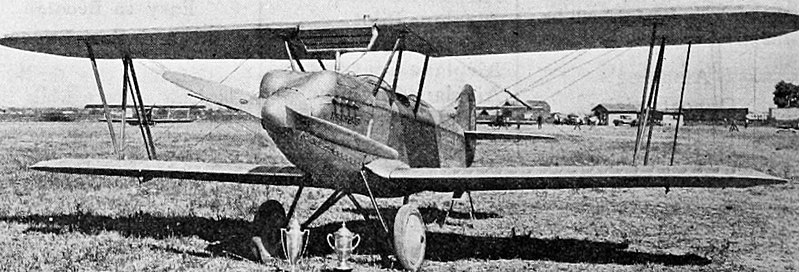
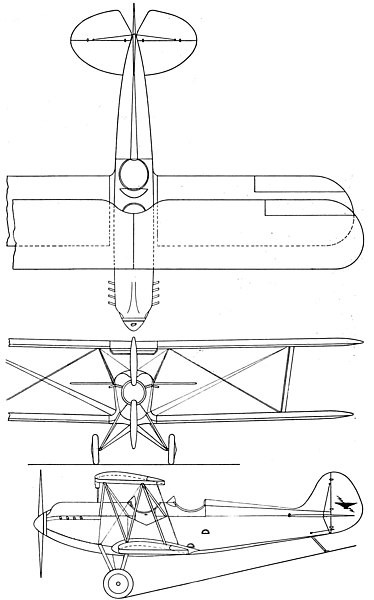
The Thunderbird W-14 was an unequal span single bay biplane with wings of rectangular plan out to rounded tips, built around twin wooden spars and fabric-covered. Both upper and lower wings were set with 3° of dihedral and had externally interconnected ailerons. Outward-leaning N-form interplane struts joined the wings, set with 20 in (510 mm) of stagger, and the upper wing was mounted over the fuselage on outward-leaning cabane struts with an inverted V from the forward spar and a single strut from the rear spar on each side.
The prototype’s OX-5 water-cooled engine was cleanly cowled, with its 43 US gal (36 imp gal; 160 L) fuel tank immediately behind it and its radiator centrally positioned on the upper wing underside. There were two open cockpits in tandem. The forward one seated either two passengers side-by-side or a trainee pilot, positioned largely under the upper wing. The pilot sat, sightly raised, in the rear cockpit. The stagger and a gentle cut-out enhanced the field of view from both cockpits. Behind the engine the fuselage was a trapezoidal section girder structure of welded steel tubes, tapering rearwards and with a rounded decking behind the cockpits.
The Thunderbird had a conventional tail with a semi-circular plan tailplane mounted on top of the fuselage, wire-braced to the fin. It carried rounded elevators separated by a gap for rudder movement. The fin was also rounded, with a large unbalanced rudder of semi-elliptical profile.
Its original fixed, conventional landing gear was a standard single axle design with pairs of legs and trailing drag struts. There were no brakes and the early tailskid could not be steered.
The Thunderbird made its first flight 11 July 1926. By the autumn of 1927 numerous modifications had been made in preparation for production. These included laminated, rather than solid, wing spars, Warren girder ribs and a steel, rather than wire, cross-braced fuselage. A new, split axle undercarriage was introduced, with axles hinged from the central fuselage underside and equipped with rubber-chord shock absorbers. The tailskid was now steerable.
Designed by Ted Woolsey, the open cockpit biplane series was first flown on 11 July 1926 (piloted by Jack Frye).
As production started W_F_W was re-organised as the Aero Corporation of California with investment from Walter Hamilton (Frye & Woolsey, Monte Edwards, Walter Hamilton, Paul Richter). With the break-up of the partnership Woolsey arranged new investment to take over the business, which became Thunderbird Aircraft Inc. of 900 N Allen St, Glendale, CA.
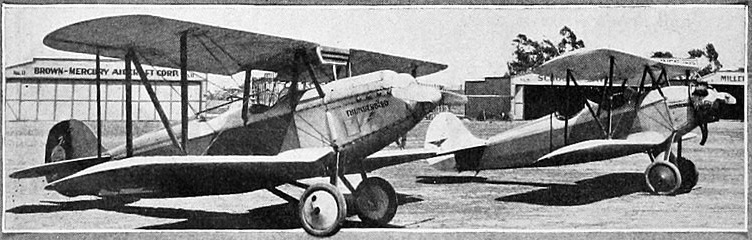
OX-5 powered Thunderbird alongside a Bailey C-7-R powered aircraft
Production Thunderbirds offered several other engines, all more powerful than the Curtiss (for $3,350). The least powerful was the 95 hp (71 kW) Dayton Bear which originally powered an iceboat.
Bailey C-7-R powered Thunderbird W-14
The Bailey CR-7 Bull’s Eye was a 120 hp (89 kW) 7-ctlinder radial engine as was the 150 hp (110 kW) Axelson (Floco) B as W-14-F. The elderly, heavy 140 hp (100 kW) Hispano E water-cooled V-8 engine (for $3,750) increased speeds of the W-14-H by 15 mph (24 km/h; 13 kn) and the climb rate by 12% but needed a 60 US gal (50 imp gal; 230 l) fuel tank to maintain the W-O-14’s range. All but the first were certified to power the W-14.
One was registered N7201as a W-14 (no suffix) with a 130hp Hallett engine,
Between 40 and 50 production Thunderbirds (ATC 2-141) were built between 1927 and 1929. There were several agencies across the south-western states and it was popular with small flying clubs in the Los Angeles area. Some were used in the Philippines until the Japanese invasion. Others were exported to Canada. In 1929, however, the onset of the depression and a management dispute ended the company even though they had an outstanding order for 50 from a single buyer.
Known registrations: N5243, N5404, N5457, N5588, N5770, N5830, N5969, N6502, N6573, N6589, et al.
Because the early advertisements for the Thunderbird said only that its maximum speed was over 100 mph, some journals suggested that the 95 mph cruising speed was in fact the maximum. To refute this, a standard Thunderbird with a three-year-old OX-5 engine, previously used by an aero club, was entered for the November 1927 Santa Anna air meet for aircraft with under 100 hp engines, where it won a trophy by completing a triangular course at an average speed of 114 mph (183 km/h; 99 kn). A few days later on 21 November 1927, at the National Guard field in Los Angeles Clint Burrows, the company test pilot, flew four flights each in opposite directions at an average speed of 119.4 mph (192.2 km/h; 103.8 kn). The aircraft was then sold to an air-taxi company for use between Los Angeles and Tucson.
One standard W-14, NX9830, was bought by Roscoe Turner and modified by the addition of a 50 ft (15 m) diameter parachute held in the wing centre-section to be deployed to save the aircraft and those aboard in an emergency.
Only one Thunderbird remains airworthy, a W-O-14. It was restored by Denny Trone and flew from Brodhead, Wisconsin. After his death in a 2008 flying accident it was donated to the Eagles Mere Air Museum along with other old aircraft he had restored. Ogden lists it as a General Aircraft Company Thunderbird W-14.
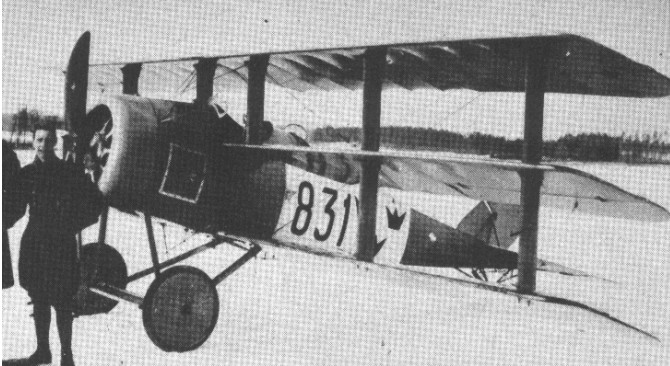
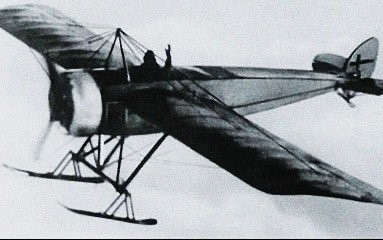
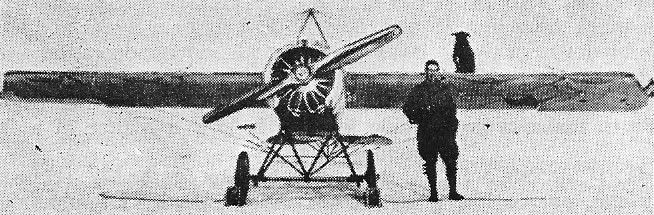
The Thulin K was based on the Nieuport IVG which they’d imported.
Nils Rodéhn
Eighteen Thulin Ks were built in 1917, sixteen going to the Dutch Army in 1920.
Engine: Thulin A, 105 hp Wingspan: 29 ft 9 in Length: 21 ft 4 in Max speed: 93 mph Cruise: 81 mph Landing speed: 53 mph Time to 3300 ft: 4 min Ceiling: 20,000 ft
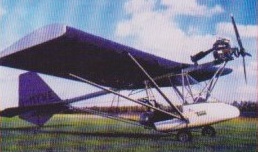
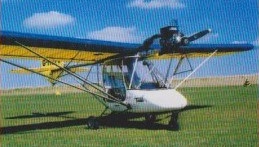
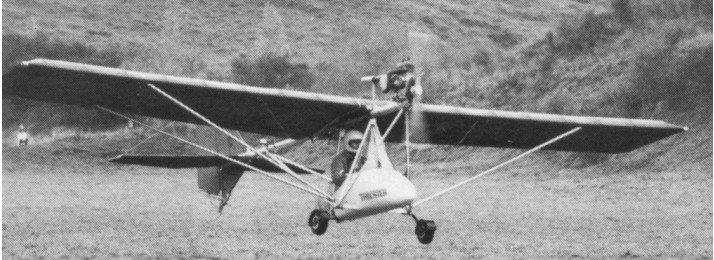
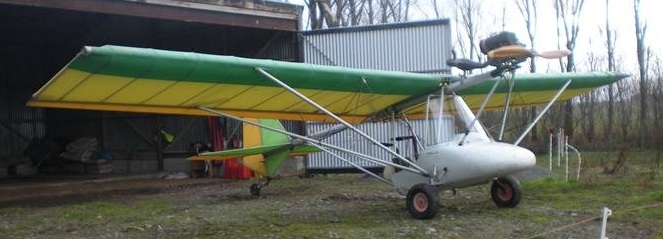
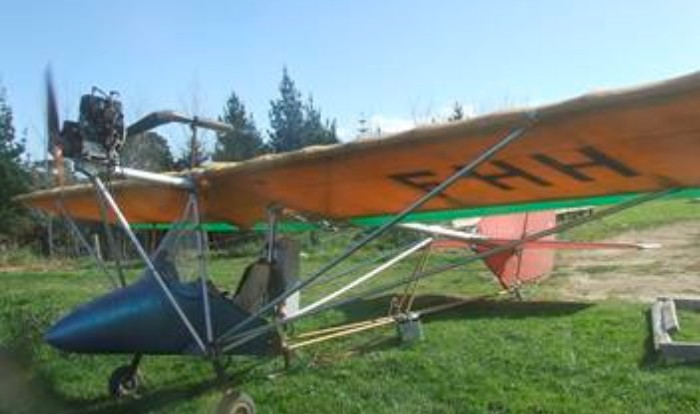
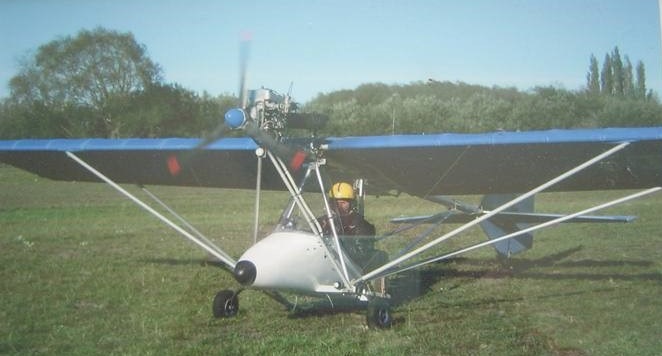
Originating in Australia, by 1998 the tube and fabric design had been built in the UK for a number of years, and marketed in the UK as the Nova T600 N.
A tricycle version on the Commandair was exported from Australia to the UK as the Nova T600 T.
T600 T
Nova T600 T Engine: Rotax 503, 52 hp Wing span: 9.60 m Wing area: 15 sq.m MAUW: 360 kg Empty weight: 150 kg Fuel capacity: 40 lt Max speed: 130 kph Cruise speed: 100 kph Minimum speed: 65 kph Climb rate: 5 m/s Certification: BCAR S Seats: 2 Fuel consumption: 13 lt/hr Price (1998): £12,350
Commandair Engine: Rotax 503, 52 hp Wing span: 9.60 m Wing area: 15 sq.m MAUW: 360 kg Empty weight: 15- kg Fuel capacity: 40 lt Max speed: 130 kph Cruise speed: 100 kph Minimum speed: 65 kph Climb rate: 5 m/s Certification: BCAR S Seats: 2 Fuel consumption: 13 lt/hr Price (1998): £13,350
The fifth design of Steve Cohen, first appearing in 1982. A unique wing design allows each wing to rack and fold inside the double surface dacron skins for trailering. A fibreglass pod keeps the pilot warm on wintery days and the strut braced high wing tail dragger design makes it a good rough strip performer. A two-place/utility version is available which sports a new pod for passenger and pilot and power is supplied from a 60 hp Rotax 503 via a geared reduction drive.
Thruster Gemini 503TC
The Thruster 85 has a shorter wing span and the fabric of the lower wing sewn onto the ribs. Conventional 3 axis controls, single or two place.
In 1998 the two seat Thruster returned to production.
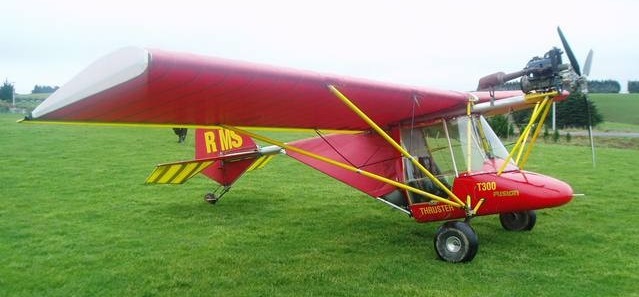
The T.300 is a side-by-side two-seat open microlight, and T.500 derivative with enclosed rear fuselage.